• Link to X
  • Link to Facebook
  • Link to Instagram
  • Link to TikTok
  • Link to Youtube
  • About
    • About Us
      • President
      • Board of Directors
      • Board of Advisors
      • Financials
      • Our Methodology
      • Success Tracker
      • Contact
  • Act Now
    • 30 Ways to Help
      • Email Congress
      • Call Congress
      • Volunteer
      • Courses & Certificates
      • Be a Donor
    • Internships
      • In-Office Internships
      • Remote Internships
    • Legislation
      • Politics 101
  • The Blog
  • The Podcast
  • Magazine
  • Donate
  • Click to open the search input field Click to open the search input field Search
  • Menu Menu

Tag Archive for: Poverty in Malawi

Posts

Global Poverty

Khalsa Aid: Clean Water Access in Malawi

Clean Water Access in Malawi
Founded in 1999, Khalsa Aid is a U.K.-based organization that has the aim to provide humanitarian aid in disaster areas and civil conflict zones around the world.

So far, its tireless efforts have included assisting victims of the Yemen Civil War and refugees landing on the shores of Greece from the Middle East, as well as extending support to the Rohingya Muslims from Myanmar. In a more recent relief project, this organization gave food to 8,000 people who were affected by the floods in Kerala and continues to provide aid to bring life back to normal.

In the recent years, this organization has also made a huge effort in providing clean water in Malawi.

Langar Aid

In 2015, through its long-term initiative Langar Aid, Khalsa Aid dedicated a team for its Malawi Project.

Though considered to be one of the smallest and least developed countries in the African continent, Malawi region is widely known to be the warm heart of Africa. In 2015, the region suffered a major setback from one of its worst floodings and according to the United Nations, close to a quarter of a million people remained displaced, facing disease and malnutrition. With total estimated damages of $50 million and 15 affected districts out of Malawi’s total 28, the Malawi government with the help of UNICEF launched series of relief programs. The aim was to rebuild infrastructure and provide clean water and life-saving food assistance to those affected.

In response to the flooding situation, Khalsa Aid’s humanitarian efforts in Malawi involved initial installation of water pumps in the rural region, and subsequently, the addition of many more water pumps.

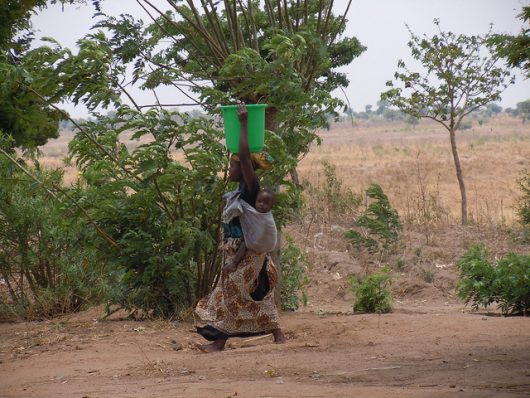
In 2015, with the help of donations, the team of Langar Aid went on grounds of Malawi to access the situation and provide assistance to the local communities. After a detailed assessment and consultation, the team felt an urgent need to provide vital food supplies and clean drinking water in the region. A relief team from Khalsa Aid visited the region for an initial assessment and found that many people had no access to clean drinking water due to damaged infrastructure. The team noticed that many people of the country’s town Phalombe had to walk for miles or take a bicycle and carry the buckets of water themselves.

The Success of the Project

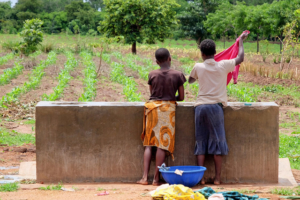
Through their interactions with local communities, government and contractors, the team of Khalsa Aid created a permanent water source in the region. The volunteers and team of specialists mobilized drilling resources and after hours of drilling, a suitable water well was found. A hand pump was included on a platform on top of the water well, making it convenient for locals to fetch the water from the well.

Additionally, the people of Malawi along with the village administrative authorities received orientation session and were given handouts explaining the usage and maintenance of installed water pumps. Khalsa Aid now plans on drilling more boreholes in the region of Phalombe to make clean water more accessible for local communities.

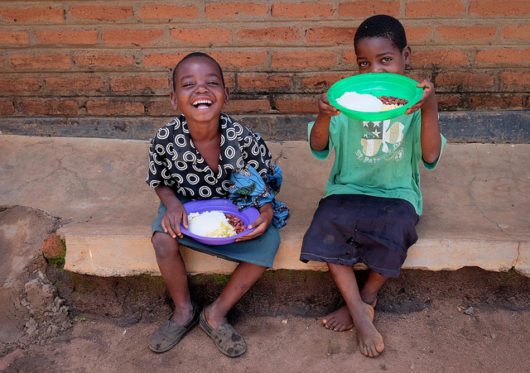
Through the project of Langar Aid, Khalsa Aid’s humanitarian efforts in Malawi included an extended support for an estimated 500 families over a month through the provision of “food drops”. These are packages of nutritious meals that contained an assortment of fresh food, vegetables and seasonings. The volunteer team of Langar Aid also installed eco-friendly clean water pumps.

Local government and organizations like WaterAid have also been working to ensure that communities in Malawi region have clean water, toilets and sanitation. Only one in three people in the Malawi region has access to clean water, that amounts to roughly 5.6 million.

A region where more than half the entire population awaits a decent toilet and where dirty water and poor toilets are a prime reason for deaths of 31,000 children in a year, noble initiatives like Khalsa Aid are getting much appreciation and extensive global support.

– Deena Zaidi
Photo: Flickr

September 26, 2018
https://borgenproject.org/wp-content/uploads/borgen-project-logo.svg 0 0 Borgen Project https://borgenproject.org/wp-content/uploads/borgen-project-logo.svg Borgen Project2018-09-26 12:54:572024-05-29 22:53:36Khalsa Aid: Clean Water Access in Malawi
Children, Food & Hunger

The Dire Situation of Child Nutrition and Healthcare in Malawi

healthcare in Malawi
According to the U.K. Business Insider, Malawi was ranked one of the poorest countries in the world in 2017. Malawi is located between Zambia and Tanzania in Africa and approximately 74 percent of its population lives in poverty. This level of poverty has a great impact on the healthcare in Malawi. There are less than 300 registered doctors and 7,000 nurses in the entire country.

The number one cause of death in Malawi is HIV/AIDS, while neonatal disorders rank number four and nutritional deficiencies rank number eight. The healthcare in Malawi suffers greatly from the lack of provided funding which causes a lack of supplies. Also, there is a considerable lack of training for healthcare professionals, a factor that results in an infant mortality rate of approximately 90 deaths for every 1,000 births.

The healthcare in Malawi, or lack thereof, has a major impact on nutritional status. It is estimated that 50 percent of malnutrition is directly related to HIV infection. Only 19 percent of children between the ages of six months and 23 months of age receive a proper diet in Malawi. This lack of nutrition causes extreme anemia, vitamin A deficiencies and other micronutrient deficiencies. These deficiencies cause stunting of the child’s growth which has negative impacts on their overall development. Only one out of every three children receive proper healthcare in Malawi to treat malnutrition.

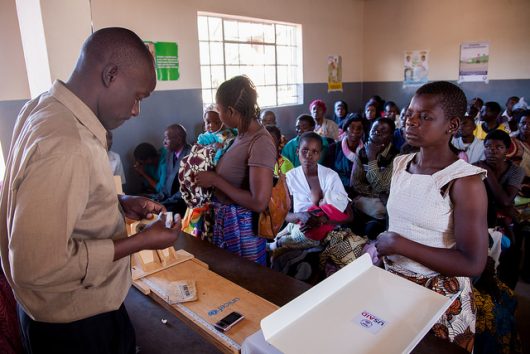
Fortunately, there are programs that are trying to improve the overall healthcare in Malawi. The Center for Disease Control (CDC) has been working with the healthcare system in Malawi since 2011. The CDC has provided scholarships for nurse-midwives and other professionals for training. The U.S. government has also partnered with the Malawi Ministry of Health (MOH) to incorporate training programs for healthcare professionals, improve surveillance systems, improve laboratories and implement prevention programs.

The World Food Programme (WFP) has acknowledged that half of Malawi’s children are stunted from malnutrition and that 23 percent of child deaths are associated with malnutrition. The WFP was organized to raise awareness all over the world for these children of Malawi. Also, in 2011, the Republic of Malawi launched SUN (Scaling Up Nutrition) which raises money for MOH to send to the local facilities. SUN is largely funded by the USAID and Irish Aid. The USAID has also funded the Food and Nutrition Technical Assistance III (FANTA III). This program provides nutrition assessment, counseling, support and HIV treatment programs.

The healthcare in Malawi is still struggling a great deal to provide proper care and improve the nutritional status of children. In 2003, Ripple Africa was created as a charity that focuses on improving healthcare in Malawi. Ripple Africa focuses on funding dispensaries and local clinics and hospitals. This charity relies on overseas volunteer doctors and nurses to provide much assistance. With these programs assisting the healthcare in Malawi, the system will hopefully continue to improve and save lives.

– Kristen Hibbett

Photo: Flickr

May 7, 2018
https://borgenproject.org/wp-content/uploads/borgen-project-logo.svg 0 0 Borgen Project https://borgenproject.org/wp-content/uploads/borgen-project-logo.svg Borgen Project2018-05-07 01:30:492024-05-29 22:42:17The Dire Situation of Child Nutrition and Healthcare in Malawi
Global Poverty

Facts and Figures Towards Rising Above Poverty in Malawi

Poverty in Malawi
With severe poverty automatically comes hardships and struggles, and Malawians are no strangers to this reality. A largely agricultural country located in southeastern Africa, poverty in Malawi is widespread among the population of more than 18 million. Landlocked by Tanzania, Zambia and Mozambique, Malawi is faced with 50.7 percent of the population living below the poverty line, and a staggering 25 percent living in what is considered to be extreme poverty.

The Southern African Regional Poverty Network (SARPN), gives insight to the widespread poverty among Malawians by defining poverty: “…as a state of continuous deprivation or a lack of the basics of life.”

Similar to most poverty-stricken areas, their government lacks the means to expand the economy, meaning Malawians oftentimes do not receive adequate healthcare, environmental protection or education. Below is a list of five pertinent facts that illuminate the poverty that Malawians face on a daily basis.

5 Facts About Poverty in Malawi:

  1. Defined by the World Bank, individuals live on $1.90 per day.
  2. Fewer than one in ten Malawians have access to electricity.
  3. Over 90,000 individuals live with HIV/AIDS.
  4. Poor children are more likely to drop out of school before they reach Standard 5, according to the SARPN.
  5. SARPN also reports that a majority of the poor reside in rural areas, where there are limited economic activities and subsistence agriculture is the main income.

Although the majority of the people in Malawi live in destitute conditions, it is deservingly known as the “Warm Heart of Africa” because the residents are known to be among the friendliest and hospitable to tourists.

It is important to note that among the struggles and inconveniences, Malawians are increasing their quality of life more and more as the years go on. Listed below are five facts delineating the efforts being made to combat poverty in Malawi, according to the Malawi Vision 2020 Statement:

5 Facts About Combating Poverty in Malawi:

  1. The Malawi Vision 2020 Statement — a document created by Malawians themselves — is the framework for expressing self-reliance, equal opportunities and the desire as a nation to be a middle-income economy powered by technology.
  2. A goal for the Malawians is to flourish into a middle-income country, with a per capita income of $1,000 by the year 2020.
  3. With the hopes of obtaining adequate and safe access to food, Malawians will focus their energies on increasing food production, developing irrigation, improving efficiency of markers and numerous other strategies. They hope to encourage community leaders to take the first steps and visit research stations to learn about new and valuable technologies.
  4. Employment opportunities are often considered scarce, so Malawians aspire to reduce unemployment with techniques such as increasing commercial farming to enhance employment in agriculture. This will help aid in a fair and equitable influx of income.
  5. The result of inadequate resources promotes Malawians to strive for an economic infrastructure that will include the provision of roads, rail water, air transport, provision of water and sanitation services.

Efforts being made by works such as the Malawi Vision 2020 Statement set the tone of a less impoverished nation for millions of individuals. The people of Malawi are taking strides and uniting together to generate a more sound and prosperous country.

– Angelina Gillespie

Photo: Flickr

April 19, 2018
https://borgenproject.org/wp-content/uploads/borgen-project-logo.svg 0 0 Borgen Project https://borgenproject.org/wp-content/uploads/borgen-project-logo.svg Borgen Project2018-04-19 01:30:052024-05-28 00:15:23Facts and Figures Towards Rising Above Poverty in Malawi
Food Security, Global Poverty

USAID: Reducing Poverty in Malawi Through Feed the Future

Poverty in MalawiMalawi is a landlocked African country that is bordered by Tanzania to the northeast, Mozambique to the south and Zambia to the west. The impact of poverty in Malawi can be seen prominently in the agriculture sector.
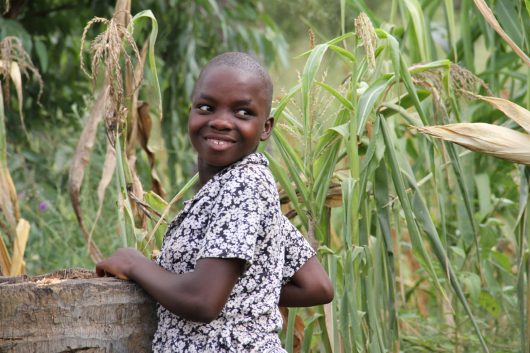
Malawi ranks 160 out of the existing 182 sovereign nations on the Human Development Index and is currently one of the world’s poorest nations. Nearly three-fourths of the population lives on less than a $1.25 a day, and approximately 90% live on less than $2 a day.

Agriculture makes up 35% of Malawi’s gross domestic product (GDP), and nearly 85% of Malawians are employed in the agricultural sector.

Maize is typically grown for local markets; small-scale farmers typically grow various fruits and vegetables such as pineapples, guava, mangoes, lemons, green peppers, cabbage, cucumbers and eggplants.

Agricultural growth in Malawi is often limited and difficult to effectively sustain due to reoccurring droughts in the region. Nearly 80% of Malawians are smallholder farmers who rely on their crops to feed their families and communities.

Malawi experiences extreme weather conditions — periods of drought and flooding — that contribute to widespread famine and destroyed infrastructure.

USAID reports that they are currently developing the National Nutrition Policy and Strategic Plan that is closely related to the Comprehensive Africa Agriculture Development Program (CAADP) plan, and the Agriculture Sector-Wide Approach to promote agriculture and address food insecurity at the national and local levels to reduce poverty in Malawi.

Feed the Future, USAID reports, is working closely with the Malawian government to devise policies to promote agricultural sustainability, improve access to food and invest in crops such as legumes and dairy that would expand domestic and export markets for Malawi to help their economy prosper.

Through the Feed the Future initiative, USAID helped trained farmers on better farming techniques to increase productivity and provided financial and marketing services to farmers as well. USAID reported that they are committed to promoting private sector development by strengthening government institutional capacity that will accelerate long-lasting agricultural sustainability.

Since the beginning of the initiative, milk productivity has substantially increased by 52%. USAID has also succeeded in organized 23,000 Malawians from rural villages into savings-and-loans groups. Adding to that success, USAID trained 60,000 farmers on new agricultural technologies and techniques that would improve irrigation and crop harvesting.

The Feed the Future initiative aims to improve the vulnerability of rural smallholder farmers to help them escape poverty and hunger. Also, they plan to impact the lives of 293,000 children in helping to provide better nutrition to reverse growth stunting and prevent infant mortality.

Economic issues and food shortage issues have historically affected the poverty in Malawi; however, the successful partnership between the Feed the Future initiative and the Malawian government continues to improve agricultural techniques, farming technologies and promote food security for impoverished communities.

– Haylee Gardner
Photo: Flickr

October 31, 2016
https://borgenproject.org/wp-content/uploads/borgen-project-logo.svg 0 0 Borgen Project https://borgenproject.org/wp-content/uploads/borgen-project-logo.svg Borgen Project2016-10-31 01:30:232020-06-02 16:58:08USAID: Reducing Poverty in Malawi Through Feed the Future
Children, Global Poverty

Problem of Child Marriage in Malawi Linked to Poverty

Child Marriage in Malawi
According to Girls Not Brides, Malawi has the highest rate of child marriages worldwide, with roughly one in two girls getting married by the age of 18. In rural areas stricken with poverty, parents choose husbands for young girls to improve their financial status. Families sometimes give their daughters in marriage in an exchange called kupimbira in order to repay their debts.

Theresa Kachindamoto, chief of a Malawian district of 900,000 people, is taking a stand to eradicate child marriage in Malawi. She has prevented more than 850 marriages and enlisted 50 sub-chiefs to enforce the ban in her district. “Whether you like it or not, I want these marriages to be terminated,” Kachindamoto said. “I tell them: if you educate your girls you will have everything in the future.”

Tamara Mhango of Girls Not Brides spoke about Kachindamoto’s mission. “She goes around her community even through the different platforms to raise awareness on the importance of girl education and also directly supports and sponsors girls who are vulnerable to stay in school, thereby delaying marriages,” Mhango said.

Between 2010 and 2013, 27,612 girls in primary schools and 4,053 girls in secondary schools in Malawi dropped out because of forced marriage. In addition to this, 14,051 primary school students and 5,597 secondary school students dropped out after becoming pregnant.

According to a Human Rights Watch report titled, “‘I’ve Never Experienced Happiness’: Child Marriage in Malawi,” marriage interrupts girls’ education and dreams. Many of Malawi’s child brides reported that they weren’t able to return to school because they couldn’t afford school fees, child care services, school programs or adult classes. Household chores also contended for their time.

The report found that child marriage in Malawi often forced girls into relationships wrought with sexual and domestic abuse and gender-based violence. Some girls said their families used manipulative tactics to coerce them into forced marriage, threatening and verbally abusing them or throwing them out on the street if they refused to comply.

“The lack of dissemination and popularization of policies and laws that protect girls [in] the communities is one of the challenges faced in the efforts to eradicate the practice,” Mhango told The Borgen Project. “Inconsistencies in the new marriage law and the constitution [regarding] the legal age of marriage is one deterrent factor.”

According to health workers in Malawi, problems related to reproductive health and pregnancy, such as maternal death, obstetric fistula, premature delivery and anemia, occur most frequently among young girls. Malawi’s maternal mortality rate has reached 675 deaths per 100,000 live births. Malawian health workers suggested that early pregnancy complications could be avoided with better funding.

“If allowed to stay in school, properly supported through their education, and make sure that policies are in place, enforced and implemented to protect the girls at all levels, then we would prevent child marriages,” Mhango said.

– Rachel Williams

Photo: Flickr

October 15, 2016
https://borgenproject.org/wp-content/uploads/borgen-project-logo.svg 0 0 Borgen Project https://borgenproject.org/wp-content/uploads/borgen-project-logo.svg Borgen Project2016-10-15 01:30:452024-12-13 17:55:50Problem of Child Marriage in Malawi Linked to Poverty
Extreme Poverty, Global Poverty

10 Facts About Poverty In Malawi

Malawi is a landlocked country in southeastern Africa bordered by Tanzania, Mozambique and Zambia. The country also borders Lake Malawi, also known as Lake Nyasa. Lake Malawi accounts for more than one-fifth of the country’s total area, making it a significant geographical feature. Poverty in Malawi has been at critical levels for decades. Of the approximately 21.8 million people in the country, about 50.7% lived below the national poverty line in 2019.

Many Malawians work in agriculture and it is hard for them to produce enough crops to maintain an income above the international poverty line. With parental death, disease and crop failure, the obstacles that many Malawians face are abounding. Below are the leading facts that thoroughly explain and illuminate the pressing issue of poverty in Malawi.

  1. In Malawi, there are more than 900,000 adults living with HIV. The infection rate is twice as high among women as it is among men. Additionally, only 88.3% of adults living with HIV know that they are HIV-positive and about 98% of them are receiving antiretroviral treatment (ART).
  2. Only 67.3% of Malawi’s population can read and write by the age of 15. This is partially attributed to a lack of access to quality education, a high number of student to teacher ratio, teacher absenteeism and a low enrolment rate.
  3. Due to poverty, poor access to health care, disease and food shortage, the average life expectancy for a Malawian is 63 years, which is 25 years more than it was in 1960, according to the World Bank. Further, The median age for Malawians is 20.3 years old.
  4. There are only 0.05 doctors for every 1,000 individuals in Malawi. As a result, millions in Malawi do not have access to standard health care services.
  5. Malawi’s economy is mainly agricultural, with 80% of the population living in rural areas. Additionally, the sector contributes 30% of the country’s national gross domestic product (GDP).
  6. The International Fund for Agricultural Development (IFAD) is working in harmony with Malawi’s government to promote agricultural growth in rural areas. This is an effort to reduce poverty throughout Malawi.
  7. About 30% of Malawian children do not start primary school (which is free) and only 33% of those who enroll will go on to complete it. Secondary and higher education is mostly attended by those of households above the international poverty line, predominantly due to the enrollment fees.
  8. Malawi is one of the world’s most impoverished countries, ranking 172 out of 193 countries on the Human Development Index.
  9. As of 2015, more than one million Malawi children were orphaned due to HIV/AIDS.
  10. In addition to IFAD, Access Health Africa, an international nonprofit, is providing Malawians with access to quality health services, education and resources through community initiatives. The organization has provided 160 general surgeries and reached more than 1,000 people.

The people of Malawi face great hardships; however, with the help of nonprofits like IFAD and Access Health Africa, there is hope for an increased economy, health services and better school systems. This, in turn, will decrease disease, orphaned children and overall poverty in Malawi.

– Bella Chaffey

Photo: Flickr
Updated: June 01, 2024

August 10, 2016
https://borgenproject.org/wp-content/uploads/borgen-project-logo.svg 0 0 Borgen Project https://borgenproject.org/wp-content/uploads/borgen-project-logo.svg Borgen Project2016-08-10 01:30:012024-06-01 12:43:4010 Facts About Poverty In Malawi
Page 4 of 41234

Get Smarter

  • Global Poverty 101
  • Global Poverty… The Good News
  • Global Poverty & U.S. Jobs
  • Global Poverty and National Security
  • Innovative Solutions to Poverty
  • Global Poverty & Aid FAQ’s
Search Search

Take Action

  • Call Congress
  • Email Congress
  • Donate
  • 30 Ways to Help
  • Volunteer Ops
  • Internships
  • Courses & Certificates
  • The Podcast
Borgen Project

“The Borgen Project is an incredible nonprofit organization that is addressing poverty and hunger and working towards ending them.”

-The Huffington Post

Inside The Borgen Project

  • Contact
  • About
  • Financials
  • President
  • Board of Directors
  • Board of Advisors

International Links

  • UK Email Parliament
  • UK Donate
  • Canada Email Parliament

Get Smarter

  • Global Poverty 101
  • Global Poverty… The Good News
  • Global Poverty & U.S. Jobs
  • Global Poverty and National Security
  • Innovative Solutions to Poverty
  • Global Poverty & Aid FAQ’s

Ways to Help

  • Call Congress
  • Email Congress
  • Donate
  • 30 Ways to Help
  • Volunteer Ops
  • Internships
  • Courses & Certificates
  • The Podcast
Scroll to top Scroll to top Scroll to top