• Link to X
  • Link to Facebook
  • Link to Instagram
  • Link to TikTok
  • Link to Youtube
  • About
    • About Us
      • President
      • Board of Directors
      • Board of Advisors
      • Financials
      • Our Methodology
      • Success Tracker
      • Contact
  • Act Now
    • 30 Ways to Help
      • Email Congress
      • Call Congress
      • Volunteer
      • Courses & Certificates
      • Be a Donor
    • Internships
      • In-Office Internships
      • Remote Internships
    • Legislation
      • Politics 101
  • The Blog
  • The Podcast
  • Magazine
  • Donate
  • Click to open the search input field Click to open the search input field Search
  • Menu Menu

Tag Archive for: Poverty in Japan

Posts

Global Poverty

Why and How Poverty in Japan is Concealed

Poverty in JapanJapan has a reputation for having one of the highest national well-being rates because of its prestigious education, successful healthcare systems and attractive culture. This perception is backed up by Japan holding 14th position in the global quality of life ranking and 16th in Gross domestic product (GDP). Consequently, the country stands out as a highly favored travel destination, attracting more than 23 million tourists in 2023. These visitors often buy into the idea of the lack of poverty in Japan.

However, according to the 2022 Basic Survey on National Living published by the Ministry of Health, Labor and Welfare, Japan’s poverty rate was 15.4%, the highest among the Organisation for Economic Co-operation and Development (OECD) members then. This raises the question: How does the country keep its poverty issue relatively concealed?

Historic Cause of Poverty in Japan

Modern Japanese poverty is often attributed to the “Lost Decade,” a period from 1991 to 2001 caused by a heightened Bank of Japan interest rate and characterized by real estate equity values lowering 70% through the decade. Before the “Lost Decade,” Japan was seen as the epitome of economic prosperity. It had an economic system called “keiretsu,” promoting entrepreneurship by forming a close-knit group of businesses able to invest in each other through the national bank.

Keiretsu allowed an entrepreneurial cushion for businesses to test new products before exporting them internationally, which, in turn, boosted the country’s economy. However, as the rapid growth of the Keiretsu system continued to succeed, the banks, also believing the government cushioned them, took riskier investments and eventually began to fail.

The Japanese government attempted to create new jobs by building new infrastructure. Similarly, the Bank of Japan boosted its monetary base by 60% with the quantitative easing program. However, deflation and fiscal deficit persisted, even as the nation exited the “Lost Decade.”

The Cultural Intersection With Poverty

Along with the economic growth, often called the “bubble economy,” there was a movement of “Nihonjinron,” the idea of defining the Japanese culture and identity. Though the concept of assuming a single, homogeneous Japanese identity was problematic, it provides a loose definition of Japanese sentiment at the time as prizing economic advancement, collectivism and a level of modernization.

However, after the “Lost Decade” and its ensuing insecurity, Japanese culture took on a “no excess” mentality, no longer prioritizing economic advancement by allowing for riskier odds. Economically, this lowered Japan’s place in the rapidly expanding world economy. Socially, this created a mindset centered around economic stability, thoroughly tabooing open poverty.

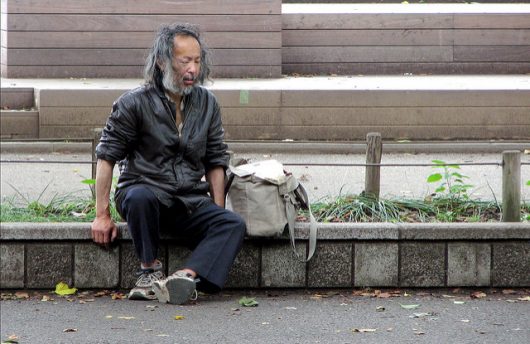
The manifestation of the nonacceptance of open poverty can be seen through Shinjuku Central Park in Tokyo. Though the park is filled with unhoused people at night, during the day, the individuals pack their belongings, often into remote, makeshift shelters or stay in government-funded homeless encampments. People living in poverty also do not typically ask for money and stay away from popular locations. This furthers the illusion of Japan’s lack of poverty.

Final Remark

With Japan’s rising poverty rate, the country has been implementing programs such as soup kitchens, public awareness campaigns, mental health support and the Housing First approach, which provides shelter to people without homes. However, as long as poverty in Japan remains invisible, it will not receive the aid it needs to help those in need to access just support.

– Aria Desai
Photo: Flickr

February 28, 2024
https://borgenproject.org/wp-content/uploads/borgen-project-logo.svg 0 0 Hemant Gupta https://borgenproject.org/wp-content/uploads/borgen-project-logo.svg Hemant Gupta2024-02-28 02:58:382024-06-11 00:12:44Why and How Poverty in Japan is Concealed
Global Poverty, Slums

A Look at Sanya: Biggest Slum in Tokyo

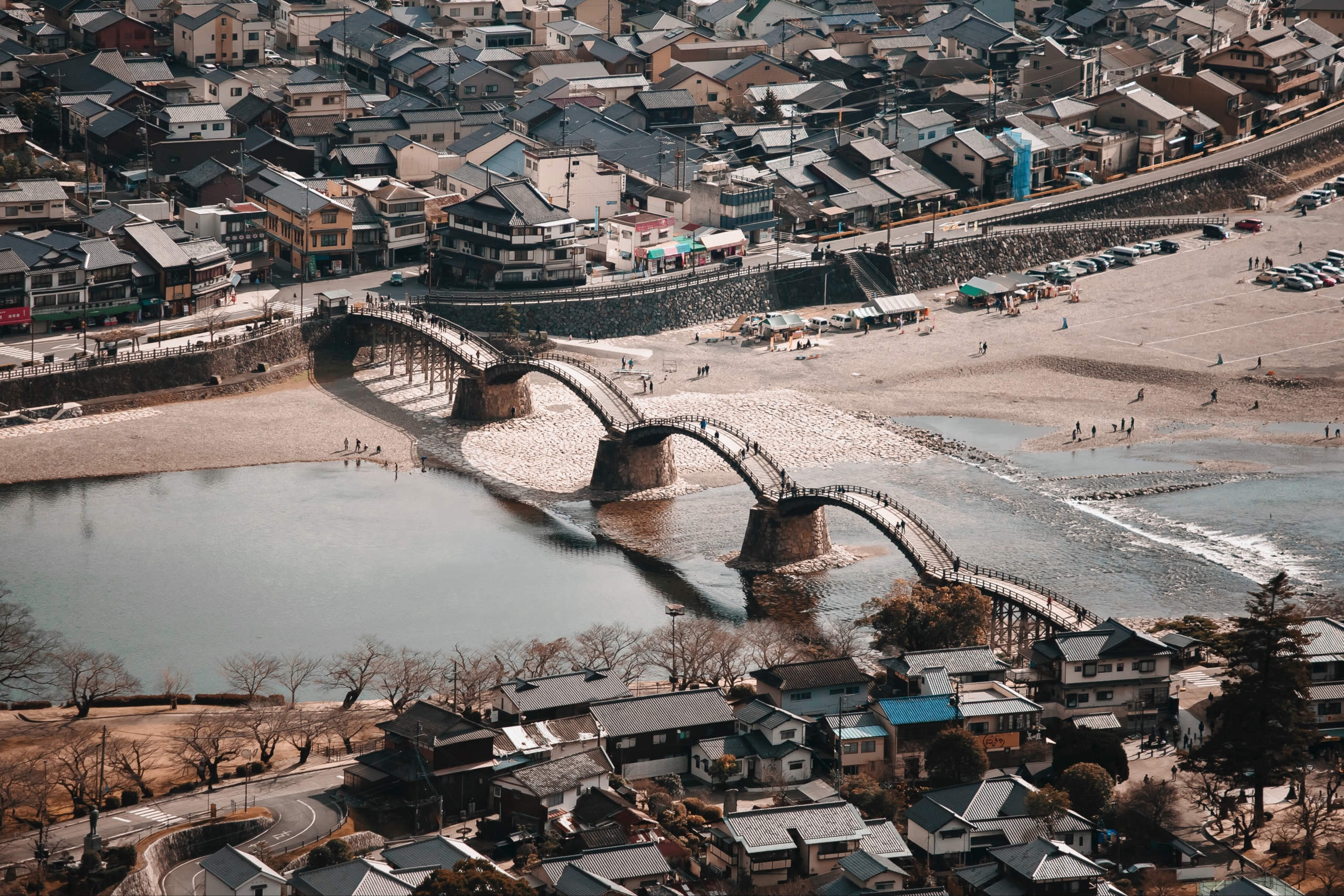
biggest slum in TokyoLocated within the bustling city of Tokyo is a hidden slum called Sanya — a place of hostels, displaced individuals and a dark past that lingers. During Japan’s Edo Period, many people flocked to Sanya to take advantage of the low costs of living, but when World War II hit, Sanya was converted into a makeshift town of tents for those displaced by bombings. Eventually, these tents were traded in for wooden hostels, which still remain today.

If one were to try to locate Sanya on a modern map, it would be impossible, having been erased 50 years ago in an attempt to keep the slum’s violence, homelessness and poverty from tainting the image of Tokyo. Sanya is not even located in a single district; it has been divided between the districts of Kiyokawa and Zutsumi. The biggest slum in Tokyo remains officially unnamed, but the name Sanya is kept alive by local residents.

The Population of Sanya

About 1,500 individuals of the Sanya population are low-income workers as well as retired laborers — many of whom were responsible for rebuilding Japan after World War II. Most of these people are between the ages of 60 and 70, and because of this, the once-active hostels are now being transformed into slow retirement homes. The elderly population is isolated in Tokyo’s hidden slum; poverty and age push them farther away from regular, Japanese society — outside of Sanya as well as internally. Because the average age in Sanya is so high, many of the people who reside here are only living off of pensions — contributing to the growing impoverished population in Sanya.

Gentrification Attempts Are Hurting Longtime Residents

To those who have lived in Sanya for decades and are part of the largely impoverished population in the district, gentrification is not the answer to financial problems, but the problem itself. Local authorities fight to resist commercial developments, but are no match for private landowners set on tearing down pre-existing buildings—such as hostels and other lodging facilities—to build more efficient housing. The retired, senior residents living off of mere pensions find this particularly frustrating because, with such little income, it would be incredibly difficult to relocate out of these hostels and start anew elsewhere. 

Hotels, apartments and stores are being built as tourism flourishes — completely changing Sanya’s ambiance. Many residents claim that Tokyo’s hidden slum is not only losing living opportunities for the impoverished due to gentrification but also its culture. Old and original stores are being torn down for new ones, and this irks many residents. 

Hope in the Forgotten District 

Japan is actively working to combat poverty and provide assistance to the impoverished through The Japan Fund for Poverty Reduction (JFPR). Currently, there are hundreds of millions being poured into vital components of the economy, such as health, transport, agriculture and technical assistance. This project was established in 2000 but is geared more toward the international population of Asian countries located near Japan. But Sanya, Tokyo’s hidden slum, has its own prominent business working to combat the struggles of the local impoverished. 

YUI Associates is a community building project based in Sanya and works to help the displaced population through a myriad of initiatives as well as bringing awareness to the issues within Sanya. This social enterprise additionally owns a couple of hotels for both travelers and Sanya residents struggling to get by. 

YUI Associates also owns the Sanya Cafe, a cafe determined to serve affordable items and provide retired laborers with meals in exchange for collected trash. This cafe was also named in an attempt to unofficially emphasize and declare that Sanya is the true name of this district — expunged or not. Not only does YUI Associates work firsthand with the impoverished population of Sanya, but workers also take to the streets on Mondays to clean the community and converse with residents and listen to any that want to talk. 

In a place nicknamed “The Lost District” and the “Place Where People Come to Disappear,” hope prevails in Sanya. Resilience is seen in the strong spirit of the residents, and with businesses like YUI Associates, Sanya improves constantly.

– Nina Argel
Photo: Unsplash

August 26, 2023
https://borgenproject.org/wp-content/uploads/borgen-project-logo.svg 0 0 Lynsey Alexander https://borgenproject.org/wp-content/uploads/borgen-project-logo.svg Lynsey Alexander2023-08-26 04:06:352023-09-01 03:23:00A Look at Sanya: Biggest Slum in Tokyo
Global Poverty, Poverty Reduction

What The News Does Not Tell You – 3 Poverty Reduction Stories

Poverty Reduction StoriesAlthough the news tends to highlight negative stories surrounding global poverty, The World Bank states that extreme poverty has “rapidly declined.” The following is an overview of stories that demonstrate successes in poverty reduction in the world.
Poverty Reduction in Japan

Established in the year 2000 after the Asian financial crisis, The Japan Fund for Poverty Reduction (JFPR) provides “direct grant assistance to the poorest and most vulnerable groups in developing member countries (DMCs) of the Asian Development Bank (ADB).” Furthermore, the JFPR works to encourage socioeconomic development for the long-term future. 

Targeting poverty reduction initiatives, the ADB’s mission is to turn Asia and the Pacific region into a poverty-free place. It strives to “help its developing member countries reduce poverty and improve the quality of life of their people.” Home to 66% of the world’s poorest population, 1.7 billion people in this area live on less than $2 a day. The main objectives the ADB occupies for supporting its developing member countries, including Japan, are “policy dialogue, loans, equity investments, guarantees, grants, and technical assistance.” As of March 2013, The JFPR received $615.4 million in contributions from Japan — sustaining project grants and technical assistance. Also, the JFPR encourages the participation of non-government organizations and other stakeholders — assisting the most vulnerable groups in Asia.

Poverty Reduction in Kenya

Good News Network revealed that the use of a mobile money system in Kenya “has lifted 200,000 Kenyan Families Out of Poverty” — especially households with a female-dominant demographic. M-PESA is a text message-based payment system used in Kenya. Good News Network reports that a study published in Science shows that this production raised “2% of households in the country” above the poverty line. 

Research highlights that, in 2007, this invention reached 96% of houses in Kenya. Using an SMS messaging service, sending money or withdrawing or depositing cash does not require complicated bank infrastructures — reaching remote rural areas, too. When discussing the project, Annie Duflo, the Executive Director of Innovations for Poverty Action, said that she hopes “these results will inform and encourage the targeted scaling of mobile money services in other countries. While many other countries have a system, too few have the kind of nationwide infrastructure that now exists in Kenya.”

Poverty Reduction in Tanzania

Ecologi, a climate action community, has a mission to “inspire and empower businesses to accelerate global climate action.” During a project in Tanzania, it installed 500,000 fuel-efficient cookstoves. Unsustainable deforestation is increasing due to many countries worldwide using non-renewable biomass as a source of cooking. Ecologi reports that, in Tanzania, “the primary fuel source for over 90% of the population of around 48 million people is biomass.” 

As well as avoiding the production of 18.8 million tons of greenhouse gas emissions during the course of 10 years, it reduces the time and energy spent gathering this fuel — which is a task children and women are most likely to complete. Also, Ecologi mentions that this project in Tanzania “brings several benefits for local people, including freeing up of time and money for other income-generating activities, health benefits due to reducing exposure to air pollution in the home and increased food security due to nutrient retention with decreased cook time.” It coincides with multiple United Nations Sustainable Development Goals, including to “end poverty in all its forms everywhere.”

Poverty Throughout the World

These stories suggest that poverty is on the decline. However, with 719 million people living in extreme poverty around the world (9.2% of the entire population), there is still a need for more efforts in the fight against global poverty. The U.N. has 17 Sustainable Development Goals, the first being to “End poverty in all its forms everywhere.” One of the ways it plans to achieve this is to “eradicate extreme poverty for all people everywhere” by 2030. This includes ensuring “significant mobilization of resources from a variety of sources” and building “the resilience of the poor and those in vulnerable situations.”

– Katerina Petrou
Photo: Pixabay

August 8, 2023
https://borgenproject.org/wp-content/uploads/borgen-project-logo.svg 0 0 Lynsey Alexander https://borgenproject.org/wp-content/uploads/borgen-project-logo.svg Lynsey Alexander2023-08-08 07:30:202023-08-07 03:34:25What The News Does Not Tell You – 3 Poverty Reduction Stories
Economy, Global Poverty, Women and Children

10 Facts About Poverty in Japan

Poverty in Japan
On the surface, Japan seems to successfully avoid the hardships and setbacks that can plague powerful economies. However, Japan actually employs costly efforts to hide its growing economic struggles. Here is some information about poverty in Japan.

10 Facts About Poverty in Japan

  1. Less than one percent of Japan is homeless. As of 2018, Japan has a population of 126.5 million people. According to the latest Ministry of Health, Labor, and Welfare statistics, Japan’s current homelessness figure stands below 5,000. This is a steady decline from nearly 26,000 people without homes in 2003. While this appears to be a remarkable feat of social reform, the truth is that the Japanese government commits millions of dollars every year to ensure homelessness remains low. The goal is to ensure that the Japanese economy appears strong. In reality, poverty in Japan is increasing. The dozens of government reforms Japan enacts each year are extremely costly and are approaching unsustainability.
  2. Japan is “the most equal major society” in terms of wealth distribution. According to the Statista Research Department, a total of 92% of the Japanese population has anywhere from $10,000 to $1 million in either assets or wealth. On paper, these figures appear to demonstrate an extremely healthy economy; however, they hide the fact that poverty in Japan is well over 16%. The notion that 92% of Japanese citizens fall into some category of “wealthy” may be misleading, serving as a straw-man statistic booster.
  3. A rising percentage of individuals in Japan are poverty-stricken. Japan has seen a huge and sudden rise in poverty and poor economic conditions, especially since 2012. According to The Guardian, 3.5 million Japanese children live in poverty-stricken homes. Since 1991, poverty has increased as a systemic problem for Japan, reaching 16.3% this past year. This figure could continue to rise dramatically as the working population decreases.
  4. Japan is in an economic game of “cat and mouse.” Ever since Japan experienced a major increase in retired citizens, poverty in Japan has become a greater issue. As a result, Japan has had to increase the retirement age to 70, shift focus to labor force participation (which breeds unequal disbursement of employment opportunity) and implement expensive government reforms to cope with the declining workforce population and the increasing retired population.
  5. Japan pours a ton of resources into battling unemployment. Poverty in Japan entered an unprecedented era of severity after a major drop in workforce members in 1991. Before 1991, unemployment hovered just below 2% for decades, then rose drastically to nearly 6% by 2002. In fact, this singular event nearly toppled Japan as a world economic leader. Today, Japan has returned to a nearly 2% unemployment rate, although the country has had to pour a huge amount of financial resources in order to accomplish this stabilization. The country still has not fully recovered.
  6. One-third of Japan is retired, and the government does not know what to do. Currently, around a third of Japan’s population is 65 or above. Japan actually has the oldest population in the world. This is partly why Japan has become one of the slowest growing major economies. Aggressive government spending is essential to care for a huge portion of Japan’s population, and the problem is only getting worse as the population continues to age.
  7. Japan suffers from an imbalanced ratio of employed citizens and recipients of social benefits. Much like the United States, Japan’s social benefits system is increasingly problematic. Japan’s “Baby Boom” generation nearly all receive social security. Meanwhile, the section of the economy that pays for social security benefits is not keeping up with financial demands. Japan’s birth rate is likewise falling behind the number of new social benefit recipients. In fact, Japan is expecting to see an unsustainable ratio of ‘recipient to payer’ in social benefit programs by 2025.
  8. Japanese single mothers carry disproportionately heavy financial burdens. In Japanese culture, if a divorce occurs, the mother receives full child custody in nearly 80% of divorce cases. Right now, there is no enforcement of child support programs — meaning that single mothers in Japan may take on 100% of the financial burden of raising children. As a result, thousands of single mothers end up in poor economic standing and have to seek government assistance. Because the subject of single motherhood due to divorce is taboo, thousands of women live without assistance. This leaves many of them in extreme poverty.
  9. Abandoned houses have become a common phenomenon. “Akiya” is a term to define a house that has been vacated or abandoned and remains empty. According to World Habitat, there are currently around 9 million abandoned homes in Japan, with an expected increase of up to 21 million abandoned homes by 2033. This adversely affects poverty in Japan because the government has to repurpose and upkeep vacant houses; this is an enormous financial burden.
  10. Japanese poverty affects women differently than men. Japan has made some remarkable advancements towards equality in the workforce in recent years. About 71% of women are employed, versus the 58% female employment rate a decade ago. Women in Japan also enjoy long and generous parental leaves. However, despite these progressive advances, the female workforce is facing an uncertain future, with prospective poverty rates for older women expected to reach 25% by 2040. With rapidly declining birth rates and increasing retirement rates, current female employment levels will not be able to combat another wave of retirement recipients and the social benefit impacts.

Why This Knowledge is Important

The Japanese economy is the third-largest in the world, and many regard Japan as a global example of economic strength and prosperity. However, the hard reality is that Japan is a struggling country that is finding it harder to support its citizens every year. Without aid, Japan may find itself unable to provide and maintain its population without making drastic sacrifices — which would not only decrease the strength of Japan but also impact the wider global economy.

– Donovan McDonald
Photo: Flickr

July 12, 2020
https://borgenproject.org/wp-content/uploads/borgen-project-logo.svg 0 0 Jennifer Philipp https://borgenproject.org/wp-content/uploads/borgen-project-logo.svg Jennifer Philipp2020-07-12 01:30:542022-03-10 12:49:3710 Facts About Poverty in Japan
Global Poverty

10 Facts About Poverty in Tokyo

Facts About Poverty in TokyoTokyo is not a city that immediately comes to mind as a poverty-stricken city. Japan currently has the third-largest economy in the world, but despite this had a relative poverty rate of 15.6 percent in 2015, significantly higher than other wealthy countries. This poverty is often hidden, and ignored by both the government and citizens of Japan. Much of this poverty is located in the nation’s capital of Tokyo. Below are 10 facts about poverty in Tokyo.
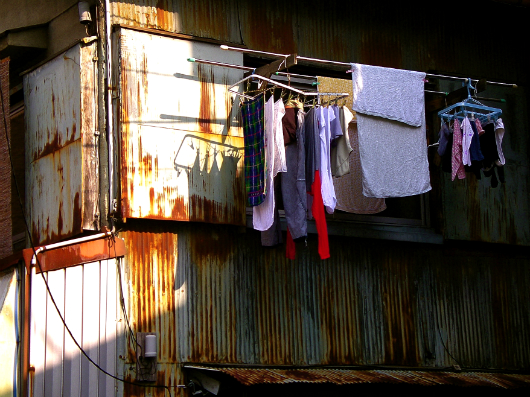

10 Facts About Poverty in Tokyo

  1. Poverty first began to gain recognition as an issue in Tokyo after the 2008 global financial crisis. During this time, a village was set up in Hibiya Park in Tokyo to provide for the city’s newly poor.
  2. The poverty line in Tokyo is set at half the median household disposable income for a given year.
  3. More than 20 percent of the children in Tokyo live in what the government has defined as an impoverished household.
  4. Ten percent of households in Tokyo are not able to adequately feed themselves because of the level of poverty in which they are living.
  5. Parents in 15 percent of households in Tokyo said they could not afford to buy clothes for their children.
  6. The Japanese government has been working to reduce the rate of homelessness in Tokyo, and in 2014 there were only an estimated 1,697 homeless individuals in Tokyo. This was an all-time low for the city.  
  7. The poverty rate of single-parent families in which the parent is working is more than 50 percent in Tokyo, as well as the rest of Japan.
  8. The economic system in Tokyo puts divorced single mothers at an especially high disadvantage, because many Japanese companies only hire recent college graduates. This places divorced single mothers at a disadvantage because if they left the workforce while married to raise children, as is a common cultural practice in Japan, they will likely not be hired when they attempt to rejoin the workforce.
  9. A community of homeless people lives in Shinjuku Central Park, which is located right next to the City Hall in Tokyo.
  10. The three primary groups that receive welfare payment in Tokyo are the elderly, single mothers and the handicapped.

These 10 facts about poverty in Tokyo only touch on poverty in the city. Though Tokyo is often thought of as a fast-paced, glamorous metropolitan city, the reality is that many living in Tokyo are facing crippling levels of poverty.

The above 10 facts about poverty in Tokyo reveal many of the issues being faced by these citizens. Though poverty may be more severe in Tokyo than many would assume, the recognition of this problem at all offers a glimmer of hope that Japan is on its way to improving the lives of its poorest citizens.

– Nicole Stout
Photo: Flickr

May 9, 2018
https://borgenproject.org/wp-content/uploads/borgen-project-logo.svg 0 0 Borgen Project https://borgenproject.org/wp-content/uploads/borgen-project-logo.svg Borgen Project2018-05-09 07:30:542024-05-29 22:42:1510 Facts About Poverty in Tokyo
Education, Global Poverty, Humanitarian Aid, Inequality

The Hidden Reality of Poverty in Japan

poverty in Japan

As the nation with the third largest economy in the world, it is easy to assume that poverty in Japan does not exist. However, one in six Japanese people is living in relative poverty. Many believe this is due to incomes dropping and the number of single-mother households increasing, which often consists of low-paying and sporadic employment. In 2014, child poverty rates in Japan hit a record high. Poverty within the country needs to be addressed, even if it’s less extreme than in other areas.


Children’s Cafeterias

In early 2017, the number of children living in poverty in Japan was estimated to be around 3.5 million. With such numbers rising, a children’s cafeteria named Kawaguchi was created in Tokyo as a place for children to socialize and have what is often times their only proper meal of the day. Kawaguchi survives strictly on cash donations from local businesses, and the food is donated by farmers and some participating families. There are around 50 children who eat there monthly, and about a third of them come from struggling single-parent households.

Like Kawaguchi, hundreds of similar cafeterias have been created throughout Japan to help with poverty issues. Although a law was passed in 2013 in regards to child poverty, sources say programs helping these children lack funding and support.

A proven difficulty in Japan is taking the poverty issue seriously, and the realities of poverty are often hidden for fear of being seen as disadvantaged. With social expectations in Japan, families often make extreme efforts to get their children everything they need to participate in expensive school activities and ensure they look well dressed. In doing this, the families often have to cut down on food.


Finding Children in Need

In addition to cafeterias for children, Japanese nonprofits have created interest-free loans for students who need extra help. An organization called The Nippon Foundation opened a facility where up to 20 children at an elementary age can go between 2 p.m. and 9 p.m. to relax, study and have a hot meal. The foundation plans to expand to allow 100 children by 2020.

Because poverty in Japan proves to be somewhat of a taboo, The Nippon Foundation understands that people may not ask for help, even when they desperately need it. So, the foundation focuses a lot of its efforts on outreach and finding children who need this kind of help.

With Japan being such a successful and economically advanced nation, poverty within its boundaries is often overlooked and misunderstood. Because of this, it is essential to understand that aid projects need to be put in place, just like in other struggling countries. Japan is a prime example that poverty can exist in wealthy countries. Assistance programs like children cafeterias and nonprofits not only help alleviate poverty in Japan, but they also spread the message that more needs to be done to help these people, especially children, who are living in poverty.

– McCall Robison

Photo: Flickr

February 11, 2018
https://borgenproject.org/wp-content/uploads/borgen-project-logo.svg 0 0 Borgen Project https://borgenproject.org/wp-content/uploads/borgen-project-logo.svg Borgen Project2018-02-11 19:30:222024-12-13 17:58:36The Hidden Reality of Poverty in Japan
Global Poverty

Poverty in Nagoya, Japan

poverty_in_nagoya_japan
Japan has held the title of the one of world’s largest economies for over 40 years and although seemingly prosperous, an “invisible” problem has emerged. CNN reports “an astonishing one in six [people in Japan], or more than 21 million people in a country of 128 million” are living below the poverty line. The majority of these people are single women, the unemployed, the elderly and children. This staggering change in perspective for one of the more prosperous nations can be realized in the nation’s lack for a proper public assistance and public welfare program.

The current social welfare system that is in place by the Japanese Diet focuses not on the economic and social stress of the poor but instead on dispersing pensions and health care to the “middle class.” This system carries over from the previous economic height of Japan, or “Bubble Period,” from approximately 1960-1990 when lifetime employment was commonplace and the majority of Japanese were “middle class.” This boom in economic sustainability thus became norm and has not realized the changing times where Japan is starting to accumulate debt and seek alternatives within the workplace.

An article from The Tokyo Foundation, which focuses on developing policy for a better Japan, states that, after the prolonged period, the illusion that all Japanese people belong to the middle class was created. They go on to state that this is characterized by the myth that Japanese-style employment is based on mass hiring of new graduates, lifetime employment, seniority-based promotion and copious benefits. Coupled with “traditional” gender roles the Japanese people became entrenched in the belief that this system worked and thus did not need to be changed. However, with the collapse of the economy at the end of the 1990s and a global economy change, “businesses actively sought to replace regular with non-regular employees in an effort to affect a recovery in their performance by reducing personnel costs to generate higher profits, or in other words, a ‘jobless recovery.’”

Nagoya is one of Japan’s major cities with a population of more than 2 million people – statistically speaking that means around 378,000 individuals are living in poverty within the city. The unfortunate result of the current system has lead to a sharp increase in the number of people living outside the protection of the businesses, companies and family welfare that accompanied it. The majority of these people have become a class of working, poverty-stricken people living in squalor.

Although there is a lack of traditional “slum” neighborhoods that you might see in more Westernized countries, these “working-poor” citizens of Nagoya, much like every other major Japanese city, live in areas with cheap hostels that have one room for all functions of living, except for hygiene. One bathing/hygiene area is usually shared with all residents of a hostel, numbering 20 or more.

Those few living in the hostels are the lucky ones however as there are still those who cannot afford even basic shelter and are documented living in tents and shacks. Although this number was documented to be only 758 individuals in 2000, it has only grown with those undocumented as the “working poor.”

Even though the “hidden” poverty problem can be found throughout Japan, in few places does the disparity between the rich and poor show more than in Nagoya. The traditional and persistent attitude of the public is to view the homeless to be idle, antipathetic to living with others, and “dirty and dangerous.” They are often harassed and sometimes killed by citizen groups, particularly youngsters. Such public stigma has also prompted many local authorities to forcibly evict homeless people from public space.

There was a case in 1993 in Nagoya in which a member of the working poor, Mr. K. Hayashi, filed a case against the Nagoya City Hall. Due to the prolonged recession he became homeless, and he could not find a job because of his age and medical issues. So he applied for the public assistance measures for livelihood and housing. However the city approved the medical assistance only. The city’s decision was in line with the ministerial policy that practically denied the entitlement of the homeless to the welfare measures just because they had no residence.

Interpretations on legislation coupled with negative opinion on the situation has led to an institutional irony that prevent people, like Mr. K. Hayashi, from escaping poverty. It unfortunately has become rather a customary practice of local authorities not to extend such measures unless an established residence is proved, and hostels do not count as they are temporary housing.

Although the overall issue of poverty has been addressed – on April 2, 2015, current Prime Minister Shinzo Abe revealed plans to set up a fund to help alleviate child poverty – this issue is only recently gaining traction within the Japanese government and has not yet had any significant change.

– Alysha Biemolt

Sources: Travel CNN, Daily Times Tokyo Foundation The State of the Urban Poor in Japan City of Nagoya
Photo: Flickr

June 15, 2015
https://borgenproject.org/wp-content/uploads/borgen-project-logo.svg 0 0 Borgen Project https://borgenproject.org/wp-content/uploads/borgen-project-logo.svg Borgen Project2015-06-15 08:51:582024-05-27 09:24:11Poverty in Nagoya, Japan
Global Poverty

The Truth Behind Poverty in Japan

Poverty in Japan
According to The Economist, poverty in Japan is rarely visible. There is little begging and little evidence that the homeless exist. The poor are quietly hidden in shadows away from what appears of economic homogeneity in Japan. They are hidden from sight and very difficult to measure.

However, the truth of the matter is that poverty is increasing at alarming rates in Japan. After years of economic stagnation, now statistics show that nearly one in six Japanese lived in poverty in 2007. This accounts for nearly 20 million people within the population.


Poverty in Japan


Yet the popular perception of Japan is one of a nation of prosperity and centenarians. Even many Japanese themselves were horrified to find out that Japan’s poverty rate was in recent years as high as 15.7%, nearly as high as the figure for the United States. The Japanese government has admitted that it had been keeping poverty statistics hidden since 1998. Aya Abe, a researcher at the National Institute of Population and Social Security in Tokyo has stated, “it is very unpopular for the Japanese media to say anything about Japanese poverty.” By denying the existence of increasing poverty, Japan has failed to support its growing impoverished population.

The results of this lack of support are visible in the plight of single parents in Japan. The poverty rate of single parents is now the highest of the all of the nations that are part of the Organization for Economic Cooperation and Development. Furthermore, statistics show that now one in seven children in Japan lives in poverty. According to Japan Times, more and more children are now unable to afford schoolbooks and basic materials for education.

Despite these grim facts, few impoverished Japanese are even willing to admit that they are poor. Poverty experts in Japan say that 80% of the poor in Japan are “working poor.” That is to say that these poor may be working temporary jobs with few benefits but they unable to or even unwilling to reveal the true condition of their financial or living situation.

Furthermore, years of deregulated labor and competition with China have created a wide market of low paying jobs. For a nation that is accustomed to lifetime jobs, there are few social safety nets for the unemployed. Thus, while the poor in Japan may fair considerably better than those in developing nations, they face a social taboo that attempts to cover up poverty. Thus the climb upwards is a difficult and lonely challenge.

– Grace Zhao 

Sources: New York Times, Japan Times, The Economist

July 30, 2013
https://borgenproject.org/wp-content/uploads/borgen-project-logo.svg 0 0 Borgen Project https://borgenproject.org/wp-content/uploads/borgen-project-logo.svg Borgen Project2013-07-30 04:59:102019-08-21 11:25:22The Truth Behind Poverty in Japan
Page 2 of 212

Get Smarter

  • Global Poverty 101
  • Global Poverty… The Good News
  • Global Poverty & U.S. Jobs
  • Global Poverty and National Security
  • Innovative Solutions to Poverty
  • Global Poverty & Aid FAQ’s
Search Search

Take Action

  • Call Congress
  • Email Congress
  • Donate
  • 30 Ways to Help
  • Volunteer Ops
  • Internships
  • Courses & Certificates
  • The Podcast
Borgen Project

“The Borgen Project is an incredible nonprofit organization that is addressing poverty and hunger and working towards ending them.”

-The Huffington Post

Inside The Borgen Project

  • Contact
  • About
  • Financials
  • President
  • Board of Directors
  • Board of Advisors

International Links

  • UK Email Parliament
  • UK Donate
  • Canada Email Parliament

Get Smarter

  • Global Poverty 101
  • Global Poverty… The Good News
  • Global Poverty & U.S. Jobs
  • Global Poverty and National Security
  • Innovative Solutions to Poverty
  • Global Poverty & Aid FAQ’s

Ways to Help

  • Call Congress
  • Email Congress
  • Donate
  • 30 Ways to Help
  • Volunteer Ops
  • Internships
  • Courses & Certificates
  • The Podcast
Scroll to top Scroll to top Scroll to top