• Link to X
  • Link to Facebook
  • Link to Instagram
  • Link to TikTok
  • Link to Youtube
  • About
    • About Us
      • President
      • Board of Directors
      • Board of Advisors
      • Financials
      • Our Methodology
      • Success Tracker
      • Contact
  • Act Now
    • 30 Ways to Help
      • Email Congress
      • Call Congress
      • Volunteer
      • Courses & Certificates
      • Be a Donor
    • Internships
      • In-Office Internships
      • Remote Internships
    • Legislation
      • Politics 101
  • The Blog
  • The Podcast
  • Magazine
  • Donate
  • Click to open the search input field Click to open the search input field Search
  • Menu Menu

Tag Archive for: Poverty In Bangladesh

Posts

Global Poverty

The Graduation Approach and Poverty Alleviation in Bangladesh

Graduation ApproachBangladesh, a country with more than 170 million people, has long struggled with widespread poverty, limited economic opportunities and vulnerability to natural disasters. However, since the 2000s, Bangladesh has made huge strides in improving welfare and halving poverty rates. For example, the estimated poverty went from 13.47 in 2016 to 10.44 in 2022 (using the international poverty line of $2.15).

The innovative strategies of BRAC’s “Graduation Approach” have been instrumental in uplifting the impoverished and fostering sustainable livelihoods. Built upon the hopes of addressing multidimensional poverty, it has effectively contributed to the sustained alleviation of poverty in Bangladesh.

The Graduation Approach in Bangladesh

The Graduation Approach is a multifaceted intervention designed to empower the ultra-poor by combining asset transfer, skills training, access to financial services and coaching. In Bangladesh, this approach has been implemented through various programs, with one of the most notable initiatives being the Targeting Ultra Poor (TUP) program launched by BRAC. The TUP program has demonstrated the transformative power of the Graduation Approach.

Central to the approach is the concept of asset transfer, which involves providing participants with productive assets, such as livestock, tools or seeds, to kickstart income-generating activities. As agriculture in Bangladesh plays a central role in the economy, asset transfer has enabled participants to establish small businesses. Subsequently, rural areas have reduced poverty between 2010 and 2016, accounting for 90% of the poverty alleviation.

In addition to asset transfer, the Graduation Approach places a strong emphasis on skills development and training. In Bangladesh, this has materialized in the form of tailored training programs that equip participants with the knowledge and expertise needed to effectively manage their businesses or agricultural activities. This training has enabled people living in poverty to make informed decisions and optimize their resources. Such training initiatives have contributed to the long-term success of the Graduation Approach in alleviating poverty. It has been proven that combining large-scale asset transfers and skills training equips the ultra-poor with access to self-employment and increases earnings by 37%.

Access to financial services is another critical facet of this approach. In Bangladesh, the provision of microcredit and savings facilities has empowered participants to invest in their enterprises, build assets and weather financial shocks. Coaching and mentorship are also integral components of the Graduation Approach. For instance, 11,864 workers have received financial services and financial literary education across 30 factories in Savar, Tongi and Gazipur. This presence of coaches and mentors has not only offered practical assistance but has also empowered participants with the confidence to be self-sufficient.

The Positive Impact 

The poverty progress in Bangladesh has been striking, with the Ultra-Poor Graduation program reaching more than nine million people in two million households and helping 95% of participants escape extreme poverty. This level of success has allowed the BRAC Ultra-Poor initiative to be implemented in 13 other countries, including Ethiopia, Honduras and Pakistan. Such implementation has occurred through technical assistance to governments and NGO partners. By showcasing how national approaches by governments can drive progress in poverty reduction, the graduation approach has demonstrated a ripple effect.

One of the key strengths of the Graduation Approach is its potential for scalability and sustainability. The approach fosters self-reliance by equipping participants with the tools and knowledge to manage their livelihoods. In influencing policy change to support the uptake of the Graduation Approach, it is believed that up to 21 million people can escape poverty by 2026. The program’s encouraging success in Bangladesh paves the way for similar development worldwide.

– Chloe Zyko
Photo: Flickr

February 11, 2024
https://borgenproject.org/wp-content/uploads/borgen-project-logo.svg 0 0 Lynsey 2 https://borgenproject.org/wp-content/uploads/borgen-project-logo.svg Lynsey 22024-02-11 01:30:352024-02-11 01:31:06The Graduation Approach and Poverty Alleviation in Bangladesh
Global Poverty, Women

Digital Wages in Bangladesh are Empowering its Female Workforce

Digital Wages in BangladeshAcross the developing world, women continue to make up large proportions of key manufacturing industries. For instance, they comprise 68% of the garment workforce and 45% of the textile industry. Wages in these industries are generally paid in cash, making it difficult for workers to save for the long term, which is one way to escape poverty. Here is some information about digital wages in Bangladesh. 

The Situation

At the same time, historic gender roles mean women often do not directly benefit from the results of their work. In Bangladesh, where female textile factories dominate, women are expected to turn their wages over to their husbands or fathers. There are even accounts of long lines of men waiting outside the factories on payday, ready for this handover.

This wage settlement means female workers are denied proper control over their finances. For those women already living in poverty, this leaves them trapped. Despite undertaking paid employment, they cannot access the financial resources required to escape their current position. While this is a complex problem, some simple solutions can go a long way to removing the barriers women face. BSR’s HERProject has looked to do exactly that. HERProject has supported the growing trend of introducing digital wages for factory workers in Bangladesh. It helps teach employees how to use digital banking systems to ensure successful implementation.

The Benefits of Digital Wages in Bangladesh

Digital wages in Bangladesh have transformed women’s lives in the key areas where they were previously disempowered. Now, it is easier for workers to plan and save. They only withdraw the money they need to spend, while the rest is stored securely in a bank account. 

World Bank researchers found that digital banking increases the likelihood of workers saving money by 25%. At the same time, women have more control over their money. Instead of receiving pay in person, their wages are transferred directly to an account that belongs to them. This prevents husbands or fathers immediately confiscating women’s wages.

One can see these benefits in the popularity of digital wages in Bangladesh. According to the Bill and Melinda Gates Foundation, pollsters found that after an H&M factory adopted digital wages, the number of workers who preferred the system jumped from 4% to 81%. A crucial part of the message of HERProject is the benefits factories themselves will stand to make from schemes such as digital wages. According to the organization, empowered women become agents of change, making businesses “more ethical and more productive.”

The Formation of RISE

On International Women’s Day 2023, HERProject joined Gap Inc. PACE, CARE International and Better Work (all organizations fighting for gender equality in supply chains) to form RISE. This new organization, standing for ‘Reimagining Industry to Support Equality,’ will look to fight for gender equality on an even larger scale. Its founders already support more than five million workers in over 20 countries. By sharing their resources, they can bring transformative ideas like HERProject’s digital wages to more of the developing world. The success of digital wages in Bangladesh is one example of how technology can be applied in the developing world to give workers greater control over their finances and the means to escape poverty. Its continued application will help reshape industries across developing countries for decades. 

– Jack Arrowsmith
Photo: Wikipedia Commons

November 27, 2023
https://borgenproject.org/wp-content/uploads/borgen-project-logo.svg 0 0 Yuki https://borgenproject.org/wp-content/uploads/borgen-project-logo.svg Yuki2023-11-27 03:00:012023-11-25 01:53:27Digital Wages in Bangladesh are Empowering its Female Workforce
Global Poverty

Addressing Child Labor in Bangladesh

Child Labor in BangladeshChild labor is defined as any work that exceeds the minimum number of hours for a child. In Bangladesh, 72.5% of child workers are classified as child laborers. Unfortunately, child labor has served as one of the only ways for poverty-ridden families to improve their quality of life. Child labor in Bangladesh remains prevalent and continues to harm children with injuries and low pay. 

Reasons

The leading cause of Bangladesh’s high child labor rate is poverty. In a study by Sylhet Agricultural University, poverty ranked as the number one cause of child labor. A child may be sent to factories to earn money for their parents and siblings. One child worker, Nuri, explained the pressure of her work, “I cannot stop working for a second, I get BDT 50 (57 US cents) for every sack of pebbles I produce. I can barely make two sacks a day. How do you expect me to eat?”

One can attribute they way children find work so easily to employers wanting to hire children instead of adults. Employers believe children are more effective workers, and children do not have to receive as much pay as adults, with their salary typically being around $2. The laborers know they can abuse the obedience and fear they instill in children, meaning they do not need to worry about high pay. Even if adults were wanted, this group has a high unemployment rate among this group due to urban migration. 

Many adults seek jobs that are more accommodating of their skills, leaving positions open and leading to a labor shortage in rural areas, with desperate children hoping to earn money being the only ones willing to take the position.

Scale

More than 2 million children from the ages of 5–17 are a part of child labor in Bangladesh. Approximately 47.5% of children had to seek work despite having two individuals in their household working paid jobs. Many children cannot receive an education because they must earn money to feed their families. About 32.5% of child laborers do not attend school and spend their days working. This can harm the future lives of families, as children who are pulled out of school never have the chance to receive proper education and perpetuate the cycle of poverty. Without an education, they often struggle to find a job that pays enough, forcing them to send their children to grueling workplaces to earn additional money for the family. The Sylhet Agricultural University found poor education in parents to cause child labor, ranking fourth among the causes.

Hazards

Several dangers come with child labor in Bangladesh. The most common are dangerous chemicals, such as formaldehyde, hydrogen sulfide and sulphuric acid. These chemicals are found in the materials used for leather and clothing and can shorten the lifespan of child workers. Other physical side effects can include musculoskeletal pain among child laborers, a result of severe physical burden. Nearly 60.14% of children in child labor have reported facing hazardous working conditions. 

Not many child laborers even get assistance in their recovery if injured, with 75% of children lacking medical attention at their jobs. These concerns over physical safety do not include the verbal abuse that comes with the jobs, as employers often scold children for being unable to keep up with their demands.

Industries

Agriculture is an industry that heavily relies on child labor, with a reported 1.08 million child laborers. With many people depending on agriculture, employers depend on workers to fill that need. Since agriculture takes place in rural areas, where children are looking for employment, it has led to many child laborers. 

The second most prominent industry for child labor is leather. This is an unregulated industry, as the places of operations are small and often hidden. Children are essential to these operations, with 96% of the process for producing leather in Bangladesh involving child laborers. The businesses ignore the abuse of the children and instead focus on the money, as the leather industry alone made up 3.5% of Bangladesh’s global exports. Given the large amount of money it produces, industries will always see child labor as essential. 

The Future

Several efforts have emerged to stop child labor in Bangladesh. One major attempt was the Minimum Age Convention which the Government of Bangladesh ratified to increase the threshold for the age at which a child can begin work. This is just one of the many steps the country is taking to eradicate child labor by 2025, a goal cited as a matter of national policy. 

The International Labor Organization (ILO) has been working with the Bangladesh government since 1994 to spread awareness on the issue and ensure laws are up to national standards. The ILO pushed for policies such as not allowing children under 14 to face harsh working conditions and has also promised to eradicate child labor in Bangladesh altogether. With efforts like this, there may be hope for improving the lives of millions of children who deserve better.

– Uzair Khan
Photo: Flickr

November 26, 2023
https://borgenproject.org/wp-content/uploads/borgen-project-logo.svg 0 0 Yuki https://borgenproject.org/wp-content/uploads/borgen-project-logo.svg Yuki2023-11-26 15:00:572024-05-30 22:32:42Addressing Child Labor in Bangladesh
Global Poverty

How Microfinance in Bangladesh Helps Fight Poverty

Microfinance in BangladeshWith a population of almost 170 million people, Bangladesh is often overlooked when thinking of the most populous nations in the world. Over the past decade, massive urbanization has occurred across the country, expediting poverty reduction in rural areas, according to the World Bank. Overall, the World Bank states that 39.6 million citizens are below the national poverty line as of 2016. 
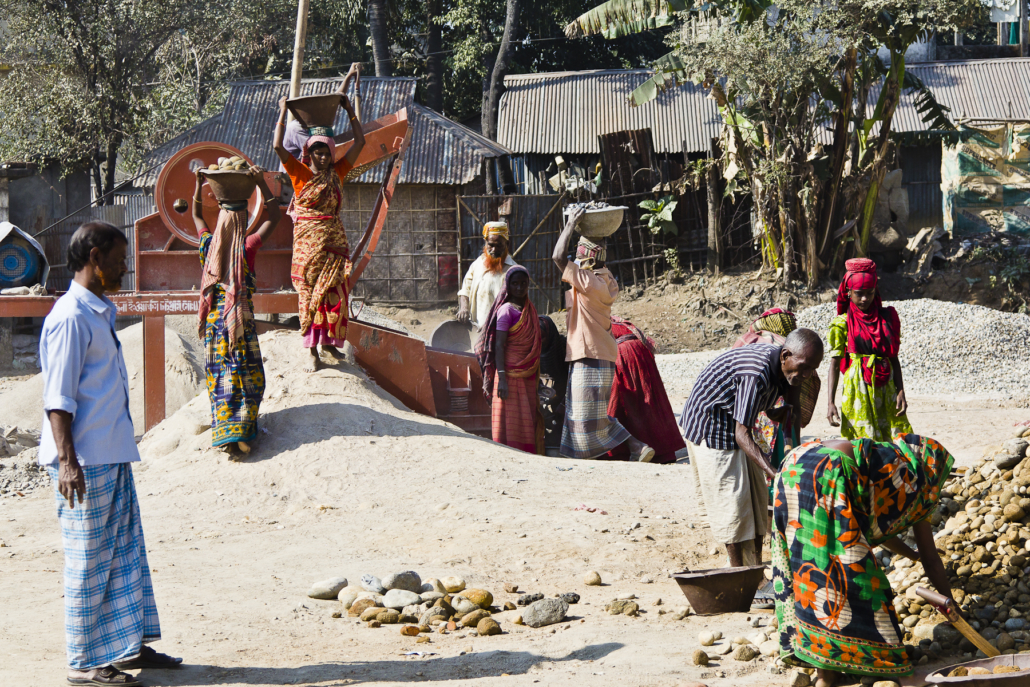
This number, although high, has been gradually decreasing in both rural and urban areas for different reasons. Urbanization has led to technological advancement in rural regions that allows for improvements in agricultural development, rapidly increasing economic output and decreasing poverty in these regions. In fact, rural poverty reduction accounts for 90% of all poverty reduction in Bangladesh, according to the World Bank. On the other hand, urban areas relied on manufacturing welfare gains. Low job creation in this industry has stunted the reduction of poverty in urban areas. 

Bridging this unequal reduction, unique techniques of microfinancing in Bangladesh have become a surprising strategy to fight poverty. 

What are Microfinance Institutions?

Microfinancing is a form of ethical loan for low-income citizens of a country. These loans are simple to repay and are intended to stimulate economic innovation and growth or help sustain a low-income household. 

Providing assistance in rural Bangladesh, these microfinance loans are distributed by many national and specialized banks, NGOs and government agencies. This form of financing is available from many institutions but has been collectivized and streamlined most effectively by 10 microfinance institutions (MFIs) and the Grameen Bank. These total 87% of all microfinance providers. Nobel Peace Prize winner and founder of Grameen Bank, Dr. Mohammad Yunus, has led his foundation in financing almost 9 million borrowers, with 97% being women.

Microfinancing generally funds six categories: 

  • Small-scale self-employment
  • Enterprises
  • Extreme-poverty prevention
  • Agriculture
  • Seasonal loans
  • Natural disasters

All of these target various forms of poverty in Bangladesh and are reflective of poverty across the world. By financing and targeting these areas, anti-poverty efforts can receive the funding needed to stabilize lower-income households and national economic growth. 

How MFIs Fight Poverty in Bangladesh

These institutions drastically help those in rural Bangladesh. By opening access to financial credit assistance for lower classes in the country, economic stimulation helps bring down regional poverty. 

According to the International Food Policy Research Institute, “Bangladesh’s MFIs cover some 32 million members and give out more than $7.2 billion annually.” Furthermore, these institutions have eliminated 10% of poverty in rural regions, collectively eliminating poverty for 2.5 million citizens.

Beyond simple credit, these institutions need to develop marketing techniques and skills for those receiving aid. A large criticism of MFIs is their potential lack of long-term stability and effectiveness. With the addition of skill education, impoverished populations will receive aid and learn to grow it. 

Another criticism is the limited accessibility caused by high interest rates. As of 2011, Bangladesh’s Microcredit Regulatory Authority (MRA) limited MFI interest rates to 27%. Nonetheless, this should and could be capped lower to increase accessibility for Bangladeshi families. 

With the continued expansion of MFIs in Bangladesh, companies are progressing, advancing and consolidating into more organized institutions that better serve the general public. 

The Unique Effect of MFIs on Women

Microcredit institutions have specific positive externalities for women. According to the Global Gender Gap Index of 2020, Bangladesh’s gender disparity was significantly higher than any other South Asian country, ranking 50th out of 144 countries worldwide. Once again, it is the non-economic policies of MFIs that benefit women the most. Currently, only 36% of working-age women are part of the nation’s labor force. 

The education and financial literacy provided by these institutions provide women more opportunities to become financially independent and break down the stigma against women in the workforce. This social assistance adds value to the benefits of microfinance in Bangladesh. 

– Sahib Singh
Photo: Unsplash

November 1, 2023
https://borgenproject.org/wp-content/uploads/borgen-project-logo.svg 0 0 Lynsey Alexander https://borgenproject.org/wp-content/uploads/borgen-project-logo.svg Lynsey Alexander2023-11-01 03:55:242023-11-02 04:53:45How Microfinance in Bangladesh Helps Fight Poverty
Education, Global Poverty

Poverty in Bangladesh and Economic Growth

Poverty in Bangladesh
Bangladesh is a small country in South Asia bordered by India and Myanmar. With a population of 161 million, the country had a poverty rate of 21.8% in 2018. Since its inception in 1971, Bangladesh has faced a myriad of issues. In 1971, the annual GDP was -14%, the country was plagued by famine and floods and there were high rates of political instability. In recent years, the government has been actively working to reduce poverty in Bangladesh by addressing concerns across a variety of sectors. According to the Asian Development Bank, Bangladesh currently has the fastest growing economy in the region.

Involvement of NGOs

Several NGOs have been involved in Bangladesh’s economic success. These NGOs include Practical Action Bangladesh (PAB) and Proshika. These two NGOs have worked to implement policies that have allowed Bangladesh to better support its working population, namely by focusing on entrepreneurship.

Proshika is a Bangladesh-based NGO concerned with skills training and employee management. The NGO is responsible for starting the Small Economic Enterprise Development (SEED) program, which was created to help impoverished people and reduce poverty in Bangladesh. This program provides microloans, employee training, technology help, business consultation and more.

PAB has worked on a similar initiative in the form of the Markets and Livelihoods Programme (MLP), which provides training, technology help and more. These programs were studied in relation to the smith communities (blacksmiths, goldsmiths, etc.) in Bangladesh. The smith communities are some of the most impoverished in the country. In a 2015 paper published by Rezaul Islam at the University of Dhaka, Islam found that these programs were essential to allow these communities to prosper and create financial growth by encouraging entrepreneurship.

Diversifying Exports

Bangladesh has emerged in recent years as a major export provider for a variety of goods. In 2018, Bangladesh’s exports increased by 4.5%, increasing an additional 10.1% in 2019. Bangladesh is a significant producer of rice, jute, mangoes, vegetables and inland fish. Recently, Bangladesh has also been exporting technology, exporting four ships to India and 12 robots to South Korea.

Investing in Education

Bangladesh has also taken great strides to invest in the education of its young workforce. Every year, Bangladesh is seeing 500,000 students graduate from college, of which 65,000 receive IT training. This has transitioned Bangladesh’s economy from rural-based agriculture to a more urban and modern economy.

Bangladesh has also been working hard to address the gender disparity gaps in education. In 2015, Bangladesh was one of a handful of countries that managed to achieve an equal amount of school enrollment across genders and had more girls than boys enrolled in secondary education.

Developing the IT Sector

Bangladesh has developed the information technology (IT) sector of its economy, which now totals to a little more than 50% of the country’s GDP. The country has established around 8,000 digital centers across the nation and scaled up internet and phone coverage.

Annually, Bangladesh’s technology products exports total about $1 billion. The government hopes to increase this number to 5 billion USD by the end of 2021. The country also boasts about 600,000 IT freelancers.

Increases in Foreign Investment

All of Bangladesh’s economic growth has yielded another benefit: increased foreign investment. Investors from around the world have chosen to invest heavily in Bangladesh’s economy, demonstrating the strong growth potential of Bangladesh. In 2019, foreign investment increased by 42.9%. HSBC bank has predicted that Bangladesh can achieve a spot in the top 30 economies of the world by 2030.

Bangladesh demonstrates how growing the economy can help fight poverty. Increases in job opportunities, employee training, education and more benefit the impoverished in the country. Moving forward, it is essential that efforts to reduce poverty in Bangladesh continue.

– Anushka Somani
Photo: Flickr

February 13, 2021
https://borgenproject.org/wp-content/uploads/borgen-project-logo.svg 0 0 Kim Thelwell https://borgenproject.org/wp-content/uploads/borgen-project-logo.svg Kim Thelwell2021-02-13 01:30:262021-02-10 13:54:09Poverty in Bangladesh and Economic Growth
Global Poverty

How Uniqlo Is Fighting Poverty in Bangladesh

poverty in Bangladesh
Located next to India and Myanmar, the South Asian country of Bangladesh has the eighth-highest population in the world. In Bangladesh, more than 20% of the population lives below the poverty line, surviving on less than $5 a day. Japanese clothing company UNIQLO, founded in 1949 and owned by the holding company Fast Retailing, is working to fight poverty in Bangladesh. UNIQLO has a commitment to the idea that creating and selling high-quality clothes can help create a sustainable society.

Social Business of Grameen UNIQLO in Bangladesh

In 2010, along with a microfinance organization called the Grameen Bank, Fast Retailing founded Grameen UNIQLO to solve health issues, unemployment and poverty in Bangladesh. Local factories that produce all goods for Grameen UNIQLO provide a safe and secure workplace that is not common in Bangladesh. The company educates partner companies on safe workplaces as well. The entire process of Grameen UNIQLO’s business, from producing and marketing to selling, takes place in the country. Moreover, all of Grameen UNIQLO’s revenue goes toward investing in local businesses, and the company distributes clothes for people in need due to poverty or natural disasters. Through creating jobs and reinvesting money in local businesses, Grameen UNIQLO has fought against poverty in Bangladesh.

Empowering Women to Be Independent

Grameen UNIQLO also focuses on empowering women and helping them be financially independent. Women traditionally tend to be financially dependent because of their limited opportunities in Bangladesh. The company provides job opportunities for women, who are referred to as the “Grameen Ladies.” These women get a low-interest loan from Grameen Bank to become financially independent, and they also work with UNIQLO to design clothes.

UN Educational Program for Women

The company also offers an educational program in collaboration with U.N. Women. In the program, female workers get training regarding workers’ rights, health and gender equality. The advanced training program for selected workers provides the class with the necessary skills for higher positions. The companies participating in this program believe that empowerment for women increases the competition and the overall quality of the community, helping to reduce poverty in Bangladesh. Importantly, Fast Retailing tries to gain a better understanding of the situation and the difficulties women face so that it can address these issues more effectively.

The $1 Million Scholarship Program

Fast Retailing launched a scholarship program at the Asian University for Women in Bangladesh to help students who struggle to afford higher education. In addition to the scholarship program, the company also provides an internship opportunity for students to work at Grameen UNIQLO and visit the company in Tokyo. These students can gain experience in marketing, market research and management during the internship program.

Grameen UNIQLO and Fast Retailing have made efforts to fight against poverty in Bangladesh through retail business. They have created job opportunities, a scholarship program, investments in local businesses and programs to help women to be financially independent. Grameen UNIQLO has developed a great model for other businesses to support local communities, fight poverty and help people develop self-sufficiency.

– Sayaka Ojima
Photo: Flickr

August 28, 2020
https://borgenproject.org/wp-content/uploads/borgen-project-logo.svg 0 0 Kim Thelwell https://borgenproject.org/wp-content/uploads/borgen-project-logo.svg Kim Thelwell2020-08-28 13:39:202024-05-29 23:22:33How Uniqlo Is Fighting Poverty in Bangladesh
Global Poverty

Progress and Development in Bangladesh

Development in BangladeshMore than 3.3 million Bangladeshis live in extreme poverty. Poverty is an ongoing issue for the country, but Bangladesh has worked on improving education and health and reducing poverty. In addition, the U.S. has contributed billions of dollars to Bangladesh to support it in its development. U.S. assistance to Bangladesh involves helping “grow more food, build more roads, train more skilled teachers, health care providers and soldiers,” according to the U.S. State Department. Furthermore, the U.S. holds the role as the largest source of foreign direct investment in Bangladesh.

Bangabandhu Satellite

In May 2018, Bangladesh launched its own satellite, Bangabandhu-1 (BD-1) into space. Estimates from the World Bank show that Bangladesh must spend billions until 2020 to bring its “power grids, roads and water supplies up to the standard needed to serve its growing population.” BD-1’s launch is a demonstration of infrastructure development and connectivity for the people of Bangladesh.

The Environment

Environmental challenges facing Bangladesh are largely due to pollution and environmental degradation. In addressing poverty, it is imperative to bear in mind that pollution affects poor communities severely. The government of Bangladesh has “embraced better planning by making environmental sustainability a cornerstone of its Seventh Five-year Plan through 2020.”

The Seventh Five-year Plan includes strategies to address the environmental and economic challenges facing Bangladesh today. In an effort to support its sustainable development agenda, the Government of Bangladesh has many institutions in place, such as The Department of Environment (DoE), Ministry of Water Resources (MoWR), Department of Fisheries (DoF) and Forest Department (FD). Bangladesh has The World Bank’s support in its development to ensure it is resilient to climate change.

Present and Future Development

The economic future of Bangladesh is hopeful, especially with the launch of BD-1. Economic and infrastructure development of Bangladesh must include addressing Bangladesh’s geographical location, thus its climate vulnerability. It is vital for Bangladesh to have plans set in motion to conserve its natural resources and to use its resources in a sustainable way.

A report by the World Bank indicates that development in Bangladesh is on a fast trajectory. The Brookings Institute suggests the biggest reason why there are fast-paced results and booming productivity in Bangladesh’s development is because of the empowerment of women. With the support of NGOs, Bangladesh’s government has “made significant strides toward educating girls and giving women a greater voice, both in the household and the public sphere” resulting positively in the improvement of children’s health and education.

Progress is happening in Bangladesh. If the current trajectory continues, then the rapid development in Bangladesh could result in Bangladesh being an Asian success story. As of March 2018, the world recognizes Bangladesh as a developing country. The announcement will become official in 2024, once the U.N. Economic and Social Council completes its assessment.

– Karina Bhakta
Photo: Unsplash

April 17, 2019
https://borgenproject.org/wp-content/uploads/borgen-project-logo.svg 0 0 Kim Thelwell https://borgenproject.org/wp-content/uploads/borgen-project-logo.svg Kim Thelwell2019-04-17 15:58:502024-06-05 02:12:20Progress and Development in Bangladesh
Global Poverty

Top 10 Facts About Living Conditions in Bangladesh

Top 10 Facts About Living Conditions in Bangladesh
Bangladesh, a small South Asian country located to the right of India, is known for its lush greenery and extensive waterways. Home to one of the longest continuous beach on the planet and the world’s only mangrove forest, the country is characterized by its natural beauty. However, with more than 1,100 people living in each square kilometer, the country faces unique challenges. Here are the top 10 facts about living conditions in Bangladesh:

Top 10 Facts About Living Conditions in Bangladesh

  1. Nearly a quarter of Bangladeshi people are living below the national poverty line, according to 2015 World Bank data. That roughly works out to almost 41 million people. In addition, according to the Food Security Portal, “Bangladesh’s high poverty and undernutrition rates are exacerbated by frequent natural disasters and high population density.”
  2. The capital city of Dhaka is home to almost 9 million people. More than 2 million of these individuals either live in slums or are without any proper shelter.
  3. A dramatic influx of refugees from Myanmar means that people have no choice but to live in dangerous and over-crowded situations. According to the World Food Programme, “slopes in the camps are unstable and are at risk of collapsing during monsoon rains.” UNICEF estimates that 693,000 Rohingya (over half of whom are children) have been driven into Bangladesh since April 2018.
  4. Health care conditions and services are lacking. According to the World Health Organization, the number of hospital beds per 1,699 people is just four. Additionally, only 3 percent of Bangladesh’s entire GDP expenditure is allocated to health care.
  5. Though access to drinking water access is widespread, half of it fails to meet safety standards. In addition, the only city in the country that has a sewer system is Dhaka, and it only serves 18 percent of the city. According to the World Bank, in urban areas of Bangladesh, only about a third of the population has access to piped water.
  6. Roads suffer from extreme and frequent traffic jams due to the country’s incredibly high population density. According to Internations, “this makes driving in the cities very difficult and unpleasant due to issues with air pollution, dangerous driving and common road rage incidents.”
  7. Bangladesh has reduced its total fertility rate from 5 (children per woman) in 1966 to just 2.44 in 2016. A regional frontrunner, Bangladesh is on track to reach a total fertility rate of 2.1, the amount where, without migration, a country’s population is neither increasing or decreasing.
  8. The country is making strides in terms of development. The economy is growing which has led to improvements in primary education, gender equality, as well as improved rates of child and maternal mortality.
  9. Rates of open defecation have improved significantly. In 2015, just 1 percent of the population engaged in open defecation compared to 34 percent in 1990. Though the rate of growth is slow at only 1.1 percent annually, the current rate of improved sanitation is at 61 percent.
  10. Poverty and extreme poverty are declining, and currently stand at 31.5 and 17.6 percent respectively. Rates of poverty have almost halved since 1990, with 44.2 million people considered impoverished in 1991 and 24.1 million in 2015.

While continuing to deal with unique circumstances due to its high population density and geography, Bangladesh is making strides towards improving living conditions for its people. These top 10 facts about living conditions in Bangladesh only capture part of a diverse and developing country and indicate that, for the country’s people, the future is bright.

– Chelsey Crowne
Photo: Flickr

March 16, 2019
https://borgenproject.org/wp-content/uploads/borgen-project-logo.svg 0 0 Kim Thelwell https://borgenproject.org/wp-content/uploads/borgen-project-logo.svg Kim Thelwell2019-03-16 10:58:142024-05-29 22:58:30Top 10 Facts About Living Conditions in Bangladesh
Global Poverty

Top 10 Facts about Poverty in Bangladesh

Top 10 Facts about Poverty in Bangladesh
The small South Asian nation of Bangladesh has undergone economic development and extremely rapid population growth. Despite economic growth in the country, Bangladesh struggles with overwhelming poverty. In order to gain a better understanding of poverty and how it’s changing in the country, below are the top 10 facts about poverty in Bangladesh.

List of Top 10 Facts About Poverty in Bangladesh

  1. Bangladesh’s economy has grown rapidly since developing the industry and service sectors of the economy. This led to increased job opportunities and standard of living. In 1980, Bangladesh had a GDP of $18.14 billion. As of 2016, the country’s economy has risen to a staggering estimated $261.4 billion, ranking as the 43rd highest in the world.
  2. Although Bangladesh’s GDP has always been relatively high due to agriculture, GDP growth in the country has increased exponentially in recent years. This GDP development was catalyzed in the early 1990s, with approximately 5.76 percent average GDP growth. As of 2017, Bangladesh has continued to maintain its growth at 7.3 percent.
  3. Industry and services form a large part of Bangladesh’s economy, with specialized jobs and manufacturing continuing to increase. The service industry accounts for a majority of the GDP in Bangladesh at an estimated 56.5 percent, while industry and agriculture contributions compose 29.2 percent and 14.2 percent of the GDP respectively. Although the service industry contributes the most to Bangladesh’s economy, 63.2 percent of the country’s 163 million people work in industry and agriculture.
  4. The unemployment rate in Bangladesh is low, with an estimated 4 percent unemployment rate. While economic opportunity has been improved for many Bangladeshis, this number is somewhat inaccurate due to underemployment rates. An estimated 40 percent of laborers are underemployed and work only a few hours a week with very low wages.
  5. Poverty rates in Bangladesh have also steadily dropped as the country’s economy improves. In 2010, 31.5 percent of the population was deemed to live below the line of poverty, which is defined as living on $1.90 a day. This number dropped to 24.3 percent by 2016.
  6. In addition to decreasing poverty rates in Bangladesh, the number of those in extreme poverty, living on just $1.90 purchasing power parity a day has also dropped significantly. The rate of employed workers living in extreme poverty was at 73.5 percent in 2010 and has dropped drastically to 14.8 percent in 2016. Poverty and hunger, however, remain serious issues in Bangladesh. According to 2014-2016 estimates from Asian Development Bank, an estimated 15.1 percent of the population suffers from undernourishment.
  7. Life expectancy in Bangladesh has risen drastically, catalyzed by rapid infrastructural and economic expansion. In 1960, the average lifetime of Bangladeshis was approximately 46 years and has more than increased to 72.5 years by 2016.
  8. School enrollment in Bangladesh has increased as development began to increase. In 1980, only 20.5 percent of primary school students completed their full studies, while this number has increased to 66.2 percent by 2016. This increase in academic persistence is likely attributed to more opportunity for skilled laborers and decreased levels in poverty.
  9. Despite increased primary school enrollment in Bangladesh, the adult literacy rate in the country is relatively low at 72.76 percent. In young adults aged 15-24, however, the literacy rate is much higher at 92.24 percent, and the female literacy rates are relatively higher at 93.54 percent than males at 90.91 percent.
  10. In the capital city of Dhaka, issues of population density have arisen, as the city’s population is over 18 million people (in the Greater Dhaka area), nearly an eleventh of the country’s population. This population density is one of the highest in the world.

These top 10 facts about poverty in Bangladesh showcase an improved economy that offers more opportunities for its many citizens. A drastic increase in the service and skilled industries along with manufacturing and agricultural growth, has allowed the country to improve its standard of living.

Although the economy has rapidly developed, poverty for many in Bangladesh still persists. With more development and emphasis on education and diversified economy, poverty will continue to decrease in Bangladesh.

– Matthew Cline
Photo: Flickr

September 21, 2018
https://borgenproject.org/wp-content/uploads/borgen-project-logo.svg 0 0 Borgen Project https://borgenproject.org/wp-content/uploads/borgen-project-logo.svg Borgen Project2018-09-21 20:57:022024-12-13 17:58:54Top 10 Facts about Poverty in Bangladesh
Global Poverty, Slums

Five Cities Suffering From Poverty and Overcrowding

poverty and overcrowding
The world is experiencing rapid population growth and urbanization. Advances in medicine have allowed for increased life expectancy as well as decreased infant mortality, while birth rates have largely remained unchanged. This combination of circumstances has lead to great growth; between 1999 and 2011, the population increased by nearly one billion people.

The population increase has led to rapid urbanization. People migrate to cities with the promise of economic or educational opportunity, technological advancement and access to health care. It is estimated that by 2050, 66 percent of the world’s population will live in urban areas.

This urbanization of cities that are neither prepared nor equipped to deal with overcrowding places strain on both natural and manmade resources alike. The following is a list of five cities suffering from both poverty and overcrowding.

Five Major Cities Dealing With Poverty and Overcrowding

  1. Mumbai, India: With a population density of 171.9 people per square mile, India is notorious for overcrowding. Mumbai is no exception, with a population near 23 million and a population density of almost 70,000 people per square mile.Mumbai serves as India’s commercial hub and is home to the Bollywood industry, making it prone to migration. Yet, those with hopes of Bollywood often end up in prostitution or organized crime. The population has doubled in 25 years, leading to many slum neighborhoods.In fact, half of the population of Mumbai lives in overcrowded, unsanitary slums that comprise only eight percent of the city’s geographic area. Although great wealth exists throughout Mumbai, poverty and overcrowding continue to increase.
  1. Dhaka, Bangladesh: Being named the most densely populated city in the world in 2015, Dhaka suffers from overcrowding and poverty alike. It has also been named to lists of least livable cities and fastest growing cities.Its population is over 18 million, with a density of 114,300 people per square mile. Roughly one-third of Dhaka’s residents live in poverty, with two million inhabiting slums or without any form of shelter.
  1. Lagos, Nigeria: Lagos is Africa’s fastest growing city. In 2017, the population was 21 million; the U.N. predicts that this number will rise to over 24 million by 2030.Situated between the Atlantic Ocean and a lagoon, Lagos is Nigeria’s commercial capital. Yet, 300,000 people live in slum neighborhoods and make a living by fishing out of hand-built canoes.  One-fifth of the city’s residents live in poverty.The slum houses are fashioned from scrap-metal and elevated on stilts to protect against flooding. There is little access to clean water, electricity or quality education. The majority of slums are built along the coast, causing friction with the wealthy as well as the government, which has evicted many communities on faulty logic in order to seize the land.
  1. Manila, Philippines: Manila has a population of 1.7 million and a land area of less than 10 square miles, leading to a high population density of over 170,000 people per square mile. Manila serves as the Philippines capital and home of its banking and commerce industries.In Manila, 600,000 people live in slum districts, which are ridden with disease and malnutrition. Many kids do not attend school, as parents are often forced to choose between feeding the family or sending the kids to school.
  1. Ulaanbaatar, Mongolia: Ulaanbaatar boasts the highest population density on this list, with over 760,000 people per square mile. The influx in population resulted in unplanned neighborhoods known as “ger” areas, which house 60 percent of Ulaanbaatar’s population but are vulnerable to natural disasters and lack water and sanitation sources as well as electricity.A number of expensive apartment buildings mark the city’s skyline, yet many of these buildings remain empty due to the high cost of living. The government intervention has tended to benefit the upper-income subgroups, rather than those living in poverty.

Poverty and overcrowding are endlessly entwined. Rather than placing a halt on migration and urbanization as many cities have attempted, lack of affordable housing, quality water and sanitation facilities, education opportunity and food shortages ought to be addressed. Cities must respond to the growing demands that come with overcrowding in order to help alleviate poverty and decrease hardship.

– Jessie Serody
Photo: Flickr

July 2, 2018
https://borgenproject.org/wp-content/uploads/borgen-project-logo.svg 0 0 Borgen Project https://borgenproject.org/wp-content/uploads/borgen-project-logo.svg Borgen Project2018-07-02 07:30:522024-12-13 17:58:50Five Cities Suffering From Poverty and Overcrowding
Page 6 of 7«‹4567›

Get Smarter

  • Global Poverty 101
  • Global Poverty… The Good News
  • Global Poverty & U.S. Jobs
  • Global Poverty and National Security
  • Innovative Solutions to Poverty
  • Global Poverty & Aid FAQ’s
Search Search

Take Action

  • Call Congress
  • Email Congress
  • Donate
  • 30 Ways to Help
  • Volunteer Ops
  • Internships
  • Courses & Certificates
  • The Podcast
Borgen Project

“The Borgen Project is an incredible nonprofit organization that is addressing poverty and hunger and working towards ending them.”

-The Huffington Post

Inside The Borgen Project

  • Contact
  • About
  • Financials
  • President
  • Board of Directors
  • Board of Advisors

International Links

  • UK Email Parliament
  • UK Donate
  • Canada Email Parliament

Get Smarter

  • Global Poverty 101
  • Global Poverty… The Good News
  • Global Poverty & U.S. Jobs
  • Global Poverty and National Security
  • Innovative Solutions to Poverty
  • Global Poverty & Aid FAQ’s

Ways to Help

  • Call Congress
  • Email Congress
  • Donate
  • 30 Ways to Help
  • Volunteer Ops
  • Internships
  • Courses & Certificates
  • The Podcast
Scroll to top Scroll to top Scroll to top