• Link to X
  • Link to Facebook
  • Link to Instagram
  • Link to TikTok
  • Link to Youtube
  • About
    • About Us
      • President
      • Board of Directors
      • Board of Advisors
      • Financials
      • Our Methodology
      • Success Tracker
      • Contact
  • Act Now
    • 30 Ways to Help
      • Email Congress
      • Call Congress
      • Volunteer
      • Courses & Certificates
      • Be a Donor
    • Internships
      • In-Office Internships
      • Remote Internships
    • Legislation
      • Politics 101
  • The Blog
  • The Podcast
  • Magazine
  • Donate
  • Click to open the search input field Click to open the search input field Search
  • Menu Menu

Tag Archive for: Energy Poverty

Posts

Global Poverty

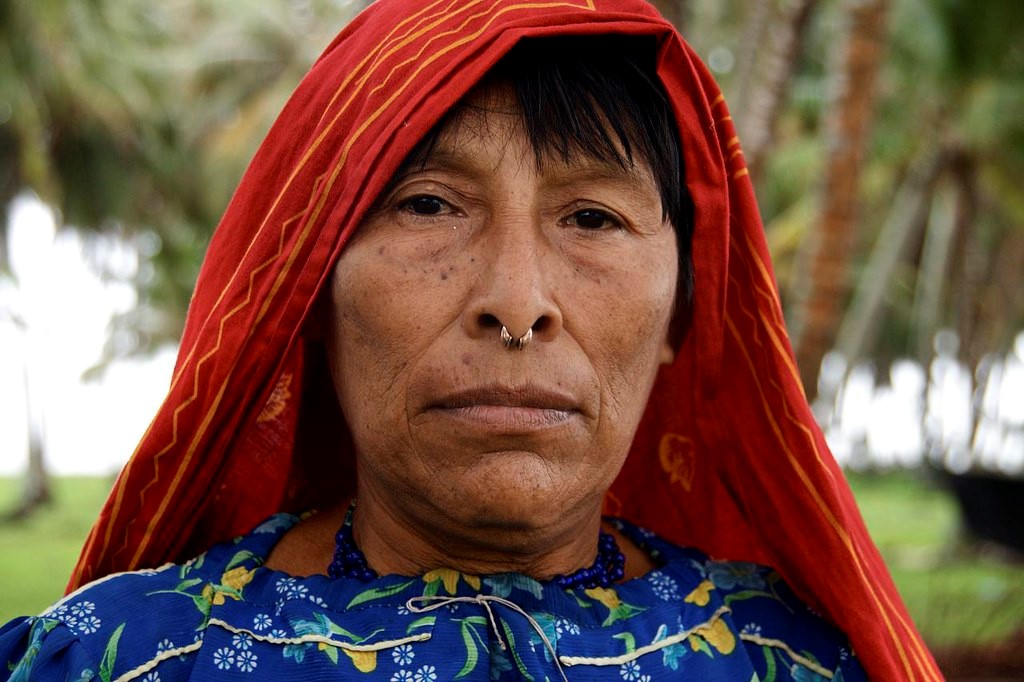
Renewable Energy in Panama

Renewable Energy in PanamaPanama is part of a group of Latin American countries committing to new energy priorities that allow them to build back better after the COVID-19 pandemic. Renewable energy in Panama is a key part of this success. The international COVID-19 crisis forced the leadership of many countries to rethink the status quo, from prioritizing healthcare accessibility to normalizing the virtual workplace. Sourcing power from renewable sources is part of this envisioned restructuring of society.

The Potential of Renewable Energy in Panama

Renewable energy in Panama can help drastically reduce energy poverty. Energy poverty occurs when a household does not receive enough electricity to power the home. Symptoms of energy poverty include negative health impacts as a result of extreme temperatures, stress and exorbitant energy bills. Panama has great potential to develop its renewable energy capacity in hydropower, solar, wind and more. The goal laid out in Panama’s National Energy Plan aims to generate 70% of its energy from renewable sources by 2050.

Hydropower: Panama’s Powerhouse

Panama produces 54% of its energy through hydropower. An isthmus of land situated between the Atlantic and Pacific oceans, Panama has many naturally flowing sources of water. In the last 30 years since Panama gained control of the Panama Canal from the United States, Panama’s economy boomed, and consequently, its energy needs swelled to unprecedented levels. Hydropower is a major source of foreign investment, and thus, is a boon for the economy.

All life is drawn to water. Conflict often arises in communities along rivers in hydropower construction projects around the world. In Panama, problems include flooding, forced migration, destruction of homes and habitats, pollution and obstruction of fish migration. In 2014, the construction of the Changuinola dam forced 1,000 people from their homes.

Addressing the needs of key stakeholders such as community members has been shown to improve the long-term sustainability of hydropower projects. A study found that heavy reliance on hydropower is linked to corruption in some nations. To address these problems, Panama may be able to opt for small-scale hydropower designs that do not require big reservoirs yet still produce enough energy. To truly create a sustainable energy source, project leaders can conduct site exploration and environmental impact studies to minimize the negative impacts of this expanding renewable energy source.

Wind and Solar Power: Uncaptured Potential

In its commitment to honoring the Paris Climate Accord, Panama has made great strides in implementing wind energy. Panama is known to have the largest wind farm in the Central American and Caribbean region, built in 2015. This wind farm generates “between 6% and 7%” of Panama’s electricity from the 108 wind turbines that stand.

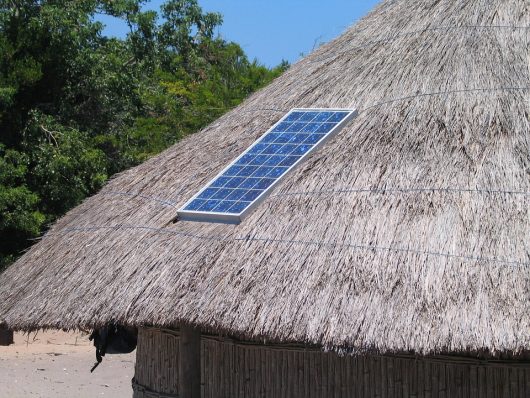
Solar power has less of a foothold in renewable energy in Panama than hydropower and wind, but being a tropical nation near the equator, the nation gets a lot of sun, notably in the dry season from October and March. There is potential for even further expansion and for this development in energy security to lift families out of poverty. Between 2011 and 2020, Panama took its annual solar energy production from two to 198 megawatts, an amount that can now power about 300,000 homes each year. This trajectory will help lift millions out of poverty between now and 2050.

The Road Ahead

The story of renewable energy in Panama is one of accomplishment and growing pains. There are still many issues to face. For 70% of its energy to be produced by renewable sources by 2050, Panama will need to focus on environmental impact studies for hydropower projects. Another priority will be training and paying a workforce with the knowledge and skills to implement renewables technology.

Considering Panama’s energy demands are growing by 8% every year, the growth of hydropower, wind and solar energy play key roles in offsetting the expansion of fossil fuels. This produces better outcomes for everyone in the nation, but particularly those experiencing energy poverty. The expansion of renewable energy provides hundreds of thousands of people with electricity and improves environmental outcomes long term.

– Sarah Metzel
Photo: Flickr

October 1, 2021
https://borgenproject.org/wp-content/uploads/borgen-project-logo.svg 0 0 Jennifer Philipp https://borgenproject.org/wp-content/uploads/borgen-project-logo.svg Jennifer Philipp2021-10-01 08:05:012021-10-12 02:59:05Renewable Energy in Panama
Developing Countries, Global Poverty

Energy Vault is Working to Fight Energy Poverty

Energy Vault
“Energy poverty” is a term that describes the lack of reliable, affordable sources of energy. More than one-seventh of the world’s population still lacks electricity, and in countries where it is available, it is often very expensive or unreliable. Access to energy is essential to people’s health and wellbeing, and it is instrumental in reducing poverty. Countries will not be able to engage in economic activities without modern, efficient energy. This in turn slows economic growth, which is a necessity for countries to pull themselves out of poverty. The poor will remain outcast and unprosperous, shut out from the high technology world if energy poverty persists. Here is some information about renewable energy and the Swiss startup Energy Vault that is providing low-cost energy to developing countries.

Renewable Energy

Renewable energy has the potential to help the developing countries that are struggling to provide power. It is sustainable and efficient, and the more efficient the energy technologies are, the more energy a country can save to use elsewhere. Renewable energy may seem like the perfect solution to energy poverty. In practice, however, the familiar forms of renewable energy like wind and hydropower pose various challenges.

Barriers to Renewable Energy Use

First, renewable energy has a high initial cost. In order to harness renewable energy, countries must build specific structures to capture it and convert it into electrical power. If using hydropower, a country must build a hydropower plant; in the case of wind energy, a country must build wind turbines. Furthermore, energy generation is dependent on the climate and geography of the area and it may be unstable. Wind does not blow incessantly, and the turbines will not generate any energy when there is no breeze.

In the example of hydropower, areas may not have water to spare to power hydroelectric plants. More than 40% of the world’s people still do not have access to clean water, and it would be unwise for countries to use the little they do have on hydropower when their own people are still struggling. While renewable energy seems like the best option for developing countries, it presents several challenges when implemented.

Energy Vault

In response to this issue, Energy Vault, a Swiss startup, developed a method to provide reliable energy by utilizing the force of gravity. It operates by lifting composite bricks, then lowering them back to the ground. The brick has kinetic energy as it goes down, which the structure converts into electricity. It uses similar principles to hydropower but replaces the water with a system of bricks. This makes the system more implementable than hydropower since it does not divert water away from the population, who need it for drinking. Any area can implement Energy Vault easily because it does not depend on geographical or climatic factors. Unlike hydropower, wind power or solar power, it can generate electricity under any conditions. Energy Vault is extremely low cost and affordable to developing countries that need it.

In addition to its reliability, Energy Vault is sustainable. It can last for more than 30 years, and its performance will not degrade at all throughout its life. Recycled waste and landfill materials make up the bricks that Energy Vault uses, and as such, they are readily available anywhere.

The affordability and sustainability of Energy Vault make it a good energy source for struggling countries. Though energy poverty is still a major issue in many areas of the world, startups like Energy Vault offer innovative solutions to combat it.

– Alison Ding
Photo: Flickr

April 19, 2021
https://borgenproject.org/wp-content/uploads/borgen-project-logo.svg 0 0 Kim Thelwell https://borgenproject.org/wp-content/uploads/borgen-project-logo.svg Kim Thelwell2021-04-19 07:30:462021-04-17 20:15:46Energy Vault is Working to Fight Energy Poverty
Global Poverty, Technology

Innovative Florida Teen Addresses Energy Poverty


Energy Poverty“I see a lot of problems in the world, and I think that engineering provides a platform to fix them. I really want to help people; that’s my goal.” –Hannah Herbst
What is Energy Poverty?

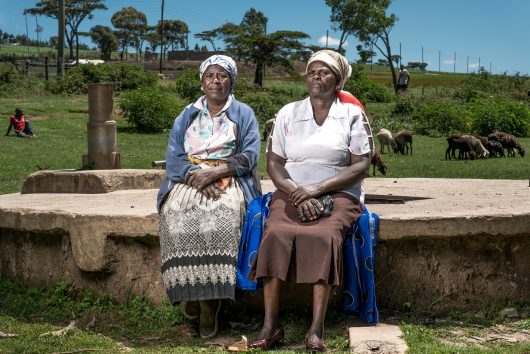
Energy poverty is defined by the European Union as the lack of energy-powered services that guarantee a decent standard of living, like adequate cooling and warmth, lighting and the energy necessary to power appliances. Energy poverty can result from a variety of issues, such as high energy expenditure, low household incomes, inefficient buildings and appliances and specific household energy needs.

Insufficient energy sources are one aspect of poverty that often goes ignored or underestimated by the general public. An estimated 1.3 billion people worldwide lack access to electricity; over 600 million in sub-Saharan Africa alone. But Africa is not the only continent contending with energy poverty:

  • Asia (622 million of 3.6 billion without power): Of all individual countries, India has the largest population living without electricity with over 304 million in the dark.
  • Middle East (17.7 million of 214.8 million without power): Since energy poverty has a direct correlation to income, Yemen (one of the poorest nations in the Arab world) houses the majority of Middle Easterners who live without power.
  • Latin America (23.2 million of 466.1 million without power): Haiti suffers the most from energy poverty, with only 29 percent of its population having access to power; even those with electricity only receive power an average of five to nine hours per day.
  • Europe: It is estimated that 50 million households in the European Union are experiencing some form of energy poverty.
  • North America (United States): Although most Americans have access to electricity, the inability to afford utility bills is the second reason for homelessness; outranked only to domestic violence.

The Teen Transforming Ocean Energy into Electricity

Seventeen-year-old Hannah Herbst from Florida was first introduced to the idea of energy poverty at age 15 by her nine-year-old Ethiopian pen pal Ruth. Ruth lived without lights—a simple luxury that Herbst had taken for granted all her life.

“I never realized how impactful her problems could be—not having lights to study by at night, not having sanitation systems, having limited medical treatment. Those problems really stuck out to me living in the United States, so I wanted to do something to help her,” Herbst explained.

Her willingness to help in tandem with her interest in engineering inspired her to investigate how engineering could be utilized to address energy poverty. What resulted was a prototype of an invention she dubbed Beacon (Bringing Electricity Access to Countries through Ocean Energy), a device that captures energy directly from ocean waves and transmits it as electricity.

Herbst focused on water energy because she noticed that populations tend to settle around bodies of water. In fact, only 10 percent of people live further than 6.2 miles from a freshwater source that does not require digging to get reach.

The Beacon consists of a hollow plastic tube capped with a propeller on one end and a hydroelectric generator on the other. As tidal energy drives the propeller of the Beacon, it is converted into useable energy by the generator. Since its creation, Herbst has tested the prototype and calculated that with enhancements, the Beacon could charge three car batteries simultaneously in one hour. She has also suggested to the BBC that her invention could be used to power water purification technologies or blood centrifuges at hospitals in the developing world.

Herbst plans on eventually open-sourcing the design after some further refinements, meaning that people around the world can create a Beacon for themselves and their communities.

– Haley Hiday
Photo: UPenn

June 2, 2019
https://borgenproject.org/wp-content/uploads/borgen-project-logo.svg 0 0 Kim Thelwell https://borgenproject.org/wp-content/uploads/borgen-project-logo.svg Kim Thelwell2019-06-02 19:17:152024-05-29 23:00:35Innovative Florida Teen Addresses Energy Poverty
Global Poverty

Shell and GravityLight Illuminate Off-Grid Regions in Kenya

Shell and GravityLight Illuminate Off-Grid Regions in KenyaWhile access to electricity does not yet span the globe, the force of gravity is universal. The GravityLight Foundation has taken advantage of Newtonian physics to create a cost-effective light source that runs on gravity. Simply by lifting a weight and letting it descend, GravityLight can provide light and transform impoverished homes.
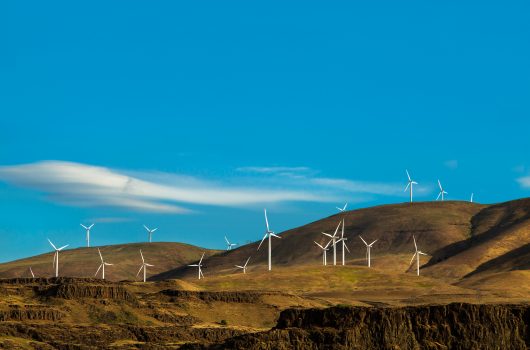
In 2015, GravityLight’s inventive engineering earned it the Shell Springboard Award, a grant of nearly $200,000 used to fund innovative businesses with low carbon footprints. Together, Shell and the GravityLight Foundation have successfully put GravityLights into production and introduced them to 50 communities in Kenya.

Kenya, which has one of the largest economies in Sub-Saharan Africa, has expended considerable effort to create an impressive power sector. In just four years, Kenya has increased the amount of households with access to electricity from 25 percent to 46 percent. Kenyan companies such as KenGen are working to utilize renewable energy sources, and geothermal energy looks promising.

A capacity of approximately 2,295 MW is available on Kenya’s power grid. However, off the grid, in remote areas of the country, only 11.5 MW are currently available. The Shell and GravityLight partnership intends to provide electric light to those off-grid regions in Kenya.

Electricity is crucial to improving the lives of the world’s poor. Access to light alone improves education and the economy by allowing people to study and work after daylight hours. However, the resources required to produce light can be extremely expensive, especially for those living in poverty. The world’s poor spend an estimated 30 percent of their income on kerosene needed to burn in lamps. GravityLight eliminates the need for kerosene to produce light, which is not only cheaper but also safer. Kerosene fumes are known carcinogens that are toxic for both humans and the environment.

Because the GravityLight Foundation uses local people and businesses to organize the sale of its product, marketing for GravityLight supplies Kenyans with jobs. By providing employment, GravityLight is bringing bright futures as well as bright homes to off-grid regions in Kenya.

Shell and GravityLight are not the only groups seeking to improve energy accessibility in order to aid impoverished populations in Africa. In 2015, the same year GravityLight won the Springboard grant, the U.S. government passed the Electrify Africa Act. The act aims to provide 60 million households and businesses throughout Africa with electricity.

Around the globe, 1.2 billion people lack access to electricity. If GravityLight’s debut in Kenya is successful, the foundation plans to continue spreading light throughout the world.

– Mary Efird

Photo: Flickr

November 12, 2017
https://borgenproject.org/wp-content/uploads/borgen-project-logo.svg 0 0 Kim Thelwell https://borgenproject.org/wp-content/uploads/borgen-project-logo.svg Kim Thelwell2017-11-12 01:30:112024-05-29 22:29:04Shell and GravityLight Illuminate Off-Grid Regions in Kenya
Global Poverty

Solving the Energy Poverty Crisis, One Windmill at a Time

Energy_Poverty
According to Sri Mulyani Indrawati, Managing Director of the World Bank, energy poverty implies that “poor people are the least likely to have access to power, and they are more likely to remain poor if they stay unconnected.” The key to solving energy poverty likely lies in the choice of power, with renewable resources being both the cheaper and environmentally cleaner option.

Misconceptions of Renewable Energy

The term renewable energy often conjures up images of developed, wealthy nations experimenting with different resources while using the most modern, up-to-date technology. However, renewable energy is now spreading to the farthest corners of the earth, achieving goals of environmental and economic sustainability. Renewable energy is often thought of as a luxury, but in some parts of the world, it has become a necessary way of life.

According to World Bank data, a large number of poor countries rank as some of the top users for renewable energy. Joining the ranks of eco-friendly Albania, Paraguay and Iceland are Kenya, Zambia, Mozambique and many other African countries. Falling at number 16, three-quarters of Kenya’s electricity production is derived from renewable resources, especially hydropower. In fact, developed countries, in general, lagged behind poorer countries in their use of renewable resources.

Renewable Resources: Budget and Environmentally Friendly

Utilizing renewable resources to create energy is not only environmentally friendly but also budget-friendly for many communities. The U.S. based nonprofit EarthSpark recently set up a solar microgrid in Haiti, which is an affordable energy solution for homes and businesses. Microgrid users pay for the service in advance, ensuring that customers only use the energy that they are able to afford.

Another benefit of renewable energy is that new technology often brings along new employment opportunities. In Haiti, 109 entrepreneurs were trained to work with and market microgrid technologies.

Countries still bypassing the usage of renewable resources for coal need to realize that solving energy poverty requires, as Huffington Post writer Edward Cavanough notes, the “pragmatic use of local and sustainable energy sources to meet immediate and long-term demand while fostering sustainable growth.” Renewable resources are the energy of the future, and it’s in the world’s best fiscal and environmental interest to utilize them.

– Carrie Robinson

Photo: Flickr

September 3, 2016
https://borgenproject.org/wp-content/uploads/borgen-project-logo.svg 0 0 Borgen Project https://borgenproject.org/wp-content/uploads/borgen-project-logo.svg Borgen Project2016-09-03 01:30:372024-05-27 09:34:31Solving the Energy Poverty Crisis, One Windmill at a Time
Global Poverty

How Should the World End Energy Poverty?

Energy poverty
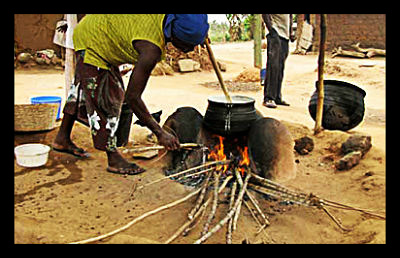
Energy poverty is a global issue. Access to energy, especially in developing areas, is severely lacking. Globally, an estimated 1.2 billion people have absolutely no access to electricity, and an additional 2.7 billion rely on the use of traditional biomass to cook.

Burning traditional biomass, which includes wood, agricultural by-products and dung, causes respiratory diseases that kill over 3.5 million annually, which is twice the amount of deaths caused by malaria every year.

Solving the problem of energy poverty is central to the goal of eliminating global poverty, but there is an extensive and politically-charged debate on the best way to approach solutions.

Tensions can run high in renewable sources such as hydro, solar and wind energy versus fossil fuels such as coal and oil. The potential role of nuclear power is also a significant consideration in the mix. Even beyond issues of energy sources, questions remain about whether energy generation should be largely centralized, or be more locally distributed?

This aspect of the question was highlighted in a recent debate held by the Brookings Institute. Ted Nordhaus is the co-founder and Research Director of the Breakthrough institute that is in favor of a more centralized model of energy development.

Nordhaus pointed out that in the past no country has had universal access to energy without the majority of the population moving out of agriculture and into cities, pointing out that growth in off-farm employment is crucial to this development.

In response, Daniel Kamme, Director of the Renewable and Appropriate Energy Laboratory at UC Berkley described the numerous technology innovations such as micro-grids and improved batteries that make a more distributed energy model more viable.

He emphasized that both centralized and distributed grids can coexist, and that rejection of smaller grids in favor of larger centralized ones is “to bet on the past, not bet on the future.”

A centralized model is more in line with coal-fired power plants and other fossil-fuel reliant methods, while a more dispersed approach has a higher reliance on renewable resources.

Proponents of fossil fuels such as Dr. Robert Bezdek, president of the consulting firm MISI, argue that the tried-and-true method of using coal is a much more reliable way to solve energy poverty, and that better scrubbing technology has improved the cleanliness of coal so that it is more sustainable.

Opponents of this viewpoint argue that this perception is an antiquated, one-size-fits-all model, and neglects to consider the level of innovation that exists now in contrast to the industrial revolution.

It is true according to World Bank data that least developed countries on average use renewable sources for 40.8 percent of their power generation, which is about twice as much as high-income countries.

Overall, the correct approach to solving energy poverty will continue to be debated until a solution is found. The answer to energy poverty must be sufficient to provide energy for both personal and commercial use in a sustainable manner.

– Adam Gonzalez

Photo: Pixabay

August 20, 2016
https://borgenproject.org/wp-content/uploads/borgen-project-logo.svg 0 0 Borgen Project https://borgenproject.org/wp-content/uploads/borgen-project-logo.svg Borgen Project2016-08-20 01:30:272024-12-13 17:54:49How Should the World End Energy Poverty?
Global Poverty

Nigerian Philanthropist Fights Against Africa’s Energy Poverty

energy_poverty
West Africa has the highest levels of energy poverty in the world. The shortage of electricity has been a big barrier to the economic development and people’s wellbeing in Africa.

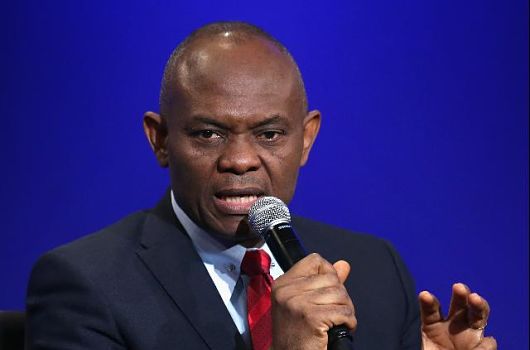
Tony Elumelu, a Nigerian-born business leader and philanthropist, makes the call for ending energy poverty in Africa and takes action to alleviate it.

Ranking 26th on the Forbes Lists of Africa’s 50 Richest in 2014, Tony Elumelu is one of Africa’s most revered business leaders. As the Chairman of Heirs Holdings, the United Bank for Africa (UBA) and Transnational Corporation of Nigeria (Transcorp), Elumelu fortune’s is estimated at $1 billion.

Approaching the latter period of his business career, Elumelu makes more effort on philanthropy. After retiring from UBA in July 2010, he founded the Tony Elumelu Foundation, intending to foster Africa’s economy by enhancing the competitiveness of the African private sector.

At the same time, Tony Elumelu has also been a significant member of many non-profit organizations, such as World Economic Forum’s Regional Agenda Council on Africa, the Nigeria Leadership Initiative and the Infant Jesus Academy in Delta State, Nigeria.

On 30 June 2015, Elumelu participated in African Energy Leaders Group (AELG) Summit. It was launched by Côte d’Ivoire President Alassane Ouattara in Abidjan with top-level political and business leaders, intended to make concrete plans for sustainable energy access in Africa.

According to Ivorian Prime Minister Daniel Kablan Duncan, in order to expedite the implementation of sustainable projects, the West African sub-group of the AELG intends to gather public and private sectors to mobilize finance. As a co-founder of AELG, Elumelu pledged to donate $150,000 over the next three years for its secretarial work.

Elumelu previously contributed to the fight against energy poverty before the Summit. In 2013, Tony Elumelu pledged to contribute $2.5 billion in President Barack Obama’s Power Africa Initiative to support Africa’s power sector.

During the same year, Transcorp, where Elumelu served as Chairman, acquired the 600 MW Ughelli plant in Delta State. It is one of Nigeria’s largest gas-powered generating plants and will generate 1,000 MW by the end of 2015.

The discussion between Transcorp and General Electric has been ongoing, and Transcorp is likely to add another 1,000 MW soon after they reach the first quota.

“Providing access to electricity for schools, hospitals, businesses and industries is the single most impactful intervention that can be made to transform the continent,” said Elumelu during the Summit. “It has tremendous implications for job creation, health, food security, education, technological advancement and overall economic development.”

– Shengyu Wang

Sources: Forbes, Sustainable Energy for All
Photo: Forbes

September 2, 2015
https://borgenproject.org/wp-content/uploads/borgen-project-logo.svg 0 0 Borgen Project https://borgenproject.org/wp-content/uploads/borgen-project-logo.svg Borgen Project2015-09-02 01:30:352020-07-01 12:08:17Nigerian Philanthropist Fights Against Africa’s Energy Poverty
Global Poverty

World Bank, Oxfam Reject “Coal is Cure for Poverty”

Coal_is_Cure_for_Poverty
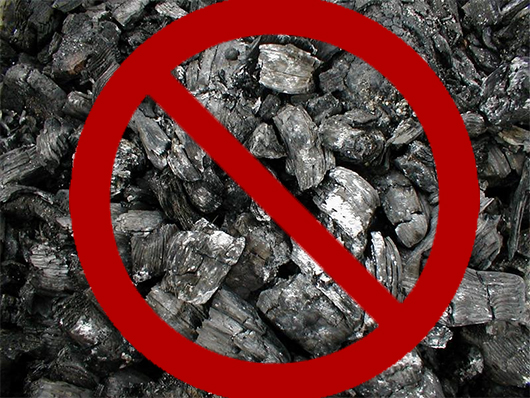
“Coal is a cure for poverty.” In a rejection of a popular argument on the part of the energy industry, World Bank climate change envoy Rachel Kyte has said that the continued extraction of coal has imposed heavy costs on civilians living in the world’s poorest communities.

At an event hosted by The New Republic magazine and the Center for American Progress, Kyte argued that while over a billion people worldwide lack reliable access to energy, coal extraction carries heavy social costs, among which is the loss of breathable air.

“If [poor communities] all had access to coal-fired power tomorrow their respiratory illness rates would go up, etc., etc.,” she said. “We need to extend access to energy to the poor and we need to do it the cleanest way possible because the social costs of coal are uncounted and damaging, just as the global emissions count is damaging as well.”

Such arguments come in response both to the increasing effects of global climate change on impoverished communities and to energy sector arguments that fossil fuel extraction can help alleviate global poverty. In its Advanced Energy for Life campaign, led by the world’s largest private-sector coal company Peabody Energy, the coal industry has argued that “coal is critically required to reduce energy poverty and to help achieve the U.N. development goals.”

But Oxfam International has refuted those claims, arguing that in addition to the more immediate implications of polluted local air and dirty extraction methods, the burning of coal is largely responsible for the acceleration of climate change that is primarily affecting poor, rural communities. In a statement directed at the Australian government – which, under Tony Abbott’s leadership, has abandoned its emissions targets and in 2014 became the first nation to repeal its carbon tax – Oxfam Australia argued that the proliferation of coal extraction runs contrary to the interests of civilians living in poor and developing countries.

“Even for rapidly growing urban populations, the past advantages of coal are diminishing as the cost of renewable energy falls and the harmful effects of coal become more and more evident,” reads the report, entitled Powering Up Against Poverty: Why Renewable Energy is the Future. “Burning coal poses significant health risks through air pollution – a major driver of China’s shift away from coal – and is leading to hundreds of thousands of premature deaths around the world.”

The report notes that the construction of coal mines is displacing many in the world’s poor communities and that extraction often leaves rural civilians without access to clean water and affordable land. Most importantly, the report notes, burning coal is the largest contributor to climate change, and “as such, it is creating havoc for many of the world’s poorest people, who are already feeling the impacts of climate change through decreased crop yields, increased risk of disasters and loss of land.”

Though the mining industry has channeled a huge amount of effort into convincing governments of the benefits of coal mining for poor communities, organizations in such communities have refuted those claims. In response to a claim made by conservative think tank the Institute of Public Affairs that increasing the supply of Australian coal to India would provide access to energy for 82 million people, Sirinivas Krishnaswamy, CEO of the Vasudha Foundation, said that those arguments “simply do not stand up to even the most basic scrutiny.”

In order to relieve poor communities around the world of the troubles perpetuated by the burning of fossil fuels, governments will need to resist the convenience and influence of already-established industries like coal. Moreover, they ought to embrace projects like the Lake Turkana Wind Farm, which, with subsidies from the Kenyan government, is set to provide the Kenyan people with energy at two-thirds the cost of electricity in the United States. However, until governments like Australia’s resist the influence of vested interests, they will continue to be working against the safety of their own environments, as well as the interests of poor people in developing countries.

– Zach VeShancey

Sources: The Guardian, Think Progress, Advanced Energy for Life, OXFAM
Photo: Free Stock Photos, Wikipedia

August 9, 2015
https://borgenproject.org/wp-content/uploads/borgen-project-logo.svg 0 0 Borgen Project https://borgenproject.org/wp-content/uploads/borgen-project-logo.svg Borgen Project2015-08-09 01:30:222024-12-13 18:04:43World Bank, Oxfam Reject “Coal is Cure for Poverty”
Activism, Global Poverty, Technology

WakaWaka is “Sharing the Sun”

WakaWaka
The Personal Solar Power Station is energizing Haiti with a mission to bring the 1.3 billion people in the world without electricity the basic right to energy.

Energy poverty’s progress has been regressing in over a quarter of the world’s population. According to the WakaWaka site, hundreds of millions face regular blackouts, and, even if they have access to kerosene lamps, they are extremely inefficient, dangerous and expensive, and also pose risks to health and the environment.

WakaWaka, which translates to “Shine Bright” in Swahili, works to create and market advanced solar-powered lamps and chargers at affordable costs. WakaWaka works to replace kerosene lamps with safer, cheaper and more sustainable energy sources, and their off-grid solar powered products do just that.

Intivation, a mobile solar products manufacturer, partners with WakaWaka Light to patent and distribute the most efficient models for solar technology.

The self-proclaimed impact-driven social venture fights to abolish energy poverty throughout the world with its original lamps. Currently, WakaWaka Power produces the “most compact power station in the world.”

What began as a kickstarter via crowd funding developed from a “buy one, give one campaign” to a full-blown sustainable enterprise and benefit corporation.

Maurits Groen and Camille van Gestel launched WakaWaka in 2010. They looked to revolutionize the energy market in South Africa by designing “an ultra-efficient LED lamp.” The award-winning model took first place in an international competition for emission-reduction ideas. WakaWaka’s bright future developed in its vision for bringing South Africans living off the electricity grid the chance to try solar-powered lamps.

Five years running, WakaWaka found partners around the world, from NGOs to national and local companies. WakaWaka lamps are charged by nothing but the sun. As of 2013, more than 12,000 LED lamps were provided to Haitian communities without electricity. WakaWaka also provides its lamps to Syrian refugees and those hit by typhoon Haiyan in the Philippines.

Mali, Liberia and Indonesia have also been impacted by WakaWaka’s off-grid lighting solutions. So far, WakaWaka has been established in more than 200 aid, crisis, and relief projects among developing nations.

The business model follows that all proceeds made from Western purchase go toward making them freely available to off-grid areas around the world at much lower prices.

As if WakaWaka was not doing enough, every WakaWaka product sold in the United States donates a WakaWaka Light to The International Rescue Committee, one of the world’s leading humanitarian aid organizations that has helped deliver tens of thousands of WakaWakas in regions that need them most.

– Lin Sabones

Sources: Waka-Waka, Kickstarter
Photo: Kickstarter

July 26, 2015
https://borgenproject.org/wp-content/uploads/borgen-project-logo.svg 0 0 Borgen Project https://borgenproject.org/wp-content/uploads/borgen-project-logo.svg Borgen Project2015-07-26 09:23:492024-12-13 17:51:58WakaWaka is “Sharing the Sun”
Global Poverty

Energy Poverty in Nigeria

energy_poverty
Nigeria’s crude oil reserves are currently estimated at 35 billion barrels; its natural gas reserves an estimated 185 trillion cubic feet. Though import levels have since dropped dramatically, in March 2007 the United States imported 41,767 barrels of Nigerian crude oil and petroleum products.

Despite this, 44 percent of Nigerian households have no access to electricity.

Indeed, even in Nigerian homes with electricity, the quality of service provided is often intermittent while growing increasingly unaffordable. In an op-ed in the International New York Times, published August 8, 2014, author Adewale Maja-Pearce explained that in February 2014 his monthly bill jumped from $30 per month to nearly $185 per month, despite the fact that he was receiving roughly three hours per day of power. This price increase occurs at a time when 92.4 percent of Nigerians live on less than $2 per day, and 70.8 percent live on less than one dollar per day.

The problem of energy poverty is not exclusive to Nigeria. According to the International Energy Agency, “over 1.3 billion people are without access to electricity and 2.6 billion are without clean cooking facilities. More than 95% of these people are in sub-Saharan Africa or developing Asia and 84% are in rural areas.”

Though the problem is not unique to Nigeria, it does bring to light the global inequality behind the phenomenon of energy poverty despite Nigeria’s status as a major energy exporter. It is seemingly paradoxical for a nation which began exporting large amounts of liquid petroleum gas through Chevron in 1997 to have a per capita liquid petroleum gas usage rate of 0.4 kilograms per second, one of the lowest in the region.

Addressing energy poverty is a key point in the fight against global poverty. Greater access to alternative energy sources will reduce unnecessary deaths, such as the 95,300 Nigerian deaths which occur annually from smoke created by the use of solid biomass fuels. It will enhance the financial capabilities of those nations currently struggling to provide power to businesses. This, in turn, will expand the global community of consumers.

Regardless, the importance of treating energy exporters as nations, and not simply as trade partners, remains a primary challenge moving forward in the fight against global inequality.

– Andrew Michaels

Sources: NY Times, CAI, UNICEF EIA, International Association for Energy Economics, Journal of Public Administration and Policy Research 3.2 International New York Times
Photo: Vanguard

May 21, 2015
https://borgenproject.org/wp-content/uploads/borgen-project-logo.svg 0 0 Borgen Project https://borgenproject.org/wp-content/uploads/borgen-project-logo.svg Borgen Project2015-05-21 08:00:222024-12-13 17:51:23Energy Poverty in Nigeria
Page 3 of 41234

Get Smarter

  • Global Poverty 101
  • Global Poverty… The Good News
  • Global Poverty & U.S. Jobs
  • Global Poverty and National Security
  • Innovative Solutions to Poverty
  • Global Poverty & Aid FAQ’s
Search Search

Take Action

  • Call Congress
  • Email Congress
  • Donate
  • 30 Ways to Help
  • Volunteer Ops
  • Internships
  • Courses & Certificates
  • The Podcast
Borgen Project

“The Borgen Project is an incredible nonprofit organization that is addressing poverty and hunger and working towards ending them.”

-The Huffington Post

Inside The Borgen Project

  • Contact
  • About
  • Financials
  • President
  • Board of Directors
  • Board of Advisors

International Links

  • UK Email Parliament
  • UK Donate
  • Canada Email Parliament

Get Smarter

  • Global Poverty 101
  • Global Poverty… The Good News
  • Global Poverty & U.S. Jobs
  • Global Poverty and National Security
  • Innovative Solutions to Poverty
  • Global Poverty & Aid FAQ’s

Ways to Help

  • Call Congress
  • Email Congress
  • Donate
  • 30 Ways to Help
  • Volunteer Ops
  • Internships
  • Courses & Certificates
  • The Podcast
Scroll to top Scroll to top Scroll to top