• Link to X
  • Link to Facebook
  • Link to Instagram
  • Link to TikTok
  • Link to Youtube
  • About
    • About Us
      • President
      • Board of Directors
      • Board of Advisors
      • Financials
      • Our Methodology
      • Success Tracker
      • Contact
  • Act Now
    • 30 Ways to Help
      • Email Congress
      • Call Congress
      • Volunteer
      • Courses & Certificates
      • Be a Donor
    • Internships
      • In-Office Internships
      • Remote Internships
    • Legislation
      • Politics 101
  • The Blog
  • The Podcast
  • Magazine
  • Donate
  • Click to open the search input field Click to open the search input field Search
  • Menu Menu

Archive for category: Poverty Eradication

Global Poverty, Poverty Eradication

ShopUp Helps with Poverty Eradication in Bangladesh

ShopUp Helps with Poverty Eradication in Bangladesh
Bangladesh’s economy has grown exponentially in the past 20 years. This raises its GDP per capita by 344% in total since the year 2000. In the last five years alone, this same figure surged 48%. Despite this progress, a significant portion of the country still lives below the poverty line — roughly 20% of a population of 164 million. Recent innovations in poverty eradication in Bangladesh are working to boost economic prospects and facilitate financial security for all of its citizens.

One of these innovations in poverty eradication in Bangladesh is the digital platform ShopUp. ShopUp is co-founded by Afeef Zaman, Siffat Sarwar and Ataur Chowdhury. It began with the goal to empower owners of Facebook businesses with the technical means to grow. More than 50% of Bangladeshis are self-employed. Many of them are operating e-commerce and social commerce shops through Facebook as their source of income. Also, it quickly became evident that clients’ lack of access to capital was hindering their businesses’ growth. After partnering with BRAC in 2018, a Bangladesh-based international development organization, ShopUp now aims to help small business owners acquire credit and other financials when they cannot afford the high cost of formal services.

How ShopUp Benefits Small Business Owners

Transaction records through sites like Facebook can be difficult to track and formalize for loan purposes. ShopUp automatically collects the relevant data from sales on Facebook Messenger. As a result, the merchant can more easily apply to loans from microfinance institutions. Furthermore, the process is quick. When a seller is ready to apply for a loan through ShopUp, the algorithm analyzes 25 different data points from the business’s profile. Additionally, it estimates an appropriate loan ceiling. It only takes 24 hours after approval for the financier to distribute the funds that the borrower requested.

Moreover, it increases access to capital. The service benefits microfinance enterprises by conducting a thorough and efficient online appraisal of the small business applying for the loan. Also, this allows for a significantly lower appraisal fee. This means a higher number of loans can be approved. Growth in the microfinance sector advances the market economy and creates more employment opportunities. In addition to financial assistance, ShopUp provides promotional assistance. Merchants can purchase advertisements for their shops via the service without needing to connect a bank account or credit card. Curated ad placement grants increased visibility. This results in a larger potential customer pool for emerging businesses.

Gender discrimination in Bangladesh means that women tend to face more barriers than men when it comes to employment. With ShopUp’s low cost and ease of access, it is an effective tool for female entrepreneurs to start their small businesses. Women’s participation in the labor force in Bangladesh rose to 36.2% in 2019, in part, due to the expanding market of e-commerce. Furthermore, that same year, 80% of ShopUp’s users were female.

Continued Growth of ShopUp

Investors recognize the potential for ShopUp to increase innovations in poverty eradication in Bangladesh. The founder of eBay, Pierre Omidyar, led a seed round in 2018 encouraging other major companies to assist in funding ShopUp’s endeavors. Google and Amazon were among the contributors for this round which resulted in a $1.62 million investment in the digital service. Data collected in January 2019 show that the platform served 380 individuals after launching the partner project with BRAC. This means it lends out a total of more than 3.1 million (BDT).

ShopUp is just one example of the innovations in poverty eradication in Bangladesh that are putting the country on track to continue its recent economic growth. Widespread Internet usage facilitates a digital market economy that has already provided new opportunities for financial gain. Having accessible services within the market for lower-income individuals is a crucial step in the process.

– Jennifer Paul
Photo: Flickr

October 8, 2020
https://borgenproject.org/wp-content/uploads/borgen-project-logo.svg 0 0 Kim Thelwell https://borgenproject.org/wp-content/uploads/borgen-project-logo.svg Kim Thelwell2020-10-08 07:30:342024-05-29 23:23:33ShopUp Helps with Poverty Eradication in Bangladesh
Education, Global Poverty, Poverty Eradication

Fighting Poverty in Eswatini

Fighting poverty in EswatiniEswatini, formerly Swaziland, is a landlocked African country positioned between South Africa and Mozambique. As of 2017, it was estimated that almost 60% of Eswatini’s estimated 1.2 million residents lived below the poverty line. Eswatini depends heavily on the economy of South Africa. It derives the bulk of both its imports and exports from this neighboring, middle-income country. Though the lilangeni, Eswatini’s currency, is on par with the South African rand, Eswatini’s economic dependency on the South African economy places it in a weaker trade position. Unemployment, heavy dependence on agriculture despite unpredictable weather, HIV/AIDS and high rates of inequality contribute to Eswatini’s struggle to develop economic independence. An increased focus on fighting poverty in Eswatini is imperative.
Eswatini’s Wealth Gap Problem

Efforts to develop Eswatini’s economy have resulted in a widening gap between the wealthy and the poor; as the portion of wealthy people in Eswatini increases, there is a subsequent increase in the poor population. Moreover, policies for economic development often bypass the poor, contributing to worsening inequality. The policies tend to increase business in urban areas, which does not help much in fighting poverty in Eswatini because far more people in rural areas suffer from poverty than their urban counterparts.

The economic insecurity of impoverished people in Eswatini is in large part due to unpredictable weather patterns as the rural economy is highly reliant on agricultural yield. Additionally, a system of land allocation which provides each man with a small plot of land, through a practice called khonta, can contribute to land degradation. Though khonta seems beneficial, often the land becomes overworked and rendered useless in farmers’ desperation to make ends meet. Also, owning a plot of land might discourage farmers from journeying into cities to seek education or other ventures.

A Consequence of Eswatini’s Colonization

Eswatini’s history as a colonized country contributes to its present-day living conditions. The colonization of Eswatini by the British in the 1930s resulted in a disparity between the colonizers and the colonized. The colonizers perceived those who assimilated as modern and enterprising. Therefore, those people tended to flock to cities. The rest, the colonizers considered backward and remained in neglected rural areas. Therefore, the post-colonial line of thought was that the solution to fighting poverty in Eswatini was to develop or modernize the lives of those living in rural areas.

Fighting Poverty with Education

However, Ackson M. Kanduza, a modern scholar, has argued for more holistic approaches to fighting poverty in Eswatini. In his opinion, Eswatini should focus on enriching the lives of children under 15, who make up just under 50% of the Sub-African population.

Children are one of the groups most vulnerable to disease and are frequently experience child labor. Kanduza advocates for enriching children’s education, skills and quality of life, which could decrease poverty because children are points of integration in society. The statistics support this theory. In illiterate households, the poverty rate was 71%, whereas that rate dropped to 30% in houses with primary school education.

Fighting poverty in Eswatini will require the reallocation of resources to close the gap between the wealthy and the poor. This means increasing access to education, health care, clean drinking water and job prospects for people living in rural areas. It will also involve integration between cities and the surrounding rural areas. One method that could help is direct investment from foreign aid so that Eswatini can develop the strength of its own economy. Finally, focusing on enriching the lives of the Eswatini youth through education could provide new opportunities for generations to come.

– Elise Ghitman
Photo: Wikimedia Commons

October 5, 2020
https://borgenproject.org/wp-content/uploads/borgen-project-logo.svg 0 0 Kim Thelwell https://borgenproject.org/wp-content/uploads/borgen-project-logo.svg Kim Thelwell2020-10-05 06:33:012022-03-03 12:07:51Fighting Poverty in Eswatini
Developing Countries, Global Poverty, Homelessness, Poverty Eradication

Addressing Homelessness in Morocco

Homelessness in MoroccoMorocco, a country bordering both Algeria and Western Sahara, has faced increased conflicts with the rising issue of homelessness. In the country, there are thousands without proper shelter as the problem worsens. However, newly implemented organizations are seeing rapid improvements in homelessness in Morocco.
More than 700,000 Moroccan citizens are currently battling homelessness. In addition, it must be noted that the youth has been severely impacted as well. There are more than 30,000 children roaming the streets in search of basic resources, as many escape abusive home situations. Under a prevalent gap between the wealthy and poor, it is reported that more than 15% of the population lives on $3 a day. With the poverty rate increasing, many turn towards the streets. Approximately four million Moroccan citizens live below the poverty line.

Causes of Homelessness in Morocco

The main contributor to the rise of homelessness in Morocco is the Structural Adjustment Policy that was launched in 1963. Since then, the homeless rate has rapidly increased, leading to its large population in present day. The policy aimed to improve the finance and social sectors. However, due to underfunding and a misallocated budget, thousands of families lost funding. For this reason, many lost their homes to the government.

Another cause of homelessness in Morocco is the shift in values in Moroccan society. As mentioned earlier, the wealth gap between the ones in poverty and the wealthy have led to resentment against the homeless. With the focus on the upper class, the poor population of Morocco is not given any aid. In certain cases, the plight of the poor is simply ignored.

Consequences of Homelessness in Morocco

With the youth making up a large portion of the homeless population, various consequences have arisen. A major problem is the overall safety of the children on the streets. With tens of thousands of children without a home, many are subject to sexual assault and abuse. The streets of Morocco have been subject to numerous crimes against the youth.

Another consequence of the homelessness problem is the lack of education. In the rural parts of Morocco, only 36% of girls pursue an education. With the issue of homelessness, the youth prioritize survival over schooling. It is also reported that only one in seven children attend school in Morocco. Homelessness plays a primary role in these low statistics as children do not have the resources to pursue an education.

The Road to Change

Despite the rising numbers, there have been numerous efforts to combat homelessness in Morocco. For example, the Moroccan government has stepped up to help those in need. Jamila El Moussali, the Moroccan Minister of Solidarity, Social Development and Family, has recently called for the largest shelter operation in Moroccan history. During the COVID-19 pandemic, the ministry has helped accommodate more than 6,300 homeless people and assisted 2,000 others in reuniting with their families. The government is looking to increase its involvement with the homeless in the coming years and boost social work to aid those in need. After completing one of the largest shelter operations, Morocco has seen a massive decline in the homeless population.

Even with the government’s newfound aid to help combat homelessness in Morocco, additional intervention is the key to make dramatic and long-lasting progress. For Morocco’s government to see a bright future and a reduced homeless count, it must act in a consistent manner to aid those in need. If the government can further boost the number of shelter operations, hundreds of thousands of homeless Moroccans would benefit.

– Aditya Padmaraj
Photo: Flickr

October 5, 2020
https://borgenproject.org/wp-content/uploads/borgen-project-logo.svg 0 0 Kim Thelwell https://borgenproject.org/wp-content/uploads/borgen-project-logo.svg Kim Thelwell2020-10-05 02:33:362020-10-05 02:33:36Addressing Homelessness in Morocco
Global Poverty, Poverty Eradication

Corn and Poverty in a Remote Chinese Village

Remote Chinese Village
When it comes to fighting poverty, it can often be challenging to find a simple concrete solution. However, a remote Chinese village, Yuanxin utilized an incredible new tool to eradicate poverty: corn. Yuanxin is a self-governing remote Chinese village in northern China. People have known it as a “national-level poverty-stricken village” for many years.

Mission to End Poverty

To help mitigate the poverty crisis, Zhang Hua went on behalf of the Beijing Forestry University to aid Inner Mongolia. At the beginning of his mission, Hua’s biggest challenge was the villagers’ distrust. To win them over, Hua began to implement solutions to the problems he saw in the village. These solutions included repaving the roads and increasing crop yield by deterring insects from eating the crops.

As reported by the Global Times, Yuanxin and Hua’s most significant victory against poverty happened when Yuanxin started investing in “black agriculture.” Black agriculture refers to the process of farming a type of black sticky corn known as waxy corn. The corn became immensely popular in Beijing. People even dubbed it “Yuanxin” after the village it came from.

Economic Advantages

By developing an agricultural hub for the corn in a remote Chinese village, the value of corn went up three times more than before. By the end of 2018, the town became poverty-free.

The development of farming corn in Yuanxin also had considerable ripples in the local economy. Previous to the tactics that Hua implemented, people in Yuanxin often lacked the financial means to afford local goods. They would pay on credit. This resulted in a lack of cash influx, further worsening the local economy. By uplifting the agricultural sector of Yuanxin, the entire village received an economic boost.

The economic advantages of investing in agriculture in developing nations are not just specific to Yuanxin, but rather an emerging global trend.

Agricultural Advantages

Growth in agriculture in developing nations can be five times more effective at mitigating poverty.

This is because there is a strong correlation between poverty and agriculture-related jobs. In China, specifically, 35% of the population works in agriculture. Farms in developing countries are often small and family-based. They also have strong ties to the local community.

The remote Chinese village of Yuanxin is highly representative of the broad investments China has sown in agriculture. It is also highly suggestive of the considerable benefits it has reaped. China has seen an average economic growth of 9%. China maintained such high growth levels because it was also continually expanding its agriculture division by 4% to 5%.

Xinhua News Agency is the official state-run news agency. It reported that China achieved its high growth model by forging constant new improvements in agriculture technology. It also did this by expanding “high-standard farmland” to around 42.7 million hectares.

Overall, the remote Chinese village of Yuanxin represents a strong example of how other developing nations can grow its economy. It can do this to mitigate poverty by strengthening agricultural practices. By investing in their agricultural sector, China managed to plant the seeds of the future that many future generations will reap the benefits of. The same is possible for other developing nations around the world.

– Anushka Somani
Photo: Flickr

September 7, 2020
https://borgenproject.org/wp-content/uploads/borgen-project-logo.svg 0 0 Kim Thelwell https://borgenproject.org/wp-content/uploads/borgen-project-logo.svg Kim Thelwell2020-09-07 09:00:422020-09-07 07:45:41Corn and Poverty in a Remote Chinese Village
Global Poverty, Poverty Eradication

Innovations in Poverty Eradication in Vietnam

Poverty Eradication in Vietnam
Between wars, famines, communist regimes and poverty, Vietnam has had its share of troubles. In 1992, 52% of Vietnam’s population was in poverty, but things have changed for the better. Vietnam has been able to bounce back from its difficulties and is now one of the fastest-growing economies in the world. In 2018, less than 2% of Vietnam’s population was in poverty. Poverty eradication in Vietnam has been successful because of its strong production, widespread infrastructure and growing middle class.

Entering the Global Economy

Vietnam has had many economic troubles in the past. One of its major problems was its reliance on agriculture as a source of income. In 1991, around 40% of Vietnam’s GDP was agriculture.

Growing crops simply did not pay enough to support Vietnamese families. Many impoverished farmers solely relied on agriculture to provide for their families. Vietnam was not doing anything to diversify its economy into more promising markets. While countries like China and Japan were building factories and manufacturing cars, Vietnam was growing rice. Once Vietnam started to invest in more profitable industries, its GDP skyrocketed. Vietnam’s real GDP growth rate was 7% in 2019, far higher than any other in the region. In 2020, around 34% of Vietnam’s GDP comes from industry markets.

Some of its main exports include electronics, footwear and textiles. This has provided life-changing opportunities for millions of Vietnamese families. Many of these poor families are now moving to major cities to work in factories and earning higher wages. Poverty eradication in Vietnam has been largely successful due to its strong and diverse economy.

Opportunities for Poor Families

A large percentage of Vietnam’s population lives in rural areas surrounded by mountain ranges. Previously, most of these people grew simple crops like rice. This was not enough to improve their poor living conditions and many of these people went hungry. The Vietnamese government has sought to dramatically increase the amount of infrastructure in order to connect these rural villages to the rest of the population. In 1993, 14% of the population used electricity as their main source of lighting. This rose to 99% as of 2016. Meanwhile, in 1993, only 17% of rural areas had access to clean water. Now, more than 70% have access to this essential service. These mountain villages are now in contact with the rest of the Vietnamese population. This has provided valuable opportunities for these poor families that they have never had access to before.

Creating a Strong Middle Class

Now that many of these rural villages are connected, people are starting to move out of poverty and into a growing middle class. Major cities such as Hanoi and Ho Chi Minh City are growing as people look for more opportunities. Higher wages and increased standard of living have lured many rural families into moving to the city. Thirteen percent of Vietnam’s population is part of the middle class, and middle-class numbers are continuing to climb. On average, 1.5 million Vietnamese join the middle class every year. What makes this even better is that very few of these people fall back into poverty. From 2014 to 2016, only 2% of Vietnamese who moved out of poverty fell back into it. Poverty eradication in Vietnam is not only successful but sustainable as well.

Despite numerous hardships, Vietnam has been able to go against the odds and become one of the fastest-growing countries in the world. In the late 1900s, Vietnam was in a dismal state. More than half of its population was in poverty. However, by entering the global economy, expanding its infrastructure and creating a strong middle class, poverty eradication in Vietnam is unprecedented in its success. Many hope that Vietnam will continue this success in the future.

– Evan Weber
Photo: Flickr

August 28, 2020
https://borgenproject.org/wp-content/uploads/borgen-project-logo.svg 0 0 Jennifer Philipp https://borgenproject.org/wp-content/uploads/borgen-project-logo.svg Jennifer Philipp2020-08-28 14:39:462020-08-28 14:39:46Innovations in Poverty Eradication in Vietnam
Children, Developing Countries, Education, Global Poverty, Health, Poverty Eradication, Poverty Reduction

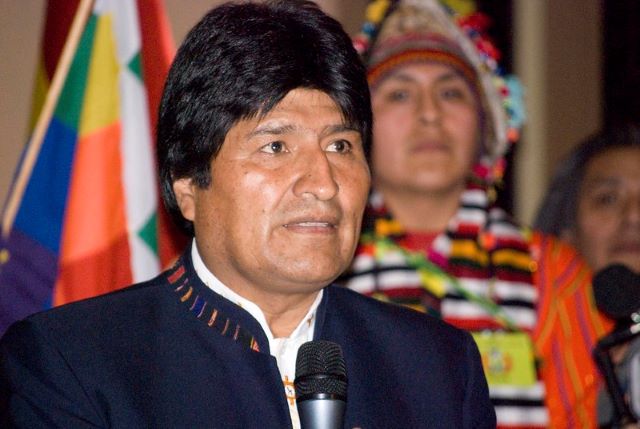
How Former President Morales Transformed Bolivia 

Morales Transformed Bolivia The year 2006 marked the beginning of a new era for Bolivia. For decades before, Bolivia had been run by presidents that continuously marginalized the indigenous population and favored wealthy foreign corporations, making Bolivia one of the poorest countries in South America. By 2002, the percentage of Bolivians that were living in extreme poverty spiked to 38% and remained stagnant until 2006. When Evo Morales became president, through programs and initiatives, Morales transformed Bolivia in several ways.

The Reign of Evo Morales in Bolivia

Evo Morales’ election sparked what his government referred to as the “Process of Change”, a presidency that would bring the spotlight to the marginalized workers and away from Bolivia’s elites that have ruled the country for years. The campaign specifically focused on restoring the rights of the indigenous population. And after just one year of the election, Bolivia began to see huge improvements. Since 2006, the Bolivian economy has grown, on average, 5% yearly compared to the 2.8% before. Most notable, Morales was able to cut the extreme poverty rate in half, bringing it down to 17%. He also obliterated the illiteracy rate to zero. So, how was Morales able to push real progress?

Bolivia’s Natural Resources

Morales set a path that focused on putting government investments in social spending. He began this project by regaining national sovereignty over Bolivia’s natural resources: Lithium. For years prior, foreign corporations had been profiting from Bolivia’s natural resources, raking in 85% of the profits generated by its natural gas production. After being sworn into office, Morales was able to regain nearly 80-90% of its shares. Now, the state is in full control of the sales and distribution of its raw resources. Since 2006, Bolivia has amassed $31.5 billion, which Morales allocated toward schools, hospitals and infrastructure, building about 4,500 educational facilities.

Anti-Poverty Initiatives in Bolivia

When it came to combating poverty, Morales had made many positive changes to improve Bolivia’s crisis during his 14 years in office and worked to raise the standard of living for the most desperate people in the country. Under Morales’ rule, the monthly minimum wage rose from 440 Bolivars to nearly 2,000, and unemployment rates dropped to under 4% from their original height of 8.5% back in 2005. There was also a sharp decline in those living in extreme poverty, shifting from 38% to just 16.8%. Overall, poverty dropped to 38.6% from the original 60.6% in 2005. Further, Morales worked to build nearly 127,000 new homes for financially insecure Bolivians without housing.

Focusing on Children and Education

Morales transformed Bolivia further by putting forth specific programs that would benefit and prevent poverty in vulnerable groups: children, mothers and the elderly. To combat low school attendance and restrict child labor, Morales put forth the Juancito Pinto program, which aimed at reaching nearly two million children. This program awards children $28 for every year of schooling they complete, encouraging them to remain engaged in their education. Before Morales taking office, the country had an illiteracy rate of 13%. However, through the use of the Juancito Pinto and the YES I CAN program, 850 thousand children became educated and Bolivia became illiteracy free in 2008.

Addressing Maternal and Infant Health

For Bolivian mothers, Morales put forth the Juana Azurduy program to end maternal and infant mortality and to reduce food shortages for children. Under the program, Bolivian mothers would receive up to $266 to go toward food, care and shelter while they raise their families, an effort that UNICEF has praised. When the program began in 2009, child malnourishment was at nearly 27% and has declined to just 16%. Child mortality has also decreased by nearly half. This program also helped to encourage women to visit medical facilities while they are pregnant and for a period after they give birth by offering cash grants to those who follow the program.

Focusing on the Elderly and Disabled

For senior citizens, Morales introduced the Renta De La Dignidad program, which focused on Bolivian citizens over the age of 60 who were not previously receiving any social assistance. This bill also gave $36 a month to disabled Bolivians as well as pregnant women and assisted them in finding jobs in the government and private sectors. The goal of this bill was ultimately to grow the income of those who were less capable of finding work and it has resulted in many Bolivian citizens who were victims of poverty increasing their yearly income to nearly $342.

The Future of Bolivia

It is evident that Morales transformed Bolivia in several positive ways. While Morales’ successful 14 years have come to end, Bolivia has rebirthed Morales’ principles with the recent election of Luis Arce.  Similar to Morales, Arce promises to bring justice to groups that continue to be marginalized.

– Maya Falach
Photo: Flickr

February 1, 2020
https://borgenproject.org/wp-content/uploads/borgen-project-logo.svg 0 0 Jennifer Philipp https://borgenproject.org/wp-content/uploads/borgen-project-logo.svg Jennifer Philipp2020-02-01 01:30:492021-02-01 03:29:43How Former President Morales Transformed Bolivia 
Activism, Foreign Aid, Poverty Eradication

Bush and Bono: Pals Fighting Poverty

Bush and Bono

As stated in his 25 April 2013 press conference, George W. Bush may consider Bono “a pal,” but he is not the only one. George H.W. Bush presented the Liberty Medal to the U2 frontman at the National Constitution Center (2007) and Laura Bush joined a meeting with them to discuss AIDS (2005). They have had a decade long relationship revolving around their mutual passion for humanitarian work in Africa.

Bono started hounding politicians in 2002 when he started his non-profit Debt, AIDS, Trade, Africa (DATA). They had a meeting that year resulting in a 5 billion dollar aid package.  Bono also persuaded the former Secretary of the Treasury Paul O’Neill to take a 4-country tour of Africa. This marked an “historic shift in Washington’s stance on aid after years of cuts.”

However, mutual skepticism has marked the their relationship. Bono acknowledged that as he pushed the former president on aid issues, Bush pushed back.  Contentious issues included speed of delivery of the Millennium Challenge money and the Global Fund.

Their friendship, rooted in their shared concern for humanitarian work in Africa, kept Bono going back to Washington.  Twice in 2005 they met in the White House to discuss pro-poor aid. In 2006 Bush invited him to speak at the National Prayer Breakfast. Bono used the opportunity to talk about the ‘Jubilee’ year in respect to the Jubilee Drop in the Debt campaign. The next year former president George H.W. Bush presented the Liberty Medal to Bono. After over a decade of arguments, discussions and commitments to aid, it is not surprising Bush considers him “a pal.”

– Katherine Zobre

Sources: Bush on Bono: ‘We became pals’ , US and Europe boost aid to poorest countries , Bono and O’Neill in Africa , Bono Visits Bush at the White House , Bono Remarks at the National Prayer Breakfast
Photo: Bush and Bono 2006

May 3, 2013
https://borgenproject.org/wp-content/uploads/borgen-project-logo.svg 0 0 Borgen Project https://borgenproject.org/wp-content/uploads/borgen-project-logo.svg Borgen Project2013-05-03 09:00:342024-06-04 02:43:51Bush and Bono: Pals Fighting Poverty
Page 10 of 10«‹8910

Get Smarter

  • Global Poverty 101
  • Global Poverty… The Good News
  • Global Poverty & U.S. Jobs
  • Global Poverty and National Security
  • Innovative Solutions to Poverty
  • Global Poverty & Aid FAQ’s
Search Search

Take Action

  • Call Congress
  • Email Congress
  • Donate
  • 30 Ways to Help
  • Volunteer Ops
  • Internships
  • Courses & Certificates
  • The Podcast
Borgen Project

“The Borgen Project is an incredible nonprofit organization that is addressing poverty and hunger and working towards ending them.”

-The Huffington Post

Inside The Borgen Project

  • Contact
  • About
  • Financials
  • President
  • Board of Directors
  • Board of Advisors

International Links

  • UK Email Parliament
  • UK Donate
  • Canada Email Parliament

Get Smarter

  • Global Poverty 101
  • Global Poverty… The Good News
  • Global Poverty & U.S. Jobs
  • Global Poverty and National Security
  • Innovative Solutions to Poverty
  • Global Poverty & Aid FAQ’s

Ways to Help

  • Call Congress
  • Email Congress
  • Donate
  • 30 Ways to Help
  • Volunteer Ops
  • Internships
  • Courses & Certificates
  • The Podcast
Scroll to top Scroll to top Scroll to top