• Link to X
  • Link to Facebook
  • Link to Instagram
  • Link to TikTok
  • Link to Youtube
  • About
    • About Us
      • President
      • Board of Directors
      • Board of Advisors
      • Financials
      • Our Methodology
      • Success Tracker
      • Contact
  • Act Now
    • 30 Ways to Help
      • Email Congress
      • Call Congress
      • Volunteer
      • Courses & Certificates
      • Be a Donor
    • Internships
      • In-Office Internships
      • Remote Internships
    • Legislation
      • Politics 101
  • The Blog
  • The Podcast
  • Magazine
  • Donate
  • Click to open the search input field Click to open the search input field Search
  • Menu Menu

Archive for category: Philanthropy

Information and news about philanthropy

Activism, Advocacy, Global Poverty, Philanthropy, Poverty Reduction

State Street Foundation: Providing Sustainability in Poor Communities

State_Street_Foundation
The State Street Foundation is a unique organization that focuses on providing grants to deserving groups that offer services to the poor. By “actively engaging in our global communities,” State Street is able to empower impoverished people through education, affordable housing and small business programs. The company also assists businesses by offering financial guidance in investment, research and trading.

State Street mainly operates 25 countries; most of its programs are in Australia, China, Hong Kong, India, Japan, Singapore, South Korea and Taiwan. The organization’s vast number of volunteers and supporters work in low-income communities to create sustainable poverty alleviation projects. These volunteers worked 78,000 hours and completed 4,900 projects in 2010. Since its formation in 2001, State Street employees and alumni have contributed 430,000 hours and 15,600 service projects.

These projects vary based on the needs of local communities, but all have the goal of improving quality of life in these areas. State Street’s Supplier Diversity Program works with businesses owned by minorities and women to ensure that these small businesses have the same opportunities as other larger companies. Providing grants to these businesses helps them financially thrive, thus creating jobs and increasing economic growth for the entire community.

In addition to distributing local grants, State Street Foundation sponsors community fundraising events for charities the organization supports. In 2010, State Street donated $3.2 million to these charities. For these reasons, the company has won copious awards for its philanthropy, including the Custody Risk’s Mutual Fund Administrator of the Year and Transfer Agent of the Year (2013), Best Securities Financing House in Asia Asset Management’s Best of the Best Awards (2013), European Transfer Agent of the Year (with IFDS) in the 2012 Funds Europe Awards (November 2012) and numerous other awards since its founding.

State Street is a foundation devoted to helping impoverished businesses and communities and hopes to contribute to poverty alleviation, one region at a time.

– Mary Penn

Sources: State Street, AVPN
Photo: Time

October 2, 2013
https://borgenproject.org/wp-content/uploads/borgen-project-logo.svg 0 0 Borgen Project https://borgenproject.org/wp-content/uploads/borgen-project-logo.svg Borgen Project2013-10-02 21:07:012024-06-04 01:17:32State Street Foundation: Providing Sustainability in Poor Communities
Activism, Advocacy, Philanthropy, Volunteer

What is Venture Philanthropy?

What_is_venture_capitalism
Venture philanthropy originated in the mid-1990s in the United States and began spreading through Europe around 2002. It is largely modeled after venture capitalism, in which professional investors use third-party funds to help startup businesses get off their feet.

In a similar way, venture philanthropists use their influence and skills to provide charities or socially minded enterprises with financial and non-financial aid. Venture philanthropy is often undertaken by organizations, which lend support to anywhere from 3 to 15 charities or socially conscious businesses. Individuals, families, and institutions usually provide the organizations’ funds.

The venture philanthropy movement originally began as an alternative to traditional philanthropy, in which high-quality nonprofits are given capital and room to work as they see fit.

Meanwhile, venture philanthropists are much more highly involved. Beyond just donating significant amounts of money, they may hold positions as board members or offer skills-based donations, such as business planning or executive coaching.

According to a 2004 report by Venture Philanthropy Partners, small and local nonprofits often lack the support they need. They can, therefore, be significantly helped by venture philanthropy, which provides long-term financial support, strategic advice, and helpful professional connections.

Depending on the goal of the philanthropy, and the types of organizations supported, venture philanthropists often choose to give in different ways. While some organizations dole out non-returnable grants seen as investments with only social returns, others use various types of loans to help charities or social enterprises get started and continually grow. Once these loans are repaid, the money is reinvested in another organization or startup company.

Venture philanthropists also generally commit to multi-year support at a substantial level, with the goal of financial independence once funding ceases. Additionally, venture philanthropists aim to improve the long-term viability of their investees by funding core operating expenses, rather than individual projects or programs.

Finally, venture philanthropists highly emphasize results and good business practices. They generally hold their recipients to high accountability and management standards, and expect goals to be achieved. This highlighting of measurable outcomes is one of the more obvious similarities between venture philanthropy and venture capitalism.

Venture philanthropy allows donors to become highly invested while working with charities and social entrepreneurs. It also provides many organizations, especially small and local ones, with the long-term and varied assistance they need.

By providing an alternative to hands-off donations, venture philanthropy encourages people to actively change the world around them. It has possibly even substantially widened the range of people becoming philanthropists by appealing to a field of entrepreneurs whose experience and expertise can be valuable assets to charities and socially conscious startup businesses.

Venture philanthropy offers a unique and very often successful approach to improving our society and the world, and should therefore enjoy continued support.

– Katie Fullerton
Sources: Social Innovations Europe, Forbes, Slate, Venture Philanthropy Partners
Photo: Francis Moran

August 23, 2013
https://borgenproject.org/wp-content/uploads/borgen-project-logo.svg 0 0 Borgen Project https://borgenproject.org/wp-content/uploads/borgen-project-logo.svg Borgen Project2013-08-23 05:37:072024-05-25 00:18:44What is Venture Philanthropy?
Activism, Philanthropy

Philanthropy and Adult Entertainment

phil harvey_opt
Phil Harvey is the founder and president of DKT International, a D.C.-based charity organization that supports family planning and HIV/AIDS prevention programs in 19 different countries. Phil Harvey is also president of Adam & Eve, one of the world’s largest purveyors of “adult entertainment.” His company, Adam & Eve, provides major revenue for DKT International’s benevolent works. In this regard, Harvey is using what seems taboo and untouchable for a charitable cause.

Harvey worked for CARE International for five years during the 1960s. There he became convinced that the best way to improve the lives of the poor was to provide family planning, contraception and fertility control. Eventually Harvey would go on to study family planning at the University of North Carolina where he met Tim Black. Black and Harvey were both extremely passionate about the topic of family planning. Realizing that rural areas often lacked the right medical infrastructure to provide the proper tools for family planning, Black and Harvey focused on social marketing techniques. They sought to place low-cost contraceptives in market places so that anybody could afford them. To do so they would have to advertise heavily to subsidize the cost and brand them carefully. Black and Harvey decided to test their ideas by selling condoms by mail order. At the time, mailing of condoms was considered illegal, as “obscene” materials could not be mailed.

Along the way, Harvey and Black’s mail order condom business would grow into the organization DKT International. Additionally, the company Adam & Eve would rise from mail order as well. DKT International branched out into developing nations while Adam & Eve grew to sell over $70 million worth of films and goods a year. However the two companies were linked together because Harvey’s Adam & Eve now provides 10% of DKT’s funding. Furthermore, Adam & Eve donates about 25% of its revenue from adult entertainment to charity.

Few customers of Adam & Eve know that much of their purchases are going toward charities. The company once attempted to inform customers of its philanthropic activities, but there was little difference in sales. Today, Adam & Eve is facing challenges to its business. One challenge is the rise of new competitors. Phil Harvey has been known for being very libertarian and has fiercely defended freedom of speech. He has also defended Adam & Eve against a variety of accusations about its obscenity. However, unwittingly, by defending his adult entertainment company, Harvey has opened doors for other sexual entertainment groups claiming the same right to free speech and expression.

Furthermore, there is also the entire issue of whether or not adult entertainment should be used to promote anything related to public health. Even though it is paying for millions of contraceptives for those in poverty, is pornography an appropriate means to do so? The adult entertainment industry, while seemingly innocuous, is also filled with a variety of its own flaws. Thus pornography and charity seem highly at odds with one another. Yet the truth is that sex sells and that money can be used for charitable purposes. For some, the idea may seem preposterous even disgusting, but Phil Harvey is certainly donating a lot more funds than many others.

– Grace Zhao

Sources: The Economist, How To Make a Difference
Photo: How to Make a Difference

August 23, 2013
https://borgenproject.org/wp-content/uploads/borgen-project-logo.svg 0 0 Borgen Project https://borgenproject.org/wp-content/uploads/borgen-project-logo.svg Borgen Project2013-08-23 04:00:502014-02-11 11:55:11Philanthropy and Adult Entertainment
Aid Effectiveness & Reform, Malaria, Philanthropy

4 TED Talks on Philanthropy

Movies that Matter, Jeff Skoll

Highlight Quote: “One is the gap in opportunity – this gap that President Clinton last night called uneven, unfair and unsustainable – and, out of that, comes poverty and illiteracy and disease and all these evils that we see around us. But perhaps the other, bigger gap is what we call the hope gap. And someone, at some point, came up with this very bad idea that an ordinary individual couldn’t make a difference in the world. And I think that’s just a horrible thing. And so chapter one really begins today, with all of us, because within each of us is the power to equal those opportunity gaps and to close the hope gaps.”

Many TED talks focus on the real, the practical and the pragmatic – on harnessing the abstract powers of good and common sense of humanity in a real life way. Yet many of these talks can leave us, as ordinary citizens feeling somewhat inadequate and unable to make an impact. Jeff Skoll, producer of films including An Inconvenient Truth, Murderball, North Country, Good Night and Good Luck, and Syriana, gives us a talk about how he, as an ordinary citizen, worked his way slowly to Hollywood. Once there, he was able to make a difference by inspiring and spreading awareness through films.

Mosquitos, Malaria and Education, Bill Gates

Highlight Quote: “But I – I’m optimistic. I think people are beginning to recognize how important this is, and it really can make a difference for millions of lives, if we get it right. I only had time to frame those two problems. There’s a lot more problems like that — AIDS, pneumonia – I can just see you’re getting excited, just at the very name of these things. And the skill sets required to tackle these things are very broad. You know, the system doesn’t naturally make it happen. Governments don’t naturally pick these things in the right way. The private sector doesn’t naturally put its resources into these things.”

Perhaps the world’s most recognizable philanthropist, Bill Gates is characteristically shrewd, practical, clear, forward thinking and unexpectedly funny. By asking us to consider how to solve two big problems: malaria and education – Gates shows us how businesslike thinking and determination can solve widespread social problems. In only 18 minutes, Gates gives us a TED talk that is small in stature but big in ideas.

Aid versus Trade, Ngozi Okongo-Iweala

Highlight Quote: “But we are talking about “Africa: the Next Chapter” because we are looking at the old and the present chapter – that we’re looking at, and saying it’s not such a good thing. The picture I showed you before, and this picture, of drought, death and disease is what we usually see. What we want to look at is “Africa: the Next Chapter,” and that’s this: a healthy, smiling, beautiful African. And I think it’s worth remembering what we’ve heard through the conference right from the first day, where I heard that all the important statistics have been given – about where we are now, about how the continent is doing much better. And the importance of that is that we have a platform to build on.”

In 2007, Okongo-Iweala, the former finance minister of Nigeria and director at the World Bank, had the unenviable task of summarizing four days of TED talks. In 22 minutes, she draws from personal experience, global leaders, real-life examples and observations to illustrate the lessons from the conference regarding effective aid, morality, and the pitfalls in the current methods of development assistance.

Cheetahs vs. Hippos, George Ayitteh

Highlight Quote: “Africa is more than a tragedy, in more ways than one. There’s another enduring tragedy, and that tragedy is that there are so many people, so many governments, so many organizations who want to help the people in Africa. They don’t understand. Now, we’re not saying don’t help Africa. Helping Africa is noble. But helping Africa has been turned into a theater of the absurd. It’s like the blind leading the clueless.”

Many ask the question, why is Africa still in the state it is, with so much money being poured into it and so much work being done by so many different organizations? In this talk, Ayitteh addresses some of the problems in development; some coming from Africa itself and others with foreign sources – and more importantly, how to address them. Ayitteh’s talk can be applied to a number of other scenarios and teach us that aid is a practice that needs close monitoring and attention in order to be effective.

– Farahnaz Mohammed

July 31, 2013
https://borgenproject.org/wp-content/uploads/borgen-project-logo.svg 0 0 Borgen Project https://borgenproject.org/wp-content/uploads/borgen-project-logo.svg Borgen Project2013-07-31 04:14:562013-07-31 11:16:104 TED Talks on Philanthropy
Activism, Advocacy, Nonprofit Organizations and NGOs, Philanthropy

Top 5 Apps to Satisfy your Philanthropic Urges

1. Charity Miles

Often the biggest obstacles in overcoming the challenge of getting off the couch and going for a run is the question “why now and not later?” We all know the importance of exercise, but the inability to find motivation to work out is what keeps us on that couch. Similarly, we all know the importance of giving and helping those in most need of help. The issue we often face regarding charity is the fact that we are often without extra cash.

Charity Miles has the answer to both of these problems. Founded in April 2012, the folks at Charity Miles developed a charity app where, with each mile you bike, run, or walk, a percentage of a dollar will be donated to the charity of your choice. And the best part is that the app is entirely free.

With a limit of one million dollars, each user can garner 10 cents per mile and walkers and runners will earn 25 cents per mile. With this app, users can get themselves into shape and put food on another person’s table. Charity Miles provides users with more motivated than ever to hit the road and feeling great about about themselves in mind, body, and soul.

2. Donate a Photo

It doesn’t get much easier than this. The developers at Johnson & Johnson have unraveled an excellent app that allows users to fight for the world’s underprivileged. For each original photo donated to Johnson & Johnson (up to one a day), they will donate $1 to a service of your choice. The beauty of the app is that users can donate a photo every single day and raise $365 a year for their cause without any cost to them. So far, Johnson and Johnson have declared 25,730 photos donated.

3. Volunteer Match

Volunteer Match is a free service that allows users to connect with volunteer opportunities both in their area and beyond. Users just need to download the app, decide what area they want volunteer in and hit connect! The service provides users with reviews of different organizations and allows them to build a repertoire to share with friends.

4. One Today

Google has entered the charitable arena with their new One Today app. The idea behind the app is to allow users to “Do a little. Change a lot.” The app allows users to donate $1 at a time to a cause of their choice, whether it be saving cheetahs or providing clean water to a village. This app has no fee for nonprofits so 98.9% of all donations go to their intended cause. For the users, the app tracks each and every dollar donated and provides updates on how that dollar was spent and the impact it causes.

5. TabForACause.org

While this is a website and not an app, the premise is very effective at fundraising. This Google Chrome and Firefox extension signals the nonprofit’s sponsors to donate a fraction of a penny to a charity for each tab a user opens. Through conducting daily business, useres, with no cost to them, can help fund Water.org and provide developing countries with clean drinking water.

– Thomas van der List

Sources: Donate A Photo, Volunteer Match, Android Police, Tab For A Cause, Charity Miles
Photo: The Guardian

July 23, 2013
https://borgenproject.org/wp-content/uploads/borgen-project-logo.svg 0 0 Borgen Project https://borgenproject.org/wp-content/uploads/borgen-project-logo.svg Borgen Project2013-07-23 05:11:262018-01-30 13:13:06Top 5 Apps to Satisfy your Philanthropic Urges
Aid Effectiveness & Reform, Philanthropy

Will Grenada Get its Jubilee?

grenada_debt_relief

Grenada, a small Caribbean island with a population of 105,000, just might be changing the world. The nation is negotiating an unprecedented debt-relief program with its creditors around the world, and their decisions could define a new standard of debt-freedom for billions of people.

Small Economy, Big Problems

After a socialist coup and U.S. invasion in the 1980’s, the island nation has struggled to sustain itself. Revenue from its current biggest export, nutmeg, hardly matches its economic struggles. A US-EU banana trade war in the 90’s eliminated its biggest source of income, hurricanes Ivan and Emily ravaged its homes and infrastructure in 2004 and 2005, and tourism has plummeted since the 2008 recession. Unemployment has reached 30%, and there is no end in sight.

To prop up its deteriorating economy, Grenada has borrowed substantial sums from private bondholders, governments, and multilateral institutions like the World Bank and International Monetary Fund. Unfortunately, the assistance failed to properly kickstart the economy, and now those creditors are calling in their debts—debts that almost exceed Grenada’s gross national income. Last March, Grenada defaulted on most of its payments, and more are due this month. But a new Grenadian organization is rethinking the nation’s approach.

The Jubilee

Grenada’s Conference of Churches (CCG) is calling for a “Jubilee”—a radical reduction of Grenada’s 1 billion dollar debt. Inspired by the biblical concept of debt forgiveness in Leviticus 25, the CCG is recommending a debt restructuring based on the World Bank’s Heavily Indebted Poor Countries Initiative, independent mediation by sympathetic nations like Norway and Germany, and budget readjustment so that debt relief funds economic development in-country.

“While the obligation to repay loans must be acknowledged,” their statement reads, “the governments of small nations are not helpless at the mercy of their creditors.” The CCG’s response has invigorated Jubilee advocacy networks across the globe, and international support for their cause is growing. Other Caribbean countries have negotiated debt restructures, such as Belize’s 10-20% debt reduction earlier this year, but Grenada’s look to be the precedent for radical debt reform. Their negotiations have implications for billions of people living in indebted countries throughout the developing world.

Whatever happens, Grenada’s creditors are looking at inevitable losses. “They may initially take a tough line, but Grenada always has the option simply to sit it out,” an anonymous source said, “Recovery through litigation is unlikely to be a serious proposition for bondholders.”

– John Mahon

Source: The Guardian, Financial Times, Now Grenada
Photo: Marsh Analytics

July 9, 2013
https://borgenproject.org/wp-content/uploads/borgen-project-logo.svg 0 0 Borgen Project https://borgenproject.org/wp-content/uploads/borgen-project-logo.svg Borgen Project2013-07-09 10:35:062017-03-20 13:03:14Will Grenada Get its Jubilee?
Philanthropy

The Mo Ibrahim Index of African Governance

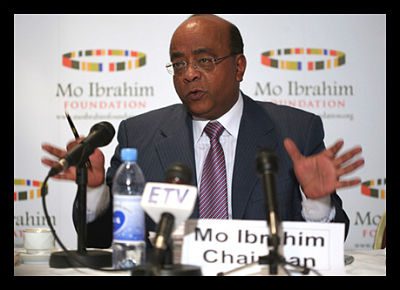
mo-ibrahim-foundation
The Mo Ibrahim Index of African Governance (IIAG) began in 2007 as a source of quantitative data for African citizens, organizations, and policy makers to refer to when making important decisions. This is just one of five core program areas for the Mo Ibrahim Foundation. The Mo Ibrahim Foundation works with other institutions to bring results to the African people by connecting citizens, stakeholders, and policy makers together. This organization believes better leadership and governance will provide full implementation of all the developmental progress that has already been made on the African continent.

In addition to the Ibrahim Index of African Governance, the other four core programs under the Mo Ibrahim Foundation are:

  1. The Ibrahim Prize for Achievement in African Leadership – A prize awarded to a former African Head of State or Government annually. Recent honorees include President Pedro Pires of Cape Verde and President Festus Mogae of Botswana. These exceptional leaders are celebrated as an example for other leaders to emulate.
  2. The Ibrahim Forum – In accordance to its commitment to create dialog between African citizens, stakeholders, and policy makers, the Mo Ibrahim Foundation has created a forum for all parties to discuss viable solutions to the proposed issues. The foundation sets up the forum in order to have productive debates based on quantitative data pulled from the IIAG and research findings.
  3. The Ibrahim Leadership Fellowship Program -This program provides mentorship for budding African leaders. Fellows are trained at top multi-lateral institutions such as the African Development Bank, the UN Economic Commission for Africa, and World Trade Organization.
  4. The Ibrahim Scholarship Program -Provides funds for future leaders to pursue their interests in select fields. Students attend top academic institutions.

Whichever solutions are discovered, or goals are accomplished in the developing nations of Africa, management of these accomplishments is a must. The Mo Ibrahim Foundation, as seen in its five core programs, works for just that. It stresses an emphasis on discussion, recognition of achieved rather than ascribed leadership, and paving the way for young, talented individuals who want to make a positive change in Africa.

Mohamed Ibrahim, the founder of the Mo Ibrahim Foundation, is now a billionaire philanthropist after selling his cellphone company, Celtel International. His philosophy is essentially, for Africa, by Africa. Founding Mo Ibrahim Foundation for him was an investment he hopes to see a return on in the future of Africa’s infrastructure. Being extremely passionate about improving African governance and leadership, Ibrahim says that the recognition given to exceptional Africa leaders under The Ibrahim Prize Program is not a façade of success in Africa, but rather a means of bringing unfiltered attention to the issue itself.

– Aysha Rasool
Feature Writer

Source: NPR Mo Ibrahim Foundation
Photo: Nazret

July 5, 2013
https://borgenproject.org/wp-content/uploads/borgen-project-logo.svg 0 0 Borgen Project https://borgenproject.org/wp-content/uploads/borgen-project-logo.svg Borgen Project2013-07-05 05:05:362017-03-20 13:02:47The Mo Ibrahim Index of African Governance
Philanthropy

Capital One Honored, Do More 24 Campaign Success

Capital-One-Do-More-24Capital One Financial Corporation was honored for the donations the company contributed last year, making it to number one on the Washington Business Journal’s list of top corporate givers in its local area by donating $15.7 million to its community in 2012. The company was honored for its philanthropy at a convention aimed at celebrating the charitable achievements made by businesses; the convention closed out with a highly successful one-day charity event called Do More 24.

The convention featured speakers of various charitable foundations — including the founding CEO of the Bill & Melinda Gates Foundation and the CEO of Martha’s Table — to discuss philanthropic strategies and stories about businesses and organizations that have greatly helped their communities through donation of time, money, or supplies to those in need.

One important achievement of the conference, in particular, was the launch of the Do More 24 campaign, a short, one-day charity event led by the United Way. The fundraiser focuses on issues related to poverty and access to economic opportunities, student performance in school, and high school graduation rates for minority students. The campaign determined which problems were the most severe in the community, and in turn gave the most donor money to the nonprofits that focus on the most pressing issues. Despite its brevity, the fundraiser was able to generate over $370,000 in just the first 30 minutes and eventually raised over $1.2 million by the end of the campaign.

– Katie Brockman

Source: Washington Business Journal, Do More 24

June 29, 2013
https://borgenproject.org/wp-content/uploads/borgen-project-logo.svg 0 0 Borgen Project https://borgenproject.org/wp-content/uploads/borgen-project-logo.svg Borgen Project2013-06-29 04:00:472020-08-21 11:44:55Capital One Honored, Do More 24 Campaign Success
Philanthropy

Top 25 Philanthropic Corporate Foundations

Philanthropic Companies
The Foundation Center has compiled a list of the top givers in the business world based on the most current financial data obtained in May 2013. Here is a list of the top 25 philanthropic corporate foundations, including the total amount of money the foundation has given in its lifetime.

1. Sanofi Foundation for North America; $497,491,467

2. Novartis Patient Assistance Foundation, Inc.; $331,911,548

3. The Bank of America Charitable Foundation, Inc.; $198,213,418

4. The Wal-Mart Foundation, Inc.; $175,680,474

5. The JPMorgan Chase Foundation; $136,201,550

6. GE Foundation; $112,221,740

7. Wells Fargo Foundation; $107,542,374

8. Citi Foundation; $78,614,500

9. The Coca-Cola Foundation, Inc.; $76,230,474

10. ExxonMobil Foundation; $74,507,597

11. Verizon Foundation; $56,282,791

12. The PNC Foundation; $54,22,909

13. The Merck Company Foundation; $53,306,196

14. Caterpillar Foundation; $49,789,926

15. Johnson & Johnson Family of Companies Foundation; $49,556,298

16. Intel Foundation; $43,388,787

17. MetLife Foundation; $43,938,306

18. The UPS Foundation; $39,833,790

19. Illinois Tool Works Foundation; $36,176,325

20. Lucasfilm Foundation; $34,770,779

21. Reckitt Benckiser Pharmaceuticals Patient Help Foundation; $30,592,240

22. The PepsiCo Foundation, Inc.; $29,773,085

23. Abbott Fund; $29,545,990

24. The Medtronic Foundation; $29,241,817

25. The Goldman Sachs Foundation; $29,237,825

Corporate philanthropy is important for several reasons and it comes in many forms, from simply donating money to encouraging employees to volunteer within the community. An obvious benefit of businesses giving back is that it benefits the community by either providing money to buy supplies or fund programs, or supplying the volunteers to run events or fundraisers. Other less-obvious benefits include boosting employee morale, recruiting more socially responsible potential employees, as well as boosting the company’s public image. These 25 companies have reaped all of these benefits and more through their generous donations to charities.

– Katie Brockman

Source: Foundation Center, Houston Chronicle
Photo: TreeHugger

June 6, 2013
https://borgenproject.org/wp-content/uploads/borgen-project-logo.svg 0 0 Borgen Project https://borgenproject.org/wp-content/uploads/borgen-project-logo.svg Borgen Project2013-06-06 04:44:272024-12-13 17:49:23Top 25 Philanthropic Corporate Foundations
Philanthropy

Does Nature or Nurture Activate Philanthropy?

smiling_twins_babies_nature_vs_nurture_volunteer_gene_parenting_opt

What makes people give? University of Minnesota psychologist Mark Snyder, PhD, asked himself that very question when he first began researching volunteerism. Snyder had a hard time thinking of reasons to volunteer, while reasons not to volunteer seemed to come easily. Could it be a question of nature vs. nurture?

Snyder has been trying to discover what exactly motivates people to volunteer for over 20 years. Through their research, he and his colleagues have identified 5 primary motivators:

Values. Volunteering satisfies personal values or humanitarian concerns, and for some, religious beliefs.

Community concern. Volunteers often feel compelled to help groups they feel a personal connection to.

Esteem enhancement. Volunteering can make you feel better about yourself as a person.

Understanding. Some people volunteer to gain understanding about cultures beyond their own.

Personal development. Some volunteers are looking to build new relationships or further their career.

The identification of these primary motivations provides insight into why some people are more philanthropic. But what steers them toward a specific motivator? Have they been taught to place value on community involvement? Have they witnessed others excel in their careers as a result of volunteer work? Or is it more basic than that? Are some people born with a desire to help others engraved in their genes?

Consider identical twins; are they alike because of genetic similarity, or because they have been raised in the same conditions? Studies show that twins exhibit striking similarities, even when they have been raised apart (genetics). But these studies also showed identical twins are never exactly alike in all respects (nurture).

So is it nature or nurture? The answer is, we just don’t know. The age old argument has never been settled, but it is commonly believed that both genetics and environment play a role in shaping who a person becomes; nature provides us with abilities and traits, but nurture shapes those traits as we learn and mature.

– Dana Johnson

Sources: American Psychological Association, About.com
Photo: High Cotton Style

June 5, 2013
https://borgenproject.org/wp-content/uploads/borgen-project-logo.svg 0 0 Borgen Project https://borgenproject.org/wp-content/uploads/borgen-project-logo.svg Borgen Project2013-06-05 04:30:302020-06-27 02:54:24Does Nature or Nurture Activate Philanthropy?
Page 12 of 14«‹1011121314›»

Get Smarter

  • Global Poverty 101
  • Global Poverty… The Good News
  • Global Poverty & U.S. Jobs
  • Global Poverty and National Security
  • Innovative Solutions to Poverty
  • Global Poverty & Aid FAQ’s
Search Search

Take Action

  • Call Congress
  • Email Congress
  • Donate
  • 30 Ways to Help
  • Volunteer Ops
  • Internships
  • Courses & Certificates
  • The Podcast
Borgen Project

“The Borgen Project is an incredible nonprofit organization that is addressing poverty and hunger and working towards ending them.”

-The Huffington Post

Inside The Borgen Project

  • Contact
  • About
  • Financials
  • President
  • Board of Directors
  • Board of Advisors

International Links

  • UK Email Parliament
  • UK Donate
  • Canada Email Parliament

Get Smarter

  • Global Poverty 101
  • Global Poverty… The Good News
  • Global Poverty & U.S. Jobs
  • Global Poverty and National Security
  • Innovative Solutions to Poverty
  • Global Poverty & Aid FAQ’s

Ways to Help

  • Call Congress
  • Email Congress
  • Donate
  • 30 Ways to Help
  • Volunteer Ops
  • Internships
  • Courses & Certificates
  • The Podcast
Scroll to top Scroll to top Scroll to top