• Link to X
  • Link to Facebook
  • Link to Instagram
  • Link to TikTok
  • Link to Youtube
  • About
    • About Us
      • President
      • Board of Directors
      • Board of Advisors
      • Financials
      • Our Methodology
      • Success Tracker
      • Contact
  • Act Now
    • 30 Ways to Help
      • Email Congress
      • Call Congress
      • Volunteer
      • Courses & Certificates
      • Be a Donor
    • Internships
      • In-Office Internships
      • Remote Internships
    • Legislation
      • Politics 101
  • The Blog
  • The Podcast
  • Magazine
  • Donate
  • Click to open the search input field Click to open the search input field Search
  • Menu Menu

Archive for category: Human Trafficking

Global Poverty, Human Trafficking

Human Trafficking in Senegal

Human Trafficking in Senegal
Poverty often drives human trafficking. Senegal faces this problem because 46.7% of its citizens have been living below the poverty line as of 2011. Senegal has become a major country in which women and children are victims of trafficking, undergoing forced labor or experiencing sexual exploitation. Here is some information about human trafficking in Senegal.

The Victims

Many young children in the country, known as “talibe” are the victims of human trafficking. Several religious schools are forcing these children to beg on the streets for them. However, these schools are supposed to be caring for these children and teaching them Islamic studies. Human Rights Watch has recorded that over 100,000 talibes had to beg on the streets of Senegal as of 2017 and 2018. Importantly, several individuals have posed as Quranic teachers as well, thus giving many religious schools a bad reputation.

Traditionally, Quranic schools had the design of helping children memorize the Quran. Many know these schools as Daaras and they provide an alternative to formal schooling.

Meanwhile, in the case of women and girls, they may experience trafficking for the purpose of doing domestic housework, performing errands and enduring sexual exploitation. They also sometimes end up in sex tourism. In fact, traffickers frequently send Senegalese women to areas such as the Middle East and Europe.

Solutions

The Senegalese government has made an effort to prevent human trafficking and help victims who have experienced trafficking. Places such as the Ginndi Center provide shelter for impoverished children, including trafficking victims. They receive funding from the Ministry of Good Governance and Child Protection (MGGCP), which receives help from international donors. MGGCP works to reunite these children with their families, being successful in at least 917 cases so far. The government also organized a special police force to combat child sex tourism and a tourism police unit that helps decrease the demand for commercial sex acts in Senegal.

Since 2005, Senegal has a Law to Combat Trafficking in Persons and Related Practices and to Protect Victims. In addition, a new Air and Border Police unit in charge of transnational criminal investigations emerged. The penalities are different regarding crimes of sex trafficking, forced labor and forced begging.

As Senegal’s 2019 Trafficking in Persons Report explained, Senegalese laws impose five to 10 years of imprisonment and a fine for sex and labor trafficking. Meanwhile, in the case of forced begging, Senegal imposes imprisonment of two to five years and a fine. Unfortunately, the government simply handles some traffickers administratively.

Pathway to Continued Progress

Despite the lack of accountability of some officials and traffickers, continuous progress is occurring to increase the number of partnerships between international organizations, NGOs and government ministries/agencies. Workshops and training have been underway for judicial officials, law enforcement, gendarmerie, reporters and social workers. This is providing them with the tools they need for victim identification, investigation practices and assistance procedures in the hopes of eradicating human trafficking in Senegal.

Lastly, three noteworthy achievements have occurred in the fight against human trafficking in Senegal. First, a campaign awareness, that MGGCP organized, exhibited photos of vulnerable children beggars in June 2018. Second, MGGCP initiated a workshop for reporters dealing with child protection, labor and trafficking in November 2018. Lastly, the continued Daara Mapping Project emerged, which is a coordinated effort that compiles and inspects all the Daaras to prevent any type of abuse.

Looking Ahead

Senegal has taken steps to combat human trafficking and corruption. It has also created more economic partnerships by doing business with countries such as France and China.

The Senegalese, just like the rest of the world, must be more sensitive when it comes to human trafficking. Overall, despite the grim realities of human trafficking in Senegal, progress is tangible and citizen awareness is increasing every day.

– Elhadj Oumar Tall
Photo: Flickr

February 2, 2021
https://borgenproject.org/wp-content/uploads/borgen-project-logo.svg 0 0 Jennifer Philipp https://borgenproject.org/wp-content/uploads/borgen-project-logo.svg Jennifer Philipp2021-02-02 21:15:502021-03-26 21:16:05Human Trafficking in Senegal
Global Poverty, Human Rights, Human Trafficking

Human Trafficking In Malaysia

Human Trafficking in Malaysia
As of 2019, the Global Slavery Index indicates that Malaysia has more than 212,000 people trapped in situations of slavery, a facet of human trafficking. The government has vowed to take action to address this, but as of 2020, efforts to control trafficking have not seen tremendous success. According to Reuters, Malaysia has made only 140 convictions concerning human trafficking out of 1,600 investigations between 2014 to 2018. People come to Malaysia from Indonesia and Bangladesh in hopes of a promising future but end up experiencing exploitation in unpaid labor or sex trafficking. Often, traffickers lure victims with the promise of a decent-paying job such as domestic work and then the traffickers force them into sex trafficking.

Prosecution of Traffickers

Malaysia launched its separate trafficking court in 2018 to help reduce the prevalence of this crime. However, as of March 2018, it cleared only 26 cases within the first 15 months. Yet, in 2017, a court addressing sex trafficking cases among children saw more than 300 cases in one year.

In 2020, a significant increase in efforts to stop human trafficking in Malaysia occurred. These efforts involved numerous changes, including summoning the help of two volunteer victim assistance specialists to work with more than 100 victims. Prime Minister Muhyiddin Yassin even hosted the first-ever national conference on anti-trafficking in 2019. The nation made stronger efforts to identify more victims than in previous years while increasing the level of traffic specialist prosecutors and creating a victim processing standard. Overall, in 2020, Malaysia saw an increase in identifying victims — 2,229 potential victims and 82 confirmed victims, with adult women accounting for 55 of these confirmed victims.

Malaysia and TVPA Recommendations

Even with this significant improvement, the government’s efforts are still lacking, resulting in the conviction of fewer traffickers in 2020. The number of investigations that authorities in Malaysia pursue is significantly low in comparison to the scale of the problem. The government has failed to prosecute those complicit with human trafficking and instead, chose to allow for release due to corruption in the government. Malaysia did not make it public that it was investigating this problem. Additionally, inadequate victim services resulted in victims not staying in Malaysia for court proceedings, causing authorities to drop their cases.

Through the Trafficking in Persons Report, Malaysia received a ranking as a Tier 2 Watchlist country. This means that while the nation has not successfully eliminated human trafficking, it is taking significant steps to do so. If a country shows that it is making significant efforts to meet the minimum requirements of the Victims of Trafficking and Violence Protection Act (TVPA) of 2000, it will remain at its current tier. These tiers indicate how much effort a country puts toward stopping human trafficking.

Tier 1 ranked countries consist of nations whose governments fully comply with the TVPA’s minimum standards. Tier 1 countries make a continuous effort to prevent human trafficking. Meanwhile, for Tier 2 countries, governments do not fully comply with the minimum standards but are making significant efforts to bring themselves into compliance. Finally, Tier 3 countries do not comply with TVPA’s standards and are not making an effort to do so.

Tiers can negatively affect countries. For example, Tier 3 countries often do not receive aid and other support that can better the country, which motivates many countries to improve their rankings.

Malaysia’s Standing

Malaysia is currently on the Tier 2 Watchlist on TVPA’s scale because it is continuing to prove that it is willing to work on the issue. According to TVPA standards and the U.S. State Department, the Malaysian government should take various steps to help reduce human trafficking in Malaysia.

The Malaysian government needs to provide the funding and training necessary to have more government-sanctioned officials available. If Malaysia has more government officials, it should be able to lower victim counts. More work is necessary regarding victim identification and Malaysia should place more emphasis on locating potential traffickers.

It is also important for victims to be able to promptly leave special housing. Malaysia implemented the Anti-Trafficking in Persons and Anti-Smuggling of Migrants (ATISOM) Act in 2007, which allows victims court-ordered protection where they end up receiving a placement for 21 to 90 days depending on their situation. Malaysia is working on allowing victims to leave shelters unchaperoned and enabling victims to contact others outside shelters through telephone. This should allow victims the opportunity to slowly integrate back into their normal lives.

Several changes are occurring to stop human trafficking in Malaysia. Crackdowns on corrupt officials will allow Malaysia to help protect victims. Hopefully, these efforts will also help track down more potential victims and bring them to safety.

– Claire Olmstead
Photo: Flickr

February 1, 2021
https://borgenproject.org/wp-content/uploads/borgen-project-logo.svg 0 0 Jennifer Philipp https://borgenproject.org/wp-content/uploads/borgen-project-logo.svg Jennifer Philipp2021-02-01 14:03:122022-05-06 08:42:41Human Trafficking In Malaysia
Global Poverty, Human Trafficking

Addressing Human Trafficking in the Marshall Islands

Human Trafficking in the Marshall Islands
The Marshall Islands, located in the northwestern Pacific Ocean, has had its fair share of organized crime. Many in this country are in danger of human trafficking. Fortunately, the government is stepping in to address human trafficking in the Marshall Islands.

Human Trafficking

Human trafficking is modern-day slavery. Victims are often swindled for labor and sexual abuse. The International Labor Organization estimates that 12.3 million people globally have been forced into involuntary labor, involuntary child labor, bonded labor and sexual subjugation.

In order to combat this, the U.S. Congress created the Trafficking Victims Protection Act to end worldwide human trafficking. A specific tool utilized is the annual Trafficking in Persons Report, which evaluates the government response in countries with reputations of human trafficking. The governmental endeavors to end trafficking are the foundations for the annual country report of three tiers.

The Marshall Islands rank in Tier 3, which means they do not entirely act in accordance with the minimum guidelines for the abolishment of trafficking and there are no major efforts to accomplish this. Sex trafficking in the Marshall Islands is of particular concern, with many women of Marshallese and East Asian descent being targeted.

Recent Example

In late 2019, Paul Petersen, a public official in Arizona, was arrested for the trafficking of Marshallese women. The multi-million dollar scheme involved smuggling pregnant women into the U.S. and then profiting from their newborns.

As the owner of an adoption law firm, Petersen falsified documentation on the mothers’ residency and then charged parents in the U.S. tens of thousands of dollars for the newborns. According to Duane Kees, the U.S. attorney for the western district of Arkansas, “Many of these mothers described their ordeal as being treated like property.”

While this case is being addressed in the U.S., efforts to prevent women from being taken from the Marshall Islands are also needed. One of the difficulties of human trafficking, however, is that it often occurs internationally, making it hard to find traffickers and their victims.

Government Efforts

The Republic of the Marshall Islands’ government is taking action to eliminate human trafficking. These actions include starting their first trafficking prosecution in just under a decade while also initiating an investigation on an immigration officer for reputed trafficking collaboration. Due to increased efforts, the Marshall Islands have recently risen to Tier 2.

Efforts to address human trafficking in the Marshall Islands can be categorized as prevention, protection or prosecution. To help prevent human trafficking, the government banned unregistered visitors on foreign fishing boats in Majuro. It also required crewmen to bring their ships in by nightfall.

To protect victims of human trafficking, the government created a network of safe houses for women aged 14 to 18. Other protection services provided by the government include legal assistance, counseling and examinations for sexually transmitted diseases.

In terms of improving prosecution, the government has been establishing more specific punishments for human trafficking. The Prohibition of Trafficking in Persons Act criminalized labor and sex trafficking and authorized punishments of up to 15 years in prison as well as a fine of $10,000.

Moving Forward

Human trafficking in the Marshall Islands has decreased, but more work needs to be done to eliminate it completely. Moving forward, the government and other humanitarian organizations must prioritize addressing the root causes of trafficking, protecting victims and finding and prosecuting traffickers. Hopefully, human trafficking will continue to be on the decline in the coming years.

– Shalman Ahmed
Photo: Flickr

February 1, 2021
https://borgenproject.org/wp-content/uploads/borgen-project-logo.svg 0 0 Yuki https://borgenproject.org/wp-content/uploads/borgen-project-logo.svg Yuki2021-02-01 13:11:192021-02-01 13:11:19Addressing Human Trafficking in the Marshall Islands
Global Poverty, Human Trafficking

Human Trafficking in Uzbekistan

Human Trafficking in Uzbekistan
On February 26, 2020, Uzbek Assembly Officials and Chonburi Provincial Police rescued four Uzbek women in Pattaya, Thailand. The women were victims of a human trafficking scam, traveling under assumptions of better pay and work. Traffickers held them captive in a condominium in south Pattaya doing undisclosed labor. Sadly, human trafficking in Uzbekistan is not new. In fact, 600,000 new migrant workers enter the Uzbek labor force each year, looking to take advantage of the opportunities within central Asia. Many workers are vulnerable to anonymous traffickers who have access to making high profits from construction, agriculture and entertainment industries, and can easily exploit environments where governments do not act upon human rights violations. In many aspects, workers’ rights and human trafficking indefinitely interlink, and looking at places like Uzbekistan can shed light on how to go about changing the playing field.

Uzbekistan’s Progress at Eliminating Human Trafficking

Shavkat Mirziyoyev is the current Uzbek president-elect since September 8, 2016.  Mirziyoyev has made considerable progress on advocating for human rights following the death of former president Islam Karimov, but still has a lot of work to do. Since 2017, Uzbekistan is currently on the U.S. Department of State’s Tier 2 watch list, failing to decrease cases of severe trafficking and lacking evidence of government efforts to implement prosecutions, investigations and convictions on trafficking crimes; this is mostly because the country itself is guilty of violating human rights.

Both government officials and privately owned businesses have forced Uzbek employees from the public sector to work on cotton fields, threatening them with job-related consequences while making a profit from their free labor. Around half of the respondents from an online survey that the Uzbek Forum conducted claimed they could not refuse the demands of employers or government officials. The survey consisted of employees from banks, government administrations, police and medical/educational personnel.

Forced Labor in Cotton

Cotton has historically been a viable cash crop for the Uzbek government, providing close to $1 billion per harvest season, historically demanding Uzbek farmers meet high quotas for company distribution. Mirziyoyev has refuted these circumstances, claiming his plan to reduce forced labor is by mainly exporting fiber and focusing more on mechanized harvesting. The U.S. Embassy in Uzbekistan reported that in 2017, president Mirziyoyev incorporated international NGOs to track potential traffickers and laborers, and through wide-reaching campaigns and production monitoring, the number of people being forced to work the fall harvest has fallen each year. However, the demand for cotton has not ceased, and it found that reports of forced labor were increasing within the Uzbek subdivisions of Syrdarya, Surkhandarya, Khorezm and Tashkent in 2019.

Even with legislative power, the need for cotton was still prominent, and corrupt government officials still threatened public sector employees to work. S&P Global reports that near the end of 2019, President Mirziyoyev proclaimed “Instead of using forced labor, I’d prefer not to have the cotton. Let it stay in the fields.”

Successes

In March 2020, President Mirziyoyev abolished the state-set cotton quota as a plan to incentivize representatives to double down on cotton production, therefore reducing the need for forced labor. In late September, The Ministry of Agriculture announced that Uzbek cotton-picking wages increased from $60 per ton in 2019 to $90 per ton in 2020. Monitoring has also played in Mirzoyev’s favor since late 2019, with the International Labour Organization (ILO) successfully recording 1,282 cases of forced labor, which has been assisting Uzbekistan since 2013.

Today, the ILO is an integrated third-party monitoring agency in Uzbekistan, working with its own training, methodology and monitoring tactics. Elena Urlaeva, a human rights activist and monitor for the ILO, says Uzbekistan has given the organization badges to access cases without question, and due to the new legislation that President Mirziyoyev signed on January 2020, “we have also recently introduced criminalization of forced labor, which we hope will serve as an effective deterrent.” However, the country lost an estimated  670,000 migrant jobs due to COVID-19, and the need for voluntary labor overruled the new legislation.

Human Trafficking in Uzbekistan and the Internet

On the local level, the internet has given a platform for migrants to find work easily but also allows traffickers to facelessly trap their victims online. The IOM UN Migration, an intergovernmental organization, reported that “We’ve noticed a sharp increase in this phenomenon of online trafficking in the past two years, and it’s high time that we fought back, also online.” The organization worked within the Uzbek region to further its campaigns online, workshopping through social media to safely spread the word of working fraud online.

Coincidentally on August 19, 2020, within the midst of COVID-19, the UNODC (United Nations Office on Drugs and Crime), hosted an online awareness campaign, promoting younger kids in Uzbekistan to send in “the best video, article, fine art, photo and essay on the subject of “Youth against human trafficking!” produced by young people of Uzbekistan.” There were thousands of submissions and the event occurred in an auditorium with panels of kids participating and learning through Zoom.

President Mirziyoyev seeks to keep helping victims by pushing laws that help rehabilitate trafficked victims and using his legislation to uphold human rights, but even though trafficking numbers have fallen, Uzbek Parliament reveals that traffickers’ selling of newborns has risen by 43% in 2020. As a result, the fight to eliminate human trafficking in Uzbekistan continues.

– Matthew Martinez
Photo: Flickr


January 31, 2021
https://borgenproject.org/wp-content/uploads/borgen-project-logo.svg 0 0 Jennifer Philipp https://borgenproject.org/wp-content/uploads/borgen-project-logo.svg Jennifer Philipp2021-01-31 01:32:082021-01-29 09:45:52Human Trafficking in Uzbekistan
Global Poverty, Human Trafficking, NGOs

Tackling Human Trafficking in Russia

Human Trafficking in Russia
As it stands, Russia is one of the largest hubs of human trafficking and has some of the weakest laws fighting against it. In fact, the Global Slavery Index states that, in 2016, “794,000 people lived in conditions of modern slavery in Russia.” Even so, many organizations are stepping up to eliminate human trafficking in Russia while Russia’s federal government is failing to act.

The Situation

The United States Trafficking in Persons Report (TIP) 2020 lists Russia alongside Iran and China as a Tier 3 country because it does not meet the minimum standards in the fight against human trafficking. Since 2003, the Russian Parliament passed only one bill related to human trafficking in Russia whilst the former countries of the Soviet Union implemented hundreds of laws. Even then, the law is vague and fails to comply with the definitions that the U.N. set.

While sex trafficking is a major problem, most instances of human trafficking in Russia relate to forced labor. In the TIP report for 2019, North Korean workers, likely “engaged in informal labor,” received approximately 20,000 student visas and tourist visas. As authorities declined to investigate instances of trafficking, reports showed evidence that the North Korean government held forced labor work camps in Russia. Despite this systemic abuse, no federal help came to assist victims or prosecute the perpetrators.

The 2014 Sochi Winter Olympics and the 2018 FIFA World Cup enriched Russia’s economy but under the backs of tens of thousands of unpaid workers. According to the Harvard International Review, about 70,000 foreign laborers worked on these two projects. Reportedly, these workers suffered under terrible conditions and those who did receive pay did not have any way to get back home. Considering the situation of trafficking in Russia, some NGOs are making sure victims obtain justice.

Alternativa

Also known as The Alternative, human rights activist Oleg Melikov originally founded the NGO in response to political corruption and environmental harm. The organization has rescued more than 1,000 victims of modern slavery, including a much-publicized case of a man forced to work in a Dagestan brick plant. The backlash forced the Dagestani government to create stricter labor laws and tighter rules for people to enter public buses.

Help Services For Nigerians in Russia

Specifically fighting for the protection of Nigerians against sex trafficking, this organization is responsible for saving more than 240 women from slavery. This work is directly due to Nigerian-born activist Oluremi Banwo Kehinde. Since 2015, he has provided temporary housing, coordinated official documentation and referred victims for medical treatment. As a result of his work, then-Secretary of State John Kerry regarded Kehinde as a Trafficking in Persons Hero in 2016.

Eurasia Foundation

Founded in 1992 following the Soviet Union’s fall, Eurasia Foundation is a massive organization spanning from Eastern Europe to Uzbekistan. Its focus is on assisting community initiatives, providing scholarships and promoting global education.

Eurasia Foundation hosted a forum on combating human trafficking in Central Asia, including Russia. For five days, experts, government officials and others analyzed methods to solve modern slavery, even highlighting the plausibility that the COVID-19 pandemic may strengthen the anonymity of traffickers. EF’s forums resulted in local organizations being better able to protect survivors and prosecute criminals. With psychosociological therapy and practical learning, more than 300 persons experienced reintegration into society in the first nine months of 2020.

The tragedy of human trafficking in Russia is real, but these international heroes are working to assist the victims and provide real solutions. What each of these organizations has in common is an altruistic desire to ease suffering, even at the expense of their own safety.

– Zachary Sherry
Photo: Flickr

January 29, 2021
https://borgenproject.org/wp-content/uploads/borgen-project-logo.svg 0 0 Jennifer Philipp https://borgenproject.org/wp-content/uploads/borgen-project-logo.svg Jennifer Philipp2021-01-29 07:30:022024-06-06 00:59:29Tackling Human Trafficking in Russia
COVID-19, Global Poverty, Human Trafficking, Women, Women & Children

Online Human Trafficking During COVID-19

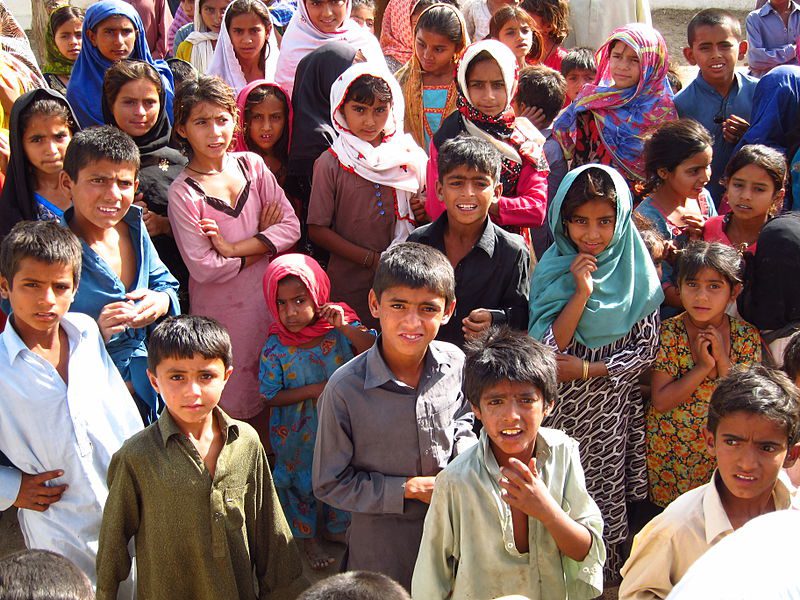
human trafficking during COVID-19The United Nations has warned of a recent increase in human trafficking taking place through social media. According to the Committee on the Elimination of Discrimination against Women (CEDAW) perpetrators are approaching victims on social media and messaging platforms. Experts correlate this surge of online human trafficking with the lockdowns governments have implemented to combat COVID-19 that has left millions of people jobless and struggling to survive.
The Human Trafficking Crisis

Human trafficking has long posed a threat to the safety and well-being of the world’s most vulnerable populations. The U.N. has stated that between 2017 and 2018, approximately 75,000 trafficking victims were identified in 110 countries. During this period, 70% of victims were female, 77% of whom were then trafficked for sexual exploitation and 14% for forced labor.

There are several factors that make a person more vulnerable to human trafficking. The most pressing factor, however, is financial struggles or poverty.

Online Human Trafficking and COVID-19

Human trafficking is on the rise as millions are made desperate by the economic consequences of COVID-19. People employed in informal sectors have been particularly impacted by layoffs, while earlier this year migrant workers were left stranded far from home when borders closed and travel bans were implemented. According to the World Bank, the COVID-19 pandemic will result in global extreme poverty increasing for the first time in two decades, pushing as many as 150 million people into poverty by 2021.

The impact, however, will be felt the hardest by females. As a result of the pandemic, 47 million more women and girls will be pushed into extreme poverty. Estimates even predict that globally, for every 100 men living in poverty in 2030, there could be as many as 121 women.

Besides  COVID-19’s economic consequences, traffickers have also benefited from the fact that people are spending more time online during lockdowns. While traffickers have usually operated with a great deal of impunity, the internet allows for easier access to vulnerable populations as well as the benefits of anonymity and false identities.

Addressing Human Trafficking During COVID-19

Human trafficking is a global problem but despite the scale of the threat and the advantages that perpetrators have during COVID-19, governments can take action to protect vulnerable groups, especially women and girls.

In an appeal to social media and messaging companies, CEDAW recommended that safety controls be set up to reduce the risk of exposing women and girls to trafficking and sexual exploitation. CEDAW has called upon online platforms to use data, artificial intelligence and analytics to identify possible patterns that could lead to trafficking. It also urges platforms to “put in place the appropriate governance structure and procedures which will allow them to be reactive in their response and provide the relevant level of information to the concerned authorities.”

CEDAW also urged governments to resolve the underlying issues that allow human trafficking to flourish. These issues include sex-based discrimination, economic insecurity, conflict and unsafe conditions for migrants and displaced people.

In addition, the United Nations has urged national governments to ensure that services for trafficking victims and survivors stay open during lockdowns and that the rights of migrant and informal workers are protected by labor laws. Finally, investments in programs for women’s economic empowerment are encouraged as a means of mitigating the disproportionate economic impacts on females. With the appropriate measures in place, human trafficking during COVID-19 can be prevented.

– Angie Grigsby
Photo: Flickr

January 28, 2021
https://borgenproject.org/wp-content/uploads/borgen-project-logo.svg 0 0 Yuki https://borgenproject.org/wp-content/uploads/borgen-project-logo.svg Yuki2021-01-28 01:30:552024-05-30 07:55:58Online Human Trafficking During COVID-19
Global Poverty, Human Trafficking

Combating Human Trafficking In Pakistan

Human Trafficking in Pakistan
Every year, the U.S. State Department publishes a report on the status of human trafficking around the globe. It ranks countries using a tier system from one to three. A score of one signifies that a country is combating human trafficking at a highly proficient level. A score of three signifies that there is ample room for improvement. In 2020, Pakistan received a Tier 2 Watch List rating for its handling of human trafficking in Pakistan.

The biggest obstacle standing between Pakistan and a Tier 1 rating is the prominence of bonded labor. Bonded labor is when a person, whether a man, woman or child, must work in order to pay off a debt. This labor is intense and usually takes place on farms or in brick kilns. The amount of debt is often ambiguous and laborers do not receive clear contracts. On some occasions, human traffickers force entire families into bonded labor under unclear terms for open-ended spans of time. While there is still work to do, Pakistan has made major strides in the right direction.

Starting the Conversation

In order to resolve any crisis, the first step is effectively communicating that a problem exists. The United Nations Office on Drugs and Crime (UNODC) has successfully pinpointed hotspots where human trafficking in Pakistan is most prevalent. These hotspots are the primary targets of hundreds of thousands of posters and flyers informing the general population of the human trafficking problem. The posters and flyers display a message that is loud and clear. “Stand up against human trafficking and migrant smuggling, it is illegal, unethical and un-Islamic.” That phrase is especially powerful, as more than 95% of Pakistanis are believers in the Islamic faith.

Cracking Down

Pakistan first took measures to combat human trafficking at the national level back in 2002. Since then, the Pakistani government has been working to pass more legislation to effectively resolve the problem.

In 2018, Pakistan passed the Prevention of Trafficking in Persons Act (PTPA). The PTPA calls for prison sentences ranging from two to 10 years for labor and sex trafficking violations as well as fines of up to $6,460. Prison terms are steepest when the victim is a child.

Under the new PTPA and existing Pakistani laws, more than 1,000 human trafficking investigations took place in 2019, according to the most recent State Department report. As a result, the country made 161 convictions and there was a specific uptick in convictions related to bonded labor in comparison to the previous year.

Uncovering New Networks

Human trafficking in Pakistan is not limited to its borders. Elaborate trafficking networks between Pakistan and China have recently come to light.

A growing problem is the arrangement of fraudulent marriages between young Pakistani women and Chinese nationals. The Chinese nationals lead the Pakistani women to believe they are law-abiding, financially well-off citizens. However, upon arrival in China, several women have reported that the men do not fit the profile the women initially received. Instead, many women discover that their “husbands” have bought them in order to use and sell them as sex slaves. Fortunately, some Pakistani women have escaped these situations and are fighting back.

Activists Emerge

Survivors are drawing more attention to the trafficking of women between Pakistan and China. Women who have escaped provide valuable intel. Their knowledge is critical to breaking the cycle of human trafficking between the two countries.

Saleem Iqbal is a Pakistani gentleman devoted to providing safety and security (which his name literally means in Arabic) to victims. He has been working diligently to aid in the escapes of young Pakistani women from China and gain a deeper look into how these trafficking rings operate. Iqbal ensures that the women receive care and that others listen to them upon their return to Pakistan. While it is difficult at times for survivors to talk about the horrendous conditions they faced in China, the information is invaluable. With survivors and people like Iqbal working together, police can gain a much better picture of who to investigate and where.

Moving Forward

Human trafficking in Pakistan remains a high priority issue and the country can certainly take more steps to combat it. The silver lining is that there is a solid foundation to build on. That foundation includes the U.N. working to raise awareness, government officials passing new legislation and survivors providing intel to law enforcement. With all of these parts working in tandem, Pakistan is one step closer to attaining a Tier 1 rating.

– Jake Hill
Photo: Wikipedia Commons

January 22, 2021
https://borgenproject.org/wp-content/uploads/borgen-project-logo.svg 0 0 Jennifer Philipp https://borgenproject.org/wp-content/uploads/borgen-project-logo.svg Jennifer Philipp2021-01-22 01:30:012022-04-28 07:41:53Combating Human Trafficking In Pakistan
Global Poverty, Human Trafficking, Women and Children

Reaching Out Romania Fights Sex Trafficking

reaching out romaniaIn Romanian, ‘Lavandelina’ means comfort or soothing. The definition is quite fitting for one small NGO that has utilized selling lavender-based essential oils to raise funds for its mission to fight sex trafficking. Since it opened in 1999, Reaching Out Romania has provided psychological, medical and legal assistance to more than 470 victims of sex trafficking. 

Reaching Out Romania

The organization was founded by Iana Matei, a trained psychologist who was approached by authorities and asked to intervene when three young girls were rescued from a trafficking situation. The girls told Matei that they had been sold by a gypsy and then sent out on the streets. Matei was shocked to learn that there were no organizations in Romania to fight the illicit sex trafficking industry and decided to start her own.

Sex Trafficking Rings

According to a report by the United Nations Office on Drugs and Crime, the majority of human trafficking victims detected in Europe have come from the Balkans and the former Soviet Union. Romania is one of the countries with the highest levels of sex trafficking reported. Many of the women pulled into the industry come from poor households and have limited options to earn an income.

Most of the girls who end up staying with Matei have returned from Italy or Spain, which are the two main destinations for young Romanians who fall victim to prostitution rings.

Lavender Farming for Essential Oils

As more young women sought refuge at Reaching Out Romania, Matei had to think of a way to fund more housing and secure medical coverage for the girls. When a 15-acre parcel of land was donated to the organization, Matei was initially unsure what to make of it. She met with Creative Nova, a design thinking agency, that helped Reaching Out Romania create a business plan. Its idea was simple: plant lavender and make essential oils to sell.

Over the last few years, the market for essential oils has been on the rise. Reports indicate that the U.S. essential oil market will expand at an annual growth rate of 9% through 2024. Recent preferences for alternative medicine and reports on the therapeutic benefits of essential oils have triggered the growing demand. The timing was right for Reaching Out Romania as few farmers were planting lavender yet the demand for essential oils was on the increase.

In addition to raising funds, the girls at Reaching Out Romania are encouraged to secure paid work in order to secure their independent futures. Roughly 30% of the victims come from rural areas so the organization tries to assist them in searching for a job in the agricultural field. The lavender fields were a perfect starting place. Over the summer, many of the girls staying at Reaching Out Romania visit the lavender farm to learn from experts and receive training in farming.

Addressing Human Trafficking in Romania

Matei and her organization, Reaching Out Romania, have received multiple recognition awards. The lavender farm proves mutually beneficial as a source of employment for the girls and a source of funding for the organization.

– Miska Salemann
Photo: Unsplash

January 14, 2021
https://borgenproject.org/wp-content/uploads/borgen-project-logo.svg 0 0 Yuki https://borgenproject.org/wp-content/uploads/borgen-project-logo.svg Yuki2021-01-14 02:51:072021-01-14 02:51:07Reaching Out Romania Fights Sex Trafficking
Global Poverty, Human Trafficking

Examining Human Trafficking in Somalia

Examining Human Trafficking in SomaliaHuman trafficking is the use of force, fraud or coercion to obtain labor or a commercial sex act. Today, human trafficking is a modern term for slavery. Mayumi Ueno, the counter-trafficking project manager at the International Office for Migration (IOM)’s Somalia Support Office, said the scale of human trafficking in Somalia is unknown. Somal women are often trafficked to Kenya, Djibouti and the United Arab Emirates to be sexually exploited.

How Human Trafficking in Somalia Happens

Every day, Najib Jama Abdi’s sister got up and walked to school. One day, she did not return. The Abdi family heard from the media that she had been trafficked to Somaliland. “By Allah’s mercy she was saved,” said Najib Jama Abdi to The New Humanitarian. Organizations like the Somali Police Force’s criminal investigations division 40-officer Counter-Trafficking and Organized Crime Unit work to rescue girls who have been kidnapped off the street and sold into human trafficking, like Abdi’s sister.

Human Trafficking in Somalia is a widespread issue. Women and girls are sometimes lied to and offered job opportunities, marriage or education in far-away places and then sold into sex slavery. In 2009, IOM began the Counter-Trafficking Project for Somalia. In Puntland and Somaliland, its activities included promoting awareness and informing citizens of the risks and dangers of being trafficked through media such as billboards.

History of Trafficking in Somalia

For decades, military dictator Siad Barre committed widespread atrocities, which effectively destroyed Somali civil society. Then, in May 1991, Barre was overthrown. The east desert region of Somalia declared itself the “Republic of Somaliland” after the overthrow of Barre. Somaliland now has a population of 3.5 million people, a functional political system, its own currency and a police force.

Before 1991, the federal and regional laws criminalized slave labor and certain forms of sex trafficking. Then, after Barre was overthrown, No progress was reported again until September 2017, when a human trafficking law was drafted and endorsed by Somaliland.

What’s Happening Now

Officials said they are concerned about the increasing amount of human trafficking in Somalia, specifically in the region of Somaliland. This region lies in the south-central region of Somalia. As a result, the lack of government in Somaliland makes child trafficking easier for traffickers to get away with. In November 2017, the city-state of Puntland in northeastern Somalia made valid a human trafficking legislative framework. It was made of new criminal procedures, penal codes and laws that specifically prohibit trafficking. The authorities recorded two trafficking cases that involved six individuals in 2020, during the period the U.S. government reported on the issue.

The Trafficking and Smuggling Task Force was the government’s anti-trafficking coordinating body. However, slow steps are being taken by the government to mitigate human trafficking in Somalia. Nevertheless, new anti-trafficking initiatives are moving in the right direction to end human trafficking in Somalia.

– Madeline Drayna
Photo: Flickr 

January 8, 2021
https://borgenproject.org/wp-content/uploads/borgen-project-logo.svg 0 0 Kim Thelwell https://borgenproject.org/wp-content/uploads/borgen-project-logo.svg Kim Thelwell2021-01-08 12:03:142021-01-08 12:03:14Examining Human Trafficking in Somalia
Human Trafficking

Path to Eliminating Human Trafficking in Namibia

Human trafficking in NamibiaAccording to the 2018 Global Slavery Index, more than 40 million people worldwide were trafficked into modern slavery as of 2016. In sub-Saharan Africa alone, this number was 7.8 million, making up 19% of the world’s trafficked population. In 2020, Namibia became the first African country to reach the rank of Tier 1 in the 2020 Trafficking in Persons report for its progress in eliminating human trafficking.

Measuring Human Trafficking

The most widely accepted and comprehensive measurement of human trafficking is the annual Trafficking in Persons (TIP) report released by the United States Department of State. The report measures countries on how well they prosecute human trafficking offenders, protect human trafficking victims and prevent human trafficking from occurring in the first place. This system divides countries into three tiers and ranks them based upon what minimum standards of compliance they meet.

Firstly, Tier 3 countries do not meet minimum standards and do not attempt to comply. Tier 2 countries do not meet all of the minimum standards but actively work toward them. Ultimately, Tier 1 countries comply with the minimum standards to eliminate human trafficking. Still, that does not mean human trafficking completely ceases to exist in these countries. These tiers are diplomatic tools as well as a guide for the allocation of resources. For example, a Tier 2 county needs more international assistance than a Tier 1 country, while a Tier 3 country may face negative consequences such as trade restrictions.

Namibia’s Path to Tier 1

The United States Department of State identified Namibia as a “Special Case” in the 2008 TIP report. This designation means observers suspect the country of having a significant amount of human trafficking but there is not enough reliable data to determine its tier ranking. The specific concern with Namibia was that the country was engaged as both a source and destination for child sex and labor trafficking.

In 2009 Namibia moved up to Tier 2 sitting on the Watch List from 2012 to 2015. Namibia was removed from the Watch List but stayed at Tier 2 from 2016 to 2019. Since then, Namibia has taken significant steps toward eliminating human trafficking.

During the TIP reporting period for 2020 rankings, Namibia made sufficient improvements to move from Tier 2 to Tier 1. These improvements include:

  • Enforcing the Combating of Trafficking in Persons Act of 2018
  • Prosecuting more human traffickers with stricter penalties
  • Identifying and caring for more victims
  • Launching an awareness campaign
  • Increasing prevention efforts and training

In 2020 alone, Namibia arrested 31 individuals for sex and labor trafficking and has 29 open investigations, compared to the investigation of nine cases in 2018. The government was also able to identify 30 victims of human trafficking, including 20 children. NGO shelters cared for all the victims.

Looking to the Future

Even countries with Tier 1 ratings have work to do to continue making steps toward the complete elimination of human trafficking and prevent backsliding. While Namibia has made dramatic improvements, the United States Department of State noted that training for frontline responders was not always adequate. Furthermore, there was some miscommunication between different government and civil sectors. To continue on its current path of progress, the Department of State recommends that Namibia improves training and coordination. The Department also recommends that Namibia’s government should continue to prosecute offenders and provide for victims. By continuously improving its services, Namibia can get closer to eliminating human trafficking and provide safer living conditions for its citizens.

– Starr Sumner
Photo: Flickr

January 2, 2021
https://borgenproject.org/wp-content/uploads/borgen-project-logo.svg 0 0 Yuki https://borgenproject.org/wp-content/uploads/borgen-project-logo.svg Yuki2021-01-02 07:30:482021-04-28 08:37:03Path to Eliminating Human Trafficking in Namibia
Page 16 of 31«‹1415161718›»

Get Smarter

  • Global Poverty 101
  • Global Poverty… The Good News
  • Global Poverty & U.S. Jobs
  • Global Poverty and National Security
  • Innovative Solutions to Poverty
  • Global Poverty & Aid FAQ’s
Search Search

Take Action

  • Call Congress
  • Email Congress
  • Donate
  • 30 Ways to Help
  • Volunteer Ops
  • Internships
  • Courses & Certificates
  • The Podcast
Borgen Project

“The Borgen Project is an incredible nonprofit organization that is addressing poverty and hunger and working towards ending them.”

-The Huffington Post

Inside The Borgen Project

  • Contact
  • About
  • Financials
  • President
  • Board of Directors
  • Board of Advisors

International Links

  • UK Email Parliament
  • UK Donate
  • Canada Email Parliament

Get Smarter

  • Global Poverty 101
  • Global Poverty… The Good News
  • Global Poverty & U.S. Jobs
  • Global Poverty and National Security
  • Innovative Solutions to Poverty
  • Global Poverty & Aid FAQ’s

Ways to Help

  • Call Congress
  • Email Congress
  • Donate
  • 30 Ways to Help
  • Volunteer Ops
  • Internships
  • Courses & Certificates
  • The Podcast
Scroll to top Scroll to top Scroll to top