• Link to X
  • Link to Facebook
  • Link to Instagram
  • Link to TikTok
  • Link to Youtube
  • About
    • About Us
      • President
      • Board of Directors
      • Board of Advisors
      • Financials
      • Our Methodology
      • Success Tracker
      • Contact
  • Act Now
    • 30 Ways to Help
      • Email Congress
      • Call Congress
      • Volunteer
      • Courses & Certificates
      • Be a Donor
    • Internships
      • In-Office Internships
      • Remote Internships
    • Legislation
      • Politics 101
  • The Blog
  • The Podcast
  • Magazine
  • Donate
  • Click to open the search input field Click to open the search input field Search
  • Menu Menu

Archive for category: Global Poverty

Key articles and information on global poverty.

Global Poverty

Dawrati Addresses Period Poverty in Lebanon

Period Poverty in Lebanon
In a world where many people within underdeveloped nations struggle to afford even their next meal, the issue of period poverty runs rampant. In Lebanon, specifically, a country experiencing what the World Bank describes as “one of the world’s worst financial crises since the 1850s,” the issue of period poverty in Lebanon is a growing concern.

What is Period Poverty?

The United Nations Population Fund (UNFPA) defines period poverty as “the struggle many low-income women and girls face while trying to afford menstrual products.” However, one can also use the term in a more broad and all-encompassing way. Period poverty also refers to any increased financial vulnerability a group of people may face strictly due to menstruation. As the country of Lebanon sinks deeper into economic and financial turmoil, period poverty in Lebanon has reached an all-time high. According to local Lebanese organization Dawrati, as much as 66% of adolescent Lebanese girls cannot afford menstrual products to properly manage their menstruation.

Overall Poverty in Lebanon

The official Lebanese currency, the Lebanese pound, is facing severe devaluation due to several factors such as corruption, crippling debt and the lack of foreign currency circulation in the country. This financial issue plunged the Lebanese population further into poverty. According to the Observatory, “the cost of food has soared by 700% over the past two years” with the potential to increase further in 2021.

The United Nations indicates that the Lebanese multidimensional poverty rate has drastically increased from 42% of the population in 2019 to 82% in 2021. Now, a significant portion of the Lebanese population earns unlivable wages, leaving most families stuck below the poverty line.

As necessities such as food and medicine become scarce and more difficult to afford, people who menstruate view menstrual products as luxuries they simply cannot afford. Due to inflation, the price of menstrual pads and products increased by 500%. This increase, in addition to the severe decrease in the value of incomes in Lebanese households, makes period poverty in Lebanon a major issue.

The Challenges Lebanese Girls and Women Face

By attempting to substitute menstrual products with more accessible alternatives, Lebanese girls and women put themselves at risk of infections and health complications. With more than 66% of girls and women in Lebanon unable to afford menstrual products, this substitution is a common reality. More than half of women in Lebanon have reduced their consumption of pads, opting for less sanitary options to manage their periods.

Lebanese women are increasingly replacing menstrual products with children’s diapers, old pieces of cloth or fabric and even newspapers. In addition to health concerns brought about by unsanitary methods of managing periods, period poverty in Lebanon also impacts the education of girls. Many adolescent girls skip school due to a lack of menstrual products, impacting their overall education and prospects for future success.

Taking Action Against Period Poverty in Lebanon

Even though the situation concerning period poverty in Lebanon is challenging, organizations are rallying to support Lebanese people who menstruate. “Dawrati,” which translates from Arabic into “menstruation cycle,” is one of the most prominent non-governmental organizations addressing period poverty in Lebanon.

Dawrati began in May 2020 and its efforts include distributing thousands of menstruation kits, maternity kits and first-time period kits to Lebanese people in the nation’s most vulnerable areas. The organization participates in many collaborative projects with other non-governmental organizations to ensure access to menstrual kits countrywide. The organization is partnering with the Zovighian Partnership to gather data on precise period poverty statistics in Lebanon. This comprehensive research will inform Dawrati’s lobbying efforts and “help Dawrati finalize its policy proposal to end period poverty in Lebanon.”

Looking Ahead

As Lebanon’s economy continues to deteriorate, it remains important to focus on addressing period poverty as issues affecting girls and women often go overlooked by governments. Period poverty in Lebanon is a serious concern, however, many individuals and organizations continue to support the country’s most vulnerable people with the resources they need to properly manage their menstrual cycles.

– Nohad Awada
Photo: Flickr

November 2, 2021
https://borgenproject.org/wp-content/uploads/borgen-project-logo.svg 0 0 Jennifer Philipp https://borgenproject.org/wp-content/uploads/borgen-project-logo.svg Jennifer Philipp2021-11-02 01:30:402024-06-06 01:05:42Dawrati Addresses Period Poverty in Lebanon
COVID-19, Global Poverty

WHO Calls for Delay in Administering Booster Shots

Delay in Administering Booster Shots
In early September 2021, World Health Organization (WHO) Director-General Tedros Adhanom Ghebreyesus and other WHO officials called for a delay in administering booster shots until the COVID-19 vaccine becomes more accessible to low-and middle-income countries. While wealthier nations are already offering booster shots to their fully vaccinated citizens to protect against COVID-19, other low-income countries, such as the African nation of Burundi, are just recently rolling out their first round of vaccines. WHO officials argue that these doses of booster shots would be more beneficial in ending the global pandemic if countries allocate them to developing nations instead.

Prioritizing Developing Nations

This is not the first time WHO officials called for a delay in administering booster shots as Ghebreyesus previously recommended the postponement of boosters until at least the end of September 2021. However, with many nations disregarding this request, the WHO is now calling for nations to pause booster shots until the end of 2021.

Burundi, a poverty-stricken country in Africa, has noted more than 12,000 cases of COVID-19 as of September 1, 2021. However, Burundi accepted its first supply of COVID-19 vaccines only in August 2021. Thus, at this point, a significant portion of the nation remains unvaccinated. These circumstances stand in stark contrast to countries such as Israel that are now offering booster shots to all vaccinated individuals ages 12 and older.

Each booster a nation dispenses comes with opportunity costs. Researchers argue that every booster shot a nation administers constitutes an inoculation that could go toward vaccinating an individual from an underdeveloped nation. These booster shots in wealthier countries ultimately deprive many at-risk populations within low- and middle-income countries of a chance at surviving COVID-19. Without a majority vaccinated population, these nations struggle to thwart the overall spread of the virus in their countries.

The Need for Booster Shots

While Ghebreyesus accepts that higher-risk portions of the population may benefit from booster shots, he believes boosters are unnecessary for low-risk groups. “We do not want to see widespread use of boosters for healthy people who are fully vaccinated,” he said. Furthermore, WHO officials maintain that there is a lack of evidence to suggest that booster shots are beneficial for protecting against COVID-19. Until this proof is available, vaccine doses will likely be more useful if the world prioritizes redirection and distribution of these shots to developing nations.

Compliance for the Moratorium on Boosters

Despite the initial failure of the first moratorium placed on booster shots, WHO officials believe that this time, nations are taking the moratorium more seriously. WHO official Dr. Bruce Aylward has stated that several countries are taking this plea into consideration, delaying their distributions of booster shots. Additionally, some vaccine manufacturers are pledging to supply lower- and middle-income countries with vaccines rather than wealthier nations that already have an ample supply.

As of September 1, 2021, about 73% of the global population was not vaccinated. Many of these unprotected individuals come from underdeveloped nations with lacking resources. Meanwhile, several wealthy nations are administering booster shots to healthy individuals. As the world continues to fight the COVID-19 pandemic, it is important to prioritize global vaccine equity as even one nation without adequate protection from COVID-19 means the whole world is without protection.

– River Simpson
Photo: Flickr

November 2, 2021
https://borgenproject.org/wp-content/uploads/borgen-project-logo.svg 0 0 Kim Thelwell https://borgenproject.org/wp-content/uploads/borgen-project-logo.svg Kim Thelwell2021-11-02 01:30:212021-10-30 22:20:08WHO Calls for Delay in Administering Booster Shots
Economy, Global Poverty

Economic Diversification in Saudi Arabia

Economic Diversification in Saudi Arabia
Saudi Arabia’s most prominent industry is the oil and gas industry. The oil and gas industry has made Saudi Arabia extremely wealthy. However, in recent years, the government has decided to diversify the economy. The involvement of more industries in the job market could create more jobs for Saudis. Here is some information about economic diversification in Saudi Arabia.

Oil and Gas in Saudi Arabia

Saudi Arabia provides about 11% of the world’s oil. It is the second-largest oil provider after the U.S. Since 1938 when Saudi Arabia first struck oil, the gross domestic product (GDP) regarding oil and gas has seen mostly positive growth. Conversely, the oil and gas sector makes up 50% of Saudi Arabia’s GDP. The oil and gas sector also makes up 70% of all export earnings. However, some estimates go as high as 90%.

Saudi Aramco is the official oil company in Saudi Arabia. In 2020, Aramco made $229.9 billion USD in revenue and employed 66,800 people. The average salary people receive at Saudi Aramco is $129,083. Even on the lower spectrum, the salary is around $60,000. Good pay creates high competition for any other job market that tries to take off. In addition, creating more jobs that are not in the oil industry is beneficial because people of all skills and education levels can seek employment.

Saudi Arabia’s Dependence on Oil and Gas

In 2016, Saudi Arabia announced a new program called Vision 2030. One of the focuses of this program is economic diversification in Saudi Arabia. Specifically, the goal is to broaden Saudi Arabia’s exports and income possibilities from oil and gas to other necessary avenues like transportation and entertainment.

Economic diversification in Saudi Arabia has already proven to be beneficial because oil prices took a massive hit during the ongoing pandemic. China is one of Saudi Arabia’s largest oil importers. Because of the pandemic decreasing travel, Saudi Arabia’s oil exports to China have drastically decreased as well. In addition, Saudi Arabia’s oil exports to the rest of the world have declined because of the pandemic. The severe decrease in oil exports has contributed to the lowering of its GDP from 0.3% in 2019 to -6.8% in 2020. These numbers show how the reliance on gas and oil is detrimental to Saudi Arabia’s economy.

Diversifying Saudi Arabia’s Economy

The goal for the revamp of Saudi Arabia’s economy is not just about diversity but also about making knowledgeable job growth decisions that make sense for Saudis. The goal is to have an economy that relies more heavily on the private sector than the government. Getting Saudis working in the private sector and creating jobs that match people’s skills will be crucial to the success of this plan.

The government’s plans on achieving economic diversification are to increase foreign investment, increase the amount of small and medium businesses and create jobs by developing what the government is calling mega-projects. Mega-projects and the new jobs could be part of several sectors looking to expand including tourism, transportation, entertainment and others.

While the drop in oil sales has created setbacks in the economic diversification of Saudi Arabia, that has not discouraged the country. Despite COVID-19, Saudi Arabia is determined to continue the diversification process by continuing with already planned projects.

– Shelby Tomassini
Photo: Flickr

November 1, 2021
https://borgenproject.org/wp-content/uploads/borgen-project-logo.svg 0 0 Lynsey Alexander https://borgenproject.org/wp-content/uploads/borgen-project-logo.svg Lynsey Alexander2021-11-01 07:30:202024-06-07 05:08:15Economic Diversification in Saudi Arabia
Global Poverty

Internet Accessibility in the Dominican Republic

Internet Accessibility in the Dominican Republic
Intelsat, an international satellite communications organization, is partnering “with coreNOC, Audio Union International and KM Systems and an undisclosed capital fund” to deliver affordable high-speed internet to rural areas of the Dominican Republic. In collaboration with the Dominican Republic government, the endeavor will help provide “a nationwide wireless internet and infrastructure system for the Ministry of Education.” Expanding internet accessibility in the Dominican Republic will benefit schoolchildren in the more rural and impoverished regions of the Dominican Republic by allowing them access to quality learning materials and lessons. The endeavor will also create more jobs in the telecommunications sector in the Dominican Republic, aiding in economic growth.

Internet Access in the Dominican Republic

Approximately 15% of the Dominican Republic’s population, or approximately 1.6 million people, live in rural areas. In these areas, internet accessibility has lagged. In 2016, internet accessibility in the Dominican Republic reached slightly more than 50% of the country’s population.

Adding and maintaining internet access is expensive and Dominican rural residents are often more impoverished than the rest of the island. The poverty in the rural sections of the Dominican Republic stems from the destruction of recurring natural disasters as well as an unproductive agricultural sector.

Benefiting School Children

In the Dominican Republic, in 2018, only 69% of children in rural areas had access to the internet. As a nation with “one of the world’s worst education systems,” in 2014, the Dominican Republic committed to reforming its education system by updating the curriculum and building better classrooms. Adding internet accessibility to classrooms has “the potential to improve the quality of education.” According to dotmagazine, the internet “opens doorways to a wealth of information, knowledge and educational resources, increasing opportunities for learning in and beyond the classroom.” In addition, “interactive teaching methods, supported by the internet, enable teachers to give more attention to individual students’ needs and support shared learning.”

As Dominican students progress from one education level to another, studies note a high dropout rate. Many students drop out of school to provide an income for their families. Others want to avoid adding further financial stress on their household with the costs of school. However, a lack of education significantly impacts an individual’s earning potential. A survey that the Central Bank of the Dominican Republic conducted in 2015 shows that students with a high school degree “earn more than 30% higher” incomes than individuals who only completed primary school. In general, a better quality education decreases overall poverty rates and the internet has the potential to increase the quality of education in the Dominican Republic.

Benefiting the Dominican Republic Workforce

Increased internet accessibility in the Dominican Republic will bring more jobs to the rural areas of the Dominican Republic. Most telecommunications jobs exist in larger cities, such as Santo Domingo. In July 2021, the Inter-American Development Bank proposed a project to improve internet connectivity in the Dominican Republic. This project alone could generate more than 33,000 local jobs. Furthermore, the World Bank estimates that with each telecommunication job generated, two to four more jobs emerge across other business sectors too.

Looking Ahead

The Dominican Republic’s poverty rate reached about 23% in 2020. Research suggests that improving internet access also increases the chances of lower poverty and unemployment rates. Intelsat’s proposed plan to improve internet accessibility in the Dominican Republic means that the nation can expect similar positive outcomes.

– Clara Mulvihill
Photo: Flickr

November 1, 2021
https://borgenproject.org/wp-content/uploads/borgen-project-logo.svg 0 0 Jennifer Philipp https://borgenproject.org/wp-content/uploads/borgen-project-logo.svg Jennifer Philipp2021-11-01 07:30:062024-05-30 22:25:19Internet Accessibility in the Dominican Republic
Global Poverty, Health, Women

Women’s Health In Nigeria

Women's Health in Nigeria
Women’s health is a branch of medicine that focuses on the diagnosis and treatment of conditions that affect women’s physical and emotional wellbeing. The promotion of women’s health greatly improves the quality of life for women and children globally. Unfortunately, women in the West African country of Nigeria experience an especially low quality of life. Luckily, several organizations in Nigeria are targeting an improvement in women’s health.

Women’s Health and Multidimensional Poverty in Nigeria

According to the Oxford Poverty and Human Development Initiative (OPHI), multidimensional poverty includes poverty in both the economic and social dimensions. It follows that health and wellbeing are significant factors in each of those dimensions. In the 2019 Human Development Report, Nigeria ranked 161 out of 189 countries. Moreover, Nigerians had an average life expectancy of 54 years.

Nigerian researchers Yetunde Abosede Zaid and Samuel Popoola attribute the low quality of life for rural women in Nigeria to poverty, hunger, diseases, a lack of drinking water and shelter. They also cite low income and access to medical attention and information as factors of poor wellbeing. For example, Zaid and Popoola reference a study that concludes that more rural women could become wage earners and boost their personal wellbeing if they began small businesses selling the produce from their farms. However, lack of access to information about running a small business stops them from doing that. In fact, since most rural women in Nigeria cannot read, they need alternatives to printed materials to get that key information. The following three organizations are working to improve these trends in women’s health in Nigeria.

Centre for Women’s Health and Information

Founded in 2003 in Lagos, the Centre for Women’s Health and Information (CEWHIN) promotes the fundamental rights of Nigerian women and girls. To do this, CEWHIN focuses on research, capacity building and advocacy. 

One of the nonprofit’s initiatives includes the Women’s Development Action Network. This project empowers disadvantaged women by providing them with educational scholarships. This is because better-educated women better understand their reproductive health rights. To date, the project has supported 50 students, including four at the university level. 

Women’s Health Solutions in Nigeria

Next, the Wellbeing Foundation Africa (WBFA) seeks to improve health outcomes for women, infants and children. Founded in Lagos in 2004 by the philanthropist Toyin Ojora Saraki, the WBFA sponsors several national projects. One of these, MamaCares360, empowers mothers by providing health information and education before, during and after pregnancy. Currently, MamaCares 360 runs in 29 locations in five southwestern Nigerian states, and it has a cumulative daily attendance of over 2,000 women per state with more than 230,000 repeated contacts.  

Women’s Rights and Health Project

Third, the Women’s Rights and Health Project is a nongovernmental nonprofit that promotes reproductive health and rights for women, young people and communities. Founded in 2007, WRAHP applies practical interventions to support community health in southwestern Nigeria. One such intervention promotes the early detection of breast, cervical and prostate cancer for communities in Lagos State. To date, it has helped over 1,300 people obtain screenings. 

Looking Ahead to Improve Women’s Health in Nigeria

Each of these organizations targeting women’s health in Nigeria works a little differently, but each is making progress to improve the health and quality of life for Nigerian women, children and young adults.

– Ozi Ojukwu
Photo: Flickr

November 1, 2021
https://borgenproject.org/wp-content/uploads/borgen-project-logo.svg 0 0 Lynsey Alexander https://borgenproject.org/wp-content/uploads/borgen-project-logo.svg Lynsey Alexander2021-11-01 01:30:232024-05-30 22:25:19Women’s Health In Nigeria
COVID-19, Development, Education, Global Poverty

The Predicted 6% Increase in Uzbekistan’s Economy

Uzbekistan’s Economy
Uzbekistan, a landlocked country in Central Asia and one of the few countries in the world to avoid a severe economic downturn in the fiscal year 2020, received a financial projection from the World Bank indicating that Uzbekistan’s economy should improve about 6% in total in the fiscal year 2021. Here is some information about the country’s economy including what contributes to its growth.

Uzbekistan’s Economic Foundation

Uzbekistan’s economy is heavily reliant on agriculture. About 27% of the population works in agriculture, a sector that accounts for 28% of the nation’s gross domestic product. The most exported crop is cotton, which is a water-intensive crop. Most of Uzbekistan’s farming land requires heavy irrigation through the country’s “system of pumps and canals.” Uzbekistan, on average, produces more than 700,000 tons of cotton per year. In 2020, this brought in $78.87 million to Uzbekistan’s economy. Other agricultural products include livestock or seedlings. Altogether, Uzbekistan earned $15 billion from the exportation of goods alone.

What Changed in 2020?

Despite the difficulties involved in trade due to the COVID-19 pandemic, Uzbekistan’s agricultural sector remained steady and robust. The impact of the pandemic on unemployment was minimal and poverty has already begun reverting to its pre-pandemic levels. At the beginning of 2020, the unemployment rate was about 9% increasing to 11% by the end of the year. Since then, the poverty rate has re-stabilized at about 9.8% for the first three quarters of 2021. Experts expect this upward trend to continue during 2021.

In 2020, one of the reasons the agricultural sector was not as harshly affected as it was in other nations is because Uzbekistan began efforts to update farming technologies and develop a primarily agricultural export-oriented market to further the agricultural sector’s contributions to the nation’s GDP. In August 2021, a plan was approved to transform the agricultural sector in partnership with the United States Agency for International Development (USAID).

The developmental plans will expand resources available for those working in agriculture and expand job accessibility in Uzbekistan. In turn, with the expanded job accessibility and resource expansion, the poverty rate in Uzbekistan has a significant chance of decreasing further. As agriculture remained a stable sector for business in 2019 and 2020, Uzbekistan’s government saw the opportunity for expansion and reorganization. This plays a significant role in the expected increase in Uzbekistan’s GDP.

Uzbekistan and the World Bank

The World Bank has partnered with Uzbekistan for decades. It tracks Uzbekistan’s overall poverty rate, economic growth and more. Uzbekistan’s partnership with the World Bank involves “providing technical advice on how to improve the country’s economic and financial management” with a focus on “private sector growth, agricultural competitiveness and modernization and improved public service delivery.” One of the aims also includes transitioning to “a market-based agriculture system.” This goal is also the primary aim of the Uzbekistan-USAID agricultural transformation strategy outlined for 2020-2030.

Throughout this partnership, the World Bank and Uzbekistan have developed policies to do away with child labor but expand job opportunities. Positively, Uzbekistan noted significant increases in the nation’s GDP since the partnership began.

In October 2021, the World Bank Vice President Anna Bjerde met with Uzbekistan’s president to discuss the partnership between the organization and the country and see how the World Bank can help Uzbekistan fulfill its goal of expanding into the market-based agriculture system. The system can help farmers operate more business ventures and expand their markets without many restrictions, leading to more job opportunities.

The Potential of a New Market

Much of the projected economic growth stems from the change in agriculture marketing in Uzbekistan. The country’s income from cotton exports and trade decreased to about $3 million in 2020, even though, in 2019, this amount was about five times higher. Despite this staggering drop, Uzbekistan’s economy remained fairly untouched.

Uzbekistan’s economy hardly shrank, which means a better chance for significant improvement this fiscal year. Furthermore, the increasing rate of vaccinations globally and the opening of markets for trade increase the potential for Uzbekistan’s economy to re-expand fully and continue expanding.

Positive projections for Uzbekistan’s economy provide confidence to Uzbekistan and will attract foreign investors. The positive projection increasing four points from the previous projection, as well as the expansion of the free agriculture-market system, potential job opportunities and the chance for more foreign investments, all point toward a positive 2021 for Uzbekistan and its economy.

– Clara Mulvihill
Photo: Flickr

October 31, 2021
https://borgenproject.org/wp-content/uploads/borgen-project-logo.svg 0 0 Jennifer Philipp https://borgenproject.org/wp-content/uploads/borgen-project-logo.svg Jennifer Philipp2021-10-31 07:30:142024-05-30 22:25:20The Predicted 6% Increase in Uzbekistan’s Economy
Development, Education, Global Poverty, Health

Foreign Aid and The Impacts of COVID-19 in Guyana

Impacts of COVID-19 in Guyana
Guyana, the only English-speaking country in South America, shares borders with Suriname, Venezuela and Brazil. According to 2021 data from the World Population Review, Guyana is the 17th most impoverished nation on the continent. Guyana’s economy relies mostly on its natural resources and has seen great improvements since the discovery of petroleum and gas reservoirs in 2015. However, the COVID-19 pandemic has affected the country socially and economically. Fortunately, foreign aid is contributing to Guyana’s recovery and the safeguarding of its population during COVID-19 in Guyana. Here is some information about the impacts of COVID-19 in Guyana including measures to help the country deal with the pandemic.

The Impacts of COVID-19 in Guyana

Similar to the rest of the world, Guyana has not been exempt from the impacts of COVID-19. By September 19, 2021, Guyana reported a total of 29,553 COVID-19 cases and 725 deaths.

In 2020, the United Nations Development Programme (UNDP) assessed the socioeconomic impacts of the COVID-19 pandemic in Guyana and found alarming results. Telephone survey results indicate that about 10% of respondents cannot access healthcare, mostly because health centers are not equipped with the necessary medical supplies and limited healthcare facilities lead to overcrowding.

Furthermore, almost 60% of respondents reported concerns of not having adequate food during COVID-19 and “22% have skipped meals since the pandemic” began. Spending more than 60% of their income on food supplies is the reality of 18% of respondents. Income cuts affect 20% of respondents, with businesses closing down or “reduced work” accounting for 70% of these income losses. People who have had to dip into their savings due to financial difficulties make up 52% of the respondents and roughly 70% of “households indicated a need for priority assistance, including cash, food and hygiene products.” The financial impacts of COVID-19 impact women-headed households the most as 76% required financial help.

Foreign Aid Counts

In 2021, Guyana has received three shipments of COVID-19 vaccines from the COVAX Facility — a partnership between “global [nonprofits] and leaders in vaccine development and distribution,” totaling 100,800 doses. France has also donated 19,200 extra doses to Guyana. These numbers together represent approximately 23% of all doses administered up until September 2021 when the same percentage of people had been fully vaccinated and 44% had at least started the vaccination protocol.

In June 2021, the World Bank approved $6 million in financial aid for the Guyana COVID-19 Emergency Response Project. This aid is not only for the purchase of vaccines but also for awareness-raising efforts and overall improvements in the country’s health system.

Finally, the United States has been one of the major allies improving Guyana’s situation, donating $1.3 million to aid Guyana’s COVID-19 response. The global superpower also benefits from helping Guyana stabilize socially and economically since the two countries have strong bilateral economic relations; the nations rely heavily on each other for imports and exports of goods, for example. In August 2021, the U.S. also shipped 146,250 cost-free Pfizer vaccine doses to the country. Guyana’s Ministry of Health stated that it has enough doses to immunize all Guyanese adults thanks to its foreign “friends.” Widespread vaccination is essential in fighting the global pandemic and reducing social-economic instability.

Looking Ahead

Guyana’s economy has been growing exponentially since the discovery of oil and gas reserves on its coast. However, the pandemic has impacted the well-being of a great part of the population with widespread job losses, income cuts and difficulties accessing healthcare, among other challenges. Foreign aid plays an essential role in Guyana’s path to recovery, mostly by accelerating immunization and promoting the improvement of the country’s health system. The United States is one of Guyana’s main donors and partners, benefiting directly from Guyana’s upturn.

– Iasmine Oliveira
Photo: Flickr

October 31, 2021
https://borgenproject.org/wp-content/uploads/borgen-project-logo.svg 0 0 Lynsey Alexander https://borgenproject.org/wp-content/uploads/borgen-project-logo.svg Lynsey Alexander2021-10-31 01:30:502021-10-28 08:09:56Foreign Aid and The Impacts of COVID-19 in Guyana
Global Poverty

USAID: Aiding the Economy in Timor-Leste

Saving Lives and the Economy in Timor-Leste
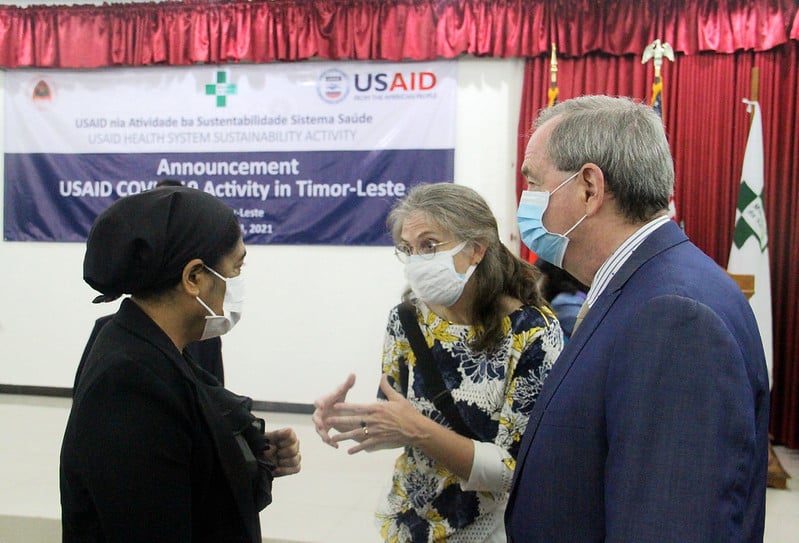
Timor-Leste, a small island nation previously known as East Timor, is inarguably enduring a very difficult and trying year. The combination of devastating floods after Cyclone Seroja in 2021 and the COVID-19 pandemic has left the nation desperately in need of assistance. Due to these disasters, the nation’s economy is currently struggling to find its way back to stability. Fortunately, on September 13, 2021, USAID announced plans to contribute an additional $1 million toward COVID-19 relief in Timor. This generous contribution will aid the goal of saving lives and the economy in Timor-Leste.

COVID-19 in Timor-Leste

Like any other nation, Timor-Leste has felt the inescapable effects of COVID-19. With a population of 1.3 million, the nation has witnessed 19,445 cases and 114 deaths as of September 28, 2021. Despite these numbers, as of September 28, 2021, Timor-Leste’s full vaccination rate stands at only about 20% of the population. This leaves an astounding number of people still unprotected.

The combination of flooding and COVID-19 has been catastrophic for Timor-Leste’s economy. In 2020, the nation’s economy endured a decline of 7%. Lockdowns and other restrictions amid COVID-19 led to significantly lower economic activity. While imports saw a reduction of approximately 19% “due to a slowdown in construction and travel services,” exports suffered even more, essentially declining by almost 50% “owing to limited travel services and lower coffee earnings.”

Because COVID-19 is a significant threat to the economy in Timor-Leste, increasing the country’s overall vaccination rate is crucial. Ending lockdowns and restoring normalcy will allow economic activity to return to pre-pandemic levels. Due to these harsh impacts, COVID-19 relief from organizations such as USAID is necessary for saving lives and the economy in Timor-Leste.

Assistance From USAID

USAID is a U.S. agency with a dedication to providing assistance during times of disaster at an international level. It works to eliminate poverty on a global scale, “strengthen democratic governance and help people emerge from humanitarian crises and progress beyond assistance.”

Along with an existing amount of $1.6 million that USAID allocated for COVID-19 relief in Timor-Leste, USAID is now providing an additional $1 million in support of this cause. The amount of COVID-19 aid to Timor-Leste from the United States now totals $5 million.

This added funding will contribute to the expansion of vaccination programs by employing prominent organizations and “trusted leaders” to encourage Timorese citizens to receive vaccinations. These efforts specifically focus on underserved communities on the outskirts of Dili, the largest city in Timor-Leste.

Partnering with Timorese officials, USAID also intends to instruct healthcare employees within rural and agricultural communities on vaccine protocols such as proper storage and transportation manners. Furthermore, USAID aims for vaccine equity, ensuring equal opportunity for all citizens to receive the vaccine. Additionally, USAID will partner with the Ministry of Health in Timor-Leste to closely monitor COVID-19 statistics in order to determine the safest resolutions for the nation and its citizens in the future.

Moving Forward

With USAID’s generous $1 million to fight the ongoing COVID-19 pandemic, the future looks promising for Timor-Leste and its population despite facing a tumultuous year. Through the support of organizations such as USAID, hope exists for restoring normalcy in Timor-Leste.

Not only are expanded vaccination efforts helping save lives but these efforts are also restoring economic stability in the country. With continued international support, Timor-Leste can successfully rebuild and recover from the impacts of the COVID-19 pandemic.

– River Simpson
Photo: Flickr

October 31, 2021
https://borgenproject.org/wp-content/uploads/borgen-project-logo.svg 0 0 Lynsey Alexander https://borgenproject.org/wp-content/uploads/borgen-project-logo.svg Lynsey Alexander2021-10-31 01:30:422024-05-30 22:25:19USAID: Aiding the Economy in Timor-Leste
Child Poverty, Children, Global Poverty

Child Poverty in The Bahamas

the-bahamas-challenges-the-children-face
Of the several nations and the many diverse peoples of Central America and the Caribbean, The Bahamas is one of the most beautiful and iconic. Well known for its thriving tourist industry, many U.S. citizens visit this collection of islands on vacation. The Bahamas has continued to rise in GDP and other metrics of quality of life for its citizens due to its successful tourism industry and offshore financing industry. Despite the growth that The Bahamas continues to present, there have been some concerning trends that have threatened this. Specifically, there have been problems and uncontrollable circumstances that the children have had to face. These problems affect the country and its future. Amongst these struggles, external catastrophes hit many of the most vulnerable children hardest, exacerbating child poverty in The Bahamas. This includes Hurricane Dorian in 2018 and more recently, the COVID-19 pandemic.

Child Poverty Rates

The Bahamas’ poverty rate is comparable to some of its Caribbean neighbors. Studies found that 12.5% of the population is living under the poverty line with under $5,000 a year. Many of these households support children. Additionally, children under the age of 14 represent the group with the highest poverty rate in the country.

Without access to resources and basic needs, these children are likely to have trouble maturing. The lack of food, sleep and time for a developing child who poverty affects will directly affect their performance in academics, recreation, social interactions and other aspects of their life.

Blocks in Education

As The Bahamas has grown its economy and infrastructure its education systems have also grown to match. However, there has been an alarming disparity in the quality and access to education. The literacy rate in people over the age of 15 decreased from 98% in 1995 to 93% in 2020. Many have largely attributed this trend to the difference in the quality of education between private and public schools.

Public state-run schools have a graduation rate of 44% for boys and 51% for girls while the graduation rate is 87.6% for those in private institutions. The reason for this variance is the lack of funding and resources for teaching materials, school supplies, and internet access for those in public schools.

Home Situations

The Bahamas has a very low dual household dynamic. More than 50% of all children in The Bahamas are born out of wedlock and a single parent often raises them. This is a holdover from times when large families lived together, so children did not feel the absence of a parent so harshly. However, the commonality of this has faded.

Children that single parents raise, especially those suffering from poverty, have more developmental and material disadvantages in life. The education challenges and dropout rates among the youth of The Bahamas reflect this issue.

Children are the Future of The Bahamas

Help from NGOs and other countries has been stagnant because of the  COVID-19 pandemic and lack of awareness. Project Hope is an organization that has a consistent presence in The Bahamas, although there are no large organizations. However, Project Hope’s work should receive commendation and undergo replication because they have been instrumental in shedding light on the challenges that people in The Bahamas face.

Project Hope is an NGO that focuses primarily on health care needs and services. They have been bringing aid, resources and expertise to The Bahamas. Beginning after Hurricane Dorian, Project Hope has focused on providing health care services for children, including those who experience child poverty in The Bahamas. This helps the children to further their education.

The Bahamas has been in a vicious cycle of struggling children becoming struggling adults. Rather than beautiful beaches or offshore tax evasion, children are at once the most vulnerable and most valuable resource that The Bahamas has.

– John J. Lee
Photo: Flickr

October 30, 2021
https://borgenproject.org/wp-content/uploads/borgen-project-logo.svg 0 0 Jennifer Philipp https://borgenproject.org/wp-content/uploads/borgen-project-logo.svg Jennifer Philipp2021-10-30 19:27:142024-05-30 22:25:26Child Poverty in The Bahamas
Developing Countries, Development, Global Poverty, Health

Horn of Africa Development Initiative in Kenya


In a part of the African region known as the Horn of Africa, Kenya has made significant reforms in the past 10 years to ignite economic growth in the nation. However, like the rest of the world, economic progress in Kenya came to a halt during the COVID-19 pandemic. With a vulnerable economy, poverty and inequality remain daunting issues. Infestations of locusts began in January 2020, which further weakened the economic infrastructure, particularly in the Northeast part of Kenya. The Horn of Africa Development Initiative aims to uplift and empower Kenyans living in poverty.

The Impact of COVID-19 on Poverty in Kenya

For many Kenyans, food security is a serious problem. According to the Kenya COVID-19 Poverty Monitor by the Chronic Poverty Advisory Network, by January 2020, some families could not afford more expensive foods such as vegetables while others only ate one or two meals per day. In addition, “lower agricultural yields” create further stress on households as does job loss due to the COVID-19 pandemic.

COVID-19 has impacted the Kenyan economy through “supply and demand shocks.” In 2020, real gross domestic product in Kenya dropped by 0.3%. Service sectors such as tourism and education faced disruption and manufacturing took a hit as well.

Help for Kenyans in Need

An inventive non-governmental organization is working to help families in need and reduce global poverty by building resilient communities. Fatuma A. Adan founded the Horn of Africa Development Initiative (HODI) in 2003, in Marsabit, Northern Kenya. Through “advocacy, education, peacebuilding and sustainable livelihoods,” the NGO works with communities and women who struggle to meet their basic needs.

Due to unemployment, locust infestation and frequent droughts that wither crops, many households are barely able to put food on the table every month. Because economic shocks disproportionately impact women-headed households, HODI runs a program with disadvantaged Kenyan women in mind.

Building Resilient Communities Program

HODI’s Building Resilient Communities Program aims to empower women and help communities increase their economic power. The program encourages village women to organize into groups of 10 to 50 women to save money together. Each member must save “at least 10 shillings every day: three shillings for education, three shillings for hospital bills and four shillings for small business.” After 30 days, this amounts to 300 shillings per member, which goes into a bank account that the women operate. From this pooled money, “women take out small loans repayable in small monthly installments” to fund their children’s education, pay medical bills and even start their own businesses.

With the revenue from their small businesses, women can”repay their loans” and also provide for their families and achieve financial independence. Within the program, HODI helps participants with record-keeping and teaches them financial literacy.

With the donations HODI receives for this program, HODI “inject[s] grants into the groups to increase the amount of money that is available for loans” and provides households with “water tanks to increase the water-saving capacity” of families.

Bringing Women Together for a Shared Purpose

Another benefit of the Building Resilient Communities Program is that although the women belong to different ethnic groups, they come together for a common purpose. Because HODI founder “Fatuma Adan was born to parents from two warring tribes in Marsabit, Northern Kenya,” she made it her goal to help unite people from different factions.

For her work in building resilient communities in Kenya, Adan received the Stuttgart Peace Prize in 2011, among other awards. In 2012, Adan received a nomination for the Nobel Peace Prize. With support and funding from donors, the Horn of Africa Development Initiative can continue to empower and uplift Kenyans living in poverty.

– Sarah Betuel
Photo: Flickr

October 30, 2021
https://borgenproject.org/wp-content/uploads/borgen-project-logo.svg 0 0 Kim Thelwell https://borgenproject.org/wp-content/uploads/borgen-project-logo.svg Kim Thelwell2021-10-30 07:30:462021-10-27 16:13:50Horn of Africa Development Initiative in Kenya
Page 696 of 2181«‹694695696697698›»

Get Smarter

  • Global Poverty 101
  • Global Poverty… The Good News
  • Global Poverty & U.S. Jobs
  • Global Poverty and National Security
  • Innovative Solutions to Poverty
  • Global Poverty & Aid FAQ’s
Search Search

Take Action

  • Call Congress
  • Email Congress
  • Donate
  • 30 Ways to Help
  • Volunteer Ops
  • Internships
  • Courses & Certificates
  • The Podcast
Borgen Project

“The Borgen Project is an incredible nonprofit organization that is addressing poverty and hunger and working towards ending them.”

-The Huffington Post

Inside The Borgen Project

  • Contact
  • About
  • Financials
  • President
  • Board of Directors
  • Board of Advisors

International Links

  • UK Email Parliament
  • UK Donate
  • Canada Email Parliament

Get Smarter

  • Global Poverty 101
  • Global Poverty… The Good News
  • Global Poverty & U.S. Jobs
  • Global Poverty and National Security
  • Innovative Solutions to Poverty
  • Global Poverty & Aid FAQ’s

Ways to Help

  • Call Congress
  • Email Congress
  • Donate
  • 30 Ways to Help
  • Volunteer Ops
  • Internships
  • Courses & Certificates
  • The Podcast
Scroll to top Scroll to top Scroll to top