• Link to X
  • Link to Facebook
  • Link to Instagram
  • Link to TikTok
  • Link to Youtube
  • About
    • About Us
      • President
      • Board of Directors
      • Board of Advisors
      • Financials
      • Our Methodology
      • Success Tracker
      • Contact
  • Act Now
    • 30 Ways to Help
      • Email Congress
      • Call Congress
      • Volunteer
      • Courses & Certificates
      • Be a Donor
    • Internships
      • In-Office Internships
      • Remote Internships
    • Legislation
      • Politics 101
  • The Blog
  • The Podcast
  • Magazine
  • Donate
  • Click to open the search input field Click to open the search input field Search
  • Menu Menu

Archive for category: Global Poverty

Key articles and information on global poverty.

Education, Global Poverty, Government, Violence Against Women, War and Violence

Pakistani Taliban Executes Peshawar School Massacre

The city of Peshawar, Pakistan mourns deeply in the wake of the Pakistani Taliban’s deadliest attack to date. An estimated 132 children and nine staff members were killed in a devastating massacre targeting a school in the northwest region, where gunmen and suicide bombers inflicted damage so horrific that even the Afghani Taliban have condemned their actions. Most of the victims were children of military families enrolled at Peshawar’s Army Public School.

On Wednesday, the Pakistani Army pointedly allowed numerous television crews to enter the school grounds, where they were able to observe the crime scene for themselves and broadcast those observations back to their respective audiences. Images captured by international news teams revealed the devastating extent of the brutality, showing classroom floors coated with blood, walls covered in hundreds of bullet holes, and rooms blown apart by suicide bombers.

The international community has collectively vocalized utter contempt over the massacre, and Pakistan was immediately consumed by a state of national outrage. Prime Minister Nawaz Sharif responded by declaring three full days of mourning and announcing an abrupt end to the moratorium on the death penalty for terrorist actions.

This decision by Sharif is quite significant given the country’s past responses to terrorist groups. Despite the fact that terrorism in Pakistan has taken more than 50,000 lives since 2001, there has long existed a puzzling lack of a national consensus to fight terrorism. In the immediate aftermath of Tuesday’s massacre, politicians refrained from publicly declaring whether they thought the Taliban had been behind the attack, even though the Tehreek-e-Taiban Pakistan, or TTP, had quickly claimed responsibility. The militants describe the Peshawar disaster as an act of revenge for an army attack that they claim killed approximately 1,000 of their own people.

The Taliban has a lengthy history of attacking schools. As an extremist group that first emerged in northern Pakistan in the early 1990s, the Taliban wields its own version of Islamic law as a major justification for and motivation behind its actions. The Pakistani Taliban adamantly opposes Western education for children, especially for girls. Education activists in Pakistan claim that this opposition is the Taliban’s way of trying to exert control over the population by keeping young people in the intellectual dark. An educated girl or boy represents a threat in the eyes of the Taliban, and the terrorist group actively works to eliminate these perceived threats through violence and oppression.

The Peshawar school massacre represents a departure from the Taliban’s usual school attacks. Militants in the past typically attacked schools while they were empty at night, specifically hoping to have the institutions shut down rather than directly harm students. The Taliban has also tried to threaten Pakistan’s education system by intimidating teachers and pressuring parents to quit sending their kids to class.

Some are beginning to question whether the Peshawar attack will force Pakistan to decidedly confront the terrorist group in a way it has generally refrained from doing in the past. Pakistan has long held an ambiguous view of Taliban militants, a phenomenon known as “good Taliban” and “bad Taliban” that for the past decade has baffled the Pakistani public and sent terribly mixed messages to the West. In the wake of the attack, Prime Minister Nawaz Sharif announced “there will be no differentiation between ‘good’ and ‘bad’ Taliban,” while acting foreign minister Sartaj Aziz has described the tragedy as “our 9/11” and a “game changer.”

– Shenel Ozisik

Sources: BBC 1, The Guardian 1, The Guardian 2, BBC 2
Photo: Flickr

January 15, 2015
https://borgenproject.org/wp-content/uploads/borgen-project-logo.svg 0 0 Borgen Project https://borgenproject.org/wp-content/uploads/borgen-project-logo.svg Borgen Project2015-01-15 12:00:362020-07-17 22:12:05Pakistani Taliban Executes Peshawar School Massacre
Activism, Global Poverty, Technology

Google Plans to Bring Internet to Remote Areas

Google has partnered with the French space agency, the Centre National d’Etudes Spatiales, to provide rural and remote areas of the world with Internet access. The partnership aims to reach higher ground with the Project Loon initiative.

Project Loon is a Google research and development project with the mission of providing Internet access to rural and remote areas. The project uses high altitude balloons to create an aerial wireless network that project Wi-Fi signals.

The balloons are solar powered and each is coordinated to make movements in a complex formation to provide continuous service. Google’s new approach on these balloons involves using technology with powerful satellites. Powerful satellites will provide more responsive Internet for the balloons to harness and spread.

They rise more than 60,000 feet above the Earth’s surface, placing them far beyond the reach of airplanes and atmospheric storm systems.

Satellite Internet is already becoming faster and more inexpensive at a steady rate. About 1.5 billion people get home Internet through a satellite connection, though only 0.2 percent of people in developed countries are connected through satellite.

Google wants to launch 100,000 balloons into the stratosphere to offer free Internet access in remote and rural locations around the world, and retrieve them when they lose air and fall to the ground.

To date, there are 75 Google balloons airborne, hovering somewhere near the far reaches of the Southern Hemisphere. These balloons automatically regulate their altitudes according to the algorithms to catch wind drafts and keep them on path.

A majority of the world still lacks Internet access, even after the 1.8 billion people that joined the Internet in 2014. An astounding 4.4 billion people still have never been online.

Internet access can benefit those in developing countries, especially those in India, where the population has more mobile phones than sanitary toilets. In India, over 1 billion people are still offline.

Moreover, China’s massive population of 1.3 people may be iPhone-obsessed, but more than half of its population still remains disconnected.

The Internet can be a useful tool for farmers, as access to the Internet allows farmers to be updated on constant climate changes, and projected problems in the seasons that may affect crop growth. Moreover, Internet access can also be a useful education tool used in schools for learning, and it can improve literacy rates.

Google’s balloons may sound expensive, but research actually indicates that these balloons are cheaper than setting up and maintaining cell towers, and the balloons are also more effective to bring access to remote areas.

Although Google’s project has faced criticism and doubts along the process among Project Loon, Google notes that the next big step is testing how the balloons handle thousands of pounds of pressure.

Google’s engineers have spent weeks trying to isolate any problems they had in the past with the balloons that are already hovering over vast remote areas. Google has the potential to deliver its promise of Internet access across the world and to regions that have been without it with precise research and design.

– Sandy Phan

Sources: Google, NPR
Photo: Digital Trends

January 15, 2015
https://borgenproject.org/wp-content/uploads/borgen-project-logo.svg 0 0 Borgen Project https://borgenproject.org/wp-content/uploads/borgen-project-logo.svg Borgen Project2015-01-15 04:00:592024-06-05 01:58:21Google Plans to Bring Internet to Remote Areas
Global Poverty

Perkins International: Redefining Blindness

perkins international
People who are blind still have yet to see a world in which they are given the same opportunities as their sighted peers, but there is one organization paving the way for this to happen. Perkins International is a collaborative effort with a mission to provide education and services to those all around the world who are blind or visually impaired.

This progressive, multi-faceted organization works on local, national and global levels in more than 60 countries, joining forces with a number of nonprofits and Disabled Persons Organizations along with academic institutions, foundations and government agencies.

Together they are committed to strengthening disability policies, increasing access to information and assistive technology, expanding education opportunities and transitional outcomes, and building sustainable local capacity.

In addition, there are five areas of focus (distinct lines of businesses) that operate every day to carry out these goals, driven by a team of experts with a passion for actively seeking the next innovative challenge to evolve as an organization.

  1. Perkins School for the Blind – Operates as the headquarters for the Community Services programs including itinerant services, independence courses for public school students, evaluations and assessments for communities, and training for professionals.
  2. Perkins International – Works to develop sustainable capacity in 67 countries via local and on-the-ground partnerships. It provides resources, training and advocacy to improve the lives of 4.5 million children around the world without access to education due to blindness.
  3. Perkins Products – Develops and distributes accessible technology in 170 countries, ranging from the classic mechanical Perkins Brailler to cutting-edge tools like the LightAide. The U.S. Department of Commerce recent presented Perkins Products with the President’s “E” Award, the highest recognition of any U.S. entity may receive for contributing to the increase of American exports.
  4. Perkins eLearning – Serves as an online portal designed to provide resources and support to anyone, anywhere, in the field of blindness education. It offers high-quality webcasts and webinars on a variety of topics, and it provides professional development and graduate level credits to educators via online workshops.
  5. Perkins Library – Considered to be one of our nation’s oldest accessibility services since 1835, this library circulates thousands of items in braille, audio, electronic and large print formats to about 28 thousand patrons in the U.S.

These five focus areas allow people with blindness the accessibility that they need for leverage in a world where opportunities are scarce even for those who have vision.

Recently, Perkins President and CEO Dave Power spoke at TEDxBeaconStreet about how we’re making the world accessible with new innovations in braille technology, facial recognition software and transportation that will help increase independence for people who are blind.

“The technology is pretty exciting, but technology isn’t the biggest barrier,” he said. “We, sighted people, are much more of an obstacle.”

So what can we do to change this?

“We need to make the world more accessible for them,” Power said. “We need to help them access information, navigate from place to place and find their way into our workforce and into our communities.

– Chelsee Yee

Sources: Perkins, YouTube
Photo: Perkins

January 14, 2015
https://borgenproject.org/wp-content/uploads/borgen-project-logo.svg 0 0 Borgen Project https://borgenproject.org/wp-content/uploads/borgen-project-logo.svg Borgen Project2015-01-14 12:00:332024-12-13 17:53:56Perkins International: Redefining Blindness
Global Poverty

EU Grants Help Seychelles Fulfill Regional Leadership Role

seychelles
Two separate grant agreements between Seychelles and the European Union were signed on December 10. The two agreements will provide as much as $6.4 million in order to help foster sustainable development and fight the effects of climate change in the archipelago nation.

The two agreements come on the heels of warnings from both the UN and the World Bank Group about the potential of climate change to exacerbate poverty in coastal communities. Seychelles’ economy—dependent chiefly upon tourism and tuna hauls—is particularly vulnerable to effects of climate change.

Recently, Seychelles has become something of a regional leader in the fight for sustainable development. Seychelles has already reached the majority of the UN Millennium Development Goals, and is now advocating the adoption of “blue economy” principles, which emphasize the protection of maritime resources and the economic potential of the Indian Ocean’s fishing, shipping, energy and tourism sectors.

Seychelles Foreign Affairs Minister John-Paul Adam believes that the development of the blue economy could allow the Indian Ocean to become a hub of sustainable ocean management and resiliency in the face of a changing climate. Adam, speaking at the 38th annual ministerial meeting of the G77 plus China, said, “The blue economy provides a blank canvas to many developing countries to charter a completely new sustainable development pathway that is to their best interest.”

In a press statement at the same meeting, Adam called for cooperation amongst southern hemisphere nations in science and technology in order to bolster blue economy sectors. Seychelles is also doing its part in building regional cooperation, strengthening bilateral ties with Fiji in the fisheries sector.

Seychelles’ efforts to sustain development and mitigate the compounding effect of climate change on poverty exemplify the kind of regional leadership that will be necessary in meeting the UN Sustainable Development Goals. Similarly, the EU grants will need to be replicated by wealthy nations in order to provide developing nations with the financial resources necessary to not only continue developing, but to do so in a sustainable and climate-conscious way.

– Parker Carroll

Sources: Chatham House, Seychelles News Agency 1, Seychelles News Agency 2, Ventures Africa
Photo: Seychelles News Agency

January 12, 2015
https://borgenproject.org/wp-content/uploads/borgen-project-logo.svg 0 0 Borgen Project https://borgenproject.org/wp-content/uploads/borgen-project-logo.svg Borgen Project2015-01-12 04:00:442024-05-27 09:23:08EU Grants Help Seychelles Fulfill Regional Leadership Role
Global Poverty

Lessons Learned from the Successes of PEPFAR

PEPFAR
The U.S. President’s Emergency Plan for AIDS Relief, started by President George W. Bush in 2003, has tried to tackle the global HIV/AIDS epidemic. The program has been tremendously successful, providing treatment for two million people and care for 10 million, including four million orphans and vulnerable children. Below are three major lessons the world of development and poverty alleviation can learn from the successes of PEPFAR.

1. Country Ownership

One of the unique components of PEPFAR is the role host countries play in the design and implementation of interventions. Ninety percent of the partner organizations that work with PEPFAR in the field are local. There is not a blanket approach, meaning that governments have to take ownership for the programs that are executed in their countries. Each country has a different approach that fits the needs of the HIV/AIDS epidemic within its borders, making the interventions more successful.

2. Focus on Results and Accountability

Even with criticism that development goals cannot be boiled down to pure numbers, PEPFAR’s intense focus on results has proved to be successful, especially when trying to build monitoring and evaluation capabilities country-to-country. A focus on results helped keep countries accountable to the goals of PEPFAR. With better monitoring and evaluation capabilities, governments can be kept more accountable and transparent when working on development projects.

3. Engagement of All Sectors

PEPFAR was one of the first projects to try to engage all sectors of the economy, not just national governments. The project included civil society, non-governmental organizations, faith-based and community-based organizations and the private sector in the implementation of specific interventions. This inclusion helps to address underlying and periphery issues that prevent or hinder interventions, like government stability, personal freedoms and development standards.

– Caitlin Huber

Sources: PEPFAR, Avert, Smith
Photo: Huffington Post

January 11, 2015
https://borgenproject.org/wp-content/uploads/borgen-project-logo.svg 0 0 Borgen Project https://borgenproject.org/wp-content/uploads/borgen-project-logo.svg Borgen Project2015-01-11 04:00:272020-07-17 11:29:30Lessons Learned from the Successes of PEPFAR
Global Poverty

Invisible Sao Paulo

Last March, two young Brazilians started a Facebook page called SP Invisivíl, or Invisible Sao Paulo, to highlight the large homeless population in the city.

The founders of Invisible Sao Paulo are Vincius Lima, 18, and Andre Soler, 21. Lima says the purpose of the project is to “open people’s eyes, and show them that people who live on the streets are human beings as well, that they have a story and they deserve respect and dignity.”

The Facebook page features a picture of one homeless person and a transcript of their story everyday. There are hundreds of stories on the page, ranging from horrific to heart wrenching, to humorous and to hopeful. The stories are diverse and unique, emphasizing the purpose of the project: to make the homeless seem more human.

One of the stories is that of Pedro Henrique, who is 33 years old. He grew up without a mother and father and has been on the streets for 20 years. He says, “Eu não nasci pra ser triste, faço de tudo pra ser feliz, mesmo morando na rua” or “I was not born to be sad, I do everything to be happy, even living on the street.” He carries a broken video camera with him because he says it makes him happy and reminds him of his time in Rio, when he shot films of skaters and surfers.

The project hopes to change the attitudes of people living in Sao Paulo toward the ever-growing homeless population. One resident of Sao Paulo, Luan Drezza, says that Invisible Sao Paulo “humanises people who we would have kept our distance from.” The Facebook page was set up to mimic Humans of New York, a project that shows stories of New Yorkers everyday.

There are an estimated 15,000 homeless in Sao Paulo, most likely the highest population of homeless in Brazil. Half of those are in shelters, but the rest are on the streets. Homelessness is also a problem in other urban areas in Brazil, mostly Rio de Janiero. A similar Facebook page, Invisible Rio, has started with the same purpose as Invisible Sao Paulo and has attracted a lot of attention in the city.

Homelessness in Brazil was highlighted during the FIFA World Cup this summer, when thousands of homeless in Sao Paulo protested their forced removal from buildings around the city and the expenditures the Brazilian government had taken on to build infrastructure for the event.

A group called Movimento do Trabalhadores Sem Teto, or MTST, helped and participated in the protests. They, along with other protesters, say that without them, all the outside world would see of Brazil was FIFA. MTST is a social organization founded originally to speak for landless rural peasants in 1997; it now focuses purely on urban homelessness in Brazil.

Brazil is also the host of the 2016 Olympic Games, which is predicted to cause more social protests.

– Caitlin Huber

Sources: BBC 1, BBC 2, City Lab, The Guardian, Facebook, MST
Photo: Flickr

January 9, 2015
https://borgenproject.org/wp-content/uploads/borgen-project-logo.svg 0 0 Borgen Project https://borgenproject.org/wp-content/uploads/borgen-project-logo.svg Borgen Project2015-01-09 04:00:262024-12-13 17:51:18Invisible Sao Paulo
Global Poverty, Poverty Reduction

Poverty in Myanmar

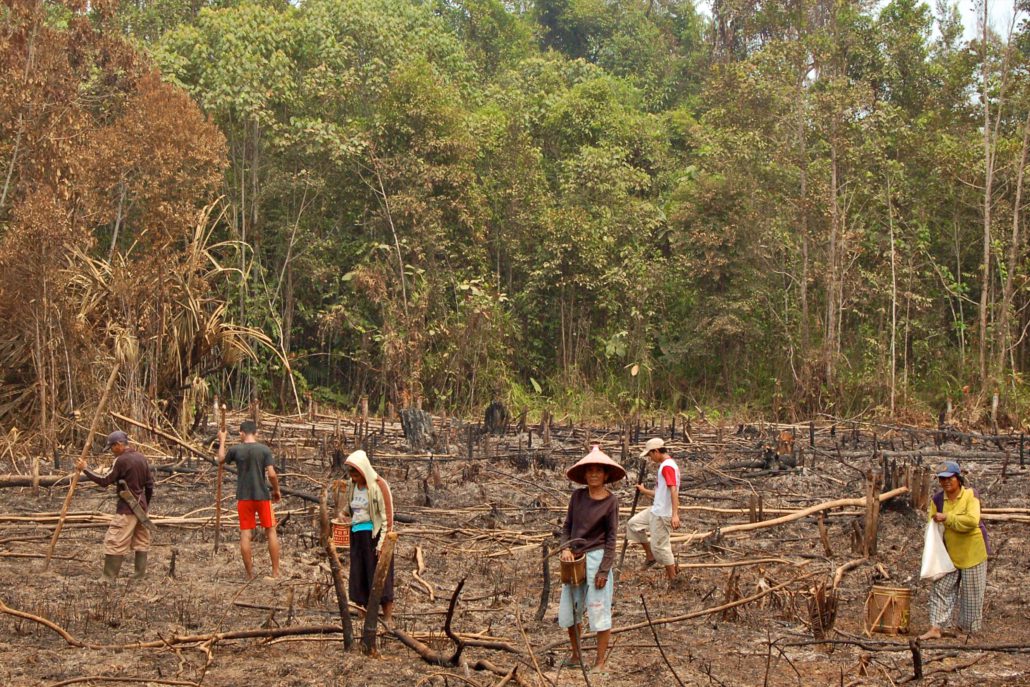
Myanmar is situated in Southeast Asia, bordered by Thailand to the south, India to the west and China to the east. Given its strategic location, one might assume that Myanmar has great potential to become an economic powerhouse in the region. However, the country continues to grapple with poverty and remains one of the poorest nations in the area.

With a population rate of 54.18 million (2022 estimate) and a gross domestic product (GDP) of $62.2 billion, Myanmar is one of the poorest nations in Southeast Asia. Furthermore, according to the World Bank, about 40% of the country’s population lived below the national poverty line in 2022.

Despite its low population density, Myanmar is resource-rich and well-suited for agriculture, with more than 70% the population engaged in agricultural work. The next largest employment sector is wholesale, retail trade and repairs, involving 15% of the population.

Causes of Poverty in Myanmar

Myanmar’s high poverty rates can be attributed to three main factors. Firstly, vulnerable individuals find themselves in situations with no way out. These people, originally employed in agriculture, mining, construction or trade, have seen their livelihoods deteriorate due to market losses, driving them into chronic poverty.

Secondly, unemployment contributes greatly to poverty in Myanmar. According to the World Bank, about 3% of the country’s population is unemployed and around 58% of total employment is considered vulnerable. Vulnerable employment is often characterized by low incomes, lack of job security, limited access to social protection and benefits and challenging conditions that “undermine workers’ fundamental rights.” Additionally, around 2% of the employed proportion lived below the international poverty line of $2.15 per day and 25% of the total population often struggled to stay above the poverty line.

Thirdly, with more than half of Myanmar’s population involved in agriculture, changing climate patterns, such as low rainfall and high temperature, affect agricultural production, exacerbating food insecurity and poverty in the county. In 2018, a monsoon-related flood affected more than one million acres of cultivated land in Myanmar.

Fortunately, technological advances are currently widely available to prevent and mitigate the effects of these losses. Therefore, the biggest work left to do to increase agricultural output each year would be to invest in spreading knowledge and properly equipping farmers.

Final Remark

Myanmar’s government is making several efforts to reduce poverty in the country. One of these is implementing the Myanmar Sustainable Development Plan (MSDP). The plan, which will run from 2018 to 2030, aims to reduce poverty, promote economic growth and improve the population’s living standards. It also includes efforts to strengthen the country’s infrastructure, healthcare and education.

Several nongovernmental organizations are also working to eradicate food insecurity and poverty in Myanmar. Notably, in 2023, the World Food Programme (WFP) assisted more than 36,000 central and northern Rakhine individuals through emergency food assistance and nearly 9,000 women and children through nutrition support. With the aid of these organizations, the root causes of poverty can be addressed, improving the living standards for vulnerable populations in Myanmar.

– Christina Cho
Photo: Flickr
Updated: May 27, 2024

January 6, 2015
https://borgenproject.org/wp-content/uploads/borgen-project-logo.svg 0 0 Borgen Project https://borgenproject.org/wp-content/uploads/borgen-project-logo.svg Borgen Project2015-01-06 04:00:082024-05-27 14:28:11Poverty in Myanmar
Global Poverty

New Fish Smoking Technology in Ghana

SNV Ghana and the Food and Agriculture Organization (FAO) have been collaborating on a new fishing technology that produces healthier and cleaner fish to meet both local and international standards. SNV Ghana with the Food and Agriculture Organization has teamed up to launch a new fish smoking technology called the FAO-Thiaroye Technique (FTT) that benefits the people of Ghana and potentially the world.

According to the World Food Programme, more than 1.2 million Ghanaians start the day without guarantee of nutritious, clean food to eat. This means that many Ghanaians have limited access to necessary nutrients. The new technology ensures an efficient sanitation process in fishing that prevents chemical patterns not conducive to PAH control in fish smoking.

The FAO-Thiaroye aims to create awareness in the country among other fish smoking areas. The innovation also aims to supply small fishing populated areas with the tools and knowledge of how to dry and smoke a fish on a simple rack. The technology is much like the form of a common oven; it produces minimal heat and has an oil collector that has been manufactured to meet the sanitation and produce standards of international markets.

Three challenges that have had a substantial impact on the impoverished are access to energy, sanitation and food and water. Insufficient supplies of food and lack of sanitation in rural areas are a major factor in mortality rates among developing countries. With its headquarters located in The Hague, Netherlands, SNV currently provides capacity development services to local organizations in three sectors: Agriculture, Renewable Energy and Water, Sanitation and Hygiene.

Started in 1965, SNV is a nonprofit and international development organization that was established in the Netherlands but since has spread worldwide. The Organization currently operates in countries within Africa, Asia and Latin America. SNV aims to alleviate poverty by supporting increased income and employment opportunities, and increasing access to basic services. SNV’s partner and collaborator of this project, The Food and Agriculture Organization, described the new technology as an innovation that will ensure food security and increase the economy in small market areas.

“Today marks another mile stone in the history of fish processing in the country after the development of the Chorkor Smoker here in 1969,” Dr. Lamourdia Thiombiano, the FAO Country Representative, said.

The new technology transfer will also increase profits in small and medium scale fish markets, which in turn contributes to poverty reduction. Fisheries and Aquaculture in Ghana, and many other developing countries, have an important role in the future of the economy. Moreover, the introduction of the FAO-Thiaroye Technique would reduce the use of wood fuels, which in turn benefits the conservation of the environment.

Not only would the technology become beneficial for the environment and the economy, it will make fish smoking less cumbersome especially for hard working women in the rural areas. The technological development in country’s fishing sector is recognized to be an essential component of SNV’s new and improved fish smoking restoration project.

The Country Director of FAO has said the organization is interested in developing longterm relationships and partnerships with important sponsors in developing and promoting the technology in other countries.

– Sandy Phan
Sources: WFP, SNV, FAO Photo: Global Press Journal

January 5, 2015
https://borgenproject.org/wp-content/uploads/borgen-project-logo.svg 0 0 Borgen Project https://borgenproject.org/wp-content/uploads/borgen-project-logo.svg Borgen Project2015-01-05 04:00:142024-05-27 09:23:08New Fish Smoking Technology in Ghana
Global Poverty

The Urbanization Paradox

Over the course of the last 200 years, the increase in average standard of living has largely mirrored increased urbanization. In 1800, just 10 percent of the world’s population lived in urban areas. The UN believes that this number will reach 55 percent in 2015. According to The Economist, 64.1 percent of the developing world, and and 85.9 percent of the developed world will live in urban centers by 2050.

Extreme poverty rates have declined precipitously over the last 30 years, and increased urbanization in developed countries suggests that this trend is likely to continue. However, while urbanization might spell economic progress in developing countries, it also poses environmental and humanitarian challenges.

Urban centers draw heavily on natural resources. The population density of urban environments brings challenges in terms of water availability, waste disposal and energy consumption. In cities like Nairobi, unplanned urban development has forced many into squalor – 60 percent of Nairobi’s urban population has been squeezed into five percent of the city’s total land mass.

What’s more, countless studies have noted that urbanization can exacerbate climate change’s negative impact on stream ecosystems. Urbanization can also exacerbate the risks posed by environmental hazards. Coastal cities are especially vulnerable to flash flooding – a risk that is rising along with the sea level.

Whether the environmental and humanitarian challenges of urbanization are met will depend largely on the responsiveness of local governments in meeting the individual needs of their communities. It will be up to local policy makers to maximize the benefits of urbanization while limiting the depths of its pitfalls. In doing so, local governments will need to draw on the ingenuity of urban planners, who face a diverse array of challenges in protecting their communities from environmental hazards and resource scarcity.

Like sustainable development models, sustainable urban planning models resist definitive archetypes, as renowned British architect David Adjaye has noted. “It has become clear that modern singularity must be refashioned into nuanced dialogues between geography, technology and culture,” said Adjaye. Urban planners will be called upon to architect fine-spun solutions, tailor-made for the communities that they serve.

However, it could be difficult for governments to resist the temptation of the short-term economic dividends of rapid, albeit unsustainable, urban growth. In addition, many developing countries may lack the financial resources and scientific expertise necessary to urbanize in and environmentally and humanitarianly sound way. Accordingly, it is essential that the U.S. government do its best to provide technical and financial support to urbanizing nations.

– Parker Carroll

Sources: EPA, Huffington Post 1, Huffington Post 2, IRIN, New Security Beat
Photo: Flickr

January 2, 2015
https://borgenproject.org/wp-content/uploads/borgen-project-logo.svg 0 0 Borgen Project https://borgenproject.org/wp-content/uploads/borgen-project-logo.svg Borgen Project2015-01-02 04:00:162020-07-17 23:02:27The Urbanization Paradox
Global Poverty

Non-Communicable Diseases in the Developing World

The largest public health problem in the developing world is currently non-communicable diseases, or NCDs. NCDs like cardiovascular disease and cancer kill around eight million people before they are 60 years old each year in developing countries. NCD-attributed deaths make up about 90 percent of  premature deaths in the world.

Urbanization, higher life expectancy and global trade drive NCDs in developing countries. Even though developed countries may have similar public health issues, they are much more equipped to deal with them because they have better and less expensive prevention and management tools and more experience dealing with the diseases.

Non-communicable diseases cause early deaths and debilitation for those in poverty in both developing and developed countries. However, the people effected in developing countries are, on average, younger and have worse outcomes than their counterparts in developed nations.

On a global scale, NCDs will cost developing countries $21.3 trillion over the next 20 years. Even though global focus and aid goes towards communicable diseases like HIV/AIDS and tuberculosis, non-communicable diseases effect a much larger portion of the population and are growing quickly in middle- and low-income countries.

The last time a global public health crisis that disproportionately affected the developing world was attacked was the HIV/AIDS epidemic. The effort originated in the U.S. with PEPFAR and grew to a worldwide effort. While lessons can be gleaned from that effort, the growing NCD crisis presents different challenges. Of course, the U.S. cannot make resource allocation decisions or policy solutions for other countries. An effort to attack this crisis has to be at the national level with the help and support of the international community.

Because most NCDs are characterized by chronicity, they have devastating socio-economic consequences. Patients require more care for longer periods of time. This not only takes them out of the workforce and reduces productivity but also uses up scarce healthcare resources. With a sicker, smaller workforce, economic growth can be stunted and have reverberating economic, social and political impacts for the country and region.

– Caitlin Huber

Sources: Council on Foreign Relations, Harvard University
Photo: Business Insider

December 29, 2014
https://borgenproject.org/wp-content/uploads/borgen-project-logo.svg 0 0 Borgen Project https://borgenproject.org/wp-content/uploads/borgen-project-logo.svg Borgen Project2014-12-29 04:00:332024-05-27 09:23:07Non-Communicable Diseases in the Developing World
Page 1960 of 2162«‹19581959196019611962›»

Get Smarter

  • Global Poverty 101
  • Global Poverty… The Good News
  • Global Poverty & U.S. Jobs
  • Global Poverty and National Security
  • Innovative Solutions to Poverty
  • Global Poverty & Aid FAQ’s
Search Search

Take Action

  • Call Congress
  • Email Congress
  • Donate
  • 30 Ways to Help
  • Volunteer Ops
  • Internships
  • Courses & Certificates
  • The Podcast
Borgen Project

“The Borgen Project is an incredible nonprofit organization that is addressing poverty and hunger and working towards ending them.”

-The Huffington Post

Inside The Borgen Project

  • Contact
  • About
  • Financials
  • President
  • Board of Directors
  • Board of Advisors

International Links

  • UK Email Parliament
  • UK Donate
  • Canada Email Parliament

Get Smarter

  • Global Poverty 101
  • Global Poverty… The Good News
  • Global Poverty & U.S. Jobs
  • Global Poverty and National Security
  • Innovative Solutions to Poverty
  • Global Poverty & Aid FAQ’s

Ways to Help

  • Call Congress
  • Email Congress
  • Donate
  • 30 Ways to Help
  • Volunteer Ops
  • Internships
  • Courses & Certificates
  • The Podcast
Scroll to top Scroll to top Scroll to top