• Link to X
  • Link to Facebook
  • Link to Instagram
  • Link to TikTok
  • Link to Youtube
  • About
    • About Us
      • President
      • Board of Directors
      • Board of Advisors
      • Financials
      • Our Methodology
      • Success Tracker
      • Contact
  • Act Now
    • 30 Ways to Help
      • Email Congress
      • Call Congress
      • Volunteer
      • Courses & Certificates
      • Be a Donor
    • Internships
      • In-Office Internships
      • Remote Internships
    • Legislation
      • Politics 101
  • The Blog
  • The Podcast
  • Magazine
  • Donate
  • Click to open the search input field Click to open the search input field Search
  • Menu Menu

Archive for category: Global Poverty

Key articles and information on global poverty.

Gender Equality, Global Poverty, Women's Empowerment

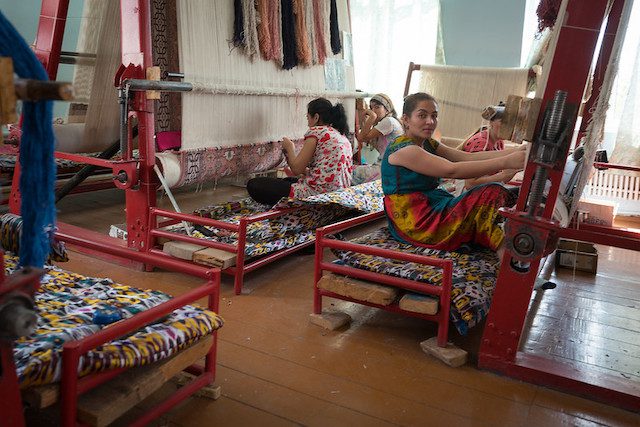
Female Weaving Co-op in Mexico Promotes Equality

 Female Weaving Co-op in Mexico
Female weaving co-ops began to proliferate in Mexico in the late 20th century, especially in the country’s most impoverished areas. Indigenous Mexican women living in these areas found it imperative to collectivize to navigate an oppressive socio-political landscape. Vida Nueva is one example of a co-op that grew out of this context. This female weaving co-op promotes gender equality in Mexico in ways that people never before imagined.

How This Female Weaving Co-op Promotes Gender Equality in Mexico

Oaxaca is the second-poorest state in Mexico, with historically low GDP growth relative to the national average. In Oaxaca, 28 percent of the population lives in extreme poverty, a statistic due mainly to income disparities between rural and urban centers and the region’s low manufacturing capacity. In the small township of Teotitlán del Valle, Zapotec women feel social and economic marginalization the hardest, because they must contend with a communal infrastructure that favors men and limits their participation in municipal government. Until the 1990s, women could not pursue education or obtain a drivers’ license.

Today, many Zapotec women are still illiterate and bound to male intermediaries so they may engage meaningfully with the economy. This is especially the case regarding the textile industry, their principal export. Under these conditions, even their own reproductive health can present a source of ignorance.

Weaving Cooperatives as a Means of Social Change

The establishment of weaving cooperatives has benefitted Zapotec communities like Teotitlán in confronting the onset of globalization and neoliberal economics in Mexico. This phenomenon has proven to be damning to rural indigenous communities throughout the country. However, the biggest impact changes in textile production have been in improving gender relations in otherwise patriarchal contexts.

Since Zapotec women began weaving, their stake in local politics has increased, as well as their lobbying ability. Exposure to new markets through access to technology and travel has led to instances of financial and ideological independence. They have placed new importance on education and female empowerment, reshaping social norms to value female labor and domestic contributions at home.

Vida Nueva

Vida Nueva (New Life in Spanish) is an all-female weaving cooperative changing the social geography for women in Teotitlán for the better. The group comprises of solteras or unmarried women, widows and the wives of migrants, who banded together in an attempt to circumvent merchant control over their products. When starting, the women struggled to sell their rugs independently due to a language barrier (most do not speak any Spanish), stigmas against indigenous Mexicans in the city, exploitative bureaucracy and male backlash within their community.

A chance encounter with Flor Cervantes, a social justice promoter in Oaxaca with over eight years of self-esteem workshops under her guidance, gave Vida Nueva the architecture to develop into what it is now. Under Cervantes’ guidance, the women learned about their bodies, their business potential and how best to advocate for themselves. With this knowledge, Vida Nueva began to expand. It eventually gained recognition from the United Nations and the licensure to sell its goods worldwide. Through education and cooperative production, Vida Nueva regained control over the production and sale of its work.

While Vida Nueva’s biggest impact on gender equality in Mexico is qualitative, concrete change also exists. By 2004, nearly 15 percent of households in Teotitlán participated in textile cooperatives. This is a considerable increase since Vida Nueva’s inception in 1996.

According to the New York Times’ measure last year, the textile industry involves almost all of Teotitlán’s 5,500 residents in some way. Since the early 2000s, higher volumes of female co-op members received invitations to attend community assemblies. Now, it is commonplace for whole collectives to receive written invitations. This serves as evidence that a once-rigis, patriarchal local government is finding women to be more valued assets.

Giving Back

At no point in becoming independent artisans did the women of Vida Nueva compromise their practice. They continue to use the natural dyes (made from pomegranate, marigolds, pulverized insects, etc.) and the arduous weaving techniques that predated colonization. Vida Nueva is a community-driven project with a localized vision. Every year, the collective sponsors a new initiative to improve the quality of life in Teotitlán for all residents. Since starting, the group has championed recycling and forestation efforts, senior care services and feminism.

– Elena Robidoux
Photo: Taken by Elena Robidoux

November 30, 2019
https://borgenproject.org/wp-content/uploads/borgen-project-logo.svg 0 0 Kim Thelwell https://borgenproject.org/wp-content/uploads/borgen-project-logo.svg Kim Thelwell2019-11-30 07:30:172024-05-29 23:13:48Female Weaving Co-op in Mexico Promotes Equality
Charity, Global Poverty, Humanitarian Aid

5 Universities Fighting Global Poverty

Universities Fighting Global Poverty
In any global issue, college students are some of the most useful people in spreading awareness about global poverty. Throughout the years, many colleges have joined to spread awareness about impoverishment and the following five are just a few examples of the many domestic and international universities fighting global poverty.

5 Universities Fighting Global Poverty

  1. Manhattan College: This NYC liberal arts college joined the One Campus Challenge, an initiative for universities fighting global poverty, back around its conception in 2007. The college remains one of the over 2,000 participants in the challenge. In an article by Thomas Hallissey, the then leader, Kieran O’Shea, managed to recruit 66 students into the campus’ chapter of the challenge. O’Shea became inspired to join the initiative after he saw other colleges join.
  2. Ohio State University: Sally Miller, a plant pathologist and professor from OSU, has focused her research on the availability of food in developing countries. According to an article from 2014 and about Miller’s travel to the African nation of Senegal, Miller’s research focuses on pest control and agricultural development as a means of fighting global poverty. Her travel and research was part of the International Plant Diagnostic Network. The project was incredibly widespread involving scientists from several U.S. universities including Ohio State and partner institutions in the 12 member countries of the IPDN.
  3. The University of Chicago: With so many universities fighting global poverty head-on and coming up with solutions, it is important to have a view of the areas in need of attention. In October 2019, researchers from the University of Chicago created the Million Neighborhoods Map. According to UChicago’s article, this map is “a groundbreaking visual tool that provides the first comprehensive look at informal settlements across Africa, helping to identify communities most in need of roads, power, water, sanitation and other infrastructure.” People could use such technology to lay a foundation for future solutions, as it is difficult to come across a solution if one cannot view the problem on a widespread scale. Reports determine that this map shall receive updates to include other African regions as well as Asian areas as well.
  4. Harvard and MIT: It would make sense that profound solutions to global poverty would come from two of the most prestigious universities in the world. MIT professor Abhijit Banerjee and his wife, Esther Duflo, as well as Harvard professor Michael Kremer, received Nobel Prizes for their research on “how to improve school results in Kenya and India, studies on micro-financing, price sensitivity to health-care costs and lifting vaccination rates,” according to a Bloomberg article. These professors and economists take a different standpoint on the issue of global poverty, treating it from a scientific point of view. They also focus on the poor as people in need of help rather than mere numbers.

Whether students or professors lead these initiatives, one cannot doubt that universities fighting global poverty have and will continue to have a significant impact. The efforts to raise awareness about poverty, understand and improve agriculture in developing countries and map countries to determine infrastructure needs are just a few of the components that should help reduce poverty around the globe.

– Christian Moore
Photo: Flickr

November 30, 2019
https://borgenproject.org/wp-content/uploads/borgen-project-logo.svg 0 0 Jennifer Philipp https://borgenproject.org/wp-content/uploads/borgen-project-logo.svg Jennifer Philipp2019-11-30 01:30:092019-11-28 06:48:125 Universities Fighting Global Poverty
Global Poverty

Eradicating Polio in Developing Countries

Although there is a vaccine, Polio is still a global problem. Here are some facts on eradicating Polio in developing countries.
People often think of polio as a disease of the past; but for many in Pakistan, Afghanistan and Nigeria, it is still a very real threat. Poliomyelitis, more commonly known as Polio, is an infectious disease that can result in base level symptoms similar to the flu, or on the more extreme end, it can invade an individual’s spinal cord or brain causing paralysis. Paralysis is the symptom people most commonly associate with Polio because of how deadly it can be. As the disease progresses slowly, the individual eventually loses function across their body and requires outside assistance to do even the most basic task of breathing. Without medical assistance, the individual will asphyxiate. Here is some information about eradicating Polio in developing countries.

Eliminating Polio

Vaccination is the only way to eradicate Polio. Children’s bodies become prepared to fight the disease more effectively with vaccination. Almost all children or 99 out of 100 will have protection from Polio as long as they receive all recommended courses of the vaccination.

However, sanitation also plays a key role in preventing the spread of Polio in the interim. The virus lives in individuals’ throats and intestines, so open sewage systems can leave a community more vulnerable to the spreading virus. The virus can thrive in feces for weeks before dying, leaving plenty of opportunities for people to come into contact with the virus and spread it.

Eradicating Polio is highly dependent on herd immunization, so it is integral that mass vaccination initiatives go to all corners of a country. By immunizing everyone who can take the vaccine, the risk of the disease spreading and those unable to take the vaccine contracting it reduces.

The Reasons Polio Still Exists in Pakistan, Afghanistan and Nigeria

Though there have been major advancements in eradicating Polio in Pakistan, Afghanistan and Nigeria, they still remain vulnerable due to the fear that the vaccine may cause fainting spells and death in children, which are false claims. Additionally, open sewage systems in rural areas and the difficulty to dispense full courses of vaccination to individuals in rural areas play a role in the continued life of Polio.

There is also the issue of spreading. In Afghanistan and Pakistan, the majority of new cases of Polio are often in the tribal areas surrounding the shared border of the two countries. The unchecked border often has people traveling back and forth so they are hard to pin down to receive their full course of vaccinations. This also allows for the virus to spread faster and makes it more difficult to isolate the infected.

Nigeria is doing relatively well with the fight towards eradicating Polio. The country no longer has an active outbreak, but it is at high risk of having an outbreak. This is due to active initiatives within the country to assure widespread vaccination and hygiene education to prevent the spread of the virus.

Mutations

Another massive issue these countries and doctors are having with eradicating Polio is that the virus is mutating. In June 2017, there were 21 cases of vaccine-derived Polio in the world. This has been caused by remnants of the oral vaccine getting loose in the environment where it is regaining strength and infecting people. The oral vaccine is from a weak form of the Poliovirus that allows the recipient’s immune system to fight off the virus and become more adept at fighting the active virus if it ever enters their body.

Many also consider the mutated and strengthened strain of the vaccine-derived disease to be more deadly as it has a higher risk of causing paralysis in those infected.

Solutions

The organization, Global Polio Eradication Initiative, is a public-private partnership working in tandem with national governments and private partners including the World Health Organization (WHO), Rotary International, the U.S. Centers for Disease Control and Prevention (CDC), the United Nations Children’s Fund (UNICEF) and the Bill & Melinda Gates Foundation. Together, they are attempting to roll out vaccines and education programs to aid in eradicating Polio internationally. The organization works with 200 countries and 20 million volunteers to ensure that everyone has the opportunity to live a life free of the pain Polio brings upon individuals and communities.

As of 2019, it has vaccinated over 2.5 billion children, and the number is only growing. This is an incredibly important program, as the alleviation of the threat of infection for every reduces the stress on government health programs. There is also a reduction in the personal and financial burden of contracting and surviving Polio from the shoulders of millions of families.

Through vigilant vaccination distribution and educational programs, the hope is that in the near future, people will be able to live in a world free from the crippling implications of the Poliovirus.

– Emma Hodge
Photo: Flickr

November 29, 2019
https://borgenproject.org/wp-content/uploads/borgen-project-logo.svg 0 0 Jennifer Philipp https://borgenproject.org/wp-content/uploads/borgen-project-logo.svg Jennifer Philipp2019-11-29 14:43:362019-11-29 14:48:35Eradicating Polio in Developing Countries
Education, Global Poverty

8 Facts About Education in Uganda

Eight Facts About Education in Uganda

Uganda has seen significant improvements in enrollment of children in primary school over the years. As one of the youngest countries in the world with one of the fastest-growing populations, the country must work even harder to continuously improve education as a means to ensure the productivity of its increasing youth population and help reduce poverty levels. Below are eight facts about education in Uganda that show where the country stands and what more it can do to improve.

8 Facts About Education in Uganda

  1. Uganda’s Education System: The first of the eight facts about education in Uganda is that the country organizes its education into three different school levels, totaling seven years. These include primary school followed by secondary school, which is sectioned into two levels – the first lasting four years, followed by another two years. Finally, people attend post-secondary education, which lasts from three to five years.
  2. Universal Primary Education (UPE): In 1997, the Ugandan government introduced Universal Primary Education (UPE). This means that the government pays the tuition fees of all orphans in the country as well as the fees of up to four children per family. After the introduction of UPE, the number of students tripled between 1997 and 2014, from 2.63 million children to more than 7.6 million children. In 2007, the government rolled out a Universal Secondary Education (USE) program to help children continue their education.
  3. Uganda’s Literacy Rate: Estimates determined that the literacy rate in Uganda was 78.4 percent in 2015 with 85.3 percent of males being literate and 71.5 percent of females being literate. One can explain the lower rate of female literacy by the fact that about 52 percent of girls drop out at the primary school level either because of pregnancy or marriage. Local organizations, including GirlUp Initiative Uganda, are playing an important role in ensuring that girls get a chance to receive an education.
  4. School Completion Rates: While the enrollment rates of students shot up after the introduction of UPE, the number of students completing school is not as high. Only one in four students who start primary school make it to secondary school. Some factors that explain these high dropout rates include lack of school fees and money to buy important materials like uniforms, stationery and textbooks, violence in the form of caning and other corporal punishments and sexual abuse, with almost 24 percent of students experiencing sexual abuse in school.
  5. Disabled Children: Children with disabilities often receive neglect when it comes to education in Uganda. According to UNICEF, only 9 percent of children with disabilities enrolled in school from the pre-primary to secondary level. The exclusion of these children from formal schools could be because of the lack of accessible facilities as well as a shortage of special needs teachers. Organizations such as Cheshire Services Uganda are working at bridging the learning gap for students with disabilities.
  6. Teacher Absenteeism: Teacher absenteeism is high. About 60 percent of teachers in nearly half of Uganda’s public schools are not in class when they need to be. This is because of poor, inadequate facilities and overworked and demotivated teachers. Classrooms in Uganda often have up to 100 students.
  7. Uganda’s Education Investments: Education expenditure as a share of the national budget in Uganda is around 10 percent. This is significantly lower than the average for Sub-Saharan Africa, which is 16 percent. By increasing its investment in education, the government can improve the productivity of its citizens and help lower the poverty levels in the country.
  8. Improving Ugandan Education: Several organizations are working with the government to improve education in Uganda. Examples include USAID, UNICEF and the Global Partnership for Education (GPE). Organizations like these are working to enforce gender equity in schools, improve access and completion rates at the various levels of learning, increase literacy and improve early childhood development and adolescent development. The government also builds 15,000 primary school classrooms each year to accommodate any additional students.

These eight facts about education in Uganda highlight the urgent need to ensure that education in Uganda continues to improve in terms of both quality and access. The government’s and other humanitarian organizations’ efforts will help Uganda reduce poverty as well as significantly improve the lives of its citizens.

– Sophia Wanyonyi
Photo: Wikimedia Commons

November 29, 2019
https://borgenproject.org/wp-content/uploads/borgen-project-logo.svg 0 0 Kim Thelwell https://borgenproject.org/wp-content/uploads/borgen-project-logo.svg Kim Thelwell2019-11-29 12:05:272024-05-29 23:13:498 Facts About Education in Uganda
Development, Global Poverty, Health

Examining Mental Health in Puerto Rico

Mental Health in Puerto Rico
Mental health is at the forefront with many other illnesses and disabilities. It can in many ways be just as dangerous if not more dangerous than physical disabilities or illnesses if it does not receive treatment. Mental health issues do not only affect the individual suffering from the illness but also the family and loved ones around. Many countries experience high levels of mental illness in all of its extremities. Mental health in Puerto Rico has become a serious conversation among the island’s people.

Mental Health in Puerto Rico

A study published in April 2019, determined the ongoing mental health impact that Hurricane Maria had on the island’s children. Much of the talk about mental health on the island is closely related to the storm. Researchers from the Puerto Rico Department of Education and the Medical University of South Carolina collaborated to study and examine the storm’s effects on the people’s well-being. A significant amount of public school students ranging from third grade to twelfth grade and lived through the storm participated in the study. About 7.2 percent of them showed clinical symptoms of PTSD.

Many regard the mental state of a country’s youth as crucial. For this reason, a group of volunteers from Fundacion Pro Ayuda de Puerto Rico or the Puerto Rico Help Foundation allied with Departamento de la Familia (Family Department) and started a project in 1997. The project’s name was Hogar Santa Maria de Los Angeles or Santa Maria de Los Angeles House.

Fundacion Santa Maria de Los Angeles (FSMA)

The Foundation’s original purpose was to give housing to young pregnant girls who lacked family support and socioeconomic resources. The name of the organization later changed to Fundacion Santa Maria de Los Angeles (FSMA). It reflects that the organization intends to provide help and care as a nonprofit organization and not just by providing housing.

FSMA benefits from donations that private organizations and the government of Puerto Rico make. It also receives individual or personal donations. Throughout the years, FSMA has adjusted to the times and necessities of youth. It offers new services to new communities with at-risk kids. It is one of the most trusted centers with the most complete help, prevention, training and therapy programs on the island.

FSMA’s Success

One of the greatest achievements that the Foundation has had is the decrease of teenage pregnancies at three schools in San Juan. Executive Director, Jose A Benitez-Gorbea states that “these three schools had an average of six pregnancies per year.” The organization made a module for every school semester centered on safe sex.

FSMA taught about protection, the risks and consequences of actions. The three schools began to have positive results and attained the goal of complete eradication of teenage pregnancies. The seminars also encouraged pregnant adolescents and motivated many away from depression. Today, none of the schools that participated in the Foundation’s program have a single occurrence of teenage pregnancy.

In the year 2018, FSMA helped 9,800 people that hurricanes Irma and Maria affected. It also provided aid to 500 people a month through its seminars. Its goal is to create a better standard of life for all and awareness of mental health throughout Puerto Rico.

FSMA’s Services

There is a necessity to create awareness regarding mental health in Puerto Rico. Some communities are vulnerable to mental illnesses because they do not have the resources to pay for medical services and psychological therapy. FSMA’s mission is to help and offer a safe place with room and board. It provides “food, objects of primary necessity, medical and psychological assistance and love,” said Jose A Benitez Gorbea.

Schools, public housing and other communities hold seminars on prevention and education on subjects that affect today’s youth. The subject matters that the seminars cover include bullying, suicide, depression, anxiety, self-esteem, self-care, responsible sex, management of emotions and how to maintain a healthy social life among others.

FSMA’s Team

The team includes a group of professionals dedicated to mental health. Two psychologists are responsible for clinical supervision and the coordination of the other positions. There is also one social worker in charge of the records who also helps with crisis intervention. FSMA collaborates with the Universidades Interamericana and Carlos Albizu of San Juan. There is a training clinic center where 15 students from these universities do their clinical practice to obtain their doctorates. Theses students offer seminars and work every day with patients in therapy.

In the administrative sector, there is an executive director, an assistant administrator and a service helper. “There is also a huge help which also comes from fifteen volunteers. Eleven belong to the union of directors and four are individual volunteers. These volunteers are in charge of making fundraising activities possible,” said Jose A Benitez-Gorbea.

The Future

FSMA is one of many organizations that is aware of the importance of mental health in Puerto Rico. It began assisting the physical, emotional and psychological needs of pregnant adolescents over 20 years ago. Today, it continues to provide support and care. FSMA eradicates teenage pregnancies in lower-income public schools in San Juan. It also facilitates the improvement of the emotional and psychological conditions of many kids. FSMA puts a stop to suicide, mutilation and risky behavior. The Foundation supports encourages and influences the island’s youth. FSMA believes that the youth of the country relies on the future.

– Francisco Benitez
Photo: Flickr

November 29, 2019
https://borgenproject.org/wp-content/uploads/borgen-project-logo.svg 0 0 Jennifer Philipp https://borgenproject.org/wp-content/uploads/borgen-project-logo.svg Jennifer Philipp2019-11-29 08:30:382024-06-05 02:12:22Examining Mental Health in Puerto Rico
Education, Global Poverty

10 Facts About Girls’ Education in Malaysia 

10 Facts About Girls' Education in Malaysia 
There is a jarring gender gap within Malaysia’s workplace despite the fact that there are more women than men in higher education institutions in the country. Girls are also more successful in primary school than secondary school because of teaching tactics and gender stereotyping they encounter in schools. Below are 10 facts about girls’ education in Malaysia.

10 Facts About Girls Education in Malaysia

  1. Literacy Rate: The literacy rate between boys and girls is unequal. Malaysia measures its literacy rate by how many people over the age of 15 can read and write. The population’s literacy rate is 94 percent. Meanwhile, it is 96.2 percent among boys and 93.2 percent among girls.

  2. The Women’s Aid Organization (WAO): The Women’s Aid Organisation in Malaysia advocates for gender equality and provides refuge for domestic abuse victims. It emerged in 1982 and works to raise awareness in order to increase Malaysia’s understanding and respect for women. The WAO has reached over 3,000 women and has provided 154 women and children refuge in 2018. It understands that education is important and at its shelters, it provides educational programs for children as well as lessons about domestic abuse.

  3. Gender Stereotyping: Malaysia is reviewing its current textbooks from gender equality yielding perspective. A social media post in 2018 triggered this by bringing attention to gender stereotyping within Malaysian textbooks in elementary schools. The textbooks taught girls how to be wives, weave and sow. Malaysia is now trying to ensure boys and girls do not have stereotyped life roles.

  4. Gender Parity in Secondary Education: Based on data from the EFA Global Monitoring Report in 2008, Malaysia will likely not achieve total gender parity for enrollment in secondary education in Malaysia by 2015 or 2025 based on past trends. This report also determined that there are more boys enrolled in secondary education than girls, however, the drop out rate is higher for boys. This information stands true today.

  5. Girls Education Improvements: Still, there have been improvements. In 1957, only 33 percent of girls enrolled in secondary school, but in 2018, girls’ enrollment rose to 75 percent. Both society and education institutions changed their attitudes about whether girls should receive education or not, which influenced this increase. It is no longer as unusual for girls to seek an education to gain a career, so schools started changing the curriculum to include girls.

  6. Likelihood of Dropping Out: According to an Organisation for Economic Cooperation and Development report in 2015, boys are three times more likely to drop out after secondary school than girls. Many dropouts come from impoverished families because boys receive encouragement to do manual labor jobs so they can make money at a young age. Meanwhile, girls are more likely to go to higher education institutions than boys.

  7. Gender Disparity at University: The only Malaysian public university with extreme gender disparity against women is the National Defense University of Malaysia. Thirty percent of those attending the university are female because Malaysians do not typically see jobs within the uniformed forces as suitable for women. The uniformed forces, which include the military, police and fire and rescue forces, reported that 10 percent of the military are women. Additionally, the percentage of female cops in high ranking officer positions rose from 59 percent (2012) to 74 percent (2016) because the country is gradually finding it more acceptable for women to work these jobs.

  8. Merit Rather than Discrimination: In Malaysia, colleges choose applicants based on merit and women do not receive any discrimination. The gender gap within STEM fields seems to be based on gender stereotyping within society. Malaysian society has often thought that girls should be mothers and wives, and until recent years, that was what many expected. This, in turn, caused a lack of interest among women and girls to seek out education.

  9. Absence of Women in Leadership Positions: Women make up 62 percent of the total enrollment in higher education institutions. However, women are still absent from many leadership, business labor market or decision-making positions. MiWEPs, a nonprofit that works with Malaysian Indian women from three categories including employed women of blue or white-collar professions, self-employed or entrepreneurs, advocates for and helps women to be in manager, Board of Director and C-suite positions.

  10. Policies to Increase Girls Participation in STEM Education: The Malaysian government has placed STEM education as a focus in the process of becoming a developed nation. It acknowledges the role of women and has formulated policies such as the Malaysia Woman Policy in 2009 and the National Policy on Science, Technology, & Innovation in 2013-2020. These policies have increased women researchers form 35.8 percent in 2004 to 49.9 percent in 2012.

These 10 facts about girls’ education in Malaysia show that women are taking over universities and higher education institutions, but secondary school girls are still struggling with gender bias. Government policies veered towards economic education, women’s welfare and STEM fields are leading Malaysia to have more gender equality and women in leadership positions.

– Taylor Pittman
Photo: Flickr

November 29, 2019
https://borgenproject.org/wp-content/uploads/borgen-project-logo.svg 0 0 Jennifer Philipp https://borgenproject.org/wp-content/uploads/borgen-project-logo.svg Jennifer Philipp2019-11-29 07:30:302024-06-12 07:49:3510 Facts About Girls’ Education in Malaysia 
Global Poverty, Technology

Poverty in Big Data

Poverty in Big DataIt is impossible to remedy the causes of poverty without enough data to make accurate assessments for formulating solutions. There is little infrastructure in fragile countries and developing nations, making data collection difficult. Gaps in data can exist that are a decade wide. Infrequent studies conducted with only a single method of surveyal are inadequate. If there are not multiple methods of gathering data, the data will be skewed, because there will be no means of comparison for bias.

New methods have been developed to gather data remotely. These methods rely on finding signs of poverty in big data. Big data is a term for the massive amounts of data collected by computers. Poverty in big data can be detected by using self-learning artificial intelligence known as machine learning programs.

Cell Phone Data

While smartphones often remain out of reach for the impoverished, basic cell phones are a staple of life even for those living in developing nations. In fact, the greater part of sub-Saharan African countries own mobile phones. For example, in Tanzania, the country with the lowest reported number of phones, 75 percent of the population still owns a mobile device. In South Africa, the country with the highest reported number of phones, only nine percent of the population lives without a mobile phone. Another study on Rwandan households also found that mobile phones were more common than televisions or computers, ubiquitous items to the American household.
Because of these factors, there is an abundance of cell phone data (CPD) even in regions that typically lack data on poverty. According to a study done by the World Bank Group in Guatemala, CPD interpreted through machine learning can yield sufficiently accurate data of urban areas. CPD can be used to determine the location of a person’s home and how far they typically travel. With this data, researchers can see who is likely to travel to a location and who has a means of transportation for getting there.

Satellite Imagery

Civil unrest and harsh conditions can make it dangerous to gather data on poverty in some regions. These factors can disincentive data collection and cause years of gaps in survey data. A new remote method of analyzing public data on physical regions has helped demystify treacherous terrain. Satellite images of the Earth’s terrain, also known as Earth observations, display signals of wealth in a region. By measuring the luminosity of man-made light at night, researchers can make estimates of the economic status of an area. A proven correlation between illuminated areas, electric power consumption, and a country’s GDP justify these estimates. This is a fast and efficient method of obtaining data from a country that has seen natural disasters or civil war.

Social Media

The digital footprint of social media users, or lack thereof, can be useful in estimating data on the development of areas. According to the Pew Research Center, 53 percent of those in emerging nations use social media. Internet use correlates with the GDP per capita of a country, so the rising numbers of users are promising. However, sub-Saharan Africa and India are falling behind the rest of the world.

Finding poverty in big data through machine learning has proven to be informative and safe for researchers. The relatively unobtrusive nature of conducting studies in this manner makes sure that locals do not feel disturbed or angered. Remote and impersonal studies such as these also avoid issues such as under-reported poverty in illiterate households and over-reported poverty from those asked to recall their consumption.

– Nicholas Pirhalla
Photo: Flickr

November 29, 2019
https://borgenproject.org/wp-content/uploads/borgen-project-logo.svg 0 0 Lynsey Alexander https://borgenproject.org/wp-content/uploads/borgen-project-logo.svg Lynsey Alexander2019-11-29 07:30:202019-12-02 08:44:39Poverty in Big Data
Global Poverty

The Link Between Drug Trafficking and Poverty

drug trafficking and poverty
People who live in low-income communities often face different types of challenges than those who live in more comfortable economic situations. People who live in poverty-stricken areas often do not have access to proper education, clean running water, shelter, food or health care. Along with the lack of basic humanitarian needs is the instability of life and income. All of these factors come together into the complex relationship between drug trafficking and poverty.

El Chapo

Those who live in poverty may be in vulnerable situations that lead to their participation in the drug trade. Some examples have proven that exposure to drugs and drug trafficking can influence adolescents into doing and selling drugs. Lastly, the fact that these people do not have a stable form of income also leads them to drug trafficking because of the fast and vast amounts of money that can come from selling drugs.

Joaquín Archivaldo Guzmán, also known as El Chapo, is one of the world’s biggest drug lords. American actor Sean Penn was pictured with Guzmán in 2016 when they sat down for a seven-hour-long meeting. Even though Penn’s intention was to start a conversation about the war on drugs, he actually discovered the impact that Guzmán’s drug trafficking activities had on his community and personal life.

Raised in a very humble and very poor Mexican family, Guzmán grew up on a ranch called La Tuna that offered no job opportunities. The only way his family was able to survive and have food on the table was because of the growth and sale of marijuana.

Guzmán acknowledged the way that drugs ruin human lives in the sense that poverty pushes individuals into the drug trade, but it does not stop there. This destruction consists of violence and conflict, which adds on to this vicious cycle of people falling into the drug trade in exchange for money to live. Writer for the Guardian, Nick Croft, said that “poor development fuels conflict, which fuels the drug trade, which fuels conflict, which fuels poverty.”

The Unexpected Outcome

When a person has no way to make money to maintain themself or their family, drug trafficking can often seem like the fastest and easiest way to make up for those financial losses. It is interesting to see the way that Guzmán’s drug trafficking activities actually helped his town rather than tainting it. His drug deals offered many people in the area job opportunities that were not present before. It also created a safe environment for those living nearby because of the massive power Guzmán had in the drug community. Everyone had a sense of stability because of the illegal trade activity that was going on around them, and it is this paradox that highlights the complexity behind the relationship between poverty and drug trafficking.

These people who have nothing, and often do not receive anything to help themselves, increasingly must choose between two lives. One is a life full of hard work with little to no returns of money, leading to a lack of education, water and food. Meanwhile, the second is a life of illegal activity that could possibly shed light on the daily hardships that those in impoverished areas face.

What the Research Says

A study by Joshua Okundaye, Drug trafficking and addiction among low-income urban youths: An ecological perspective, provides an analysis of drug use, drug trafficking and drug addiction among low-income youths living in urban areas.

It demonstrates the way that people living in poverty can be more vulnerable to drug-related situations because of the interactions within the microsystems and mesosystems they live in. Microsystems refer to “the family, the classroom, the neighborhood, the community center and the playground” while mesosystems are the “interrelationships between two or more of the microsystems.”

By looking at drug trafficking through this ecological perspective, one can see the way that this relationship is all about the point in which “independent systems or groups meet and interact.” It is exactly this point that differentiates socioeconomic groups. Those living in areas where poverty levels are higher are more prone to becoming involved in drug dealing than those who live in more privileged areas.

The finding of this study is that after evaluating the young people studied and the facts, drug trafficking is the main source of behavioral issues. With the elements of parental drug use, communication with local dealers, the number of times people ask young people to participate, age and the actual size of the person, drug trafficking becomes a key component in poverty.

The relationship between drug trafficking and poverty is very complex in the sense that it puts families and individuals in positions where they have to choose between life or death. In this case, life is the sense that one can either remain in their impoverished life while death is where if they do not take on this illegal activity, they will die with the few resources they have.

– Isabella Gonzalez Montilla
Photo: Flickr

November 29, 2019
https://borgenproject.org/wp-content/uploads/borgen-project-logo.svg 0 0 Lynsey Alexander https://borgenproject.org/wp-content/uploads/borgen-project-logo.svg Lynsey Alexander2019-11-29 06:46:012019-11-29 17:13:17The Link Between Drug Trafficking and Poverty
Global Poverty

7 Facts About the Rising Genocide in Ethiopia

Genocide in Ethiopia
Over 3 million people have had to move due to ethnically motivated attacks. Some people have burned churches and there have been many recent deaths in ethnic-based conflicts. If these conflicts do not stop soon, a horrific genocide in Ethiopia could ensue. Here are some facts about the rising genocide in Ethiopia.

7 Facts About the Rising Genocide in Ethiopia

  1. Ethnic and Religious-Based Conflicts: Multiple ethnic groups, including Oromo extremists who want to take back the power others have historically denied them, have been starting ethnic and religious-based conflicts. There has been a long history of ethnic conflicts in Ethiopia. These conflicts include opposition between the Oromo people and Amarah people and the Oromo and the Gedeo people. Additionally, the Tigrean people have had more control over the government resulting in a long and complex history. The Oromo extremists’ acts of violence attempt to eradicate anything resembling the Ethiopian Empire including Christianity (a religion that has a long history in Ethiopia). People are burning Ethiopian Orthodox Tewahedo Churches to the ground due to these conflicts. The Crisis Group, an organization that seeks to reduce conflicts worldwide, urges the Ethiopian prime minister (Abiy Ahamed Ali) to, “govern more inclusively, working to collaboratively with state institutions on reforms and involving civil society in reconciliation efforts.”
  2. Violence from the Conflicts: Recently, there has been a rise in ethnic and religious clashes in Ethiopia. On October 23, 2019, during a protest, ethnic and religious-based violence broke out and killed up to 78 people in the Oromia region of Ethiopia. Authorities arrested 409 people who were in connection with the attacks.  
  3. The Role of Fake News: The BBC reported that fake news has aided in spurring these attacks. The entire protest emerged from a false claim that security forces were detaining Jawar Mohammed, the founder of the Oromia Media Network and a renowned anti-government activist with a Facebook following of 1.75 million people. These claims were not true. The Ethiopian Prime Minister has responded to this spreading of fake news by warning of forthcoming tough measures against media organizations fueling conflict. Here is a petition from the Genocide Prevention Department to help prevent more violence. This organization is fighting to hold OMN Media, which is a network that is currently broadcasting the hate propaganda accountable for instigating violence.
  4. Ethiopia’s Efforts to Prevent Violence: The new governmental changes that have been making strides to peace have intensified ethnic conflicts in Ethiopia. The Tigrean and Oromo people seek to break away from the government because they oppose its recent efforts to bring peace to Ethiopia. These strides towards peace include the Eritrea peace deal which ended a 20-year stalemate following the 1998-2000 border war, freeing thousands of opposition activists from jail and allowing exiled dissidents to return home.
  5. German Bernhanu and Ignorance: Small disputes become fatal skirmishes due to the absence of a culture of constructive dialogue and the alarming rise of intolerance. During an interview with The Borgen Project, Germa Bernhanu discussed how propaganda fuels a lot of these conflicts because people ignorantly follow. An example of ignorance causing violence is the October 23, 2019 skirmishes that resulted from falses claims.
  6. The Role of Education: Only 41 percent of girls are literate in Ethiopia while 34 percent of school-aged children do not attend school. If more Ethiopian children could gain an education, the ignorant following of propaganda may not be an issue. Organizations like Save the Children and the World Bank are working towards educating children around the world. In the U.S., the Keeping Girls in Schools Act seeks to solve this issue as well by empowering young girls, but the U.S. has not passed this bill yet. Contacting Senators and House Representatives is a great way to urge congress to pass this bill.
  7. Potential for Genocide: Many Ethiopians have a great fear that genocide will break out in Ethiopia. Ethiopians such as Elijah Wallace, Ethiopian native and scholar, and Haile Gebrselassie, Ethiopian running legend, also say the potential for a genocide to emerge in Ethiopia soon is great. Many believe that the situation is very fragile due to political protests against the Ethiopian government’s attempts to unify Ethiopia as well as ethnic and religious-based feuds that have broken out in Ethiopia recently. Since very bloody ethnic-based clashes continue to happen in Ethiopia, the beliefs that genocide in Ethiopia is a very likely possibility in the near future are strong.

While a full-blown genocide has thankfully not occurred in Ethiopia yet, genocide in Ethiopia is certainly a looming possibility. If the Ethiopian government is able to defuse the conflicts and figure out how to handle them, these conflicts might be able to resolve without outside interference. 

– Emily Oomen
Photo: Flickr

November 29, 2019
https://borgenproject.org/wp-content/uploads/borgen-project-logo.svg 0 0 Jennifer Philipp https://borgenproject.org/wp-content/uploads/borgen-project-logo.svg Jennifer Philipp2019-11-29 01:30:192019-12-17 14:33:357 Facts About the Rising Genocide in Ethiopia
Global Poverty

10 Facts About the United State’s Southern Border

10 Facts About the United State's Southern Border
The border between the United States and Mexico is the second-largest border in the world, spanning about 2,000 miles long. The fences have made it harder to cross but Mexico has been the driving force of U.S. immigration control and has deterred hundreds of thousands of Central Americans from traveling north of the border. Despite the recent headlines surrounding the border dividing the U.S. and Mexico, many people do not have much knowledge about the topic. Here are 10 facts about the United State’s southern border.

10 Facts About the United State’s Southern Border

  1. Arrests at the Border: Arrests at the United State’s southern border are at their lowest in history. Though the number of apprehensions has more than doubled between 2018 and 2019, that number is still below the historical high. Statistics show that U.S. authorities made more than 1.6 million arrests at the southern border, a figure that has been steadily declining. In fact, the number of immigrants arrested at the southern border in 2018 was the fifth-lowest total since 1973, where apprehensions regularly exceeded 1 million each fiscal year during the 1980s, 1990s and 2000s.
  2. Reduced Asylum Seekers: Only a limited number of asylum seekers are passing through the United State’s southern border. The Trump Administration has implemented and proposed changes that have limited the number of asylum seekers seeking refuge in the U.S., causing them to wait weeks and even months along the southern border before legally crossing. One of the changes to stem from the Trump Administration is the metering and queueing process that allows U.S. officials to limit the daily number of individuals who can make asylum claims. Before these changes, most asylum seekers apprehended were able to live the U.S. while awaiting a decision on their immigration status.
  3. Families at the Border: Fact three of the 10 facts about the United State’s southern border is that the rate of families attempting to cross the border is at an all-time high. According to the Pew Research Center, people traveling in families accounted for the majority of apprehensions at the southern border in 2019, totaling 473,682 apprehensions of family units. The cause of family separation is simply because the U.S. does not have enough facilities licensed to detain them. President Trump’s zero tolerance policy has been the result of apprehended families and their separation at the southern border, separating over 4,000 immigrant families. However, a federal court has since blocked Trump’s Administration efforts for now.
  4. Overstays vs. Border Crossings: More people are overstaying their visas than those that authorities arrest at the border. Though the President claims that the issue of illegal crossing at the border stems from immigrants and bad people, the Department of Homeland Security reports otherwise. It reported having had a suspected 606,926 people in-country overstays in 2018 alone, thus, pressuring the President to suspend travel from countries with high rates of overstays.
  5. Illegal Drugs: Most illegal drugs are entering the U.S. through legal ports of entry. Illegal drugs are making their way into the U.S. but not in the way that President Trump suggests. According to a report from the Drug Enforcement Administration in 2018, most drugs entering the United States are not coming from the southern border, but through official border crossings that U.S. authorities safeguard. However, there are efforts to prevent drug trafficking into the U.S. at legal ports of entry. The Trump Administration is working toward providing more customs and border protection officers along the U.S.’s southern border.
  6. Central Americans: The majority of border crossers are Central Americans. Non-Mexicans have far outnumbered the Mexicans crossing at the United State’s southern border. In an attempt to flee extreme violence and poverty-stricken circumstances, Central Americans – those individuals from the Northern Triangle nations including Honduras, Guatemala and El Salvador – have accounted for nearly half of the people crossing the southern border illegally today. According to the Pew Research Center, individuals from these three countries accounted for 71 percent of all apprehensions in fiscal 2019, totaling 607,774 combined.
  7. Spread of Disease: Border crossing has lead to increased health issues. A large number of people crossing the United State’s southern border, whether legally or illegally, has led to an increase in health issues, mainly the spread of diseases such as Hepatitis A, HIV, measles and tuberculosis. However, there have been efforts to treat or prevent the spread of disease across the United State’s southern border. Programs such as the Binational Border Infectious Disease Surveillance Program (BIDS) have emerged to detect, report and prevent infectious disease threats and outbreaks.
  8. History at the Border: What some may not know about the United State’s southern border is that the U.S. did not target Mexican immigrants until the early 1900s. Efforts to keep Mexicans out of the U.S. did not begin until the Mexican Revolution in 1910. Armed forces began monitoring the border to keep fighting from spilling over into the U.S. The Texas Rangers and other militias were among the first to form along the border to keep the Mexicans fleeing battle from immigrating to the states.
  9. The Most Crossed Border in the World: The U.S.’s southern border has the most frequent crossings in the world with more than 350 million legal crossings each year and more than 200,000 illegal crossings through Texas. Though the majority of those crossing are seeking refuge and fleeing to escape poverty and violence at home, others are crossing simply for the economic freedoms that the country promises.
  10. Barriers at the Border: Contrary to what most Americans believe, fact number 10 of the 10 facts about the United State’s southern border is that there are already barriers in place. The U.S. has been initiating fencing and other physical barriers with Mexico since the mid-1990s. President Bill Clinton is the first to advocate for a physical barrier between the U.S. and Mexico.

These 10 facts about the United State’s southern border have shown that cutting off aid to the countries of Central America, closing the U.S.-Mexico border and increasing family apprehensions and separations are not going to make the issues circling the border disappear. However, people are doing work on all sides, from Mexico’s government to the CDC and Customs Border Protection officers, in an effort to improve the structure, avoid chaos and move forward with the progress at the southern border.

– Na’Keevia Brown
Photo: Flickr


November 28, 2019
https://borgenproject.org/wp-content/uploads/borgen-project-logo.svg 0 0 Jennifer Philipp https://borgenproject.org/wp-content/uploads/borgen-project-logo.svg Jennifer Philipp2019-11-28 07:30:472024-05-29 23:13:4610 Facts About the United State’s Southern Border
Page 1159 of 2162«‹11571158115911601161›»

Get Smarter

  • Global Poverty 101
  • Global Poverty… The Good News
  • Global Poverty & U.S. Jobs
  • Global Poverty and National Security
  • Innovative Solutions to Poverty
  • Global Poverty & Aid FAQ’s
Search Search

Take Action

  • Call Congress
  • Email Congress
  • Donate
  • 30 Ways to Help
  • Volunteer Ops
  • Internships
  • Courses & Certificates
  • The Podcast
Borgen Project

“The Borgen Project is an incredible nonprofit organization that is addressing poverty and hunger and working towards ending them.”

-The Huffington Post

Inside The Borgen Project

  • Contact
  • About
  • Financials
  • President
  • Board of Directors
  • Board of Advisors

International Links

  • UK Email Parliament
  • UK Donate
  • Canada Email Parliament

Get Smarter

  • Global Poverty 101
  • Global Poverty… The Good News
  • Global Poverty & U.S. Jobs
  • Global Poverty and National Security
  • Innovative Solutions to Poverty
  • Global Poverty & Aid FAQ’s

Ways to Help

  • Call Congress
  • Email Congress
  • Donate
  • 30 Ways to Help
  • Volunteer Ops
  • Internships
  • Courses & Certificates
  • The Podcast
Scroll to top Scroll to top Scroll to top