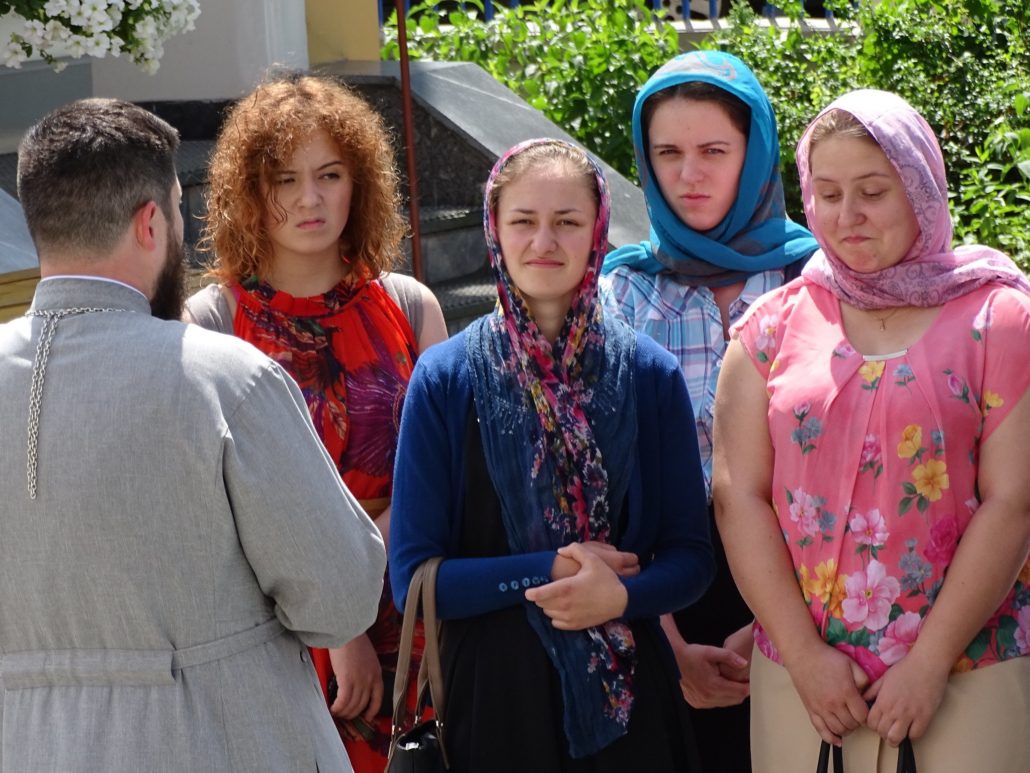
Belarus is a landlocked Eastern European country that Russia, Ukraine, Poland, Lithuania and Latvia border. Women’s rights in Belarus have a complicated role in society. As of July 2020, Belarus reported a population of 9.4 million, over half of which were females. The 2017 estimated median age for Belarusian women is 43.1, with most falling into the 25-54 age range. The average life expectancy for Belarusian women is 74 years old.
Belarusian law has protected women since the late 16th century, and Belarus continues to celebrate its contributions to society each year on March 8 on International Women’s Day. The nation has signed onto all international documents of gender equality and has been a party to the UN Convention on Elimination of All Forms of Discrimination against Women since 1981.
Yet gender roles in Belarus remain staunchly traditional, largely due to the country’s historically patriarchal culture. This article will provide an overview of women’s rights in Belarus, including their history, current state and areas for improvement.
History of Women’s Movements
Belarus has a rich history of women’s activism. Activists have been fighting for women’s rights in Belarus for over a century. The first women’s advocacy group, the United Belarusian Women’s Committee, formed at the beginning of the 20th century, promoting national revival via the advancement of women’s rights. Several organizations followed its lead, eventually leading to the first women’s political party, Nadzieja, in 1994.
The 1990s were the peak of the women’s movement, however. Though the Belarusian women’s network, an organization connecting women’s rights groups, formed in 2007, it has achieved minimal success; this is largely due to the movement’s struggle to find commonality in their goals and methods of advocacy. As of 2017, women’s organizations compose less than 1.5% of all NGOs in Belarus.
A Different Kind of Movement
The women’s movement is largely non-feminist. Though Belarusian women’s groups are largely unsuccessful due to their disorganization, it is important to note that these organizations generally do not focus on the advancement of women’s social and political rights. Belarusians instead emphasize women’s unique role as mothers, housekeepers and wives; they seek to protect and honor women in these traditional roles. As a result, most of these organizations have the prevention of violence against women as a top priority.
Tacciana Karatkievič, Belarus’s first female presidential candidate, is emblematic of these cultural values. Even as a public political figure, she adopted a ‘motherly’ persona rather than promoting gender equality.
In Business and Politics
Women remain underrepresented in business and politics. A significant wage gap remains between the sexes. In 2016, the average salary of Belarusian women was 25% lower than men, and women only occupied 23% of high academic positions. In the 2017 rating of the best business people in Belarus, only seven out of 200 were women. Women are similarly a minority in politics, where, although about 30% of parliament members are female, there are little to no female chairpersons, administrators and deputies. This underrepresentation has consequences: according to an Internet survey of 1,519 women, 90% face discrimination at the workplace. Very few organizations are working to rectify these issues, however.
Women led the 2020 protests. Belarus made international headlines in 2020 for its massive protests against the contested reelection of President Alexander Lukashenko, which many believe was rigged. Women have a leading role in the movement, speaking out against Lukashenko’s past comments about women, which many consider sexist. These activists, distinctive in white dresses at rallies and demonstrations, also have voiced frustration about the constant harassment Belarusian women are subject to.
The Road Ahead
NGOs are fighting for change. Although fragmented, numerous NGOs exist that are advocating for women’s rights in Belarus. For example, the United Nations Development Project (UNDP) Belarus works to create new jobs in sustainable development and green energy specifically for women so that they are equally represented in the workforce. TUNDP Belarus earned the UNDP Equality Bronze Seal in 2015 for its successful strides toward greater gender equality. One successful UNDP initiative is its establishment of a system for collecting sex-disaggregated data to monitor and reduce HIV prevalence.
The Karat Coalition for Gender Equality began in February 2014 and has been working to have Belarusian law explicitly ensure women’s human rights. Karat has laid the groundwork for more comprehensive laws protecting women. It is currently working on a Belarusian draft law on gender equality, which it has received positive feedback on from the Belarusian government. This is a promising step that indicates greater equality in the law in the near future.
The Center for the Promotion of Women’s Rights—Her Rights is another Belarusian NGO that provides free and confidential help for women who experience gender-based violence and discrimination, especially domestic violence. The group helps at least 20 women each month escape unsafe homes and work environments.
The results of Belarus’s current social unrest are yet to emerge. But there is reason to believe that women’s rights in Belarus may finally begin to become a priority. The successful ventures of small, citizen-led groups indicate that the fight for Belarusian gender equality, though slow-moving, is leading to societal change.
– Abby Tarwater
Photo: Flickr

The Success of the UBI System in Kenya Amid COVID-19
Universal basic income is a system in which the citizens of a country receive a recurring payment from the federal government for basic necessities such as food, housing and medicine. The goal is to lessen wealth inequality while fostering a higher standard of life regardless of one’s status in society.
Universal basic income in Kenya started in 2017 as a study to map the effectiveness of supplying money to individual villages. In each village, a different stipend was doled out with varying degrees of frequency. The $30 million UBI program was created with the help of GiveDirectly, a non-governmental organization dedicated to addressing global poverty through direct payments. In both 2019 and 2020, researchers followed up with more than 8,000 people involved in the study. What they found proves the success of universal basic income programs to improve food security, health, and mental and emotional well-being.
How the Cash is Distributed
For this study, it is important to note how the payments were allotted to the 14,474 households that participated. The researchers split counties in rural Kenya into four groups. The people in the first set of villages received $0.75 per day for 12 years. The second group received the same stipend but for only two years and was therefore never surveyed during COVID-19. The third group received a one-time lump sum of $500. Finally, the last division of villages was given nothing to act as a comparison.
Food Insecurity
The comparison group, which received no UBI, reported only 32% food security in the last few years. The three UBI groups who received payments reported a notable decrease in hunger between 5-11 percentage points. The study shows that the first group, which received a recurring amount during 12 years, experienced the smallest hunger levels. This suggests that UBI in Kenya can alleviate hunger, especially when provided in smaller payments over time.
Physical, Mental and Emotional Well-being
Universal basic income in Kenya also affects physical health. About a third of respondents without a stipend said they sought medical attention in the last month. However, those in the UBI groups were healthier, with fewer respondents reporting clinical visits or sick family members. Given the lack of COVID-19 cases in the respective villages, the pandemic did not change the findings.
The researchers also found that degrees of depression varied by the method in which the income was distributed over time. Mental health was considered low in the cashless group. Not all UBI groups benefited; however, the group provided with the $500 lump sum reported high levels of depression. Some researchers speculate that receiving a cash payment in regular increments is more beneficial to one’s mental and emotional well-being.
During the Pandemic
The COVID-19 outbreak has brought to light how beneficial a universal basic income program can be when faced with unforeseen financial setbacks like a pandemic. When the study researchers checked in with Kenya in 2020, the pandemic struck the world. Only 12 cases existed in Siaya and Bomet, where the study was being conducted. Kenya underwent a strict lockdown in March, pushing vulnerable people living in rural communities into even more precarious situations. The study showed that UBI recipients were less likely to engage in social activities or visit a clinic, both of which increase the likelihood of catching the virus.
While the study is new and not fully complete, good signs point toward a permanent UBI in Kenya because of the proven benefits. Universal basic income has the ability to offer financial assistance and stability to lessen the blow of the pandemic for Kenyans. With UBI, Kenya has the potential to help those in desperation and foster a higher standard of living for all.
– Zachary Sherry
Photo: Flickr
The Impact of Feed the Future Program in Nigeria
Nigeria is a nation burdened with poverty and an unemployment rate of about 50% for Nigerians under 25-years old. It also relies heavily on agriculture in its economy as this employs about 75%of people in the country. The U.S. Feed the Future program began with the mission to help those in economic need meet their hunger needs on an international level. This article will discuss how the Feed the Future program in Nigeria is making an impact on the nation.
Feed the Future
Launched in 2010, Feed the Future is a U.S. government program aiming to combat global hunger and ensure food security, worldwide. The program focuses mainly on its partnerships with the nations it works in and innovative solutions to work towards its goal. The program is currently focusing its efforts in 12 nations. This ensures the organization can properly allocate the money to be as efficient as possible. Overall, between 2011 and 2018, the program has spent more than 3 billion dollars to fund its mission.
Feed the Future Program Impact in Nigeria
Nigeria is one of the few nations Feed the Future focuses its initiatives on. The program partners with Nigeria’s agricultural fund and supplies it with about 20 million dollars a year. These funds go towards improving Nigeria’s agricultural sector and proving economic help to create food security.
The Feed the Future program utilizes innovation to solve hunger. In 2018 alone, the organization had 38,000 people applying new practices to Nigeria’s agriculture sector. These innovations improved approximately 26,000 hectares of land throughout the same year. On top of these innovations, the program improves economic conditions by uplifting business development organizations in agribusiness. In this same vein, these efforts invest in Nigeria’s agricultural sector, directly.
As a result of the Feed the Future program, 79,000 children under the age of five received assistance regarding their nutrition needs in 2018. However, the Feed the Future program does more than just solve the problem; the organization creates a sustainable cycle to relieve the issue. For instance, in 2018, Feed the Future educated 236,000 individuals in nutritional, professional training to multiply the impact of relief.
Feed the Future in Nigeria: Outlook
The Feed the Future program’s success has been noticed as there is still a great amount of support for it. Thus, in 2018, the Global Food Security Reauthorization Act was signed to ensure the continuation of the program through 2023.
However, despite the success, there are still changes occurring with the program. For instance, the Center for Strategic & International Studies recommends that the future of the Feed the Future program should shift focus “to strengthen resilience across all zones of influence”. There is also a push for the program to make itself more sustainable. This is so that fragile areas will continue to show success in the program.
In the coming years, the Feed the Future program and its investments are expected to make major impacts in Nigeria. The Center for Strategic & International Studies anticipates the program to spend hundreds of millions of dollars in agricultural finance and investments. This funding will cause more innovation and more people to be food secure.
In the past decade, the Feed the Future program has become a major success that has drawn many people into a more stable future. The program’s future is secured until at least 2023 with recommended adjustments being taken into account to ensure the program’s efficiency.
– Erica Burns
Photo: Flickr
5 FIFA Soccer Players Practicing Philanthropy
Soccer, or football players to most of the world, are most often recognized for their impressive work on the field. However, professional soccer players have a lot of potential for impactful good off the field. This, due to their status, influence and financial capabilities. Listed here are five soccer players (part of FIFA) who have a powerful impact on the lives of impoverished peoples. Importantly, their reach extends throughout the world. These are great examples of professional soccer players practicing philanthropy.
5 FIFA Soccer Players Practicing Philanthropy
Good Work: On and Off the Pitch
In addition to their work on the football pitch, these soccer players practicing philanthropy are doing excellent work for humanitarian missions and initiatives. The contributions of these soccer players in healthcare, education and nutrition are improving the lives of the individuals affected by their initiatives worldwide.
– Hannah Bratton
Photo: Flickr
Addressing Childhood Blindness
Eye Foundation of America
Most instances of vision impairment result from eye conditions. When eye conditions obstruct the visual system and one or more of its functions, if not treated quickly and effectively, vision impairment leads to permanent blindness.
Dr. Raju, the creator of Eye Foundation of America (EFA), grew up in Rajahmundry, Andhra Pradesh, India. His medical career in ophthalmology brought him to his current residence of Morgantown, West Virginia. Following his journey from east to west, Dr. Raju strengthened his ties to India and other developing countries through EFA.
Childhood vision impairments have an impact on education as learning is done 80% through vision. Therefore, EFA revolves around a singular mission: eradicating childhood blindness. The principles of service, teaching and research, underscore operations of the foundation. EFA sets up medical clinics across the world focused on training staff on ophthalmological procedures, screening local populations for eye conditions and maintaining a functional vision for the youth.
In four decades, EFA made notable strides in combating childhood blindness and overall blindness. In 30 countries across the world, EFA trained and educated more than 700 doctors and medical staff, conducted three million vision screenings and saved the vision of more than 350,000 people through essential procedures.
Early Intervention Prevents Blindness
In an interview with The Borgen Project, Dr. Raju affirms the importance of proper sight for children, without which “the child becomes a problem to themselves, a problem to the family and a problem to society.”
Reducing childhood blindness requires early intervention. If health care personnel identify eye conditions in a child’s first two years of life, the visual cortex still has time to develop and function properly. Conversely, if doctors neglect vision problems during this critical period of growth, the brain cells may never learn to see.
Disparities Between Access and Affordability
Dr. Raju traces the pervasiveness of childhood blindness to accessibility and affordability rather than incidence. He offers his home state of West Virginia as an example. In 2018, the U.S. Census Bureau documented the West Virginia poverty rate at 17.8%, which is 6% above the national rate of 11.8%. Despite relative poverty, Dr. Raju asserts that West Virginia residents enjoy excellent health care and ophthalmological treatment, regardless of whether they have insurance.
Two-thirds of the 1.4 million cases of childhood blindness occur in developing countries where Dr. Raju sets up the majority of EFA’s clinics. Accordingly, The World Health Organization (WHO) reports, “The burden of visual impairments and eye conditions tends to be greater in low and middle-income countries and underserved populations, such as women, migrants, indigenous peoples, persons with certain kinds of disability and rural communities.”
Vision Impacts Global Poverty
Mahatma Gandhi once famously declared, “Be the change you wish to see in the world.” For Dr. Raju, the change is to see. Though often taken for granted, vision enables children to read, write and learn through seeing. Vision impacts education and education impacts poverty. Dr. Raju’s foundation addresses overall global poverty by addressing childhood blindness.
– Maya Gonzales
Photo: Flickr
Refugees in Jordan: NGOs Helping During COVID-19
However, during the COVID-19 lockdown, the informal working sector shut down. Most refugees did not have savings to fall back on while roughly 80% of Syrian refugees in Jordan live below the poverty line. When Jordan began to reopen in late April, the government mandated that businesses first give employment preferences to Jordanians.
The International Labor Organization recently published a survey confirming that of all the vulnerable working populations, refugees have been hit the hardest amid the pandemic. Nearly all refugees are ineligible for governmental aid. Moreover, only about 30,000 refugee families receive cash assistance from UNHCR. The NGOs in Jordan were non-essential, and many shut down in the spring. However, with easing restrictions, NGOs are reopening and providing necessary assistance again.
Collateral Repair Project
Collateral Repair Project (CRP) is a nonprofit in Amman that provides many services. These services include a community center with programs for refugee children, women and men. Additionally, CRP runs a Basic-Needs Assistance program. It is essentially a food voucher program for refugees to trade in coupons for fresh produce. CRP know how essential this program is for refugees. As a result, it found a way to operate during the shutdown. By partnering with local markets, CRP managed to keep over 700 refugee families fed throughout the lockdown.
Reclaim Childhood
Reclaim Childhood provides sport and leadership training to refugee girls ages six to 18 in Amman and Zarqa. While it had to stop programming during the lockdown, its return is significant. Reclaim Childhood employs nine female coaches, some refugees, some Jordanians and has nearly 300 girls play each season. Refugee children are suffering from the effects of the pandemic. Girls in particular are hurt with schools shutting down. Children from families facing increased poverty are more likely to be forced into child labor or early marriage. Reclaim Childhood, beyond providing these girls with a meal each day, reminds them that they are strong, capable and surrounded by girls and women who support them. Even amid poverty and pandemics, children should always have the right to play, learn and grow.
Action Against Hunger
Action Against Hunger (AAH) is an organization that operates in Jordan. It provides water, sanitation, hygiene, food security and livelihoods and mental health services to both host communities and refugee populations. In 2019 alone, it reached 86,522 people with water, sanitation and hygiene programs. Additionally, the organization offers cash-assistance programs for refugees. During the height of the Jordanian lockdown, it became clear to AAH that the majority of people receiving its services also desired a way to access more information about the pandemic and preventative measures. In response to this need, AAH launched a free telephone hotline that offers updated information about the risks associated with the pandemic. They currently have 38 operators managing phone lines, communicating essential information.
Overall, the work of these organizations is essential to the livelihood and safety of many refugees in Jordan, especially during this global pandemic.
– Grace Harlan
Photo: Pixabay
The EU Farm to Fork Strategy
The Farm to Fork Strategy
On June 2, 2020, The EU dedicated €10 billion towards developing the start of the program by donating towards “the research and innovation of food, bioeconomy, natural resources, agriculture, fisheries, aquaculture and the environment” along with developing new technology to find a nature-based solution for naturally grown food, that is also sustainable year-round and throughout multiple years, by growing annuals in the farms of European countries. This trial run, done exclusively in Europe, hopes to be a pioneer in agriculture, destined to help millions globally once the project receives more traction.
The Farm to Fork Strategy stands in line with the Sustainable Development Goals (SDGs) and not only plans to provide more sustainable food sources but will also provide aid to issues such as global warming, pollution, deforestation and overfishing. The overall goal is to “ensure food security and create a safe food environment” globally.
The Main Goals of Farm to Fork:
This detailed plan, if executed properly, is estimated to reduce greenhouse gas emissions and global food shortages. Targets that are essential to meet in order to reach the environmental and food safety goals of Farm to Fork are:
The Potential Impact of Farm to Fork
With the use of the Farm to Fork Strategy, the entire world could be more self-sustaining. The initiative could help millions around the world who struggle with food scarcity, making sustainable agriculture one of the most important fields in society. Farm to Fork helps not only food scarcity but the environment as a whole as well. Farm to Fork aims to do more than just curb global hunger, ultimately, aiming to make the planet a better place as a whole.
– Alexis LeBaron
Photo: Flickr
The State of Health and Healthcare in Ecuador
The national healthcare in Ecuador was first deployed in 1967, where it floundered in providing reliable and efficient coverage for its population. Spanning the time between 1992 and 2006, Ecuador underwent eight national governments. This lack of stability created a turbulent socio-political landscape. It ended up wounding the efficacy of the various infrastructural sectors, including health. The Constitution of 2008 declares health to be a right. This supports the moral tenants on which its publicly integrated healthcare system operates, those being the universality and equity of it.
Ecuador spends 9.16% of its GDP on health. This number grew from spending $1.153 billion in 2010 to spending $2.570 billion in 2015. For comparison, the United States, a much wealthier nation, spends about 17.7% as a health expenditure, which amounts to about $3.6 trillion.
The State of Health
Deficiency diseases, which are common in places that struggle with food and nutrition security, along with infectious diseases and degenerative conditions are prevalent within the population. The most common health issues tend to arise from vehicular accidents and assaults.
The World Health Organization measures an efficient healthcare system. It is according to population health, equality in healthcare, the responsiveness of the system, the distribution of a responsive system and the responsible allocation of healthcare expenditures. Ecuador is still making strides in all of these criteria.
Additionally, the healthcare system itself lacks consistency, as those delivering care struggle to coordinate. The classification of different sub-sets within the umbrella of healthcare is also poorly defined. Each healthcare institution has its own structure, management and funds. They can make for unequal care for the people depending on their varying circumstances.
The Healthcare System
Furthermore, Ecuador has two kinds of healthcare: private and public. The public sector includes Social Security and other government institutions such as the Armed Forces and the National Police. There are also private organizations that work within the public sector such as the Cancer Society and Ecuadorian Red Cross.
Also, the national budget, funds that come from outside of the budget, outside agreements and organizations and emergency funds all subsidize public healthcare. Meanwhile, private organizations selling their service to the public health sector, private health insurers and pre-paid health insurance bankroll the private health sector. Private insurers and pre-paid insurers cover 3% of the middle to high-income population.
The Country Takes Action
Fortunately, the country is fighting to create a healthcare system that works for and is accessible to everyone in Ecuador. This includes the poorest and most vulnerable communities. As a result, the Ecuador Ministry of Public Health decided to deploy healthcare in Ecuador that prioritizes primary care. The number of those covered by the healthcare system has been rising. In 2007, the number was just 1,518,164, which rose to 3,123,467 as of 2014.
Overall, healthcare in Ecuador has been improving throughout the years. However, as of June, Ecuador clocked in at one of the highest per-capita COVID-19 death rates in the world. Ecuador’s developing healthcare system struggles to keep up with the pandemic. In the meantime, organizations like Direct Relief are sending donations and resources to Ecuador. They attempt to triage the economic damage and loss of life that will be wrought. The nation continues to build a more robust, sustained infrastructure. Such relief is being used to fill in gaps where Ecuador may have been struggling with preventative measures, such as protective clothing and clinics.
– Catherine Lin
Photo: Flickr
Examining the Updates on SDG 8 in India
The Sustainable Development Goal 8 aims for the promotion of “sustained, inclusive and sustainable economic growth, full and productive employment and decent work for all.” In India, the government has launched various schemes to ensure that people, especially the youth, receive sustainable work opportunities through programs like Make in India, Startup India, Skill India and Digital India. Here are some updates on SDG 8 in India, and in particular, what its performance has been regarding each indicator pertaining to the goal.
Indicators Regarding SDG 8 in India
Looking Ahead
The COVID-19 pandemic brings to focus the need to invest in the skills of people to ensure stability in work. India faced a major challenge during the March-April 2020 lockdown where millions of laborers migrated from cities to their villages due to work instability and lack of opportunities. Generating employment opportun
– Anandita Bardia
Photo: Flickr
Women’s Rights in Djibouti and What the US is Doing to Help
Generally speaking, many inequalities exist between men and women in Djibouti. Men make up the vast majority of the national workforce. Women have a very low proportion of representation in government compared to men. Historically, the state permitted many forms of unjust treatment for women. In recent years, the Djiboutian government has made many strides in improving the lives of women through legislation, the ratification of international treaties and the cooperation with foreign governmental agencies. In spite of these improvements, quite a bit of work remains in order to assure women’s rights in Djibouti.
Women in the Workforce
Djibouti’s constitution, ratified in 1992, states that all people are equal under the law regardless of sex, language, origin, race or religion. Nevertheless, large gaps exist between men and women which is particularly evident within the workforce. Only 19% of women are employed, compared to 81% of men. According to the Labor Code and Penal Code, all people are protected from discrimination when seeking employment. It is illegal for employers to take into account one’s gender when hiring and is punishable by imprisonment and fines. Furthermore, employers are required to pay men and women equally for equal work. In spite of these legal protections, labor restrictions still exist for women. For example, women are restricted from working a job that is considered above their strength. This frequently excludes women from jobs that include any manual labor. Thereby, it contributes to 19% employment rate.
Domestic Issues
When it comes to domestic issues, obstacles stand in the way of women having equality within the family. For example, men can request a divorce without the burden of evidence. However, for a woman, she must surrender any financial rights and sometimes even pay her spouse damages. Furthermore, the high illiteracy rate of women in Djibouti (61%) causes women to have minimal access to justice, information regarding their rights and legal assistance. In terms of domestic violence, the penal code only criminalizes violence generally. However, it does not provide specific legal protections from domestic violence. Rape is a violent act and punishable under the law. In spite of this, marital rape remains taboo and is rarely prosecuted.
Gender-based Violence
Gender-based violence (GBV) is another women’s rights issue in Djibouti. The Djibouti federal government has taken many administrative and legal actions to outlaw gender-based violence and reduce its occurrence. The Ministry of Women and Family collaborates with the National Union of Djiboutian Women (UNFD) to combat gender-based violence. This collaboration advocates for better legal protections for women and also provides counseling services to victims of GBV.
One of the greatest obstacles for women in terms of GBV is female genital mutilation and cutting (FGM/C). Many legal instruments are in place that aims at eliminating FGM/C such as Article 333 of the Penal Code and the establishment of the National Committee for the Abandonment of FGM/C. However, FGM/C is still a common practice. As of 2015, an estimated 71% of women and girls were victims of FGM/C. In order to respond to the continued practice of FGM/C, the Ministry of Women and Family released the National Strategy for the Total Abandonment of FGM/C 2018-2022. This plan aims to use radio, television, door-to-door campaigns, school curriculum and high-profile publicity strategies to effectively and quickly eliminate the practice.
How the U.S. Is Helping Djiboutian Women
USAID, through a grant to the United Nations Development Programme (UNDP), began a two and a half year program entitled “Women’s Empowerment and Community Strengthening.” This plan aims at empowering impoverished women in suburban and rural areas through skills-strengthening strategies.
This program has three primary goals: to improve the capacities of the Ministry of Women and Family, to bolster women’s income-generating skills and to promote new women’s cooperatives. A relatively small-scale operation, the program plans to provide about 850 women with the skills to engage in small-scale economic activities. Some of the program’s successes include the donation of raw materials and equipment to women creating handicrafts. It also includes providing literacy courses to women in national languages and supporting artisan fairs where women can showcase their crafts.
This program through USAID is certainly a step in the right direction in improving women’s rights in Djibouti and the ability to earn income. However, a larger-scale program would do even more to help. In light of the efforts of the Ministry of Women and Family and the more recent structural and legal protections, the future looks hopeful for Djiboutian women.
– Alanna Jaffee
Photo: Flickr
Improving Women’s Rights in Belarus
Belarus is a landlocked Eastern European country that Russia, Ukraine, Poland, Lithuania and Latvia border. Women’s rights in Belarus have a complicated role in society. As of July 2020, Belarus reported a population of 9.4 million, over half of which were females. The 2017 estimated median age for Belarusian women is 43.1, with most falling into the 25-54 age range. The average life expectancy for Belarusian women is 74 years old.
Belarusian law has protected women since the late 16th century, and Belarus continues to celebrate its contributions to society each year on March 8 on International Women’s Day. The nation has signed onto all international documents of gender equality and has been a party to the UN Convention on Elimination of All Forms of Discrimination against Women since 1981.
Yet gender roles in Belarus remain staunchly traditional, largely due to the country’s historically patriarchal culture. This article will provide an overview of women’s rights in Belarus, including their history, current state and areas for improvement.
History of Women’s Movements
Belarus has a rich history of women’s activism. Activists have been fighting for women’s rights in Belarus for over a century. The first women’s advocacy group, the United Belarusian Women’s Committee, formed at the beginning of the 20th century, promoting national revival via the advancement of women’s rights. Several organizations followed its lead, eventually leading to the first women’s political party, Nadzieja, in 1994.
The 1990s were the peak of the women’s movement, however. Though the Belarusian women’s network, an organization connecting women’s rights groups, formed in 2007, it has achieved minimal success; this is largely due to the movement’s struggle to find commonality in their goals and methods of advocacy. As of 2017, women’s organizations compose less than 1.5% of all NGOs in Belarus.
A Different Kind of Movement
The women’s movement is largely non-feminist. Though Belarusian women’s groups are largely unsuccessful due to their disorganization, it is important to note that these organizations generally do not focus on the advancement of women’s social and political rights. Belarusians instead emphasize women’s unique role as mothers, housekeepers and wives; they seek to protect and honor women in these traditional roles. As a result, most of these organizations have the prevention of violence against women as a top priority.
Tacciana Karatkievič, Belarus’s first female presidential candidate, is emblematic of these cultural values. Even as a public political figure, she adopted a ‘motherly’ persona rather than promoting gender equality.
In Business and Politics
Women remain underrepresented in business and politics. A significant wage gap remains between the sexes. In 2016, the average salary of Belarusian women was 25% lower than men, and women only occupied 23% of high academic positions. In the 2017 rating of the best business people in Belarus, only seven out of 200 were women. Women are similarly a minority in politics, where, although about 30% of parliament members are female, there are little to no female chairpersons, administrators and deputies. This underrepresentation has consequences: according to an Internet survey of 1,519 women, 90% face discrimination at the workplace. Very few organizations are working to rectify these issues, however.
Women led the 2020 protests. Belarus made international headlines in 2020 for its massive protests against the contested reelection of President Alexander Lukashenko, which many believe was rigged. Women have a leading role in the movement, speaking out against Lukashenko’s past comments about women, which many consider sexist. These activists, distinctive in white dresses at rallies and demonstrations, also have voiced frustration about the constant harassment Belarusian women are subject to.
The Road Ahead
NGOs are fighting for change. Although fragmented, numerous NGOs exist that are advocating for women’s rights in Belarus. For example, the United Nations Development Project (UNDP) Belarus works to create new jobs in sustainable development and green energy specifically for women so that they are equally represented in the workforce. TUNDP Belarus earned the UNDP Equality Bronze Seal in 2015 for its successful strides toward greater gender equality. One successful UNDP initiative is its establishment of a system for collecting sex-disaggregated data to monitor and reduce HIV prevalence.
The Karat Coalition for Gender Equality began in February 2014 and has been working to have Belarusian law explicitly ensure women’s human rights. Karat has laid the groundwork for more comprehensive laws protecting women. It is currently working on a Belarusian draft law on gender equality, which it has received positive feedback on from the Belarusian government. This is a promising step that indicates greater equality in the law in the near future.
The Center for the Promotion of Women’s Rights—Her Rights is another Belarusian NGO that provides free and confidential help for women who experience gender-based violence and discrimination, especially domestic violence. The group helps at least 20 women each month escape unsafe homes and work environments.
The results of Belarus’s current social unrest are yet to emerge. But there is reason to believe that women’s rights in Belarus may finally begin to become a priority. The successful ventures of small, citizen-led groups indicate that the fight for Belarusian gender equality, though slow-moving, is leading to societal change.
– Abby Tarwater
Photo: Flickr