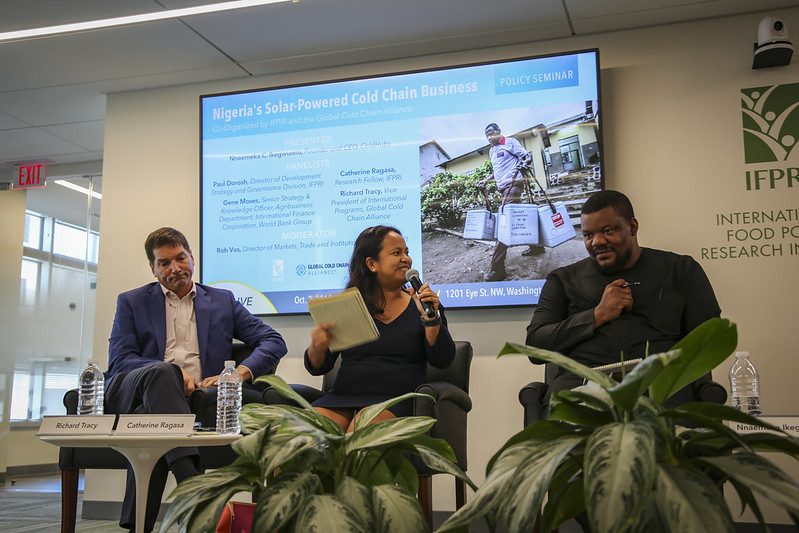
 In sub-Saharan countries, post-harvest crop loss is so high that nearly 50% of fresh food never reaches consumers. These losses not only diminish the economic potential of the agricultural industry, but they also aggravate food insecurity, malnourishment and stunting in young children. In turn, poor nourishment decreases productivity in individuals, which is reflected by a 2% to 3% loss in GDP. So far, many countries lack a solution to this serious problem. This is where Nigerian company ColdHubs comes in.
Post-Harvest Losses
The main culprit in post-harvest losses is spoilage, the natural process of decay and deterioration characteristic to perishable food items. While reduced temperatures can slow the pace of spoilage, sub-Saharan countries lack ample access to chilled storage spaces for produce. The small-scale farmers of sub-Saharan Africa who lack such storage face both financial and infrastructural barriers. While 62% of farmers cannot afford cooling technology, 36% do not have access to power in the first place.
In Nigeria, agriculture accounts for 22% of GDP and employs 36% of Nigerians. Nearly 90% of these Nigerians are small, family farmers. Yet large quantities of post-harvest losses pose a tremendous hurdle to their economic progress. For instance, Nigeria is home to the largest tomato production belt in West Africa. However, nearly half of the crop of tomatoes spoils each year. As of 2017, post-harvest losses in Nigeria cost up to $9 billion dollars annually. Meanwhile, more than 5 million people in Nigeria are food insecure. Two million children suffer from severe acute malnutrition, and 45% of all child deaths are due to malnutrition.
Cabbage in Nigeria: A Case Study
One company is working to make a dent in those statistics. In 2013, a radio journalist specializing in agricultural news was following the journey of cabbage from farms to markets in Jos, Nigeria. What the journalist, Nnaemeka Ikegwuonu, hadn’t anticipated addressing was the story of the cabbage post-market. Farmers abandoned the cabbage that didn’t sell, leaving edible food to rot. Ikegwuonu tracked down the farmers, asking why they had left the cabbage and how to avoid such a situation.
In a recent interview with The Borgen Project, Ikegwuonu recounted, “They actually told me that if there was a form of storage inside the market, that it would be very useful to them to actually store their produce and then come back in the next week to pick up their produce [for sale] when there is less cabbage in that market.” It was this moment that inspired Ikegwuonu to develop ColdHubs. The idea: 100% solar-powered, walk-in cold rooms for food storage, installed in Nigerian markets and farms.
How ColdHubs Helps
The ColdHubs business model is simple. Farmers store perishable items in reusable crates provided by ColdHubs, using a flexible pay-as-you-store subscription. The crates then go into a ColdHub refrigerated room powered by solar panels. Each unit features enough solar panels to generate six kilowatts of energy every hour. However, the cold room itself uses up only 1.5 to 2 kilowatts per hour. This surplus allows for refrigeration to continue to run on rainy or cloudy days.
For a daily flat fee per crate stored, the solar-powered system allows farmers access to 24/7 chilled storage that operates entirely off the grid. This storage extends the shelf life of perishable foods from two days to 21 days. Importantly, this leads to an 80% reduction in post-harvest loss and a 25% increase in smallholder farmer income. For the 24 ColdHubs presently in use, some 3,517 smallholder farmers use the service. So far, ColdHubs has saved more than 20,000 tons of food from spoilage. Another 30 ColdHubs are currently under varying stages of construction. By the end of the year, the company hopes to have 50 ColdHubs fully operational throughout Nigeria.
Supporting Women and Farmers
ColdHubs looks not only to serve economic and renewable ends, but social ones as well. ColdHubs aims to employ women for its management and oversight operations. Thus far, the organization has created new jobs for 48 women. Additionally, ColdHubs is careful to maintain an affordable model ultimately aimed to support farmers over increasing profit.
“We designed Cold Hubs from a smallholder farmer from our perspective. I’m a smallholder farmer myself. The design was specifically suited so that the technology and service would be affordable,” Ikegwuonu explained. This manifests in the pay-as-you store model, as opposed to selling cold rooms outright. “We actually take up the risk of building in a cold room, and in three to four years we recover on that capital expenditure. It’s a slow, philanthropic process.”
Why It Matters Now
The proliferation of ColdHubs throughout Nigeria comes at a crucial moment, as farming seasons become more and more volatile. With prolonged heatwaves and an increasingly erratic rainy season, rain-reliant smallholder farmers struggle to raise crops, predict growing seasons, and sell food before it rots.
“Once you harvest tomatoes, you have approximately 48 hours to sell it. With increased heat, it has actually reduced now to about 32 hours to sell that tomato.” Ikegwuonu added. With climate change in mind, ColdHubs operates with as much attention to its own climate footprint as possible. In addition to being entirely solar-powered, the cold rooms also use natural refrigerants. This reduces their contribution to atmospheric pollution.
Since approximately 54% of the working population in the continent of Africa relies on agriculture for income, ColdHubs could be a lifeline in the fight against hunger. The organization intends to bring its technology into other regions of Africa. As in Nigeria, it hopes to uplift smallholder farmers. “The future for us is to be running close to 10,000 ColdHubs in about five to 10 years, all across Africa,” Ikegwuonu shared. Once ColdHubs spreads throughout Africa, he hopes to bring the technology to developing countries across the globe.
– Alexandra Black
Photo: Flickr

Adapting to Food Insecurity in the Andes
Melting Glaciers and Food Insecurity in the Andes
The Andes hold 70% of the world’s tropical glaciers. However, as climate change progresses, many of Peru’s glaciers are melting. This is disastrous for many of the people living in the foothills. These citizens are losing access to clean water, which is essential for drinking and irrigating staple crops and pastures. As the glaciers melt, water cannot run through the cracks of the mountain downhill into the springs for the people to collect. This causes a decline in crop yields and crop diversification, which can lead to food insecurity in the Andes.
“If the snow disappears, the people will disappear too,” says Rev. Antonio Sánchez-Guardamino, a priest in the country’s southern Ocongate District. He continues, “if the snow disappears, we will be left without water. The pastures and the animals will disappear. Everything is interconnected. The problem of the melting of the glaciers is that the source of life is drying up.”
Food insecurity in the Andes is therefore a persistent and serious problem. Many smallholder farmers produce staple crops at a subsistence level, enough to feed themselves and their families. However, with less water, it has been difficult for them to uphold this, leading to the danger of food insecurity.
Adapting to these Changes
As water in the lower regions of the mountains grows scarce, farmers are adapting to keep up with these geographical changes. One way they have adapted is by moving uphill, where water is more abundant but land is more scarce. Moving crops uphill also prevents diseases such as late blight from killing off entire harvests. This helps farmers maintain a sufficient potato yield for their families.
Another way Peruvian farmers have adapted to water scarcity is by revamping ancient agricultural technologies and practices. The use of amunas, for example, is extremely resourceful. These stone-lined canals turn rainwater into drinking water by channeling the rainwater to springs downslope for use. Today, most of these once-widespread canals lie abandoned, but 11 of them still function. They feed 65 active springs and 14 small ponds.
Terracing is another ancient agricultural practice that makes farming on the highlands fruitful. It involves flattening out the rocky terrain into level terraces for plant roots to better grip. In the Andes, this is an increasingly common agricultural practice. Terracing has shown to create sustainable water-drainage systems and successfully produce high yields of crops.
Taking Further Action
From 2007 to 2011, The New Zealand Aid Programme along with the Food and Agriculture Organization (FAO) initiated the FORSANDINO (Strengthening of High-Andean Indigenous Organizations and Recovery of their Traditional Products) project in Huancavelica, Peru. The project aimed to improve food management and development in Indigenous communities. In doing so, it hoped to alleviate food insecurity in the Andes.
Thanks to this initiative, the production of staple crops significantly increased. Indigenous communities produced 329% more quinoa and 100% more potatoes, oca and mashua. Consumption also dramatically increased by 73% for quinoa, 43% for mashua and 64% for oca. In addition, the net annual income per capita increased by 54% for families participating in the project. As a result, the proportion of families living below the poverty line decreased.
As climate change wreaks havoc on the livelihoods of Peruvians, especially farmers in the Andes, they are cultivating a culture of resistance. People are looking to their roots, resources, communities and innate abilities for answers. This restoration work is renewing old technologies that can still help today. Hopefully, the government will also focus more on on meeting the needs of farmers to support their fight against food insecurity in the Andes.
– Sarah Uddin
Photo: Flickr
Homelessness in Suriname
An Ongoing Housing Problem
Despite having plenty of economic assets, Suriname has struggled to build a stable economy due to a number of factors. Corruption within the government has tarnished many economic sectors dominated by state-owned firms. Consistent economic depreciation has also made Suriname a less appealing destination for foreign aid and investment. However, the recent discovery of oil fields has ignited some interest in that market.
A failure to manage credit, public debt, tax collection and monetary policy are chief reasons for an increase in inflation. This has further led to the suppression of property rights among citizens. Unfortunately, the government’s repossession of citizens’ property and land has only worsened poverty and homelessness in Suriname. The government owns 98% of the country’s land, which has not benefited working-class citizens. Furthermore, this scarcity of private property has made it increasingly difficult for many workers to acquire their own land and achieve economic stability.
Homelessness in Suriname: The Statistics
Homelessness in Suriname is reportedly low, but the numbers are deceptive. Only homeless people in populous areas count in official statistics, which disregard people outside of these regions. This is because there are few mechanisms in place to matriculate citizens in Suriname. Additionally, only two organizations address homelessness in Suriname. There is also no day-and-night shelter for the homeless to take sanctuary in the capital city of Paramaribo. In recent years, this has left the homeless susceptible to violent attacks without any actionable means for justice or prevention.
In 2019, the government evicted 37 permanent residents from two shelters, which got shut down suddenly without clear reason. Overall, Suriname lacks a reliable infrastructure to address the growing prevalence of informal settlements, housing crises and urban sprawl. This has led non-governmental organizations to stage a plan for restoring land and property rights to destitute populations in Suriname.
The Government and an NGO Compete for a Solution
Suriname instituted a program in 2011 intending to divest land capital from the government back to its citizens. The Inter-American Development Bank (IDB) financed the program. Specifically, the program gave a one-time subsidy to low-income beneficiaries. Chosen by a sophisticated targeting system that subverted self-reported income statements, these beneficiaries received $3,000. This money improved current housing situations or went toward a down payment for a new home on another property.
However, beneficiaries had to own the land on which to build that house. This is an anomaly for almost any citizen, especially poor citizens. The program’s inherent bias toward those who already owned a home continued to alienate the most vulnerable. It also disregarded the goal to restore land rights to homeless people. Overall, the program exposed how unaffordable and infeasible land ownership is in Suriname. Only 87 new homes came out of this program as of November 2014, leaving homelessness in Suriname unresolved.
An Action Plan for Paramaribo
The IDB itself created an action plan in 2019 to address the alarming rate of housing disenfranchisement in Paramaribo. The plan outlines a comprehensive year-long study to map out the extent of homelessness in Suriname. It also includes strategies to transform informal living situations into habitable shelters. Specifically, one strategy the plan described was the implementation of a housing quality program. This would staff a project team to monitor and collect data from citizens who live in precarious situations.
The staff would also work in conjunction with an unburdening program to help families in financial duress. By locating and obtaining the means to build on new land, the program would help families resolve their housing deprivation. In total, the IDB’s 264-page action plan reflects a steadfast effort to reduce homelessness in Suriname from an NGO. This is in stark contrast to the country’s government.
Conclusion
There is no one solution to the decaying stability of property rights and housing ownership in Suriname. Working-class citizens and homeless people alike can only hope for other well-funded NGOs like the IDB to intervene in issues neglected by the government. With this sort of dedicated assistance, homelessness in Suriname can decline within the next few years.
– Camden Gilreath
Photo: Flickr
Poverty among Canada’s Indigenous Population
The Housing Crisis
Many indigenous residences are overcrowded, often in poor and unsafe conditions. Overall, 20% of Canada’s Indigenous population lives in overcrowded households, both on and off reserves. Additionally, 25% of First Nations people live in housing that is substandard. Among Canada’s homeless population, 22% are First Nations.
While high rates of poverty among First Nations people are one major contributor to the housing crisis, the limited number of homes available to them is another large problem. Estimates suggest that Canada’s Indigenous population living on reserves needs anywhere from 130,000 to 175,000 new homes. It is even more difficult to gauge the number of housing units needed to accommodate the off-reservation First Nations population. Information for off-reservation housing extends to other Indigenous populations like the Métis and Inuit.
Food Deserts
Approximately 48% of First Nation households struggle to meet their daily food needs. This rate is higher in Canada’s Alberta province, where 60% of First Nations people find it difficult to feed their families. Both of these numbers are much higher among Canada’s Indigenous population compared to the national rate of 8.4%.
Within Canada’s Indigenous population, food insecurity continues to climb. This is especially true in remote areas with little to no access to a service center. When available, these centers help the Indigenous population with food, water, housing, health and education services.
While getting food is a struggle in itself, not all meals are equally nutritious. First Nations people have an even harder time getting healthy foods due to high demand, few centers and high prices. Traditional foods, like game and fish, are also hard to come by due to pollution and industry in Canada. However, these traditional foods generally lack the preservatives and artificial sugars found in much other food. As a result, many Indigenous adults suffer dietary issues. About 82% are overweight, while 20% suffer from diabetes. Again, these rates are disproportionately high among Canada’s Indigenous population relative to the overall population.
Education and Employment
Education remains one of the most effective ways for members of impoverished communities to lift themselves out of poverty. However, under a system that treats the Indigenous population like second-class citizens, quality education is scarce. This makes it more difficult for Canada’s indigenous population to improve their quality of life.
Less than 50% of First Peoples have a high school diploma. Further, just 6% have any kind of college degree. Canada has a history of investing fewer resources into Indigenous education than in its public education. Specifically, the disparity may be as severe as investing $8,000 less per Indigenous student than per Canadian student.
This disparity between First Peoples and Canada’s population continues to affect employment trends. Unemployment rates among the Inuit, Métis and First Nations are more than double Canada’s rate. In some areas, 80% of the Indigenous population relies on welfare. Reducing the educational gap (and consequently, the employment gap) would infuse an additional $36 billion into Canada’s economy by 2026.
Employment and education disparities also exist between on-reserve and off-reserve Indigenous people. As of 2007, the high school graduation rate was up to 70% for off-reserve First Peoples. By contrast, on-reserve rates rest at about 45%. Among the Inuit population, the high school graduation rate has decreased, falling from 52% to 41%.
The Gord Downie and Chanie Wenjack Fund
In a country that’s thriving, it can be hard to believe that there are populations so deprived of resources and opportunities. The Gord Downie and Chanie Wenjack Fund (DWF) strives to build people’s awareness about the marginalization of First Peoples. It also seeks to mend the relationship between Canada and its Indigenous population through teaching their history and culture.
The donations the DWF receives go to the creation of legacy schools and spaces. For example, its Legacy School program is a partnership between the DWF and certain schools. These legacy schools educate students on the history and culture of First Peoples. The Legacy Spaces program is a similar program that partners with organizations and corporations who are passionate about mending the divide between Canada’s non-Indigenous and Indigenous populations.
In focusing on building mutual understanding, the DWF seeks a more supportive relationship between Canada’s two populations. This would serve to preserve the culture of the First Peoples. Importantly, it would also help the Canadian government to finally recognize its duty to its most marginalized population.
– Catherine Lin
Photo: Flickr
Combating Disability and Poverty in El Salvador
In El Salvador, poverty is the main impediment to child education. With a population of 6.4 million, the poverty rate decreased from 39% to 29% in 2017. However, the COVID-19 pandemic will likely negatively affect poverty reduction and economic growth in 2020, according to The World Bank. Disability and poverty in El Salvador are an obstacle for many children living in rural areas.
The fight against poverty and the current economic crisis accentuated the already existing lack of education for the deaf population. For this reason, Fatima Project swims against the current with the hope of instructing disabled children one by one. The project intends to create an educational system that teaches deaf children primary and secondary education so that they can access university and participate in it in the same way as their classmates.
The Situation
In El Salvador, there are four public schools for deaf people, but only one of them offers education from kindergarten to high school. On the other hand, few private schools provide the option for a deaf person to attend classes with an interpreter, who translates Spanish into a gestural language. In this case, the student’s parents fund the interpreter’s work. Moreover, only the University of El Salvador can offer education for the deaf and fully pay for the interpreter’s expenses. Still, the statistics are discouraging: Between 2010 and 2018, only eight deaf people graduated from college. In a deaf population of 88,000 people, what is the main obstacle and –most important- the ultimate solution?
From a Garage to NGO
In May 2017, Fátima Abarca -a deaf-mute teacher- established a small kindergarten education school for deaf children with help of the Forja Foundation, an NGO that provided the facilities. She received one classroom in Forja’s facilities in San Salvador, but that was enough to help 10 children from 3 to 7 years old. Abarca told The Borgen Project that “Becoming a teacher was a moral imperative that nourished from a deep conviction about the need to educate and guide children who like me, face hearing impairment.” The project began a few years before Fátima received a classroom when a group of parents approached her to ask for her help and she agreed to teach them in the only space available to her: the garage.
In rural areas of El Salvador, low-income families, who cannot afford education or transportation to public schools, often withdraw their children from school. In addition, some of those families have deaf children and do not speak sign language. Therefore, their children live in isolation. The latter triggered Fátima and her collaborators into action, knowing that those parents could not pay for the teacher’s services. Fundraising has kept the project going.
The project obtains funding from sponsors. For example, a donor will take on the responsibility of paying for one child’s tuition. Fátima uses the money that she has received to finance the project and pay for the teachers. Moreover, the Forja Foundation takes care of utility expenses. In addition, the NGO Gloria de Kriete awarded the project $5,000 for the category of community development in 2018. However, Fatima needs more funding to expand the project.
The Children
“The first years of age are crucial for a human being’s education. That is where we lay the foundations of knowledge for intellectual and moral development,” said Fátima. Fátima dreams of establishing a school that provides the education necessary for children to access a public high school and understand –just as she did- that the disability should not be a limitation.
Fabricio Hernández, 12, is one of her students. He has a cleft lip and congenital disorders that affect his hearing. He lives with his mother and his maternal grandparents. His mother works at a bakery to support their living. “Fabricio is an intelligent, outgoing child with an extraordinary thirst to learn,” argued his teacher.
Like Fabricio, 5-year-old Angélica Martínez struggles to learn due to the added difficulty of Asperger’s syndrome. For this reason, Fátima provides her with specialized lessons. Angelica’s parents are deaf too, so she is under the care of her mother and grandmother.
Meanwhile, Alison Diaz, 12, struggles with deafness and autism. Her parents’ divorce affected her. “Despite the difficulties that surround my star student, she has made progress in her behavior and has learned a lot,” Fátima reaffirmed.
The Effects of the COVID-19 Crisis on the Project
The school closed during the pandemic. In addition, the funds decreased because no parents were able to pay for the education the school provided. Thus, the pandemic has significantly affected children experiencing disability and poverty in El Salvador. Many of them, confined at home, do not have access to the internet. However, Fatima has found other proactive strategies to reach them: she sends schedules to parents through their mobile devices and uploads the lessons to her YouTube channel, proving that she has not given up on her fight against disability and poverty in El Salvador.
The project is a young dream. Freshly settled three years ago, Fatima has made progress in educating children who are struggling with disability in the face of poverty. Fatima has given them the opportunity to educate themselves and expand their threshold of opportunities.
– Paola Arriaza Avilés
Photo: Flickr
How ColdHubs Is Using Solar Power to Help Smallholder Farmers
Post-Harvest Losses
The main culprit in post-harvest losses is spoilage, the natural process of decay and deterioration characteristic to perishable food items. While reduced temperatures can slow the pace of spoilage, sub-Saharan countries lack ample access to chilled storage spaces for produce. The small-scale farmers of sub-Saharan Africa who lack such storage face both financial and infrastructural barriers. While 62% of farmers cannot afford cooling technology, 36% do not have access to power in the first place.
In Nigeria, agriculture accounts for 22% of GDP and employs 36% of Nigerians. Nearly 90% of these Nigerians are small, family farmers. Yet large quantities of post-harvest losses pose a tremendous hurdle to their economic progress. For instance, Nigeria is home to the largest tomato production belt in West Africa. However, nearly half of the crop of tomatoes spoils each year. As of 2017, post-harvest losses in Nigeria cost up to $9 billion dollars annually. Meanwhile, more than 5 million people in Nigeria are food insecure. Two million children suffer from severe acute malnutrition, and 45% of all child deaths are due to malnutrition.
Cabbage in Nigeria: A Case Study
One company is working to make a dent in those statistics. In 2013, a radio journalist specializing in agricultural news was following the journey of cabbage from farms to markets in Jos, Nigeria. What the journalist, Nnaemeka Ikegwuonu, hadn’t anticipated addressing was the story of the cabbage post-market. Farmers abandoned the cabbage that didn’t sell, leaving edible food to rot. Ikegwuonu tracked down the farmers, asking why they had left the cabbage and how to avoid such a situation.
In a recent interview with The Borgen Project, Ikegwuonu recounted, “They actually told me that if there was a form of storage inside the market, that it would be very useful to them to actually store their produce and then come back in the next week to pick up their produce [for sale] when there is less cabbage in that market.” It was this moment that inspired Ikegwuonu to develop ColdHubs. The idea: 100% solar-powered, walk-in cold rooms for food storage, installed in Nigerian markets and farms.
How ColdHubs Helps
The ColdHubs business model is simple. Farmers store perishable items in reusable crates provided by ColdHubs, using a flexible pay-as-you-store subscription. The crates then go into a ColdHub refrigerated room powered by solar panels. Each unit features enough solar panels to generate six kilowatts of energy every hour. However, the cold room itself uses up only 1.5 to 2 kilowatts per hour. This surplus allows for refrigeration to continue to run on rainy or cloudy days.
For a daily flat fee per crate stored, the solar-powered system allows farmers access to 24/7 chilled storage that operates entirely off the grid. This storage extends the shelf life of perishable foods from two days to 21 days. Importantly, this leads to an 80% reduction in post-harvest loss and a 25% increase in smallholder farmer income. For the 24 ColdHubs presently in use, some 3,517 smallholder farmers use the service. So far, ColdHubs has saved more than 20,000 tons of food from spoilage. Another 30 ColdHubs are currently under varying stages of construction. By the end of the year, the company hopes to have 50 ColdHubs fully operational throughout Nigeria.
Supporting Women and Farmers
ColdHubs looks not only to serve economic and renewable ends, but social ones as well. ColdHubs aims to employ women for its management and oversight operations. Thus far, the organization has created new jobs for 48 women. Additionally, ColdHubs is careful to maintain an affordable model ultimately aimed to support farmers over increasing profit.
“We designed Cold Hubs from a smallholder farmer from our perspective. I’m a smallholder farmer myself. The design was specifically suited so that the technology and service would be affordable,” Ikegwuonu explained. This manifests in the pay-as-you store model, as opposed to selling cold rooms outright. “We actually take up the risk of building in a cold room, and in three to four years we recover on that capital expenditure. It’s a slow, philanthropic process.”
Why It Matters Now
The proliferation of ColdHubs throughout Nigeria comes at a crucial moment, as farming seasons become more and more volatile. With prolonged heatwaves and an increasingly erratic rainy season, rain-reliant smallholder farmers struggle to raise crops, predict growing seasons, and sell food before it rots.
“Once you harvest tomatoes, you have approximately 48 hours to sell it. With increased heat, it has actually reduced now to about 32 hours to sell that tomato.” Ikegwuonu added. With climate change in mind, ColdHubs operates with as much attention to its own climate footprint as possible. In addition to being entirely solar-powered, the cold rooms also use natural refrigerants. This reduces their contribution to atmospheric pollution.
Since approximately 54% of the working population in the continent of Africa relies on agriculture for income, ColdHubs could be a lifeline in the fight against hunger. The organization intends to bring its technology into other regions of Africa. As in Nigeria, it hopes to uplift smallholder farmers. “The future for us is to be running close to 10,000 ColdHubs in about five to 10 years, all across Africa,” Ikegwuonu shared. Once ColdHubs spreads throughout Africa, he hopes to bring the technology to developing countries across the globe.
– Alexandra Black
Photo: Flickr
The Impact of Poverty and GDP on Education in Malaysia
Poverty and Education in Malaysia
Lori Niehaus is a 2019 Fulbright Scholar in Malaysia and founder of the Change Makers program. Niehaus told The Borgen Project about the significant role that poverty plays in Kelantan, the Malaysian state with the lowest GDP. Poverty impacts the daily lives of students and their ability to get an education in Malaysia. For starters, many students are driven for financial reasons to work all night to support their families. As a result, they have less time to study, which puts them at a disadvantage in school.
Through the stratification process in public schools in Kelantan, students with low scores in any subject are designated to lower-level classes. These classes receive very little attention and resources from their schools. In some cases, students often arrive at school and sit in a classroom without a teacher the entire day. As such, this stratification further stalls their education and deprives them of opportunities to advance.
Additionally, social stigmas that result from poverty and Kelantan’s low GDP rate also deprive students and adults of professional opportunities. Kelantan is unique in that its population speaks its own language, a mix of standard Malay and Thai. However, wealthier populations within Malaysia speak standard Malay. Niehaus told The Borgen Project that standard Malay speakers “automatically discount Kelantanese as less educated, and that creates a mental and cyclical effect on what they feel capable of accomplishing.”
Gender Disparities in Education in Malaysia
Along with poverty, gender disparities in the classroom prove to be another obstacle to education in Malaysia. Social and cultural gender disparities produce a stifling, hyper-gendered environment for girls. In that environment, academic insecurities and shyness prevent female students in school from reaching their full potential. To combat gender disparities in Kelantan, Niehaus and a colleague created the Change Makers program in their community.
Change Makers
Through a two-day, one-night camp, the Change Makers program worked with 80 female students from four different high schools. The camp fostered an academic environment in which girls have the chance to engage in problem-solving workshops. Moreover, the camp curriculum included three major issues. These are mass displacement (in the context of the Rohingya crisis), environmental issues and the relationship between racism and identity.
However, because Niehaus and colleagues facilitated this particular program, it will not continue in the future. But schools support similar events every few years. Without initiatives like these, female students around the world will continue face challenges while pursuing their education in Malaysia or chasing professional opportunities.
“The purpose of Change Makers was to encourage our [students] to think critically about the problems that their community—both in Kota Bharu, their city, and in Malaysia at large—face and how we might bring about change,” said Niehaus. Niehaus believes that by creating conversations about change for marginalized groups within Kota Bharu and Malaysia as a whole, students will find ways to think critically and effect real change in their communities. They may then be able to work on solving problems with education in Malaysia within their own communities.
– Nye Day
Photo: Flickr
Village Enterprise Fights Poverty in Africa
There are a plethora of organizations with eradicating global poverty at its center. Many focus on specific continents as there are many poverty-stricken countries across these areas. Africa is one of many continents in need of help. One in three Africans, 422 million people, live below the global poverty line and represent more than 70% of the world’s poorest people. On the bright side, one organization making a tangible difference in these numbers is Village Enterprise. Village Enterprise fights poverty in Africa in multiple ways.
Village Enterprise started in 1987 and is working towards ending poverty in East Africa through various methodologies. It has transformed over 1 million lives throughout its establishment. Its focus is eradication through entrepreneurship and innovation with a focus on women, rural youth and refugees. These three categories tend to be the most vulnerable groups with the least resources for success.
Facts About Village Enterprise
The Village Enterprise Graduation program is the primary way they aid Africa. It started over 48,000 businesses and trained over 185,000 East Africans through its program. It targets individuals who have no prior business experience, live on less than US$1.90 a day and are unable to provide for their basic needs.
Village Enterprise fights poverty in Africa by providing groups of three entrepreneurs with cash as seed capital, training and mentoring. These groups filter into Business Savings Groups (BSGSs) of 10. This allows them further access to growth capital, safe savings and social capital. These businesses have included farming, restaurants, beekeeping and small retail stores. Additionally, studies have shown that this program has led to increased consumption, assets and income, and improved nutrition and well-being.
Women Empowerment in Africa
One of its main focuses is empowering women. In fact, 75% of its business owners are women, which is essential because seven out of 10 of the world’s hungry are women. Additionally, in East Africa, women are more likely to be illiterate, underpaid and provided with food than men.
However, with the help of Village Enterprise, financially-empowered women can prioritize these areas to benefit their families. They can do this to benefit their communities as well. The Village Enterprise program analyses show that households with female participants reported increased standing in the city and subjective well-being. This includes improved mental health and happiness, which all work towards ending global poverty.
Empowerment for the Youth of Africa
Regarding empowering the rural youth, over 75% of East Africa’s population is younger than 35. Therefore, investing in youth unlocks economic opportunities in the future. Most rural youths are unemployed because of a few economic opportunities.
By stepping up in places like Kitgum, Uganda, the rural youth can start providing for themselves and their family. Village Enterprise adapted its Graduation program for youth. This created the Mastercard Foundation-funded DYNAMIC (Driving Youth-led New Agribusiness and Microenterprise). It allows children to have agricultural opportunities for economic activity.
Providing Help for Refugees
Finally, Village Enterprise fights poverty by focusing on empowering refugees through another adaptation of its Graduation program. The refugee population in Uganda is at nearly 1.5 million people, so helping the community economically is vital in Africa.
It worked with other organizations to conduct assessments for its programming in the West Nile refugee settlements of Bidi Bidi, Rhino Camp and Palorinya. Following these assessments, it paired refugees with community members to small businesses. Doing this promotes resilience and reduces aid alliance, improving outcomes for the refugees.
Overall, the work of Village Enterprise is inspiring. It demonstrates how vital aid is for other countries, and how a little help goes a long way. By enabling opportunities for economic growth, Village Enterprise has begun a long-standing economic boost for many people in East Africa. With expansion across the continent, it can continue towards its mission of ending global poverty.
– Kiana Powers
Photo: Wikimedia Commons
Haiti’s Need for Mental Health Services Heightened During COVID-19
The Humanitarian Crisis in Haiti
Haiti is now home to over 11.4 million people, and nearly 60% of the population lives below the poverty line. Income inequality and unemployment rates are high, while the country does not meet its citizens’ basic needs. In fact, nearly 90% of people in rural areas lack access to electricity and plumbing.
Several natural disasters have also damaged Haiti in the past decade. The 7.0-magnitude earthquake of January 2010 devastated the nation’s capital city of Port-au-Prince. Indeed, the earthquake was one of the worst natural disasters to strike an urban area. An estimated 250,000 people died, while 300,000 people got injured and over 5 million became displaced. Six years later, Hurricane Matthew wiped out trade roads and coastal infrastructure. Conversely, lengthy periods of drought have paralyzed local agricultural markets. This has resulted in the inflation of even the most basic foods and necessities.
Though Haiti has focused on efforts to recover from natural disasters, longstanding economic and sociopolitical crises remain. One often overlooked problem lies in how these humanitarian crises affect mental health in Haiti.
Mental Health in Haiti: Existing Services
The ongoing humanitarian crises in Haiti create an extraordinary psychological toll on people. In particular, poverty and socioeconomic disadvantage increase the crisis of mental health in Haiti. Following the earthquake, 25% of the population reported experiencing PTSD. Additionally, 50% experienced a major depressive disorder. Disasters have also caused many Haitians to experience trauma and the loss of loved ones and livelihoods.
Despite these negative psychological outcomes, mental health in Haiti remains neglected. This is largely due to the majority of Haitians attributing mental health problems to supernatural forces. Specifically, many Haitians rely on inner religious and spiritual strength to overcome mental health issues. This culturally important Haitian belief, in tandem with the country’s inadequate mental healthcare services, leaves vast numbers of the population neglected.
Many people in Haiti simply go without mental healthcare. For a nation of around 11 million people, Haiti has a mere 23 psychiatrists and 124 psychologists. Haiti’s investment in healthcare services has even declined from 16.6% to 4.4% since 2017. Additionally, even if Haitians could find mental health services, they may not be able to afford or access them. Available services are often costly and inaccessible for those who do seek care.
The Implications of COVID-19
During the pandemic, Haiti has seen a rise in the cost of mental health services and medication. The country’s two running psychiatric hospitals have stopped accepting patients. Other hospitals, many now at full capacity due to the pandemic, have become testing facilities for COVID-19.
The pandemic has further exacerbated mental health in Haiti. General anxiety and concerns relating to the coronavirus and its effects have skyrocketed. Additionally, quarantine mandates have increased rates of domestic violence and abuse. Fatigued health professionals and medical staff also suffer from increased rates of depression. In short, medical professionals as well as the general population are experiencing the devastating mental impacts of COVID-19.
Moving Forward
Humanitarian crises and the coronavirus pandemic persist in the small island nation of Haiti. The aftermath of natural disasters, trauma and continuing political and economic instability lead to a crisis of mental health in Haiti. The country needs attention to the mental health needs of its citizens, in the midst of current and past crises.
Thankfully, nonprofit organizations like Partners in Health are striving to improve mental health in Haiti. Based out of Boston, Partners in Health is dedicated to establishing long-term relationships with organizations in the world’s poorest developing countries. Through its partnerships with local governments and other organizations in Haiti, Partners in Health has helped to innovate mental healthcare delivery models that integrate cultural beliefs about health and current biopsychosocial knowledge. Mobile health clinics also help ensure ensure that patients living in even the most remote regions of Haiti have access to necessary mental health services.
In the years to come, continued funding and support of programs like Partners in Health and its partnership organizations will be vital to improving the mental health and overall well-being of Haitians. Only then can the country truly overcome its current crises and past history.
– Alana Castle
Photo: Flickr
Overpopulation in Rwanda
Rwanda is a small, highly populated, mostly rural country in Central Africa. Within the past few decades, the rate of population growth has grown to unsustainable and potentially dangerous levels. For instance, a woman in Rwanda has an average of 5.4 children and the country is on pace to double its already large population in just 24 years. As a small rural country, limited amounts of resources exist to support the overpopulation in Rwanda. This exponential increase will inevitably lead to problems with resource management.
Increased Access to Healthcare
Increased access to reliable healthcare in the country has certainly, in part, contributed to overpopulation in Rwanda. An ever-expanding amount of children survive into adulthood due to 82% of the country being vaccinated against deadly diseases. This may seem like a purely positive fact at first glance. However, as more children survive, the population grows and generates other problems. Third world countries, such as Rwanda, have limited access to adequate food and water supplies. The more people there are, the fewer resources there are available to each person. Moreover, the growing population has a direct link to more people suffering from malnutrition and starvation.
Geography and Resources
Rwanda is 10,000 square miles with a population density of more than 1,000 people per square mile. The immense overcrowding and strain on limited resources lead to stifled agricultural growth within the country. The farmland supports the population to the best of its ability, but there is very limited space for new fields for crops. The population explosion stagnates food production. Quality of life depends on adequate food access and overpopulation blocks that. Rapid population growth must stop to save the quality of life from deteriorating at an alarming pace in Rwanda. Two things they could look into are investing in family planning and education.
Family Planning and Education
Family planning helps reduce family sizes by providing different forms of birth control to eliminate unplanned births. Making family planning more accessible to all people should help reduce overpopulation in Rwanda.
The Belgian Development Cooperation is an NGO working in Rwanda to help limit the birth rate and population. They strongly believe that access to family planning, birth control and contraceptives is a human right. They are donating 26.7 million pounds to the Rwandan government to try and make family planning available to all of the people of Rwanda.
Education is also important in curbing rapid population growth. Investing in education is important because people with an education, especially women, generally tend to have fewer children.
Looking Forward
Something needs to be done in Rwanda to help stop the birth rate from increasing. Investing in methods to lessen birth rates, such as birth control and education, could have major influences. Working on being able to sustain an ever-increasing population is also a priority. Overpopulation is not just a problem in Rwanda; it is a global issue. Rwanda as well as the entire world should work to decrease birth rates. To sustain an acceptable standard of living, the world needs to take action before it is too late.
– Samira Akbary
Photo: Flickr
Poverty and Natural Resources in Equatorial Guinea
The History of Natural Resources in Equatorial Guinea
Equatorial Guinea declared independence from Spain in October 1968. However, the regime of post-independence president Francisco Macias Nguema saw declines in quality, maintenance and labor. As a result, previously booming industries of cocoa and coffee exports almost completely disappeared. After Teodoro Obiang Nguema Mbasogo overthrew Nguema in 1979, Equatorial Guinea seemed to be moving toward economic revitalization. In the 1980s, the country joined the Customs and Economic Union of Central Africa and replaced its currency with one linked to the French franc. However, it was not until the discovery of offshore petroleum and natural gas reserves in 1996 that its GDP skyrocketed.
The IMF estimated that oil production increased from 17,000 barrels per day (b/d) in 1996 to its peak at 280,000 b/d in 2004 before beginning to steadily decline. Real GDP grew by 150% in 1997. Equatorial Guinea remains the third-largest oil producer in Sub-Saharan Africa. Along with GDP growth, Equatorial Guinea became a trading partner with China, Portugal, India, the U.S. and Spain. This accounted for an increase in government revenue, and the country’s per capita income became the highest in Africa. Natural resources in Equatorial Guinea created this economic transformation. However, today about two-thirds of the population still lives in extreme poverty.
Why the Poverty Level Hasn’t Decreased
Despite the wealth of natural resources in Equatorial Guinea, poverty remains an issue. Human rights abuses and corruption during the Obiang’s regime have raised criticism internationally. As of 2015, only half of citizens in Equatorial Guinea have access to clean water. Newborn immunization rates for polio and measles are among the lowest in the world. Also, government expenditures on health and education are merely 2% to 3% of the total budget. In 2018, the United Nations designated the country 144 out of 189 on its Human Development Index. This measures dimensions including life expectancy, education access and standard of living.
Corruption contributes to poverty in the country. Although Equatorial Guinea has held multi-party elections since 1993, Obiang won his fifth presidential term in 2016 with 94% of the vote. His party also occupies every parliamentary seat. Furthermore, about 80% of the government’s revenue from oil went toward spending sprees on public infrastructure. Construction contracts, however, went to companies partially owned by government officials, including Obiang. Obiang’s son further compounded evidence suggesting government corruption by provoking money-laundering investigations with overseas spending. Thus, the wealth resulting from natural resources in Equatorial Guinea goes not to the people but to the government.
An Unsustainable Future
Many natural resources in Equatorial Guinea also face misuse and exploitation. For example, timber is one of Equatorial Guinea’s most abundant agricultural resources and its main export after oil. The IMF, however, indicated an unsustainable level of timber production in 2001. This resource composed most of the non-oil GDP that grew by 21% in 1999. Environmental damage in the Bioko region, where most of the timber grows, also supports claims of unsustainable exploitation. Despite this boom in timber, the country has mineral deposits that remain untouched due to a lack of extraction and refining equipment. This gold, titanium, manganese, iron ore and uranium could provide balance to the country’s resource exports with the right material.
Furthermore, the 2014 international drop in oil prices reversed GDP growth and caused a recession in Equatorial Guinea. Experts predict that its oil will also run out by 2035. This emphasizes the need for reform and sustainable sources of revenue from natural resources in Equatorial Guinea.
Partnering with the IMF
Recently, Equatorial Guinea partnered with the IMF to recover its economy by promoting sustainable, inclusive growth. The $283 million program focuses on anti-corruption efforts and economic diversification. This will help monitor public finances, increase social spending and improve governance.
While this partnership with the IMF indicates progress, reform needs to be more widespread and supported internationally. The State Department names U.S. corporations ExxonMobile, Marathon Oil and Noble Energy as among the largest investors in Equatorial Guinea. These corporations and other international entities can use their influential positions to support economic reforms to sustain the country’s resources. They can also support political and social reforms to improve living conditions.
By investing more oil revenue into social programs, legitimate infrastructure projects and the agricultural sector, Equatorial Guinea could build a stable economic future and better living conditions for its citizens. Policy reform like this would also decrease poverty and preserve natural resources in Equatorial Guinea. This way, the country’s natural wealth will exist for generations to come.
– Isabel Serrano
Photo: Flickr