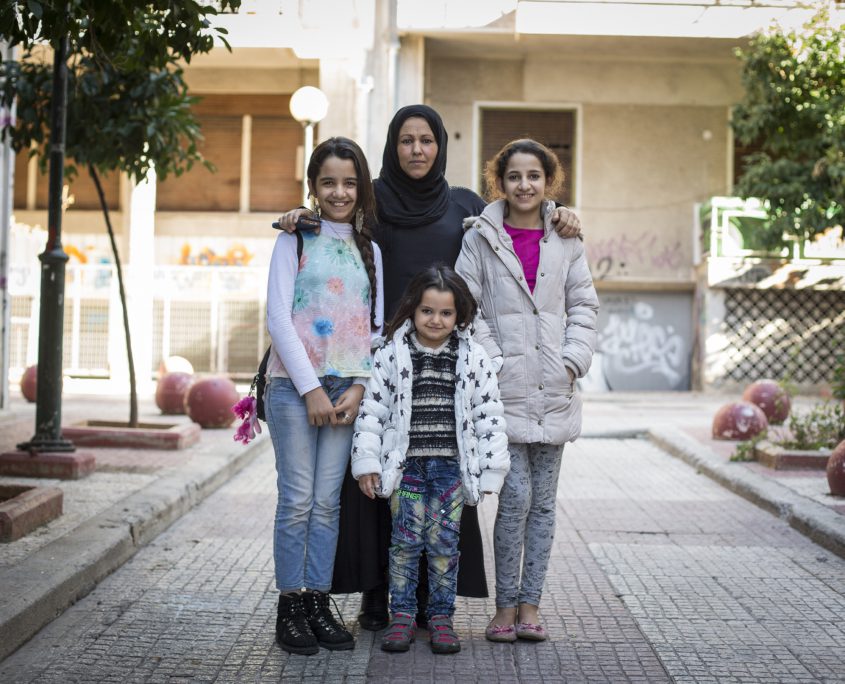
In Spain, 10% of the population occupies 70% of the land. Meanwhile, the rest of the population lives in only 1,500 large and middle-sized cities. Similar to other European countries, Spain has undergone dramatic demographic changes in the last decade. Of towns with fewer than 1,000 residents, 90% have seen people move away, leading to grocery stores and other essential businesses having to shut down. The benefits of resettling refugees in rural Europe are on display in Pareja.
A school in Pareja, Spain might have had to close if not for the refugee families with young children who recently moved to the area. Towns With a Future Association is an NGO connecting refugees and small towns. The nonprofit helped one Venezuelan family relocate from Madrid to Pareja, a town with 400 inhabitants. Moving to a small town allowed the family to make connections with locals more easily, find suitable jobs and go off government support sooner. Pareja has had great success in welcoming refugees and the town has a desire for new life and increased prosperity. Every town is different and challenges exist for both refugees and receiving communities.
Demographic Changes
The demographics of the European Union (EU) are changing. A European Commission study from 2020, “The Impact of Demographic Change,” took a look at these changes and how they could affect European society. Europe has an increasingly older population due to high life expectancies and low birth rates as rural and remote regions are losing people and urban regions are gaining people. The report addressed COVID-19 recovery plans by explaining that “this is an opportunity for Europe to build a fairer and more resilient society.”
A more inclusive labor market must include increased employment for women, a better relationship between family life and work, support for disabled people, opportunities for people with little education and efforts to prevent all forms of discrimination. The working-age population of Europe will shrink in the next decade and the increase or decrease in opportunities for refugees and other underrepresented groups will have a direct effect on the speed and severity at which the population shrinks. Prosperity for refugees in rural Europe is possible if there is an adequate investment and care for receiving communities in rural regions.
New Integration Efforts
Resettling refugees in small and medium-sized towns across rural Europe has become a more frequent practice in recent years. The practice is in part due to dispersal policies, which ask small and mid-sized cities to integrate refugees to prevent overcrowding in large metropolitan areas. Furthermore, there is an increased desire from small towns to simply help out and be of service.
A research report by the Migration Policy Institute (MPI) Europe, titled “Building Welcome From The Ground Up,” explored the expanding role of rural municipalities in welcoming refugees and migrants. The research argued that if EU-wide immigration policies chose to include rural regions of Europe, integration efforts in both urban and rural areas would have the potential to be longer-lasting and more sustainable.
Opportunities in Rural Areas
Smaller towns are often more personal, meaning that people may be able to more easily navigate essential services and meet locals naturally in day-to-day life. Newcomers also tend to learn the language more quickly and receive a more personalized and tailored welcome than in large cities. Rural development is an important opportunity because it benefits refugees in rural Europe and the receiving community.
Liam Patuzzi, a policy analyst at MPI Europe and an author of the study, spoke with The Borgen Project about the development opportunities that national funding provides. Patuzzi told The Borgen Project about the research by stating “we heard about this alliance of small municipalities in southern Italy that tried to use the resources and funding that come with resettlement to create community enterprises” that employ “resettled refugees.” The alliance “would help revive certain local trades and skills such as viticulture.” In the case of the small municipalities in Italy, funding from the national government helped towns create jobs for migrants and refugees that also brought back local industries.
Aside from national government funding for resettling refugees, small towns also benefit from the increased population. Businesses and institutions that rely on regular attendance, such as doctor’s offices, grocery stores and schools, are able to keep doors open. The larger and more diverse population also leads to new learning experiences. A local school in Martelange, Belgium added additional French and math classes to the school roster when more students began attending school. The town also added a new medical center because of higher demand. Meanwhile, in Sant’Arcangelo, teachers learned how to teach Italian as a foreign language for the first time. Opportunities are abundant when newcomers enter rural communities and challenges are equally present.
Arising Challenges
Rural areas may not have very specialized services, especially for refugees and migrants with complex challenges, trauma or disabilities. Limited employment opportunities are also common, usually for both newcomers and long-time residents. Life for refugees in rural Europe can be cheaper and more spacious than life in a large city at times. However, that is not the case for refugees in some towns, and especially for those without a job.
The homogeneity of rural regions can be isolating. Although social interaction with locals may happen more frequently, it does not necessarily lead to meaningful connections. For young people, it can be particularly hard to form deep friendships in rural areas of mostly older residents while there is less access to public transportation. The established elements can make the other challenges more extreme because there is not an easy way to find jobs or social connections in a nearby city. In the MPI study, transportation was one of the most challenging barriers for refugees in rural Europe to overcome.
Hope for Rural Resettlement
Despite the difficulties, there is hope that small municipalities will have a positive impact on integration with the right government policies, funding and local initiatives. Patuzzi and a team of fellow researchers in the study emphasize the importance of adequate preparation and support in order to bring prosperity to receiving communities and refugees in rural Europe. The changing demographics of many older residents, young newcomers and depopulation in rural areas will require addressing in the near future to ensure a decent standard of living for all.
– Caitlin Harjes
Photo: Flickr

The Decline of Deforestation in Indonesia
Causes of the Decline of Deforestation in Indonesia
Indonesia’s government attributed the drop to their several prohibited forest-clearing policies imposed last year. These include, “a permanent ban on issuing new permits to clear primary forests and peatlands; a moratorium on new oil palm plantation licenses; forest fire mitigation; a social forestry program; land rehabilitation and increased enforcement against environmental violations.”
Due to La Niña, 2020 was one of Indonesia’s rainiest years in the past four decades. As a result, deforestation from forest fires decreased significantly. Additionally, the economic fallout caused by COVID-19 slowed Indonesia’s timber production, contributing to the low deforestation rate. A researcher with Forest Watch Indonesia, Mufthi Fathul Barri, commented on the matter, “The disruption to economic activity can be seen from timber production from natural forests, which declined. In 2019, Indonesia produced timber from 8.4 million hectares of natural forests. In 2020, it was 6.6 million hectares.” As such, the very low rate of deforestation in Indonesia last year will be difficult to mimic in the near future.
Conservation Work
Yet another factor contributing to Indonesia’s declining deforestation rate is the conservation work done by advocacy groups such as Rainforest Alliance. This organization assists farm and forest communities across the island through training and certification. It successfully improves the health of the environment as well as the people. The Rainforest Alliance details their conservation efforts in Kalimantan on their website, which reads, “FSC [Forest Stewardship Council] certification significantly reduced deforestation by 5% points and air pollution by 31% compared to the rates of control villages in non-certified logging concessions.”
In addition, the Rainforest Alliance has helped educate Indonesian people on ecosystem conservation and sustainable farming. Their educational initiatives help protect the ecosystem while simultaneously administering information that can improve the livelihoods of Indonesian farmers. Overall, this aspect of the Rainforest Alliance’s mission offers considerable aid to low-income communities.
The organization’s work in Central Sulawesi has helped restore the region’s watershed, Lake Poso. This was achieved through a community-led program with the Karya Bersama cocoa cooperative in Pamona Seletan. Since the cooperative started working with Rainforest Alliance, their 500 farmers have experienced increased crop productivity, with a 20% yield increase in 2019. Rainforest Alliance’s work with the Karya Bersama cooperative shows significant potential to restore Indonesia’s ecosystem while improving the quality of life in rural communities. This can all be achieved through conservation and sustainable farming education.
Looking Ahead Amidst the Decline of Deforestation in Indonesia
Many factors caused the 75% drop in deforestation in Indonesia last year. The government’s new anti-forest-clearing policies, the rainy season and the slow in timber production due to COVID-19 all contributed. Although the climatic conditions of 2020 and the economic lull offered favorable circumstances for a decrease in deforestation, the Indonesian government, along with organizations can not be discounted for their tremendous efforts. Hopefully, Indonesia can continue the favorable trend into the future.
– Eliza Kirk
Photo:Flickr
Progress Regarding the Gender Wage Gap in Taiwan
The gender wage gap in Taiwan is a prominent issue. In 2012, women had to work 65 more days than men to earn the same pay. In 2018, it was down to 52 more days. But in 2019, it was back up to 54. Even though this statistic has decreased in the past 10 years, it is still a prominent issue.
Background
While the gender wage gap in Taiwan is better than in other developed nations, more work is necessary. In human health services, for example, the pay gap is 45%. This means that women would have to work 109 more days to receive the same yearly salary as a man. While the wage gap is decreasing, the progress is not spread out equally across different industries.
Certain professions have seen the gap increase in particular. In arts and entertainment careers, men’s wages in this field have increased drastically while women’s have remained the same.
Progress, From a Global Perspective
According to the Ministry of Labor, the average salary per hour for women in Taiwan in 2020 was New Taiwan (NT) $296, or $10.63. On the other hand, men earned NT $344, or $12.35. This gap has improved throughout the past 10 years, as it was 17.1% in 2010 and 14% in 2020.
While a significant wage gap in Taiwan still exists, the country is making significant progress in relation to other countries. For comparison, in 2019, the wage gap was 31.9% in Japan, 30.6% in South Korea and 17.7% in the United States.
Government Efforts
In order to raise awareness about the gender wage gap in Taiwan, the Ministry of Labor initiated an Equal Pay Day in 2012. This has drawn attention to the higher number of days women must work in order to earn the same amount as a man. As of 2017, women needed to work 13 fewer days to receive the same annual salary as they did in 2012.
Taiwan has also established gender equality laws to create a better workplace environment for women. In 2002, the Act of Gender Equality in Employment (AGEE) passed. Its goal is to protect gender equality in the workplace by prohibiting gender discrimination. One can see this in the Maternity Protection section of AGEE, which protects menstrual leave. This provides women with half of one’s regular pay one day each month, maternity leave for eight weeks and five days of leave for pregnancy checkups.
The Office of Gender Equality in the Taipei City government has played a key role in advocating for gender equality in Taiwan. Since its development, it has worked to improve family support, enforcing legal action against gender discrimination and supporting female union members.
Progress
The number of women who are pursuing college degrees in Taiwan has increased throughout the past decade. However, the graduate school rate is lower, with females taking up 31.7% of doctoral degree graduates. As the number of women in college continues to increase, they are more likely to hold positions in the workplace.
In addition to this, the average age of giving birth to one’s first child has increased. In 2017, the average age was 30.83 years. Family obligations make it difficult for mothers to continue their careers and/or education. This contributes to the higher number of women in the workplace and in graduate studies.
– Miranda Kargol
Photo: Flickr
Clean Water in Somalia
Access to Clean Water in Somalia
The United Nations has reported that over 2 billion people globally lack access to clean water. UNICEF reports that only 52% of the population of Somalia has access to a water source. With such a low percentage of the Somali people having readily accessible clean water, preventable diseases become a greater threat. Access to clean water in Somalia means improving sanitation, hygiene and decreasing susceptibility to diseases like cholera, diarrhea and respiratory infections.
Save the Children has reported that droughts have left 70% of Somali families lacking access to clean water. The survey gathered responses from over 630 families in 18 provinces of Somalia. Droughts have led to crop failures resulting in more people struggling with food insecurity. Without access to clean water, women and children face an increased risk of health-related issues, like preventable diseases and childbirth complications.
Providing Clean Water in Somalia
Mercy-USA for Aid and Development is a nonprofit organization from Michigan that has been working in Somalia since 1997. The United States-based nonprofit has projects spanning several countries including Syria, Kenya and Yemen. The programs in Somalia are developing self-reliance skills through education, skill training and food and water assistance. In order to combat the crisis of accessibility to clean water in Somalia, Mercy-USA is building wells for the Somali people. The organization has built over 700 wells, which have provided clean water to over 750,000 people. The organization can build a new well for $3,500 which can provide water to an entire community.
CARE International is a non-governmental organization based in Switzerland that has been providing humanitarian aid to Somalia since 1981. The organization has been helping mitigate the damage that extreme weather like floods and droughts have had on Somali agriculture. CARE’s programs in Somalia have helped over 250,000 people through improvements to clean water accessibility, sanitation and hygiene. The organization works with local authorities and international organizations to treat preventable diseases like acute watery diarrhea. CARE International has provided over 10,000 people access to clean water. The organization’s ongoing projects include efforts to improve agriculture, sanitation and develop local businesses.
Looking Forward
With extreme weather displacing communities and damaging agriculture, more people are finding themselves without access to clean water in Somalia. The Somali government is working to expand assistance and opportunities to those suffering from the effects of poverty with the support of humanitarian organizations like Mercy-USA and CARE International. The poverty rate is expected to remain at 71% as the Coronavirus pandemic further exacerbates food insecurity and displacement. Continued humanitarian support is necessary to improve the situation of the Somali people and ensure everyone has access to clean water in Somalia.
– Gerardo Valladares
Photo:Flickr
5 Challenges due to Child Poverty in Uganda
Many know Africa as having a high amount of poverty. Uganda is becoming one of the most impoverished countries, which is significantly affecting the children. The life-threatening impacts children in Uganda face every day include malnutrition, health assistance deprivation, access to education, shelter deprivation and exposure to crime. Here are five life-threatening impacts pertaining to child poverty in Uganda.
5 Life-Threatening Impacts Due to Child Poverty in Uganda
Save the Children
The life-threatening effects of malnutrition, limited healthcare access, lack of education, shelter deprivation and higher exposure to crime rates could significantly increase if no one addresses child poverty in Uganda. Luckily, the organization Save the Children is aiming to fight for children’s rights to education, healthcare and safety around the world. In 2020, Save the Children and its donors changed the lives of over 552,000 children in Uganda by providing education, protection and health assistance.
While child poverty in Uganda is prevalent, the efforts of Save the Children have had a significant impact. Through continued work, child poverty should continue to reduce in Uganda and around the world.
– Mary McLean
Photo: Flickr
Drought in Taiwan and the Semiconductor Industry
Drought in Taiwan
The most recent drought in Taiwan is the result of a dry spell that has lasted 18 months. Under normal circumstances, Taiwan is considered subtropical as the area usually receives plenty of rain throughout the year and typhoons are typical for the region. In the summer of 2020, however, Taiwan did not experience any typhoons and rainfall rates decreased significantly.
In the Baoshan Second Reservoir found in Hsinchu County, water levels dropped by 96.2% from March 12, 2019, to March 12, 2021. The state of the reservoir and other central water storage facilities in Taiwan prove just how serious the drought has become. A study conducted by the Research Center for Environmental Changes predicts a 50% chance of a 20% water inadequacy in the future, specifically in the Banxin and Taoyuan regions.
Drought and the Semiconductor Industry
As Taiwan is the world’s largest producer of semiconductor chips, companies rely heavily on the water supply to continue running since the chips require copious amounts of water to be cleaned and manufactured. Due to water shortages, the Taiwanese Government decided to stop irrigating thousands of hectares of crops and instead grant more water to the semiconductor chip industry. The government is compensating farmers, but farmers still risk losing clientele and damaging their brand reputation. Furthermore, young farmers who were encouraged to go into agriculture feel as though they have wasted investments in land and equipment.
The worldwide demand for the chips has caused companies in the United States, the U.K. and Australia to raise prices on cars containing microchips as the need for these devices is greater than ever. As the demand for chips continues to grow, Taiwan’s farmers must face the socioeconomic impacts of losing countless crops.
Solutions
The importance of the computer chip industry to Taiwan’s economy is immense. Therefore, the government is putting a lot of effort into trying to quickly resolve the water crisis. The government has prioritized constructing wells for water and using military planes to spread cloud-seeding chemicals that have the potential to produce rain.
The government had promptly tackled prior issues with water, including leaky pipes, which caused 14% of water loss in the past. The leakage rate is now down 20% from the previous decade. The government has also started creating more water desalination plants, which process significant amounts of water. The plants may not be enough to keep up with the needs of semiconductor manufacturers, however. Chip manufacturers are also attempting to save themselves. A large semiconductor producer known as TSMC is recycling 86% of the water it uses in order to conserve water.
There is no doubt that water allocation during droughts in Taiwan must be improved, but with government authorities, struggling farmers and social media influencers coming together to discuss the issue, there is hope that a long-term solution may be on the horizon.
– Susan Morales
Photo: Flickr
Updates on SDG 6 in Bhutan
Government Initiatives for SDG Goal 6
In 2018, Bhutan’s government launched its 12th National Five Year Plan. The agenda contains many SDGs in order to reduce poverty levels. Within the plan, the government has also developed National Key Result Areas (NKRA) to maintain accountability for its initiatives. There are three NKRAs that center on safe drinking water. NKRA 17 specifically targets sustainable water by focusing on maintaining proper irrigation and sanitation for quality water. The agenda plans to create at least six new programs dedicated to this goal, including a flagship program that will prioritize this issue.
While the Bhutan government has increased its focus on SDG 6, there is still room for improvement. According to the Annual Health Bulletin 2017, 4.1% of its citizens experience open defecation due to no access to hygienic toilets and proper water sanitation. Inequalities within this country also result in unequal access to clean water, especially in rural areas. However, more than 90% of rural homes in the country have improved water quality.
Global Partnerships
Bhutan works with many global organizations to improve clean water within their country. The organization Sanitation and Water for All is a multi-national partnership that focuses on achieving universal access to water sanitation by working to implement the SDGs. Bhutan joined this organization in 2017 and is currently upgrading older toilets and developing a map for accessible safe water.
Bhutan also partners with the SNV Netherlands Development Organization (SNV), a nonprofit organization that focuses on the SDGs and global poverty. SNV, Bhutan’s Public Health Engineering Division and Ministry of Health developed the Rural Sustainable Sanitation and Hygiene Programme (RSAHP). Their mission is to develop more water, sanitation and hygiene (WASH) protocols in the Bhutan government. This program has increased sanitation to almost 99% in certain districts.
The Water for Women initiative is a program by the Australian government that works with Bhutan. The program also partners with SNV. Both organizations developed Beyond the Finish Line – Sustainable Sanitation and Hygiene for All to improve rural water sanitation in Bhutan. This project focuses on the impact quality sanitation can have on many factors, including decreasing poverty levels and increasing gender equality.
Bhutan is making headway in its work to achieve the SDG 6. Although there is always room for improvement, Bhutan’s governmental policies, programs and its global partnerships will further aid their positive progress toward more accessible water sanitation. The drive can be heard in statements made by the King of Bhutan, Jigme Khesar Namgyel Wangchuck, who said, “Where we live must be clean, safe, organized, and beautiful, for national integrity, national pride, and for our bright future. This too is nation-building.”
– Mia Banuelos
Photo: Pixabay
5 Facts About The Construction Sector In Côte d’Ivoire
5 Key Facts About the Construction Sector in Côte d’Ivoire
1. Growth of the Sector: In 2011, the transportation sector became a priority, increasing the need for the construction sector. Spurred by public investment in roads and urban areas, construction saw major growth in GDP from 2015-2018. Through the years, more local companies have gotten involved. An increase in funding will allow the sector to continue its growth before the COVID-19 pandemic.
2. Impact of COVID-19: Construction became more difficult due to the pandemic. An increase in health regulations, a decline in access to supplies and lockdown all stunted the construction sector’s growth. However, Ivory Coast was able to slow the economic impact of COVID-19. Not only did the International Monetary Fund (IMF) assist them with a financial package, but the country’s economic diversification and government’s effective emergency spending plan also helped them become one of the few Sub-Saharan African countries to continue to achieve economic growth.
3. Global Assistance: The growth of the construction sector in Côte d’Ivoire has resulted in much global interest. In fact, many businesses in China have funded construction projects in the Ivory Coast, such as a hydroelectric dam in Soubré and a motorway in Abidjan. There are many projects still in development, including three stadiums for the 2023 Africa Cup of Nations.
4. National Development Plan: The country’s new National Development Plan 2021-2025 intends to strengthen infrastructure development, which will help the construction sector’s growth. This agenda will also help increase exports and public investment.
5. Impact on Poverty: Ivory Coast has a high poverty rate despite its economic growth. As of 2020, the country’s poverty rate is at least 45%. If the construction sector continues its growth and increase in GDP, local construction projects will help develop an influx of jobs. As a result, the economy will continue to grow and help lower these rates of poverty.
Interweave Solutions
The nonprofit organization Interweave Solutions focuses on different sectors of a country. Their Masters of Business in the Streets, Literacy and Success Ambassador Programs allow for an increase in business understanding to improve homes and communities. By linking these three areas, this nonprofit works to increase self-reliance and lower poverty levels. This nonprofit wants citizens to have the ability to achieve a higher income by participating in these programs.
Ivory Coast’s construction sector will benefit from this nonprofit due to its unification of businesses and communities. The construction industry grew in GDP due to public investment, so Interweave Solutions’ focus on community involvement will continue to help the sector grow. The nonprofit’s focus on reducing poverty levels will help the country’s economy and help the GDP of the construction sector. The emerging construction sector of Ivory Coast has expanded over the years. Conclusively, The pandemic only serves as a roadblock for this construction’s economic growth.
– Mia Banuelos
Photo: Flickr
Opportunities and Challenges for Refugees in Rural Europe
In Spain, 10% of the population occupies 70% of the land. Meanwhile, the rest of the population lives in only 1,500 large and middle-sized cities. Similar to other European countries, Spain has undergone dramatic demographic changes in the last decade. Of towns with fewer than 1,000 residents, 90% have seen people move away, leading to grocery stores and other essential businesses having to shut down. The benefits of resettling refugees in rural Europe are on display in Pareja.
A school in Pareja, Spain might have had to close if not for the refugee families with young children who recently moved to the area. Towns With a Future Association is an NGO connecting refugees and small towns. The nonprofit helped one Venezuelan family relocate from Madrid to Pareja, a town with 400 inhabitants. Moving to a small town allowed the family to make connections with locals more easily, find suitable jobs and go off government support sooner. Pareja has had great success in welcoming refugees and the town has a desire for new life and increased prosperity. Every town is different and challenges exist for both refugees and receiving communities.
Demographic Changes
The demographics of the European Union (EU) are changing. A European Commission study from 2020, “The Impact of Demographic Change,” took a look at these changes and how they could affect European society. Europe has an increasingly older population due to high life expectancies and low birth rates as rural and remote regions are losing people and urban regions are gaining people. The report addressed COVID-19 recovery plans by explaining that “this is an opportunity for Europe to build a fairer and more resilient society.”
A more inclusive labor market must include increased employment for women, a better relationship between family life and work, support for disabled people, opportunities for people with little education and efforts to prevent all forms of discrimination. The working-age population of Europe will shrink in the next decade and the increase or decrease in opportunities for refugees and other underrepresented groups will have a direct effect on the speed and severity at which the population shrinks. Prosperity for refugees in rural Europe is possible if there is an adequate investment and care for receiving communities in rural regions.
New Integration Efforts
Resettling refugees in small and medium-sized towns across rural Europe has become a more frequent practice in recent years. The practice is in part due to dispersal policies, which ask small and mid-sized cities to integrate refugees to prevent overcrowding in large metropolitan areas. Furthermore, there is an increased desire from small towns to simply help out and be of service.
A research report by the Migration Policy Institute (MPI) Europe, titled “Building Welcome From The Ground Up,” explored the expanding role of rural municipalities in welcoming refugees and migrants. The research argued that if EU-wide immigration policies chose to include rural regions of Europe, integration efforts in both urban and rural areas would have the potential to be longer-lasting and more sustainable.
Opportunities in Rural Areas
Smaller towns are often more personal, meaning that people may be able to more easily navigate essential services and meet locals naturally in day-to-day life. Newcomers also tend to learn the language more quickly and receive a more personalized and tailored welcome than in large cities. Rural development is an important opportunity because it benefits refugees in rural Europe and the receiving community.
Liam Patuzzi, a policy analyst at MPI Europe and an author of the study, spoke with The Borgen Project about the development opportunities that national funding provides. Patuzzi told The Borgen Project about the research by stating “we heard about this alliance of small municipalities in southern Italy that tried to use the resources and funding that come with resettlement to create community enterprises” that employ “resettled refugees.” The alliance “would help revive certain local trades and skills such as viticulture.” In the case of the small municipalities in Italy, funding from the national government helped towns create jobs for migrants and refugees that also brought back local industries.
Aside from national government funding for resettling refugees, small towns also benefit from the increased population. Businesses and institutions that rely on regular attendance, such as doctor’s offices, grocery stores and schools, are able to keep doors open. The larger and more diverse population also leads to new learning experiences. A local school in Martelange, Belgium added additional French and math classes to the school roster when more students began attending school. The town also added a new medical center because of higher demand. Meanwhile, in Sant’Arcangelo, teachers learned how to teach Italian as a foreign language for the first time. Opportunities are abundant when newcomers enter rural communities and challenges are equally present.
Arising Challenges
Rural areas may not have very specialized services, especially for refugees and migrants with complex challenges, trauma or disabilities. Limited employment opportunities are also common, usually for both newcomers and long-time residents. Life for refugees in rural Europe can be cheaper and more spacious than life in a large city at times. However, that is not the case for refugees in some towns, and especially for those without a job.
The homogeneity of rural regions can be isolating. Although social interaction with locals may happen more frequently, it does not necessarily lead to meaningful connections. For young people, it can be particularly hard to form deep friendships in rural areas of mostly older residents while there is less access to public transportation. The established elements can make the other challenges more extreme because there is not an easy way to find jobs or social connections in a nearby city. In the MPI study, transportation was one of the most challenging barriers for refugees in rural Europe to overcome.
Hope for Rural Resettlement
Despite the difficulties, there is hope that small municipalities will have a positive impact on integration with the right government policies, funding and local initiatives. Patuzzi and a team of fellow researchers in the study emphasize the importance of adequate preparation and support in order to bring prosperity to receiving communities and refugees in rural Europe. The changing demographics of many older residents, young newcomers and depopulation in rural areas will require addressing in the near future to ensure a decent standard of living for all.
– Caitlin Harjes
Photo: Flickr
International Poverty Reduction Center in China (IPRCC) Helps Laos
The Chinese government, the United Nations Development Programme (UNDP) and other organizations founded the International Poverty Reduction Center in China (IPRCC) in 2004. Its goal is to allow for the sharing of knowledge and information to reduce poverty and encourage development throughout the world. It also engages in research on international poverty reduction theories and practices and provides reviews of China’s poverty reduction policies. While its work extends beyond Asia, it participates in poverty reduction in Southeast Asia and takes part in ASEAN forums and conferences.
What the International Poverty Reduction Center (IPRCC) Does
One of the major issues of programs seeking to help raise people out of poverty is that they rely too much on giving people what they need today, rather than ensuring they have the resources and knowledge to provide for tomorrow. The International Poverty Reduction Center is trying to prevent this by focusing on involvement at the village level. It pays attention to ensuring those on the ground have the knowledge, resources and ability to continue to grow sustainably even after the IPRCC leaves.
The Ban Xor Example
In December 2016, Ban Xor, Laos became the site for the pilot program of the IPRCC. There were 2,007 residents at the time and half lived on less than $700 a year. The goal of the involvement in Ban Xor is to share knowledge of farming techniques, assist in the construction of public infrastructure and give people market access to sell their products. The emphasis is on using China’s experiences to help others as well as sharing information between both the Chinese and Lao teams. The Chinese experts learned what people in Ban Xor required and what their living situation was like, and the Lao executives’ team learned management methods as well as how to tackle poverty issues based on China’s experiences.
As a result of this program, the people of Ban Xor have improved their corn and cattle farming techniques and have been able to increase their yields. Additionally, women have been able to sell their traditional weaving to Chinese buyers. Some of the infrastructural changes include the building of a bridge to allow easier travel throughout the village at all times of the year. Furthermore, they constructed a school, which caters to students from kindergarten through secondary school, with 60 teachers and 550 students as of 2019. This school includes a playground and places for people to live. As education is one of the best ways to lift people out of poverty and ensures that the next generation will be better off than the current, this is a vital part of this program.
The use of both “hard methods,” such as building roads, bridges and schools and “soft methods,” such as knowledge sharing, is vital. These methods provide the people with the groundwork and the knowledge needed for sustainable development.
The Importance of the Program
While this program is still ongoing and the results of such programs can take years or even decades to come to fruition, changes have already occurred in Ban Xor and other villages to improve the quality of life.
China is still a developing country but has made incredible strides in decreasing poverty within its own country. In 1990, two-thirds of the population was living below the international poverty line. By 2016, it was only 0.5% of the population. That is not to say that there is no inequality in China, but more to show how quickly China has been able to increase the standard of living. This rapid growth has given Chinese poverty reduction experts the knowledge and experience to help others in the region and globally.
Countries like Laos have been steadily decreasing the number of people living in poverty, due in part to programs such as this which facilitate knowledge sharing and encourage people on the ground to make sustainable change. Regional cooperation is vital to ensuring stability and sustainable growth and this program is just one example of how a country can go from a major aid recipient to a major aid donor and help bring change to a region.
– Harriet Sinclair
Photo: Flickr
Fair Fashion and Poverty in India
Women employed in formal and informal work settings fuel India’s fashion sector to meet the global demand for fast fashion. India’s garment industry is the second biggest exporter and manufacturer after China. By 2021, projections determined that the textile market will reach $223 billion. Predictions have stated that the domestic market will reach $59.3 billion in 2022 and the global market will reach $1.3 trillion by 2025. Despite the booming economy, Indian garment workers face exploitation, poverty wages and unsafe working conditions while working for fast fashion brands. Fair fashion in India presents a solution for workers to receive a living wage, to be empowered and to thrive during a global pandemic.
Fast Fashion
Fast fashion refers to when brands prioritize profit over people by pressuring factories to produce high quantities of clothing at a rapid pace and low cost. Indian workers experience unfair and abusive conditions in their workplace. About 12.9 million individuals work in sweatshops and millions more work in informal settings, typically in their homes. The United States and European Union receive 47% of India’s total fast fashion output. In March 2020, fast fashion brands refused to pay for completed orders, fired workers with no severance pay and left garment workers with little protection and safety nets. This caused millions of Indian garment workers to go hungry, become vulnerable to COVID-19 and suffer wage theft.
Fair Fashion
Fair fashion in India has been critical in providing fair and ethical employment opportunities to Indian garment workers. About 30% of the world’s poverty is in India. Garment workers with a fair wage are able to break cycles of poverty, support themselves and their families and enroll their children in school. Organizations demanding circular innovation and experimenting with business practices and technologies have made India the hotbed for circular corporate-startup partnerships. India is the second-largest spinner in the world and is consistently the top three producers of cotton. In 2018, Textile Exchanges Organic Cotton Market Report found that India was the largest producer of organic cotton. Sreeranage Rajan also explains that the proximity of manufacturing, processing and fiber production makes it easier to create transparent supply chains in India.
Garment workers benefit from fair fashion through the increasing demand for well-made clothing in safe working conditions. India houses 40% of certified Fairtrade cotton producers, 449 Organic Cotton Standard (OCS) producers and has the most Global Organic Textile Standard (GOTS) Factories, totaling 1,254. According to Nivedita Rai, the Executive Director of Women Weave, the biggest problem for workers in the fashion industry is being underpaid. The benefits of more certified factories would ensure more dignity and respect for the garment workers spread across India.
Indian Fair Fashion Brands
KKIVI is a slow fashion platform that has been a pioneer in pushing for systemic change in the fashion industry. They encourage conscious consumption and minimalism by curating unique pieces from ethical and sustainable designers in India. Chosen designers uplift culture, promote timeless design and empower artisans. KKIVI’s platform also uplifts the designer’s stories to global markets while showcasing their creative abilities to the world. Limited quantities and small units highlight their meaningful sustainable and ethical pieces.
WORK+ SHELTER, an ethical sourcing and cut and sew business, empowers Indian garment workers by providing skill-based training and employment opportunities. Workers receive five times more than the average wage rate, work a standard eight hours per day and can earn promotions and raises. Theresa VanderMeer, CEO of WORK + SHELTER, spoke with The Borgen Project saying “Many of the women that work with us never finished school, so our job training in sewing and production management provides them with the means to find dignified work they otherwise wouldn’t have access to. We provide a work environment that is safe and respects them as individuals.” During COVID-19, garment workers have still been paid despite products not selling. A second facility for social distancing, having all workers wearing masks and running air filtration systems 24-7 has also ensured worker’s safety.
Fair fashion in India is essential for the poverty alleviation of garment workers. VanderMeer explains that “Each woman has her own story of hardship. Some have had to make tough decisions on whether to eat or send their children to school, have suffered through forced arranged marriages, or have even endured coerced abortions….” Supporting fair fashion brands that produce high-quality clothing, therefore, uplifts the most vulnerable women in the world
– Giselle Magana
Photo: Pexels