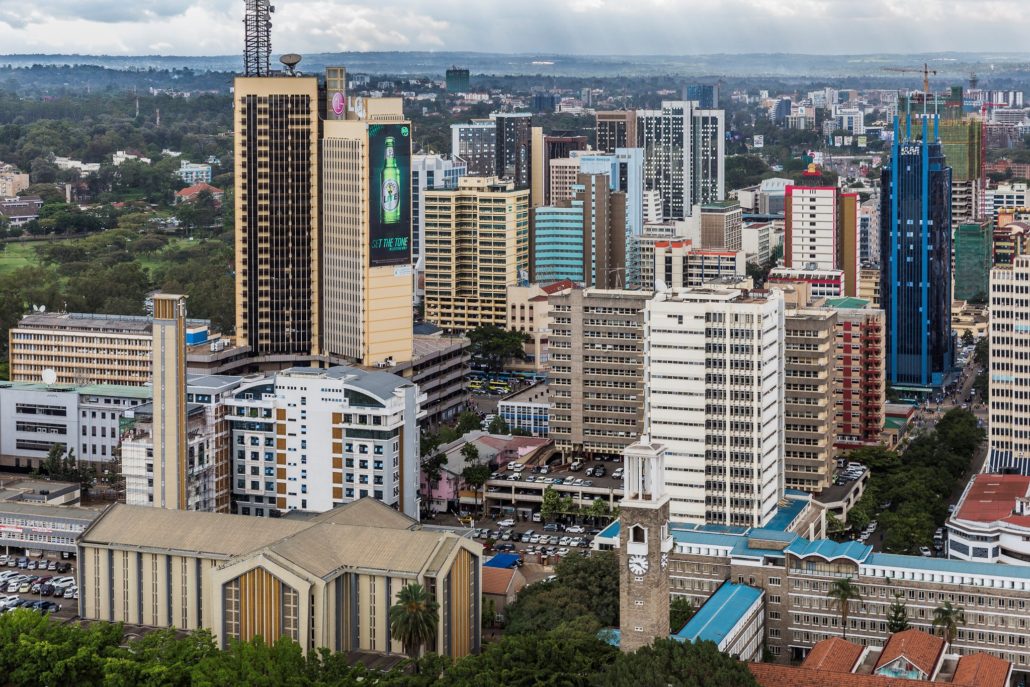
Africa has become home to multiple smart tech cities. More than 15 tech cities have undergone introduction in Africa in the past decade, and three more cities are currently boosting the continent’s economy. Here is some information about the three new smart tech cities in Africa.
Mwale City
One of the smart tech cities is Mwale, a tech and medical city located between Butere Sub-county and Kakamega County in Kenya. The construction of Mwale started in 2014 and reached completion in December 2020, with a budget of $2 billion. Mwale city consists of five districts, and its construction occurred in three phases. The construction of the city occurred with sustainable energy, including solar street lights.
Mwale will also have amenities like a golf resort with more than 4,700 private residences, a Disney water park and the biggest convention center in the world. Additionally, people will be able to reach the city’s hospital via a cable car that travels along a serene aerial route from a private international airport.
When Mwale reached completion in 2020, it became home to more than 20,000 workers, 9,000 of whom are healthcare workers in Hamptons Hospital. The hospital has the capacity to serve 12,000 patients regularly. With the Kakamega County Healthcare Referral Program, the hospital also offers free treatment to Kakamega habitants.
Additionally, the smart tech city of Mwale has also seen a jump in land prices, benefiting 30,000 landowner inhabitants. The cost of one acre in 2014 was $1,500. One acre now costs more than $30,000, which makes landowning residents part of the middle class.
Mwale also has its own source of power, running on solar power and other energy sources. It also uses rainwater harvesting for drinking water.
Further, builders constructed the city’s 150 km of roads to accommodate all-weather standards. It also contains a connected system of installed bicycles and sidewalks that intersect the city to discourage motor vehicle transport and create a pollution-free environment.
Many anticipate that the smart tech city of Mwale will become one of the biggest cities in Africa in 15 years. It could become a leading economic hub not only in Western Kenya but also in the broader regions of East and Central Africa.
Konza City
The smart tech city of Konza is among the projects central to Kenya’s vision for 2030. This plan includes the goal of establishing Konza as a world-class smart city and a prime economic driver for the nation. The city will also create 200,000 jobs once its construction is complete.
Konza is located about 37 miles away from the nation’s capital of Nairobi on 2,000 hectares of land, and it has a total project budget of several billion dollars. The city will include four primary services: infrastructure, residential, city and business (local trade support).
In addition, Konza will collect data from smart devices installed in the city’s roads and buildings. To adapt services to Konza’s residents, a smart communications scheme will share the data and examine it with software. For example, pedestrian and vehicular traffic will undergo supervision with route sensors, which will also control the traffic lights.
Konza is currently in its first phase of construction on 400 acres of land. The intention of this phase is to host more than 30,000 residents. More than 300 investors have demonstrated interest in the city.
Diamniadio City
Another smart tech city, Diamniadio, is part of Senegal’s vision for 2035. The city is located 24 miles from Dakar, the country’s capital. The intention of Diamniadio is to lessen the population overcrowding in the capital while boosting the country’s economy.
Diamniadio has cost $2 billion so far and will include four areas of 1,000 acres each. One area will be the Ministerial City, which will include entertainment amenities, an international park and the Amadou Mahtar Mbow University (UAM). The city plans to host about 350,000 residents.
Diamniadio will also have an express train connecting to Dakar, the Dakar “Abdou Diouf” conference center, the Dakar Arena and a sports complex. Eventually, China will invest $105 million in the second industrial phase of the city.
Africa is now competing to lead the world in the cultivation of smart tech cities. Smart tech cities in Africa are attracting global giant companies, which will help grow its economy and accommodate the rest of the world.
– Zineb Williams
Photo: Flickr

Helping Kenyan Tea Farmers Rise Out of Poverty
KTDA Raises Earnings for Kenyan Tea Farmers
The Kenya Tea Development Agency (KTDA), which was established in 1964, employs around 600,000 smallholder Kenyan tea farmers across 16 different counties. The organization works to advise farmers on the best methods of growing tea and markets the products on behalf of the farmers while allowing farmers to serve as shareholders. Following its mission to invest in the tea industry and ensure the success of small-scale tea farms, KTDA has recently approved an increase in monthly payments by as much as 17%. This comes as an important measure in the fight to mitigate weaknesses in the global tea industry as many farmers reap the consequences of climate change and oversupply in the form of reduced wages.
Providing farmers with a means of financial security allows them the ability to invest in a growing economy and promote the longevity of tea farming. True to its values of promoting ethical practices and upholding a standard of social responsibility, CEO Wilson Muthaura tells World Tea News that he believes the wage increase, “is in line with the commitment the new board has undertaken to ensure that farmers are getting earnings that reflect their hard work, and which are responsive to their everyday social and economic needs.” Though the wage increase benefits a small portion of Kenyan farmers, KTDA’s forward-thinking initiative could serve as an example for those involved in the tea industry as a whole.
Current State of Kenya’s Tea Industry
Located in what is considered a logistic hub in Eastern Africa, Kenya’s tea industry is a crucial part of Kenyan agriculture, with nearly 75% of Kenyans earning their income in the agriculture sector. In 2017, Kenya’s tea exports contributed about $1.4 billion in revenue and agriculture accounted for 33% of total GDP. For major companies like KTDA, smallholder farms account for nearly 60% of all tea production.
Operating under the watch of the Ministry of Agriculture, the Tea Directorate and key research organizations in Kenya, the industry combines the efforts of producers and manufacturers to smoothly export tea leaves around the world. And while the country profits from the widespread success of the global tea trade, the majority of tea farmers still face major issues. With a lack of funding to invest in up-to-date agricultural equipment, many farmers resort to using outdated equipment to harvest crops. This often results in crops perishing before the harvest time and farmers run the risk of ruining the quality, thus contributing to higher costs of production.
Poverty in Kenya also extends to the lack of access to proper transportation, where rural areas do not have adequate roads that can connect farms to commercial areas of the country. Possibly the biggest hurdle for farmers is the lack of information about the most efficient growing methods and how to utilize updated machinery. The inability to keep up with modern farms could spell disaster for farmers who rely on large crop yields in order to make a sufficient income.
Poverty in Kenya
In 2020, estimates indicate that nearly 27.3% of Kenya’s population were living in extreme poverty, surviving on less than $1.90 a day. Impoverished communities, primarily located in the northeastern region of the country, are often at a disadvantage due to their distance away from social resources. By 2039, Kenya’s population is expected to reach 81 million people, nearly doubling from the current number.
And while this steady upward trend means the creation of more jobs and overall consumers, it also puts more strain on a system fighting food insecurity, unstable infrastructure and unfair working conditions. Although overall poverty in Kenya is declining, poverty continues to disproportionally affect those in rural areas.
Empowering Farmers
KTDA’s increase in wages is just one of its many ways to help smallholder farmers. Acknowledging that growers often face reduced wages in circumstances out of their control, the agency also provides a number of programs aimed at helping farmers become self-sufficient. Farmer Field School (FFS) teaches classes on the latest developments in planting and preparation, incorporates diverse farming practices and provides information on managing finances.
Fully funded by KTDA, the organization runs nearly 400 classes that assist farmers in gaining access to the vital information they need to ensure their farms stay operational. By empowering farmers directly, these methods serve to better the quality of life of workers in rural areas and call attention to changes that need to occur if poverty in Kenya is to significantly diminish. In line with the country’s overall mission to reach middle-income status by 2030, KTDA’s move to pay farmers a living wage benefits not only small-scale farmers residing in rural communities but improves the entire tea industry.
– Nicole Yaroslavsky
Photo: Flickr
Kounkuey Design Initiative Tackles Floods in Kibera
Flooding in Kibera Slum
According to UN-Habitat, Kenya’s Kibera slum is the second-largest informal settlement in Africa. The estimated population in the almost 555 acres of informal housing ranges from 350,000 to one million people. The high population density coupled with “unplanned and crowded” housing as well as inadequate infrastructure makes the Kibera slum extremely vulnerable to flooding as a result of drainage issues.
The World Bank Group reports that Kenya is highly vulnerable to “climate hazards” such as drought and floods, “which cause economic losses estimated at 3% of the country’s gross domestic product (GDP).” Poverty and poor infrastructure are the major reasons why floods are extremely devastating in the Kibera slum. Since women and children are more vulnerable to the impacts of poverty, flooding in the Kibera slum impacts them significantly by destroying women’s kiosks and exposing children to water-borne diseases.
The poverty in the Kibera slum makes it more difficult for the dwellers to cope with flooding. Most of the residents survive on just $1 a day. The high unemployment rate in Nairobi makes it difficult for those trying to secure jobs in order to survive. According to a 2012 survey, 50% of the population experienced unemployment. Floods have major economic consequences, and for people already living in poverty, the impacts of floods exacerbate poor living conditions.
A survey conducted in the Kibera slum highlighted that half of the respondents’ homes were flooded in the 2015 rainy season. In May 2021, four people died near the Kibera slum due to flooding. The flooding has become increasingly dangerous, but for residents of the dense Kibera slum, moving to higher ground is easier said than done.
The Kibera Public Space Projects and Floods
The Kounkuey Design Initiative started the Kibera Public Space Projects in 2006, aiming to build spaces that could meet the residents’ social and economic needs. There are about 12 projects, including a project that involves constructing bridges over rivers prone to flooding. Not only are the 12 projects vital for protecting people from the impacts of flooding but the projects also protect the socio-economic well-being of the residents of Kibera.
The Kibera Public Space Projects hope to reduce the fatal impacts of flooding, among other goals. The projects involve a series of goals that aim to bring the community together, create efficient drainage and improve social conditions. For instance, some public spaces incorporate “gardens and playgrounds with sanitary blocks, laundry spaces and educational facilities.”
The Kounkuey Design Initiatives addresses flooding in Kibera slum while fostering social inclusion. Using creative design-oriented solutions, KDI addresses issues impacting impoverished areas. The innovative efforts of KDI contribute to overall poverty reduction in Kenya.
– Frank Odhiambo
Photo: Flickr
Female Genital Mutilation in the Central African Republic
The World Health Organization (WHO) defines female genital mutilation (FGM) as “all procedures involving partial or total removal of the female external genitalia or other injury to the female genital organs for non-medical reasons.” FGM has no health benefits, and in fact, it can lead to extreme health complications. This includes severe bleeding, problems urinating, cysts and infections as well as complications in childbirth and the added risk of newborn deaths. More than 200 million girls and women alive today have experienced mutilation in 30 countries in Africa, the Middle East and Asia. About three million girls per year are at risk of undergoing FGM before their 15th birthday without interventions to combat the prevalence of FGM. Female genital mutilation is a common practice in the Central African Republic.
The Prevalence of FGM in the Central African Republic
FGM is widespread in the Central African Republic. The average portion of women undergoing FGM in the Central African Republic is 24% but can range from 3%-53% depending on the province, according to UNICEF. Of those cut, 52% of girls underwent the procedure between the ages of 10 and 14.
The Orchid Project’s Work to End FGM
The Orchid Project is an NGO that focuses on ending FGM throughout the world. It does this by “catalyzing the global movement to end female genital cutting,” particularly by advocating among global leaders and governments to make sure that the elimination of FGM is a priority. The Orchid Project has a goal of eliminating all FGM by 2030. The project spreads awareness of the dangers of FGM through its website.
The Murua Girl Child Education Program
The Murua Girl Child Education Program is an organization that raises awareness of child rights and promotes children’s protection from harmful practices like FGM. Seleyian Partoip, the program’s founder and director, gave a speech at the International Conference on Population Development in Nairobi, Kenya. She says, “Every time I speak about FGC [female genital cutting], I speak as a survivor of the practice… My daughter will never speak as a survivor.” The program’s vision is to preserve, promote and protect cultural practices while stopping harmful traditions. It does this by reaching out to schools and communities and educating them on the dangers of harmful practices like FGM, while also teaching people about proper hygiene, their bodies and their rights. The program is based in Kenya but also reaches out to youth in other African countries.
28 Too Many’s Work to End FGM
28 Too Many is an organization that spreads awareness of female genital mutilation in the Central African Republic and other African countries. “The more we talk the better . . . [b]ut to fully eradicate FGM we need to have the authorities on our side enforcing the law,” said Marguerite Ramadan, president of the Central African Republic Committee of the Inter-African Committee on Traditional Practices.
Female genital mutilation is prevalent in the Central African Republic, but, the Orchid Project, the Murua Girl Child Education Program and others are working to end it. With the right education, outreach and awareness, communities will abandon the practice of female genital mutilation. Thanks to donations, these organizations can continue working toward their goal of eliminating the practice of female genital mutilation by 2030.
– Neve Walker
Photo: Flickr
Examining the Work of Irish Aid in Vietnam
The S-shaped country of Vietnam has many picturesque sights to behold. Rice paddies stretch out over the Mekong and Red River Deltas that run through the country. Vietnam’s geography includes hills and various elevations with only 20% of the country being flat. Despite the beauty of Vietnam, the people in the country find themselves in need of aid. Since 2005, Ireland has been providing much-needed assistance to Vietnam. Ireland’s Department of Foreign Affairs and Trade runs the Irish Aid Programme. Irish Aid in Vietnam has provided various forms of assistance for the Vietnamese people.
Irish Aid’s Support of Ethnic Minorities
The aid that Ireland offered to Vietnam has given support to numerous sectors within the country. Sectors working with Irish Aid include human rights, agriculture, education and health. From 2011 to 2016, Irish Aid spent 17 million Euros on its Vietnam Country Strategy. One goal that the organization is working toward is the inclusion and provision of sustainable development for the various ethnic minorities that live in Vietnam. The largest of all the ethnic groups in Vietnam is the Kinh, otherwise known as the Viet. There are 53 other ethnic groups outside the Kinh that vary in how much of Vietnam’s population they make up.
Through the Irish embassy in Vietnam, Irish Aid has been addressing the needs that these ethnic groups need to better improve their quality of life. These needs include access to basic nutrition and gender empowerment. Irish Aid determines the needs of these ethnic groups by working with them and partnering with NGOs that are active in Vietnam.
Results of Irish Aid in Vietnam
Vietnam has made many improvements in various areas over the years. Life expectancy in Vietnam rose from 70 years to 76.25 just from 2005 to 2016 according to the World Bank. The stunting rate for children under the age of 5-years-old in Vietnam declined by 5% in only five years. In 2010, the stunting rate was at 29.3% and by 2014, it declined to 24.9%. Some of the work of Irish Aid in Vietnam has benefited the Vietnamese people as well. For one, the program was able to finish 60 different infrastructure projects that improved living conditions for the various ethnic minorities residing in Vietnam. Irish Aid also assisted with landmine removal across a distance of 879,431 meters.
Irish Aid held 132 landmine education sessions that taught about the dangers of landmines in Vietnam. These sessions helped to educate 38,124 children. Lastly, Irish Aid helped 400 people with disabilities in gaining employment or an improved living situation.
Despite the hardships for the people living in Vietnam, Irish Aid continues to assist. Not only has the organization provided aid, but its work has and is having a positive impact on the people of Vietnam.
– Jacob E. Lee
Photo: Flickr
Poverty Reduction on Indian Reservations
In the United States, indigenous people have the highest rates of alcoholism compared to any other minority group. This is due to factors such as unemployment, lack of political rights, cultural loss and minimal education. As a result, poverty has become common on Indian reservations, making these issues highly pressing. Progress in legislation, education, employment and treatment have been on the horizon. Thus, by reducing alcoholism on Indian reservations, poverty can decrease and prosperity can rise.
Recent Political Progress
The year 2021 brought attention to poverty on Indian reservations through legislation. One example highlights Congressman Dan Newhouse (R-WA) who proposed making May 5 a National Day of Awareness for Missing and Murdered Native Women and Girls. Congressman Joe Neguse (D-CO) has also issued a bill that would provide clean water for reservations. Other proposed bills are working to address mental health awareness for veterans. They also aim to provide child support, internet access, accessible healthcare and resource centers. On April 19, 2021, the House of Representatives passed the Protecting Indian Tribes from Scams Act. This bill was able to protect and give a voice to those living in Indian reservations. Through this exposure, Indian reservations have been able to make progress tackling poverty.
Improvements in Education
To improve education in Indian reservations, tribal leaders have been teaching children, rather than the government. The Native Culture, Language and Access for Success Act (CLASS) and the Elementary and Secondary Education Act (ESEA) were bills that allowed this to happen. Reservations saw much success due to this initiative, however, Congress has recently put the reauthorization of these bills on the back burner. The National Council of American Indians is currently fighting for giving tribal leaders control of student records, state and tribal cooperation. The council hopes to honor native languages and preserve tradition, as they believe it is necessary for students to feel connected to their heritage. The initiative hopes to lower dropout rates and create more job opportunities, helping to eliminate poverty in the reservations.
Solutions for Employment Opportunities
In order to diversify tribes, the U.S. government has received encouragement to build more tribal sovereignty and industry. Many tribes want to move towards climate diaspora and renewable resources. This would mean expanding reservation land previously stolen, leading to industry growth and job creation. Restoring Native American land would give reservations a stronger sense of independence, granting mobility and freedom to these reservations.
Another issue present on reservations is equal access to capital. Many Native Americans are unable to legally own their land or houses. Solutions to possession of land include legislation and government recognition. The U.S. Department of Housing and Urban Development recently had a victory concerning housing. The department created the Indian Home Loan Guarantee Program, which showed immense progress and hope for the future.
Treatment Options
Unfair treatment is a major cause of alcoholism in Indian reservations. To improve equality for these reservations, tackling poverty needs to be the first priority. Treatment plans such as professional help, medication and counseling are the first step for Indian reservations to receive the help they need. Improvements in education and community activities can also decrease poverty in these reservations. With recent exposure, passed legislation has made a major change for Indian reservations. Overall, by eliminating alcoholism, poverty can reduce, as equality and economic improvement will lead to a healthier, safer community.
– Selena Soto
Photo: Wikipedia Commons
Fighting the Water Crisis in Kenya’s Slums
Origins of the Crisis
Urbanization plays a large role in the water crisis. While 90% of urban residents had clean water in 1990, this figure fell to 50% in Nairobi as the city’s population nearly quadrupled. The city began rationing water in 2017. The Nairobi City Water and Sewerage Company estimates that supply still falls 25% short of demand. Informal settlements lack piped water and the World Health Organization (WHO) warns that water from vendors or surface sources often contains contaminants.
The Kenyan government struggles to address the water crisis in Kenya’s slums due to the informal nature of the urban settlements. Aid organizations and private nonprofits also fail to provide long-term relief, with more than 60% of water projects failing in their first year.
Well Aware Executive Director Kareece Sacco told The Borgen Project that “There’s the first water crisis that everyone is aware about that’s left people lacking access to reliable clean water. But the second one, as we have termed it, is the failure of the system.” Well Aware is a nonprofit with more than 70 successful water projects in East Africa.
In 2021, the organization plans to complete a new water project for the Ingrid Education Center in the Kayole-Soweto slum in Nairobi. Speaking on the systemic failures that perpetuate the water crisis, Sacco explained that “a lot of organizations doing similar work don’t have these long term relationships with these communities and they’re just not being empowered in the correct way to help maintain them [water systems].” Strengthening local partnerships with aid organizations empowers Kenyans in poverty to solve the water crisis in Kenya’s slums.
The Challenges
Without connections to a water source, residents of the Kayole-Soweto slum often trek long distances to provide water for their families. This chore falls mostly on women and girls, which worsens gender inequalities in the area. The World Bank interviewed residents of Kayole-Soweto, with many respondents reporting that they often resort to purchasing water at high costs from vendors who take advantage of this need. The vendors also sell water of questionable quality to slum dwellers for discounted rates, which causes health and sanitation issues throughout Kayole-Soweto.
The Impact of Local Partnerships
Aid and non-governmental organizations that effectively engage in local partnerships directly address these issues. For example, Well Aware maximizes its impact by partnering with local schools to drill wells, which increases education rates overall by 34% and increases education rates for girls by 58% on average.
Sacco told The Borgen Project that “if we do a drill at a school, most of the time, we’ll set up a kiosk at the road for the community to be able to come too.” This is how water projects with local partnership components make a larger impact. By engaging directly with local partners, projects to solve the water crisis in Kenya’s slums are more responsive to the needs of those in poverty.
Slums also struggle with incorporating traditional connections to water sources. Piped water requires large initial investments that individual households in slums cannot bear, and this has adverse health and sanitation effects. As a result, the decision to implement piped water systems in the slums of Kayole-Soweto and other locations favors landlords who pool money from multiple sources. This poses additional barriers to clean water for slum-dwellers in poverty.
Water projects that provide innovative solutions to the water crisis in Kenya’s slums circumvent traditional barriers to water access. For example, Stanford University water projects in Kenyan slums recognize the fact that around 70% of urban Kenyans own cellphones. Bearing this in mind, Stanford innovates apps and mobile services that help slum dwellers pinpoint water locations. Similar ideas come from courses at Stanford University that prioritizes local partnerships and requires in-person meetings in Kenya with local leaders. This demonstrates how local partnerships foster innovative solutions that accurately meet the needs of locals in poverty.
The Future of the Water Crisis in Kenya’s Slums
The water crisis in Kenya’s slums becomes more urgent as infrastructure fails to keep up with population growth. USAID reported that the Kenyan government drastically increased spending on the water sector as sufficient progress requires $14 billion in the next 15 years.
As a result, the Kenyan government needs international aid and private assistance from humanitarian organizations to bridge the gap. Current water project financing in the country consists of 64% donor funds. This creates an opportunity for donors to find new methods of delivering water access apart from traditional government-provided public goods.
Rapid urbanization in Kenya exacerbates the existing water crisis in the country. With many new arrivals to Kenya’s cities ending up in slums, inequality and failures of traditional water systems to adequately serve the needs of citizens in poverty have further worsened the water crisis. As donors continue to drive the financing of the water sector in Kenya, opportunity grows for innovative partnerships with local actors in Kenya’s slums. Kayole-Soweto exemplifies this by using conventional and unconventional tools for water access, including building wells on school land and incorporating cellphone technology. Local partnerships empower residents of Kenya’s slums to find the best solution to the water crisis for themselves.
– Viola Chow
Photo: Unsplash
The New Smart Tech Cities in Africa
Africa has become home to multiple smart tech cities. More than 15 tech cities have undergone introduction in Africa in the past decade, and three more cities are currently boosting the continent’s economy. Here is some information about the three new smart tech cities in Africa.
Mwale City
One of the smart tech cities is Mwale, a tech and medical city located between Butere Sub-county and Kakamega County in Kenya. The construction of Mwale started in 2014 and reached completion in December 2020, with a budget of $2 billion. Mwale city consists of five districts, and its construction occurred in three phases. The construction of the city occurred with sustainable energy, including solar street lights.
Mwale will also have amenities like a golf resort with more than 4,700 private residences, a Disney water park and the biggest convention center in the world. Additionally, people will be able to reach the city’s hospital via a cable car that travels along a serene aerial route from a private international airport.
When Mwale reached completion in 2020, it became home to more than 20,000 workers, 9,000 of whom are healthcare workers in Hamptons Hospital. The hospital has the capacity to serve 12,000 patients regularly. With the Kakamega County Healthcare Referral Program, the hospital also offers free treatment to Kakamega habitants.
Additionally, the smart tech city of Mwale has also seen a jump in land prices, benefiting 30,000 landowner inhabitants. The cost of one acre in 2014 was $1,500. One acre now costs more than $30,000, which makes landowning residents part of the middle class.
Mwale also has its own source of power, running on solar power and other energy sources. It also uses rainwater harvesting for drinking water.
Further, builders constructed the city’s 150 km of roads to accommodate all-weather standards. It also contains a connected system of installed bicycles and sidewalks that intersect the city to discourage motor vehicle transport and create a pollution-free environment.
Many anticipate that the smart tech city of Mwale will become one of the biggest cities in Africa in 15 years. It could become a leading economic hub not only in Western Kenya but also in the broader regions of East and Central Africa.
Konza City
The smart tech city of Konza is among the projects central to Kenya’s vision for 2030. This plan includes the goal of establishing Konza as a world-class smart city and a prime economic driver for the nation. The city will also create 200,000 jobs once its construction is complete.
Konza is located about 37 miles away from the nation’s capital of Nairobi on 2,000 hectares of land, and it has a total project budget of several billion dollars. The city will include four primary services: infrastructure, residential, city and business (local trade support).
In addition, Konza will collect data from smart devices installed in the city’s roads and buildings. To adapt services to Konza’s residents, a smart communications scheme will share the data and examine it with software. For example, pedestrian and vehicular traffic will undergo supervision with route sensors, which will also control the traffic lights.
Konza is currently in its first phase of construction on 400 acres of land. The intention of this phase is to host more than 30,000 residents. More than 300 investors have demonstrated interest in the city.
Diamniadio City
Another smart tech city, Diamniadio, is part of Senegal’s vision for 2035. The city is located 24 miles from Dakar, the country’s capital. The intention of Diamniadio is to lessen the population overcrowding in the capital while boosting the country’s economy.
Diamniadio has cost $2 billion so far and will include four areas of 1,000 acres each. One area will be the Ministerial City, which will include entertainment amenities, an international park and the Amadou Mahtar Mbow University (UAM). The city plans to host about 350,000 residents.
Diamniadio will also have an express train connecting to Dakar, the Dakar “Abdou Diouf” conference center, the Dakar Arena and a sports complex. Eventually, China will invest $105 million in the second industrial phase of the city.
Africa is now competing to lead the world in the cultivation of smart tech cities. Smart tech cities in Africa are attracting global giant companies, which will help grow its economy and accommodate the rest of the world.
– Zineb Williams
Photo: Flickr
The Issue of Child Poverty in Romania
Romania, an Eastern European country bordering Ukraine and Hungary, is infamous for its struggles with children’s rights. A quarter of the nation lives below the poverty line, and furthermore, almost one-third of all children in Romania live below the poverty line. The rate of child poverty in Romania is one of the highest in the whole European Union.
Childhood Poverty in Romania
Romania has one of the highest poverty rates in Europe and the issue of child poverty is especially pressing. According to the Independent, child poverty in Romania has worsened in recent years due to three main reasons: “a higher rate of unemployment, a wider gap between rural and urban areas in terms of investment, education and employment opportunities” as well as “a general descending economic trend after the 2008 financial crisis.” Though the number of working children has decreased in recent years, still, 1% of children work, involved in begging, washing car windows or working as brickmakers. Some families sell their children to mafias who recruit them to join gangs or sex traffick them in Romania or in other European countries.
Rural Child Poverty
Today, child poverty is the worst in rural areas of Romania where 45% of the population lives. Most rural Romanians are impoverished subsistence farmers, leading to their children growing up in poverty-stricken conditions. Access to education and proper medical facilities is not as available as it is in cities. Many rural Romanians cannot pay for medical services, which has resulted in a severe lack of doctors in the countryside. In addition, the country decreased its education budget because of dire economic conditions, which led to a shortage of teachers. Furthermore, 400,000 children are not attending school.
Solutions
Several organizations have been working in Romania with the main goal of promoting the rights of children and lobbying the government in order to alleviate childhood poverty. The National Council of Students represents all the country’s students by defending students’ rights and lobbying for a reformed educational system. Another organization, the Children’s Board, comprises children of different ages from all over the country. It strives to create a governance that protects children of all ethnicities and backgrounds.
These organizations work to keep children’s voices heard in different capacities, a pressing task considering the treatment of children during Romania’s communist days. Four of the leading child protection organizations joined to produce the “Child Rights Now! Romania” report. The report details how child rights have improved since the end of communism and the execution of Romanian communist dictator, Nicolae Ceaușescu, in 1989. The report also highlights issues to address in order to improve child rights and decrease poverty levels, plus several tangible solutions.
More organizations are addressing child poverty in Romania than ever before. Under Ceaușescu’s regime, Romanian children living in poverty had no rights. Hopefully now, with the help of various advocacy organizations working with the government, improvements will alleviate child poverty in Romania.
– Allie Degner
Photo: Flickr
The Schools for Africa Initiative Supports Education
Supporting Education in Africa
The education initiative prioritizes fundamental elements of educational standards and accessibility in countries such as Angola, Burkina Faso, Ethiopia, Guinea-Bissau, Madagascar, Malawi, Mali, Mozambique, Niger, Rwanda, Sierra Leone, South Africa and Zimbabwe by funding improvements to the existing education system. Specifically, the initiative aims to construct and restore almost 1,000 schools. Furthermore, the initiative prioritizes training 100,000 teachers and supplying educational resources to schools.
The initiative also ensures clean drinking water for children and gender-separate bathrooms for students. Schools for Africa prioritizes the education of vulnerable students such as orphans, girls and extremely impoverished children. The program knocks down barriers to education, such as scarcity of economic resources, and helps lessen economic gaps throughout Africa.
Other Supporters of Schools for Africa
Organizations such as the Delta Kappa Gamma Society International have supported the Schools for Africa initiative, spreading awareness about the importance of education for children and fundraising for the cause. The Society views its contribution to the program as a critical step in fostering an inclusive and safe atmosphere for children who are particularly vulnerable, such as impoverished children and those without parents.
In 2008, the UNICEF Office for Croatia joined the Schools for Africa program, prioritizing educational improvement in Croatia by working with “kindergartens, schools and centers for education all over Croatia.” Croatia also aims to improve educational access across Africa. The UNICEF Office for Croatia and Croatian communities garnered more than six million Croatian kunas “for the education of children in Rwanda, Ethiopia and Burkina Faso.”
Education for Poverty Reduction
In many African countries, natural disasters, insufficient infrastructure and a lack of professional training for teaching staff contribute to low school attendance for many children. For example, only a third of the teaching staff in Madagascar have adequate training. Furthermore, the Madagascan school attendance rate is exceptionally low in contrast to more developed countries. Now more than ever, it is important to acknowledge the economic inequity that correlates with low school attendance. Supporting the Schools for Africa initiative shows a commitment to reducing poverty in Africa since education and poverty are interlinked.
The Schools for Africa Initiative is now able to reach more than 30 million children. The efforts of the initiative ensure that children possess the skills and knowledge to advance and prosper in their lives ahead. Through education, children are empowered and cycles of poverty are broken.
– Kristen Quinonez
Photo: Flickr
Progress for Nurses in the Solomon Islands
Nurse Strikes and Protests
Nurses are the primary healthcare providers in the Solomon Islands, but despite this, they consistently struggle with pay allowances rightfully due to them. The Solomon Islands Nurses Association has issued strikes multiple times over the past five years. In 2016, nurses went on strike for “multi-allowances and special duty allowances” that remained unpaid from 2013. The association extended the strike multiple times as nurses fought to receive the outstanding allowances. Eventually, the strike ended when the government agreed to review and listen to nurses’ demands.
In 2018, nurses found that many of the demands from a Memorandum of Agreement signed in 2007 remained unmet. It called for public service to pay for transportation, housing and posting and for the government to review five other claims. Eleven years later, those demands remained unmet and nurses issued a 28-day strike notice.
In 2019, the nurses again faced a similar situation. The government had agreed on a payment plan the previous year that would provide the nurses with their incentives at the beginning of 2019. A month into the year, the payment did not come through as agreed upon. Once again, the Solomon Islands Nurses Association issued a 28-day strike notice.
Most recently, in October 2020, nurses working in Honiara, the country’s capital and a COVID-19 emergency zone, threatened to strike if they did not receive allowance pay for working on the front lines. The nurses initiated sit-in protests, but when those were overlooked, they went on strike without government approval.
Strike Repercussions
As a result of the unauthorized strike, the government suspended the Solomon Island Nurses Association as a trade union. The government recognized its inability to pay the nurses but did not believe the strike was in Solomon Islanders’ best interests. However, since the suspension, the government has taken action to address the nurse shortage by improving training programs for nurses.
Supervised Practice Program
In March 2021, 180 registered nurses graduated from the Solomon Islands National University and Pacific Adventist University in Papua New Guinea and Atoifi. The graduates have begun a year-long internship with the newly implemented Supervised Practice Program. The Supervised Practice Program ensures nurses are fully registered before employment, focusing on areas of nursing that need improvement in the Solomon Islands.
The graduates are monitored and tested in attendance and timeliness, nursing ethics, code of conduct adherence and dedication. The Supervised Practice Program will help ensure that the Solomon Islands employs qualified and properly trained nurses. With this program, the government aims to improve healthcare and show support for nurses.
Long-Term Benefits of More Nurses
A lack of proper healthcare not only leads to poor health and a shorter lifespan but can also impact people’s ability to work and earn money, ultimately lowering household income and increasing poverty. People living in poverty are already at high risk of poor health because of limited access to healthcare services, a lack of nutritious food and unhealthy living environments. With increased access to qualified nurses, the people of the Solomon Islands will be able to improve their health and reduce poverty as productive citizens who can contribute to the economy.
The pandemic highlights the essential role of nurses, and as such, it is imperative to value, support and prioritize nurses. With progress for nurses in the Solomon Islands, quality healthcare will be more easily accessible to citizens, helping to reduce disease, death and poverty.
– Delaney Gilmore
Photo: Flickr