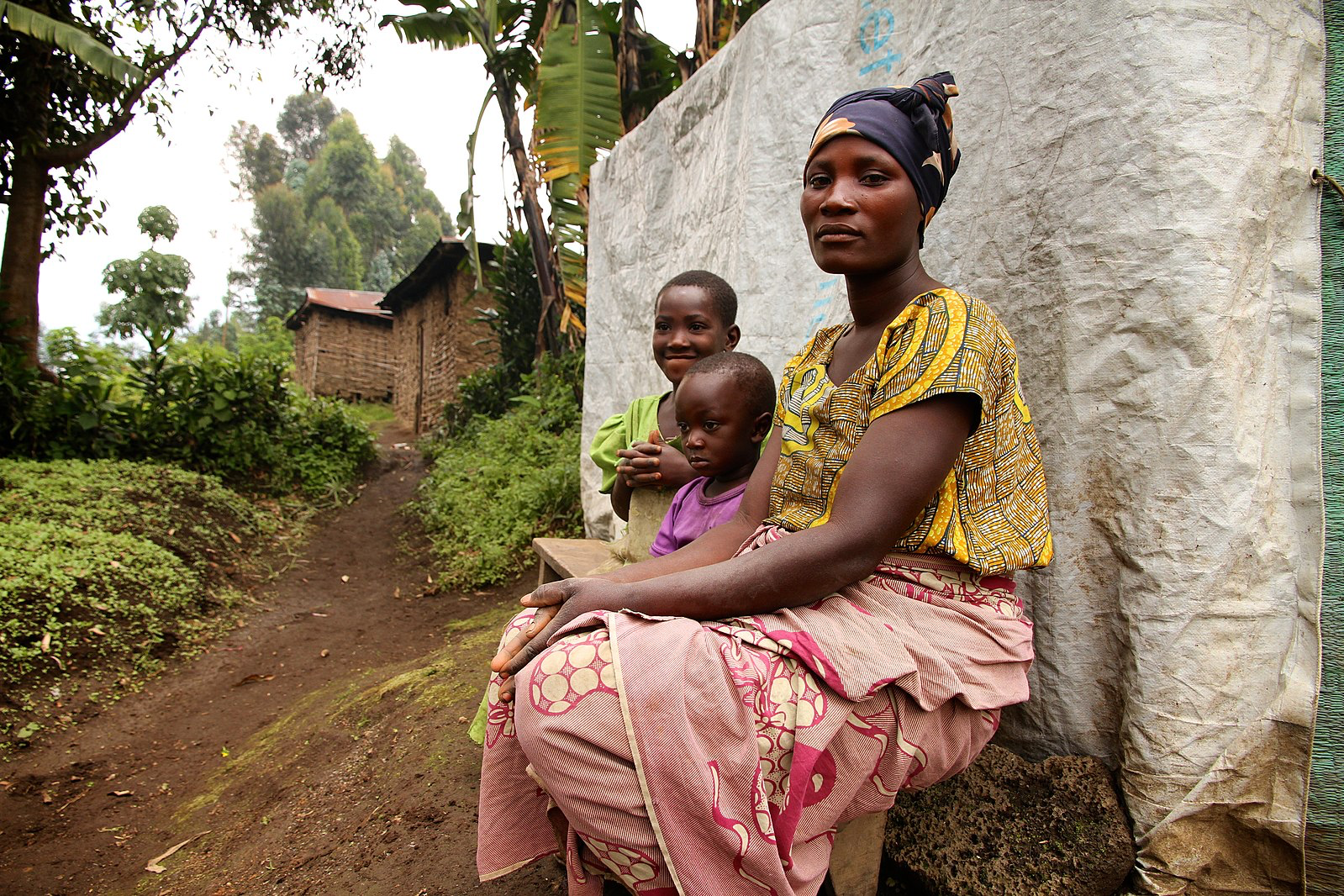
Around the world, 13% of women are single mothers with children under 15-year-old, according to research. However, in Asia and Sub-Saharan Africa, there are 25% and 32% of single mothers, respectively. One direct consequence caused by single motherhood is child poverty and this correlation between child poverty and single mothers do not exist without reasons. For instance, since single mothers tend to have relatively lower incomes, their children are unlikely to receive complete education, limiting their career options. In turn, this makes the single mothers and their offspring more difficult to escape poverty, thereby forming a poverty cycle. Yet, some international organizations are helping single mothers by providing guidance and support, both mentally and financially.
Littleones (Japan)
Among the 34 OECD countries, Japan has the highest poverty rate for single mothers. Approximately 48% of single-mother families have no more than 500,000 yen or $3,500 USD of savings. Despite the depressing figures, there is the NGO, Littleones, meaning “little children.” According to the organization, its objective is to support children in both big and small ways since “children are the hope of the future.”
Focusing on single families in Tokyo, Littleones helps needy families in three different ways. First, to organize social events such as hiking and Christmas parties, allowing mothers to build friendships and establish solidarity. Second, to advise mothers on issues including education, legal matters and employment opportunities. Third, to help those mothers to find suitable housing.
Empowering Young African Single Mothers (EYASM) (Cameroon)
In Cameroon, it is common to find many single mothers between their 20s and 30s. Single mothers live in poverty and the public also discriminates against them. However, the government has not done much to help single mothers. Therefore, Empowering Young African Single Mothers has taken the lead. Similar to Littleones, EYASM believes that “children of today are the leaders of tomorrow.” Such conviction leads the NGO to a series of objectives, for example, to help children break the poverty cycle and encourage single mothers to establish self-reliance, self-esteem and self-awareness.
One interesting project that EYASM did in 2020 was the Single Mothers Empowerment Contest, in which the top five winners received money as prizes. The purpose of this was to encourage single mothers to become entrepreneurs for livelihood.
Korean Unwed Mothers Families Association (KUMFA) (South Korea)
The conventional social conceptions in Korean society make single mothers harder to sustain themselves and their families – the public perceives them as sexually promiscuous. Consequently, finding a stable job becomes a challenge for unwed mothers. Yet, the government does not provide sufficient financial support to them. According to the National Statistical Office and Bank of Korea, while the monthly income of the average Korean family was 4 million won in 2017 or $3,640 USD, only 200,000 won or $180 USD a month for single parents with an income of less than 1.55 million or $1,400 USD.
KUMFA aims to protect the maternal rights of single mothers and establish a support network for the mothers to exchange information. Moreover, the NGO also practically helps single mothers – providing shelter for them and their children.
Hong Kong Federation Of Women’s Centers (HKFWC) (Hong Kong)
According to the government’s thematic report on single parents in 2016, Hong Kong had approximately 56,515 single mothers, with an average monthly income of 12,000 HKD or $1,520 USD.
Similar to other organizations, HKFWC understands the need to establish a community for single mothers. Calling the project “You’re Not Alone,” the organization matches volunteers with the same background as single mothers, forming a more personal relationship.
Looking Ahead
Overall, it is more challenging for children coming from single-parent households to break the poverty chain. However, international organizations are helping single mothers, changing the lives of many single-parent families.
– Mimosa Ngai
Photo: Wikipedia Commons

New USAID Program Seeks to Combat Food Insecurity in Haiti
Background on Food Insecurity in Haiti
Haiti has grappled with a growing need for humanitarian assistance in recent years. The Integrated Food Security Phase Classification (IPC) reported many key drivers of food insecurity, including the 7.2 magnitude earthquake that shook the island nation in August 2021. Reduced rainfall and harvests in 2021 led to income loss among farmers, while insufficient government assistance and a general economic decline in the country due to rising inflation rates, depreciation of the Haitian gourde against the U.S. dollar and the economic blowback of the COVID-19 pandemic have only compounded the issue.
These factors left an estimated 4.3 million people facing crisis levels of food security by the end of 2021, according to the Famine Early Warning Systems Network (FEWS NET).
In 2022, conditions only worsened with rising costs attributed to the conflict in Ukraine. Haiti is particularly vulnerable to shocks in the global food and fuel markets due to its heavy reliance on imports. Furthermore, the threat of the ongoing Atlantic hurricane season looms over the economically fragile nation.
A Stronger Haiti
At the International Event for the Financing of the Reconstruction of the Southern Peninsula of Haiti, USAID Deputy Administrator Isobel Coleman revealed their 5-year plan to combat Haiti’s struggle with food insecurity. The conference’s objective was to expand international attention and support to Haiti in response to the 2021 earthquake that caused close to $2 billion in damages across the nation. The project, Ayiti Pi Djanm, initially titled in Haitian Creole, translates to “A Stronger Haiti.”
The USAID program in Haiti is projected to reach nearly 90,000 Haitians across the Nord-Est and Sud departments with integral support. The efforts will include:
USAID will partner with international NGO Catholic Relief Services (CRS) to bring this program to fruition. Led by CRS, the project will focus on private sector investments to support local production of food crops, both to reduce food insecurity and foster opportunities for agricultural livelihood.
USAID and Earthquakes
Since the devastating magnitude 7.0 earthquake in 2010, USAID has been Haiti’s top donor, contributing around $5 billion in aid. Relief, recovery and long-term reconstruction assistance in 2010 included search and rescue efforts, the launch of emergency shelters and the construction of educational facilities. These past USAID programs in Haiti have been integral to the nation’s disaster response and economic stability in the face of new challenges.
In 2021, the U.S. Government provided almost $105 million towards disaster response and risk reduction, including over $92 million from USAID.
CRS has partnered with USAID Bureau for Humanitarian Assistance (BHA) since its outset in 1954, supporting BHA growth through advocacy to Congress and the White House. Together, these organizations have been successful in implementing emergency and ongoing efforts to tackle food insecurity in Haiti as well as other nations across the globe.
– Carly Ryan Brister
Photo: Unsplash
Elderly Poverty in Cambodia
Introductory Statistics
Cambodia has an inadequate social security net with a very limited pension system, only extending to those who worked in the public sector. As such, many elderly people have no financial security and continue working despite health problems, often in labor-intensive jobs.
This problem is also exacerbated by the fact that the elderly literacy rate in Cambodia among people 65 and older stood at only 53.1% as of 2015, impacting the elderly population’s ability to retire reasonably well.
Of note, older persons in Cambodia experienced and survived genocide between 1975 and 1979 at the hands of the Khmer Rouge, and prior to this, the Cambodian civil war in 1970. Research reveals that the genocide led to the deaths of 75% of Cambodia’s educators and 96% of university students. The loss of teachers led to a whole generation of Cambodian children missing out on education. For this reason, today, a large portion of Cambodia’s elderly are illiterate.
The coronavirus pandemic also had an overwhelming impact on elderly poverty in Cambodia. A 2021 study conducted by HelpAge aimed to uncover the impacts of the pandemic on older Cambodians. About 55% of study participants said the pandemic impacted their overall family income, citing reasons such as job losses or reduced earnings of their children and delayed or significantly reduced remittances.
Additionally, 72% of participants confirmed that they did not receive adequate food support to meet their minimum needs and 85% said they did not receive adequate support to obtain necessary medications.
The Aging Population and the Social Security Net
As with many other areas around the world, an aging population comes with disadvantages. For example, “a decline in the working-age population and a surge in health care costs.” Additionally, large numbers of elderly people depend on small numbers of working-age people to fund “higher health costs, pension benefits and other publicly funded programs” through taxes, Investopedia explains.
Aging populations are often more dependent on government support, posing a problem in Cambodia as the elderly do not receive adequate support from a social assistance program. The Cambodian government does not provide social assistance programs that specifically target the elderly, although there are social assistance programs targeting poorer households. However, these programs tend to exclude impoverished older people who do not have the correct identification or documentation.
Efforts Underway to Address Elderly Poverty in Cambodia
In July 2022, the Cambodian government launched a social security pension fund for private sector employees, which will work as a future prevention measure for elderly poverty. This follows the attempted implementation of this pension scheme in 2019, which came to a halt due to the COVID-19 pandemic.
In terms of NGOs, Habitat for Humanity Cambodia partners with vulnerable groups, including older persons, to build affordable safe housing with elements “that focus on water and energy efficiency.” Through its efforts, since 2003, Habitat Cambodia “has enabled [more than] 22,000 families to build strength stability and self-reliance through shelter.”
HelpAge is an organization working toward improving the lives of older people across the world. With a specific country office in Cambodia, HelpAge has partnered with Cambodia’s Ministry of Health since 1992. Its projects involve building “age-inclusive and disaster-resilient communities in Cambodia.” Its first activities in Cambodia were associated with “eye care delivery” for elderly people.
With commitment, the government and NGOs can address elderly poverty in Cambodia through improved social security measures, ensuring a better quality of life for older people.
– Priya Maiti
Photo: Flickr
Educational Poverty in Italy
People tend to associate educational poverty with less developed nations. Although Italy is a developed country, according to research in 2006, the education level among Italians ranked as one of the lowest among the OECD countries: average Italian adults only attained just over 10 years of education. The situation remains similar after a decade — according to the 2015 Program for International Student Assessment (PISA), Italy’s “attainment rates in upper secondary and tertiary education” did not reach the OECD average. The figures suggest that educational poverty in Italy is a pressing issue because it directly contributes to and accentuates poverty among the population, in particular, among children. Understanding the urgency of tackling educational poverty in Italy, the Italian branch of the international organization Save the Children partnered with an Italian banking group, Credem, to strengthen educational development among disadvantaged children.
Child Poverty and Educational Poverty
Child poverty and educational deficiency have an intricate relationship. In 2021, about 1.3 million children in Italy lived in conditions of absolute poverty, according to the Italian National Institute of Statistics.
The COVID-19 pandemic exacerbated educational poverty in Italy due to a lack of technology to access remote education. According to UNICEF, in a survey of 1,028 families conducted during the lockdown in Italy in June 2020, about 27% of households did not have access to “suitable technology” and about 30% of parents reported a lack of time to “support their children with remote learning” due to work and other responsibilities. Across the world, this inaccessibility and disruptions to education have caused learning losses among children.
Without an education, children are unable to attain the skills and knowledge required to access higher-paying, skilled jobs, meaning cycles of poverty continue.
Credem explains that child poverty severely affects “the educational development of many children and adolescents: it compromises their performances at school, reduces their ability to learn and develop skills, talents and aspirations and deprives them of sources of stimulation.” This impacts both their mental and physical well-being, social abilities and future opportunities.
Save the Children Italia and Credem
In 2014, Save the Children Italia launched a project called “Illuminiano il futuro,” meaning “They light up the future.” In collaboration with Credem, a local bank group that had been in partnership with the organization for more than a decade at the time, the two-part project targeted impoverished children in Italy between the ages of 6 and 16. The two parts consisted of:
Every country has social issues. In Italy, educational poverty is one. The lack of education among the population also reveals the increasing child poverty in the country. In fact, the two have an inseparable relationship. Understanding that children are the future of Italy, Save the Children Italia and Credem worked together to tackle the issue. By setting up socio-educational centers across Italy, Save the Children and Credem encouraged children to believe in themselves and their futures.
– Mimosa Ngai
Photo: Flickr
5 Charities in the Central African Republic
5 Charities in the Central African Republic
Overall, the work of these five organizations has been integral in the elevation of underprivileged communities plagued by food and health crises, civil war and poor literacy rates.
– Namra Tahir
Photo: Flickr
Addressing Malnutrition in Tunisia
A Dependency on Imports
A 2019 article by Aymen Amayed says “Tunisia is not self-sufficient in terms of food production: more than 50[%]of the food the country consumes is imported.” Although the importing of food products allows Tunisia to meet the country’s food needs, and even though the government provides subsidies for specific basic food products, affordability is still an issue. Amayed explains that “because many agricultural inputs such as seeds and fertilizers are imported, locally produced food is also subject to price pressure and fluctuation related to currency exchange rates and other uncertainties of international trade.” Also, the planting of imported seeds and trees depletes local varieties of crops.
Extreme weather patterns also exacerbate the situation. Tunisia’s Intended Nationally Determined Contribution (INDC) document created in 2015 predicts that droughts will decrease the land area used for cereal crops by 200,000 hectares and will reduce the land area for arboriculture by 800,000 hectares by 2030. There will be a 30% decrease in “available land area for rain-fed cereal production,” resulting in the country’s GDP shrinking by 5-10% by 2030.
Impacts of the Russia-Ukraine War on Malnutrition in Tunisia
Due to the war in Ukraine, food dependence in Tunisia has become a major issue. The impacts of the war in Ukraine on the global food system have long-term consequences. Tunisia’s current food insecurity issues originate from “agricultural, economic and social policies introduced by successive governments since independence and which are directly related to global food systems,” Arab Reform Initiative says. For example, instead of strengthening the production of local cereal crops, Tunisia’s government increased cereal imports.
Despite the problems related to malnutrition in Tunisia, the WFP is working to help the government address these issues through the Tunisia Country Strategic Plan (2022–2025). The WFP will help to strengthen and expand state-run school feeding programs with the goal of reaching 260,000 vulnerable Tunisian children.
The government acknowledged the importance of school feeding programs in improving education, nutritional and developmental outcomes; therefore, in 2019, it expanded the budget for the school feeding program to $16 million annually. Furthermore, the “WFP is providing technical assistance in establishing a national food security monitoring system that can inform efforts to make the national social protection system and safety nets more inclusive and shock-responsive.” The Strategic Plan aims to accomplish two main outcomes:
Through continued reform commitments from the Tunisia government, hunger in Tunisia can reduce.
– Olga Petrovska
Photo: Flickr
New App Designed to Improve Agriculture in Kyrgyzstan
Causes of a Bad Harvest
Bad harvests can occur due to a wide variety of completely random influences, which can be exacerbated by a lack of infrastructural technologies that could assist farmers in preventing bad harvests from occurring when they are preventable. Notably, extreme weather patterns have hurt harvests in recent years including the harvest of 2020 when snow in the walnut’s budding season led to a dramatic decrease in yield that year.
In 2022, in addition to changing weather patterns, overgrazing by nearby livestock has caused devastating effects on the walnut harvest. Many Kyrgyz herd cattle and sheep as their primary source of income. This livestock requires a lot of food and when nearby pastures are overgrazed, the shepherds need to lead their herd elsewhere. The massive walnut grove provides shelter from the intense heat, as well as plenty of food for the herds, so it becomes an obvious choice for livestock herders.
Effects of a Bad Harvest on Agriculture in Kyrgyzstan
Some families depend entirely on the land as both a source of income and food. Because of this dependence, when a particularly bad harvest occurs the farming families must either settle for significantly lower selling prices or sell fewer walnuts in favor of keeping more for consumption.
New “Pasture Monitoring” App to Boost Agriculture in Kyrgyzstan
In 2022, in an effort to aid both walnut farmers and livestock herders in protecting their main sources of income, a Kyrgyz environmental protection organization, CAMP Alatoo, created and began the testing of a new app called “Pasture Monitoring.” This app, which functions in English, Kyrgyz and Russian, allows livestock herders to input information and photographs about their pastures.
The app then compiles the data and sends it to a team of experts made up of members of the Kyrgyzstan Ministry of Agriculture, the Water Resources and Regional Development of the Kyrgyz Republic and the Design Institute of Land Management. The Pasture Monitoring app also allows environmental experts to send recommendations directly to the herders on how they can individually improve the quality of their pasture. Additionally, government officials can access this information at any point in the future when making decisions regarding the development of these lands on a larger scale.
As livestock herders begin to implement the recommendations of the environmental officials, they will be able to more sustainably allow their herds to graze on their own pastures without needing to utilize the massive walnut grove near Arslanbob. Consequently, walnut farmers will no longer need to worry about livestock encroaching on and damaging their livelihoods. As of October 2022, the new farming app has commenced testing in the Aksy and Bazar-Korgon districts with the goal of boosting agriculture in Kyrgyzstan.
– Chris Dickinson
Photo: Flickr
Education in Norway and Poverty Reduction
More About Education in Norway
Education in Norway is state-supported and even college is cost-free. Students in Norway generally go through three levels of education before the college level:
Attending primary and lower secondary school is compulsory in Norway and high school is “a statutory right.” There is no upper age limit to entering high school, but most students start at age 16. According to statistics from 2019, about 80% of Norwegians have completed upper secondary education, which is higher than the Organization for Economic Cooperation and Development (OECD) average.
Different Types of Learning for Different People
There are several options for education in Norway, depending on one’s background and needs. Below are some of these options:
The more educated a population is, the less likely they are to experience poverty. When personalized approaches to education are available, learners can focus their studies on what is most important for them and advance their natural skills and abilities, thereby improving employability.
Diversity
The systems of education in Norway are diverse. In fact, the country has some of the most socio-economically diverse schools in the world. Norway is also doing well with regard to closing the gender gap, ensuring equitable access to education and creating a diverse workforce. In 2017, the World Economic Forum ranked Norway as the most inclusive advanced economy in the world.
To further explain how education in Norway reduces class barriers, The Borgen Project interviewed Ingunn Jakobsen, a veteran senior high school teacher of English and Norwegian with 40 years of experience. Jakobsen states that every year, secondary schools evaluate their progress in terms of providing equal opportunities to all socioeconomic groups. She explains that these schools then “apply statistics where each school is measured in its contribution to [raising] pupils from lower income groups to a high-performing group of pupils.”
Regardless of what country workers live in, Indeed states that having a diverse workforce means a wider recruitment pool, better decision-making in the workplace, improved employee satisfaction and expanded profits.
Impact on Poverty Reduction
When education is made accessible to poor populations, it breaks the cycle of generational poverty by opening doors to greater employment opportunities. Additionally, learning skills such as reading, writing and math significantly increase marginalized groups’ incomes and strengthen the economy.
– Ava Ronning
Photo: Unsplash
Everything You Need to Know About Food Insecurity in Laos
The Human Capital Index report by the World Bank indicates that “Lao children born today only reach 45% of productivity they could have if afforded full health and education.” This shows that these deprivations are not only detrimental to the individual but to the progression of the country as a whole.
Reasons Behind Food Insecurity in Laos
At the onset of the COVID-19 pandemic, hunger in Laos rose. Prior to the pandemic, Laos depended on food aid from Vietnam to meet citizens’ food needs. However, when countries closed their borders, this was no longer possible. Additionally, the food programs already in place in Laos are failing as these initiatives are not able to “[keep]pace with the changing circumstances,” including changing weather patterns, natural disasters and “land mismanagement” according to the RFA.
Laos’ geographic location also makes the nation more vulnerable to droughts and floods. These extreme weather events severely impact food security in Laos by destroying existing crops, thus affecting the livelihoods of farmers. Furthermore, as a landlocked and predominantly rural country, it is more difficult to transport and access food.
Additionally, issues regarding access to clean water and sanitation contribute to poor nutritional outcomes in Laos. A lack of water, sanitation and hygiene facilities can lead to diseases that impact the body’s ability to absorb nutrients. ReliefWeb reports that “malnutrition can be widespread even in regions with plentiful supplies of affordable food because this food is not well absorbed by the body.”
Efforts to Reduce Food Insecurity in Laos
The WFP has been “working in partnership with the Government of Lao PDR on promoting access to nutritious food for school-age children for two decades,” according to the WFP website. To improve nutrition and reduce hunger among children, the WFP leads school feeding programs. During times of crisis and emergency when the government cannot adequately provide for citizens’ needs, the WFP “provides nutritious food and cash assistance.”
The Adventist Development and Relief Agency (ADRA) is helping to address hunger and malnutrition in Laos through various programs and interventions. As part of the positive Deviance/Hearth initiative, a community nutrition rehabilitation program, in 2021, ADRA Lao’s health and nutrition officer, known as Chef Touktick, taught children and women how to cook healthy and nutritious food.
By implementing long-term strategies, the government of Laos can ensure sustainable solutions to food insecurity in Laos while improving the quality of life of citizens.
– Priya Maiti
Photo: Flickr
The Fight to End Human Trafficking in Togo
Human Trafficking in Togo
Tragically, the western border of the Plateau region is often used by traffickers because it provides easy access to major transportation routes between Lomé and Accra. Reports indicate that most Togolese trafficking victims are children who become subjected to either forced labor or prostitution. NGOs and government officials report that devissime markets, meaning ‘small girls markets’ or ‘child markets’ exist in Lomé and elsewhere in the country.
The trafficking networks in Togo are predominantly community-based and organized loosely by local actors. Often, the traffickers visit rural areas in the north and central regions of Togo. They usually target impoverished families in need of money. Reports indicate that the traffickers promise the parents employment for the children and offer an advanced payment. Then, they transport the minors to Lomé, where the children become immersed in forced labor and sex markets. COVID-19 travel restrictions economically hindered Togolese families in the service and retail sectors, leaving them even more vulnerable to exploitation. As a result, the majority of trafficking victims are children from economically disadvantaged families.
Fighting Human Trafficking in Togo
In recognizing the prevalence of human trafficking across the globe, Congress passed the Victims of Trafficking and Violence Protection Act of 2000, establishing guidelines and anti-trafficking policies in order to prevent trafficking, protect trafficking victims and prosecute traffickers. Togo is ranked on the Tier 2 watchlist because the government does not meet the minimum standards for eliminating trafficking.
Unfortunately, Togo’s government has not updated its anti-trafficking National Action Plan NAP since 2008. However, in 2020, Togolese officials finalized Togo’s five-year NAP on child labor which partially addresses human trafficking in Togo. Furthermore, the 2022 Trafficking in Persons Report from the U.S Department of State cites that Togolese authorities have prosecuted and convicted more traffickers than in previous years. Togo’s government has also continued an awareness-raising campaign and established a national anti-trafficking committee to coordinate efforts.
Providing Support to Victims
La Conscience, a humanitarian organization, located outside Togo’s capital city of Lomé in Ahépé Kpowla aims to protect human trafficking victims and prevent trafficking from occurring through an integrated service delivery approach. La Conscience provides housing, psychosocial services, educational and financial support and reintegration programs for young human trafficking victims. In order to ensure enrollment in school, La Conscience organizes mobile court hearings with local leaders and judges to obtain birth certificates. The organization also works closely with police and border officers to rescue children that are trafficked. To date, La Conscience’s consistent efforts have helped more than 40,000 people.
The Togolese government’s efforts to combat human trafficking along with nonprofit organizations’ efforts paint a prosperous picture for a future end to human trafficking in Togo.
– Sophie Caldwell
Photo: Flickr
4 International Organizations Helping Single Mothers
Around the world, 13% of women are single mothers with children under 15-year-old, according to research. However, in Asia and Sub-Saharan Africa, there are 25% and 32% of single mothers, respectively. One direct consequence caused by single motherhood is child poverty and this correlation between child poverty and single mothers do not exist without reasons. For instance, since single mothers tend to have relatively lower incomes, their children are unlikely to receive complete education, limiting their career options. In turn, this makes the single mothers and their offspring more difficult to escape poverty, thereby forming a poverty cycle. Yet, some international organizations are helping single mothers by providing guidance and support, both mentally and financially.
Littleones (Japan)
Among the 34 OECD countries, Japan has the highest poverty rate for single mothers. Approximately 48% of single-mother families have no more than 500,000 yen or $3,500 USD of savings. Despite the depressing figures, there is the NGO, Littleones, meaning “little children.” According to the organization, its objective is to support children in both big and small ways since “children are the hope of the future.”
Focusing on single families in Tokyo, Littleones helps needy families in three different ways. First, to organize social events such as hiking and Christmas parties, allowing mothers to build friendships and establish solidarity. Second, to advise mothers on issues including education, legal matters and employment opportunities. Third, to help those mothers to find suitable housing.
Empowering Young African Single Mothers (EYASM) (Cameroon)
In Cameroon, it is common to find many single mothers between their 20s and 30s. Single mothers live in poverty and the public also discriminates against them. However, the government has not done much to help single mothers. Therefore, Empowering Young African Single Mothers has taken the lead. Similar to Littleones, EYASM believes that “children of today are the leaders of tomorrow.” Such conviction leads the NGO to a series of objectives, for example, to help children break the poverty cycle and encourage single mothers to establish self-reliance, self-esteem and self-awareness.
One interesting project that EYASM did in 2020 was the Single Mothers Empowerment Contest, in which the top five winners received money as prizes. The purpose of this was to encourage single mothers to become entrepreneurs for livelihood.
Korean Unwed Mothers Families Association (KUMFA) (South Korea)
The conventional social conceptions in Korean society make single mothers harder to sustain themselves and their families – the public perceives them as sexually promiscuous. Consequently, finding a stable job becomes a challenge for unwed mothers. Yet, the government does not provide sufficient financial support to them. According to the National Statistical Office and Bank of Korea, while the monthly income of the average Korean family was 4 million won in 2017 or $3,640 USD, only 200,000 won or $180 USD a month for single parents with an income of less than 1.55 million or $1,400 USD.
KUMFA aims to protect the maternal rights of single mothers and establish a support network for the mothers to exchange information. Moreover, the NGO also practically helps single mothers – providing shelter for them and their children.
Hong Kong Federation Of Women’s Centers (HKFWC) (Hong Kong)
According to the government’s thematic report on single parents in 2016, Hong Kong had approximately 56,515 single mothers, with an average monthly income of 12,000 HKD or $1,520 USD.
Similar to other organizations, HKFWC understands the need to establish a community for single mothers. Calling the project “You’re Not Alone,” the organization matches volunteers with the same background as single mothers, forming a more personal relationship.
Looking Ahead
Overall, it is more challenging for children coming from single-parent households to break the poverty chain. However, international organizations are helping single mothers, changing the lives of many single-parent families.
– Mimosa Ngai
Photo: Wikipedia Commons