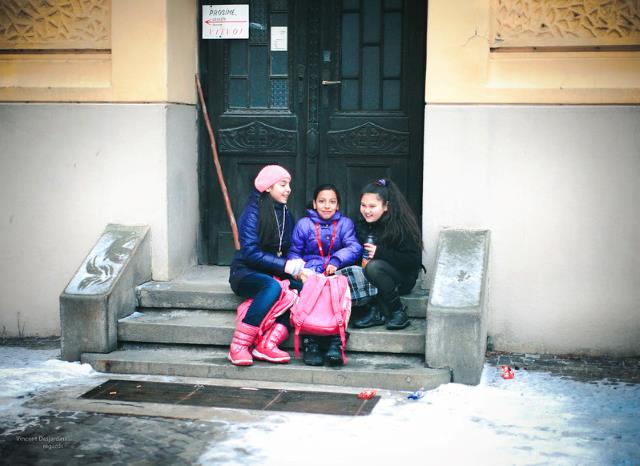
 In Czechia, children are the most vulnerable to the effects of extreme poverty. Czech deputy prime minister and minister of labor and social affairs, Marian Jurečka, acknowledged in 2022 that child poverty in Czechia is a “huge problem.” The rate of children under 18 at risk of poverty and social exclusion has increased from 12.9% in 2020 to 13.3% in 2021 due to the impacts of the COVID-19 pandemic. However, the Czech presidency and nonprofit organizations are taking action to reduce the risk of child poverty and protect those most in jeopardy.
Groups at High Risk of Poverty
The youth most affected by poverty in the Czech Republic are socially disadvantaged. For instance, Roma children, children with disabilities, Ukrainian refugees or those from single-mother families.
The European Roma Rights Center and Forum for Human Rights filed a complaint in January 2023 to the European Committee of Social Rights, noting the government’s failure to provide Roma children and those facing poverty with accessible preschool education. Without accessible and affordable education and care, poverty could lead to a loss of educational opportunities and a decline in children’s overall well-being.
Policies in Action
The Czech Republic, along with its fellow European Union member states, is ready to fulfill these needs. The European Pillar of Social Rights Action Plan promises to decrease the number of children at risk of poverty by approximately 5 million in seven years (2030). Additionally, the European Child Guarantee, proposed in 2021, aims to meet the five basic needs of every child: “free health care, education, preschool education and care, decent housing and adequate nutrition.”
Reformation on the Horizon
Combating child poverty requires addressing children’s specific needs. The government will likely appoint an ombudsman (representative) for children soon in order to tackle specific needs and systemic issues. According to Diana Šmídová, the secretary of the Committee on the Rights of the Child, school reforms are underway focusing on teaching children’s rights. Free language lessons for Ukrainian child refugees and educational integration are also a priority. Appointed in December 2022, Lucie Fuková, the first-ever Roma commissioner in Czechia, is taking on the task of helping the Roma community integrate.
Alternatives to Institutionalization
Every year, more than a thousand children are sent to orphanages or state care institutions in Czechia. A notable 25% of these children are younger than 4. Czechia is one of the few remaining countries in the EU that still institutionalize children so young.
Children born in poverty are more likely to be placed in institutions because their families are unable to provide for them. This subsequent neglect and separation from their biological family can have detrimental effects on children’s development.
Roma children are also commonly removed from their homes and institutionalized as their families are more susceptible to eviction, or simply because of discrimination.
For these reasons, the Czech government is prioritizing foster families and slowly restricting institutionalized care. Such institutionalized care for children younger than 4 will be banned from 2025, save for certain exemptions, according to a national 2022 report. Substitute family and preventative care will be expanded to meet as many needs as possible. With supportive networks in development, an increasing interest in foster care is anticipated.
Nonprofits Making an Impact
Nonprofits like Charita Hvězda z.s. step in to provide additional support for children of at-risk families. In 2022, the organization assisted 293 families in need, 395 Ukrainian refugee families and 212 substitute families. Ukrainian families received the organization’s largest contribution of aid (44%). Assistance ranged from covering individual client expenses to donations of food and drugstore items.
Charita Hvězda’s main project, the Foster Care Warehouse, is located in Horoměřice and offers material help for all children from substitute or socially disadvantaged families. This includes baby food, playpens, toiletries and sports equipment.
As of 2018, this site serves as a meeting place for foster families and those in crisis, providing emergency care, information and numerous resources. Though Charita Hvězda is a non-governmental organization, it is the byproduct of a government initiative to support surrogate families and limit institutional care.
Refugees in Need
The Russia-Ukraine war has taken a particularly heavy toll on the young. Notably high, more than a third of global refugees forced out of their countries are children. Approximately 130,000 Ukrainian children are living as refugees in Czechia now, some unaccompanied.
In response to the growing numbers of refugees fleeing the conflict, the Czech Republic’s Ministry of Labour and Social Affairs (MoLSA), UNICEF and civil society organizations created a disability cash benefit program in January 2023. This program targets vulnerable, refugee children: whether Ukrainian, Roma, unaccompanied or disabled. MoLSA and UNICEF began their collaboration in July 2022 and are expanding this plan to address specific needs.
According to Yulia Oleinik, head of the UNICEF Refugee Response Office in Czechia, the collective goal is to provide “4,000 refugee children with disabilities with financial benefits and support services.” Expanded psychosocial and mental health services for 25,000 at-risk refugee children, as well as their guardians, is another aim. Oleinik said that strengthening the social system will eventually “benefit all children in the Czech Republic.”
UNICEF is cooperating with MoLSA through March 2024. Together, the two partners have already provided grants for education centers, giving children up to age 6 access to community education. So far, 29 early education centers offering non-formal activities like integration groups and parenting support have reached more than 1,200 children and 1,500 parents across Ukraine and Czechia.
Dedication to the Cause
Money alone will not eradicate child poverty in Czechia. A strong commitment to seeing through key action plans and making them a reality is also necessary. With community support and nonprofit organizations providing further aid, Czechia can greatly reduce child poverty for at-risk groups and keep families together.
– Clare Calzada
Photo: Flickr

LDC5 Conference Brings Support for the Least Developed Countries
The fifth United Nations Conference on the Least Developed Countries (LDC5) took place in Doha, Qatar from March 5 to March 9, 2023. It was an amalgamation of political leaders, the business sector, civic organizations and youth. The conference’s main aim was to build a framework of support for the current 46 least developed countries in the world through the Doha Programme of Action (DPoA). Between 2022 and 2031, DPoA will aid LDCs in six key areas, driving investment and innovation in these countries and hopefully leading to their graduation from the LDC status.
LDC Classification
LDC or a least developed country is a U.N. classification of an impoverished country bereft of economic and human resources. The Committee for Development Policy meets every three years to review the LDCs and their inclusion and graduation criteria. These criteria are based on a country’s gross national income, human assets and economic and environmental vulnerability.
There are currently 46 countries on the LDC list, most of which are in Africa. Asia also has a significant number of LDCs. The U.N. put the first group of countries (25 nations) in this category in 1971. Today, the number has risen to 46 countries. However, since 1994, six countries have graduated from the LDC list and seven more are on the path to graduation by 2026, with Bhutan next in line.
Challenges LDCs Face
The combined population of all the world’s least developed countries is 1.1 billion. According to the U.N., “more than 75% of those people still live in poverty.” Due to low economic and human resources, LDCs are more vulnerable to deprivation. Many of the current LDCs are indebted. The U.N. states that out of the 46 countries, “four are classified as in debt distress” and “16 LDCs are at high risk of debt distress.”
The U.N. states that in 2019 “almost half of the children out of school worldwide” lived in LDCs. This shows that children in these countries have a higher chance of growing up without proper education, leaving them more vulnerable to economic instability. Poor enrollment and completion rates along with low education budgets in LDCs leave much to be desired. “Clearly, the education systems in the LDCs require significant development to equip their young people with the skills they need for the future,” said Rabab Fatima, secretary-general of the LDC5 at the conference.
LDCs face a multitude of challenges including “limited fiscal space, high external debt, macroeconomic imbalances, widespread poverty and underdeveloped or no social protection systems,” U.N. Deputy Secretary-General Amina Mohammed stated at the LDC5 conference.
LDC5 and DPoA
The LDC5 conference is the U.N.’s effort at uniting people that can make a difference in order to build a strategy for driving positive change in LDCs. This was the fifth such decennial conference, with the first taking place in Paris in 1981. The LDC5 conference hosted 9,000 people, including 46 heads of state and comprised many events and discussions.
The main focus of LDC5, however, was the DPoA. It “manifests a new generation of renewed and strengthened commitments between the least developed countries and their development partners, including the private sector, civil society and the governments at all levels,” the U.N. says. The DPoA provides a framework and guiding principles for LDCs to improve their socioeconomic standing and graduate from the category.
There are six key areas of focus in DPoA, including increased investment in human assets, driving technological advancements and increasing trade. In particular, the DPoA promises “an online university, a graduation support package, a food stock holding solution, an investment support center and a crisis mitigation and resilience building mechanism,” the U.N. reports.
Agrifood Systems Transformation Accelerator (ASTA)
The U.N. Industrial Development Organization and the Food and Agriculture Organization (FAO) launched the Agrifood Systems Transformation Accelerator (ASTA) at LDC5. ASTA aims to revitalize agricultural food production in LDCs by combining investment from the public and private sectors as one of its methods. ASTA had been successfully operating as a pilot scheme in 15 countries since 2018. It predicts more than $300 million in investment from the private sector in the future.
Many countries officially announced support packages at the conference. According to the U.N., Germany pledged €200 million to support LDCs. Qatar pledged $60 million while Canada dedicated $59 million toward ecosystem conservation and delivering vitamin supplements in LDCs.
With a blueprint ready, LDCs have way ahead of making socioeconomic progress and graduating from the category. The LDC5 conference proved that the world is full of people who are committed to improving the situation in these 46 countries and beyond. The U.N. General Assembly President Csaba Kőrösi said, “Through science, technology and innovation, we have the tools to build sustainable recoveries.”
– Siddhant Bhatnagar
Photo: Flickr
How Tackling SDG1 and SDG5 Simultaneously Can Eradicate Poverty
Patterns of Progress
According to the U.N., global poverty has vastly decreased since the 1990s, with 44% of the population living below the poverty line in 1991 compared to 15% in 2016. However, the pandemic significantly reversed this progress, increasing global poverty by 9% between 2019 and 2020.
The progress of SDG5 mirrors this pattern. The U.N. reports that since 2000, there has also been a vast improvement globally regarding gender equality. For instance, women’s role and representation in parliament have increased from 9.1 % in 2000 to 20.9% in 2020. However, much like with SDG1, the pandemic significantly pushed progress backward.
To achieve SDG1, U.N. Women emphasizes the importance of working toward a future free of gender inequalities and inequities. Ending poverty “in all its forms everywhere”, requires countries to make efforts towards reaching SDG1 and SDG5 simultaneously.
Country Insight: Bangladesh
According to the World Bank, Bangladesh is a developing country. One of the fastest-growing economies in the world, Bangladesh aims to become an upper-middle-income country by 2031. Regarding SDG1 and SDG5, Bangladesh has “significant challenges” along the way. Whilst encouraging progress has been made to eradicate poverty in the country, progress on achieving gender equality is slower. To achieve SDG1, Bangladesh must improve its score for SDG5. There were 1627 rapes reported throughout the country in 2020 alone, though it is widely known that many instances of assault go unreported.
Links Between SDGs in Bangladesh
Reports suggest that one of the ways that SDG1 and SDG5 can work hand in hand is through the introduction of women into an equitable and inclusive workplace. However, in the context of employment in Bangladesh, there are many instances of gender-based violence in the workplace. For instance, a report detailing the experiences of women working in the Ready-Made Garments sector in Bangladesh reveals that it is an industry rife with “sexual harassment, pay inequity and improper benefits”. Links between poverty reduction and equal opportunities for women are widespread in the literature, and women in Bangladesh have the opportunity to work. This highlights a need for the country to focus on women’s equality of voice and equality under the law.
Looking Ahead
In striving to achieve the Sustainable Development Goals (SDGs), the interlinkage between SDG1 and SDG5 is crucial, as emphasized by the United Nations. While progress has been made globally in reducing poverty and promoting gender equality, the COVID-19 pandemic has posed significant setbacks. Bangladesh, a developing country, faces challenges in achieving both goals, with the need to address issues of gender-based violence and empower women in the workplace. Overall, acknowledging how SDG1 and SDG5 synergize could open up the path to a more sustainable and inclusive future.
– Eloïse Jones
Photo: flickr
How the Arsenal Football Club is Fighting Poverty
Arsenal Football Club is currently top of the Premier League, leading English football in points and the number of wins. Perhaps a more important way Arsenal is leading the Premier League is through its contribution to children’s livelihoods in developing nations through Arsenal Foundations’ partnership with Save the Children. Here is how the Arsenal Football Club is fighting poverty.
How The Arsenal Foundation is Fighting Poverty with Save the Children
Despite having a modest budget compared to other football clubs’ charities, Arsenal spends most of its budget working in developing nations. Specifically, the Arsenal Foundation and Save the Children, a U.K based charity, formed a global partnership in 2011 and have raised more than 3.7 million pounds for Save the Children. The Arsenal Foundation gives year-round support to Save the Children through their shared mission of fighting child poverty, keeping children safe and providing children with a future. This includes providing funding for programs that provide education, food and medicine to children.
Responding to Local and Global Needs
The Arsenal Foundation is efficient and effective at responding to global crises and supporting the global community via Save the Children’s emergency work. Examples are donating in the immediate aftermath of the Ebola Outbreak, the Philippines Typhoon, the Nepal Earthquake, the East Africa Food crisis and the Turkey-Syria Earthquake.
The Arsenal Foundation also engages its north London community, through its support of sports, social and educational programs for young people. The Foundation provides money, time and hard work from the Foundation supporting the local community every day.
Coaching for Life Program
In partnership with Save the Children, in 2018, the Foundation developed the “Coaching for Life Program” a football education program for boys and girls based in the Za’atari refugee camp in Jordan and poor children in Jakarta, Indonesia. The program aims to improve children’s mental well-being by teaching innovative coaching techniques to help them build courage and inner strength in some of the most difficult circumstances on the planet.
The Jakarta program has been particularly successful in addressing gender issues in Indonesia, as footballer Leah Williamson’s visit in 2022 highlighted. Poor, young women in Indonesia have to work to support families and are also at a high risk of child marriage. Too many girls in Indonesia miss out on a proper education. Girls from the wealthiest backgrounds in Indonesia are five times more likely to finish secondary school than the poorest, limiting their future potential. The Coaching for Life Program is providing the opportunity to change that outcome.
The Jordan program is particularly unique among international football coaching schemes because it is based in the Za’atari refugee camp near the northern border with Syria. Za’atari opened in 2012 shortly after the outbreak of the Syrian civil war and is the largest camp for Syrian refugees. The U.N. estimated in 2018 that there were nearly eighty thousand refugees in the camp, with nearly 20% of the population under five. The program helps refugee children by giving them a sense of purpose and belief in a community where only 20% of the adult population gains work from the Jordanian government. Prospects for these children are limited, so Coaching for Life uses football to build a sense of belonging and fun to improve their emotional, physical and mental well-being. The interviews and stories from on the ground show how the Arsenal Football Club is fighting poverty.
– John Cordner
Photo: Flickr
Mitigating Bird Flu Outbreaks in the Americas
In light of recent outbreaks of avian influenza, or bird flu, in the Americas, the Pan American Health Organization (PAHO) held a meeting in Rio de Janeiro on March 16, 2023. Organized by PAHO’s Health Emergency Department and the Pan American Center for Foot and Mouth Disease (PANAFTOSA), the meeting gathered health experts from the Americas. They discussed strategies for halting the spread of the disease, which poses great health and economic risks to those dependent upon poultry.
Bird Flu
Bird flu occurs due to a virus of the Orthomyxoviridae family. Although the disease mainly spreads among birds, it can be transmitted to humans through contact with infected animals or contaminated feces. According to PAHO, risk factors include “handling infected poultry carcasses, and preparing poultry for consumption, especially in domestic settings.” Depending upon the severity of the infection, bird flu’s effects on humans can range from mild or asymptomatic to lethal.
Re-emergence
In the recent past, several strains of the virus have spread across the globe. In the last decade alone, Southeast Asia and West Africa saw the disease spread widely, resulting in substantial losses of livestock and income. With more recent outbreaks of a highly pathogenic A(H5) variant in 10 countries of the Americas, PAHO circulated an epidemiological alert on 11 January. By March, the disease had spread to 14 countries across the region, with the first human case reported in Ecuador.
Bird Flu and Poverty
Bird flu can have a detrimental impact on those living in poverty. A research study funded by the U.K. Department for International Development, which explored the relationship between poultry and poverty in Vietnam, found that “poultry is in fact very much a livestock asset of the poor.” In Vietnam, as in other countries, much of the rural population depends upon poultry for sustenance and income. According to the study, poultry is both “an important source of protein” and “an investment” that “yields extremely high returns.”
Bird flu can therefore be devastating for small-scale poultry farmers. They face, not only a higher risk of infection and transmission but also lack the resources needed to prevent and treat infections among their livestock. A report by the World Bank shows that the spread of bird flu could disproportionately impact low- and middle-income countries. The report estimates that if 12% of domestic birds died from bird flu worldwide, low- and middle-income countries would see a GDP reduction of 0.4%, even though global GDP would shrink by just 0.1%. The spread of bird flu would particularly affect Latin America and the Caribbean, causing a cumulative GDP reduction of 0.7%.
Solutions
With attendees from Argentina, Brazil, Canada, Chile, Colombia, Ecuador, Guatemala, Mexico and the United States, the PAHO-hosted meeting in Rio de Janeiro provided an opportunity to collaborate to protect the region’s most vulnerable. Dr. Manuel Sánchez Vázquez, a Veterinary Epidemiology Advisor at PANAFTOSA, said, “it is crucial that public and animal health sectors carry out joint risk analyses to establish mitigation strategies.” There were several recommendations for reducing the risk of regional bird flu transmission. These included increasing monitoring and surveillance; enforcing proper hygiene standards; and creating “national technical commissions for information exchange and analysis between ministries of health, agriculture and environment.”
PAHO regularly organizes such meetings to strategize plans for responding to zoonotic diseases. The Ministerial Level Inter-American Meeting on Health and Agriculture, for instance, provides an ongoing regional forum to discuss threats such as the bird flu and collaborate in prevention and response planning.
The WHO’s Global Influenza Surveillance and Response System (GISRS) also supports global influenza surveillance and mitigation. With institutions in 125 WHO member states, GISRS provides guidelines, alerts and monitoring mechanisms to ensure a high level of global readiness to respond to threats of influenza.
The WHO also works to ensure that the most vulnerable are protected in times of need. It has secured 10% of the global supply of pandemic flu vaccines for low- and middle-income countries. It is negotiating with manufacturers to secure 20% of the global supply of vaccines for other types of pandemics.
Bird flu is a virus that can be lethal to humans and animals alike. While the threat of bird flu is real, there are proactive measures and cooperative efforts that can be taken to mitigate its effects. With the right strategies in place, more lives and livelihoods can be saved from this potentially deadly virus.
– Siddhant Bhatnagar
Photo: Flickr
Poverty Reduction in Zimbabwe
Extreme poverty in Zimbabwe has gotten worse over the last decade due to agricultural industry failures and changing weather patterns. Still, the government’s strategy of Pfumvudza, introduced in 2020, is helping poverty reduction in Zimbabwe. When set against a background of progress in non-income poverty metrics, indicators show Zimbabwe should progress in the battle against extreme poverty over the next decade.
Agricultural Industry Failures
Due to heavy investment in agriculture during the Mugabe administration, up to two-thirds of Zimbabweans worked in agriculture and many Zimbabweans relied directly on the domestic agriculture industry for food security. Incomes from the agriculture industry are the lowest in the country due to low productivity and changing weather patterns causing long droughts, which have increased in frequency and intensity over the last 20 years. For example, “maize production in 2019 was only 36% of its 2017 level.” These two key factors have resulted in plummeting agricultural output and, therefore, losses in income for two-thirds of Zimbabwe’s workers.
The failing agricultural industry has pushed more Zimbabweans into extreme poverty. The U.N. defines extreme poverty as living on less than $1.90 per day, a rate that has increased in Zimbabwe from 21.4% in 2011 to 39.5% in 2021. This is deeply concerning as the extreme poverty rate for the whole of sub-Saharan Africa stood at 45.8% in 2011 and 39.7% in 2021, according to the World Bank.
Battling Extreme Poverty
The Zimbabwean government has attempted to battle the rise in extreme poverty linked to the agricultural sector by boosting agricultural productivity and reducing climate challenges in farming. To do this, it introduced a program called Pfumvudza, a name derived from the Zimbabwean phrase meaning “the blooming of new leaves during the farming season.”
Pfumvudza is a form of conservation agriculture focused on crop rotation, mulching and minimum tillage, which increased crop yields in areas where it was tried. Before the implementation of Pfumvudza in specific areas, about 92% of households relied on food aid from NGOs and the U.N. In the same areas, after the implementation, this rate fell to 43%.
By improving agricultural output, Pfumvudza helps poverty reduction in Zimbabwe, improving work conditions and pay for workers in the agricultural industry and food security for the whole country. The government has expanded the Pfumvudza scheme to 4.6 million plots in the 2022/23 season. This indicates that Zimbabwe’s extreme poverty rate could fall as the agricultural sector develops under the Pfumvudza strategy.
Progress in Non-Income Dimensions of Poverty
Unlike monetary measurements of poverty, Zimbabwe has performed well on the non-income dimensions of poverty. Infant mortality, maternal mortality and life expectancy rates have all improved significantly over the last decade and at a higher rate than the average for sub-Saharan African countries. Infant mortality decreased from 57 deaths per 1,000 live births in 2007 to 36 in 2021. Zimbabwe saw 579 maternal deaths per 100,000 live births in 2000, which reduced to 458 in 2017. Furthermore, life expectancy rose from 45 in 2000 to 61 in 2020.
Education provision quality and quantity have boomed over the 2010s, with spending on primary and secondary education quadrupling between 2009 and 2014. More than 90% of adults are literate and more than 90% of boys and girls finish primary school, according to a World Bank report. Education provision is key to poverty reduction in Zimbabwe because it allows individuals to improve their economic circumstances, so this increase in education provision could lead to poverty reduction in Zimbabwe in the long run.
With continued efforts to reduce conditions of poverty, Zimbabwe will see further progress and improvements on quality of life indicators.
– John Cordner
Photo: Flickr
Uber for Tractors: Transforming the Agricultural Sector in Africa
Within sub-Saharan Africa, about 220 million smallholder farmers live on $2 per day. As a result of a lack of financing, farmers do not have access to mechanization tools that increase productivity across the agricultural sector in Africa. The majority of the poor earn their source of income on farms and 80% of households in sub-Saharan Africa rely on agriculture to live.
Inadequate Mechanization in the Agriculture Sector in Africa
Since farmers lack the utilities to cultivate their land fully and efficiently, they lose out on potential yields and profit, which detrimentally impacts Africa’s agricultural sector. In fact, about half of Africa’s yield gap arises from a lack of agricultural equipment.
“Less than 1% of commercial lending goes to agriculture in Africa – conveying that this sector is grossly under-invested despite the crucial role that it plays in the long-term development of most African countries,” Hello Tractor says. Reasons include hefty requirements that smallholders simply cannot meet, especially in sub-Saharan Africa, which accounted for two-thirds of the world’s extreme poor in 2018, the World Bank says.
This urgency of strengthening the livelihoods of smallholder farmers submerged in poverty through digital technology has fostered a desire for entrepreneurs to develop innovative methods to boost agricultural mechanization.
What is Hello Tractor?
African American investment banker, founder and CEO, Jehiel Oliver, established Hello Tractor in Nigeria in 2014 to increase access to mechanization. The Hello Tractor platform, nicknamed ‘Uber for Tractors,’ runs a pay-as-you-go (PAYG) program to allow for collaborative consumption, facilitating access for smallholder farmers to rent tractors on demand.
Booking agents receive these rental requests and provide the services smallholder farmers yearn for. Now, farmers are readily equipped with the tools to liberate themselves from poverty because they reap the benefits of accessing low-cost tractors they do not own. The Hello Tractor app acts as a digital hub for business owners, such as tractor owners, to network with farmers in need of their services.
The Uber analogy relates to the fact that farmers can easily book available tractor services near them at the tap of a button. A GPS tracking device is fitted onto equipment and synced to the mobile app, allowing tractor owners to view details about the tractor, such as the distance their tractor has traveled, acres cultivated and fuel levels.
Impacts of Hello Tractor
Smallholder farmers now have access to formerly unattainable agricultural machinery. The cost of tractor access equates to a third of the amount paid for manual labor and can be as much as “40 times more efficient.” By the end of 2020, Hello Tractor had assisted 41,000 farmers in Kenya with these services. The company had fitted its technology in more than 2,500 tractors and assisted more than 500,000 farmers by 2020.
According to a World Food Programme (WFP) article from 2020, Hello Tractor’s strategic objectives in Nigeria within five years will bring 10,000 tractors to the market through a partnership with John Deere, which will result in 9 million hectares of arable land, 37 million metric tons of crops for food and more than 2 million employment opportunities.
The Future of the Agricultural Sector in Africa
Overall, Hello Tractor has drastically transformed the agricultural sector in Africa. The introduction of digital technology is revolutionizing agriculture in Africa. Improvements in productivity, food insecurity and income insecurity improve overall livelihood and provide hope for a promising future. Hello Tractor’s services allow the opportunity for smallholder farmers to break intergenerational cycles of poverty.
Jehiel Oliver has harnessed digital technology to create a model that empowers smallholder farmers with the tools to rise out of poverty. These innovative development projects help to galvanize systemic change and eliminate global poverty overall.
– Dami Kalejaiye
Photo: Flickr
Elderly Poverty in Burundi
Burundi, located in Central Africa, is one of the least developed countries in the world. According to the U.S. Department of State, more than 85% of its population lives in poverty, with 80-90% of people living in rural areas where agriculture is the main source of livelihood.
Although there is limited data on elderly poverty in Burundi, the country’s life expectancy in 2020 was 62, significantly lower than the 2020 global average of 72. Yet, in 2019, the age dependency ratio — the ratio of unemployed elderly dependents to working-age people — in Burundi was 95.2%, a value significantly higher than the 85.1% global average. The country’s high dependency ratio reflects the inordinate financial stress that its working population, and the economy as a whole, face in supporting the elderly. Factors compounding this stress include a high level of food insecurity; a steadily rising population; poor access to health, education and clean water; and susceptibility to climate-related devastation.
The Concerns of Burundi’s Elderly
As early as 1999, Cécilie Siboniyo, an 80-year-old woman living in the Buraniro Refugee camp, expressed concern that children were becoming less well-educated and losing their sense of community responsibility. She noted that increasing distractions and a growing lack of respect for elders were making it difficult to teach social values. She was hopeful that directing media attention to this problem would help pave the way for a brighter future.
Still, Abtwahi Al Hajj, a 77-year-old man living in Ngozi, Burundi, feared for the future. He worried that young people no longer felt a duty to care for the elderly.
Such concerns are valid. A comparative analysis of ageism in Belgium and Burundi found that, while both Burundian and Belgian adults living in Belgium valued the elderly, Burundians living in their own country saw the elderly as poor and weak. The study correlated this perception to a lack of social and economic resources and a “lack of government spending on older people (pension and health care systems)” in less developed countries like Burundi.
Need for Action
Land shortages, changing weather patterns and overpopulation in Burundi are making survival increasingly difficult for a population that relies upon agriculture for food and income. With more than 60% of the population undernourished, malnutrition is one of the leading causes of death in the country.
To ensure progress and a better life for Burundi’s elderly, social and economic resources must go toward helping the many who live in poverty. According to a World Bank report, targeting pensions to support elderly people who are responsible for households and children would also have a significant impact on reducing poverty in Burundi overall.
Positive Impact of Organizations in Burundi
Despite the severity of the situation, numerous organizations have partnered with the Burundi government to provide help for the elderly who face poverty and food insecurity.
The World Food Programme (WFP) has partnered with the United Nations to support the Burundi government in providing immediate and long-term assistance for the elderly and vulnerable. In 2022, WFP and its donors assisted 995,651 Burundians in need, an act of service that the organization has committed itself to continue.
The World Bank and the United States Agency for International Development (USAID) have also helped negotiate policies to make the country’s most valuable crop, coffee, more lucrative. Now, European and U.S. companies purchase coffee directly from Burundian producers. USAID is also working to help improve the country’s agricultural resource base. In addition to providing better seed varieties, it is helping to advance crop and livestock production, provide guidance for soil preservation and ensure that the most vulnerable have access to a healthy, diversified diet.
Additionally, USAID is working to build social welfare in Burundi, emphasizing food security, democracy, economic growth and health care. It has strengthened the health system by ensuring access to quality maternal and child care, medications and other basic necessities.
Finally, the African Union has developed the Maputo Protocol to promote human rights and the rights of women, with specific provisions for protecting women who are elderly. In late 2022, the African Union Commission and Gender, Peace and Security Programme concluded a joint mission to Burundi to advance the implementation of the Maputo Protocol, which the Burundi government signed in 2003. The hope is that the country will fully adopt and enforce the protocol by July 2023.
A Brighter Future
Although elderly poverty remains a growing problem in Burundi, the Burundi government and numerous international organizations are working to ensure a better future for the country’s elderly and population at large. Such a clear commitment to this goal is sure to inspire hope and positive change.
– Chidinma Nwoha
Photo: Flickr
5 Facts About Kiva: Empowering Small Business Owners Globally
5 Inspiring Facts About Kiva
Pillar of Hope
These facts about Kiva indicate that the organization stands as a shining pillar for innovation in the face of impoverishment. Through its revolutionary system, entrepreneurs and everyday people across the globe can get the financial support they need to thrive through dire economic situations. Kiva continues to push forward against the tide of poverty and help millions of people sail across waves of hardship and toward the more friendly shores of financial security and prosperity.
– Sanjith Sambath
Photo: Flickr
Renewable Energy in Nepal
Nepal is in a unique position — the country is blessed with abundant natural renewable energy resources, providing it with the opportunity to bypass developing a fossil fuel industry and transition straight into a renewable energy economy. In 2019, about 17% of the population in Nepal endured multi-dimensional poverty. Renewable energy in Nepal can help expand energy access to remote areas and improve living standards for impoverished Nepalese people.
Immense Potential for Renewables
The dramatic Himalayan mountains, glaciers and rivers that dominate the Nepalese landscape provide the country with a powerful energy source, in the form of falling water. This is known as hydropower. Thanks to this energy source, Nepal is one of the few countries with domestic energy generation that is entirely renewable, with 98% of it coming from hydropower. Nepal currently produces 2,200 MW of hydropower but has the potential to produce 50,000 MW of estimated hydropower, one of the highest amounts in the world.
However, Nepal’s natural renewable resources do not stop at hydro as experts consider the country’s solar resources to be even greater than that of hydro. Scientists estimate that solar power alone could provide 100 times more energy than required for a 100% solar system in which all Nepalese had consumption levels similar to developed countries.
Despite abundant resources, the high cost of infrastructure development has historically limited the development of renewable energy in Nepal. Renewable energy makes up only a fraction of Nepal’s total energy consumption. The majority of the country’s energy consumption is from non-electric sources including biomass (68%) and fossil fuels (25%). Shifting to electricity as the main energy source, a process known as electrification, is necessary to fully utilize Nepal’s renewable energy potential.
Energy Access in Remote Areas
Electrifying Nepal comes with challenges. The situation is especially severe in rural and remote areas where the rugged, mountainous terrain creates a barrier to connecting communities to national electricity grids. As a result, many rural households still use firewood, kerosene and batteries for cooking and lighting their homes. The lack of access to reliable and efficient energy hinders other fundamental human rights like access to clean water, health and education. This is known as energy poverty.
Despite historical challenges with energy access, Nepal is one of the fastest electrifying countries in the world. Electricity access in remote areas is increasing at an annual rate of around 4.3% per year compared to the global average of 0.8%. The proportion of households with access to electricity increased from 68% in 2010 to almost 90% in 2020. However, this remains low when compared to neighboring countries such as India, Sri Lanka and Thailand, which have achieved 100% access.
Micro-grid Renewable Energy
Micro-grid renewable energy may be the solution to Nepal’s energy access challenges. Government and local organizations have previously invested heavily in micro-hydro plants in rural communities. One example is the Rural Energy Development Programme (REDP) which began in 2015 and installed 307 micro-hydro plants across rural areas of Nepal. The overall efforts of the REDP allowed 550,000 people living in remote areas to obtain access to electricity.
Experts are now advocating for the use of micro-grid solar energy in rural Nepal. Solar is competitive with and vastly more available than hydro and is also easy to implement at small scales. As the cost of solar energy production falls, it becomes an increasingly viable option for broaching the gap in nationwide electricity access and eliminating energy poverty in Nepal. Solar will also enhance Nepal’s energy resiliency in the circumstance of changing weather patterns, with climate scientists predicting that some areas of Nepal will experience a reduction in water availability, which will impact hydropower production in the future.
Micro-grid Solar Power Installations
A number of micro-grid solar power projects have undergone initiation in rural areas of Nepal in recent years. One such project is the installation of solar-powered water pumps in the buffer zone of Bardiya National Park in the southern Tarai region of Nepal. The water pumps allow clean water access for houses and businesses. The water also helps grow crops and raise livestock, contributing to the overall food security of the community.
In Nepal’s Gulmi district, solar panels underwent installation in 11 schools and colleges, providing educational institutions with a regular power supply. This improved the quality of education by powering equipment such as computers and has allowed water pumps to be installed to provide access to clean water and improve sanitation. Access to clean water is especially important for encouraging girls to attend school, given the sanitary challenges that stop girls from attending school during menstruation.
The electrification of Nepal’s rural and remote communities is also a goal of the federal government. The federal, provincial and local governments have been collaborating with energy sector stakeholders to expand and promote clean and sustainable energy. The government has released a target of electric cookstoves in all households by 2030 and net-zero national carbon emissions by 2045.
Looking Ahead
Renewable energy in Nepal at both small and large scales is playing an important role in the country’s economic development. With the right renewable energy strategy, experts believe Nepal can achieve energy self-sufficiency during the 21st century. The development of a clean sustainable energy economy has the potential to reduce energy poverty and improve living standards for Nepalese people.
– Amy McAlpine
Photo: Flickr
A United Front to Fight Child Poverty in Czechia
Groups at High Risk of Poverty
The youth most affected by poverty in the Czech Republic are socially disadvantaged. For instance, Roma children, children with disabilities, Ukrainian refugees or those from single-mother families.
The European Roma Rights Center and Forum for Human Rights filed a complaint in January 2023 to the European Committee of Social Rights, noting the government’s failure to provide Roma children and those facing poverty with accessible preschool education. Without accessible and affordable education and care, poverty could lead to a loss of educational opportunities and a decline in children’s overall well-being.
Policies in Action
The Czech Republic, along with its fellow European Union member states, is ready to fulfill these needs. The European Pillar of Social Rights Action Plan promises to decrease the number of children at risk of poverty by approximately 5 million in seven years (2030). Additionally, the European Child Guarantee, proposed in 2021, aims to meet the five basic needs of every child: “free health care, education, preschool education and care, decent housing and adequate nutrition.”
Reformation on the Horizon
Combating child poverty requires addressing children’s specific needs. The government will likely appoint an ombudsman (representative) for children soon in order to tackle specific needs and systemic issues. According to Diana Šmídová, the secretary of the Committee on the Rights of the Child, school reforms are underway focusing on teaching children’s rights. Free language lessons for Ukrainian child refugees and educational integration are also a priority. Appointed in December 2022, Lucie Fuková, the first-ever Roma commissioner in Czechia, is taking on the task of helping the Roma community integrate.
Alternatives to Institutionalization
Every year, more than a thousand children are sent to orphanages or state care institutions in Czechia. A notable 25% of these children are younger than 4. Czechia is one of the few remaining countries in the EU that still institutionalize children so young.
Children born in poverty are more likely to be placed in institutions because their families are unable to provide for them. This subsequent neglect and separation from their biological family can have detrimental effects on children’s development.
Roma children are also commonly removed from their homes and institutionalized as their families are more susceptible to eviction, or simply because of discrimination.
For these reasons, the Czech government is prioritizing foster families and slowly restricting institutionalized care. Such institutionalized care for children younger than 4 will be banned from 2025, save for certain exemptions, according to a national 2022 report. Substitute family and preventative care will be expanded to meet as many needs as possible. With supportive networks in development, an increasing interest in foster care is anticipated.
Nonprofits Making an Impact
Nonprofits like Charita Hvězda z.s. step in to provide additional support for children of at-risk families. In 2022, the organization assisted 293 families in need, 395 Ukrainian refugee families and 212 substitute families. Ukrainian families received the organization’s largest contribution of aid (44%). Assistance ranged from covering individual client expenses to donations of food and drugstore items.
Charita Hvězda’s main project, the Foster Care Warehouse, is located in Horoměřice and offers material help for all children from substitute or socially disadvantaged families. This includes baby food, playpens, toiletries and sports equipment.
As of 2018, this site serves as a meeting place for foster families and those in crisis, providing emergency care, information and numerous resources. Though Charita Hvězda is a non-governmental organization, it is the byproduct of a government initiative to support surrogate families and limit institutional care.
Refugees in Need
The Russia-Ukraine war has taken a particularly heavy toll on the young. Notably high, more than a third of global refugees forced out of their countries are children. Approximately 130,000 Ukrainian children are living as refugees in Czechia now, some unaccompanied.
In response to the growing numbers of refugees fleeing the conflict, the Czech Republic’s Ministry of Labour and Social Affairs (MoLSA), UNICEF and civil society organizations created a disability cash benefit program in January 2023. This program targets vulnerable, refugee children: whether Ukrainian, Roma, unaccompanied or disabled. MoLSA and UNICEF began their collaboration in July 2022 and are expanding this plan to address specific needs.
According to Yulia Oleinik, head of the UNICEF Refugee Response Office in Czechia, the collective goal is to provide “4,000 refugee children with disabilities with financial benefits and support services.” Expanded psychosocial and mental health services for 25,000 at-risk refugee children, as well as their guardians, is another aim. Oleinik said that strengthening the social system will eventually “benefit all children in the Czech Republic.”
UNICEF is cooperating with MoLSA through March 2024. Together, the two partners have already provided grants for education centers, giving children up to age 6 access to community education. So far, 29 early education centers offering non-formal activities like integration groups and parenting support have reached more than 1,200 children and 1,500 parents across Ukraine and Czechia.
Dedication to the Cause
Money alone will not eradicate child poverty in Czechia. A strong commitment to seeing through key action plans and making them a reality is also necessary. With community support and nonprofit organizations providing further aid, Czechia can greatly reduce child poverty for at-risk groups and keep families together.
– Clare Calzada
Photo: Flickr