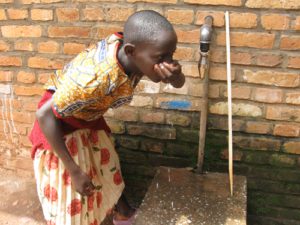
 Although progress is visible concerning poverty in Rwanda, with the poverty rate decreasing from 75.2% to 52% between 2000 and 2013, further action is necessary. The latest World Bank statistics from 2016 indicate that 52% of the country’s population still lives in poverty.
Three charities, in particular, are combating the effects of poverty in Rwanda.
GiveDirectly’s Cash Transfer Method
GiveDirectly, co-founded by Rohit Wanchoo, Michael Faye, Paul Niehaus and Jeremy Shapiro in 2008, is a charity that provides direct cash transfers to those living in poverty. This organization believes that people suffering from poverty understand how to address their problems better than any organization or government department ever could.
As a result, GiveDirectly avoids intervening with grand infrastructure projects or conditional aid packages. Instead, they place money directly into the pockets of those living below the poverty line in various countries, including Rwanda.
Poverty in Rwanda is a concern that GiveDirectly is committed to addressing, evident by 86,955 Rwandan households receiving cash from the charity.
Nsengiyumva received $412 from the organization, enabling her to buy land in a safer area, free from the risks of flooding. Here, GiveDirectly assisted those living in Rwandan poverty by relocating a family.
Tuyisenge is another success story. After receiving $415, he could repair the family home and save money to pay for his children’s school fees. This cash sum allowed him to secure his family’s future and potentially break the cycle of poverty in Rwanda.
Rwanda Action’s Bottom-up Approach
Rwanda Action, founded by David Chaplin in 2008, is a charity that collaborates with communities to deliver needed aid. Similar to GiveDirectly, Rwanda Action believes that those suffering from poverty know the assistance they require. Consequently, Rwanda Action does not adopt a ‘one size fits all’ aid policy. Instead, the organization employs a ‘bottom-up’ approach, ensuring that communities receive the help they genuinely need.
For example, after the 2008 earthquake, the visible effects of poverty in Rwanda were apparent as the natural disaster destroyed homes, displaced families and devastated farms, necessitating swift intervention.
Rwanda Action aimed to address the shelter need by constructing homes and rehousing over 50 families, preventing homelessness. In response to this crisis, 2000 families received training on improving crop yields through small-scale farming. This training enabled families to produce more food, saving funds that would have otherwise been spent on purchasing food. The increased disposable income empowered families to invest in school fees, housing and health care.
Increased crop yields could also combat chronic malnutrition, a severe issue in Rwanda, where a notable percentage of Rwandan children experience chronic malnutrition as of 2010, according to the World Health Organization.
Finally, Rwanda Action endeavors to tackle the problem of child homelessness, a brutal symptom of poverty in Rwanda, which sees 7,000 children living on the streets, ReliefWeb reported in 2021.
The organization established a center for street children named ‘aho Neza Mwana’, meaning a good life for children. The center provided short-term residential stays for 214 boys and a day program for 85 boys. These interventions play a pivotal role in supporting vulnerable children and removing them from harmful environments.
Children of Rwanda’s Sustainable Approach
Founded by Robbie MacMillan, Children of Rwanda is a charity that dismantles barriers preventing impoverished Rwandan children from accessing education. Enhancing education access is vital, given that Rwanda’s literacy rate stood at 76% as of 2021, according to the World Bank. Improving the literacy rate is only achievable through education, underscoring the significance of this organization’s work.
The most persistent barrier to overcome is cost, encompassing expenses related to uniforms, materials, school meals and exam fees.
To help keep up with the costs of education, Children of Rwanda equips families with the tools to increase their income independently. The sustainability displayed by this approach is essential, as it ensures that families do not become reliant on assistance and instead become independent as a result of this charity’s aid.
For instance, Children of Rwanda collaborates with parents to teach them farming techniques to generate a sustainable income.
The additional income enables parents to send their children to school, aiming to break the cycle of poverty in Rwanda. Completing school offers Rwandan children better job prospects and equips them with the knowledge to make decisions benefiting their well-being.
Children of Rwanda’s work is especially beneficial for gender equality, as women who complete their education gain a 15-20% increase in earnings for every year in education.
While Rwandan people across the country undoubtedly feel the impact of organizational work, work remains on the part of charities, international organizations and governments.
– Tom Eccles
Photo: Flickr

Fragility and Rule of Law in Myanmar
Out of 139 countries, the World Justice Project ranked Myanmar 128th concerning the rule of law in 2021. This was the same year Myanmar’s military junta had a coup against the democratic government. The military forces are creating a more brutal operating environment for those providing aid to the country, including NGOs and civil society organizations, by using legislation and bending the judicial system to their will. The situation in Myanmar challenges the foundational principle of the rule of law that no one is above the law.
In 2019, Mr. Nyan Lin Aung, Alternate Representative of the Republic of the Union of Myanmar, gave a statement at the United Nations General Assembly. He stated that the rule of law is a fundamental principle of democratic governance for the government of Myanmar. Just two years after this declaration, the military deposed the democratically elected government. This led to fragility and the rule of law in Myanmar collapsing.
Historical Background
Myanmar has dealt with decades of colonial rule, ethnic conflict, civil war and more in its troubled history. Since its independence from British colonial rule in 1948, it has tried establishing a representative democracy, but it only continued until 1962. General Ne Win led a military coup, followed by military rule in Myanmar for 26 years from 1962. In 1974, the government introduced a new constitution, centered around an isolationist foreign policy and a socialist economic program. According to data from 2017 from the Asian Development Bank (ADB), 24.8% of the population lives under the national poverty line. The new constitution had negative implications for the country’s economy. It leads to a drastic fall in currency value, corruption and food shortages that continue to impact the country. This led to an increase in poverty levels in the country, as seen by a fall in currency value.
In 2007, the military began loosening its control slightly due to the Saffron Revolution. The countrywide protests due to the hike in fuel prices were the trigger point. They led to the formation of a new constitution in 2008. This gave the military immense power despite being under civilian rule. The dissolution of the military junta in 2011 prompted the establishment of a civilian parliament and the first nationwide multiparty elections.
Understanding the Coup and its Effect on Fragility and Rule of Law
Despite the political system favoring the military due to the 2008 legislation, institutionally, the military was losing power under democratic reforms. The 2008 constitution allows for three main ministries, namely the Ministry of Defense, the Ministry of Border Affairs and the Ministry of Home Affairs, to be controlled by the military commander-in-chief, along with 25% of seats in the parliament reserved for military personnel. This reservation allows military personnel to dictate legislation in their favor.
So far, the military forces have tried to misuse their power through legislation, enabling them to misuse their power and oppress the country’s citizens. One such piece of legislation is the Organization Registration Law, also called the CSO Law. Under its provisions, registration is mandatory for all civil society organizations, NGOs and other associations. Also, these organizations cannot provide services to the opponents of the military junta. This has enabled the military to shut down the resistance movements rising after the coup.
The practices of the military government blatantly disregard the four main tenets of the rule of law. These include accountability, just law, open government and impartial justice. The tentative numbers show that the military takeover resulted in the deaths of around 3,000 people and the arrests of another 20,000. The people of Myanmar being cut off from humanitarian assistance mandated by international human rights laws due to the CSO Law was the reason for the fragility and rule of law in Myanmar collapsing.
Improving the Rule of Law Situation
Myanmar requires strong institutions to recover from the fragility of the justice system that the collapse of the rule of law created. To address the fragility and rule of law in Myanmar and support the transition to a democratic government, the U.S. is funding the Promoting the Rule of Law Project (PRLP). The U.S. Agency for International Development (USAID) has selected Tetra Tech as the implementing agency. The project aims to develop political reform, capacity building and ethnic reconciliation.
The major issues associated with the justice system are government corruption, limited resources and knowledge, political control of the judiciary, disregard for citizens’ rights and the rule of law. To resolve these issues, the PRLP called for an open dialogue between citizens and the government to build faith and credibility in the justice system. The PRLP began developing a draft justice sector comparative law and best practices compendium. It published a three-year strategic plan and a five-year strategy in a measure to restore trust among the citizens. This would work to transition into democracy smoothly.
Thus, it is evident that the rule of law cannot be maintained in a country without a strong and impartial judicial system backing it. The judiciary should uphold the values of impartiality, integrity, equality and diligence to ensure that all public and private individuals, institutions and entities, including the State itself, are accountable before the law to prevent the fall of democracy as observed in Myanmar.
– Anurima Deshmukh
Photo: Flickr
3 Charities Fighting Poverty in Rwanda
Three charities, in particular, are combating the effects of poverty in Rwanda.
GiveDirectly’s Cash Transfer Method
GiveDirectly, co-founded by Rohit Wanchoo, Michael Faye, Paul Niehaus and Jeremy Shapiro in 2008, is a charity that provides direct cash transfers to those living in poverty. This organization believes that people suffering from poverty understand how to address their problems better than any organization or government department ever could.
As a result, GiveDirectly avoids intervening with grand infrastructure projects or conditional aid packages. Instead, they place money directly into the pockets of those living below the poverty line in various countries, including Rwanda.
Poverty in Rwanda is a concern that GiveDirectly is committed to addressing, evident by 86,955 Rwandan households receiving cash from the charity.
Nsengiyumva received $412 from the organization, enabling her to buy land in a safer area, free from the risks of flooding. Here, GiveDirectly assisted those living in Rwandan poverty by relocating a family.
Tuyisenge is another success story. After receiving $415, he could repair the family home and save money to pay for his children’s school fees. This cash sum allowed him to secure his family’s future and potentially break the cycle of poverty in Rwanda.
Rwanda Action’s Bottom-up Approach
Rwanda Action, founded by David Chaplin in 2008, is a charity that collaborates with communities to deliver needed aid. Similar to GiveDirectly, Rwanda Action believes that those suffering from poverty know the assistance they require. Consequently, Rwanda Action does not adopt a ‘one size fits all’ aid policy. Instead, the organization employs a ‘bottom-up’ approach, ensuring that communities receive the help they genuinely need.
For example, after the 2008 earthquake, the visible effects of poverty in Rwanda were apparent as the natural disaster destroyed homes, displaced families and devastated farms, necessitating swift intervention.
Rwanda Action aimed to address the shelter need by constructing homes and rehousing over 50 families, preventing homelessness. In response to this crisis, 2000 families received training on improving crop yields through small-scale farming. This training enabled families to produce more food, saving funds that would have otherwise been spent on purchasing food. The increased disposable income empowered families to invest in school fees, housing and health care.
Increased crop yields could also combat chronic malnutrition, a severe issue in Rwanda, where a notable percentage of Rwandan children experience chronic malnutrition as of 2010, according to the World Health Organization.
Finally, Rwanda Action endeavors to tackle the problem of child homelessness, a brutal symptom of poverty in Rwanda, which sees 7,000 children living on the streets, ReliefWeb reported in 2021.
The organization established a center for street children named ‘aho Neza Mwana’, meaning a good life for children. The center provided short-term residential stays for 214 boys and a day program for 85 boys. These interventions play a pivotal role in supporting vulnerable children and removing them from harmful environments.
Children of Rwanda’s Sustainable Approach
Founded by Robbie MacMillan, Children of Rwanda is a charity that dismantles barriers preventing impoverished Rwandan children from accessing education. Enhancing education access is vital, given that Rwanda’s literacy rate stood at 76% as of 2021, according to the World Bank. Improving the literacy rate is only achievable through education, underscoring the significance of this organization’s work.
The most persistent barrier to overcome is cost, encompassing expenses related to uniforms, materials, school meals and exam fees.
To help keep up with the costs of education, Children of Rwanda equips families with the tools to increase their income independently. The sustainability displayed by this approach is essential, as it ensures that families do not become reliant on assistance and instead become independent as a result of this charity’s aid.
For instance, Children of Rwanda collaborates with parents to teach them farming techniques to generate a sustainable income.
The additional income enables parents to send their children to school, aiming to break the cycle of poverty in Rwanda. Completing school offers Rwandan children better job prospects and equips them with the knowledge to make decisions benefiting their well-being.
Children of Rwanda’s work is especially beneficial for gender equality, as women who complete their education gain a 15-20% increase in earnings for every year in education.
While Rwandan people across the country undoubtedly feel the impact of organizational work, work remains on the part of charities, international organizations and governments.
– Tom Eccles
Photo: Flickr
4 Ways Blockchain Technology Aids Poverty Alleviation in Nigeria
What is Blockchain technology?
Blockchain technology is a decentralized digital ledger that securely records transactions across multiple computers. It operates on a peer-to-peer network, where each transaction, or “block,” is linked to the previous one, forming an immutable chain. This technology ensures transparency, security and trust as all participants in the network have access to the same information, eliminating the need for intermediaries and enhancing efficiency.
4 Ways Blockchain Technology Helps Poverty Alleviation in Nigeria
A Positive Impact
Overall, Blockchain technology presents a transformative opportunity for Nigeria to alleviate poverty and achieve sustainable development. It’s a promise of progress that can boost the Nigerian economy by $29 billion by 2030. While it continues to evolve and demonstrate its potential, its impact on Nigeria’s development and poverty alleviation efforts can inspire other nations to explore and adopt similar solutions tailored to their specific contexts and challenges.
– Miriam Schuller
Photo: Pixabay
Improving Access to Technology and Information for Refugees
Refugees face numerous challenges upon arriving in Calais, a town in Northern France, as they attempt to cross into the U.K. According to the refugee charity, Care4Calais, most refugees are fleeing war-torn and impoverished countries like Afghanistan, Syria and South Sudan. However, the U.K. offers limited legal options for refugees to seek asylum. In response to this situation, an organization called Refugee Info Bus strives to enhance refugees’ access to technology and information in Calais, empowering them with knowledge about their rights and connecting them to family and local support organizations.
Where is Calais?
Calais, often referred to as the jungle, serves as a point of entry for migrants attempting to reach the U.K. It is located in Northern France, where hostile weather conditions and pervasive anti-immigrant sentiments contribute to challenging living conditions for the refugees. Although the French government demolished the central camp in Calais, smaller encampments persist in the region. Human Rights Watch reports that migrants frequently face eviction, harassment and confiscation of their belongings. Additionally, humanitarian assistance is constrained and limited, making it difficult for individuals to access basic necessities such as food, water and suitable shelter. In this trying environment, refugees urgently need support and guidance, and organizations like Refugee Info Bus play a crucial role in improving their access to technology and relevant information.
The conditions of the camps in Calais are rough, but many refugees struggle to leave the area safely. In 2021, 2,000 people lived in Calais according to the Human Rights Watch data. Refugees hoping to leave Calais struggle with the asylum process in the U.K.
Why is it Challenging for Migrants to Stay in the UK Legally?
The Nationality and Borders Act focuses on the use of unsafe routes to enter the U.K. According to the Refugee Council, the U.K. does not provide safer routes for refugees to receive asylum, so refugees often face penalties. Refugees often travel risky routes because they are fleeing violence, persecution and unsafe living conditions. Refugees often have no choice but to travel illegally without identity documents. Persecuted individuals are forced to leave their home country with nothing.
The U.K. issues visas to determine the legality of an individual’s stay in the country, but these visas remain inaccessible to refugees fleeing perilous circumstances and poverty. The lack of visas makes it exceedingly challenging for refugees to secure asylum. In this difficult landscape, Refugee Info Bus plays a critical role in providing support to these vulnerable migrants.
What Does Refugee Info Bus Do?
Refugee Info Bus originated in 2016 to help refugees in Calais connect with resources to help them receive asylum. Through its mobile bus, the organization provides Wifi, phone charging, phone repair, batteries and mobile phones.
According to the Refugee Info Bus website, “we facilitated over 10,000 Wi-Fi logins and delivered more than 1,000 workshops to 3,000+ individuals on the U.K. and French asylum systems as well as ‘’know your rights’’ workshops, following and during evictions.” The organization focuses on access to technology and information for refugees seeking asylum.
Refugee Info Bus, established in 2016, serves as a lifeline for refugees in Calais, connecting them with essential resources to aid their asylum process. The organization operates a mobile bus equipped with Wi-Fi, phone charging, repair services, batteries and mobile phones. Its efforts have facilitated more than 10,000 Wi-Fi logins and delivered more than 1,000 workshops to more than 3,000 individuals in the U.K. and French asylum systems, along with “know your rights” workshops, especially during evictions.
Additionally, the organization expanded its services to Greece in 2017, offering audio and video materials in multiple languages to help refugees navigate the intricate asylum process. These services have also extended to online platforms. “From 2018-2019, we created 40 videos that have been viewed 750k times in total, each video receives on average around 20 private messages or requests for further info or assistance.”
Looking Ahead
Refugees rely on the mobile bus to connect with their families and acquire knowledge about the asylum process. They access the internet, which is vital for staying connected to external support networks. Given the intricate nature of the asylum process and the legalities involved, being well-informed about their rights is crucial for refugees. The commendable work of Refugee Info Bus significantly improves access to technology and vital information for refugees residing in temporary and precarious circumstances.
– Ellie Bruce
Photo: Flickr
Elderly Poverty in Cuba
Elderly poverty in Cuba remains a significant concern as the country faces with economic challenges and limited resources. According to the World Bank, individuals aged 65 and above constituted 16% of Cuba’s population in 2021. Looking ahead, the National Office of Statistics and Information (ONEI) projected in 2016 that by the year 2030, 29% of the Cuban population will be aged 60 and above, while only 16.1% will be under the age of 15. This article delves into the impact of meager pensions and economic struggles on the elderly population in Cuba, emphasizing the need for sustainable solutions to alleviate their financial hardships.
Caring for the Elderly Becomes an Important Daily Commitment for Cuban Families
Caring for the elderly has become a crucial daily commitment for Cuban families as the elderly population continues to grow. The Cuban government has responded by assigning caregiving responsibilities to the family unit while preserving cultural traditions. The care of older people has become an important daily commitment for Cuban families.
However, to avoid the care of the elderly becoming an overwhelming family burden, these families receive relevant thematic education and community support. Changes in the structure and functioning of the Cuban family have significantly affected the economic, physical and psychological well-being of older people. Moreover, as the generation of Cuban baby boomers born in the 1960s enters the aging stage in the next decade, the sudden increase in the number of older people will impact the existing mechanisms of family solidarity in Cuba.
In 2021, Cuba’s old age dependency ratio (percentage of working-age population) reached 23%, highlighting the growing importance of taking care of the elderly and addressing elderly poverty in Cuban society.
Insufficient Pension Rates
The issue of insufficient pension rates is one of the key challenges contributing to elderly poverty in Cuba. Retired individuals in the country often receive pensions that fall short of meeting basic living expenses, leaving many elderly individuals in a precarious financial situation.
As of the end of 2022, the Ministry of Finance and Prices reported that 367,887 individuals were receiving social welfare benefits and there were 1,821,000 pensioners in Cuba. The minimum pension, which varies depending on the economic sector, is set at 1,528 pesos, equivalent to less than $10 USD in today’s currency. This limited amount makes it extremely challenging for older adults to cover even basic living expenses, let alone address other financial needs and maintain a decent standard of living. The Cuban Observatory for Human Rights presented a report in 2022 showing that 20% of surveyed adults aged 65 and above were able to access the necessary medicines they require. Additionally, 18% of the elderly were occupying houses that could potentially collapse, highlighting the precarious living conditions that a significant portion of the elderly population in Cuba faces.
Efforts to Fight Elderly Poverty in Cuba
In the context of the aging population, the Integral Program on Healthy Ageing is a project that the European Union and the Municipal Government. The Cuban Society of Gerontology and Geriatrics, a nongovernmental organization in Cuba, coordinates it. It started in January 2018 and the main goal of this project is to enhance the overall quality of life and well-being of the elderly residents in the targeted municipality.
The Integral Program on Healthy Ageing, a project that the European Union and the Municipal Government funded, plays a crucial role. The Cuban Society of Gerontology and Geriatrics, a nongovernmental organization in Cuba, coordinates the project with the main goal of enhancing the overall quality of life and well-being of elderly residents in the targeted municipality. The project adopts an integrated care approach encompassing all environments where individuals grow older, necessitating coordinated efforts at the micro (clinical), meso (service delivery) and macro (system) levels.
Furthermore, the Community Care Program and the National Program for the Comprehensive Care of the Elderly have led to the establishment of Casas del adulto mayor (Houses of the Elderly). These daycare facilities serve as an integrated approach to address the intersection of health and social care for isolated elderly individuals. Over the past decade, there has been an increase in the number of Casas del Adulto mayor, with a growth rate of 37%. In 2005, there were 201 facilities and by 2016, this number had risen to 276.
While the challenge of elderly poverty in Cuba persists, ongoing initiatives demonstrate a dedication to creating a more inclusive and supportive environment for the elderly, with the ultimate goal of reducing poverty and enhancing their overall well-being.
– Yizhi Cao
Photo: Flickr
Diseases Impacting Bahrain
Alongside poverty, the incidence of diseases impacting Bahrain has also surged. Multiple factors contribute to the spread and development of diseases in Bahrain, necessitating investments in disease management measures to mitigate potential long-term health and economic repercussions.
Disease Statistics in Bahrain
According to a 2020 report by the Bahrain Ministry of Health, the United Nations and its partners, non-communicable diseases account for approximately 75% of all deaths in Bahrain, translating to around 2,000 people annually. Furthermore, nearly one in five adults in Bahrain succumb to non-communicable diseases before reaching the age of 70.
The predominant disease affecting Bahrain is cardiovascular disease, responsible for about 49% of non-communicable disease-related deaths. Additionally, cancer and diabetes also have a significant presence, causing 18% and 3% of deaths, respectively.
Causes of Disease
It is widely acknowledged that smoking is a cause and aggravator of several diseases. About 15% of Bahrain’s adult population engages in daily tobacco product consumption. In 2015, 17.7% of children aged 13 to 15 were tobacco users and nearly half of all Bahraini children were exposed to second-hand smoke in public spaces.
Insufficient physical activity also contributes to the diseases affecting Bahrain, with just over half of the population reporting activity levels below the recommended standard. Unhealthy dietary habits, coupled with a high percentage (72.4%) of overweight or obese individuals, have further exacerbated disease development. Poverty-stricken communities often struggle to afford nutritious food and opt for inexpensive, processed, sugary and nutrient-deficient alternatives. Consequently, those living in poverty are more susceptible to obesity, diabetes and other diet-related diseases.
The 2020 report also says that poor environmental conditions throughout the nation provoke the onset of health conditions. Bahrain’s climate is very hot, with temperatures reaching upward of 120 degrees Fahrenheit for more than half of the year. High temperatures worsen pre-existing conditions and impede outdoor physical activity. Additionally, the capital city, Manama, suffers from alarming air pollution levels, surpassing the World Health Organization’s recommended PM2.5 exposure limit by over six times. The report highlights that air pollution escalates the risk of non-communicable diseases such as “ischaemic heart disease, stroke, chronic obstructive pulmonary disease and cancers.”
Making Progress
A new government-subsidized health insurance plan was implemented in Bahrain in 2019, extending coverage to all nationals. The country is also augmenting its health care infrastructure, with an influx of health facilities annually. Under a trade agreement, the United States supplies a range of health care products to Bahrain.
Bahrain’s largest health infrastructure project is currently in the works. The $1 billion hospital, called the King Abdullah Bin Abdulaziz Medical City, will include four research centers, 300 beds and a medical college. New improvements like this will increase the ability of Bahrain to provide health services to its citizens, therefore better addressing some of the common diseases like heart disease, cancer and obesity.
Over the past years, several cities in Bahrain have earned the “Healthy City” designation from the WHO. Um Alhassam achieved this recognition in 2018, followed by Manama. These cities were lauded by the WHO for their commitment to enhancing health care and prioritizing public health initiatives.
The prevalence of tobacco smoking is also on the decline throughout the nation. Survey data from the WHO has shown a decrease of about 2% in the total number of adults who smoke tobacco daily since 2009. Students in Bahrain have also shown opposition to smoking, with 75.5% in favor of prohibiting indoor smoking in public places.
Overall, Bahrain has shown that it is a country committed to improving the health of its citizens. Despite the grim statistics, the country is on a solid path to reducing the prevalence and severity of the diseases impacting Bahrain.
– Tristan Weisenbach
Photo: Flickr
Gender Wage Gap in North Korea
It is surprising that North Korea has a relatively small gender wage gap compared to many other countries, challenging common assumptions. However, there is a need to approach these findings with caution due to limited access to inside information about North Korea. Nevertheless, the available information offers intriguing insights into the economic dynamics within the country.
North Korea’s Economy Throughout History
During the 1990s, when the Soviet Union collapsed and the Cold War came to a close, North Korea’s attempted economic recovery failed. This economic decline led to a devastating famine, resulting in the loss of hundreds of thousands to millions of lives. In the aftermath of these disasters, women took up the task of selling mushrooms and scrap copper cables to provide for their families and achieve sustenance.
As the hope for state rations dwindled, North Koreans turned to the informal economy, and it was here that women thrived. Despite the continued dominance of men in society, the military and the government, reports stated that “women earned more than 70% of household income…mainly as traders in the informal markets.”
According to numerous defectors from North Korea, women’s business skills and their ability to sell goods and services accurately reflect the living standards of the country, rather than the influence of the state or the military power of men. Consequently, the once male-dominated society needs to recognize the increasing influence and significance of women, who have emerged as the primary drivers of economic activity within the state. This transformation has led to a remarkable reversal of the gender wage gap in North Korea.
However, despite their entrepreneurial success within North Korea, defectors who flee to South Korea encounter yet another economic hurdle as they face discrimination in the job market.
Discrimination and Violence Against Women
In addition to the economic burdens they face, women in North Korea also actively experience gender inequality, as they confront daily discrimination that is socially accepted as an inevitable part of their lives. From a young age, society teaches girls to adhere to stereotypical gender roles, a practice prevalent in many countries and cultures, emphasizing their inherent differences and the contrasting standards they will be held to.
Moreover, social structures perpetuate discrimination against women on a daily basis, beyond disparities in education and unfair job opportunities. They are expected to use honorific forms of speech when addressing boys, reinforcing gender hierarchies. These detailed expectations persist throughout the lives of North Korean girls, extending from school to work, marriage and even the later stages of life.
Unfortunately, gender inequality represents just one aspect of the challenges that women in North Korea face. They also confront unaddressed issues of domestic violence, often dismissed as “private matters.” It is disheartening that only when such incidents occur in public do they have a chance of receiving some semblance of justice, yet most cases go unreported.
Ongoing Support
North Korea is an isolated country with strict border control measures in place to prevent foreign influence. However, despite the country’s isolation, there exist indirect channels through which aid can reach the citizens of North Korea.
One notable organization is Crossing Borders, a nonprofit organization that provides safety, counseling and medical care to North Korean refugees through its Refugee Care and Orphan Care programs. Supporting these initiatives would offer much-needed assistance to those in need.
Another organization making a difference is Helping Hands Korea, a Christian non-governmental organization located on the Korean Peninsula. Established in 1996, Helping Hands Korea, led by Tim and Sunmi Peters, has partnered with various international organizations to address the urgent needs of vulnerable individuals in the North Korean population. The organization plays a crucial role in providing aid to North Koreans during times of crisis.
Looking Ahead
The gender wage gap in North Korea exhibits intriguing dynamics where women hold significant power despite the isolated, militarized and patriarchal nature of the society. Although the limited access to information about North Korea necessitates caution, it is crucial to continue to address the challenging issues that hardly come to light. And efforts to support organizations like Crossing Borders and Helping Hands Korea can provide much-needed aid to vulnerable individuals in North Korea and contribute to positive change.
– Sandy Kang
Photo: Flickr
“Serbia Against Violence” Protests Across the Country
In May 2023, two mass shootings rocked Serbia for the first time in seven years. The two massacres totaled 18 deaths. As a result, the nation has responded with a wave of protests calling for the government to pursue action against the “culture of violence” spawned in the age of social media and television that cheer on violence. The movement has been termed “Serbia Against Violence.”
Two Mass Shootings
On May 3, a 13-year-old boy took his parent’s two legally registered pistols from their home and shot and killed 10 people at his elementary school in Belgrade. Less than 24 hours later, a 20-year-old man killed eight people and injured another 14 in a random shooting spree across three Serbian villages with one illegal automatic rifle.
Mass shootings in Serbia are very rare occurrences, as the country holds some of the tightest restrictions on gun control in Europe. Serbia has banned all automatic rifles and most semi-automatic weapons. However, according to the Small Arms 2018 Survey, there are still 2.7 million firearms in the hands of Serbian civilians. This is largely due to guns left over from Serbia’s involvement in the Yugoslav Wars throughout the 1990s.
“Serbia Against Violence” — The Movement
Following the back-to-back shootings in May, the grassroots movement “Serbia Against Violence” has risen to address the failures of President Aleksander Vucic and his government’s control of violence. Civilians have gathered, calling for Vucic to leave office and the resignation of the interior minister and the head of intelligence services. Beyond the removal of government officials, Serbians are calling for the government to revoke the broadcasting licenses of several television channels that currently promote violent content to their viewers.
Many Serbians blame the wave of violence on social media and television as perpetrators and normalizers of brutality. The movement began as a way to address this “culture of violence” and to honor and commemorate the victims from early May but very quickly morphed into a system of critiquing Vucic’s government. The “Serbia Against Violence” movement is bigger than anything the country has seen in years. On June 3, the one-month anniversary of the first shooting, the movement’s fifth protest, led by a group of college students, brought out the most support yet — tens of thousands of people.
The Government’s Response
Vucic denied responsibility for the shooting and refused to step down. He did, however, declare he would work to tighten the nation’s gun laws and seek “almost complete disarmament.” On May 5, Vucic implemented a one-month amnesty program allowing any unregistered gun owners to turn in their firearms without repercussions. In the first week, 13,500 weapons were overturned, and after the first month, that number rose to 50,000. Yet this remains strikingly low, as this is less than 2% of the total number of estimated firearms in civilian hands. Furthermore, Vucic chose to plan his own, pro-government rally to combat the critiques and opposition he has received.
What is Next?
Serbia’s future remains unclear. While President Vucic has stepped down from the head role of his political party, the Serbian Progressive Party, many widely suspected this move prior to the May shootings. While there has been some progress, many onlookers still worry if Serbian civilians will be able to uphold the momentum of recent months for the “Serbia Against Violence” movement. As things stand, it appears only time will tell.
– Sayda Bir
Photo: Flickr
Urban Gardens and Food Insecurity in the Dominican Republic
In fact, as of April 2023, 287,000 people remain severely food insecure and 3.7 million people, or 35.5% of the population, are moderately food insecure. Food insecurity is broadly defined as a diet lacking in quality, variability or food intake. The phenomenon typically occurs in impoverished populations with no nutritional knowledge, minimal places to find food and limited finances to purchase produce. Both poverty and obesity are linked to food insecurity in the Dominican Republic. Individuals living in environments with reduced nutrition are more likely to have micronutrient deficiencies and a diet lacking in fruits and vegetables.
The factors driving more civilians into food insecurity include the socioeconomic impacts of COVID-19, the disruption of supply chains due to the war in Ukraine and the collapse of food systems from natural disasters. However, to improve the resiliency of the Dominican Republic’s food systems and to increase the accessibility of nutritious food, urban gardens could be the solution.
What Are Urban Gardens?
Cities are prime locations for food insecurity. Although the populations of urban landscapes are surrounded by different stores, their diets lack variety and nutrition. Not only is this the result of businesses selling unhealthy street foods to attract customers, but the buildings and concrete of cities make it hard to find arable land for growing produce.
Nonetheless, agriculturalists have implemented urban gardens into city landscapes to ensure residents receive a healthy variety of fresh foods. As a result of food insecurity, urban dwellers in the Dominican Republic also face health issues. Anemia, a sign of chronic undernutrition, affects 61% of children aged 6 to 11. However, by increasing household food security and food consumption with the fruits and vegetables urban gardens provide, the micronutrient deficiencies impacting children can be combated.
Urban gardens diversify the diets of individuals that would not regularly have access to produce. While providing low-income individuals with sufficient nutrients, gardening also helps people save money — up to $84 per month — by growing their own food instead of purchasing meals. Therefore, these gardens mitigate the effects of poverty on nourishment by making fruits and vegetables accessible to people of all socioeconomic backgrounds.
A Future of Food Security
Individual farmers, city boards, or non-profit organizations begin urban gardens to mitigate the consequences of socioeconomic inequality in cities. With urbanization on the rise in Latin America, population growth puts more demand on food supply chains. Therefore, cities across Latin America have successfully used urban agriculture to reduce food insecurity.
For example, Havana, Cuba is leading the world in urban agriculture. Its rooftop farms and community gardens produce up to 100% of the city’s vegetables, which have increased public health. By making cheap produce more accessible, the city increased food security for its residents and boosted nutritional health.
The non-profit research institute RAND Corporation sees other opportunities to reduce food insecurity in the Dominican Republic. Since residents of cities like Santo Domingo identify economic instability as the main reason for their food insecurity, increasing access to cheap fruits and vegetables would bring variety to diets.
In 2015, Mission Alpha International established a community garden in Bella Vista, Dominican Republic. By providing families with 21 parcels of land, free seeds and gardening tools and educational services from experienced gardeners, the organization supplies low-income families with a diverse diet made up of fruits and vegetables like tomatoes, cucumbers, onions and eggplant.
Since the success of the Bella Vista garden, Mission Alpha International has distributed food to low-income families monthly. Through urban agriculture, the organization was able to deliver 3,500 kilograms of food to 132 families in 2019.
In the fight against hunger and food security, community gardens like those established by RAND and Bella Vista have proved to mitigate the effects of poverty on nutrition and food access. Urban dwellers are using their landscapes in creative ways to support the health and well-being of their communities.
– Meilyn Farina
Photo: Wikimedia Commons
A Home for Young Girls at Dream Catchers Academy
New Beginnings
Having experienced poverty herself as a child, Oluyole’s family had struggled with maintaining financial support for her academic and artistic education. Her upbringing was one with homelessness and trauma yet she maintained faith in herself by producing her own music and working toward a career in the entertainment industry. After having lived in the U.S. at age 21, she returned home feeling “unfulfilled” and sought to work with Nigerian girls like herself. By age 24, Oluyole had establishethe Dream Catchers Academy, a place of refuge and family for orphaned girls with artistic ambitions.
Access to Education
Through exposure to extreme poverty, young African girls are significantly vulnerable to gender-based violence within their communities as well as a lack of education and achievement of aspirations. According to the Malala Fund, Nigeria’s 10 million out-of-school children are made up of 60% of Nigerian girls, where 30% of girls aged 9–12 have not had any opportunities for schooling. The importance of universal primary education is crucial to ensuring the prevention of diseases and lessening infection rates within vulnerable communities while also allowing for equality and female empowerment in places such as Nigeria. While increasing access to education is needed, it is crucial that investments are being made to maintain current infrastructure and resources so the demand is met and the supply is not strained.
Unaffordable education due to high expenditures and school fees has severely affected young girls and women within sub-Saharan Africa. However, The U.N. reports that national governments have abolished the two in order to achieve the goal of universal primary education, which has increased attendance and accessibility. Through the reduction of rural poverty and unaffordable education, data provided by the U.N. has proven positive benefits such as improved maternal health and lower HIV/AIDS infection rates. Educating young girls is especially important for allowing them to start families when they are older and more comfortable in doing so, at an age where they make higher wages and maintain job security.
Moving Forward
With the help and support of Dream Catchers Academy, young Nigerian girls are mobilized into classrooms and homes where they are taught formal education, leadership and technological skills in order to sustain their artistic careers and personal lives.
Programs that are included at Dream Catchers Academy also include farming. Their website states that each girl has a portion of land — a way to evolve self-sustaining skills and financial independence through agricultural practices. Part of this program teaches the importance of “working hard, communication and caring for others” while also encouraging sustainability.
As the girls train at the academy to become “seasoned performers,” their performances are not only held at events but also on digital social media platforms such as Instagram and YouTube. According to their website, a portion of the donations received from performances are placed into trust funds that support the girls when they are older. On Instagram, many of their dance videos have impacted the scope of the academy’s donations. On July 18, the academy’s Instagram shared a video thanking donors for providing a new kitchen shed for the girls. A previous video from July 2 had shown the faulty state of the kitchen, which was endangering the health of the girls as smoke from firewood and charcoal would travel across the academy. Within a matter of two weeks, their Instagram video had reached enough people to raise enough money.
Oluyole’s efforts with Dream Catchers Academy have educated over 40 orphaned girls, according to their Instagram. Oluyole’s endearment towards the students has led to a mother–daughter relationship with each of the girls, emphasizing the importance of family as the basis for personal growth.
– Lucy Cosme Vera
Photo: Flickr