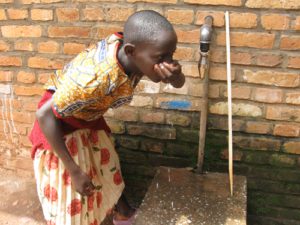
 Although progress is visible concerning poverty in Rwanda, with the poverty rate decreasing from 75.2% to 52% between 2000 and 2013, further action is necessary. The latest World Bank statistics from 2016 indicate that 52% of the country’s population still lives in poverty.
Three charities, in particular, are combating the effects of poverty in Rwanda.
GiveDirectly’s Cash Transfer Method
GiveDirectly, co-founded by Rohit Wanchoo, Michael Faye, Paul Niehaus and Jeremy Shapiro in 2008, is a charity that provides direct cash transfers to those living in poverty. This organization believes that people suffering from poverty understand how to address their problems better than any organization or government department ever could.
As a result, GiveDirectly avoids intervening with grand infrastructure projects or conditional aid packages. Instead, they place money directly into the pockets of those living below the poverty line in various countries, including Rwanda.
Poverty in Rwanda is a concern that GiveDirectly is committed to addressing, evident by 86,955 Rwandan households receiving cash from the charity.
Nsengiyumva received $412 from the organization, enabling her to buy land in a safer area, free from the risks of flooding. Here, GiveDirectly assisted those living in Rwandan poverty by relocating a family.
Tuyisenge is another success story. After receiving $415, he could repair the family home and save money to pay for his children’s school fees. This cash sum allowed him to secure his family’s future and potentially break the cycle of poverty in Rwanda.
Rwanda Action’s Bottom-up Approach
Rwanda Action, founded by David Chaplin in 2008, is a charity that collaborates with communities to deliver needed aid. Similar to GiveDirectly, Rwanda Action believes that those suffering from poverty know the assistance they require. Consequently, Rwanda Action does not adopt a ‘one size fits all’ aid policy. Instead, the organization employs a ‘bottom-up’ approach, ensuring that communities receive the help they genuinely need.
For example, after the 2008 earthquake, the visible effects of poverty in Rwanda were apparent as the natural disaster destroyed homes, displaced families and devastated farms, necessitating swift intervention.
Rwanda Action aimed to address the shelter need by constructing homes and rehousing over 50 families, preventing homelessness. In response to this crisis, 2000 families received training on improving crop yields through small-scale farming. This training enabled families to produce more food, saving funds that would have otherwise been spent on purchasing food. The increased disposable income empowered families to invest in school fees, housing and health care.
Increased crop yields could also combat chronic malnutrition, a severe issue in Rwanda, where a notable percentage of Rwandan children experience chronic malnutrition as of 2010, according to the World Health Organization.
Finally, Rwanda Action endeavors to tackle the problem of child homelessness, a brutal symptom of poverty in Rwanda, which sees 7,000 children living on the streets, ReliefWeb reported in 2021.
The organization established a center for street children named ‘aho Neza Mwana’, meaning a good life for children. The center provided short-term residential stays for 214 boys and a day program for 85 boys. These interventions play a pivotal role in supporting vulnerable children and removing them from harmful environments.
Children of Rwanda’s Sustainable Approach
Founded by Robbie MacMillan, Children of Rwanda is a charity that dismantles barriers preventing impoverished Rwandan children from accessing education. Enhancing education access is vital, given that Rwanda’s literacy rate stood at 76% as of 2021, according to the World Bank. Improving the literacy rate is only achievable through education, underscoring the significance of this organization’s work.
The most persistent barrier to overcome is cost, encompassing expenses related to uniforms, materials, school meals and exam fees.
To help keep up with the costs of education, Children of Rwanda equips families with the tools to increase their income independently. The sustainability displayed by this approach is essential, as it ensures that families do not become reliant on assistance and instead become independent as a result of this charity’s aid.
For instance, Children of Rwanda collaborates with parents to teach them farming techniques to generate a sustainable income.
The additional income enables parents to send their children to school, aiming to break the cycle of poverty in Rwanda. Completing school offers Rwandan children better job prospects and equips them with the knowledge to make decisions benefiting their well-being.
Children of Rwanda’s work is especially beneficial for gender equality, as women who complete their education gain a 15-20% increase in earnings for every year in education.
While Rwandan people across the country undoubtedly feel the impact of organizational work, work remains on the part of charities, international organizations and governments.
– Tom Eccles
Photo: Flickr

Food Insecurity in East Timor
Current State of Food Insecurity in East Timor
East Timor’s history is marred by conflict and political instability, which has had profound implications for its food systems. According to the Global Hunger Index (GHI) 2022, East Timor ranks 110th out of 121 countries, indicating a serious level of hunger. The GHI measures hunger on a scale from 0 to 100, with higher scores indicating more severe hunger. East Timor’s score of 30.6 places it in the category of “serious” hunger levels.
The challenges faced by East Timor in achieving food security are multifaceted. One crucial factor is the limited access to arable land. The country’s mountainous terrain and limited fertile areas make agricultural cultivation challenging. According to the U.N. Human Rights Office, only about 11% of East Timor’s total land area is suitable for agriculture, severely constraining the potential for increased food production.
Furthermore, extreme weather events pose a significant threat to food security in East Timor. The country is prone to cyclones such as El Niño, floods and droughts, which can lead to the destruction of crops and livestock, undermining farmers’ livelihoods and exacerbating hunger. Recently, the International Monetary Fund (IMF) estimates that the 2021 Cyclone Seroja in East Timor alone caused an economic loss of approximately 20 to 50% of the country’s GDP with total recovery costs of $422 million (25% of non-oil GDP).
Actions Addressing the Challenges
To address these challenges, the East Timorese government, with support from international organizations and NGOs, has implemented several initiatives. For instance, The World Bank’s Timor-Leste Agriculture Rehabilitation Project, launched in 2001, aims to improve the productivity and resilience of smallholder farmers by providing training, access to agricultural inputs and market linkages for the country post-independence.
Additionally, the United Nations Development Programme (UNDP) has been supporting the establishment of agricultural cooperatives in East Timor. These cooperatives enable small farmers to pool their resources, access credit and receive training in modern farming techniques, thus enhancing their productivity and income.
Infrastructure development is also crucial for improving food security. The Asian Development Bank (ADB) has been supporting East Timor in developing rural road networks and irrigation systems, totaling their investment of up to $210.83 million in irrigation and agricultural infrastructure. These investments are vital for facilitating the transportation of goods from rural areas to markets, reducing post-harvest losses and improving farmers’ access to inputs and services.
– Kent Anderson
Photo: Unsplash
Education Technology Solutions: Bridging the Global Education Gap
The Global Education Gap: EdTech as a Solution
According to UNESCO, more than 258 million children and youth were out of school in 2019. This figure represents a significant hindrance to global development, worsening both poverty and inequality. Therefore, bridging this gap is an urgent global priority that demands immediate and comprehensive interventions.
In response to this pressing need, EdTech has emerged as a potential game-changer for education across the globe. These technologies include an array of educational initiatives ranging from open online courses to interactive digital learning platforms. Not only do these platforms make learning more engaging and personalized, but they also hold the potential to make education more accessible. In overcoming physical, social and economic barriers, bridging the education gap becomes more attainable.
The Interplay of EdTech and Poverty Alleviation
Beyond its potential in education, EdTech is playing a crucial role in poverty reduction. When efficiently incorporated into educational systems, technology can empower individuals and communities, ultimately enabling social mobility. The World Bank affirms that EdTech can foster economic transformations by shifting toward knowledge-based models. These models are not only more sustainable but also foster equitable growth in the long run.
Ensuring Inclusive Adoption of EdTech
While the adoption of education technology is rapidly gaining momentum, it’s crucial to ensure that these advances do not inadvertently exacerbate existing inequalities. To maximize the potential benefits of EdTech, there is a pressing need for a coordinated, holistic approach. Governments, NGOs and private sectors must collaborate to ensure that these technologies are accessible and beneficial to all learners, preventing the emergence of a digital divide in education.
EdTech in Action
Taking the digital leap, programs like Samsung’s Smart Class are playing a pivotal role in rural India. Samsung India’s initiative provides classrooms with Wi-Fi and necessary training for teachers to effectively employ advanced digital tools like interactive Smartboards, laptops and tablets. The result is a noteworthy increase in student engagement and comfort with technology. On the African continent, two significant projects, BraceKids and Africa Code Week, are introducing coding to hundreds of thousands of children. These programs provide programming language workshops, equipping young minds with important digital skills for the future.
Efforts are also underway to promote diversity in tech education. Nonprofits like Rails Girls, founded in Finland, offer worldwide training in basic programming, sketching and prototyping to encourage women to engage with technology. Another example of this is with the Ministries of Education, which is exploring virtual reality (VR) for classrooms, globally. In Singapore, the Rails Girls is partnering with a local company to create virtual field trips, meant to supplement, not replace, traditional learning. Early results show students’ insights have improved with this tool. These initiatives exemplify the potential of EdTech in bridging the global education gap. By demonstrating how technology can help facilitate education and provide quality learning opportunities, these efforts shine a light on the path toward a more digitally inclusive educational future.
Education technology holds remarkable potential to bridge the global education gap and to fundamentally reshape the future of learning. However, the journey to realizing this vision is complex and requires meticulous planning and execution. Successfully rising to the challenge opens the path for EdTech to revolutionize the education landscape, extend learning opportunities to those previously left behind and make a significant contribution to global poverty alleviation efforts.
– Mari Caitlin Riggles
Photo: Flickr
4 African Artists Combating Poverty and Social Inequality
Africa plays host to a variety of cultures. With 54 countries on the continent and more than 1.4 billion inhabitants, there is a true diversity of tradition and lifestyle. The best way to portray culture is through art. As well as helping share cultural practices with the rest of the world, some have also utilized art to tackle stereotypes of African people and highlight injustices in certain communities. Here is a list of four African artists combating poverty and social inequality through their artistic talents.
4 African Artists Combating Poverty and Social Inequality
Art and Social Inequality
Despite the progress that these artists have made in combating poverty and social inequality, there remains a lot of work to do. The contribution of African artists to public discussion and debate is huge. Their work will continue to give many African people a voice and provide a platform to promote social change.
– Christian Vince
Photo: Flickr
How GiveDirectly Impacts Global Poverty
GiveDirectly directly provides cash-based assistance to those in need, eliminating the need for intermediaries, and thereby significantly impacting global poverty. Here is how GiveDirectly impacts global poverty.
About GiveDirectly
GiveDirectly is a nonprofit organization that originated in 2008 with a mission to grant people living in poverty greater autonomy over their financial decisions. By adopting this approach, the organization believes it restores dignity and enables recipients to allocate the cash where it deems it most valuable. The organization has been operational in several countries since 2009, including the DRC, Kenya, Liberia, Malawi, Mozambique, Morocco, Nigeria, Rwanda, Turkey, Uganda, the U.S. and Yemen.
Hurricane Fiona Response
While GiveDirectly primarily respects individuals’ autonomy in financial decisions, it also implements targeted programs focusing on specific issues such as emergency relief, climate and refugees. In 2022, the organization provided cash assistance to 4,748 low-income families from Puerto Rico and Florida affected by Hurricane Fiona, aiming to support those natural disasters impacted.
Natural disasters pose a severe threat to those already living in poverty. According to a World Bank study, such disasters push 26 million people into poverty each year, disproportionately affecting those with lower incomes. In the case of Puerto Rico, Hurricane Fiona struck just five years after Hurricane Maria, leaving little time for a stable recovery. The disaster exacerbated challenges, especially for those in rural areas, with around 760,000 people lacking access to water and 928,000 people without electricity.
GiveDirectly responded by distributing pre-loaded credit cards to Puerto Ricans in dire need of support. Utilizing revolutionary AI tools, the organization identified geographical areas requiring assistance and successfully ran simultaneous campaigns in 32 Puerto Rican municipalities.
Success Tracker
The success of the way GiveDirectly impacts global poverty is evident in the positive results it has achieved through its cash-based assistance programs. To date, the organization has directed an impressive $650 million worth of aid to people in poverty.
The nonprofit shares first-hand accounts from beneficiaries who have benefited from the cash transfers. For example, Milka, a Kenyan man, is just one of the many who have been receiving monthly transfers from GiveDirectly. When asked about the impact of the donations, he talks about how the money has allowed him to start a small-scale cereal company which has significantly reduced the burden of supporting his family.
Another Kenyan recipient, Nyevu, described how “the weight of financial uncertainty that had burdened me for so long was finally lifted” after he received his first payment. He used the funds to purchase a wooden door for his house, providing a sense of security. He further invested in four goats, which not only provide income but also serve as an investment for a dairy cow in the future.
Both examples show how important it is to leave decisions up to the individual as each person will have different methods of using the funds to help their lives.
These examples underscore the importance of empowering individuals to make their own decisions, as each person has different ways of utilizing the funds to improve their lives.
Validation of the Organization’s Approach
The organization’s approach has undergone thorough research and received validation, demonstrating the effectiveness of direct cash transfers. Three hundred studies have supported this method. The studies have been compiled to illustrate the most efficient ways of providing cash transfers and to debunk the misconception that “you can’t just give money to poor people.”
For example, a study on the impact of unconditional cash transfers on poor households in rural Kenya found that in less than two years, the households had sustained increases in assets, as well as many knock-on long-term impacts.
Looking Ahead
The way GiveDirectly impacts global poverty has occurred through a straightforward yet effective method. By restoring financial autonomy to those living in poverty, the organization plays a vital role in the fight against global poverty without imposing rigid assistance on those in need.
– Daisy How
Photo: Flickr
5 INITIATIVES EMPOWERING WOMEN IN NIGERIA
Women’s World Banking
Nigeria faces a significant financial inclusion gender gap, as only 35% of women and 55% of men in the country have access to financial services. Organizations like Women’s World Banking are at the forefront, implementing strategies to drive savings mobilization, leverage remittances for increased access, provide capital to women-owned enterprises and support resilience through insurance. With the help of Women’s World Banking efforts in Nigeria, the country has achieved a historic milestone with women holding the position of Chief Executive Officer in eight out of its 24 commercial banks in 2022. As women gain access to credit, savings and insurance products, they are better equipped to start businesses and improve their households’ economic stability.
Global Initiative for Girls’ Rights Education and Empowerment
Since its foundation in 2019, this NGO has been regularly implementing projects to promote education for Nigerian women and raise awareness about menstrual hygiene management. The organization’s achievements include empowering 100 rural women in Benue with skills in leadership, accounting and artisanal capabilities to improve their economic status and participation in decision-making in their homes and community.
The African Women Power Network
Through various initiatives such as pitch competitions for young entrepreneurs, agribusiness training for women farmers and the DREAM Initiative to help secondary school students develop business plans, the Association for Women in Business has become a leading platform for African women entrepreneurs, facilitating their business success and growth. Aiming to empower African women entrepreneurs by providing them with training and support, with a particular focus on technology, this organization envisions sustainable change through women empowerment.
Give Girls A Chance
This non-profit organization is dedicated to bridging the educational gap between men and women by addressing barriers such as limited access, low awareness of the significance of education and inadequate infrastructure in educational institutions. Their approach involves community and family engagement, providing need-based scholarships and offering mentorship programs. As of 2020, Give Girls A Chance has impacted the lives of more than 100 girls and young women through scholarships, enabling them to either return to or continue their education. Moreover, the organization has connected these beneficiaries with mentors who invest their time in nurturing their psychosocial well-being, fostering a supportive environment for their personal and educational growth.
The Nigerian Women Trust Fund
The proportion of women in elective and professional positions in Nigeria is currently at 4.8%. By 2027, the organization wants to realize the goal of achieving 35% female representation. Through endorsements, the creation of a database of high-profile female candidates and fundraising to support female political campaigns in Nigeria, they seek to achieve this valuable target. Further successful campaigns include the training of 100 Nigerian women in their mentorship program to foster female leadership and the end of violence against Women and Girls.
Looking Ahead
Empowering women in Nigeria is a powerful strategy in the battle against poverty. By increasing access to financial services, enhancing education opportunities, promoting women’s entrepreneurship and strengthening women’s leadership, these initiatives pave the way for a brighter and more equitable future for Nigeria. As women rise to their full potential, they become a driving force for sustainable development, lifting themselves and their communities out of poverty.
– Miriam Schuller
Photo: rawpixel
Fragility and Rule of Law in Myanmar
Out of 139 countries, the World Justice Project ranked Myanmar 128th concerning the rule of law in 2021. This was the same year Myanmar’s military junta had a coup against the democratic government. The military forces are creating a more brutal operating environment for those providing aid to the country, including NGOs and civil society organizations, by using legislation and bending the judicial system to their will. The situation in Myanmar challenges the foundational principle of the rule of law that no one is above the law.
In 2019, Mr. Nyan Lin Aung, Alternate Representative of the Republic of the Union of Myanmar, gave a statement at the United Nations General Assembly. He stated that the rule of law is a fundamental principle of democratic governance for the government of Myanmar. Just two years after this declaration, the military deposed the democratically elected government. This led to fragility and the rule of law in Myanmar collapsing.
Historical Background
Myanmar has dealt with decades of colonial rule, ethnic conflict, civil war and more in its troubled history. Since its independence from British colonial rule in 1948, it has tried establishing a representative democracy, but it only continued until 1962. General Ne Win led a military coup, followed by military rule in Myanmar for 26 years from 1962. In 1974, the government introduced a new constitution, centered around an isolationist foreign policy and a socialist economic program. According to data from 2017 from the Asian Development Bank (ADB), 24.8% of the population lives under the national poverty line. The new constitution had negative implications for the country’s economy. It leads to a drastic fall in currency value, corruption and food shortages that continue to impact the country. This led to an increase in poverty levels in the country, as seen by a fall in currency value.
In 2007, the military began loosening its control slightly due to the Saffron Revolution. The countrywide protests due to the hike in fuel prices were the trigger point. They led to the formation of a new constitution in 2008. This gave the military immense power despite being under civilian rule. The dissolution of the military junta in 2011 prompted the establishment of a civilian parliament and the first nationwide multiparty elections.
Understanding the Coup and its Effect on Fragility and Rule of Law
Despite the political system favoring the military due to the 2008 legislation, institutionally, the military was losing power under democratic reforms. The 2008 constitution allows for three main ministries, namely the Ministry of Defense, the Ministry of Border Affairs and the Ministry of Home Affairs, to be controlled by the military commander-in-chief, along with 25% of seats in the parliament reserved for military personnel. This reservation allows military personnel to dictate legislation in their favor.
So far, the military forces have tried to misuse their power through legislation, enabling them to misuse their power and oppress the country’s citizens. One such piece of legislation is the Organization Registration Law, also called the CSO Law. Under its provisions, registration is mandatory for all civil society organizations, NGOs and other associations. Also, these organizations cannot provide services to the opponents of the military junta. This has enabled the military to shut down the resistance movements rising after the coup.
The practices of the military government blatantly disregard the four main tenets of the rule of law. These include accountability, just law, open government and impartial justice. The tentative numbers show that the military takeover resulted in the deaths of around 3,000 people and the arrests of another 20,000. The people of Myanmar being cut off from humanitarian assistance mandated by international human rights laws due to the CSO Law was the reason for the fragility and rule of law in Myanmar collapsing.
Improving the Rule of Law Situation
Myanmar requires strong institutions to recover from the fragility of the justice system that the collapse of the rule of law created. To address the fragility and rule of law in Myanmar and support the transition to a democratic government, the U.S. is funding the Promoting the Rule of Law Project (PRLP). The U.S. Agency for International Development (USAID) has selected Tetra Tech as the implementing agency. The project aims to develop political reform, capacity building and ethnic reconciliation.
The major issues associated with the justice system are government corruption, limited resources and knowledge, political control of the judiciary, disregard for citizens’ rights and the rule of law. To resolve these issues, the PRLP called for an open dialogue between citizens and the government to build faith and credibility in the justice system. The PRLP began developing a draft justice sector comparative law and best practices compendium. It published a three-year strategic plan and a five-year strategy in a measure to restore trust among the citizens. This would work to transition into democracy smoothly.
Thus, it is evident that the rule of law cannot be maintained in a country without a strong and impartial judicial system backing it. The judiciary should uphold the values of impartiality, integrity, equality and diligence to ensure that all public and private individuals, institutions and entities, including the State itself, are accountable before the law to prevent the fall of democracy as observed in Myanmar.
– Anurima Deshmukh
Photo: Flickr
3 Charities Fighting Poverty in Rwanda
Three charities, in particular, are combating the effects of poverty in Rwanda.
GiveDirectly’s Cash Transfer Method
GiveDirectly, co-founded by Rohit Wanchoo, Michael Faye, Paul Niehaus and Jeremy Shapiro in 2008, is a charity that provides direct cash transfers to those living in poverty. This organization believes that people suffering from poverty understand how to address their problems better than any organization or government department ever could.
As a result, GiveDirectly avoids intervening with grand infrastructure projects or conditional aid packages. Instead, they place money directly into the pockets of those living below the poverty line in various countries, including Rwanda.
Poverty in Rwanda is a concern that GiveDirectly is committed to addressing, evident by 86,955 Rwandan households receiving cash from the charity.
Nsengiyumva received $412 from the organization, enabling her to buy land in a safer area, free from the risks of flooding. Here, GiveDirectly assisted those living in Rwandan poverty by relocating a family.
Tuyisenge is another success story. After receiving $415, he could repair the family home and save money to pay for his children’s school fees. This cash sum allowed him to secure his family’s future and potentially break the cycle of poverty in Rwanda.
Rwanda Action’s Bottom-up Approach
Rwanda Action, founded by David Chaplin in 2008, is a charity that collaborates with communities to deliver needed aid. Similar to GiveDirectly, Rwanda Action believes that those suffering from poverty know the assistance they require. Consequently, Rwanda Action does not adopt a ‘one size fits all’ aid policy. Instead, the organization employs a ‘bottom-up’ approach, ensuring that communities receive the help they genuinely need.
For example, after the 2008 earthquake, the visible effects of poverty in Rwanda were apparent as the natural disaster destroyed homes, displaced families and devastated farms, necessitating swift intervention.
Rwanda Action aimed to address the shelter need by constructing homes and rehousing over 50 families, preventing homelessness. In response to this crisis, 2000 families received training on improving crop yields through small-scale farming. This training enabled families to produce more food, saving funds that would have otherwise been spent on purchasing food. The increased disposable income empowered families to invest in school fees, housing and health care.
Increased crop yields could also combat chronic malnutrition, a severe issue in Rwanda, where a notable percentage of Rwandan children experience chronic malnutrition as of 2010, according to the World Health Organization.
Finally, Rwanda Action endeavors to tackle the problem of child homelessness, a brutal symptom of poverty in Rwanda, which sees 7,000 children living on the streets, ReliefWeb reported in 2021.
The organization established a center for street children named ‘aho Neza Mwana’, meaning a good life for children. The center provided short-term residential stays for 214 boys and a day program for 85 boys. These interventions play a pivotal role in supporting vulnerable children and removing them from harmful environments.
Children of Rwanda’s Sustainable Approach
Founded by Robbie MacMillan, Children of Rwanda is a charity that dismantles barriers preventing impoverished Rwandan children from accessing education. Enhancing education access is vital, given that Rwanda’s literacy rate stood at 76% as of 2021, according to the World Bank. Improving the literacy rate is only achievable through education, underscoring the significance of this organization’s work.
The most persistent barrier to overcome is cost, encompassing expenses related to uniforms, materials, school meals and exam fees.
To help keep up with the costs of education, Children of Rwanda equips families with the tools to increase their income independently. The sustainability displayed by this approach is essential, as it ensures that families do not become reliant on assistance and instead become independent as a result of this charity’s aid.
For instance, Children of Rwanda collaborates with parents to teach them farming techniques to generate a sustainable income.
The additional income enables parents to send their children to school, aiming to break the cycle of poverty in Rwanda. Completing school offers Rwandan children better job prospects and equips them with the knowledge to make decisions benefiting their well-being.
Children of Rwanda’s work is especially beneficial for gender equality, as women who complete their education gain a 15-20% increase in earnings for every year in education.
While Rwandan people across the country undoubtedly feel the impact of organizational work, work remains on the part of charities, international organizations and governments.
– Tom Eccles
Photo: Flickr
4 Ways Blockchain Technology Aids Poverty Alleviation in Nigeria
What is Blockchain technology?
Blockchain technology is a decentralized digital ledger that securely records transactions across multiple computers. It operates on a peer-to-peer network, where each transaction, or “block,” is linked to the previous one, forming an immutable chain. This technology ensures transparency, security and trust as all participants in the network have access to the same information, eliminating the need for intermediaries and enhancing efficiency.
4 Ways Blockchain Technology Helps Poverty Alleviation in Nigeria
A Positive Impact
Overall, Blockchain technology presents a transformative opportunity for Nigeria to alleviate poverty and achieve sustainable development. It’s a promise of progress that can boost the Nigerian economy by $29 billion by 2030. While it continues to evolve and demonstrate its potential, its impact on Nigeria’s development and poverty alleviation efforts can inspire other nations to explore and adopt similar solutions tailored to their specific contexts and challenges.
– Miriam Schuller
Photo: Pixabay
Improving Access to Technology and Information for Refugees
Refugees face numerous challenges upon arriving in Calais, a town in Northern France, as they attempt to cross into the U.K. According to the refugee charity, Care4Calais, most refugees are fleeing war-torn and impoverished countries like Afghanistan, Syria and South Sudan. However, the U.K. offers limited legal options for refugees to seek asylum. In response to this situation, an organization called Refugee Info Bus strives to enhance refugees’ access to technology and information in Calais, empowering them with knowledge about their rights and connecting them to family and local support organizations.
Where is Calais?
Calais, often referred to as the jungle, serves as a point of entry for migrants attempting to reach the U.K. It is located in Northern France, where hostile weather conditions and pervasive anti-immigrant sentiments contribute to challenging living conditions for the refugees. Although the French government demolished the central camp in Calais, smaller encampments persist in the region. Human Rights Watch reports that migrants frequently face eviction, harassment and confiscation of their belongings. Additionally, humanitarian assistance is constrained and limited, making it difficult for individuals to access basic necessities such as food, water and suitable shelter. In this trying environment, refugees urgently need support and guidance, and organizations like Refugee Info Bus play a crucial role in improving their access to technology and relevant information.
The conditions of the camps in Calais are rough, but many refugees struggle to leave the area safely. In 2021, 2,000 people lived in Calais according to the Human Rights Watch data. Refugees hoping to leave Calais struggle with the asylum process in the U.K.
Why is it Challenging for Migrants to Stay in the UK Legally?
The Nationality and Borders Act focuses on the use of unsafe routes to enter the U.K. According to the Refugee Council, the U.K. does not provide safer routes for refugees to receive asylum, so refugees often face penalties. Refugees often travel risky routes because they are fleeing violence, persecution and unsafe living conditions. Refugees often have no choice but to travel illegally without identity documents. Persecuted individuals are forced to leave their home country with nothing.
The U.K. issues visas to determine the legality of an individual’s stay in the country, but these visas remain inaccessible to refugees fleeing perilous circumstances and poverty. The lack of visas makes it exceedingly challenging for refugees to secure asylum. In this difficult landscape, Refugee Info Bus plays a critical role in providing support to these vulnerable migrants.
What Does Refugee Info Bus Do?
Refugee Info Bus originated in 2016 to help refugees in Calais connect with resources to help them receive asylum. Through its mobile bus, the organization provides Wifi, phone charging, phone repair, batteries and mobile phones.
According to the Refugee Info Bus website, “we facilitated over 10,000 Wi-Fi logins and delivered more than 1,000 workshops to 3,000+ individuals on the U.K. and French asylum systems as well as ‘’know your rights’’ workshops, following and during evictions.” The organization focuses on access to technology and information for refugees seeking asylum.
Refugee Info Bus, established in 2016, serves as a lifeline for refugees in Calais, connecting them with essential resources to aid their asylum process. The organization operates a mobile bus equipped with Wi-Fi, phone charging, repair services, batteries and mobile phones. Its efforts have facilitated more than 10,000 Wi-Fi logins and delivered more than 1,000 workshops to more than 3,000 individuals in the U.K. and French asylum systems, along with “know your rights” workshops, especially during evictions.
Additionally, the organization expanded its services to Greece in 2017, offering audio and video materials in multiple languages to help refugees navigate the intricate asylum process. These services have also extended to online platforms. “From 2018-2019, we created 40 videos that have been viewed 750k times in total, each video receives on average around 20 private messages or requests for further info or assistance.”
Looking Ahead
Refugees rely on the mobile bus to connect with their families and acquire knowledge about the asylum process. They access the internet, which is vital for staying connected to external support networks. Given the intricate nature of the asylum process and the legalities involved, being well-informed about their rights is crucial for refugees. The commendable work of Refugee Info Bus significantly improves access to technology and vital information for refugees residing in temporary and precarious circumstances.
– Ellie Bruce
Photo: Flickr
Elderly Poverty in Cuba
Elderly poverty in Cuba remains a significant concern as the country faces with economic challenges and limited resources. According to the World Bank, individuals aged 65 and above constituted 16% of Cuba’s population in 2021. Looking ahead, the National Office of Statistics and Information (ONEI) projected in 2016 that by the year 2030, 29% of the Cuban population will be aged 60 and above, while only 16.1% will be under the age of 15. This article delves into the impact of meager pensions and economic struggles on the elderly population in Cuba, emphasizing the need for sustainable solutions to alleviate their financial hardships.
Caring for the Elderly Becomes an Important Daily Commitment for Cuban Families
Caring for the elderly has become a crucial daily commitment for Cuban families as the elderly population continues to grow. The Cuban government has responded by assigning caregiving responsibilities to the family unit while preserving cultural traditions. The care of older people has become an important daily commitment for Cuban families.
However, to avoid the care of the elderly becoming an overwhelming family burden, these families receive relevant thematic education and community support. Changes in the structure and functioning of the Cuban family have significantly affected the economic, physical and psychological well-being of older people. Moreover, as the generation of Cuban baby boomers born in the 1960s enters the aging stage in the next decade, the sudden increase in the number of older people will impact the existing mechanisms of family solidarity in Cuba.
In 2021, Cuba’s old age dependency ratio (percentage of working-age population) reached 23%, highlighting the growing importance of taking care of the elderly and addressing elderly poverty in Cuban society.
Insufficient Pension Rates
The issue of insufficient pension rates is one of the key challenges contributing to elderly poverty in Cuba. Retired individuals in the country often receive pensions that fall short of meeting basic living expenses, leaving many elderly individuals in a precarious financial situation.
As of the end of 2022, the Ministry of Finance and Prices reported that 367,887 individuals were receiving social welfare benefits and there were 1,821,000 pensioners in Cuba. The minimum pension, which varies depending on the economic sector, is set at 1,528 pesos, equivalent to less than $10 USD in today’s currency. This limited amount makes it extremely challenging for older adults to cover even basic living expenses, let alone address other financial needs and maintain a decent standard of living. The Cuban Observatory for Human Rights presented a report in 2022 showing that 20% of surveyed adults aged 65 and above were able to access the necessary medicines they require. Additionally, 18% of the elderly were occupying houses that could potentially collapse, highlighting the precarious living conditions that a significant portion of the elderly population in Cuba faces.
Efforts to Fight Elderly Poverty in Cuba
In the context of the aging population, the Integral Program on Healthy Ageing is a project that the European Union and the Municipal Government. The Cuban Society of Gerontology and Geriatrics, a nongovernmental organization in Cuba, coordinates it. It started in January 2018 and the main goal of this project is to enhance the overall quality of life and well-being of the elderly residents in the targeted municipality.
The Integral Program on Healthy Ageing, a project that the European Union and the Municipal Government funded, plays a crucial role. The Cuban Society of Gerontology and Geriatrics, a nongovernmental organization in Cuba, coordinates the project with the main goal of enhancing the overall quality of life and well-being of elderly residents in the targeted municipality. The project adopts an integrated care approach encompassing all environments where individuals grow older, necessitating coordinated efforts at the micro (clinical), meso (service delivery) and macro (system) levels.
Furthermore, the Community Care Program and the National Program for the Comprehensive Care of the Elderly have led to the establishment of Casas del adulto mayor (Houses of the Elderly). These daycare facilities serve as an integrated approach to address the intersection of health and social care for isolated elderly individuals. Over the past decade, there has been an increase in the number of Casas del Adulto mayor, with a growth rate of 37%. In 2005, there were 201 facilities and by 2016, this number had risen to 276.
While the challenge of elderly poverty in Cuba persists, ongoing initiatives demonstrate a dedication to creating a more inclusive and supportive environment for the elderly, with the ultimate goal of reducing poverty and enhancing their overall well-being.
– Yizhi Cao
Photo: Flickr