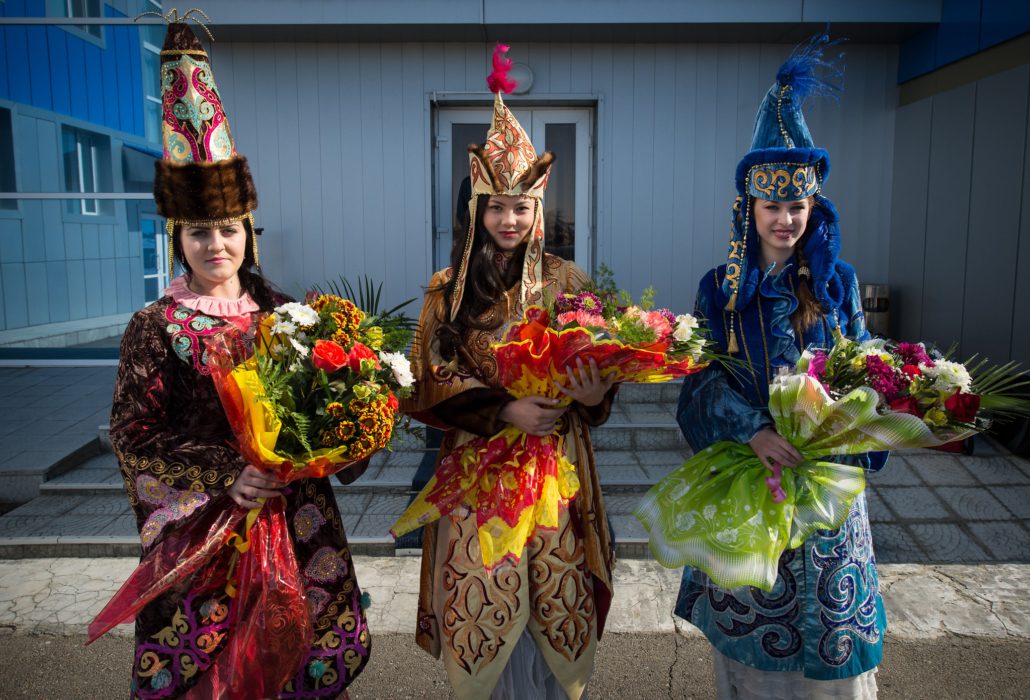
Women’s rights in Kazakhstan have been an uphill climb within the country. Moreover, Kazakhstan’s poverty rates appear to be linked to gender inequality. In 2020, the unemployment rate of women was 5.4%, whereas it was only 4.4% for men. This contrast shows how focusing on women’s rights could ease the country’s overall poverty rate.
Kazakhstan is the largest landlocked country, with immense economic potential due to the vast mineral resources in its landscape. The country has seen widespread economic growth since the 1991 collapse of the Soviet Union, as it is a former Soviet republic.
Kazakhstan has also managed to maintain a low poverty rate of 5.2% in 2021. However, this is a slight increase, as the poverty rate was 4.3% in 2019.
This increased poverty rate is likely a consequence of the COVID-19 pandemic. However, strengthening women’s rights in Kazakhstan has proven to enrich the country’s economy through technology and the job market.
Notably, Kazakhstan is a pacesetter for Central Asian female equality on some fronts. Kazakhstan ranked 65th in the Global Gender Gap Report 2022, with its neighboring countries, Mongolia and China, ranking 70th and 102nd. With this in mind, here are three ways women’s rights in Kazakhstan are developing, and how they are alleviating Kazakh poverty.
Job Opportunities
As of 2022, a gender wage gap of 21.7% still favors men in Kazakhstan. However, this gap has been gradually reducing. A study in 2006 revealed a wage gap of about 40%.
While there has been improvement, the persisting gender wage gap can be attributed to a societal perception that men should primarily be the household breadwinners. A 2022 Central Asia survey highlighted that two-thirds of participants held the belief that women should prioritize domestic roles over work.
The COVID-19 pandemic disproportionately impacted the female workforce. Between 2019 and 2020, the Kazakh male labor force participation rate rose from 74.8% to 75.5%. However, the Kazakh female labor force participation rate dropped from 66% to 63.7%. Although female employment rates are increasing, a 10% disparity remains between men and women.
To tackle this, NGOs such as the Wonder Foundation operate in Kazakhstan to provide women and girls with skills to seek employment. Since 2015, the Wonder Foundation has directly impacted 406 girls.
The Foundation supports the Kumbel Training Centre, a program that focuses on girls from rural areas. Participants undergo a 10-month training to assist them in finding employment in hospitality, tourism and catering.
Legislation
Gender equality has been a priority of the Kazakh government in recent decades. In 1998 the country established the National Commission on Women, Family and Demographic Policy. The commission pushes for equal economic opportunities for women, strengthening the family unit and combating violence against women.
More recently, the Concept of Family and Gender Policy until 2030 aims to increase the number of women in decision-making roles to 30% by 2030. In 2022, it was 25%.
Legislation such as this combats poverty in Kazakhstan because it aims to balance domestic responsibilities within the household. Currently, women spend three times more than men undertaking unpaid domestic roles.
Technology
In June 2023, Kazakhstan was the chair of the Dialogue of Women of Central Asia. The platform focused on female roles in technology. Events like this promote the increasing integration of Central Asian women into the labor force.
Speaker of the lower house of the Kazakh government, Yerlan Koshanow, noted: “Women in Central Asia are actively involved in the development of information and communication technologies, leaving no stone unturned in the stereotypical perception that it is not a woman’s job.”
The Womentech Network is mobilizing female ambassadors all over the globe, including Kazakhstan. Ainur Abilbayeva, Dana Aubakirova and Laura Tlepina are among the Kazakh representatives. The program aims to connect more than 100,000 women globally in their annual global conference supporting female tech spaces.
In an incredibly fast-paced and technological society, it is crucial women possess digital literacy skills. These skills provide opportunities for women within the job market, which reduces Kazakhstan’s poverty rate. Kazakhstan is making positive strides in this field, with the internet access rate for women being 84.9% in 2022. Yet, the country has an added challenge due to its varying landscapes. More rural areas have limited internet access which can hinder this progression. Women make up over half of the rural population.
The Accessible Internet National Project aims to give all Kazakhstan residents internet of at least 100 Mbit/s, covering 3,000 villages. In addition, a new 5G is going to be implemented in many cities and regional centers. In the next few years, this scheme will greatly increase Kazakh digital literacy, subsequently providing opportunities for all. This will particularly benefit the dense female populations in rural areas.
Providing Kazakh women and girls with transferable skills, alongside the support of NGOs and the government, will reduce overall poverty in Kazakhstan. Women have a greater chance of facing poverty than men due to disparities in employment and opportunities. Thus, career prospects, legislation and digital literacy for women are three ways women’s rights in Kazakhstan are tackling poverty.
– Beth Brown
Photo: Flickr

Mental Health in Zambia: 5 Facts
5 Facts About Mental Health in Zambia
Governmental Efforts
The country’s government has been working to implement new mental health resources. In 2019, the Mental Health Act was enacted with the goal of improving and upholding the rights and livelihoods of people living with mental illness. The act also calls for the establishment of a Mental Health Council in the country and to provide mental health treatment to those residing in prisons. In addition, The act repealed the 1949 Mental Disorders Act, which used outdated language to categorize those with mental disorders.
– Emma Glas
Photo: Flickr
Disability and Poverty in Puerto Rico
The Price of Poverty
There are six categorizations for disabilities: hearing, visual, cognitive, ambulatory, self-care and independent living.
According to the 2017 Disability Status Report on Puerto Rico, individuals with cognitive disabilities have the most prevalent poverty rate of 58.2%. However, despite having the lowest poverty rate for PWD, visual disabilities still result in a 52.2% rate. While the poverty rate has decreased slightly, dropping to just below 50% in 2022, there is still a concerning link between disability and poverty in Puerto Rico.
Explanations for the levels of poverty in Puerto Rico
First, there are minimal job opportunities available for PWD in Puerto Rico. In 2022, the National Council on Disability noted that only about 23.7% of Puerto Ricans with disabilities play an active role in the workforce. This is a significant contrast to the 36% of PWD in the U.S.
Second, disability accommodations are costly. The NCD found that “the cost of specialized [durable medical equipment] was 11% to 58% higher in Puerto Rico versus the [U.S.].” As of the 2021 U.S. Census Bureau, Puerto Rico’s annual income per capita is approximately $14,000, making it a massive financial burden to pay for expensive equipment like electric wheelchairs.
In the mainland U.S., citizens can qualify for supplemental income and financial assistance if they have a disability and/or fall below the annual income threshold. Despite being a U.S. territory, Puerto Ricans are not entitled to these same benefits.
For example, the Supplemental Nutrition Assistance Program, formerly colloquially known as “food stamps,” is not available in Puerto Rico. Instead, the territory is allocated a block grant, which has not been adjusted for inflation or unforeseeable disasters.
In addition, an April 2022 U.S. Supreme Court decision officially excluded Puerto Ricans from the federal Supplemental Security Income program (SSI). SSI provides direct financial assistance to low-income U.S. citizens with disabilities. This vote further entrenches the exclusion and marginalization of Puerto Ricans with disabilities.
Progress Toward Equality
In lieu of SSI, the government allocates funds to the Aid to the Aged, Blind, and Disabled (AABD) program. AABD’s supplemental assistance aims to meet the basic, daily needs of PWD in Puerto Rico. To receive this aid, individuals have to endure a “physical or mental impairment that will likely not improve and which prevents them from performing their previous job or any other paid work” and own less than $2,000 in total assets.
The Division of Human Development and Disability (DHDD) also provides early diagnosis and intervention services to aid children with disabilities throughout their development. One example of DHDD projects is the Early Hearing Detection and Intervention (EHDI) programs. EDHIs work to examine a child’s risk for hearing loss and ensure an appropriate diagnosis and accommodations are put in place.
While these services show a commitment to aiding PWDs in Puerto Rico, assistance programs such as the AABD are limited. The funding is meager and split between adult assistance, foster care and adoption assistance. Instead of the $750 for an SSI recipient, AABD participants only receive $75. Therefore, more comprehensive efforts are necessary to alleviate the impact of disability and poverty in Puerto Rico.
Despite challenges, there are gradual improvements in living conditions for Puerto Ricans with disabilities. Overall, the ongoing efforts of both the U.S. and Puerto Rico hold the potential to reduce poverty and enhance the quality of life for Puerto Ricans.
– Katrina Girod
Photo: Pixabay
Kellogg’s Helps Smallholder Farms Reduce Poverty
KELLOGG’S ORIGINS™ Pledge
Fundamentally, Kellogg’s helps smallholder farms by building partnerships to support their climatic, social and economic resiliency. Its goal by 2030 is to reach 1 million farmers, including smallholders and women. As of 2020, Kellogg’s had reached 440,000 farmers around the world. Kellogg’s has constructed more than 40 ORIGINS™ projects globally. For example, Kellogg’s is helping smallholder farms in Ecuador with projects in Cocoa Training and Development. This project’s aim is to diversify the crops grown with the supplier, Olam, and to educate more than 3,000 farmers about pesticides. This would enable diverse crop growth and new income streams for farmers whose initiatives align with the specific contexts and aspirations of the communities they serve.
Building Farmer Resilience to Climate Change
The company also promotes the use of sustainable farming techniques, such as crop rotation and water conservation, to improve soil health and mitigate environmental impacts. By pushing farmers to adapt to climate change, Kellogg’s is aiding poverty reduction. In 2022, Kellogg’s helped smallholder farms through their partnership with Enveritas, a nonprofit that verifies supply chains for multinational food companies, focusing on hard-to-reach smallholder supply chains in cocoa and coffee. Enveritas addressed that approximately 40% of Kellogg’s Cocoa source originates from Cote d’Ivoire, which gives insight into procedure footprints and the ability to address salient issues such as deforestation and potential interventions to aid smallholders from the climate crisis.
Continuing into 2023, Enveritas supports Kellogg’s in creating a work plan to further its responsible sourcing goals.
Fair Trade
Kellogg’s is helping smallholder farmers additionally through its use of Fair Trade ethical operations. Within farming communities, Kellogg’s helps smallholder farms by ensuring that farmers receive fair compensation for their produce, leading to increased income and improved livelihoods. This empowerment enables farmers to invest in better agricultural practices, education and health, contributing to long-term poverty reduction and sustainable development.
Curbing Hunger
As well as aiding the farmers with training and fair pay, Kellogg’s also partners with food banks, these drives limit hunger to reduce the effects of poverty in South Africa. For instance, in South Africa, the Kellogg’s® Better Days project feeds people in desperate need. Among South African children, 11% (approximately 2.1 million) lived in households that reported experiencing hunger, while 30% of children in households without hunger were categorized as living below the poverty line. Kellogg’s partnership with the Kolisi Foundation means that they are able to provide 4,000 meals in the Eastern Cape.
Kellogg’s steadfast commitment through its work in sustainable sourcing, partnerships with local organizations, climate resilience initiatives and fair trade practices prove that Kellogg’s has made significant strides in the fight against poverty. Its strong consideration of its farmers suggests that there is hope for reducing poverty for farmers globally.
– April Plenderleith
Photo: Flickr
3 Ways Women’s Rights in Kazakhstan are Tackling Poverty
Women’s rights in Kazakhstan have been an uphill climb within the country. Moreover, Kazakhstan’s poverty rates appear to be linked to gender inequality. In 2020, the unemployment rate of women was 5.4%, whereas it was only 4.4% for men. This contrast shows how focusing on women’s rights could ease the country’s overall poverty rate.
Kazakhstan is the largest landlocked country, with immense economic potential due to the vast mineral resources in its landscape. The country has seen widespread economic growth since the 1991 collapse of the Soviet Union, as it is a former Soviet republic.
Kazakhstan has also managed to maintain a low poverty rate of 5.2% in 2021. However, this is a slight increase, as the poverty rate was 4.3% in 2019.
This increased poverty rate is likely a consequence of the COVID-19 pandemic. However, strengthening women’s rights in Kazakhstan has proven to enrich the country’s economy through technology and the job market.
Notably, Kazakhstan is a pacesetter for Central Asian female equality on some fronts. Kazakhstan ranked 65th in the Global Gender Gap Report 2022, with its neighboring countries, Mongolia and China, ranking 70th and 102nd. With this in mind, here are three ways women’s rights in Kazakhstan are developing, and how they are alleviating Kazakh poverty.
Job Opportunities
As of 2022, a gender wage gap of 21.7% still favors men in Kazakhstan. However, this gap has been gradually reducing. A study in 2006 revealed a wage gap of about 40%.
While there has been improvement, the persisting gender wage gap can be attributed to a societal perception that men should primarily be the household breadwinners. A 2022 Central Asia survey highlighted that two-thirds of participants held the belief that women should prioritize domestic roles over work.
The COVID-19 pandemic disproportionately impacted the female workforce. Between 2019 and 2020, the Kazakh male labor force participation rate rose from 74.8% to 75.5%. However, the Kazakh female labor force participation rate dropped from 66% to 63.7%. Although female employment rates are increasing, a 10% disparity remains between men and women.
To tackle this, NGOs such as the Wonder Foundation operate in Kazakhstan to provide women and girls with skills to seek employment. Since 2015, the Wonder Foundation has directly impacted 406 girls.
The Foundation supports the Kumbel Training Centre, a program that focuses on girls from rural areas. Participants undergo a 10-month training to assist them in finding employment in hospitality, tourism and catering.
Legislation
Gender equality has been a priority of the Kazakh government in recent decades. In 1998 the country established the National Commission on Women, Family and Demographic Policy. The commission pushes for equal economic opportunities for women, strengthening the family unit and combating violence against women.
More recently, the Concept of Family and Gender Policy until 2030 aims to increase the number of women in decision-making roles to 30% by 2030. In 2022, it was 25%.
Legislation such as this combats poverty in Kazakhstan because it aims to balance domestic responsibilities within the household. Currently, women spend three times more than men undertaking unpaid domestic roles.
Technology
In June 2023, Kazakhstan was the chair of the Dialogue of Women of Central Asia. The platform focused on female roles in technology. Events like this promote the increasing integration of Central Asian women into the labor force.
Speaker of the lower house of the Kazakh government, Yerlan Koshanow, noted: “Women in Central Asia are actively involved in the development of information and communication technologies, leaving no stone unturned in the stereotypical perception that it is not a woman’s job.”
The Womentech Network is mobilizing female ambassadors all over the globe, including Kazakhstan. Ainur Abilbayeva, Dana Aubakirova and Laura Tlepina are among the Kazakh representatives. The program aims to connect more than 100,000 women globally in their annual global conference supporting female tech spaces.
In an incredibly fast-paced and technological society, it is crucial women possess digital literacy skills. These skills provide opportunities for women within the job market, which reduces Kazakhstan’s poverty rate. Kazakhstan is making positive strides in this field, with the internet access rate for women being 84.9% in 2022. Yet, the country has an added challenge due to its varying landscapes. More rural areas have limited internet access which can hinder this progression. Women make up over half of the rural population.
The Accessible Internet National Project aims to give all Kazakhstan residents internet of at least 100 Mbit/s, covering 3,000 villages. In addition, a new 5G is going to be implemented in many cities and regional centers. In the next few years, this scheme will greatly increase Kazakh digital literacy, subsequently providing opportunities for all. This will particularly benefit the dense female populations in rural areas.
Providing Kazakh women and girls with transferable skills, alongside the support of NGOs and the government, will reduce overall poverty in Kazakhstan. Women have a greater chance of facing poverty than men due to disparities in employment and opportunities. Thus, career prospects, legislation and digital literacy for women are three ways women’s rights in Kazakhstan are tackling poverty.
– Beth Brown
Photo: Flickr
Shifting Towards Renewable Energy in the Maldives
In the past five years, the Maldives has produced positive economic and human development outcomes. The poverty rate decreased from 3.9% in 2019 to an estimated 2.1% in 2023. Tourism, which makes up 28% of the Maldivian GDP, can be credited for this decrease in poverty. However, only about half of the Maldivian islands are tourist islands, meaning many rural islands still face developmental struggles.
Due to the size and geography of the Maldives, the islands lack the resources needed to develop new industries. The Maldives relies on importation for resources, such as energy and electricity. In 2021, the Maldives imported $553 million worth of refined petroleum. Energy imports are successful in powering the main Maldivian industries, such as tourism, fishing and sea transportation, but they come at a high cost for the Maldivian government and remain less accessible and affordable for rural islands. To combat this obstacle, the Maldives is implementing renewable energy sources — predominantly solar-powered energy. Renewable energy in the Maldives is now providing more affordable electricity, protection for current industries and potential for economic development.
Fossil Fuel Availability in the Maldives
Out of the 199 inhabited Maldivian islands, 197 islands receive electricity. Despite the wide physical reach of electricity, the quality and affordability of electricity differs greatly between more urban areas, like Malé, and the rural outer islands. Unlike Malé, the outer islands do not receive direct access to imported petroleum. While Malé receives power from state-owned electricity, the outer islands must purchase diesel from private resellers who apply a markup to diesel prices. Due to this, only 82 islands have 24-hour access to electricity, while others may have as little as five hours of electricity a day. This discrepancy in accessibility offers outer islands limited methods of income growth and economic development. Instead, rural islands remain reliant on electricity-free industries like small-scale fishing.
Additionally, the predominance of fossil fuel energy depletes the few natural resources that Maldivian islands do have. A previously used form of renewable energy in the Maldives is biomass energy, such as wood and agricultural residue. However, rising sea levels, which are strongly correlated to the use of fossil fuels, are depleting these resources. Rising sea levels and changing weather patterns are also reducing access to fresh water due to longer dry seasons and are raising concerns for tourism and fishery as both industries take place within 100 meters of the coastline. Renewable energy in the Maldives offers the potential for more accessible and affordable energy to all Maldivian islands, without any environmental consequences.
Implementing Renewable Energy in the Maldives
In 2022, the Asian Development Bank (ADB) financed the Preparing Outer Islands for Sustainable Energy Development (POISED) Project, which has helped increase renewable energy in the Maldives. The project installed a photovoltaic hybrid energy system, which harnesses both solar and wind power, in more than 70 outer islands in the Maldives. These installations have been aided by private investment, encouraged by the World Bank’s ASPIRE project. The ASPIRE project has mobilized $9.3 million in investment and provided the Maldivian government with technical assistance to install 6.5 megawatts of solar power in the Maldives.
The ADB plans to continue this approach by installing another 20 megawatts of solar power through private investment. Other private groups are going a step further to determine how renewable energy can best be implemented while taking rising sea levels into consideration. Since 2009, Swimsol has been creating floating solar-powered energy banks to overcome land limitations. Additionally, their solar-powered energy is less expensive than diesel-powered electricity, making it an affordable option for those living in rural islands.
Looking Ahead
Through collaborative efforts involving the Maldivian government, NGOs and private investors, renewable energy is gaining traction in the Maldives. As these initiatives progress and receive additional support, the islands of Maldives are poised to reduce their dependence on fossil fuel imports and embrace locally generated electricity from solar and wind-powered sources. This transition to renewable energy will not only grant all Maldivian islands improved electricity access but also foster healthier lifestyles while unlocking possibilities for industrial advancement and economic growth.
– Aliya French
Photo: Flickr
The Impact of Organized Crime Syndicates on Poverty in Romania
After coming out of being ruled under a dictatorship for decades, Romania is still enduring political instability. Although more than 30 years have passed since the end of Nicolae Ceausescu’s rule, the nation is still struggling to find its footing, with the combination of widespread corruption and powerful organized crime syndicates leading to rampant poverty.
Effects of Corruption on the Romanian People
Since assuming office in December 2014, President Klaus Iohannis has had 13 different Prime Ministers and corruption has wormed its way into every aspect of Romanian society.
This volatility has made it difficult for the nation to recover from the damaging economic policies of Ceausescu. This instability has contributed to about 22% of the Romanian population living below the national poverty line in 2020, according to World Bank data.
How Criminal Syndicates Prey on Poorer Communities
In an interview with The Borgen Project, Serious Organized Crime Coordinator for Central and Southern Europe Richard Calver explained how organized criminal syndicates capitalize on poverty; “When political instability and grand corruption result in failing state services, organized crime groups will establish illicit economies.” These economies will undoubtedly target the poorest in society and exacerbate the issues they are facing by driving them toward crime and away from the possibility of support.
Calver elaborated on this describing how, “over time these established criminal dynamics can become culturally ingrained in poorer communities, further isolating them from state protection and perpetuating an acceptance of exploitation.” The venality in these communities also provides prime recruitment grounds for the syndicates responsible for the corruption in the first place.
Patrick Winn explains in his book “Hello, Shadowlands,” how widespread corruption inevitably forces politicians to turn to crime and pushes individuals into a state where they have to choose if they want to become predator or prey. If the government and law enforcement are in league with criminal persecutors, finding a foothold in the underworld can often seem like the only way to survive.
Unfortunately, criminality is not just prevalent among the residents of these poorer communities, corruption spreads through all levels of Romanian society. The crime syndicates strive hard to preserve this status quo since these poor areas are a lucrative source of money for them. The consequence of this is widespread bribery, corruption, violence and those in power overlooking the plight of the Romanian people.
According to the Corruption Perceptions Index that Transparency International released in 2021, Romania scored 45 out of 100, making it the second most corrupt nation in the European Union. These factors create a vicious cycle as the instability, poverty and organized crime all feed off each other and make it extremely difficult for the nation’s economic issues to be resolved.
The Search for a Solution
Calver speaks of the vital role understanding plays in solving these situations, stating, “When considering initiatives to tackle poverty, consideration must be given to understand the vested interests of criminal actors who profit from the suffering of others.” A large part of Calver’s work involves developing this understanding. His time in Romania and the hard work of his team promise to help both Western governments and humanitarian organizations address the issues the Romanian people face in a more effective manner.
One of the humanitarian organizations working to improve the quality of life for impoverished people in Romania is Habitat for Humanity. Habit for Humanity began working in Romania in 1996 to address housing poverty, particularly in rural areas where people “live in cramped and decaying apartments in condominium complexes,” according to its website. Its work involves constructing and renovating homes for low-income families throughout the country. Habit for Humanity’s building rehabilitation work targets low-income households living in dilapidated communist-era apartment blocks. In 2018 alone, the organization served 280 people in Romania through housing initiatives.
Calver and his team along with the international community and humanitarian organizations like Habitat for Humanity aim to improve the quality of life of Romanians amid corruption and the presence of organized crime syndicates. Despite the difficulties the nation’s people face, with an understanding of the intricacies of issues at play, there appears to be hope for change.
– Henry Tuppen
Photo: Flickr
India’s Railway Crash And The Risks Of Modernization
India’s railway crash which occurred in India’s eastern state of Odisha on June 2, 2023, was a tragic accident, one of the worst in the country’s recent history. However, as many have pointed out, it is one of many accidents. Indian citizens and external organizations alike are criticizing Prime Minister Narendra Modi for his seeming prioritization of speeding up India’s modernization over the safety of workers carrying out the modernization. This elicits wonder as to what position India’s railway system occupies in the country’s path to zero poverty and how authorities can better manage it and ensure it does not become a source of harm in the fight against poverty.
India’s Railway System
India boasts the fourth largest railway system in the world, having built more than 68,000 km of track. More than 24 million people use the railway system every single day and the system transports nearly 204 million tonnes of freight throughout the world’s seventh-largest country. It began in 1954 and is also one of the oldest systems in the world. The Indian government manages this huge, sprawling network of trains and passengers under the company Indian Railways.
Indian Railways is therefore the second-largest employer in India after the Indian Armed Forces and the seventh-largest employer in the world. Under the state, 1.4 million people earn a living while contributing to the economic activity of India, allowing business owners who depend on train transport to make a stable income.
As such, the Indian railway system is a symbol of India’s modernization. The network hosts the world’s tallest railway bridge, which will open to visitors in late 2023/early 2024. It has also developed a High-Speed Rail Track system using Japanese bullet train technology. These advancements are displays of the increasing wealth of the Indian economy as well as indicators of how India is using the whopping $30 billion budget for train development at the moment. From these statistics alone, it seems that India is witnessing a decrease in poverty levels.
The Consequences of the Crash
The events of June 2 in Odisha threw the pace and stability of such rapid modernization and poverty alleviation into question. On the day, two passenger trains carrying more than 3,000 travelers and a freight train collided near Bahanaga Bazar station.
Furthermore, due to the lack of clarity surrounding the official cause of India’s railway crash, many eyes are turning toward India’s Automatic Train Protection (ATP) system, called Kavach. Kavach emerged in March 2022 and boasted advanced elements like an automatic brake application, aids to improve visibility in unfavorable conditions and communication and SOS response systems in cases of emergency. Yet, Kavach either did not undergo development or failed to work adequately in the trains that were in the Odisha railway crash.
While this is all hearsay at the moment, the severity of the crash has put the safety of the Indian railway system into focus, in contrast to the newness of Kavach and the billions that PM Modi spent on modernizing Indian Railways. The Guardian, for example, stressed the increase of Indian rail accidents by 37% in 2022 despite Kavach’s introduction and stated that “safety remains the biggest problem for the Indian railways.”
Moving Forward After India’s Railway Crash
Kavach is a great idea for ensuring the safety of all those who work for Indian Railways and the millions of ordinary people using its services on a daily basis. However, it could be beneficial to employ human safety managers alongside this advanced technology, as such a move would also increase the number of jobs available in the Indian labor market.
Having people specialize in monitoring and operating Kavach would unleash the full potential of this safety mechanism and the overall capacity of the railway system in India to carry the country out of unemployment and poverty. The loss of talented lives, the stress on medical services and the damage to the reputation and credibility that a crash like the one in Odisha has caused could be repaired in the long run. All in all, there appears to be a need for Indian Railways to combine the human and mechanical potential to prioritize the safety of its services.
– Tiffany Chan
Photo: Flickr
USAID Programs in Burkina Faso
Agriculture and Food Security
Agriculture plays a massive role in the Burkinabè economy, with the sector being responsible for the income of 80% of the population. Despite this, food insecurity is high. The WFP estimates that over 3 million people face acute food insecurity, which is why USAID programs in the country work to improve agriculture production and access to food in the country.
In the fiscal year 2021, USAID provided over $11 million for agriculture and food security programs in Burkina Faso. Regarding agriculture, one of the areas of focus for USAID programs is increasing the production of food by educating farmers on better agricultural practices. In addition, by strengthening the stability of markets and providing microloans, the U.S. helps Burkinabè farmers have more stable, financially viable agriculture businesses.
Due to the high levels of food insecurity, USAID programs in Burkina Faso addressing this issue are essential. By way of USAID’s Office of Food for Peace (FFP), the agency works with the World Food Programme to donate food to hundreds of thousands of people. FFP also partners with other agencies working in the country. For example, in 2018, together with ACDI/VOCA, FFP pledged $50 million in food assistance and resilience building for particularly vulnerable families in Burkina Faso’s Centre-North region.
Democracy and Human Rights
Burkina Faso saw the democratically elected leader of the country ousted in 2022, in a blow to the country’s democratic transition. USAID programs in Burkina Faso remain committed to supporting democracy — for example, through the training of independent election officials and organizing conferences on democratic governance.
USAID programs in Burkina Faso also support those institutions in the country that monitor human rights violations and ensure victims of human rights violations are able to access justice.
Health
Like many impoverished countries, Burkina Faso faces a number of challenges in the health sector, so USAID programs in Burkina Faso that work towards improving the health of the population are of high importance.
The main health issue concerning Burkina Faso is the prevalence of malaria. The disease, which has been eradicated in many wealthy countries, is the main cause of death for children under the age of 5 in the country, according to UNICEF, and USAID reports that nearly 20,000 people were killed by malaria in Burkina Faso in 2020 alone. This number can be seen as the reason why USAID provided $128.5 million for the fight against malaria in Burkina Faso between 2017 and 2022. Malaria prevention infrastructure, diagnostic tests and medication are all funded by USAID programs in Burkina Faso, highlighting the broad approach aid is taking to fight the disease. For the future, a new, effective Malaria vaccine looks promising, and USAID programs are likely to fund vaccine distributions should a vaccine become broadly usable.
While malaria may be the main health issue facing Burkina Faso, the country also requires support in fighting HIV/AIDS. Regarding this illness, international efforts including those of USAID appear to be bearing fruit as the number of HIV/AIDS-related deaths has steadily declined since the early 1990s.
Humanitarian Assistance
A significant portion of USAID programs in Burkina Faso is focused on the provision of humanitarian assistance. The country has seen multiple humanitarian crises in the past years, due to crop failures, domestic armed conflict and natural disasters. As a consequence of these crises, the Internal Displacement Monitoring Centre estimates that as of 2022, around 2.2 million people were internally displaced in Burkina Faso. By way of its Bureau of Humanitarian Assistance, USAID provided $54.4 million in humanitarian aid to the country in the fiscal year 2021 alone.
Water and Sanitation
UNICEF estimates that in 2021, 2.4 million people in Burkina Faso lacked access to safe water. This is why USAID programs in Burkina Faso improving the water and sanitation circumstances have a high priority. Within this area, USAID has a broad field of programs to improve the lives of Burkinabè. Concrete actions by USAID include the improvement and establishment of water points, the monitoring of groundwater and water systems infrastructure as well as the provision of tools and education enabling communities and health care providers to access safer water.
Looking Ahead
The challenges faced by Burkina Faso are great, and poverty remains widespread in the country. USAID programs in Burkina Faso will need to continue providing support for the foreseeable future if the lives of Burkinabè are to be improved. The announcement of additional aid by the U.S. in the last two years to West Africa may be a sign that USAID will further expand its programs in the country and spells hope for those in need in Burkina Faso.
– Patrick Brownlow
Photo: Flickr
Eliminating TB in India
However, this is no easy feat to accomplish for India. Poor sanitation and crowded areas greatly increase the risk of transmission — a harsh reality for India with 1.4 billion people and 1/10 living below the poverty line. Furthermore, a lack of stable infrastructure, awareness and accessibility add barriers to reducing TB. To combat these poor environmental factors the Indian government has developed a myriad of programs to improve TB outcomes.
Panchayat Initiative
The goal of the Panchayat (a village council) Initiative is to tackle TB on a small-scale village level. By working with local governments the initiative has elevated TB awareness, care and prevention in more than 500,000 villages. This was accomplished by creating TB units that covered five villages each and had members inform residents about TB identification, early diagnosis and treatment.
Ni-Akshay Mitra Campaign
The Ni-Akshay Mitra campaign focuses on reducing the stigma surrounding TB in India. By creating a public government program easily accessible via the internet citizens are able to access vital information. The program offers an array of support ranging from dietary, diagnostic and occupational information. The campaign has already reached over 1 million TB patients and has had success in building a culture aiding the elimination of TB in India. It also highlights nutritional information that recent studies have shown can be instrumental in preventing and reducing TB.
Government Aid
A primary barrier to TB treatment in India is a lack of monetary resources. TB treatment can total about $700 in direct and indirect costs, but the average monthly salary in India is $387. To curb this, India’s Direct Benefit Transfer a government program provides money to TB patients. The program has helped about 8 million patients and distributed $260 million.
The government has also focused on helping citizens with care. Recently developing a family-focused model of care through the Ministry of Health to aid family caregivers in treating TB. Information made easily accessible by the government teaches caregivers through media, videos and animations.
Looking Forward
While there are still barriers and challenges regarding TB that need addressing, such as increasing drug resistance and hindered infrastructure due to the COVID-19 epidemic, India is no doubt ahead of the WHO’s schedule in eliminating TB. Reducing TB is another weight that is lifted off those suffering from poverty and is a great step in working to improve the lives of billions living in India.
– Aditya Arora
Photo: Flickr
5 Organizations Helping Children in Singapore
5 Organizations Helping Children in Singapore
Looking Ahead
While Singapore has been ranked highly in human capital development, there still remains a need to aid those who lack funding and support. These organizations provide children with resources, ambition and courage to grow. Through the 2022 Children Enrichment Programme by Children’s Wishing Well, for example, roughly 80% of children involved became highly motivated to escape the poverty cycle and curate their futures. With the continued efforts of organizations that aid impoverished children in Singapore, these children will grow academically and mentally, given the care and support that allow them to succeed.
– Kristina Gaffney
Photo: Flickr