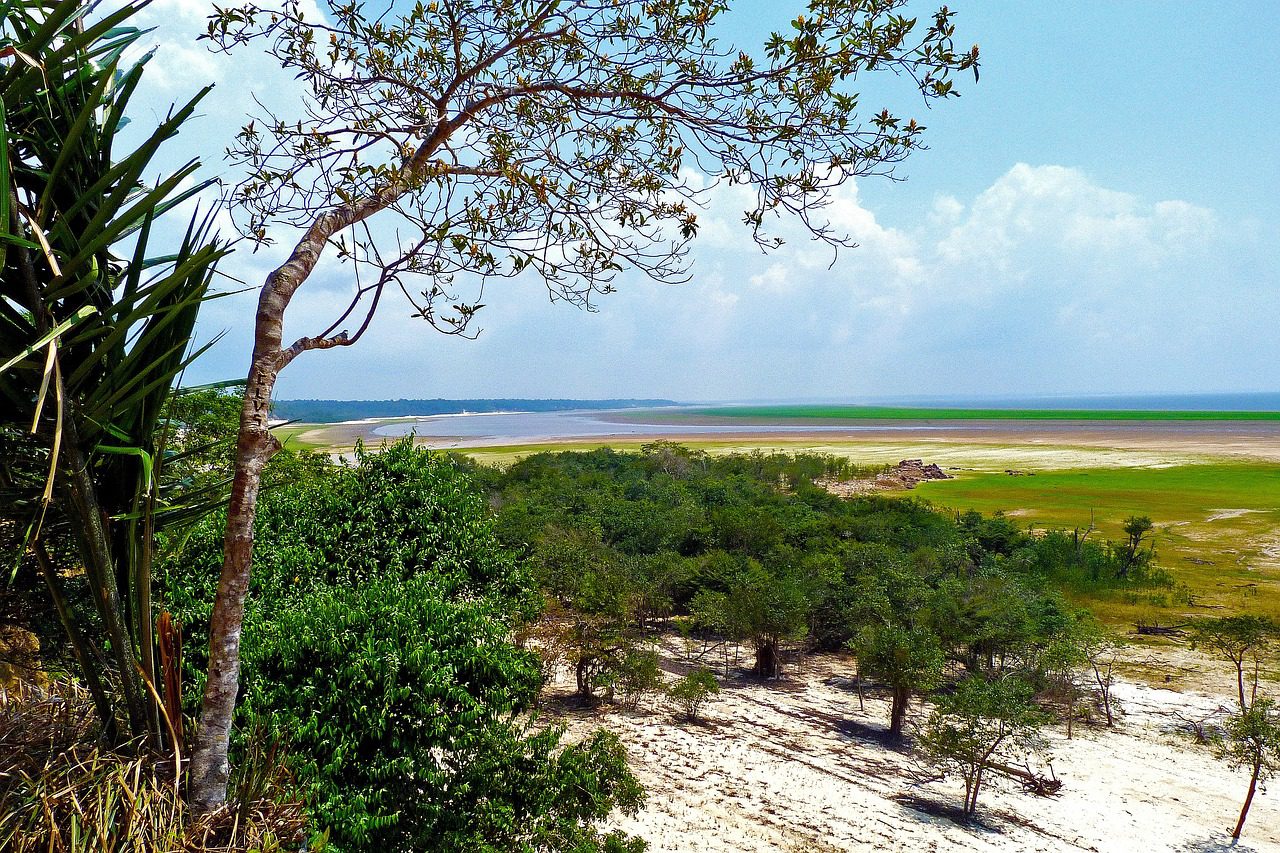
 A groundbreaking alliance is emerging in the remote reaches of the Amazon rainforest, where the lack of governance has left an indelible mark of destruction. Brazilian ecologists are embarking on a mission to preserve the world’s largest tropical forest and reduce poverty in the Amazon’s communities. Managing a stretch of land along the Juruá River, this venture seeks to counter the forces that have continued to deforest the Amazon. Their ambition extends beyond their immediate efforts, aiming to create a replicable model for other regions in the vast Amazon.
The Environmental Crisis and the Role of the Amazon
The Amazon rainforest sprawls over an area twice the size of India. It hosts unparalleled biodiversity and holds vast carbon reserves, serving as a crucial buffer against the changing climate. Unfortunately, deforestation has reached a 15-year high in recent years.
According to WWF.org, deforestation in the Amazon remained at the highest levels since 2009, with the extent of destruction in the eastern Amazon transforming it from a carbon sink to a carbon source.
Concerning Poverty
In the sprawling expanse of the Amazon rainforest, poverty intertwines with environmental degradation in a complex and troubling nexus. Approximately 9.7% of the region’s population grapples with extreme poverty in the Amazon.
In a region plagued by some of Brazil’s highest poverty levels, inhabitants with scant alternatives often confront a grim dilemma: abandon depleted fields and encroach further into the forest, perpetuating a vicious cycle of environmental decline. As Judson Ferreira Valentim, a soil scientist at Embrapa, the government’s agricultural research agency, aptly observes in an AP News interview, “The biodiversity is rich, but so many people are impoverished.”
Addressing the pervasive poverty gripping the Amazon is not only a moral imperative but also an indispensable component of safeguarding its ecological treasures. Without concerted efforts to alleviate poverty and provide viable livelihood alternatives, the relentless march of deforestation imperils not only the Amazon’s delicate ecosystems but also the global climate and the myriad species that call it home.
A Troubling Reality of Deforestation
According to AP News, 10% of the Amazon has been decimated in less than four decades.
Brazilian ecologists aim to establish a model that can be replicated across the vast expanse of the rainforest. The genesis of this movement can be traced back to a four-month expedition along the Juruá River in 2016.
The researchers, diving into the heart of nearly 100 communities, initially encountered a seeming uniformity of rows of wooden homes on stilts along the water. However, the striking contrasts in living conditions laid bare the harsh reality. A crucial piece of information is that 29% of the Amazon, an area roughly three times the size of California, is either unprotected public land or public land with no recorded information, making these areas more susceptible to deforestation.
João Vitor Campos-Silva, a tropical socio-ecologist, expressed the glaring inequality: “Inside protected areas, many positive things are happening but outside, they seemed to be 40 years behind.”
Designing a Conservation Model on a Basin Scale
Recognizing the disparities, the ecologists identified the Medio Juruá region near Caraua. Here, communities managed their resources sustainably within “extractive reserves,” public lands allowing residents to harvest fish and crops. However, many communities faced oppression from self-appointed landowners, restricting access to vital resources.
The solution took shape in the form of the non-profit Juruá Institute, which acquired a 13 km rainforest property along the Juruá River. This unique parcel includes about 20 lakes with significant potential for sustainable practices, including cultivating pirarucu, the world’s largest freshwater scale fish.
Bridging Science and Community
The institute’s ambition, as expressed by Campos-Silva, is to promote high-quality science grounded in collaboration with the region’s people. In proximity to the Institute’s land, 12 communities of former rubber tappers, known as “Ribeirinhos,” find their livelihoods tied to the pirarucu fishery. A shift from rubber trees to sustainable fishing practices has not only revived a declining species but also generated income without resorting to forest clearance.
Empowering Communities in Governance
To ensure the active involvement of riverine communities, the institute established a steering committee and initiated public meetings named “Community of Dreams.” These sessions allowed residents to prioritize improvements, conducted in three groups: women, youth and men to avoid potential biases.
Fernanda de Araujo Moraes, president of the river communities’ association, emphasized the initiative’s primary purpose: preventing river people from migrating to Amazon cities, where the unemployment rate has declined. In the community of Lago Serrado, both men and women identified 24-hour electricity as their top priority, showcasing the tangible impact this collaboration aims to achieve.
A New Paradigm
Residents like José Alves de Morais see this initiative as unprecedented, stating that José, already involved as a lake keeper for the institute, is eager for his family to participate in managing pirarucu fishing, awaiting federal approval.
On the scientific front, the Juruá Institute has erected a houseboat and a wooden house, accommodating up to 20 researchers, to study various aspects of the region. The initiative, spearheaded by Carlos Peres, an Amazon-born professor of tropical conservation ecology at the University of East Anglia, earned recognition when Peres and three other scientists won the Frontiers Planet Prize in April, bringing $1.1 million in support.
A Vision for the Future
The Amazon grapples with the ongoing challenges of environmental degradation. Recent revelations from a 2023 NPR report offer hope, as tree clearance has decreased by 34%.
Amidst the lush landscapes of the Amazon, the synergy between data-driven insights and unwavering resolve points toward a promising trajectory, where preservation and prosperity intertwine to forge a path toward sustainable coexistence with nature. However, the broader context of poverty in the region casts a shadow. Overall poverty, projected at 24.3% in 2022, remains on par with 2014 levels after peaking at 28.4% in 2021. While the 2023 poverty outlook appears promising, addressing striking inequalities necessitates faster job creation and more substantial investments in human capital.
Their mission along the Juruá River seeks to counter the forces perpetuating deforestation and aims to address the underlying poverty that fuels this cycle of environmental decline. By bridging science and community, empowering local governance and fostering innovative conservation models, this initiative represents a paradigm shift in our approach to safeguarding the region and reducing poverty in the Amazon.
– Quinn Higby
Photo: Pixabay

Child Marriage in South Africa
Women Leading Change
Men often dominate public discourse, making it notable when women lead the charge for change. Such was the case in South Africa in November 2023, when female philanthropists, activists and leaders convened to strategize support for adolescent girls, with a focus on eradicating child marriage.
Prominent among the attendees were Mrs. Michelle Obama and Ms. Melinda Gates. Mrs. Obama, the former First Lady of the United States (U.S.), underscored the critical role of education for young girls in breaking the cycle of child marriage and called for sustained investment in grassroots organizations and leadership. Ms. Gates advocated for a comprehensive approach that includes policy and legal reforms. She emphasized the importance of community awareness supported by government action to empower girls with choices over their futures. Both women, celebrated authors and influential figures, alongside other local dignitaries, issued a call to action against child marriage.
Benefits of Ending Child Marriage
Ending child marriage in South Africa and globally, brings a multitude of benefits that span social, economic and health dimensions. By addressing this issue, South Africa could unlock the potential for individual growth, societal advancement and economic development. Notable sources, including the United Nations (U.N.), World Bank and various NGOs, have highlighted these benefits in their research and advocacy efforts.
According to UNICEF, by delaying marriage, girls are less likely to face early pregnancy, which is associated with higher risks of maternal and neonatal mortality and morbidity and more likely to stay in school and complete their education. Education equips girls with the knowledge and skills necessary to support themselves, fully participate in their communities and make informed decisions about their lives and health, setting a foundation for improved health outcomes both for themselves and their future children.
Furthermore, the World Bank indicates that eliminating child marriage could significantly boost economic growth and productivity by enhancing a country’s earnings and growth potential. In fact, educated and empowered women are more likely to enter the workforce and contribute positively to the national economy.
Economic Implications
Eradicating child marriage has positive ripple effects on the economy, including a reduction in birth rates that alters a population’s age structure, thereby enhancing what is known as the ‘demographic dividend.’ This term refers to the economic growth potential when a larger portion of the population is of working age. It boosts health, productivity and the overall economy. The effect on productivity is particularly significant.
Child marriage sidelines girls, excluding them from the workforce and depriving economies of half their potential labor force, presenting a substantial obstacle to development. The World Bank estimates that countries lose on average about 1% of their economic base due to child marriage.
The Role of Girls Not Brides
Girls Not Brides is a global network dedicated to ending child marriage, focusing on girls as central to the solution. The organization collaborates with communities, local governments and faith leaders, emphasizing that only a collective effort can eliminate the outdated stigma of girls being inferior and end the practice of child marriage as a means of connecting families and kin.
This strategy aims to end the treatment of girls as currency and sees empowering them as a way out of poverty. By mobilizing young girls and improving their access to education and sexual health care, Girls Not Brides helps lift nations out of poverty.
Empowering the Future
The global fight against child marriage, led by influential women and organizations like Girls Not Brides, is carving a path toward empowerment and equality for girls in South Africa and beyond. By fostering education and legal reforms, these efforts are unlocking the vast potential for personal and economic growth, setting a precedent for future generations.
The collective drive and dedication to ending child marriage reflect a powerful commitment to reshaping society for the better, ensuring every girl has the opportunity to control her destiny and contribute fully to her community.
– Isaac Rowlands
Photo: Unsplash
Escaping Poverty: Zoe Empowers Is Helping Orphaned Youth
A Long-Term Change
A significant proportion of the African youth are unemployed; 10-12 million youth enter the workforce in Africa every year. However, only 3 million jobs are created annually, leaving vast numbers of youth unemployed.
Zoe Empowers aims to resolve this issue by prioritizing self-sufficiency for orphaned youth to enable them to escape poverty. The organization achieves this by teaching them skills for long-term success, such as lessons in accounting and investing. With minimal job opportunities, these lessons in self-sufficiency are a lifeline to orphaned and impoverished youths, allowing them to forge their path out of the poverty cycle. The charity has empowered nearly 200,000 children across the world, including Africa, with work being done in Kenya, Rwanda, Zimbabwe, Malawi, Liberia, Tanzania, Mozambique and South Sudan.
Success Story From Zoe Empowers
Welshman, a man from the Zoe Empowers program in Zimbabwe, finally achieved his dream of opening a bakery when he was financially supported with a small loan to purchase basic supplies such as flour and loaf pans. After a few months, the profits from his trade allowed him to send his siblings back to school. Today, his bakery is a booming business in the local community. Before Zoe Empowers, Welshman had spent years caring for his younger siblings while working jobs that paid less than $1 per day. The financial and emotional support from Zoe Empowers has allowed Welshman and his family to escape poverty, giving him new sources of income, new career prospects and a new prosperous life.
Zoe Empowers shows impoverished and orphaned children how to turn their passions and natural skills into profitable businesses and trades. The organization has undeniably opened doors of opportunity for struggling youths such as Welshman and Priya. With their success, they and their families now have a steady income that will lift them out of poverty and help rebuild the local economy, ending the cycle of poverty. Zoe Empowers offers impoverished children a long-term solution to escape poverty and empowers the local youth, establishing grassroots change for generations to come.
– Abigail Tidball
Photo: Unsplash
Onesmus Okamar on Art and Education in Kenya
About Onesmus Okamar
Born in Teso-North, Busia County, Kenya, Okamar is an award-winning visual artist based in the country’s capital city, Nairobi. With no formal training, Okamar began pursuing art at age 17. Two years later, in 2014, Okamar received a commendation for the Mask Prize, an award celebrating the creativity and innovation of African youth.
While discussing art and education in Kenya, Onesmus Okamar states that one of the biggest problems that Kenyans face is an insufficiency of information and access to resources, explaining that a particular struggle for creatives is to find “a physical space where they can work and where they can invite clients to get to know their art.”
The Kobo Trust
According to Onesmus Okamar, the Kobo Trust, a charitable foundation and nonprofit founded by Kobo Safaris Ltd. in 2011, works both with artists and children from disadvantaged backgrounds, seeking to create a solution to this problem. The Kobo Trust provides a creative space for artists to use while educating, rehabilitating and sheltering children from disadvantaged backgrounds.
Okamar describes that many “kids end up in the streets because they don’t have anything to do when they finish school.” However, the Kobo Trust sponsors children through their primary, secondary and tertiary levels and “empowers them by getting them involved in businesses of their own.”
Having worked as an artist for the Kobo Trust since 2017, Okamar explains that the foundation receives 20% of any sale from its exhibitions while the remainder profits the artist directly. Through a circular scheme, the 20% returned to the Kobo Trust funds further investment in the foundation’s children, projects and partnerships.
Art as a Tool
The Kobo Trust is dedicated to sponsoring both children and artists. However, its primary goal is to use arts and culture as a tool for alleviating poverty. The foundation achieves this by using art as a tool for healing traumas while empowering, transforming and building resilience.
When asked how art can practically translate to alleviate poverty, Okamar says, “First and foremost, art must be used as a tool to find an individual’s inner voice, to help expand creativity and freedom of expression.”
The Kobo Trust encourages the freedom of expression as a means to address issues and traumas associated with poverty. It provides an outlet for children and young people to respond positively to their circumstances through art. In doing so, individuals learn that art can be used to overcome a wide variety of challenges and are edified about art as a tool to amplify wider discussions of social, economic and political concerns.
In a brief given by the United Nations Educational, Scientific and Cultural Organization (UNESCO) discussing the role of art in alleviating poverty, Dr. Kessous, UNESCO artist and ambassador for peace, described it as this: “The impact of art is underestimated today. We have a limited view of an artist as someone who produces beauty devoid of social conscience. In response, many artists decide to combine activism and art to become ‘artivists’ – offering their talents to alleviate suffering, promote peace and prevent war.”
Education in Kenya
Since 2005, Kenya’s economy has steadily grown, transcending from a low-income to a middle-income country. However, disparities in wealth distribution and access to education and health care have created a large divide between Kenya’s rich and poor. Okamar explains that “at times, even the people who may have finances around them lack the information that can help them in their careers.”
When discussing whether art is supported in the Kenyan education system, Okamar laughs, saying that “most parents in Kenya still want their children to become lawyers and doctors.” While this remains prevalent in many countries worldwide, a 2020 study showed that only 19% of Kenyans enrolled in tertiary education, indicating 23% less than the global average.
According to Onesmus Okamar, the latest curriculum does include art but doesn’t address it to be beneficial for development beyond the educational level. He states that “they [students] don’t know anything about the finance part of it. They’re not taught about marketing or using it as an income.” He likens the current system to “giving someone the equipment without giving them the manual on how to use it.”
Alleviating Poverty
Increasing education and access to resources has been proven as a way of reducing poverty. However, when combined with art, it creates a positive medium to address issues synonymous with poverty while increasing awareness and visibility of this suffering. By engaging people in the arts, disadvantaged individuals are encouraged to find their voices and positively contribute to the world around them. Art transforms mentalities, making it a powerful tool in the battle against poverty reduction.
– Zoe Winterfeldt
Photo: Courtesy of Onesmus Okamar
Reducing Poverty in the Amazon Rainforest
The Environmental Crisis and the Role of the Amazon
The Amazon rainforest sprawls over an area twice the size of India. It hosts unparalleled biodiversity and holds vast carbon reserves, serving as a crucial buffer against the changing climate. Unfortunately, deforestation has reached a 15-year high in recent years.
According to WWF.org, deforestation in the Amazon remained at the highest levels since 2009, with the extent of destruction in the eastern Amazon transforming it from a carbon sink to a carbon source.
Concerning Poverty
In the sprawling expanse of the Amazon rainforest, poverty intertwines with environmental degradation in a complex and troubling nexus. Approximately 9.7% of the region’s population grapples with extreme poverty in the Amazon.
In a region plagued by some of Brazil’s highest poverty levels, inhabitants with scant alternatives often confront a grim dilemma: abandon depleted fields and encroach further into the forest, perpetuating a vicious cycle of environmental decline. As Judson Ferreira Valentim, a soil scientist at Embrapa, the government’s agricultural research agency, aptly observes in an AP News interview, “The biodiversity is rich, but so many people are impoverished.”
Addressing the pervasive poverty gripping the Amazon is not only a moral imperative but also an indispensable component of safeguarding its ecological treasures. Without concerted efforts to alleviate poverty and provide viable livelihood alternatives, the relentless march of deforestation imperils not only the Amazon’s delicate ecosystems but also the global climate and the myriad species that call it home.
A Troubling Reality of Deforestation
According to AP News, 10% of the Amazon has been decimated in less than four decades.
Brazilian ecologists aim to establish a model that can be replicated across the vast expanse of the rainforest. The genesis of this movement can be traced back to a four-month expedition along the Juruá River in 2016.
The researchers, diving into the heart of nearly 100 communities, initially encountered a seeming uniformity of rows of wooden homes on stilts along the water. However, the striking contrasts in living conditions laid bare the harsh reality. A crucial piece of information is that 29% of the Amazon, an area roughly three times the size of California, is either unprotected public land or public land with no recorded information, making these areas more susceptible to deforestation.
João Vitor Campos-Silva, a tropical socio-ecologist, expressed the glaring inequality: “Inside protected areas, many positive things are happening but outside, they seemed to be 40 years behind.”
Designing a Conservation Model on a Basin Scale
Recognizing the disparities, the ecologists identified the Medio Juruá region near Caraua. Here, communities managed their resources sustainably within “extractive reserves,” public lands allowing residents to harvest fish and crops. However, many communities faced oppression from self-appointed landowners, restricting access to vital resources.
The solution took shape in the form of the non-profit Juruá Institute, which acquired a 13 km rainforest property along the Juruá River. This unique parcel includes about 20 lakes with significant potential for sustainable practices, including cultivating pirarucu, the world’s largest freshwater scale fish.
Bridging Science and Community
The institute’s ambition, as expressed by Campos-Silva, is to promote high-quality science grounded in collaboration with the region’s people. In proximity to the Institute’s land, 12 communities of former rubber tappers, known as “Ribeirinhos,” find their livelihoods tied to the pirarucu fishery. A shift from rubber trees to sustainable fishing practices has not only revived a declining species but also generated income without resorting to forest clearance.
Empowering Communities in Governance
To ensure the active involvement of riverine communities, the institute established a steering committee and initiated public meetings named “Community of Dreams.” These sessions allowed residents to prioritize improvements, conducted in three groups: women, youth and men to avoid potential biases.
Fernanda de Araujo Moraes, president of the river communities’ association, emphasized the initiative’s primary purpose: preventing river people from migrating to Amazon cities, where the unemployment rate has declined. In the community of Lago Serrado, both men and women identified 24-hour electricity as their top priority, showcasing the tangible impact this collaboration aims to achieve.
A New Paradigm
Residents like José Alves de Morais see this initiative as unprecedented, stating that José, already involved as a lake keeper for the institute, is eager for his family to participate in managing pirarucu fishing, awaiting federal approval.
On the scientific front, the Juruá Institute has erected a houseboat and a wooden house, accommodating up to 20 researchers, to study various aspects of the region. The initiative, spearheaded by Carlos Peres, an Amazon-born professor of tropical conservation ecology at the University of East Anglia, earned recognition when Peres and three other scientists won the Frontiers Planet Prize in April, bringing $1.1 million in support.
A Vision for the Future
The Amazon grapples with the ongoing challenges of environmental degradation. Recent revelations from a 2023 NPR report offer hope, as tree clearance has decreased by 34%.
Amidst the lush landscapes of the Amazon, the synergy between data-driven insights and unwavering resolve points toward a promising trajectory, where preservation and prosperity intertwine to forge a path toward sustainable coexistence with nature. However, the broader context of poverty in the region casts a shadow. Overall poverty, projected at 24.3% in 2022, remains on par with 2014 levels after peaking at 28.4% in 2021. While the 2023 poverty outlook appears promising, addressing striking inequalities necessitates faster job creation and more substantial investments in human capital.
Their mission along the Juruá River seeks to counter the forces perpetuating deforestation and aims to address the underlying poverty that fuels this cycle of environmental decline. By bridging science and community, empowering local governance and fostering innovative conservation models, this initiative represents a paradigm shift in our approach to safeguarding the region and reducing poverty in the Amazon.
– Quinn Higby
Photo: Pixabay
How Is Axian Energy Transforming Africa?
Africa’s Energy Crisis
The percentage of people in Africa with access to electricity is the lowest in the world at just more than 40%. Energy consumption per capita in Sub-Saharan Africa, excluding South Africa, is 180 kWh compared to 6500 kWh per capita in Europe and 13,000 kWh per capita in the U.S. This crisis has been exacerbated by recent wars and the COVID-19 pandemic. Currently, more than 25 million African people live without access to electricity. The International Energy Agency predicts that demand in Africa will grow rapidly by a third between 2020 and 2030. This means that the crisis must be faced with efficient and sustainable solutions, which AXIAN Energy Group is proposing.
Renewable Energy
The new funding to the AXIAN group will allow them to access rural areas with “limited power access.” The CEO of the AXIAN Energy group, Benjamin Memmin, expressed that this “marks a pivotal moment in our journey toward sustainable development and energy inclusion across Africa.” In an interview with IT News Africa, he expressed that this initiative will “bolster our unwavering dedication to delivering clean and accessible power to communities throughout the continent.” This includes greenfield solar projects, akin to the Burkina Faso PIDG project in which their first ever solar greenfield was implemented, allowing them to produce sustainable power independently.
Specifically, there is heavy investment in Madagascar, as it has some of the lowest access to electricity rates in the world; more than 18 million people are without access. Therefore, the boost in investment in renewable energy will allow for a sustainable boost to electrification rates. Furthermore, the funding will give households stable electricity, improving living standards and employment rates, which will boost economic activity across the continent. The focus on renewable energy also recognizes the importance of the global energy demands alongside addressing environmental concerns.
The AXIAN Energy group aims to provide electricity to millions, enhance economic markets, raise the standard of living and position Africa as an innovator in the sustainable power initiative. A Ninety One director, Tidiane Doucoure, argued in Africa Business that stable electrification will boost investment in African nations, as it will “de-risk projects,” making them more attractive to additional investment and improving supply reliability in line with international standards.” Therefore, AXIAN Energy certainly has the potential to transform Africa.
– Beth Keith
Photo: Flickr
Poly-Fluorinated Alkyl Substances: PFAS in India
What Are PFAS?
These chemicals, commonly referred to as “forever chemicals,” belong to the fluorine-based group. They find widespread use in various household items like paint, fire extinguishers, cookware and more. PFAS has been shown to have many negative health impacts, including higher rates of cancer, decreased vaccine effectiveness and increased blood pressure and cholesterol.
The everlasting nature of this chemical means that once it comes into contact with humans, it leaves a lasting impact and accumulates over time. While many countries race to find solutions and create preventive pieces of legislation, India has remained quiet on the matter. With various risks to human and environmental health, the question arises: “How has the government been addressing the impact of per- or polyfluorinated alkyl substances in India?”
The Problem of PFAS in India
A major difference between PFAS in India and several other countries is the culture behind the burning of waste. However, when waste containing PFAS is burned, these chemicals are released into the air, posing a higher risk of exposure to individuals through inhalation. The limited research conducted on pollution levels in different locations across India reveals a significant correlation between population density and the levels of PFAS in both the air and dust. Additionally, these studies show that younger generations tend to have higher levels of PFAS in their body, indicating recent exposures.
PFAS is disproportionately affecting low-income neighborhoods, where residents often depend more on drinking water from nearby rivers, streams and wells, making them susceptible to contamination with these substances. Additionally, these areas are typically closer to large factories and plants that tend to use PFAS, further contributing to increased levels of exposure. With most of the people living in these communities also working in the plants, their exposure levels are exponentially higher than those who can afford to move away and work in less labor-intensive and less hazardous jobs.
What Is India Doing?
In 2006, India took a significant step in environmental protection by joining the Stockholm Convention in 2006. In 2009, the convention established a list of various PFAS substances considered harmful and recommended restrictions on them for member countries. However, India has not accepted this amendment to the convention and thus does not show any initiative towards regulating PFAS within the country.
With the nation focusing on industrialization and boosting the economy, there has been limited research on alternatives to PFAS in India and methods to combat pollution. PFAS remains the most convenient yet harmful substance that can create water, oil and stain-resistant materials. The lack of extensive research inhibits the formulation of concrete legislation and hinders the development of innovative solutions. To move forward, India could consider slowly implementing a blank ban across PFAS substances, taking cues from other countries that have successfully reduced pollution in bodies of water.
– Aman Chaudhary
Photo: Wikimedia Commons
Spreading Awareness: Movies About Period Poverty
Over the years, films and documentaries have been a key way in which audiences across the globe can gain a deeper understanding of historical, social and political issues, such as poverty. Period poverty is a deeply misunderstood issue and often disregarded in society. However, in the last few years, filmmakers and organizations have begun spotlighting period poverty and spreading necessary awareness on the stigmatized issue. Here are three movies that spread awareness about period poverty.
PadMan
This is a 2018 Bollywood biopic that chronicles the life of Arunachalam Muruganantham. He was an Indian entrepreneur who invented a low-cost, revolutionary sanitary pad machine after becoming aware of the improper sanitary products used by women in India who could not afford expensive manufactured products. Due to taboos, Muruganantham faced challenges recruiting female volunteers for his research. To overcome this, he boldly broke social stigmas by personally wearing the sanitary pads, leading to him being nicknamed “PadMan.”
Since creating the machine, Muruganantha has supplied more than 4,000 machines to women in India. His focus has been on providing these machines to NGOs and female support groups. Bollywood star Akshay Kumar takes on the role of “PadMan” in the film, which documents Muruganantham’s journey in developing the machine and the challenges he encounters. The movie serves more purpose than solely providing entertainment; it brings to light important issues surrounding period poverty and confronts the widespread stigmas surrounding menstruation in India.
Period. End Of Sentence
This is a short documentary that follows a small group of women in the rural Indian village of Kathikher. The idea to make the documentary came from a group of high school students at Oakwood High School in California. They successfully raised more than $55,000 to produce the film and provide the Kathikher community with one of the pad-making machines pioneered by “PadMan.” The documentary highlights the awkwardness and embarrassment that girls and women face when talking about menstruation. It also addresses the widespread lack of knowledge and negative attitudes toward menstruation within entire communities.
Despite these challenges, the documentary presents an uplifting story of women in the village learning to use one of “PadMan’s” pad machines, ultimately creating their own brand of sanitary pads called “Fly.” By making and selling pads, the women in the community are provided with safe and affordable sanitary products. They also become empowered by their employment and ability to earn a living independently. This inspiring documentary won the Academy Award for Best Documentary (Short Subject) at the 2019 Oscars. Since its release, the short has been viewed by almost 27 million people worldwide. This has led to an increased acknowledgment and discussion on menstruation and period poverty issues usually seen as taboo in society.
Pandora’s Box: Lifting the Lid on Menstruation
In 2019, DivaCup CEO Carinne Chambers-Saini developed the concept behind “Pandora’s Box,” a documentary that delves into the issue of period poverty across the globe. The title of the film reflects its objective to expose truths on period poverty and spread awareness of the stigmas, discrimination, misinformation and often abuse that surround menstruation across the world. Led by director Rebecca Snow, the documentary was intentionally made only by women.
This was to ensure the female subjects participating in the film felt safe and comfortable, fostering their willingness to discuss their personal experiences with period poverty. Although period poverty is often more severe in developing countries, “Pandora’s Box” presents the globalized nature of this issue. The documentary shows the challenges faced by women not only in countries like India, Kenya and Uganda but also in more developed nations such as the U.K. and the U.S.
Final Remark
The use of films and documentaries, such as those discussed above, successfully challenges social stigmas and taboos surrounding menstruation. It is an innovative means of encouraging society to expand its understanding of this global issue and to spread awareness about period poverty.
– Lucy Jacks
Photo: Wikimedia Commons
Tropical General Investments (TGI) and Rice Production in Nigeria
TGI’s Rice Production Plan in Action
In response to the escalating crisis, TGI implemented a strategic plan to boost domestic rice production, reducing the country’s reliance on imported rice and therefore controlling the cost. The company invested in modern rice mills and, in collaboration with local farmers, established over 70 rice mills in 2021. In addition to meeting the rising demand for rice, this move stimulated economic growth by creating employment opportunities within the agriculture sector.
In its first four years, TGI created 2,000 jobs in Nigeria and exported $280,000 in rice, benefiting local communities by reducing unemployment. Through a recent partnership with the United States Agency for International Development (USAID), it plans to create 60,000 more jobs and produce an additional 20,000 tons of rice.
Results and Impact of TGI on the Nigerian Economy
In a span of two years, the company significantly increased its rice production capacity, meeting a substantial portion of the domestic demand. TGI’s rice production plan not only contributed to stabilizing rice prices, but also played a role in reducing overall food inflation rates. As of July 2022, Nigeria’s rice imports fell over 98%, with the country only importing 15 metric tons, compared to 957 metric tons in past years.
Conclusion
TGI’s rice production plan stands as a beacon of hope, showcasing the transformative power of private-sector initiatives in the face of economic challenges. Through a strategic emphasis on enhancing domestic rice production, TGI has tackled the pressing issue of rising food prices, created a profitable export product and contributed to Nigeria’s overall economic stability.
– Quinn Higby
Photo: Pixabay
Chagas Disease: Unveiling the Silent Struggle
The Impact of Chagas Disease
There is no vaccine against CD, but if detected in the initial acute phase it can be treated.
The disease mostly spreads as a result of vector-borne transmission. These blood-sucking bugs, called triatomine, bite an infected animal or person and pass the parasites on to humans via feces. These bugs also tend to bite people’s faces, and are therefore referred to as “Kissing Bugs.”
CD can also be transmitted via blood and organ donation as also congenital transmission, from a pregnant woman to her baby. Contraction of CD in the initial phase presents as mild flu-like symptoms and in the later stages can lead to cardiac, digestive and neurological alterations. It has been detected in 21 countries in Latin America and is endemic to this region. In November 2023, The Global Health Innovative Technology Fund reported, that in comparison to all other parasitic diseases in the Americas, CD carried the largest burden of disability-adjusted life years.
The Bolivian Chagas Platform
In 2009, The Bolivian Chagas Platform was formed in a bid to control CD. It consisted of both local and international forces with a strong emphasis placed on promoting trans-nationality to allow research to be shared. Groups involved in The Bolivian Chagas Platform included ISGlobal, CEADES, AECID and the Bolivian National Chagas Program.
Originally piloted in three of Bolivia’s most affected regions, Cochabamba, Tarija and Chuquisaca, a specific strategy was implemented in seven centers to begin with. The four focus areas were: providing care, training health personnel, performing research and engaging with the community.
Due to the success of the pilot program, the operation was scaled up and extended to a further 52 centers.
The results of the Platform have been positive and have improved the care for CD at both national and international levels.
Detecting Chagas Disease
The existence of the Bolivian Chagas Platform centers has facilitated the screening of more patients, resulting in the detection of a greater number of CD cases. CD is often referred to as a “silent disease” as infected patients present either with no symptoms at all or with ambiguous symptoms resulting in misdiagnosis. If treatment is not given quickly, the damage becomes irreversible, and the patient cannot be cured. Therefore, timely detection of CD to ensure early treatment is crucial to save a person’s life. Furthermore, early detection of the CD helps in its control because transmission is prevented.
Increasing Research and Resources Available
ISGlobal reports that, at present, there are two drugs available for treating CD, nifurtimox and benznidazole. Research studies on this disease have been scarce due to limited resources and funding. As a result, the majority of people infected with CD do not have access to treatment.
The Bolivian Chagas Network reported that of the 57,871 people who tested positive for CD, 32.1% were able to be treated as a result of this platform. Furthermore, 67% of health care workers were given CD training, more resources were provided and detailed research was undertaken.
Whilst the two drugs used to treat CD are highly effective, they were developed over 50 years ago, therefore greater updated research is imperative.
Minimizing the Stigma and Promoting Awareness
Despite 10,000 people dying from Chagas Disease every year, it remains largely unheard of by the general public.
The UN has reported the negative consequences of the stigma associated with CD. Largely people view CD as confined to rural and poorer areas, but this is not the case. ISGlobal reported that in Spain, only an estimated 30% of people with CD are diagnosed and treated.
– Heidi Helen Horgan
Photo: Flickr
Saudi Arabia’s Strategic Investment in Sports
Economic Impact
In 2018, Saudi Arabia initiated its first major foreign sports investment by signing a ten-year, $100 million per year deal with World Wrestling Entertainment (WWE). Since then, the kingdom has made expenditures to host various sports events, including boxing, tennis, horse racing and Formula 1 races. These ventures are made through the $650 billion Public Investment Fund (PIF), the world’s fifth-largest sovereign wealth fund, which also acquired Newcastle United. The PIF’s investments have also attracted global sports stars through lucrative contracts, exemplified by Cristiano Ronaldo’s record-breaking salary upon joining Saudi Arabian club Al Nassr.
Job Creation
The advancement of the sports industry in Saudi Arabia provides employment opportunities in the sports business sector. With more than two-thirds of the population being under the age of 35 and showing a growing interest in sports, there is a rise in both event participation and attendance. Fostering a sports culture contributes to positive global perceptions, showcasing Saudi Arabia’s history, customs and traditions. This cultural enhancement positively impacts the nation’s economic, social, lifestyle and the nation’s health aspects.
The 2020 Ministry of Sport report underscores the industry’s economic significance, generating more than 14,000 jobs, crucial for economic growth and financial independence. Sports club employment has surged by 129% in the last three years, boosted by the introduction of new sports programs. Further, administrative positions witnessed a 156% increase, while career opportunities in sports grew by 114% from 2018 to 2021.
Tourism and Hospitality Impact
Hosting sporting events in the Kingdom has a substantial impact on tourism. It draws a larger number of international visitors and results in heightened expenditures, positively impacting the Saudi economy. In 2020, sports events generated a total revenue of $9.8 million. Moreover, the sports sector contributes to hotel and broader hospitality industry spending. Riyadh’s hotel occupancy rates increased by 58% in the first eight months of 2022 and Jeddah saw a 52% occupancy rate, nearly 13% higher than the previous year.
Reforming Education and Health
Sports for All (SFA) President Prince Khaled bin Alwaleed aims to engage 40% of the Saudi population in physical activity by 2030. Meanwhile, former U.S. Open competitor Kevin Kerns is expanding tennis programs in Saudi schools, impacting more than 70,000 children. Kerns emphasizes tennis as more than a sport, instilling skills like goal-setting, teamwork and valuable life lessons.
Youth Empowerment
Saudi Arabia is investing in empowering its youth through strategic investments in sports. This commitment is evident in the development of sports facilities, academies and grassroots programs, fostering opportunities for aspiring athletes, coaches and sports management professionals. Emphasizing the significance of nurturing talent from the grassroots level, the nation has implemented initiatives to identify and support young athletes across various sports. These efforts, providing essential resources, coaching and facilities, are aimed at cultivating future champions and ensuring a sustainable pipeline of sporting talent.
Beyond the pursuit of victories, Saudi Arabia’s extensive sports investment significantly contributes to shaping the nation’s culture and social cohesion. Sporting events serve as unifying platforms, fostering inclusivity and creating opportunities for those facing economic challenges, exceeding societal divides. This commitment to sports also promotes a healthier lifestyle, contributing to enhanced overall well-being within the population.
Increasing Women’s Rights and Participation
Saudi Arabia’s strategic investment in sports is empowering women. It provides opportunities for skill development, new employment, health improvement and leadership growth. This contribution helps in fostering their self-sufficiency and aids in the fight against poverty. The country currently boasts more than 6,000 female athletes and supports 27 women’s sports teams.
The granting of driver’s licenses in 2017 opened new avenues for female athletes, exemplified by Reema Juffali’s participation in an international racing competition in 2019. Additionally, Saudi Arabia hosted its inaugural Ladies European Tour golf tournament in 2020, featuring Saudi women alongside international players. During the same year, there were significant developments, such as the issuance of business licenses for women’s gyms and the authorization of physical education inclusion in schools for girls and boys.
Navigating the Sports Washing Debate
Saudi Arabia’s strategic investment in sports has sparked a debate on the practice of “sports washing,” where high-profile sports events are used to divert attention from systematic human rights violations. Led by Crown Prince Mohammed bin Salman, the government leverages billions from the PIF to host and secure sports deals. This includes events such as the Spanish football Super Cup and potential hosting of major events like the 2034 Asian Games, men’s football World Cup and even the 2035 women’s World Cup.
Despite media restrictions, severe penalties for certain behaviors, migrant-related issues and a lack of labor unions and protests, Saudi Arabia persists in using sports to enhance its global reputation. Saudi Crown Prince Mohammed bin Salman, in an interview with Fox News, expressed a willingness to continue “sports washing” if it boosts the country’s GDP by 1%, regardless of criticism.
– Ellen Jones
Photo: Flickr