Reducing Poverty in the Amazon Rainforest
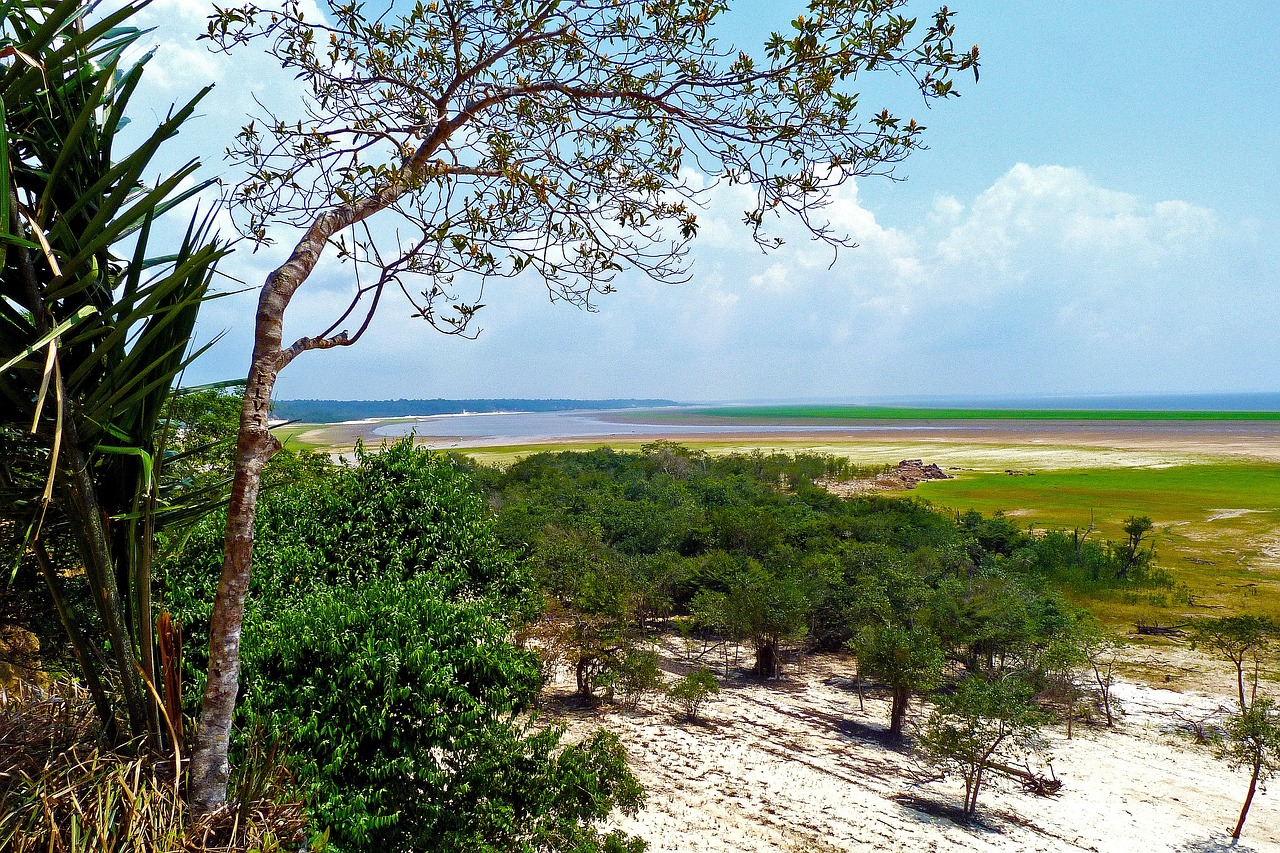 A groundbreaking alliance is emerging in the remote reaches of the Amazon rainforest, where the lack of governance has left an indelible mark of destruction. Brazilian ecologists are embarking on a mission to preserve the world’s largest tropical forest and reduce poverty in the Amazon’s communities. Managing a stretch of land along the Juruá River, this venture seeks to counter the forces that have continued to deforest the Amazon. Their ambition extends beyond their immediate efforts, aiming to create a replicable model for other regions in the vast Amazon.
The Environmental Crisis and the Role of the Amazon
The Amazon rainforest sprawls over an area twice the size of India. It hosts unparalleled biodiversity and holds vast carbon reserves, serving as a crucial buffer against the changing climate. Unfortunately, deforestation has reached a 15-year high in recent years.
According to WWF.org, deforestation in the Amazon remained at the highest levels since 2009, with the extent of destruction in the eastern Amazon transforming it from a carbon sink to a carbon source.
Concerning Poverty
In the sprawling expanse of the Amazon rainforest, poverty intertwines with environmental degradation in a complex and troubling nexus. Approximately 9.7% of the region’s population grapples with extreme poverty in the Amazon.
In a region plagued by some of Brazil’s highest poverty levels, inhabitants with scant alternatives often confront a grim dilemma: abandon depleted fields and encroach further into the forest, perpetuating a vicious cycle of environmental decline. As Judson Ferreira Valentim, a soil scientist at Embrapa, the government’s agricultural research agency, aptly observes in an AP News interview, “The biodiversity is rich, but so many people are impoverished.”
Addressing the pervasive poverty gripping the Amazon is not only a moral imperative but also an indispensable component of safeguarding its ecological treasures. Without concerted efforts to alleviate poverty and provide viable livelihood alternatives, the relentless march of deforestation imperils not only the Amazon’s delicate ecosystems but also the global climate and the myriad species that call it home.
A Troubling Reality of Deforestation
According to AP News, 10% of the Amazon has been decimated in less than four decades.
Brazilian ecologists aim to establish a model that can be replicated across the vast expanse of the rainforest. The genesis of this movement can be traced back to a four-month expedition along the Juruá River in 2016.
The researchers, diving into the heart of nearly 100 communities, initially encountered a seeming uniformity of rows of wooden homes on stilts along the water. However, the striking contrasts in living conditions laid bare the harsh reality. A crucial piece of information is that 29% of the Amazon, an area roughly three times the size of California, is either unprotected public land or public land with no recorded information, making these areas more susceptible to deforestation.
João Vitor Campos-Silva, a tropical socio-ecologist, expressed the glaring inequality: “Inside protected areas, many positive things are happening but outside, they seemed to be 40 years behind.”
Designing a Conservation Model on a Basin Scale
Recognizing the disparities, the ecologists identified the Medio Juruá region near Caraua. Here, communities managed their resources sustainably within “extractive reserves,” public lands allowing residents to harvest fish and crops. However, many communities faced oppression from self-appointed landowners, restricting access to vital resources.
The solution took shape in the form of the non-profit Juruá Institute, which acquired a 13 km rainforest property along the Juruá River. This unique parcel includes about 20 lakes with significant potential for sustainable practices, including cultivating pirarucu, the world’s largest freshwater scale fish.
Bridging Science and Community
The institute’s ambition, as expressed by Campos-Silva, is to promote high-quality science grounded in collaboration with the region’s people. In proximity to the Institute’s land, 12 communities of former rubber tappers, known as “Ribeirinhos,” find their livelihoods tied to the pirarucu fishery. A shift from rubber trees to sustainable fishing practices has not only revived a declining species but also generated income without resorting to forest clearance.
Empowering Communities in Governance
To ensure the active involvement of riverine communities, the institute established a steering committee and initiated public meetings named “Community of Dreams.” These sessions allowed residents to prioritize improvements, conducted in three groups: women, youth and men to avoid potential biases.
Fernanda de Araujo Moraes, president of the river communities’ association, emphasized the initiative’s primary purpose: preventing river people from migrating to Amazon cities, where the unemployment rate has declined. In the community of Lago Serrado, both men and women identified 24-hour electricity as their top priority, showcasing the tangible impact this collaboration aims to achieve.
A New Paradigm
Residents like José Alves de Morais see this initiative as unprecedented, stating that José, already involved as a lake keeper for the institute, is eager for his family to participate in managing pirarucu fishing, awaiting federal approval.
On the scientific front, the Juruá Institute has erected a houseboat and a wooden house, accommodating up to 20 researchers, to study various aspects of the region. The initiative, spearheaded by Carlos Peres, an Amazon-born professor of tropical conservation ecology at the University of East Anglia, earned recognition when Peres and three other scientists won the Frontiers Planet Prize in April, bringing $1.1 million in support.
A Vision for the Future
The Amazon grapples with the ongoing challenges of environmental degradation. Recent revelations from a 2023 NPR report offer hope, as tree clearance has decreased by 34%.
Amidst the lush landscapes of the Amazon, the synergy between data-driven insights and unwavering resolve points toward a promising trajectory, where preservation and prosperity intertwine to forge a path toward sustainable coexistence with nature. However, the broader context of poverty in the region casts a shadow. Overall poverty, projected at 24.3% in 2022, remains on par with 2014 levels after peaking at 28.4% in 2021. While the 2023 poverty outlook appears promising, addressing striking inequalities necessitates faster job creation and more substantial investments in human capital.
Their mission along the Juruá River seeks to counter the forces perpetuating deforestation and aims to address the underlying poverty that fuels this cycle of environmental decline. By bridging science and community, empowering local governance and fostering innovative conservation models, this initiative represents a paradigm shift in our approach to safeguarding the region and reducing poverty in the Amazon.
– Quinn Higby
Photo: Pixabay
