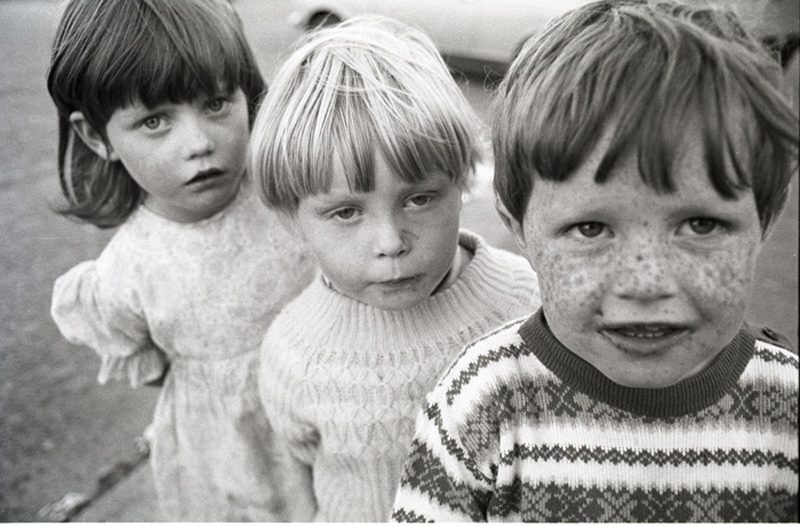
 Economic hardship is an all too real and frequent issue across the world. It has been known to create harmful factors such as corrupt governments, homelessness, hunger, limited to non-existent access to healthcare and an overall lower standard of living. However, as negative as these factors can be for those affected by poverty in general, it is especially detrimental toward children. The plight of Ireland’s impoverished children serves as one such case in which rampant economic penury has served as a severe detriment to their overall quality of life.
Ireland and the 2008 Recession
Irish children are one of the most vulnerable and disadvantaged groups within the region. Granted, Ireland suffered and continues to be burdened from persistent economic difficulties since the 2008 recession. Since then, more than 689,000 Irish people are reported to be in the poverty range, according to the 2019 Survey on Income and Living Conditions (SILC). Additionally, of these people living in poverty, 202,000 are shown to be children.
The gradual process of economic recovery since the 2008 recession has shown to be beneficial to the more general population, rather than vulnerable groups such as children. In fact, one report from the 2011 annual census found that 9.3% of children were living in perpetual poverty, with an additional 22% listed as going to school hungry. Conditions have unfortunately worsened since this census.
Moreover, whereas infrastructure has been invested in other important aspects of economic stability, such as industrial and technological growth, the same cannot be said for all aspects of economic stability. Specifically, the areas of health, housing and education were cut substantially in the aftermath of the 2008 recession, and there have not been suitable efforts to restore them to their previous levels.
These government cutbacks, unfortunately, do not even refer to some of the most disadvantaged subsections of children. For instance, the Council of Europe’s commissioner for human rights Nils Muiznieks reports that the Travelers experienced disproportionate drawbacks in housing (up to 85%) and in education (up to 86%). These drawbacks are especially harmful to the children in this group.
These unfortunate circumstances may not be in place forever. New initiatives and actions have been taken to mitigate and heal the issues affecting Ireland’s impoverished children.
No Child 2020: Addressing Child Poverty in Ireland
One of the more prominent examples of this includes the initiative, No Child 2020. This initiative’s goal was to bring public attention and government action to child poverty in Ireland. Headed by The Irish Times, the following five issues were addressed through the initiative: child hunger, homelessness, accessible healthcare, education and access to culture and sport.
No Child 2020 made substantial success in terms of garnering attention toward the issues of child poverty in Ireland. A key example of this can be seen in the passing of the journal Social Justice Ireland, which published its very own list of issues that require government involvement to rectify the issues of child poverty. It should be further noted that of the 12 issues the journal listed, the need to “provide adequate payments for children to end child poverty” was highlighted.
As a result of these endeavors, the Irish government added an extra one million euros toward creating a pilot system providing free books to more than 50 primary schools. There has also been the provision of free dental care for Irish children below 6 years of old and free general practitioner coverage for Irish children below 8 years of age.
Looking Ahead
There is still far more to be accomplished to assist Ireland’s impoverished children. The Irish government still has not bestowed more medical coverage to low-income families altogether, nor The Irish Times’ request 20 million pounds per year for free school books to all of Ireland’s primary schools. Moreover, no official government action has been taken to better address the aforementioned dilemmas concerning child hunger, homelessness and sporting/cultural involvement.
If progress is to be truly advanced to address these issues, more financial investment and government action are required. According to Muiznieks’s 2016 report, significant “budgetary and economic redress” is critical to aid vulnerable groups such as Ireland’s impoverished children.
Still, the presence of the No Child 2020 and the Social Justice Ireland have shown development in the country. These initiatives have already contributed economically, educationally and politically toward resolving the obstacles of Ireland’s impoverished children. Who knows how many more initiatives or reformative actions these imperatives could inspire? Progress takes time but now that the issues of Ireland’s impoverished children are being acknowledged, there is hope that the reality of such progress continues.
– Jacob Hurwitz
Photo: Flickr

10 Facts About Girls’ Education in Albania
Albania is a small country located in southeastern Europe neighboring Montenegro, Serbia, Macedonia and Greece. The country has endured many socioeconomic hardships since the fall of communism in 1991 but is now on the rise from one of the poorest countries in Europe to a middle-income country. As in most countries, education is an integral part of social, cultural and economic development. Here are 10 facts about girls’ education in Albania.
10 Facts About Girls’ Education in Albania
Albania is a country rich in history. Unfortunately, much of that history has allowed gender-based discrimination to take root, even affecting girls’ education in Albania. Because of its changing political and social climate, patriarchal beliefs and a lack of protection for women have allowed the country to leave them behind. The good news is that women are catching up. Albania has worked tirelessly this past decade to undo gender inequality through laws, civil society and partnerships with global organizations to provide women the resources they need to succeed, starting with a promise of an education.
– Emily Young
Photo: Unsplash
10 Facts about Life Expectancy in Guinea-Bissau
Guinea-Bissau, a small country in Western Africa, has a low life expectancy of 57.67 years. However, life expectancy in Guinea-Bissau of both men and women increased by seven years over the last 17 years. In 2001, life expectancy in Guinea-Bissau was 50.368. Currently, men in Guinea-Bissau have a life expectancy of 55.6 while women have a life expectancy of 59.62. The increase in life expectancy in Guinea-Bissau is due to improvement in health care services, education, preventive measures and a reduction in child mortality.
10 Facts About Life Expectancy in Guinea-Bissau
Although Guinea-Bissau’s life expectancy is low, there is hope that it will continue to increase due to continuous investment by international donors and non-government organizations. One of the best ways that Guinea-Bissau can provide better health care for its citizens is to strive to be more politically stable.
– Joshua Meribole
Photo: Flickr
Reducing Poverty for Scheduled Tribes in India
The term “Scheduled Tribes” refers to multiple tribes in India who the Indian government and the country’s constitution recognizes. Currently, 705 Scheduled Tribes exist in India. Among these 705 recognized tribes, 75 of them have the Particularly Vulnerable Tribal Groups (PVTGs) designation. These groups have a pre-agriculture level of technology, stagnant or declining populations, extremely low literacy and subsistence-level economies.
Scheduled Tribes
Scheduled Tribes of India are usually called Adivasi after the original inhabitants of India. Many of these Scheduled Tribes have their own languages, religious customs, forms of self-governance and traditions of their own.
During India’s industrialization era, from 1750 to 1947, many Scheduled Tribes experienced displacement from their homes and homelands. Mining activities, commercial farming, timber industries and war were the main causes of Adivasi displacement during this time period. Due to their displacement, Adivasis had to migrate to different parts of India. The majority of these Adivasi had problems integrating into the mainstream Indian society since many of them were illiterate and malnourished. This contributed to the Indian perception that the Adivasi were poor, ignorant and backward.
According to the 2011 census of India’s population, Scheduled Tribes made up approximately 8 percent of India’s population. Scheduled Tribes also accounted for 25 percent of the poorest populations in India. In 2018, India’s National Data found that Scheduled Tribes in India were the poorest populace. According to The National Family Health Survey 2015-2016, 45.9 percent of Scheduled Tribe members lived in the lowest wealth bracket. This finding was even more shocking since more people of Scheduled Tribes lived in the lowest wealth bracket than the people of Scheduled Castes, who people previously knew as the untouchable castes.
Statistics
A 2018 study in the Journal of Social Inclusion Studies delves deeper into the above statistics. The study points to the lack of access to productive income-earning assets, non-utilization of available resources, lack of education and equal opportunities, all serving as the main causes of poverty among Scheduled Tribes in India. What further complicates the matter is that traditional methods of addressing tribal poverty are not viable.
While economic development usually associates with poverty alleviation, economic development and industrialization are the cause of Scheduled Tribes’ poverty in India. The recent economic development has eliminated many of the traditional occupations that tribal inhabitants of India had. The same study presented a table of data about the incidence of poverty between tribals and non-tribals in India. The researchers noted that India’s economic development did not occur equally for the many Scheduled Tribes. The data from 1993 to 2012 shows that tribal poverty is always higher than non-tribal poverty. The study found that tribal poverty was still more than two times higher than non-tribal poverty, even though India’s overall incidence of poverty has been in decline since 1993.
The Indian Government
The Indian government is working to reduce poverty among Scheduled Tribes. In 2019, for example, India’s finance minister Nirmala Sitharaman announced that India is allocating 85,000 crore ($74,710.96) of its 2020 budget to furthering the development and welfare of scheduled tribes. The Indian Ministry of Tribal Affairs is also responsible for promoting and implementing the programs that will benefit Scheduled Tribes in India.
On February 14, 2020, the Minister of Tribal Affairs conducted a workshop with the Tribal Cooperation Marketing Federation of India (TRIFED). During the workshop, the minister recognized and congratulated TRIFED in its mission of expanding and promoting products that tribal craftsmen and craftswomen made. In the same workshop, multiple shareholders, mainly leading national institutions, social sector and industry leaders, met up to discuss their further cooperation with the TRIFED’s mission.
Scheduled Tribes in India still find themselves in a difficult economic reality. The historic and economic marginalization which displaced the Scheduled Tribes still seems to still loom over India. More shockingly, the cause of Scheduled Tribe poverty seems to have its roots in India’s improving economic conditions since 1750. The Indian government does, however, recognize the importance of economically supporting and developing its Scheduled Tribes. With the help of the Indian government, many hope that a better financial future waits for the Scheduled Tribes in India.
– YongJin Yi
Photo: Flickr
Addressing the Issues Surrounding Ireland’s Impoverished Children
Ireland and the 2008 Recession
Irish children are one of the most vulnerable and disadvantaged groups within the region. Granted, Ireland suffered and continues to be burdened from persistent economic difficulties since the 2008 recession. Since then, more than 689,000 Irish people are reported to be in the poverty range, according to the 2019 Survey on Income and Living Conditions (SILC). Additionally, of these people living in poverty, 202,000 are shown to be children.
The gradual process of economic recovery since the 2008 recession has shown to be beneficial to the more general population, rather than vulnerable groups such as children. In fact, one report from the 2011 annual census found that 9.3% of children were living in perpetual poverty, with an additional 22% listed as going to school hungry. Conditions have unfortunately worsened since this census.
Moreover, whereas infrastructure has been invested in other important aspects of economic stability, such as industrial and technological growth, the same cannot be said for all aspects of economic stability. Specifically, the areas of health, housing and education were cut substantially in the aftermath of the 2008 recession, and there have not been suitable efforts to restore them to their previous levels.
These government cutbacks, unfortunately, do not even refer to some of the most disadvantaged subsections of children. For instance, the Council of Europe’s commissioner for human rights Nils Muiznieks reports that the Travelers experienced disproportionate drawbacks in housing (up to 85%) and in education (up to 86%). These drawbacks are especially harmful to the children in this group.
These unfortunate circumstances may not be in place forever. New initiatives and actions have been taken to mitigate and heal the issues affecting Ireland’s impoverished children.
No Child 2020: Addressing Child Poverty in Ireland
One of the more prominent examples of this includes the initiative, No Child 2020. This initiative’s goal was to bring public attention and government action to child poverty in Ireland. Headed by The Irish Times, the following five issues were addressed through the initiative: child hunger, homelessness, accessible healthcare, education and access to culture and sport.
No Child 2020 made substantial success in terms of garnering attention toward the issues of child poverty in Ireland. A key example of this can be seen in the passing of the journal Social Justice Ireland, which published its very own list of issues that require government involvement to rectify the issues of child poverty. It should be further noted that of the 12 issues the journal listed, the need to “provide adequate payments for children to end child poverty” was highlighted.
As a result of these endeavors, the Irish government added an extra one million euros toward creating a pilot system providing free books to more than 50 primary schools. There has also been the provision of free dental care for Irish children below 6 years of old and free general practitioner coverage for Irish children below 8 years of age.
Looking Ahead
There is still far more to be accomplished to assist Ireland’s impoverished children. The Irish government still has not bestowed more medical coverage to low-income families altogether, nor The Irish Times’ request 20 million pounds per year for free school books to all of Ireland’s primary schools. Moreover, no official government action has been taken to better address the aforementioned dilemmas concerning child hunger, homelessness and sporting/cultural involvement.
If progress is to be truly advanced to address these issues, more financial investment and government action are required. According to Muiznieks’s 2016 report, significant “budgetary and economic redress” is critical to aid vulnerable groups such as Ireland’s impoverished children.
Still, the presence of the No Child 2020 and the Social Justice Ireland have shown development in the country. These initiatives have already contributed economically, educationally and politically toward resolving the obstacles of Ireland’s impoverished children. Who knows how many more initiatives or reformative actions these imperatives could inspire? Progress takes time but now that the issues of Ireland’s impoverished children are being acknowledged, there is hope that the reality of such progress continues.
– Jacob Hurwitz
Photo: Flickr
Eradicating Femicide in South Africa
In September 2019, after days of protests, the South African government declared femicide in South Africa a national crisis. Femicide, simply put, is the intentional murder of a woman. However, the World Health Organization (WHO) elaborates on the definition and adds that the murder of a woman is intentional because she is a woman. It is different from male homicide because in many cases of femicide, the crime is “committed by partners or ex-partners and involves ongoing abuse in the home, threats or intimidation, sexual violence or situations where women have less power or fewer resources than their partner.”
The Facts
The Republic of South Africa is at the southern tip of Africa, and Namibia, Botswana, Zimbabwe, Mozambique, Swaziland and Lesotho borders it. Femicide in South Africa is nothing new, dating back as early as colonialism in the 17th century. Female violence has continued since then, possibly due to the lack of severe consequences for the perpetrators. However, studies for femicide in South Africa did not begin until 1999.
According to South Africa’s Department of Police, someone murders a woman every three hours, which equates to about seven per day. In contrast, someone murders a man every 30 minutes, about 50 per day. Despite the lower murder rates for women, most female homicides are much more violent in nature than the male. Many of the female victims suffer assault, rape and burning before their perpetrators dump them. In comparison to other countries, this rate of femicide is almost five times higher than the world’s average. South Africa ranks fourth in the world for the highest rate of violence against women. Additionally, people reported 39,633 rapes and 6,253 sexual assaults in 2017 alone.
Activism Enabling Change
Femicide has gained a lot of media attention in recent years. Anene Booysen suffered brutal rape and murder in 2013. In 2017, an ex-boyfriend murdered Karabo Mokoena. Protests against femicide in South Africa broke out in September 2019 after the rape and murder of the University of Cape Town student, Uyinene Mrwetyana. The protests requested action from the South African government, including the death penalty for all perpetrators of femicide.
South African President Cyril Ramaphosa announced that the country was in a national crisis of violence against women after three days of protests. He detailed a plan of action to combat femicide and gender-based violence, including making the register of offenders public, reviewing cold cases and providing harsher penalties for perpetrators. President Ramaphosa also promised to implement policies in schools, workplaces and communities that would curb violence against females.
The Cavalry Steps In
Femicide in South Africa is also gaining attention internationally. The stories of Anene Booysen and Karabo Mokoena have made international headlines. Award-winning and South African-born actress Charlize Theron has used her platform to speak out against the violence against women in the country, and she has been doing so since 1999. She urged the leaders of South Africa to do more for women and told men not to be bystanders.
In an era of the internet and movements such as #MeToo, the ongoing femicide in South Africa is impossible to ignore. Thankfully, the South African government has taken the right steps. Not only did the President of South Africa publically acknowledge it as a national crisis but also vows to take action against it. It remains for one to see if the South African government keeps its promises, but it is clear that the women and media of South Africa will hold it accountable until they get the justice they deserve.
– Emily Young
Photo: Pixabay
Because International is Aiding Children
There is an invention that is changing the lives of millions living in poverty around the world. A leather sandal, called The Shoe That Grows, has been making a big difference for children living without shoes that properly fit them. Kenton Lee, a pastor and founder of the nonprofit organization Because International, designed the shoe. He came up with the idea during a six-month stay in Kenya. He originated this new brand of footwear that has benefited those who have outgrown their previous pairs of shoes. Because International is aiding children in developing countries that live without proper-sized shoes and are vulnerable to serious injuries and parasites.
More than 300 children from poor families are in need of a pair of properly fitting and long-lasting shoes. Using materials around his house, Lee used the plastic part of a baseball cap to have a makeshift expanding shoe. He also used tacks and soft foam to create pegs, allowing the shoe to expand.
“The design process was interesting because I am not a designer, and I knew nothing about shoes,” Lee told Bored Panda. “I was just a normal guy with an idea.”
Helminth Infections
More than 225,000 pairs of adjustable sandals are distributed to more than 100 countries around the world. The previous lack of this resource has prevented kids from attending school daily and staying healthy. More than 1.5 billion people worldwide have suffered from soil-transmitted helminth infections, in which parasitic worms transmitted by eggs pass through the feces of those infected by the disease. The adult worms live in the intestines where they produce eggs every day. Helminth infections also weaken an individual’s nutritional status by feeding on host tissues including blood which leads to a loss of protein and iron. In addition to helminth infections, hookworms, which are also parasitic, cause intestinal blood loss that results in anemia.
As for the organization’s long-term goals, it plans on continuing distribution to poor countries. This provides an economic improvement, in which job creation appears, low shipping for merchants, decreased carbon footprinting and overall innovation of footwear that will increase economic growth while fighting poverty.
The Bednet Buddy
Because International is also aiding children through its invention to protect kids vulnerable to mosquitoes. The Bednet Buddy is also available on its official website; a pop-up net lined with long-lasting insecticides, which are synthetic substances for killing insects. The Bednet Buddy has the guarentee to protect children aged 5 and under from mosquito bites while sleeping. Lee, who also invented this protective kit, came up with the idea during the same visit to Kenya. He visited an orphanage where children were sleeping without bedding or a roof over their heads during the night, leaving them more vulnerable for mosquito bites, increasing the chance of catching malaria.
The organization has made about 1,000 nets and sent 700 to the west-central region of Africa for testing, so the organization has already manufactured the product and some have already used it. Because International is still working toward making improvements to the product that it has yet to reveal.
GroFive
Because International also has a sister company for commercial use called GroFive. Because International primarily owns GroFive and is a small-time player in the American footwear industry. Where parents typically run out to buy their children more pairs of shoes, costing them hundreds of dollars, the company decided to use the idea of The Shoe That Grows for American consumers. The key is to sell the product domestically where parents can purchase this type of shoe for a low price instead of buying multiple pairs for higher prices. GroFive sells its expanded sandals, or “expandals,” for both kids and adults at $39.95 a pair.
Pursuit Incubator
In addition, Because International has also developed a program for struggling entrepreneurs to take their new ideas to the next level. Known as the Pursuit Incubator, Because International offers training to get new businesses off the ground and to mobilize them to their target audience. It even gives guidance and funding that help support these new entrepreneurs as they embark on growing their businesses.
Overall, Because International is aiding children through its consistency in making products and services that can help serve those in need. In addition to The Shoe That Grows, it is capable of making more products. It can market these for use in underprivileged and developed nations alike. Finally, it provides services to help others with their own products.
– Tom Cintula
Photo: Flickr
Reducing Childhood Cancer in Developing Countries
Although people have made significant progress in treating communicable diseases in childhood, one cannot say the same about reducing childhood cancer in developing countries. In fact, many did not consider it a public health problem in the developing world until recently. The mortality rate is currently an alarming 80 percent in developing countries with 160,000 new cases each year. Tragically, many could receive treatment from generic medications if they receive the right foreign aid according to Republican Congressman Michael McCaul. Children with cancer living in low to middle-income countries are four times as likely to die of their disease as children living in high-income countries.
Challenges Ahead
In order to reduce morbidity rates from childhood cancer in developing countries, people on the ground will face significant challenges. U.S. researchers reported that the median cost for 15 different generic drugs was only $120 in South Africa and $654 in the U.S., yet many people cannot even afford the lowest drug prices. The reason is that the drugs are actually more expensive when compared to per capita GDP (the average person’s total economic output). In Australia, generic drug prices were 8 percent of per capita GDP compared to 33 percent in India. The question of how many people will be unable to receive treatment despite lower drug prices remains. Another challenge is that many children will have already reached the late stages of the disease and perhaps even have comorbid HIV as with the Burkitt lymphoma trial in Malawi. The trial failed to reach two-thirds the cure rate of developing countries despite patients receiving intensive chemotherapy treatment.
New Legislation Passed
Yet there is hope. The U.S. House of Representatives has recently passed a bill to address the issue. McCaul and Democrat Congressman Eliot Engel introduced the Global Hope Act of 2019 and demonstrated that the two parties are still capable of swiftly passing bipartisan legislation despite increased polarization in the country.
The congressmen introduced the bill on December 10, 2019, and the House passed the bill on January 27, 2020. The bill aims to improve the survival rate of children living with cancer in developing countries. It will support the Global Health Organization’s initiative to increase the survival rate of children with cancer to 60 percent by 2030.
How it Works
One of the main focal points of the bill is improving the availability and cost of existing medicines and developing new ones. People have already developed much of the infrastructure from previous aid directed toward communicable diseases, but the bill seeks to enhance infrastructure as well. As outlined by the foreign affairs committee’s press release, the bill will help increase the survival rate of children with cancer by:
Childhood cancer is the second leading cause of death in childhood worldwide, second only to accidents. Though the issue remained in the shadow of communicable diseases for years, people are starting to take notice. The new legislation passed in the house addresses many of the barriers to a high survival rate for childhood cancer in developing countries.
– Caleb Carr
Photo: United Nations
Artificial Intelligence is Helping Developing Countries
Artificial Intelligence Can Make a Difference
Artificial Intelligence (AI) can solve many of the problems that developing countries face. Not only can it do more than a human, but it can also learn and adapt as it goes. AI takes the data it receives and uses it in the way it is told but also finds ways to optimize the process. The more that people use artificial intelligence, the more it improves.
Disaster Relief
The United Nations Office for the Coordination of Humanitarian Affairs used a system called Artificial Intelligence for Disaster Response (AIDR) to gather all information about the 2015 earthquake in Nepal and its damage, emergency needs and disaster response. AIDR was able to pinpoint the location of actual and potential victims and determine which workers were available. Artificial intelligence can also create digital maps of the area to identify which places need the most assistance. It is able to identify humanitarian aid needs automatically and sort any given data into different categories, such as infrastructure damage, urgent needs and response efforts. Based on this categorization and captured data, available responders could quickly focus their efforts and supplies on the right places.
Tutoring
Artificial intelligence is helping developing countries because it has the power to bring education to those who formerly never dreamed of accessing it. With over 750 million adults unable to read and write, most of them in developing countries, AI could enact big change in their lives. Currently, there are two large learning platforms that utilize artificial intelligence in Africa: Daptio and Eneza Education. Daptio helps students to study remotely. It gathers data on the student, such as their strengths and weaknesses, and adjusts its curriculum accordingly. Eneza Education is a mobile learning platform that gives lessons and assessments to over 860,000 subscribers. Students receive these through web communication or SMS messages. It has quizzes, offline access to Wikipedia, a dictionary and its own feature where users can “Ask-A-Teacher” questions live.
Improving Crop Production
The AI Sowing App, made by Microsoft and the International Crop Research Institute for the Semi-Arid Tropics (ICRISAT), pinpoints the best time to plant seeds, prepare land and use fertilizer. It also has a function that finds the moisture adequacy index, both in real-time and the future. The app works by gathering data from past climate trends, usually around a couple of decades, and applies it to the present. AI can also assist in weeding; Harvest CROO Robotics created a device that can analyze each plant individually and determine whether it needs pesticides or not, greatly saving on pesticides and their costs.
Improving Health Care and Hastening Economic Development
AI can perform accurate diagnoses, give treatment plans and predict disease outbreak. This saves on human resources and gives those that live farther from civilization the same access to medical care. It can also make basic health care cheaper for those who cannot afford to travel to an actual doctor for medical attention. As for economic development, with AI taking care of menial labor like factory work and educating the public, humans will be able to focus on doing more complicated jobs like working as entrepreneurs or engineers.
Although many developing nations suffer from poor education, lack of health care and economies, artificial intelligence is helping developing countries solve many of these problems. From disaster relief and education to improving crop production and providing medical assistance, artificial intelligence applications have the potential to greatly improve the lives of countless individuals within the developing world.
– Nyssa Jordan
Photo: Flickr
3D Printed Houses: Affordable Housing in Mexico
Tabasco, Mexico, a state located in the southeast of the country, hosts a population of over 2.5 million people, and more than half of the population lives in rural areas. As with many poverty-stricken countries, struggles with poverty hit the rural areas of southern Mexico disproportionally hard. While residents of Tabasco report among the highest levels of life satisfaction, unemployment and poverty create undue challenges, especially in rural populations. Luckily, 3D printed houses in Mexico are providing residents of Tabasco with affordable homes.
Living in Tabasco, Mexico
Tabasco first became a state in 1824 and now consists of different governmental areas called municipios. The region experiences a rainy season, in which the land is subject to flooding due to its mostly low and flat relief. Heavy rains and floods can be particularly devastating for those living in poverty in Tabasco. Oftentimes, residents who cannot afford to purchase housing will craft their own out of wood, metal and other scavenged or purchased material. When heavy rains come, these homes can flood drastically, sometimes for months at a time.
A New Look at Affordable Housing
In December 2019, the struggle for affordable, safe and durable housing took an innovative turn in one neighborhood in Tabasco where residents live on an average of $3 a day. Developers have begun using a large-scale 3D printer to build houses for residents in the neighborhood, planning to complete the construction of 50 new homes by the end of 2020. The prospect of these 3D printed houses in Mexico has numerous implications for Tabascan residents and the fight for affordable housing at large.
These massive printers emit a sturdy concrete that one can layer into a wall, with the complete simultaneous construction of two homes taking only 24 working hours. The homes feature 500 square-feet of living space, with two bedrooms, a bathroom, a kitchen and a living area.
The Organizations
The three foundations that are collaborating to make these 3D printed houses in Mexico a reality are ICON, a construction technology company; New Story, a San Francisco-based nonprofit; and ÉCHALE, a Mexican nonprofit.
ICON focuses on revolutionizing the construction of homes, utilizing printers, robotics and other technology tools to contribute to efforts surrounding affordable housing construction. ICON developed its first commercially available construction printer, called the Vulcan II, in 2018.
ÉCHALE saw its beginnings in 1985 and has since become a successful organization that works for social housing and community development in Mexico. ÉCHALE focuses on the main sustainable development goals for 2030, including ending poverty, promoting gender equality and responsible consumption and production.
Founded in 2014, New Story aids families in need of housing and shelter. Since then, New Story has built over 2,700 homes using traditional construction methods in Haiti, El Salvador, Bolivia and Mexico. ICON and New Story first collaborated on a 3D printed home in Austin, Texas in March 2018.
Most importantly, these three organizations that are creating 3D printed houses in Mexico have worked with residents of the Tabascan neighborhood every step of the way. They hired local construction workers to complete aspects of building such as land clearing and installing windows and roofs, ensuring that printing homes do not take jobs away from residents. The design of the homes also came from a collaboration with the very same residents that will live in them, ensuring that these houses will meet the specific needs of the community. This type of community involvement is critical for the long-term success of affordable housing programs, and one that can serve as a model for future technology-based affordable housing solutions.
PCDA Aiding Agriculture in Mali
Mali is one of the poorest countries in the world and has a per capita income of $300. Estimates determine that the overall poverty rate is 64 percent. Many factors contribute to the country’s poverty level. Mali suffers from low and erratic rainfall, poor soil and low agricultural production output. The country also suffers from poor infrastructure, especially in the areas of transportation and communications, as well as underdeveloped human capital. This is devastating because almost 80 percent of the country’s population depends upon agriculture in Mali for their livelihood.
Four Pillars for Mali’s Rural Development
The International Monetary Fund of the African Department published a poverty reduction strategy paper in 2002. The paper proposed policy priority action programs for Mali’s rural development. The paper presented four pillars:
The Project Appraisal Document entitled, Project Appraisal Document on a Proposed Credit in the amount of SDR 30.7 Million to the Republic of Male for an Agricultural Competitiveness and Diversification Project, emerged in 2005. It said that Mali’s poverty problem is a rural issue and that fighting it requires improving the life and income of Mali’s rural population. The Product Appraisal Document stated, “The project aims at fostering improvements in the performances of supply chains for a range of agricultural, livestock, fishery and gathering products, for which, Mali has a strong competitive advantage.” Thus, after the publishing of the poverty reduction strategy paper, Mali instituted the Program for Competitiveness and Agricultural Diversification (PCDA).
Program for Competitiveness and Diversification of Agriculture
The goal of the PCDA was to increase the competitiveness of Mali’s traditional produce of cotton, rice and less traditional crops, such as fruit, horticulture products, oilseeds, Arabic gum and cashews. The PCDA has a strong private sector focus. The project’s goal was to pump more money into marketing and communication.
The World Bank has been supportive of the implementation of Mali’s governmental strategy to reduce the issues leading to Mali’s poverty. The agriculture project, with the World Bank’s backing, has granted financial and technical support for 125 of Mali’s agricultural business investors.
Socodevi
Socodevi carried out the work of the Program for Competitiveness and Diversification of Agriculture. Socodevi is a mutual and cooperatives network that shares its knowledge and expertise with developing countries. Its work focused on techniques and technology to improve the competitiveness and production of agriculture in Mali. The regions of focus for the project were Bamoko-Koulikor, Mopti, Segou and Skasso.
The result of this project has been beneficial for more than 8,000 individuals. The 1,482.6 acres developed have yielded a 30 percent increase due to the improved irrigation methods. The PCDA project created 2,280 jobs with 1,175 being permanent.
Who This Project Has Helped
The project helped people such as Madame Coulibaly, an agricultural engineer, who turned her small store into a booming green business through government permits and bank loans. Coulibaly says she now has eight women employees that do the washing, whereas she only had two before. She also has a guard and three publicists, amounting to a total of 14 employees, including Coulibaly. She says that increases in her sales have led to increases in her staff.
Other examples of people who have benefited from government aid are Mamadou Diallo, who grows fruit on his own plot of land. Diallo said he would work in agriculture without government help, but would not be producing as much. Mamadou received seedlings for a new type of papaya that comes from Burkina Faso. This type of papaya produces more fruit in less time.
Along with seedling and financial aid, people such as Mamadou and Coulibaly also receive technical advice on irrigation and how to care for their crops for improved productivity. They may also receive advice on other crops they can grow.
Agriculture in Mali is likely to increase with the continued support of the World Bank. It could, perhaps, also benefit from private investors from the United States who may benefit from Mali’s agricultural produce. Financial support from the United States toward the reduction of poverty and promotion of industry may also foster the growth of an important friendship which may be beneficial in an unstable part of the globe.
Photo: Flickr