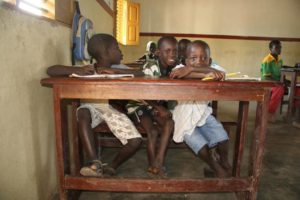
When discussing the development of some of the lower-income nations of the world, the English language has a tricky history. Some countries label English as their national language when a majority of their populations speak something else. There are also organizations, such as the Peace Corps, that teach English in developing nations with the intention of providing the students with more opportunities. However, some have widely debated the effectiveness of teaching English in other nations and its relation to development. This begs the questions: How might English improve a developing nation and what are some past results?
Expectations
The intentions behind teaching English in lower-income areas are usually positive. In 2011, the British Council identified four benefits of the English language including that it improves employability, provides international mobility, is a key for unlocking development opportunities and is a neutral language. Here is a breakdown of each of these points.
- Employability: English for the purpose of employability assumes that someone with English skills will be more competitive for a job.
- International Mobility: English for the purpose of increasing international mobility assumes that people with English skills are able to travel to other countries more easily, through methods such as studying in international schools or working in other countries.
- Development Opportunities: English as a key for unlocking development opportunities assumes that a lot of published information and research is in English and that acquiring English skills can grant access to a lot of that information.
- Neutrality: English as a neutral language occurs when an institution or country has several dialects, possibly with complex social connotations attached to them, that hinder easy communication. People can use English as a linking language to unify groups.
These four roles outline how people could ideally use English to help developing nations, but history has proven that it is rarely that simple or effective.
Reality
Now, with the establishment of the theoretical ways that English can help people, here is some evidence to show if reality meets the expectations.
In regards to English’s ability to help employment opportunities, a Sierra Leonean wrote a piece in 2020 in which she discussed this very problem. Sierra Leone’s schools teach English and most government positions speak it, but a majority of the population speaks Krio, a dialect similar to English.
This writer labeled English as a “burden on a majority of citizens aged 18-40.” She stated that children struggle to learn due to its usage in classrooms and that jobs often go to unqualified people because they can speak English. Essentially, they feel that it is unfair that people have labeled English as such an important skill while teachers ineffectively teach it to students. She acknowledged that English can be an opportunity to make citizens more globally competitive, but that there seems to be a disconnect between the education system and the people. In this instance, the mishandling of the execution of teaching English did not measure up to the expectations.
Despite the structural shortcomings, there are some observed benefits for English in developing nations. A 2011 study that the British Council commissioned concluded that learning English in a developing country can increase an individual’s earning power by around 25 percent. The study gathered the data from five countries: Nigeria, Bangladesh, Pakistan, Cameroon and Rwanda. The data revealed that the English speaking countries (Nigeria, Bangladesh and Pakistan) received more investment from other English speaking countries such as the U.S. and U.K. However, the report also shows that urban elites reap most of the benefits of speaking English, as they tend to have access to better schooling and higher-paying jobs.
Another benefit of speaking English is that some countries that outsiders previously did not visit, such as Sierra Leone, Mozambique and Ethiopia, are now growing tourist destinations. Many think that locals’ abilities to communicate with said tourists can increase interaction and commerce. In 2018, Africa accounted for only 1 percent of tourism earnings worldwide. Because of this largely untapped market, a lot of policymakers and business owners are hoping to find ways to appeal to more travelers.
African migrants often move to places such as the U.S. or the U.K. to flee economic hardships and human rights abuses. According to the 2019 census, African languages are the fastest growing in the United States.
However, English skills can greatly affect the success of African migrants entering English speaking countries. The BBC published a story in 2005 on Africans’ success in the U.K. It stated that “African-born immigrants are doing better than many other migrants.” It found that 81 percent of South Africans, 73 percent of Zimbabweans, 61 percent of Nigerians and 12 percent of Simoleans had employment. These figures deduced that English competency plays an important role in an African migrant’s ability to find employment in the U.K. and most likely other English speaking nations.
The Need for Balance
Essentially, what the evidence suggests is that teaching English as a tool for development could be beneficial, but currently there are a lot of obstacles surrounding the actual implementation process. English carries the stigma of colonization in several countries, so people often meet it with resistance. Conversely, in places such as Pakistan, people treat English as superior to native languages, which causes rifts between populations rather than unifying them.
Clearly a balance is necessary and there are specialists and organizations attempting that now. One method that seeks to maintain the integrity of native language while also presenting the opportunity to learn English is “Mother Tongue-Based Multilingual Education.”
A paper that Tove Skutnabb-Kangas wrote in 2013 cited examples of MLE in practice in Nepal, Sápmi and Ethiopia, and highlighted the positive effects the program had on students.
There are organizations, such as the Asia-Pacific Multilingual Education Working Group, that are currently attempting to utilize this method in places such as Thailand and Cambodia to strike a balance when integrating English in developing nations around the world.
English does seem to be a viable option for development in some instances, but in others, it can lead to added societal tension and obstacles for students. As implementation and teaching programs progress, hopefully, they will work out the negatives so citizens of low-income nations can just focus on creating more opportunities for themselves.
– Lindsey Shinkle
Photo: Flickr

How Ebola Survivors in the Congo are Giving Back
The Ebola epidemic that ravaged the Democratic Republic of the Congo (DRC) in 2018 claimed more than 2,250 lives. Doctors and nurses worked vigorously for months to treat patients and stop the spread of the deadly disease. Finally, in early March 2020, the DRC was able to announce that it had discharged its last Ebola patient. After the country’s lengthy battle with the virus, citizens are seeing that the end of the outbreak is finally within reach. With this new horizon in sight, here’s how Ebola survivors in Congo are giving back to their communities.
Interacting with Patients
There are more than 1,000 Ebola survivors in the DRC. These survivors have developed antibodies that can last up to a decade, allowing them protective immunity against Ebola. Essentially, if survivors come into contact with someone infected, they are not at risk of contracting the disease again.
This allows them to interact with sufferers who may feel isolated and alone during their treatment. Members of the Ebola Survivors Association were able to talk with and provide companionship to patients suffering from Ebola without making them feel alienated.
Spreading Awareness One Home at a Time
Members of the Ebola Survivors Association have been serving their community in Beni, a northeastern city in the DRC, by visiting homes to educate families on Ebola prevention strategies. One member, Gemima Landa, goes above and beyond as a way to thank the healthcare team that saved her life when she was infected.
Landa spends her week visiting countless neighborhoods in Beni. She shares her own story to enlighten families on how to stay healthy. She also makes regular visits to health centers to meet with mothers and pregnant women to explain to them how they have a crucial role in protecting their children against the deadly disease. Landa has been able to spread Ebola awareness and share life-saving information with hundreds of Congolese, and she isn’t the only survivor who’s making a difference.
Caring for Orphans of Ebola
With Ebola having taken so many lives across the country, it also left hundreds of children parentless as a result. Fortunately, survivors were quick to volunteer their time to step in and care for these orphans by providing love, attention and other necessities children desperately need during such a difficult time.
UNICEF also stepped in to help by partnering with survivors and opening nurseries close to Ebola treatment facilities. This is so that the caregivers would have a separate space to tend to the children. These nurseries provide daily screenings and checkups. Additionally, children who may have the disease can be cared for by survivors, who don’t have to risk being infected because they have developed an immunity.
There are now more Ebola survivors in the world than ever. The survivors in the Democratic Republic of the Congo have proven how valuable their help can be to impacted communities. If volunteers continue to band together and share their experiences, the world could be on its way to a healthier, Ebola-free future.
– Hadley West
Photo: Flickr
Economic Growth to Reduce Poverty in Russia
Poverty in Russia at the End of the 20th Century
After the U.S.S.R. collapsed, Russia faced huge difficulties leading to economic catastrophe. Finally becoming an independent democratic state in the 1990s, Russia began the transition from a command economy to a market economy. A record level of inflation and default took place in that period where people experienced an aggravated recession, ensuring a drop in income. Russian GDP per capita fell about 39 percent in real terms between 1991 and 1998.
Economic decline and political turbulence led to an increase in a criminogenic culture. Criminals in Russia became powerful and rich at the expense of the economy, all while the majority of the population became more and more impoverished. These obstacles formed exceptional economic inequality in the post-soviet state and impacted the increase of poverty in Russia.
Current Regime and the Economy
The economic situation changed dramatically with the power transition in the 21st century. From the beginning of Putin’s presidency in 2000 to the 2008 financial crisis, economic growth indicators reached impressive levels. For example, the average GDP grew by 26 percent on an annual basis. After the 2008 crisis, the economic situation has yet to regain the growth it once experienced.
One key factor of the Russian economy is oil prices, meaning a shift in price can be catastrophic to the nation. Another crucial factor is sanctions from the U.S. and other Western nations; the sanctions have a hefty impact on the poor economy, ultimately increasing poverty in Russia.
Halving the Poverty Rate
Despite the economic growth in the early 2000s, poverty in Russia remains a crucial issue; to combat poverty in Russia the state should take intense actions. In 2018, Putin signed a decree to reduce poverty in Russia by half by 2024. Today, Russian annual economic growth is at 1.5 percent. The current economic growth would indicate that the government would only be able to reduce the poverty rate by 10.7 percent by 2024. To meet the goal by 2024, the Russian government should strengthen the economy to increase annual GDP growth to at least 4.4 percent. The Russian government aimed to achieve this ambitious goal through a stimulus plan worth $400 billion that builds new infrastructure and investments.
Poverty in Russia is still a huge issue for the state and citizens. After the 2008 crisis, the Russian economy faces new challenges like a decrease in oil prices and economic sanctions. To combat poverty in Russia, the country should aim to strengthen its economy and reduce inequality.
– Elizaveta Naguslaeva
Photo: Piqsels
Children with Developmental Disabilities
Across all countries, 20.4 percent of children have at least one developmental disability. In developed countries like the U.S., many schools have resources for children with developmental disabilities, but in countries where a solid implementation of an education system is struggling to find a foothold, people with learning disabilities often face an additional, invisible hurdle.
Medical professionals conducted a study that screened populations for developmental disabilities throughout the world. A developmental disability is a type of disability that occurs before adulthood. Some of these are learning disabilities, but all of them impact a child during the prime educational years. The study first sorted countries based on HDI (Human Development Index) a score the U.N. gives to countries according to life expectancy, education and gross domestic product (GDP). In general, this means that countries with higher HDI are more developed, and those with lower HDI are less developed.
Out of a pool of 16 countries, this study included 101,250 children averaging 5 years of age. The countries with the highest number of children with developmental disabilities include Thailand, Bangladesh and Iraq.
Thailand has an HDI of 0.755, Bangladesh has one of 0.608 and Iraq has one of 0.685. For scale, Norway has the highest HDI at 0.953. Thailand ranks 83rd in the world for high human development (though still developing), whereas Bangladesh and Iraq lay in the “medium developed” range.
Thailand
The study concluded that Thailand had 12,911 children with a developmental disability. In Thailand, communities, professional groups and other social institutions provide education and learning centers, which serve as Thailand’s primary agents of education. Thailand has separate schools available for children with developmental disabilities. Thailand gives other resources, like communicative devices, to children with disabilities to aid in education. Thailand has different classifications of disabilities, like intellectual disabilities, learning disabilities and behavioral disorders, and different sorts of schooling options available to accommodate these different groups. The parents and the children can choose which system they would like to use, and it is available as a lifelong educational resource for them.
The Education for Development Foundation (EDF), founded in 1987, started a scholarship in 2003 with the intention of making education more accessible to children with developmental disabilities. This scholarship aims to support the physical, social and emotional development of Thai youth. To qualify, candidates must already demonstrate a certain level of communicative and learning ability.
Bangladesh
The study also found that in Bangladesh, there were 36,987 children with developmental disabilities. It also determined that the rate of enrollment for a primary school in Bangladesh was 97 percent, but only 11 percent of disabled children received any sort of education.
Approaching education with respect to disabilities, methodical diagnosing and treating physical ailments is not possible. A child’s environment has a larger role in deciding how a disability might appear. As such, many early childhood education specialists recommend an approach that relies more on the stage of development the child is in to see what children with disabilities are capable of learning. Similar to how Thailand’s education system handles children with disabilities, Bangladesh has different types of schools to choose from. Unfortunately, that sort of data is not readily available or consistent.
Many international efforts to improve educational and social infrastructure have aimed to support the needs of children with developmental disabilities in impoverished countries. As a result of the UNESCO Declaration on Education for All (1990), the Dakar Framework (2000) and the Salamanca Declaration on Inclusive Education (1994), Bangladesh is working to offer children with developmental disabilities an inclusive education alongside able-bodied children.
While this sentiment does bring the needs of children with developmental disabilities to light, it is not sufficient in clearing various obstacles that arise. One study surveyed educators on the barriers of educating children with disabilities. The results were that 11 out of 15 respondents answered ‘yes’ to a lack of the proper instruments and learning materials.
Iraq
The study showed that Iraq had 11,163 children with developmental disabilities. Malnutrition, an issue in many developing countries, can inhibit cognitive development, leading to learning disabilities and difficulties.
Further, one in three children suffers from an iodine deficiency in the Iraq and Afghanistan areas. This deficiency can result in a slew of health issues including goiter, learning difficulties and severe mental impairment in the worst cases. Statistics have shown that this environmental factor contributes to the rate of mentally disabled individuals. This adds pressure on Iraq to determine adequate educational accommodations for children with developmental disabilities.
Although, since the Iraqi society is advancing technologically, there are diverse ways to deliver education to children. This means that a wider range of people can receive education, including children with developmental disabilities. The United Nations Children’s Fund launched a series of e-projects in an attempt to standardize accessible, inclusive learning. These projects were available to all students – disabled or otherwise. About 4,000 schools had access to these e-projects, not only making education accessible to all but also providing equity to education.
Solutions
Disabled Peoples’ International (DPI), established in 1981, works on behalf of all disabled individuals to give them a proper place in education, the workforce and society alongside able-bodied counterparts. DPI is active in 139 countries and seven regions, including Africa, Asia and the Middle East. DPI also develops educational materials, promotes the rights of disabled people and collects data on disability issues.
In working with MPhasiS F1 Foundation, the organization is creating a Global Youth with Disabilities Network. This network will advocate for the representation of children with developmental disabilities throughout all levels of decision-making. The organization plans to ensure these youths have access to public transportation, health care, education and employment opportunities.
– Catherine Lin
Photo: Flickr
A View into Homelessness in India
India has a population of 1.3 billion and is the second most populated country in the world. While it has a booming economy and democratic government, it has nonetheless struggled with containing its population growth and maintaining an equal distribution of wealth. India’s GDP is worth $2.6 trillion, but so many remain sidelined by their country’s overpopulation and are struggling to find a roof over their heads. Homelessness in India is a growing issue, one that will require multilateral cooperation from various sources to overcome.
The Statistics
India is the second most unequal country in the world, with 55 percent of income going to the top 10 percent of its population. Since India’s population increased exponentially, many cities ran out of space to contain the growing population. According to the Homeless World Cup, there were about 1.8 million homeless individuals living in India as of 2019. Over half of this population was living in urban areas, such as slums on the edge of cities. Unfortunately, the majority of the homeless often experience displacement through government-endorsed city beautification programs or by natural disasters. Due to their lack of resources, those who are homeless and poor struggle to recover from these events.
Conditions
Most homeless people in India live on the streets of cities, under bridges, on highways or in any place they can seek refuge. Some maintain a nomadic lifestyle, where they roam around to find the best area for themselves and/or their families to live. In addition, they often face difficulties from the weather. This is especially prevalent during severe weather conditions, such as rain or snow. They have to use what is at their disposal to protect themselves.
Moreover, women are more prone to abuse, trafficking and harassment, especially if they live on their own or as single mothers. Even in slums, families have very limited access to basic resources and almost no access to sanitation. Additionally, illegal squatting makes up a majority of the slum population, so many families live in fear of eviction.
Solutions
Despite the alarming numbers, the country is making progress to combat homelessness and poverty in India. Each day, 44 people come out of poverty through the work of government initiatives. The Indian government has implemented initiatives to help the poverty-induced with housing. The most prominent example of this is the Housing for All Act, called Pradhan Mantri Awas Yojana. Declared in 2015 by Prime Minister Narendra Modi, this Act claims to build homes for the entire population by 2022 (when India reaches 75 years of independence). However, there is a lot of criticism about the act in terms of its feasibility.
Many critics claim that the federal government should actually follow in the footsteps of one of its states. In Kerala, the state government put another Housing for All Act in place, granting its homeless population free flats. As of April 2019, the state built the first set of flats that fit 145 families within a 270-flat complex. Kerala’s state government is surveying its homeless population and figuring out who qualifies for need-based housing and then building flats based on its findings. It plans to build over 400,000 flats. The government will cover all funding for the flats.
The Housing for All Act could solve homelessness in India. However, India still has a long way to go in order to achieve this ideal. The government initiatives are the first steps in figuring out how to end this chronic issue that India has had to deal with for decades.
– Shreya Chari
Photo: Flickr
Challenging Poverty Issues in Mexico
Mexico is in the southern area of North America. It is a beautiful country famous for its cuisine and tourism. However, the country is continuing to address several challenging poverty issues in Mexico.
Obesity Problem
Of all the challenging poverty issues in Mexico, obesity and the related health risks are the most common. The January 2020 OECD (Organization for Economic Co-operation and Development) report states that 72.5 percent of the population is overweight or obese. Poor diet has increased the obesity rate from one in five in 1996 to one in three currently; specifically, 34 percent of adults are morbidly obese. Childhood obesity has increased from 7.6 percent in 1996 to 15 percent in 2016.
Subsequently, diabetes-related hospitalizations occur at a rate of 249 per 100,000 people. Also, heart disease mortality is currently at 27.5 percent.
The OECD’s main concern is the accessibility of healthy foods for low-income households. The report recommends healthy lifestyle investment policies to restore health care resources, that the obesity pandemic is currently draining. A 20 percent calorie reduction has the potential to save as much as MXN$1.99 million per year in health care costs. Additionally, reduction of taxing sugary drinks and high-calorie non-essential foods would likely improve obesity rates.
Poverty Eradication
The next most challenging poverty issue in Mexico is that a large number of its population is in poverty. Of the 129.2 million citizens, an astronomical 52.4 million people are living in poverty and 9.5 million are living in extreme poverty.
For the year 2020, the government has mapped out a plan to address the complex poverty issues in Mexico. Specifically, devoting MXN$470,626 million to 25 ministry programs and trusts to reduce the poverty rates in the nation. Some programs will receive more funding than others, with 60 percent of the overall budget allocated for local government and pensions. The Well Being Ministry plans to distribute MXN$ 126.7 million for pensions to 6.8 million elderly and MXN$11,600 million to people with disabilities.
Health Insurance Problem
Another poverty issue in Mexico is health insurance coverage. With 89.3 percent of the population with health insurance coverage, the total out-of-pocket expenses are typically 41 percent.
The Health Ministry plans to distribute MXN$79,900 million to health care for marginalized communities through the Seguro Popular program. In 2018, this program reached 52.8 million people that Mexico’s Social Security Program did not cover. Seguro Popular provides primary and secondary care through state-run facilities. The goal is to reach as many uninsured citizens as possible, especially those over the age of 50, who now rely on institutions that the Secretary of Health manages.
The Elephant in the Room
The most challenging poverty issue in Mexico is the immigration of refugees from the Northern Triangle of Central America (NTCA) which consists of three countries: El Salvador, Guatemala and Honduras. Some 500,000 desperate people have taken the perilous 541-mile journey to flee the violence there only to find more violence en route.
In a heroic effort to help meet these poverty issues in Mexico, Doctors Without Borders maintains a large presence. Mobile clinics patrol the network of freight rail lines, dubbed La Bestia, that runs the length of Mexico from the border of Guatemala all the way north to the United States border. Migrants risk their life and limbs to jump the trains and shorten their trip to the United States. In the past, men typically used the railway, but women, children and sometimes entire families are increasingly using the route.
Besides the railways, and in many cases collaborating with the Ministry of Health, Doctors Without Borders maintains a presence across Mexico. Clinics for migrants and refugees exist at the northern border in Tijuana; the eastern border in Nuevo Laredo, Reynosa and Matamoros; Coatzacoalcos on the gulf coast; Mexico City in the central-lower peninsula; Chalchihuitan and Tenosique in the lower peninsula; the Norte, Centro and Tierra Caliente regions of Acapulco; and Guadalajara on the western side of the upper peninsula.
The clinics provide food, medical and psychological care, occupational therapy, referrals for social assistance, legal advice and employment. Treatment for travel-related injuries and illnesses among the migrants and refugees run the gamut from respiratory infections, skin infections, foot injuries, injuries from falls and physical and psychological violence. In Mexico City, Doctors Without Borders runs a safe shelter specifically for victims of extreme violence and the Acapulco clinics have shifted focus to emergency response and treatment for victims of sexual violence.
Despite the challenging poverty issues in Mexico, the country is making real progress to ensure that its citizens get health care and opportunities that will help them rise above the fray. People should commend the Mexican government and the Mexican Health Ministry for their accomplishments and continued work under such difficult circumstances.
One way U.S. citizens can make a difference is to contact congressional leaders and voice a desire for an improved relationship between Mexico and the United States. An improved relationship will address poverty issues in Mexico through foreign aid.
– Lorna Kelly
Photo: Flickr
The Impact of English in Developing Nations
When discussing the development of some of the lower-income nations of the world, the English language has a tricky history. Some countries label English as their national language when a majority of their populations speak something else. There are also organizations, such as the Peace Corps, that teach English in developing nations with the intention of providing the students with more opportunities. However, some have widely debated the effectiveness of teaching English in other nations and its relation to development. This begs the questions: How might English improve a developing nation and what are some past results?
Expectations
The intentions behind teaching English in lower-income areas are usually positive. In 2011, the British Council identified four benefits of the English language including that it improves employability, provides international mobility, is a key for unlocking development opportunities and is a neutral language. Here is a breakdown of each of these points.
These four roles outline how people could ideally use English to help developing nations, but history has proven that it is rarely that simple or effective.
Reality
Now, with the establishment of the theoretical ways that English can help people, here is some evidence to show if reality meets the expectations.
In regards to English’s ability to help employment opportunities, a Sierra Leonean wrote a piece in 2020 in which she discussed this very problem. Sierra Leone’s schools teach English and most government positions speak it, but a majority of the population speaks Krio, a dialect similar to English.
This writer labeled English as a “burden on a majority of citizens aged 18-40.” She stated that children struggle to learn due to its usage in classrooms and that jobs often go to unqualified people because they can speak English. Essentially, they feel that it is unfair that people have labeled English as such an important skill while teachers ineffectively teach it to students. She acknowledged that English can be an opportunity to make citizens more globally competitive, but that there seems to be a disconnect between the education system and the people. In this instance, the mishandling of the execution of teaching English did not measure up to the expectations.
Despite the structural shortcomings, there are some observed benefits for English in developing nations. A 2011 study that the British Council commissioned concluded that learning English in a developing country can increase an individual’s earning power by around 25 percent. The study gathered the data from five countries: Nigeria, Bangladesh, Pakistan, Cameroon and Rwanda. The data revealed that the English speaking countries (Nigeria, Bangladesh and Pakistan) received more investment from other English speaking countries such as the U.S. and U.K. However, the report also shows that urban elites reap most of the benefits of speaking English, as they tend to have access to better schooling and higher-paying jobs.
Another benefit of speaking English is that some countries that outsiders previously did not visit, such as Sierra Leone, Mozambique and Ethiopia, are now growing tourist destinations. Many think that locals’ abilities to communicate with said tourists can increase interaction and commerce. In 2018, Africa accounted for only 1 percent of tourism earnings worldwide. Because of this largely untapped market, a lot of policymakers and business owners are hoping to find ways to appeal to more travelers.
African migrants often move to places such as the U.S. or the U.K. to flee economic hardships and human rights abuses. According to the 2019 census, African languages are the fastest growing in the United States.
However, English skills can greatly affect the success of African migrants entering English speaking countries. The BBC published a story in 2005 on Africans’ success in the U.K. It stated that “African-born immigrants are doing better than many other migrants.” It found that 81 percent of South Africans, 73 percent of Zimbabweans, 61 percent of Nigerians and 12 percent of Simoleans had employment. These figures deduced that English competency plays an important role in an African migrant’s ability to find employment in the U.K. and most likely other English speaking nations.
The Need for Balance
Essentially, what the evidence suggests is that teaching English as a tool for development could be beneficial, but currently there are a lot of obstacles surrounding the actual implementation process. English carries the stigma of colonization in several countries, so people often meet it with resistance. Conversely, in places such as Pakistan, people treat English as superior to native languages, which causes rifts between populations rather than unifying them.
Clearly a balance is necessary and there are specialists and organizations attempting that now. One method that seeks to maintain the integrity of native language while also presenting the opportunity to learn English is “Mother Tongue-Based Multilingual Education.”
A paper that Tove Skutnabb-Kangas wrote in 2013 cited examples of MLE in practice in Nepal, Sápmi and Ethiopia, and highlighted the positive effects the program had on students.
There are organizations, such as the Asia-Pacific Multilingual Education Working Group, that are currently attempting to utilize this method in places such as Thailand and Cambodia to strike a balance when integrating English in developing nations around the world.
English does seem to be a viable option for development in some instances, but in others, it can lead to added societal tension and obstacles for students. As implementation and teaching programs progress, hopefully, they will work out the negatives so citizens of low-income nations can just focus on creating more opportunities for themselves.
– Lindsey Shinkle
Photo: Flickr
7 Facts About Women’s Health for Syrian Refugees
Top 7 Facts About Women’s Health for Syrian Refugees
These seven facts about women’s health for Syrian refugees show that there is important work to be done. Thankfully, there are organizations working on addressing the needs of refugees, especially women.
– Alyson Kaufman
Photo: Flickr
7 Facts About Measles in Bulgaria
Though the increased distribution of vaccines has nearly eradicated measles around the world, countries have recently seen returning outbreaks. Bulgaria’s outbreak is one of the worst. However, the nation is working to control the measles outbreak with the help of vaccinations and strict government procedures. Here are the top 7 facts about measles in Bulgaria.
7 Facts About Measles in Bulgaria
Though Bulgaria’s recent measles outbreaks are distressing, the country has worked hard to protect as many people as possible. Additional efforts are aimed towards preparedness for the possibility of future outbreaks of measles in Bulgaria. With an increase in vaccines and a focus on the disease by medical professionals, Bulgaria will be able to keep measles under control.
– Alyson Kaufman
Photo: Pexels
Elton John’s Impact Through Five Organizations
Elton John’s Involvement
Throughout his career, Elton John has championed numerous causes, earning him awards such as the Peter J. Gomes Humanitarian of the Year Award in 2017 and the BAMBI Award in 2004. John has performed at countless benefit concerts, raising awareness for organizations that range from rainforest conservation to supporting first responders during the COVID-19 pandemic. Elton John has made a lasting impact on the world, using his star-studded platform for good.
– Megan McKeough
Photo: Flickr
Top 8 Accomplishments Made By Thorn
Top 8 Accomplishments Made by Thorn
Being less than 10 years old, Thorn has accomplished many things is a short period of time. Though the organization has fewer than 40 employees, Thorn is still able to continuously create and evolve its technology. Thorn already benefits thousands of children worldwide. It will continue to fight child sexual exploitation and trafficking for years to come.
– Alyson Kaufman
Photo: Flickr