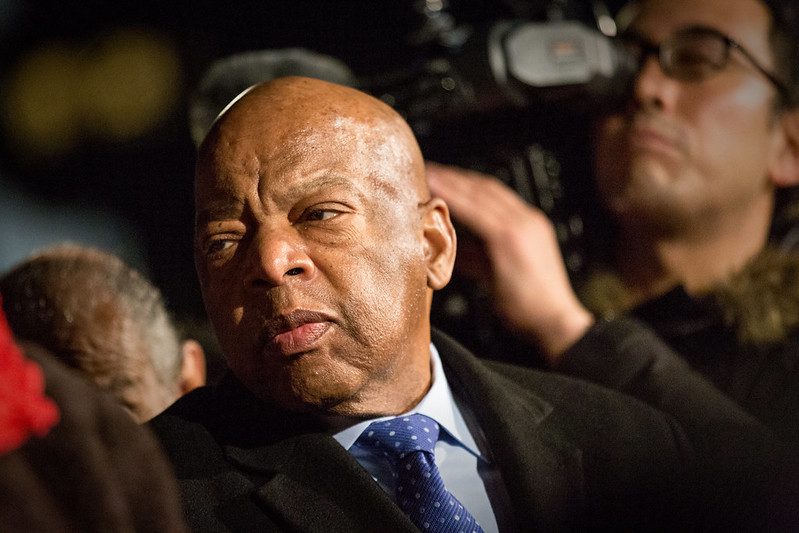
John Lewis was an American civil rights leader and activist, a respected representative for Georgia’s fifth congressional district for over 30 years and a champion for reducing global inequalities. John Lewis introduced or sponsored at least 23 bills and resolutions that influenced U.S. foreign relations, humanitarian aid and advocacy. While some of his bills did not pass at the time, John Lewis’s globally-minded legislative style set a precedent for advocating for the world’s poor through legislative action.
Timeline of John Lewis’s Foreign Affairs Legislation
1999-2000
Under the Clinton Administration, John Lewis sponsored H.Con.Res.348. This resolution officially declared that Congress condemns the use of children as soldiers in any context. It provided guidelines on addressing the use of child soldiers, reintegration approaches for former child soldiers and incentives for foreign armies or organizations to dismantle exploitative child soldier systems.
2007-2008
Under the Bush Administration, Lewis sponsored H.R.2522, which defined modern-day slavery and enabled the government to better restrict it. Lewis’s bill called for a congressional commission to address the ways global modern-day slavery creeps into economic systems. The bill addressed how modern-day slavery targets vulnerable populations and requires intervention. This legislation would have also affected U.S. trade relations at the time, pressuring the government to halt trade with nations known to endorse modern-day slavery.
In 2008, Lewis introduced H.RES.1169. This resolution pushed the U.S. to advance its stance on eliminating discrimination and all forms of human or civil rights abuses. The resolution had both a domestic and international focus. It proposed to recommit several NGOs and governmental bodies that promoted equity.
2009-2010
Under the Obama Administration, Lewis reintroduced H.RES.1169 with slight wording changes. This resolution continued to advocate for the U.S. to step up as a global human rights leader. That same year, John Lewis also introduced H.R.3328 and H.Res.948. The first resolution called on the Secretary of State to collaborate with India in funding the Gandhi-King Scholarly Exchange Initiative, an educational and professional exchange program. While that bill did not pass, the other resolution officially endorsed the organizers and participants of the World March for Peace and Nonviolence.
After the U.N. General Assembly declared July 18 International Nelson Mandela Day, Lewis also introduced H.Res.1518. This resolution expressed the U.S.’s support for the U.N.’s action, which recognized Mandela’s progression of the nonviolent fight for equality under the law. This legislation also called on U.S. citizens to appreciate democracy, discourse and peace domestically.
2011-2016
Throughout the 112th, 113th and into the 114th congressional sessions, Lewis continued to introduce versions of his previous legislation. Lewis reintroduced H.Res.1518, regarding International Nelson Mandela Day, in 2011, 2013 and 2015. In those same years, John Lewis also restructured and then reintroduced what was originally H.RES.1169, regarding the U.S.’s commitment to protecting human rights globally. The new versions of the resolution maintained all components but did not specify to which conventions the U.S. must recommit, leaving room for expansion.
In 2011, 2013 and 2016, Lewis also reintroduced revised conditions for the Gandhi-King Scholarly Exchange Initiative bill. In 2016, Lewis introduced a new resolution, H.Con.Res.158, which focuses on the importance of U.S. citizens and government recognizing the 35th annual International Day of Peace.
2017-2018
This time, under the Trump Administration, John Lewis persisted through the 115th congressional session. Despite blockage from other congressional leaders on several bills, he reintroduced legislation centered on humanitarianism. In 2017, Lewis first reinstated recognition of International Nelson Mandela Day, then of the International Day of Peace. He lastly revised the bill intended to strengthen the Gandhi-King Scholarly Exchange Initiative.
2019-2020
In his last year serving, at the age of nearly 80, John Lewis continued to advocate and reintroduce globally-conscious legislation. Lewis again dedicated floor time to the Nelson Mandela International Day resolution, and then again to the International Day of Peace resolution. At the end of 2019, Lewis introduced a new resolution, H.R.5517. This bill had the same goals as the previous Gandhi-King Scholarly Exchange Initiative legislation Lewis introduced. However, Lewis amended the bill to include rhetoric affirming the altruistic intentions of the U.S. in collaboration with India. The 116th congressional session is still unfolding. This is an opportunity for other congressional leaders to pass the initiative Lewis pushed for over a decade.
Aside from his decades of success in public service and activism, John Lewis’s persistence in the congressional fight for global equity has paved the way for future lawmakers. John Lewis thought and acted as a global citizen. Despite setbacks and congressional stalemate, Lewis consistently and creatively committed the U.S. to the advancement of conditions for the world’s poor. Lewis leaves behind a legacy of care and compassion, ready for the next generation of American citizens and politicians to adopt.
– Caledonia Strelow
Photo: Flickr

Trypanosomiasis in the Central African Republic
Trypanosomiasis, a parasitic infection that is transmittable to humans through bites from the tsetse fly, is an illness common only among those living in sub-Saharan Africa. People living in rural areas and those who depend on agriculture, hunting or fishing for their food are most exposed to the infection. Poverty, war and failed healthcare systems can contribute to the spread of trypanosomiasis. Proper diagnosis requires a skilled staff and early treatment can help prevent the infection from worsening. The Central African Republic (CAR) has the highest number of cases of the disease in the world. Trypanosomiasis in the Central African Republic is a pressing health issue, which demands sustained funding for treatment and medical training.
About the Infection
Also known as human African sleeping sickness, trypanosomiasis is most prevalent in the 36 sub-Saharan African countries, including the CAR. There are two types of trypanosomiasis. Depending on which parasite causes the disease, an infected individual could have Trypanosoma brucei rhodesiense or Trypanosoma brucei gambiense (the more common of the two). If an individual becomes sick with the latter, symptoms can go unnoticed for months or years before the infection begins to affect their central nervous system. Symptoms include fever, headaches, confusion, poor coordination and irregular sleep patterns. Transmission of trypanosomiasis can occur from mother to child, a tsetse fly bite or sexual contact with an infected person.
If trypanosomiasis goes untreated, an individual can experience worsening symptoms and can eventually enter a coma — hence the infection’s nickname (sleeping sickness). People in the CAR are especially susceptible to contracting the disease from doing agricultural work. Much of the population of the CAR lives in rural areas, depending heavily on subsistence farming to survive. More than 55% of the nation’s GDP stems from agriculture and 80% of the workforce is in the farming industry. Since citizens are dependent on farming and hunting for their food, they are at a higher risk of exposure to the tsetse fly and thus, have an increased rate of contracting trypanosomiasis.
Treating Trypanosomiasis
Infected individuals’ symptoms often go unnoticed or untreated. The CAR’s political climate, high poverty rate and lack of proper healthcare centers all facilitate the spreading and worsening of the infection. As of 2018, more than 71% of the population lived below the world’s poverty level, meaning that medical staff and treatment were inaccessible to most citizens living with trypanosomiasis in the Central African Republic. The country is also recovering from the violence of late 2013, which left many hospitals and offices ransacked or closed. Due to these various factors, citizens suffering from trypanosomiasis in the Central African Republic have few options for testing and medication.
There is one well-known medication that can treat the disease, called nifurtimox-eflornithine combination therapy (NECT). Though NECT can significantly help patients with trypanosomiasis, the treatment includes multiple injections and close monitoring of the symptoms — both of which are usually unavailable or difficult to follow through to completion.
The Good News
However, with combined efforts from the government and other organizations, more patients suffering from the illness are receiving treatment. With help from the World Health Organization (WHO), CAR’s government is monitoring the cases and number of deaths from trypanosomiasis and working to provide more clinics, healthcare professionals and medication. The WHO and CAR’s health sectors aim to eliminate transmission of the disease by 2030. With only 997 cases and 164 deaths reported in 2018 (the lowest number in the 80-year battle with the disease), the CAR is on track to reach this goal partially due to consistent outside aid.
One notable international organization, Médecins San Frontières, mobilizes doctors and nurses throughout the CAR to provide free diagnoses and medication for those who have trypanosomiasis. Citizens are made aware of the free medical care and the organization can screen thousands of patients.
Over the next few years, help from organizations like the WHO and Médecins San Frontières can lead to adequate testing and medication for citizens with trypanosomiasis in the Central African Republic. It is imperative that organizations and countries in a position to help — contribute trained medical staff, funding and medicine to aid in the CAR’s fight against trypanosomiasis.
– Danielle Kuzel
Photo: Flickr
Uplifting Women Through Economic Empowerment in India
India is located in South Asia and has a population of about 1.3 billion people. The country is mostly known for its agricultural work, multiple languages and cultural communities. Also, India has been a part of the U.N. since its creation in 1945. Currently, the country is attempting to grow its economy and reach the technological level of first world countries. Yet, among many issues that India needs to recognize is gender and class inequalities within its workforce. One solution is uplifting women through economic empowerment.
The Legacy of India’s Caste System
In India, caste and ethnic background still play a major role in the workplace — which can lead to people remaining stuck in underprivileged communities. Many believe that women may be educated but should nevertheless, remain housewives after marriage. Recently, many women have married, subsequently left their jobs and then attempted to return to work after many years of absence. Saundarya Rajesh, who holds a doctorate in Women’s Workforce Participation and hails from Chennai, recognized that there were not many women in white-collar jobs and that class differences were preventing women’s acceptance, when restarting their careers. Rajesh herself was a second-career woman in a white-collar job, who felt the pressure to choose between work and family. Her experiences led to her beginning Avtar I-Win in 2005, with the aim of helping women in similar situations to her own.
Avtar I-Win Empowers Women
The first step for Avtar I-Win was connecting women with job opportunities — helping showcase their resumes or launch their careers. Rajesh wanted the corporate workforce to create or allocate jobs for women — many of these jobs only men held. The Avtar I-Win group has completed 15,000 successful placements and the group continues to place women in new careers. The group’s main goal is to uplift women through economic empowerment in India. As the program grew, the organization cultivated a counseling service with a focus on life decisions and career development, called WINSIGHT. The service, run by qualified experts, provides a way for women to gain mentorship themselves and grow into mentors for other Avtar women.
With the growth of the organization, Rajesh and her board have added new aspects to their organization — always seeking to instill career intentionality and independence in girls, from a young age. With this mindset, girls can make their way out of poverty, forced marriages and sexual and domestic abuse — eventually increasing the corporate talent pool of India. Seeing the success and positive impact of Avtar I-Win, Rajesh began Avtar Human Capital Trust (AHCT) in 2008, which is a charitable not-for-profit organization.
Reaching Women in Poverty
Rajesh and her team noticed that even though they helped women restart their careers; education and financial barriers prevented them from reaching all women. Headquartered in Chennai, AHCT addresses gender inequality across the states of Tamil Nadu and Pondicherry — providing financial help for women and students in underprivileged communities. By doing so, AHCT allows women to focus on preparing and aspiring for professional careers.
With the support of companies willing to hire more women, AHCT and Avtar I-Win have launched programs such as Project Puthri and FLEXI Careers in India. Project Puthri focuses on helping girls from a young age, so they can graduate with the purpose of attaining corporate jobs. The organization’s current goal is to help 10,000 girls per year across Tamil Nadu and Pondicherry. The board believes that with more women contributing to India’s GDP, the country will become more prosperous and communities will rise out of poverty. FLEXI Careers supports this mission through diversity and inclusion consulting. The organization focuses on an array of services to make the corporate world an inclusive workplace for women from underprivileged communities.
Female Empowerment and the Future
Saundaraya Rajesh founded her organization on helping and believing in women from communities of poverty. Yet, she understood that women needed assistance in obtaining careers for which many (especially family-oriented women in poverty) experienced great barriers to entry. Along with other pioneers in workplace inclusivity, Rajesh is uplifting women through economic empowerment in India — introducing programs on technology, economic empowerment, health and hygiene education for women who need extra support to succeed in the corporate world.
– Sumeet Waraich
Photo: Pxhere
The Rising Problem of Homelessness in Cyprus
Homelessness in Cyprus is increasingly becoming a problem, or at least, many are just now recognizing it as a problem. Thousands of families are unable to afford the high rents and loan installments. Furthermore, asylum-seekers from a number of countries such as Syria, Cameroon, Somalia and Iraq are unable to find housing. However, the Ministry of Labor claimed in 2019 that “there isn’t a single person living on the street, not one homeless person exists.”
The leaders of Cyprus claim that the economy has spectacularly recovered from a 2012 to 2013 economic crisis in which the second-largest bank shut down and the largest, the Bank of Cyprus, had to seize deposits from savers in a bid. The government bailed out the economy, and Cyprus was able to repay the emergency liquidity assurance and regain the trust of its people. While it is true that Cyprus has made a remarkable recovery, the country cannot continue to ignore its housing problem.
Although the government has generally failed to recognize and take action against the problem of homelessness in Cyprus, here is some information regarding how Cypriots are coming together to make a difference.
Housing for All
Created in 2019, an alliance called Housing for All unites 20 social organizations together to fix the housing problem. It put forward demands and proposals to address the issue of homelessness across the European Union.
SXEDiA Shelter
A new center for the homeless opened on July 15, 2020, in Limassol called SXEDiA. The center, led by Nicos Nicolaides, teamed up with the Labor Ministry and provides shelter and support. The center’s goal is for homeless people to gain skills to re-enter the workforce. It also works to help the homeless strengthen support networks and find housing. Cyprus’ lack of data on the homeless population fuels the problem, so the group will also collect and monitor data. This is one of the first temporary accommodation centers in Cyprus.
UNHCR
The United Nations Refugee Agency (UNHCR) is advocating for Cyprus’ homeless, specifically the refugees. The Cyprus Refugee Law guarantees asylum-seekers immediate access to housing and social assistance after applying. However, the system currently fails to deliver on these promises. One problem is the time it takes to receive these applications, leaving many homeless and without money for long periods of time. The Kofinu Reception Center is no longer admitting single asylum-seekers, further exacerbating the problem.
However, the UNHCR claims the problem is avoidable. By allowing refugees to work as early as possible, they will become independent of state welfare and also contribute to the development of Cyprus’ economy. The UNHCR pushes for the government to review the current policy on asylum-seekers so that they can ensure a certain standard of living. They also push for assisting asylum-seekers outside of organized centers so they can more easily integrate into society.
Although homelessness in Cyprus does not seem to be a pressing problem due to the “very low rates,” it is much more of a problem than many realize. The limited statistical information hides the issue, but the number of those without housing is rising dramatically. Luckily, various organizations are taking action to ensure that the thousands in need of housing will receive it. Through direct action, Cyprus can solve its homelessness problem.
– Fiona Price
Photo: Flickr
Students Learn Via Radio During Pandemic
As a result of the COVID-19 pandemic, about 297 million students in Africa—and 1.29 billion worldwide—have experienced school closures. These schools must quickly produce and distribute distance learning materials, often through online programs and television broadcasts. Students who lack television or internet access are at risk of falling behind. Therefore, many students from impoverished communities are at a disadvantage. However, according to UNESCO, 75% of all households worldwide have radio access. Similarly, nine out of 10 households have radio access in sub-Saharan Africa. Thanks to innovative groups like the Rwanda Education Board, students are able to learn via radio.
State, private and community radio stations have been airing educational broadcasts to make remote learning more accessible during the pandemic. In the Democratic Republic of the Congo, Okapi Ecole, a radio network that the United Nations sponsors, broadcasts educational programs for students in primary and secondary school twice a day. Students are also able to learn via radio in Peru; the “Aprendo en casa” initiative uses multiple platforms, including radio, to teach lessons on math, Spanish, art and other subjects. This article will provide more examples of the radio broadcast programs that have emerged to make learning engaging and equitable during the pandemic.
Literacy and Hygiene in Rwanda
Because of COVID-19 related school closures, 3 million students in Rwanda lack the option to attend school in person. In April 2020, the Rwanda Education Board started to broadcast radio learning programs. These broadcasts air for six hours every weekday and aim to improve literacy among students in primary school. Almost all children in Rwanda attend primary school; however, according to UNICEF, primary students in Rwanda “score too low in numeracy and literacy exams.” High-quality and widely accessible radio broadcasts can prevent students from falling behind on their literacy skills. As a result, students will be prepared to return to school. Additionally, UNICEF has partnered with the Rwanda Broadcasting Agency to broadcast literacy and numeracy classes across the country.
A series of radio dramas have also helped educate Rwandans about the importance of hygiene and how to reduce the spread of diseases like COVID-19. Young people wrote these plays and produced them alongside WaterAid, a nonprofit organization. Each of these plays broadcasted to about one-third of the country’s population, reaching millions of people.
UNICEF Funds Educational Broadcasts in Côte d’Ivoire
In March 2020, UNICEF provided Côte d’Ivoire’s Ministry of National Education with $70,000 for distance learning during the COVID-19 pandemic. With the help of this contribution, the Ministry introduced free educational radio and television broadcasts as part of its “Mon école à Maison,” or “My School at Home,” program. This program contains resources for students in preschool, primary school and secondary school. Unfortunately, gender inequality and poverty are high in Côte d’Ivoire. Programs like “Mon école à Maison” are ensuring that all students will be able to continue their education.
Rising on Air Initiative Reaches Students in Africa And Beyond
Rising Academy Network aims to improve the quality of schools in Liberia and Sierra Leone. The company is expanding its reach and curating its lessons to engage students during the pandemic. They have created a free resource for distance learning materials called Rising On Air. This distance learning tool shares lessons so millions of students can learn via radio and SMS. Rising On Air also provides a free 20-week program of lesson scripts and pre-recorded audio. These lessons are personalizable to fit educators’ specific goals. Lessons are available for students of all ages; there are programs designed for children aged three to five with a “family-child interaction component.” Rising On Air also offers literacy and numeracy classes for students from kindergarten to 12th grade. Furthermore, every lesson begins with a message about health and safety for students and their families.
UNICEF finds that “more than 50% of school-age children” in African countries have the resources to learn via radio. UNICEF also states that radio broadcasts have “an important role to play” in the COVID-19 education response. Rising Academy Network collaborates with organizations across the African continent and beyond. Additionally, Rising Academy Network partners with the governments of Sierra Leone, Liberia, Gambia, Chad and Guinea.
Conclusion
According to UNICEF, although “marginalized children are more likely to be in homes with fewer learning resources,” radio broadcasts have “the potential to reach almost all children, including the poorest.” Higher education rates directly connect to higher employment rates and reduced income inequality, as well as healthier and more democratic societies. Progress towards ending global poverty is at risk of unraveling. It is critical that students around the world have the opportunity to succeed in school. With the help of radio broadcasts, students in impoverished communities can continue to learn during the COVID-19 pandemic and return to school ready to move forward.
– Rachel Powell
Photo: Flickr
3 Factors Perpetuating Poverty in Puerto Rico
Puerto Rico is a Caribbean island and United States territory which has struggled with poverty long before the COVID-19 pandemic. In 2019, of Puerto Rico’s 3.2 million people, 43.1% of the total population and 57% of children lived in poverty. For comparison, the U.S. national poverty rate was drastically lower at 13.1%. Poverty in Puerto Rico has become a chronic issue as a long-term recession resulted in massive debt. The island has also endured multiple disasters, the most recent being Hurricane Maria and COVID-19. These hardships have weakened Puerto Rico’s economy, infrastructure and health systems and have left vulnerable groups even more susceptible to poverty. However, Puerto Ricans have demonstrated remarkable resilience and current efforts are helping to improve this situation. Here are three factors perpetuating poverty and COVID-19 in Puerto Rico, and what some are doing to change these circumstances for the better.
Recession
While external factors have exacerbated poverty in Puerto Rico, the current crisis has been building in conjunction with a decade-long recession. Economic growth fell by 10% between 2004 and 2018, with an unemployment rate above 8% and a declining population compounding this deficiency. Some elements such as the encouragement of Puerto Rico’s reliance on U.S. loans to fill federal funding gaps, a 1996 change that mandated Puerto Rican businesses begin paying taxes—in contrast to their previous tax-free status under the Internal Revenue Code Section 936—and the 2008 financial crisis, which further lowered tax revenues and caused large-scale unemployment, have mainly fueled this debt crisis. These issues have culminated to create massive debt and a chronic recession that has exacerbated poverty within the territory.
The most notable improvement effort occurred with the creation of the 2016 Puerto Rico Oversight, Management and Economic Sustainability Act (PROMESA), which oversees Puerto Rico’s finances and works to restructure its debt. In 2019, PROMESA announced a plan to reduce the island’s debt by one-third to enable it to function under less financial stress and better support people in need.
Hurricane Maria
In addition to this long-term recession, the country’s vulnerability to severe hurricanes has perpetuated poverty in Puerto Rico. The most recent hurricane was also the most destructive in nearly a century. Hurricane Maria struck Puerto Rico on September 20, 2017, and its destruction created lasting consequences. In addition to destroying thousands of homes and causing $94.4 billion in infrastructural damage, Maria wiped out about 80% of the island’s agriculture. Immediately following the hurricane, 100% of the island lost power for months and lacked access to necessary items including water, food, medicine and fuel. Though the U.S. government has promised increased funding to help fix the island’s damaged infrastructure, repairs have been slow and people are advocating for increased disaster relief funding.
Puerto Rico has repaired much of its infrastructure and widely improved living conditions. Meanwhile, the return of tourism has helped boost the economy in the three years following Hurricane Maria. Efforts by nonprofits and citizen groups have also helped bring attention to the issues that remain and attract funding to transform temporary band-aids into long-term solutions.
COVID-19
Three years after Hurricane Maria, Puerto Rico is now facing a daunting new crisis: COVID-19. The declining population, a long-term recession and extensive hurricane damage have left Puerto Rico with a largely poor and elder population, both factors that increase vulnerability to the disease. Following Hurricane Maria, the portion of the population over age 65 increased from 14% in 2008 to 21% in 2018 as many working-age adults sought better employment opportunities in the U.S. mainland.
The high poverty level is affecting the quality of life during quarantine, as Puerto Rico has not rebuilt many homes following Hurricane Maria. Meanwhile, those who previously struggled financially are now jobless.
Due to its status as a territory, the U.S. federal government does not prioritize Puerto Rico in terms of crisis management. Although Puerto Rico receives federal funding to support critical programs such as Medicaid, this funding is insufficient under regular circumstances and does not adapt to meet Puerto Rico’s unique needs. Puerto Rico has received some extra provisions under the Coronavirus Aid, Relief, and Economic Security (CARES) Act, however, including stimulus checks, expanded unemployment benefits and temporarily increased Medicaid funding. However, these funds comprise only a fraction of what states receive. Advocates for Puerto Rico urge policymakers to consider the fact that Puerto Rico entered the pandemic in a more vulnerable position than the U.S. when determining whether to extend funding.
Potential for a Better Future
Puerto Rico’s experience with frequent disasters has taught citizens to be self-sufficient and prepare for when disaster strikes. This silver lining helped the island quickly transition into lockdown in early March 2020, and citizens and organizations quickly acted in times of need to disburse basic necessities and medical supplies around the island to the sick and elderly.
The disasters that Puerto Rico continues to experience ravages the small island and further plunges residents into poverty. However, some are executing significant efforts to improve the territory’s infrastructure, health care systems and general living conditions. To effectively combat the factors perpetuating poverty and COVID-19 in Puerto Rico, plans to reduce debt and boost the economy are on the horizon.
– Angelica Smyrnios
Photo: Flickr
Tackling Hunger in Equatorial Guinea
It stands as the only Spanish-speaking country in Africa, gaining independence from Spain in 1968. Natural resources are dominated by offshore oil reserves, which were discovered in 1995.
Equatorial Guinea has been referred to as a classic example of the “paradox of plenty.” This “resource curse” occurs when an abundance of natural resources leads to a lack of attention to activities to improve economic outcomes, which are then less in comparison to countries with fewer natural resources. At one time, EQG had the highest per capita income in Africa, but this has been coupled with limited social development, and life expectancy and infant mortality below the average for sub-Saharan Africa. This is in part explained by political corruption and limited health and education investment.
The last several years have seen lower-than-expected oil production and prices that, along with global economic events not under the country’s control, have led to a continuing recession, with an exaggerated impact on the most vulnerable. These factors are not likely to change, making economic diversity—especially increasing private activity in non-oil sectors—a high priority.
The government’s most recent economic strategy includes the objective to attract private investment, as well as to prioritize the blue and green economy, energy and tourism and the digital sector.
Hunger and Food Insecurity
Less than 5% of Equatorial Guinea’s GDP comes from agriculture, and less than 30% of demand can be met by domestic food production, with 80% of the population unable to meet their daily nutritional needs. This leads to dependence on imports for food consumption. COVID-19 and Ukraine war supply chain issues have resulted in food price inflation and a high level of food insecurity.
It is difficult to assess the state of hunger and nutrition in Equatorial Guinea because of the sparsity of data available, some of which are five to 11 years old. The most recent Global Nutrition Report for EQG (2022) reports that the country is “on course” for maternal, infant and young child nutrition, and for overweight children under 5 years old (9.7% affected); has made some progress regarding childhood stunting (26.2%—lower than the Africa regional average) and reducing anemia among women of reproductive age (44.5%). For several indicators—sodium intake, raised blood pressure, obesity and diabetes)—the report notes the country is “off course.” The report also notes no national policies regarding the global nutrition targets of women’s anemia, birthweight, breastfeeding, obesity, high blood pressure or diabetes.
The Global Hunger Index 2023 reports that EQG’s child stunting (% of children under 5 years old) is around 25% and child mortality and wasting are both under 10%. While all three indicators have declined since 2000, especially child stunting, which was over 40%, there has been virtually no change in the last decade. Undernourishment data were not available.
Food Security, Agriculture and Climate Control
Equatorial Guinea is vulnerable to the impacts of climate change due to rising coastal sea levels, droughts, frequent storms, floods, rising temperatures and extreme weather events, all of which impact the agricultural sector.
In September 2023, the Government of EQG expressed interest in receiving support from the SCALA program, an initiative of the United Nations Development Programme and the Food and Agriculture Organization of the United Nations: Scaling up Climate Ambition on Land Use and Agriculture. SCALA is addressing the threat of climate change, and its impact on agriculture, livelihood and food security, by supporting participating countries to develop adaptive capacity and to implement low-emission priorities in land use and agriculture.
Equatorial Guinea will be a SCALA “reference country” for climate-smart agriculture in tropical areas, developing measures to guarantee food security, diversify the national economy and reduce the use of agrochemicals, among other objectives. Reduction of food imports through the development of agricultural product value chains and national marketing is an element of the strategy. There will also be an emphasis on developing medium and small producers and introducing climate-smart practices. EQG intends to implement detailing mapping and analysis of the coconut value chain ecosystem and to identify private sector players, challenges, best practices, financial barriers, investment potential and incentives.
– Staff Reports
Photo: Flickr
Updated: October 10, 2024
John Lewis: Decades of Foreign Affairs Legislation
John Lewis was an American civil rights leader and activist, a respected representative for Georgia’s fifth congressional district for over 30 years and a champion for reducing global inequalities. John Lewis introduced or sponsored at least 23 bills and resolutions that influenced U.S. foreign relations, humanitarian aid and advocacy. While some of his bills did not pass at the time, John Lewis’s globally-minded legislative style set a precedent for advocating for the world’s poor through legislative action.
Timeline of John Lewis’s Foreign Affairs Legislation
1999-2000
Under the Clinton Administration, John Lewis sponsored H.Con.Res.348. This resolution officially declared that Congress condemns the use of children as soldiers in any context. It provided guidelines on addressing the use of child soldiers, reintegration approaches for former child soldiers and incentives for foreign armies or organizations to dismantle exploitative child soldier systems.
2007-2008
Under the Bush Administration, Lewis sponsored H.R.2522, which defined modern-day slavery and enabled the government to better restrict it. Lewis’s bill called for a congressional commission to address the ways global modern-day slavery creeps into economic systems. The bill addressed how modern-day slavery targets vulnerable populations and requires intervention. This legislation would have also affected U.S. trade relations at the time, pressuring the government to halt trade with nations known to endorse modern-day slavery.
In 2008, Lewis introduced H.RES.1169. This resolution pushed the U.S. to advance its stance on eliminating discrimination and all forms of human or civil rights abuses. The resolution had both a domestic and international focus. It proposed to recommit several NGOs and governmental bodies that promoted equity.
2009-2010
Under the Obama Administration, Lewis reintroduced H.RES.1169 with slight wording changes. This resolution continued to advocate for the U.S. to step up as a global human rights leader. That same year, John Lewis also introduced H.R.3328 and H.Res.948. The first resolution called on the Secretary of State to collaborate with India in funding the Gandhi-King Scholarly Exchange Initiative, an educational and professional exchange program. While that bill did not pass, the other resolution officially endorsed the organizers and participants of the World March for Peace and Nonviolence.
After the U.N. General Assembly declared July 18 International Nelson Mandela Day, Lewis also introduced H.Res.1518. This resolution expressed the U.S.’s support for the U.N.’s action, which recognized Mandela’s progression of the nonviolent fight for equality under the law. This legislation also called on U.S. citizens to appreciate democracy, discourse and peace domestically.
2011-2016
Throughout the 112th, 113th and into the 114th congressional sessions, Lewis continued to introduce versions of his previous legislation. Lewis reintroduced H.Res.1518, regarding International Nelson Mandela Day, in 2011, 2013 and 2015. In those same years, John Lewis also restructured and then reintroduced what was originally H.RES.1169, regarding the U.S.’s commitment to protecting human rights globally. The new versions of the resolution maintained all components but did not specify to which conventions the U.S. must recommit, leaving room for expansion.
In 2011, 2013 and 2016, Lewis also reintroduced revised conditions for the Gandhi-King Scholarly Exchange Initiative bill. In 2016, Lewis introduced a new resolution, H.Con.Res.158, which focuses on the importance of U.S. citizens and government recognizing the 35th annual International Day of Peace.
2017-2018
This time, under the Trump Administration, John Lewis persisted through the 115th congressional session. Despite blockage from other congressional leaders on several bills, he reintroduced legislation centered on humanitarianism. In 2017, Lewis first reinstated recognition of International Nelson Mandela Day, then of the International Day of Peace. He lastly revised the bill intended to strengthen the Gandhi-King Scholarly Exchange Initiative.
2019-2020
In his last year serving, at the age of nearly 80, John Lewis continued to advocate and reintroduce globally-conscious legislation. Lewis again dedicated floor time to the Nelson Mandela International Day resolution, and then again to the International Day of Peace resolution. At the end of 2019, Lewis introduced a new resolution, H.R.5517. This bill had the same goals as the previous Gandhi-King Scholarly Exchange Initiative legislation Lewis introduced. However, Lewis amended the bill to include rhetoric affirming the altruistic intentions of the U.S. in collaboration with India. The 116th congressional session is still unfolding. This is an opportunity for other congressional leaders to pass the initiative Lewis pushed for over a decade.
Aside from his decades of success in public service and activism, John Lewis’s persistence in the congressional fight for global equity has paved the way for future lawmakers. John Lewis thought and acted as a global citizen. Despite setbacks and congressional stalemate, Lewis consistently and creatively committed the U.S. to the advancement of conditions for the world’s poor. Lewis leaves behind a legacy of care and compassion, ready for the next generation of American citizens and politicians to adopt.
– Caledonia Strelow
Photo: Flickr
Sub-Saharan Africa and Unicaf
The Sub-Saharan Africa region includes 48 countries which together hold to close to 1 billion humans. Unfortunately, the region has problems regarding education among its citizens: it has the largest number of school-aged children who do not receive a daily education. About 33 million of the 61 million children who are out of school globally live in Sub-Saharan Africa. One organization is distributing free tablets and free online course materials to alleviate Sub-Saharan Africa’s education problems. Unicaf is an online and in-seat university that is growing in popularity in Sub-Saharan Africa. Unicaf is fighting to provide hope for a better future with education for children across the region.
How Online Learning Compares to Classroom Learning
Since many children never attend school, later in life, they may choose to take online classes to further their education as adults. Drawbacks of online education range from distractions to a lack of social interaction to less instructor feedback. Studies suggest that students who struggle with in-class learning will struggle more in the online platform.
Direct Benefits of Online Learning
While students may find curriculum challenging in an online setting, Unicaf has alleviated the burden of finding adequate technology for course requirements. Students have the luxury of free study notes provided to them all day every day on the university classroom webpage. The ability to register for a degree program is easy and student learning is affordable for learners as well.
In-Home Education Makes Life Safer
The price tag and distance of the school determines the annual out-of-school student proportions in Sub-Saharan Africa and Unicaf. Research implies that typically, more advanced education leads to increases in earnings. Online education has removed the haunting reality for many students who have conflicts outside of their homes which makes it dangerous to travel.
What Makes Online Universities Successful
Common themes such as the lack of travel time for education seem to spill over while researching the benefits of online learning for Sub-Saharan Africa and Unicaf. Websites also specify how online education allows individuals to maintain high paying careers while attempting career advancement with loftier degrees. It appears that online programs’ top sellers are courses that have a full 24 hours of sections to choose from.
Online Education Explained from a Customer Support Contractor
In an interview with The Borgen Project, Customer Support Contractor Juliette Rice confirmed that indeed, the University of Massachusetts’s Online (UMass Online) program is also widely accessible. According to Miss Rice, when students enroll in the online program for an education, they often have some life experience and they are more intentional. These intentional students can complete their chosen degree paths on their own time and they also endure less travel. Student demographics range from half of the students being first-time students (ages 18-22) to half of the students being non-traditional students (the ages are varied in the 30 and 40s).
Juliette made it clear that students enroll in courses that require involvement which varies every week. Although in most cases an online course mirrors its on-campus counterpart in terms of the subject matter covered and homework and research, studies have indicated that online students do spend more time on their coursework. This is due in part to the student’s enthusiasm for participating in class discussions. The online option of learning is very impressive for individuals who would like a higher paying job. While the diploma ensures higher wages, students do not necessarily have to complete fieldwork. Juliette said higher-tier degrees (Masters and Ph.D.s) require that an individual already have a prior degree such as a bachelor’s.
Unicaf Staff Desires Graduates Who Will Engage Communities
While designating students as graduates, Unicaf staff expects and hopes to achieve a position of dominance in Sub-Saharan Africa. Unicaf staff would like to think of the students it prepares as being hard-working and involved in their perspective fields of study. The university’s staff would also like to produce a learning spirit in its students that causes them to contribute to public knowledge in Sub-Saharan Africa and Unicaf.
Unicaf staff not only hold high expectations for their students but it also sets high expectations for the organization’s conduct and global impact. Additionally, it aims to produce new and applicable scientific knowledge through engaged doctors. The staff also wants to place the materials the university uses back into production through recycling. Last but not least, it hopes to make high-school graduates computer literate in order to better prepare graduates for the workforce.
The Unicaf University Conglomerate
Accreditation is a big deal throughout Sub-Saharan Africa and Unicaf has multiple accreditations for the degrees it offers. Unicaf has boasted that it has granted scholarships to need-based applicants totaling in the range of $100 million. While Unicaf looks to become the most dominant tertiary institute in Sub-Saharan Africa, the university is a part of a conglomerate of 156 different countries with a large number of students, some of who are able to come full circle and teach at the university level themselves.
Technology That Powers Online Education
While some students come full circle and become teachers at the university level, the reality is that this may not have been possible for them without the ability to learn on a virtual platform. The ability for students to learn anytime or in any place allows them to forget about the wars breaking out around them and focus on becoming the solution to the problems they see. Students can trust that their courses have the most up-to-date technology with features such as video and the ability to have conference calls. Students at Unicaf are always one click away from a better tomorrow.
– DeAndre’ Robinson
Photo: Flickr
Humanitarian Need and Conflict in Central Africa
An economic crisis ravaging Sudan, Chad and other such nations of Central Africa has made the region a hotbed for protest and armed conflict. As a result, this worsens the living conditions of the citizens residing there. Recently, rising tensions in these nations have contributed to an actively worsening humanitarian crisis. Consequently, this left countless people with homelessness and food insecurity. In Sudan alone, 260,000 people face displacement and hunger due to conflicts in Port Sudan and the Red Sea State. While international relief organizations are administering humanitarian aid, a long list of challenges due to conflict in Central Africa made this process exceedingly difficult.
Crisis and Military Conflict in Sudan
Sudan has been in military conflict since a military coup removed its long-serving ruler Omar al-Bashir in April 2019. The coup removed al-Bashir as a result of austerity measures in response to an economic crisis that has been ongoing in Sudan since 2012. Austerity measures or higher subsidies on products worsened the poor quality of life of citizens living in the area. Instability within the Sudanese reached a boiling point when public protests of living conditions broke out across the country with citizens often calling for al-Bashir’s removal.
Since the April 2019 coup, a council of generals exercised executive power over the nation. However, stability has yet to return. On June 3, 2019, the government of Sudan responded to the protests with violence. The government murdered dozens of journalists and threw their bodies into the Nile. Meanwhile, the military government and armed conflict in Central Africa worsened the humanitarian conditions of the vulnerable citizenry further. Moreover, the nation remains on the United States’ “State sponsors of terrorism” list. Consequently, the nation has less access to debt relief through the United States. This means that the $50 billion debt that Sudan owes to external nations falls on the shoulders of the military government. This will affect vulnerable and impoverished citizens.
Civil Conflict and Resource Scarcity in Chad
Civil unrest in Chad is the primary factor contributing to the depletion of the resources of the already economically insecure population for a number of decades. Since 1990, the Chadian population lived under the power monopoly of the Zaghawa military clan. Its leader is the long-standing president Idriss Déby. Under this military regime, the Chadian population has suffered from political violence and poor social relations due in large part to the nation’s corrupt spoils system. Likewise, poor international relations with the government of Sudan perpetuates conflict within the Chadian border, as each nation offers its support to the other nation’s rebels.
Chad suffers from resource depletion, widespread internal displacement and a high influx of foreign refugees. Protracted internal conflict in Nigeria has displaced more than 200,000 refugees to Chad, Cameroon and Niger alone. As Chad, Sudan, Niger, Nigeria and other surrounding nations participate in armed conflict in Central Africa, resources spread ever-thinner for those in the throes of poverty.
Relief and Reduction of Conflict in Central Africa
Some nations in Central Africa receive funding and foreign aid in order to relieve their populations of the life-threatening stress of resource depletion and military violence. Sudan, however, failed to meet the political requirements for such funding. Likewise, while Chad, Niger and Nigeria all receive funding, these nations are consistently underfunded by 30-40%. Providing guidance to the Sudanese government will foster peace and greater security and end the conflict in Central Africa. Funding goals should be consistent in order to resuscitate the faltering economies of the Central African region.
The Sudanese government has made a recent effort to repair social relations with its citizens. The government prioritizes education and health care as central goals of government funding. Likewise, international partners in humanitarian aid, headed by the U.N., intend to develop programs in the Central African region. This act hopes to align economic stability with improved humanitarian resilience.
Aid does exist for those struggling in Central Africa. However, armed conflict poses a continual threat to the safety and security of the population there. In order for the humanitarian situation to improve in this region, the global community must make a more dedicated effort to support peace and economic stability.
– Anthony Lyon
Photo: Flickr
Township Businesses in South Africa
According to the World Bank, townships today contain about half of South Africa’s urban population and 38% of its working-age citizens but as much as 60% of its unemployed. The communities were intentionally developed on the periphery of larger cities. These locations were chosen to separate them from the economic bustle of city centers. This socioeconomic isolation resulted in the development of what is considered an “informal” economic sector containing nearly 6 million businesses across the country.
Businesses in the Informal Economy
These township businesses, according to a 2018 report by the First National Bank, operate in the six primary sectors of grocery stores and stores stocking fast-selling consumer goods, taverns, hair salons, educational centers, micro-manufacturing and motor and cellular repair services. The majority of these enterprises are cash businesses that can make up to millions of rand in revenue. This is particularly true for those that operate in retail. For example, Ram Thapa’s is a South African beauty store and fast-food vendor that has an annual turnover of about 19 million rand ($1.36 million).
Despite a large amount of cash in circulation, the businesses in South Africa’s townships have been historically ignored by the country’s formal economic institutions, such as banks and corporations. These businesses operated untaxed and unregulated. However, the recent recognition of untapped business opportunities in townships and the benefits of collaboration between “informal” and “formal” businesses is marking a turning point in the relationship between these economic sectors in South Africa.
Hardships Within Townships
The recent movement to connect South Africa’s formal and informal economic sectors is closely linked with several issues townships face. These issues regard lack of credit, crime and poverty. The high unemployment and poverty rates in townships could be improved through the growth of township economies and informal institutions. Using poverty lines developed by Statistics South Africa, a 2012 report by T.J. Sekhampu from North-West University in South Africa found that 77% of households in townships were below the upper-bound poverty line. In addition, 50% are below the lower-bound poverty line. With the growth of township businesses through partnerships with formal economic institutions, these startling rates could decrease.
Additionally, a lack of access to credit has discouraged investments in township businesses that are necessary for growth. It has ultimately hindered the development of township economies. Government initiatives are focused on developing physical infrastructure and encouraging regulation. This would create the base for a safer, investment-friendly business environment without the constant threat of crime.
Financial Partnerships
The World Bank estimates that of the 5.78 million informal businesses in townships, which range in size from micro to medium, less than half have a bank account. However, formal institutions are taking steps to offer these businesses financial legitimacy and inclusion, starting with the cities they border. In 2018, FirstRand Ltd.’s First National Bank partnered with startup financial-tech company Selpal. It uses software and tablets to connect local stores with suppliers. The goal of this partnership is to use zero-fee offerings, as opposed to the traditionally high fees needed to set up business accounts, to attract owners of businesses located in townships.
Ultimately, this partnership signifies a push to connect informal businesses with external suppliers and formal economic institutions that will fuel economic growth for both parties. Economic advancements in townships foster lower crime rates, especially with the lesser amounts of cash business owners will have on-hand. In addition, they help to lower poverty rates by encouraging the growth of businesses that will require more employees.
I Am Emerge
However, Selpal and First National Bank are not the only firms providing township businesses with opportunities for increased economic inclusion and legitimacy. I Am Emerge, an agency specializing in connecting township markets to big business and vise versa, created “Vuelka”, an award-winning app that facilitates bulk purchases of goods sold by businesses in townships. Informal business owners order goods in bulk with cashless purchases. This further enforces the necessity of Selpal and First National Bank’s goal to increase the number of owners with business accounts.
With continued efforts from organizations such as these, the economic limitations of informal township businesses can begin to lessen. They can pave the way for further equality across South Africa.
– Isabel Serrano
Photo: Flickr