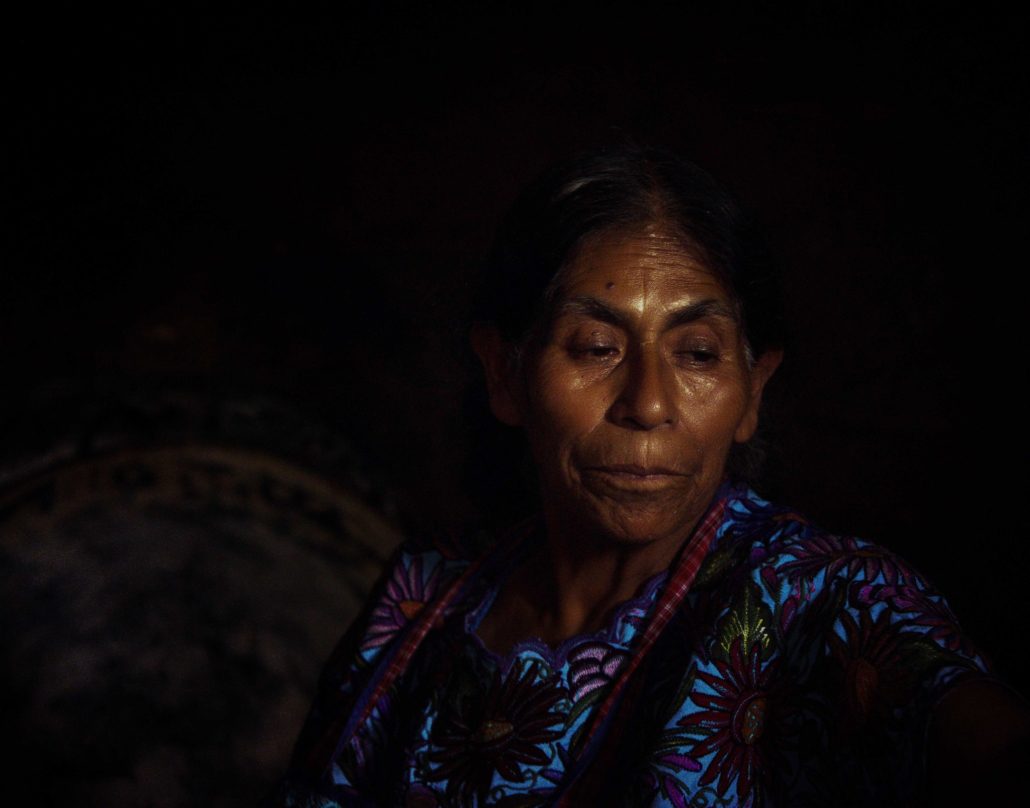
The Mexican government’s abandonment and abuse of Indigenous communities in Mexico are historical, stretching back to the country’s colonial past. In the present day, governmental neglect is largely to blame for a host of social inequities suffered by Indigenous communities in Mexico, including lack of access to hospitals and quality health care in general. Accustomed to being outliers in a system originally designed to benefit elites, Indigenous Mexicans in one region of Mexico have taken matters into their own hands.
In the Zapotec region of Oaxaca, a state in southern Mexico, a network of villages called the Pueblos Mancomunados lies nestled in the Sierra Norte mountains, and is made up of eight villages which maintain their distinctions while honoring their collective identity as well. Prior to COVID-19, this network of villages had for over 20 years had an agreement amongst themselves to welcome outside tourists into their insular community to observe not only the striking natural environment but also traditions of agriculture, gastronomy, weaving, education and sacred healing.
Where Abandonment is Historical, Prevention is Key
In an interview with The Borgen Project, Claudia Schurr, owner of the ecotourism company Tierraventura, said that the tourism sector in these villages and in the region has been completely shut down since mid-March 2020 to prevent infections. Through the company, which is based in Oaxaca City, Schurr has developed close personal ties to the Pueblos Mancomunados, where, prior to COVID-19, she regularly ran tours with her husband, Yves. She said, “Most of the Indigenous communities have closed to outsiders, even people from the village who live in the city of Oaxaca. Only the village authorities are allowed to leave the community in order to buy supplies.”
Tourism in Mexico
While tourists have still been able to fly into and travel around Mexico in 2020, Indigenous communities in Mexico such as the Pueblos Mancomunados have said “no,” preferring instead to block entrances to their towns and return to their ‘milpa’ fields, where harvests have been abundant due to plentiful rains. Schurr said in an interview, “The interesting thing for me is to observe how people are handling the crisis… nobody is complaining.” Focusing on subsistence and environmental justice rather than business and profits has so far insulated the Zapotec villages from a crisis that continues to ravage the world outside. There have been only a few cases of COVID-19 in these Zapotec communities, according to Schurr. Santos Reyes Yucuná, an Indigenous Mixtec village also in Oaxaca state, remained COVID-free until July 17th, long after Mexico saw its first case in the capital city.
Other Indigenous communities in Mexico are reacting similarly, partially due to a lack of resources to fight the virus. Pavel Guzmán, an activist in the Indigenous Purepecha community of Michoacán state, said in April 2020 “If an infection arrives in the Indigenous communities, then there’s no … medical institution that can contain the problem because the clinics don’t even have basic supplies… These are historical problems, and now… they’ve become more critical.” According to Mexico’s National Council for the Evaluation of Social Development Policy (CONEVAL), though 21.5% of Mexicans identify as Indigenous, only 1.5% of public hospitals are located in Indigenous regions.
Community and Autonomy
But these Indigenous communities in Mexico are not merely reacting to the virus. The Zapotec communities—pandemic or not—tend to live in a way that is synonymous with their ancestral traditions of community and autonomy. Zapotec children learn early on the importance of cooperation in the community via the “tequio,” or group that cooperates to accomplish needed work in the community. Rather than one person in the community mending a fence, for example, a group of people may work on it together to make the process quick and easy. This cooperation is also visible in the model of group consensus that runs the villages.
They even made the decision to allow tourists into their villages for ecotourism in a collective process. The community is as self-sustaining as it was before the arrival of the Spanish. And while COVID-19 sent the outside world scrambling to adjust life to a crisis, Zapotec society already had the mechanism in place to take refuge.
What Indigenous Communities in Mexico Can Teach the World
While it remains true that infections or governmental neglect during an economic fallout could adversely affect these communities, the Zapotec remain uniquely sustained by their core ideals. As a result, they are in a good position to beat the virus.
The Zapotec have another tradition called “guelaguetza,” which is a tradition of mutually exchanging gifts and even favors. Schurr, not having run tours for her business since March, says that times are hard. Without an income, her family now finds itself in the position of surviving without much income. However, she has stayed in touch with the Zapotec mountain communities: “I have more the feeling that they support us now, emotionally and sending us vegetables, potatoes, flowers.”
“We always talk about creating a global community, which is a beautiful idea,” Schurr said. “…[T]his includes also [taking] responsibility for each other when times are not so great.”
– Andrea Kruger
Photo: Flickr

Bitland: Property Rights for The World’s Poor
In poor nations like Ghana, it can be incredibly difficult for citizens to attain property rights. The lack of services to provide landowners with deeds and official paperwork poses a challenge in providing proof of ownership for the land they occupy. Bitland is an innovative nonprofit company that uses blockchain technology to help secure property rights for the world’s poor.
Land Rights in Ghana
Ghana uses largely informal land distribution processes. People inherit land from extended family, through membership of a certain clan or through traditional authority. These landowners do not typically keep written documentation of land transactions and ownership. Therefore, tracking proper ownership of land becomes difficult. A lack of adequate formal documentation of land ownership and previous transactions creates an informal land market, which in turn creates land conflict, lawsuits and multiple ownership claims of a plot of land.
Bitland in Ghana
African startup Bitland uses blockchain technology to help Ghanaians attain property rights and secure more financially stable futures. The startup launched its pilot service in Ghana due to a local need for autonomy through improved land rights. The CEO and founder of the company, Naringamba Mwinssubo, is also a resident of Ghana. Bitland’s main goal is to provide land registry services where they are functioning poorly, or where no land registry and title services available to locals.
Bitland operates in three key phases: land survey, preparation of titles and land registry and land tokenization. During the land survey phase, the company leaves approximately 30 markers with members of the local community. The community members then place the markers in agreed-upon spots to mark boundaries between individual plots of land. Survey markers placed during this phase serve as landmarks of property boundaries.
In the second phase, land registry, blockchain creates titles for the land. The titles are prepared by verifying the GPS coordinates of the land with the owners of the land. Once the coordinates are verified, the company creates a land title contract that includes owner names, GPS coordinates, map references, block numbers and addresses. This information then receives a timestamp and stored in a database.
In the land tokenization phase, the land titles and accompanying files are turned into a token that is both tradeable and traceable. Various parties use these tokens when making land transactions such as renting and buying/selling. The traceable nature of these tokens makes them an ideal choice for ensuring security and transparency between potential buyers, sellers and renters.
Impact on the Ground
Bitland’s services provide consumers with greater security and transparency when it comes to property rights for the world’s poor. The service also helps document marriages, birth certificates, escrow accounts and mutual savings. As of 2018, Bitland had plans to expand its land registry services to Kenya and Nigeria. The unalterable nature of blockchain records is key to building credit for users and helping them secure a more financially stable future. By allowing landowners to rely on digital traceable records rather than verbal customary agreements, Bitland is establishing strong property rights for the world’s poor and improving their economic outlook for the future.
– Maddi Miller
Photo: Flickr
Examining Homelessness in Latvia
After the Great Recession of 2008, Latvia saw a large rise in its homeless population. After a 389% increase in homelessness from 2009 to 2017, the nation recorded 6,877 homeless people, three-quarters of whom are concentrated in Riga. Data from 2018 also displays that the majority of subjects living in shelters are pre-retirement, ages 41 to 61. Coupled with its lack of affordable housing and deteriorating household economic situation, Latvia has long struggled to provide organized and well-funded state programs to its homeless population. As the government continues not to act, many citizens struggle against addiction, health problems, a weakening economy and stereotypes that exacerbate homelessness in Latvia.
Why Latvia Has Been Unsuccessful So Far
Latvia’s main weakness within its programs is the lack of national and state support. Measures to address homelessness in Latvia are left entirely to the local authorities, which are often inadequate and only provide low-intensity aid. For example, shelters do not offer essential and progressive services such as transfers to temporary or permanent accommodations, making it difficult for individuals to leave shelter systems. Latvia dismisses this issue to such a great extent that has yet to even recognize a formal definition of homelessness in its legislation. The nation’s poor funding and organization, as well as the exceedingly small size of its housing stock, causes the ineptitude of homeless prevention. Municipalities provide social housing exclusively, though some larger governments have formed specific companies to maintain and manage public stock.
Most shelters in Riga have limited services that only provide basic emergency shelter and minimal support-worker time. Displaced individuals thus struggle to re-establish themselves in society and find sufficient private housing, leaving them stuck in public housing systems. Those with alcoholism or other addictions may use detox and rehab programs that Latvian social services provide, but these interventions are costly at €200 for 28 days with an additional €50 per month for accommodation.
Discrimination Against the Homeless
A pervading culture of discrimination also limits opportunities for displaced citizens. In 2018, Latvijas Sabiedriskie Mediji, the official news portal of Latvian radio and television, reported a case of blatant prejudice towards 43-year-old homeless man Gunārs. Gunārs did not qualify for free healthcare, as he was the victim of an inventive tax evasion scheme that firms targeting the homeless used. However, even after Gunārs offered proper payment and was proved a registered patient, the doctor still denied him treatment by claiming his intoxicated state was in violation of code and removing him from the premises. The news source’s further investigation revealed mistreatment towards alcoholic clients at the Red Cross shelter on Gaizina street, which limited drunk individuals to stay on the first floor where they faced verbal and physical abuse by guards and even preachers.
Persons without tax-paying families are also unable to claim financial assistance, as applications of welfare for homeless citizens can only occur through the head of the household based on additional household costs. Latvian citizens returning from abroad are also subject to police inquiry and assessment to determine whether people have a genuine reason to be homeless.
A recent video campaign that the local transport authority in Riga released encourages this anti-homeless sentiment by urging passengers who encounter homeless individuals on their commute to call the police to arrest them. The advert repeatedly plays on the screens of buses, trams and trains throughout the city that advise citizens to identify homeless individuals through their “odor.”
Initiatives to Reduce Homelessness in Latvia
Fortunately, Latvia has taken steps to improve conditions for its homeless citizens. The Riga Central Library, for example, started an initiative in 2017 by collaborating with a local day center to serve as an easily accessible intermediary for homeless clients seeking social needs. The library also solicits food, toiletries and supplies for the homeless; offers brochures, posters and handouts that describe the services available within the library/community; and offers assistance in public service application forms, as well as time to discuss with lawyers, social workers and career consultants.
According to the 2019 ESPN Thematic Report on National Strategies to Fight Homelessness and Housing Exclusion, the government aims to develop a uniform housing policy that improves insufficient social housing, develops affordable quality housing support mechanisms, expands the range of services offered to homeless individuals and prevents homelessness through increased material support. Additionally, the plan strives to ensure that national and local governments designate fiscal funds to make this goal a reality. Statistics from 2019 showed a 3% decrease in Riga’s homeless population in comparison to the previous year, which could indicate that these projects had some positive impact.
The recent COVID-19 pandemic has also hastened the Latvian government to take more direct action. To prevent further evictions, the Riga municipality has guaranteed both minimum income benefits and housing benefits for its population. Citizens can also request food from the city’s six food dispensers. In addition to increasing funding for social services provided to homeless and vulnerable persons by €93,320, the Riga Municipality has demonstrated initiative in enforcing hygiene to stop the spread of COVID-19 in shelters by increasing funding to the Blue Cross Men’s Shelter of the Evangelical Christian Church by €4,211 to install five toilets and two disinfection tables.
These new policies could indicate a shift toward greater direct government funding and organization to help homeless persons. By aiming to reduce both shelter occupation numbers and rates of poverty in the next decade, the elimination of homelessness in Latvia is possible.
– Christine Chang
Photo: Flickr
A Bright Future for Accessible Energy in Togo
Togo’s government has set ambitious goals to achieve universal access to electricity by 2030. The country cites three main obstacles to this goal. First, Togo has limited experience with independent power producers. Second, there are technical issues concerning the aging infrastructure. Finally, Togo does not have a plan to integrate on-grid and off-grid connection goals yet.
Initiatives Promoting Rural Accessible Energy in Togo
A large part of Togo’s energy project targets improving access to energy in rural areas. Many rural communities are not reachable by the standard electricity grid. Therefore, the government is looking into various off-grid options to support the three million people who are not reachable by the grid.
In 2017, Togo launched an initiative called “CIZO.” This initiative seeks to increase rural electrification to 40% by the year 2022. In order to do this, the government is working with off-grid companies to offer solar power to rural communities. The goal is to build 300 small solar plants across the country and distribute solar kits to 500,000 households. So far, 35,000 households have received solar kits.
Looking Towards a Renewable Future
In addition to solar energy, Togo is invested in creating other sources of renewable and accessible energy for its communities. The country has a goal of reaching 50% energy from renewable sources.
In July 2020, Togo announced that it will begin the construction of a new biogas reference laboratory at the West African Centre for Scientific Services on Climate Change (WASCAL) at the University of Lomé. As stated by Komi Agboka, director of the WASCAL, “the future laboratory will enable Togo’s enormous biomass potential to be further exploited through the development of research capacity and the demonstration of innovative biogas production technologies.”
The construction of this laboratory is part of the larger Programme for the Development of Renewable Energy in Togo (Pdert) which launched on February 27, 2019. This project will assess Togo’s renewable energy resources, develop the storage and distribution of clean energy, and find economically sustainable models.
Togo’s government emphasis on finding renewable energy sources has garnered international attention. Togo’s Rural Electrification and Renewable Energy Agency recently won third place in the Ashden 2020 Award for its renewable energy development policy. This is an award given by the British organization Ashden and seeks to highlight countries that show “systemic innovation for energy access.”
Accessible energy in Togo will take many significant steps to achieve, but with the persistence and commitment of both private energy providers and academic institutions, this goal is realistic. Togo’s renewable energy initiatives show that even without the large budgets of developed countries, it is still possible to make meaningful progress towards sustainable and accessible energy.
– Antoinette Fang
Photo: Flickr
10 Facts About Women’s Rights in Brazil
Brazil is the largest country in South America with a population of more than 200 million. Though the country has taken many legal steps forward towards improving women’s rights in Brazil — a number of hurdles remain in the way of equal representation and gender equality within the country. Below is a list of 10 facts about women’s rights in Brazil.
10 Facts About Women’s Rights in Brazil
Brazil has made good and meaningful progress in the past, regarding women’s rights. However, issues such as the increasing rate of femicide, coupled with the country’s already high rates of child marriage must be remedied in order to bring about true gender equality. The outlook should prove promising if previous positive trends continue.
– Jazmin Johnson
Photo: Google Images
Innovations Combating Energy Poverty in Greece
According to the European Union Energy Poverty Observatory, energy poverty impacts 50 to 125 million people within the European Union population. With 58% of Greek households identified as lacking efficient energy, this issue has significantly impacted the overall physical and mental well-being of Greek citizens. Further, over 90% of Greek families below the poverty level suffer from energy poverty. Physical and mental health stressors due to unaffordable energy bills demonstrate the need for innovation in energy poverty eradication in Greece. Also, due to low incomes, poor-quality housing and high energy prices, innovation in energy poverty eradication in Greece is critical.
Innovative Energy Initiatives Create Jobs
Since its transition to renewable energy in the 1990s, Greece has faced unforeseen obstacles due to government legislation, business regulations, investor subsidies and funding deficits. Since 2010, modifications of such initiatives have led to progressive developments and growth opportunities.
Some expect that innovations eradicating energy poverty in Greece through renewable energy could boost employment and economic opportunities. In fact, projections have determined that job openings including electro-mechanics, construction and energy farm installation could contribute to 50% of these potential opportunities. Job generation will increase household income and minimize the inability to afford adequate energy by reducing unemployment and creating growth.
Global Organizations Addressing Energy Poverty
Greece has demonstrated its commitment to resolving energy poverty among vulnerable households, and international organizations are supporting that commitment. For example, in 2015, Greenspan Greece launched the Solarize Greece crowdfunding campaign that promoted solar energy in an effort to alleviate energy poverty. This initiative involved the installation of photovoltaic systems in low-income family households. The Greek government had passed legislation that allowed citizens to create cheap energy for their own use, and that made the crowdfunding initiative viable. As the Huffington Post advocated, “Installing solar power in Greece’s oil-dependent islands will bring relief to low-income households in need; it will help reduce oil consumption and pollution and it will save money for Greek consumers on the mainland.”
Innovations in Renewable Energy Production
Plans to further increase renewable energy sources in Greece continue. In 2020, the Ministry of the Environment and Energy of Greece asked the European Commission to fund a system anchored by two pumped storage hydropower plants and two artificial lakes in Western Greece. This system is expected to last 50 years with 70.1% efficiency. The hope is to replace coal-supported energy that is unsafe and contributes to pollution with solar energy that is safer and does not pollute. This system would provide the electricity for that transition.
Energy reform within Greece must remain a priority to rectify the social, economic and environmental destruction that energy poverty causes. Through the development of innovative energy technologies, Greece is making strides to achieve 60% of renewable energy sources by 2030. These actions will reduce the use of harmful coal technologies used to generate electricity by shifting to solar energy and pumped storage. Given the benefits of renewable energy in reducing household energy poverty, Greece is becoming a role model for other nations in protecting its people.
– Brandi Hale
Photo: Flickr
Technology Closing the Gender Gap in Malawi
A Girl’s Challenge
While both boys and girls face high dropout rates in Malawian schools, girls are less likely to return due to factors such as labor demands at home, being discriminated against as the perceived weaker gender, absence of female role models and harassment by male teachers and fellow students. With typical teaching practices concerning math and reading in Malawi early grade schools, boys usually pull ahead of girls in math by second grade while girls pull ahead of boys in reading, but this advantage in reading disappears by sixth grade and girls are behind in both subjects.
The Onecourse Experiment
Onecourse is unique in its approach in that it is an all-digital platform where students are guided by a virtual teacher through a strategically crafted set of activities. Students are given a Onetab tablet loaded with Onecourse apps in their native language. For Malawian students this was Chichewa. One of the biggest challenges for developer Onebillion is to prove in trials that significant learning can happen in the absence of a teacher. “For the Onebillion trial, children were taken out of their huge classes, put in groups of 25 and given tablets loaded with math software; similar-sized groups were given tablets without the math software, to control for the possibility that children might benefit from any instruction given in smaller groups.”
Promising Results
Onebillion’s software has helped Malawian girls make significant advances. Evaluations by the University of Nottingham and the University of Malawi demonstrate that digital intervention can not only educate students but prevent girls from falling behind in their learning. Specifically, eighteen 30 minutes sessions with Onecourse early grade math apps prevent girls from falling behind early in mathematics. Early mathematics intervention may also promote girls more likely going to Science, Technology, Engineering and Mathematics courses in the future.
Final Thoughts
Overall, Onecourse technology is closing the gender gap in Malawian early education. Digital learning platforms like Onebillion’s Onecourse have helped aid undertrained and over burned faculty in many developing countries like Malawi, Uganda and Tanzania and is also being used to help marginalized children in the United States. The Onebillion organization, in a tie with the Kitkit school (a similar digital program developer), was awarded the Global Learning Xprize that promotes organizations that create programs allowing children to educate themselves in reading, writing, and math. This program, and others like it, will be essential in ending the educational gender gap in Malawi.
– Joseph Maria
Photo: Flickr
Venezuela’s Women Migrants: Victims of Exploitation
The pandemic has forced Venezuela’s women migrants to seek out sex work as a means to survive. With nothing to eat or to support their children back in Venezuela, they are charging as little as $2 for sex in foreign countries according to women’s right protector Karina Bravo.
The Situation
Since the beginning of the crisis, Venezuela’s women have had to look for creative ways in which they can still provide food for their children and themselves. According to the United Nations Refugee Agency (UNHCR), an estimated 6.5 million will flee the South American country by the end of 2020; 4.5 million have emigrated already. Walking miles and miles away, they gained the name of the Walkers (Los caminantes) as they cross frontiers and reach their destinations. Yet, due to the current coronavirus pandemic, they have received eviction from Colombia (where Venezuelans are half of the workforce), Ecuador and Peru.
Now, they are on the streets, with no source of income or food to provide for themselves and their families. As a result, at the start of the COVID-19 pandemic, the only option for many of Venezuela’s women was to either go back to their homeland before the borders closed–a country which unemployment, economic crisis, social crisis, food shortages, electricity and water shortages and a surge in crime and violence have obliterated–or become sex workers in a foreign country.
Women who are refugees are the most vulnerable to “labour and sexual exploitation, trafficking and violence.” Moreover, this is the truth for Venezuela’s women migrants, who have been emigrating from their country looking for a better quality of life for themselves and their families.
Prior to the Pandemic
Before the pandemic, Venezuela’s women migrants were already struggling, charging around $9 for sex in the hopes of sending money to their families back in Venezuela and sustaining themselves. However, because of the pandemic, they have had to charge as little as $2. Karina Bravo, a former sex worker in Ecuador and now a women’s right protector through the Latin American Network of Sex Workers, explained in an interview with The Guardian that the current conditions have led to Venezuela’s women migrants being unable to sustain themselves or send money to their families back home. On top of that, they are also facing trouble with available health services and experiencing emotional distress. These women also more frequently become victims of gender-based violence, including rape and stabbings.
Mothers are not the only ones to become sex workers; “girls as young as twelve” are part of the same fate, working for $1 an hour, according to Jana Lopez, a volunteer who is helping migrant families in Cucuta, the Colombian city bordering with Venezuela.
Even young Venezuelan women who applied for jobs in Trinidad and Tobago in the hopes of finding a better opportunity frequently become sex workers. This is a situation that is currently happening in Colombia, Ecuador, Peru, the Dominican Republic, Mexico, Trinidad and Tobago, and many other countries in which Venezuela’s women migrants have emigrated.
Solutions
Indeed, there has been an increase in trafficking and sexual exploitation all over Latin America since the beginning of the pandemic, and it has become much harder for sex workers to find the help they need.
Yet, groups such as the Doctors Without Borders/Médecins Sans Frontières (MSF) are still working to provide medical and preventive care, and mental health counseling services to sex workers in La Guajira, Colombia, most of whom are Venezuelans. All the organization’s services are free and it provides STDS tests, treatment, contraception, prenatal care, vaccinations and nutrition support. Since 2018, it has been providing immigrants with essential lifecare services which they cannot always access in their own countries.
Church organizations and networks are also operating near frontiers in order to help vulnerable immigrants and refugees who frequently become prey to trafficking and prostitution. However, an extreme urgency to expand more services to immigrants and refugees during the pandemic still exists so that they do not fall into the chains of sexual exploitation.
– Alannys D Milano
Photo: Flickr
Indigenous Communities in Mexico During COVID-19
The Mexican government’s abandonment and abuse of Indigenous communities in Mexico are historical, stretching back to the country’s colonial past. In the present day, governmental neglect is largely to blame for a host of social inequities suffered by Indigenous communities in Mexico, including lack of access to hospitals and quality health care in general. Accustomed to being outliers in a system originally designed to benefit elites, Indigenous Mexicans in one region of Mexico have taken matters into their own hands.
In the Zapotec region of Oaxaca, a state in southern Mexico, a network of villages called the Pueblos Mancomunados lies nestled in the Sierra Norte mountains, and is made up of eight villages which maintain their distinctions while honoring their collective identity as well. Prior to COVID-19, this network of villages had for over 20 years had an agreement amongst themselves to welcome outside tourists into their insular community to observe not only the striking natural environment but also traditions of agriculture, gastronomy, weaving, education and sacred healing.
Where Abandonment is Historical, Prevention is Key
In an interview with The Borgen Project, Claudia Schurr, owner of the ecotourism company Tierraventura, said that the tourism sector in these villages and in the region has been completely shut down since mid-March 2020 to prevent infections. Through the company, which is based in Oaxaca City, Schurr has developed close personal ties to the Pueblos Mancomunados, where, prior to COVID-19, she regularly ran tours with her husband, Yves. She said, “Most of the Indigenous communities have closed to outsiders, even people from the village who live in the city of Oaxaca. Only the village authorities are allowed to leave the community in order to buy supplies.”
Tourism in Mexico
While tourists have still been able to fly into and travel around Mexico in 2020, Indigenous communities in Mexico such as the Pueblos Mancomunados have said “no,” preferring instead to block entrances to their towns and return to their ‘milpa’ fields, where harvests have been abundant due to plentiful rains. Schurr said in an interview, “The interesting thing for me is to observe how people are handling the crisis… nobody is complaining.” Focusing on subsistence and environmental justice rather than business and profits has so far insulated the Zapotec villages from a crisis that continues to ravage the world outside. There have been only a few cases of COVID-19 in these Zapotec communities, according to Schurr. Santos Reyes Yucuná, an Indigenous Mixtec village also in Oaxaca state, remained COVID-free until July 17th, long after Mexico saw its first case in the capital city.
Other Indigenous communities in Mexico are reacting similarly, partially due to a lack of resources to fight the virus. Pavel Guzmán, an activist in the Indigenous Purepecha community of Michoacán state, said in April 2020 “If an infection arrives in the Indigenous communities, then there’s no … medical institution that can contain the problem because the clinics don’t even have basic supplies… These are historical problems, and now… they’ve become more critical.” According to Mexico’s National Council for the Evaluation of Social Development Policy (CONEVAL), though 21.5% of Mexicans identify as Indigenous, only 1.5% of public hospitals are located in Indigenous regions.
Community and Autonomy
But these Indigenous communities in Mexico are not merely reacting to the virus. The Zapotec communities—pandemic or not—tend to live in a way that is synonymous with their ancestral traditions of community and autonomy. Zapotec children learn early on the importance of cooperation in the community via the “tequio,” or group that cooperates to accomplish needed work in the community. Rather than one person in the community mending a fence, for example, a group of people may work on it together to make the process quick and easy. This cooperation is also visible in the model of group consensus that runs the villages.
They even made the decision to allow tourists into their villages for ecotourism in a collective process. The community is as self-sustaining as it was before the arrival of the Spanish. And while COVID-19 sent the outside world scrambling to adjust life to a crisis, Zapotec society already had the mechanism in place to take refuge.
What Indigenous Communities in Mexico Can Teach the World
While it remains true that infections or governmental neglect during an economic fallout could adversely affect these communities, the Zapotec remain uniquely sustained by their core ideals. As a result, they are in a good position to beat the virus.
The Zapotec have another tradition called “guelaguetza,” which is a tradition of mutually exchanging gifts and even favors. Schurr, not having run tours for her business since March, says that times are hard. Without an income, her family now finds itself in the position of surviving without much income. However, she has stayed in touch with the Zapotec mountain communities: “I have more the feeling that they support us now, emotionally and sending us vegetables, potatoes, flowers.”
“We always talk about creating a global community, which is a beautiful idea,” Schurr said. “…[T]his includes also [taking] responsibility for each other when times are not so great.”
– Andrea Kruger
Photo: Flickr
Removing Landmines in Tajikistan
Tajikistan, a Central-Asian country bordered by Afghanistan to the south and China to the east, has been fighting poverty and food insecurity for years. As of 2018, 27.4% of the country’s 9.1 million population live in poverty. The landscape is particularly rural, with a majority of the population relying on the agricultural industry for both food and employment. However, the lack of fertilizers and proper machinery makes it difficult for people to care for agricultural land in Tajikistan. In order to help remove farmland overgrowth and landmines in Tajikistan, the U.S. Department of State and Defense intervened.
Landmines in Tajikistan
Currently, Tajikistan possesses a number of landmines on its border with Afghanistan. Russia, which partnered with Tajikistan in defense efforts against Afghanistan about 20 years ago, placed these landmines. Landmines continue to pose a threat to Tajikistan civilians who wish to utilize this land for farming and crops. In addition to the landmines, this land has become overgrown with vegetation and would cost a great sum to restore to its original state. The amount of physical labor would be extensive, and the presence of landmines makes the task prohibitively risky.
To assist with the efforts to clear this land, the U.S. Department of State and Defense used a $1.2 million Foreign Military Financing grant to supply the Tajikistan National Mine Center with a mini-Mine Wolf, a machine that remotely removes a number of explosive devices. In addition to the machine itself, the grant covered the deployment and the training of members of the Tajikistan Ministry of Defense to learn how to properly use the machine. The machine simultaneously cuts down overgrown vegetation and removes landmines from the surface, solving the two major problems with this land at the same time.
Since the machine’s deployment, six acres of land have recovered and irrigation channels have reopened to supply towns near this land with clean water. As poverty and food insecurity exists at higher rates in rural areas, access to clean water and this land for farming will provide food for thousands of families, as well as employment for jobless citizens living along the border.
Global Landmine Removal
While the United States has provided assistance in the removal of explosives and harmful landmines in Tajikistan, it has provided aid to other countries as well. In 2019, the United States Department of State and Defense funded conventional weapon destruction in 18 African countries, and during its active years, the department has funded more than $845 million toward weapon destruction in the Middle East. By freeing these lands of explosives and weapons that pose danger, the U.S. has helped support the economies of numerous countries by giving them access to land to farm and battle food insecurity. Food insecurity and poverty go hand in hand, and by enabling countries to cultivate the land they were able to in the past, these countries will be able to battle the hardships of poverty in years to come.
– Evan Coleman
Photo: Flickr
An NGO for Acid Attack Survivors in India
Terrifying acid attacks in India are rising in number according to ABC News. Advocates for acid attack survivors estimate that around 1,000 attacks take place per year in the country. However, only 300 cases get reported due to fear of retribution. It can take up to 10 years for an abuser to face justice, and still, some get off scot-free.
Gender-Based Violence
India has more acid attacks than any other country in the world. With patriarchal arranged marriages common, unsatisfied husbands are often the perpetrators. In these attacks, a person throws acid on the woman’s face and body with the intent to disfigure her permanently. Men commit these gendered acts of violence out of jealousy, for retribution or for any “wrongdoing” that they believe has occurred.
Once a woman endures such an attack, she is expected to cover her face in public. Oftentimes, she must hide in the home of a family member since it is difficult to find employment under these circumstances. Society tends to reject disfigured acid attack survivors, who are then unable to find employment due to the prejudicial belief that they deserved the violence. As a result, it is nearly impossible for a woman to support herself or her children, which throws them into abject poverty.
An NGO for Survivors
In 2014, Make Love Not Scars (MLNS) launched in Delhi as the first nonprofit center for the rehabilitation of acid attack victims. Ria Sharma is the founder of the organization. After completing graduate work in the United Kingdom, Sharma came back to India to make a documentary film on acid attack survivors. Her work on the film inspired her to start an NGO to assist the survivors with recovery
Psychological and Physical Recovery
Sharma has stated that the main focus of the organization’s efforts is to enable acid attack survivors to recover both psychologically and socially. The survivors need to regain confidence, which is a difficult task after enduring an attack that often disfigures a person for life. The women suffer immense physical trauma as well as long-term psychological repercussions. MLNS addresses the impact of such an attack by encouraging the victims to enroll in courses that will enable them to earn a regular income. The organization also helps pay for these courses. In this way, MLNS works to alleviate global poverty by helping the victims make a living. Otherwise, the survivors would have difficulty in finding a job after such a devastating and disfiguring experience.
Funding for Medicine and Legal Aid
In addition to offering psychological aid, MLNS raises money to provide for women’s medicine, surgery and vital post-operative care. The charity also helps survivors of acid attacks connect with leading pro-bono lawyers who volunteer to help victims in India.
New Laws Help Prevent Acid Attacks
Some countries are enacting laws and restrictions that reduce the number of acid attacks. For example, in Bangladesh, these attacks have gone down in number after the death penalty was introduced for the crime. Additionally, the sale of common chemicals used in the attacks is now restricted in Bangladesh. Advocates for victims hope that similar laws will be instated in India.
MLNS Founder Honored
In 2016, Make Love Not Scars ran a campaign named #EndAcidSale, which called for a universal ban on acid sales. The campaign won a Gold Cannes Lion award in the category of film. Then in 2017, Sharma won the United Nations Bill and Melinda Gates GoalKeepers Global Goals Award, becoming the first Indian to receive the honor. Sharma has stated that MLNS would like to expand its work into other areas of gender-based violence and burn victims.
– Sarah Betuel
Photo: Flickr