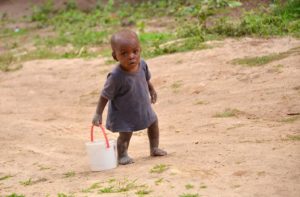
In Uganda, Africa around 12% of children are orphans. Many of the children have either lost both or one of their parents due to high rates of cholera and tuberculosis, as well as the high price tag of medical treatment in Uganda. In addition, the number of orphans in Uganda is increasing. UNICEF estimates that there are over 2 million orphans living in Uganda. The Amani Baby Cottage, located in Uganda, Africa, has dedicated itself to helping orphans. It makes sure that these children receive proper care, reunite with their families or become adopted by new ones.
How Amani Baby Cottage Helps Fight Poverty in Uganda
The Amani Baby Cottage started in 2003. The orphanage is located in Uganda, Africa, specifically in Jinja. The facilities allow Amani to take in around 60 children at a time, catering to children who are newborn to 5 years old in particular. The orphanage focuses on taking in abandoned children. Many of the children’s parents died due to AIDS. This means that many of the children are HIV positive. Amani has helped an estimated 400 children since its start in 2003.
The owner and founder of Amani Baby Cottage, Danyne Bharj, says that she had the inspiration to start Amani when she was 23 years old. The African Children’s Choir, a traveling children’s choir of 7 to 10-year-old’s who travel the world to perform and sing, came to her church. Danyne says that the choir’s performance moved her and after housing five of the children in her home, became very connected and invested in the African Children’s Choir. Danyne ended up touring with the group and forming a great relationship with the children and individuals who ran the choir. According to Danyne, this experience inspired her to start the Amani Baby Cottage in Uganda.
Amani also employs many women in neighboring districts. Approximately 45 Ugandans work at the orphanage. They care of the children as nurses, work to keep the grounds in good condition and work in the main office aiding with adoptions and social work. While many people work tirelessly to help support Amani, it always appreciates donations. Donors can donate money generally or can even sponsor a specific child. Additionally, they are able to donate certain supplies that Amani needs at the moment. Its website lists those supplies.
Amani’s Volunteer Programs
For those interested in doing more than just donating to Amani, the orphanage provides an internship program. Individuals from around the globe are welcome to go to Amani in Africa to spend quality time with the children and staff there. Interns can do a short-term internship of six weeks to three months or a long-term internship of three months to a year. Individuals can participate in the program as a group or alone. While there, interns have the opportunity to work in the nurseries or cottages, or with the older children or at the preschool. In addition, the interns can nurse and help with social work or other projects that might need to be done around Amani, such as building projects. Amani chooses its interns through an application process on its website. Amani’s Instagram page features many interns playing with and taking care of the children.
Schools at Amani
Amani has started a preschool for the older children at the orphanage. The children who are old enough attend classes during the week, learn things such as the alphabet, numbers, shapes and months of the year. The classes also include snack time and lots of fun educational games. Amani has staffed an onsite teacher to teach the children, with help from other volunteers as well.
For the children who become too old to stay at Amani, either, a family adopts the child, or the child’s parents come back. Regardless of the outcome, there are social workers who check in to make sure that the family and child are doing well. However, in the rare case that this does not happen, Amani will set the child up with a family in the surrounding area that they have bonded with and who Amani has a strong relationship with.
More to Do
Though Danyne has done much to try and help care for children in Uganda living in poverty through Amani Baby Cottage, more effort is required to decrease the number of children living in poverty. The Ugandan government has implemented the Poverty Alleviation Programmes in Uganda.
These programs specifically target children who are living in poor areas. Additionally, the program helps to better educate the youth living in Uganda. The number of children in this program continued to grow greatly since the introduction of the program in the 1990s. According to the World Bank, Uganda has been successful in driving down the poverty rate within the last decade as the percentage of individuals living below the poverty line declined from 31.1% to 19.7% in 7 years. However, new troubles have arisen due to the COVID-19 pandemic as many families do not have access to medical care and money from tourism has decreased significantly. In regard to COVID-19, one can have hope that the rate of poverty in Uganda will continue to decrease.
– Olivia Eaker
Photo: Flickr

Amani Baby Cottage’s Work with Orphans in Uganda
In Uganda, Africa around 12% of children are orphans. Many of the children have either lost both or one of their parents due to high rates of cholera and tuberculosis, as well as the high price tag of medical treatment in Uganda. In addition, the number of orphans in Uganda is increasing. UNICEF estimates that there are over 2 million orphans living in Uganda. The Amani Baby Cottage, located in Uganda, Africa, has dedicated itself to helping orphans. It makes sure that these children receive proper care, reunite with their families or become adopted by new ones.
How Amani Baby Cottage Helps Fight Poverty in Uganda
The Amani Baby Cottage started in 2003. The orphanage is located in Uganda, Africa, specifically in Jinja. The facilities allow Amani to take in around 60 children at a time, catering to children who are newborn to 5 years old in particular. The orphanage focuses on taking in abandoned children. Many of the children’s parents died due to AIDS. This means that many of the children are HIV positive. Amani has helped an estimated 400 children since its start in 2003.
The owner and founder of Amani Baby Cottage, Danyne Bharj, says that she had the inspiration to start Amani when she was 23 years old. The African Children’s Choir, a traveling children’s choir of 7 to 10-year-old’s who travel the world to perform and sing, came to her church. Danyne says that the choir’s performance moved her and after housing five of the children in her home, became very connected and invested in the African Children’s Choir. Danyne ended up touring with the group and forming a great relationship with the children and individuals who ran the choir. According to Danyne, this experience inspired her to start the Amani Baby Cottage in Uganda.
Amani also employs many women in neighboring districts. Approximately 45 Ugandans work at the orphanage. They care of the children as nurses, work to keep the grounds in good condition and work in the main office aiding with adoptions and social work. While many people work tirelessly to help support Amani, it always appreciates donations. Donors can donate money generally or can even sponsor a specific child. Additionally, they are able to donate certain supplies that Amani needs at the moment. Its website lists those supplies.
Amani’s Volunteer Programs
For those interested in doing more than just donating to Amani, the orphanage provides an internship program. Individuals from around the globe are welcome to go to Amani in Africa to spend quality time with the children and staff there. Interns can do a short-term internship of six weeks to three months or a long-term internship of three months to a year. Individuals can participate in the program as a group or alone. While there, interns have the opportunity to work in the nurseries or cottages, or with the older children or at the preschool. In addition, the interns can nurse and help with social work or other projects that might need to be done around Amani, such as building projects. Amani chooses its interns through an application process on its website. Amani’s Instagram page features many interns playing with and taking care of the children.
Schools at Amani
Amani has started a preschool for the older children at the orphanage. The children who are old enough attend classes during the week, learn things such as the alphabet, numbers, shapes and months of the year. The classes also include snack time and lots of fun educational games. Amani has staffed an onsite teacher to teach the children, with help from other volunteers as well.
For the children who become too old to stay at Amani, either, a family adopts the child, or the child’s parents come back. Regardless of the outcome, there are social workers who check in to make sure that the family and child are doing well. However, in the rare case that this does not happen, Amani will set the child up with a family in the surrounding area that they have bonded with and who Amani has a strong relationship with.
More to Do
Though Danyne has done much to try and help care for children in Uganda living in poverty through Amani Baby Cottage, more effort is required to decrease the number of children living in poverty. The Ugandan government has implemented the Poverty Alleviation Programmes in Uganda.
These programs specifically target children who are living in poor areas. Additionally, the program helps to better educate the youth living in Uganda. The number of children in this program continued to grow greatly since the introduction of the program in the 1990s. According to the World Bank, Uganda has been successful in driving down the poverty rate within the last decade as the percentage of individuals living below the poverty line declined from 31.1% to 19.7% in 7 years. However, new troubles have arisen due to the COVID-19 pandemic as many families do not have access to medical care and money from tourism has decreased significantly. In regard to COVID-19, one can have hope that the rate of poverty in Uganda will continue to decrease.
– Olivia Eaker
Photo: Flickr
Innovations in Poverty Eradication in Slovakia
Slovakia: The Heart of Europe
Entrepreneurs succeed in Slovakia because the country is a central hub enclosed by Austria, the Czech Republic, Poland, Ukraine and Hungary. This gives the country high exporting potential. For example, the Organization for Economic Co-operation and Development (OECD) and The Norwegian Barents Secretariat have signed agreements with Slovakia to continue cross-border cooperation with Ukraine to promote economic development.
Slovakia also has a rich cultural heritage, history and modern art. The country’s Culture Program aims to bring attention to these facets of Slovakian culture. Through this program, the Slovakian government hopes to increase income and jobs through art creation and performances. This is one of many innovations in poverty eradication in Slovakia that would significantly reduce poverty in disadvantaged communities.
Partnerships Are the Key to Success
The Slovakian government also encourages partnerships between students and professionals to address poverty. These programs help those in need as well as provide experience to students. Overall, they focus on technological advancements, thus creating innovations in poverty eradication in Slovakia.
One of these partnership programs is the Butterfly Effect. A digital start-up, this organization assists young, tech-savvy leaders of tomorrow by offering full-time courses geared toward developers and inventive leaders. Additionally, the program encourages students to innovate for the future of Slovakia in the ever-changing digital world. For example, students developed a ride-sharing app specifically for those traveling to and from work through this program.
Similarly, LEAF focuses on developmental programs for those just starting or those who are already in their career field. They help all those who hope to build a more successful Slovakia, regardless of personal finances. LEAF also has programs specialized for teachers and skill-based volunteering that focuses on living conditions. Additionally, LEAF offers paid internships to students committed to staying in Slovakia, thus providing guidance and job security to the next generation. These programs all abide by LEAF’s four core values: ethics, excellence, entrepreneurial leadership and civic engagement.
Investors Help Equality Progress
Fueling many innovations in poverty eradication in Slovakia is the country’s influx of investors, creating a demand for skilled workers. To keep up, Slovakia is dedicated to improving educational and entrepreneurial opportunities to increase its ability to adapt to new technologies. International investors have the chance to network with Slovakian startups at Innovation Day, hosted by the German-Slovak Chamber of Industry and Commerce (GSCIC).
One such digital technology startup to watch on Innovation Day 2020 is Meet ‘n’ Learn. Meet ‘n’ Learn is an app allowing parents and students to find tutors in their neighborhood. They can arrange to meet up in person or virtually through the app for lessons. Additionally, the app provides a free option where students can post questions and receive replies from multiple instructors. This app has the potential to bridge the gap between children of different economic backgrounds. Slovakia is embracing these investors that are backing these innovative ideas to give everyone equal advantages.
The Future of Innovations in Poverty Eradication in Slovakia
To facilitate poverty reduction, Slovakia encourages citizens to welcome the technological and digital world through modernization and entrepreneurship. The country’s efforts have been rewarded with a historically low unemployment rate of 7%. OECD Secretary-General Angel Gurría says, “Living standards are gradually catching up with the higher-income …. [T]o ensure this growth is more inclusive, [we need to] move towards more sophisticated and innovative products and ensure that everyone has the skills and training for the jobs of tomorrow.” In doing so, innovations in poverty eradication in Slovakia will continue to further the country’s progress on this front.
– Sam Babka
Photo: Flickr
Combating Poverty in the Philippines
Combating Poverty in the Philippines
Unfortunately, poverty is expected to increase in the Philippines because of the coronavirus crisis. This will lead to a decrease in consumption growth and further income losses. Therefore, greater efforts are necessary to combat poverty in the Philippines amid the pandemic, which has hit the impoverished the hardest.
– Zoë Nichols
Photo: Flickr
5 Facts About Healthcare in Mauritania
5 Facts About Healthcare in Mauritania
Improving healthcare in Mauritania is certainly a complex task. But the government and aid organizations can come together to cultivate a coordinated effort to improve infrastructure, assist healthcare professionals at the district level and expand the reach of care. In doing so, they will begin to create an equitable healthcare system and provide all Mauritanians with the care they deserve.
– Olivia Bielskis
Photo: Flickr
Vietnam’s COVID-19 Response and its Global Implications
COVID-19 has presented the world with new problems, set against the backdrop of a globalized economy. Some nations have opted for strict shutdowns, while others have taken a more gradual approach via staged lockdowns. Regardless of the initial steps taken, nations have seen astronomical numbers of new coronavirus infections. Some nations have been able to control outbreaks better than others. Vietnam’s COVID-19 response won praise from the World Health Organization for its swift implementation and effectiveness. Regardless of a relatively low GDP and proximity to China, Vietnam was able to keep COVID-19 cases below 300 while other nations surged in April 2020.
Early Response
After nations throughout Southeast Asia and other locations around the world began reporting cases, Vietnam’s COVID-19 response (initially) was to issue a nation-wide address to quell the spread. These regulations, though extensive, were quite effective. Vietnam fell victim to both the SARS outbreak of 2003 and the H1N1 outbreak in 2009. These experiences meant the government was on high alert, as soon as reports began to trickle out of Wuhan, China in January 2020.
Part of their methodology included banning all flights, either domestic or international. This helped to reduce travel between nations as well as between different areas of Vietnam. Additionally, the government has placed more than 44,000 people in quarantine camps. Also, Vietnam’s COVID-19 response included widespread economic shutdowns to decrease person-to-person contact. While these measures were effective in reducing the number of cases, it has taken an economic toll on the markets around Vietnam.
Complications
The nation overall is well below the world’s average GDP, coming in at $261 per capita. This indicates that the Vietnamese economy will be less flexible when placed under economic stress. While these widespread restrictions and quarantines are effective at limiting exposure to the virus — economic ramifications accompany them as well. According to the Vietnamese Labor Ministry, 7.8 million people have been left unemployed as a result of the pandemic.
Amid economic pressure, the government and people are coming together to help move past these hard times. NPR reports that some entrepreneurs within cities have established “rice ATMs” to ensure that all people can access food, regardless of income. In addition to an economic toll, a second wave of the virus is also threatening the Vietnamese people. Since the initial outbreak of COVID-19 in March — Vietnam was able to avoid community spread through the early measures it took. In mid-July 2020, the nation still has no evidence of community transmission. However, in late July 2020, more cases began cropping up to bring the nation’s case count up to 867 cases. This represents an increase of more than 600 cases and the nation’s first 10 COVID-19 deaths accompanying them.
These cases are a warning to the nation about how easy the virus spreads. Regardless, the nation is responding swiftly and responsibly as 80,000 visitors have already flown out of Danang as the city shut down once again to prevent more infections.
The Takeaway
The Vietnamese COVID-19 response began with strong policies to protect its citizens against COVID-19. Though these restrictions posed economic challenges, the nation was able to shelter those who posed a risk in reportedly well-maintained and staffed quarantine camps while other citizens worked to ensure those who faced lay-offs were still able to feed themselves and their families. The spike in cases is indicative that the pandemic, though controlled, is not over.
– Allison Moss
Photo: Flickr
Explosion in Beirut Worsens Poverty in Lebanon
Lebanon has long served as a bustling commercial hub for the Middle East. However, in recent years, its burgeoning economic crisis has shifted more and more of its population below the poverty line. This crisis results from a multitude of factors, including Lebanon’s pile-up of debt and the Syrian crisis. This already souring situation took a turn for the worst on Aug. 4, 2020, when an explosion in Beirut, Lebanon’s capital, left 177 dead, 6,000 wounded and around 300,000 people homeless. Devastating by every stretch of the word, the explosion in Beirut impacted all types of people. Even so, the population has felt its impact in different ways. Efforts to recover and rebuild have often overlooked the poorest communities, exacerbating poverty in Lebanon.
Poverty in Lebanon
Many of Lebanon’s poor come from the refugee population. In all, 25% of Lebanon’s population comprises refugees, in large part due to the Syrian crisis. This crisis, socioeconomic unrest and the COVID-19 pandemic have only kept refugees and other vulnerable families below the poverty line. Just under half of Lebanon’s population is accordingly food insecure. The explosion in Beirut, through which 70% of Lebanon’s commerce takes place, has further crippled an already floundering economy. It has left Lebanon ill-prepared to care for its native people on top of the refugee population it has taken in.
The Poor Take the Backseat in Times of Crisis
Already a vulnerable population in more certain times, the poor fall further when a crisis hits. Impoverished people may struggle to access healthcare and safe shelter during crises. Homeless and low-income populations may struggle to meet their daily needs more during a crisis when those needs become more precarious and expensive. Furthermore, people with more resources are often better equipped to access available aid and resources. A good example of this phenomenon is the ongoing COVID-19 crisis. Many people are concerned about low-income populations obtaining shelter and having access to clean water and medical care.
Similar worries crop up with the crisis in Beirut. Because a large number of people lost their homes, the explosion in Beirut thrust many into homelessness. This made it harder for many people to access shelter and medical aid. Though capacity issues already plague the homeless seeking shelter in Lebanon, the explosion in Beirut created a new wave of displaced people looking for a place to stay. With limited resources, homeless and low-income populations are at an automatic disadvantage in securing their needs.
Long-Term Impacts of the Explosion in Beirut
The explosion in Beirut has launched Lebanon into a series of severe shortages when resources were already tight. After predictions of a low harvest in the months to come with rising crop prices, experts were already concerned about food security for Lebanon’s vulnerable. However, the explosion in Beirut destroyed 15,000 metric tons of wheat stored in nearby silos. In response, various world leaders convened a summit to pledge funds toward the country. Their aim is to respond to both the disaster and COVID-19’s strain on the nation’s economy and health care system.
Before the explosion, Beirut’s health care system was already under pressure from the country’s economic downturn. By destroying five major hospitals and 12 primary healthcare centers, the explosion in Beirut further strained this system. Lebanon’s major drug supply also experienced destruction, leaving the country with a crippling shortage of essential medications while demand skyrocketed.
In addition, the blast damaged more than 8,000 buildings, leaving many displaced and homeless. Architects and engineers have started a grassroots effort to collect donations and rebuild people’s homes. However, the concern of money weighs heavily on the project, threatening to kneecap it before it has fulfilled its purpose. In all, the population fears that the world will forget Beirut and leave it to deal with the long-term effects of the explosion on its own.
Rebuilding Beirut will be a lengthy process. In the meantime, members of the displaced community are struggling to get their daily needs met. The people of Lebanon lack no determination to do so: all they need are the resources to rebuild and recover.
– Catherine Lin
Photo: Flickr
5 Local Groups Fighting Poverty in Nepal
Nepal, a small landlocked country about the size of Iowa, is home to Mount Everest and more than 100 ethnic groups speaking 90 languages. However, Nepal, like many developing countries, is also one of the poorest in the world. Many citizens live on about $2,700 a year, and the majority of the population lives in poverty. Fortunately, many organizations are fighting poverty in Nepal. Here are five local groups fighting poverty in Nepal, their home country.
5 Local Groups Fighting Poverty in Nepal
Looking Ahead
These five local groups are only a fraction of organizations working hard to foster progress in Nepal. Nonetheless, setbacks like the 2015 earthquake and internal political strife have hindered growth in recent years. Many critics of foreign aid deem it useless due to corrupt government, insufficient infrastructure and a supposed lack of initiative. However, this criticism fails to account for the impact of deep-seated cultural conflicts, geography and natural disasters on poverty in Nepal. Critics also fail to recognize local organizations making significant changes in smaller communities throughout Nepal. Despite the country’s internal conflicts and fragile geographical location, these five local groups are valiantly fighting poverty in Nepal.
– Mizla Shrestha
Photo: Pikist
How Waste Management Can Improve Public Health in Kampala, Uganda
High Cost of Waste Management
Creating sustainable and effective waste management systems is incredibly expensive. According to the World Bank, efficient waste management services can require 20% to 50% of a government’s budget. This makes such services frequently unattainable for municipalities in developing countries. Indeed, this is exactly the problem posed by waste management in Kampala, Uganda.
On the outskirts of Kampala is the Kiteezi landfill. Opened in 1996, the landfill was intended to last until 2010, but it is still in use today. Not only has the landfill been used far past its capacity, but due to rapid urbanization, the city has generated substantially more waste than originally projected. This has culminated in a dire state of public health in Kampala.
Waste Management and Public Health in Kampala
The lack of residential services in Uganda only serves to exacerbate this problem. Kampala, like many cities, is not homogenous. There are a wide variety of infrastructure accommodations, socio-economic conditions and community engagements involved in municipal services. Poor road conditions can make it difficult for collection trucks to pass through living areas. A lack of communication regarding sanctioned dumping sites can lead to confusion and improper disposal practices, such as burning waste or piling it in an area where the waste will not be collected or sanitized.
What are the repercussions of all of this? Firstly, it can degrade residents’ quality of life. Seeing and smelling waste build up is enormously unpleasant. Additionally, that waste buildup can have serious public health consequences. The burning of garbage can produce methane, exacerbating climate change. Waste sites are the perfect breeding grounds for mosquitos, which, for countries riddled with malaria, can make exposure to infectious disease much more likely. Rain can allow waste to flow into water sources and contaminate food sources, making illnesses like cholera and bacterial infections more prevalent. Ultimately, poor waste management in Kampala is a public health hazard.
Building a New Landfill
Currently, the Kampala Capital City Authority (KCCA) is negotiating with investors to build a new landfill and work with the city to revamp waste management services with private contractors to improve public health in Kampala. This agreement will cap the Kiteezi landfill, create a new landfill with the city’s needs in mind and allow Kampala to utilize recycling processes to generate revenue for the municipality. This type of agreement is known as a public-private partnership (PPP).
PPPs are a popular way to get better services to more people, as these agreements allow municipalities to delegate certain services to companies that have the resources and experience to implement them. The End Neglected Tropical Diseases Act, passed by Congress in December 2019, supports the use of PPPs to combat similar issues. This legislation utilizes the resources and expertise of both local and U.S. governmental agencies, as well as private-sector health institutions, to combat debilitating ailments such as malaria and dengue fever in developing countries. Public health in Kampala, as well as in other similarly situated cities, relies on measures like the End Neglected Tropical Diseases Act.
Much-Needed Funding
However, treating these diseases after their infliction is not the only way public health can be bettered in developing cities. Indeed, the best solution to public health crises is to cut off these ailments at their sources, which in many countries requires proper waste management and sanitation. According to The World Bank, investment in infrastructure, education and citizen engagement is the best path to making waste management sustainable and safe.
Whether this investment is through private contractors partnering with developing governments or urging the U.S. to increase its funding for international health projects, cities like Kampala need solutions to manage waste effectively to ensure the safety and health of their citizens.
– Cecilia Payne
Photo: Wikimedia Commons
How GVCs Help Progress Developing Economies
In the past, companies primarily produced goods in one country as that was the most efficient way at the time. However, as technology gets more sophisticated, companies are finding that global value chains (GVCs) are the most effective and cost-efficient means of manufacturing goods. This article will explore how GVCs progress developing economies.
What are GVCs?
GVCs are the means behind fragmenting the production process so that different steps can occur in different countries. For example, to make a smartphone, a GVC would call for labor and supplies from multiple suppliers in different countries. Making a smartphone would also require assemblage in another country and selling in other target places. These complex production orders, spanning across multiple countries, have transformed trade as many know it. Both the economic and diplomatic implications of these chains are far-reaching.
The Importance of GVCs
GVCs are robust drivers of productivity and job growth, and they push for improved living standards. The way that a country engages with a GVC determines how that country benefits. According to the Global Value Chain Development Report that the World Bank, World Trade Organization and other partners published, nations that embrace these production chains grow more quickly than normal. They import and export not only manufactured goods but skills, information and technology.
For developing countries, this is an ideal opportunity to vary exports and reinforce the global economy. Under GVC operations, developing countries can grow by embedding more technology and expertise in their production lines. This higher value in labor and production also increases the value of labor and technological tasks, which helps boost the economies of developing countries when exporting products.
Countries that have Grown Under GVCs
Bangladesh, a country in South Asia, uses a GVC model for a variety of sectors, including the garment and apparel sector, which is especially prominent overseas. Garment sector job growth is a catalyst for Bangladesh’s poverty reduction and has had significant positive social impacts.
To elucidate, this GVC model led to the creation of over three million jobs beginning in the early 2000s, with women capturing approximately 70% of those jobs. Not only did this contribute to the growth of Bangladesh’s economy but it also contributed to a 10% rise in female labor force participation in the earlier 2000s.
Another example of how GVCs progress developing economies is in the global technology sector. For example, television designs come from Japan. Input pieces like semiconductors and processors come from South Korea or China. Meanwhile, the entire televisions receive assembly in China. They are exported throughout the world and the participating countries in a chain profit.
The Impact of GVCs
GVCs are evidently important and effective drivers of socio-economic growth for all countries, especially developing countries. They empower people by providing them with jobs and ways to service their abilities. They also allow for nations to take a strong stance in the global economy, encouraging diplomatic relations between countries.
These chains are a means for global growth, shared prosperity and allyship. There is always room for improvement, like finding a balance between importation and exportation. However, nations have already accomplished a lot already. As time passes, countries will hopefully see value in strengthening ties with the surrounding world through GVCs.
– Sarah Uddin
Photo: Flickr
Stanford’s Poverty and Technology Lab
Stanford University launched its Poverty and Technology Lab in 2016, promoting the collaboration of students and Silicon Valley experts to use their knowledge of the technology world in order to provide practical solutions to poverty.
Reversing the Roles of Technology
Stanford initiated its Poverty and Technology Lab as a project within the university’s Center for Technology and Inequality (CPI). Its goal with this initiative is to redefine the various uses of technology. Experts and students at the university recognize the possible dangers of technology, as it has the potential to decrease employment opportunities and perpetuate global inequalities. This Lab aims to switch this role by applying technology to benefit low-income people, rather than prioritizing the improvement of middle-class lives.
The Technology and Poverty Lab fostered collaboration among students, professors and Silicon Valley technology experts. In addition, the Lab incorporates the voices and opinions of people living in low-income communities into these conversations. This inclusion ensures that the tools being innovated are truly geared toward issues that the impoverished are enduring.
A Unique Approach in the Classroom
Stanford also launched a course series that parallels the goals of this lab. Professor David Grusky, Director of Stanford’s Center on Poverty and Inequality, teaches the first course—Ending Poverty with Technology—as well as the remaining courses.
Grusky explained the unique approach of both his classes and the lab in an interview, stating that “[Stanford’s Poverty and Technology Lab] is an opportunity to not take on problems at their root sources, which is our instinct. … Sometimes the best way forward is to not take on problems at their causes, at their sources, but rather to approach them less directly and instead opt for approaches that proceed in a different way. It’s kind of a more pragmatic approach.”
Grusky said his classes are largely geared toward teaching students to think in a manner that enables them to create solutions using this unique method: “One of the outputs [of my class] is just training students in how you would think through problems in this way. So it’s not that they actually make headway on the problems themselves, but they learned how to approach problems of this type, and hopefully, in the future, we’ll make headway.”
Forming Projects
Many of the projects that have formed through Stanford’s Poverty and Technology Lab are information-oriented. Examples include services that aid employment, boost access to educational opportunities and enable low-income communities to rate preexisting assistance programs. These projects primarily focus on the process of linking data to evaluate current programs related to these processes.
“We have a lot of work underway in which we negotiate data-sharing agreements and use them to put together linked administrative data sets that then allow us to carry out evaluations,” Grusky reported.
From the United States to Abroad
Stanford created the Poverty and Technology Lab to find poverty solutions in the Bay Area and the United States. However, much of the work by this lab is applicable to impoverished communities across the globe. Acknowledging this global relevance, some students have even begun the process of testing their innovations abroad.
“Although we used the U.S. as a kind of a testbed in trying to understand the problems, some of [the students] actually went on and worked on their projects in other areas,” Grusky revealed.
Experimentation with one such project occurred in Peru, where a female student devised an entrepreneurship app. She proposed this application to include a convenient toolkit for those struggling to secure employment opportunities. This app would help these impoverished individuals to avoid this challenge by learning to start their own business.
At the surface, this project engages students at Stanford University. But it also urges technology experts across the country to examine the impact of their products more broadly. Students and scholars nationwide are collaborating with community members to find practical technological solutions to poverty.
– Hannah Carroll
Photo: Flickr