• Link to X
  • Link to Facebook
  • Link to Instagram
  • Link to TikTok
  • Link to Youtube
  • About
    • About Us
      • President
      • Board of Directors
      • Board of Advisors
      • Financials
      • Our Methodology
      • Success Tracker
      • Contact
  • Act Now
    • 30 Ways to Help
      • Email Congress
      • Call Congress
      • Volunteer
      • Courses & Certificates
      • Be a Donor
    • Internships
      • In-Office Internships
      • Remote Internships
    • Legislation
      • Politics 101
  • The Blog
  • The Podcast
  • Magazine
  • Donate
  • Click to open the search input field Click to open the search input field Search
  • Menu Menu
Blog - Latest News
Advocacy, Developing Countries, Development, Disease, Food & Hunger, Food Aid, Food Security, Global Health, Global Poverty, Health, Human Rights, Hunger, Inequality, Sanitation, Water

5 Facts About Hunger in Rwanda
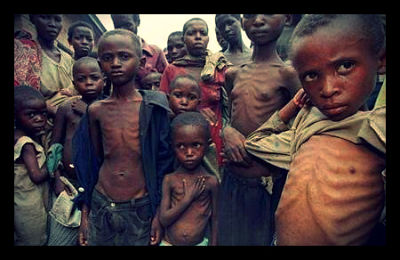
hunger_rwanda
The Republic of Rwanda is a small sovereign state in the Eastern part of Central Africa. Rwanda ranked at 166 of 187 countries on the UNDP Human Development Index in 2011. Rwanda also has the highest population density in the region with 416 people per square kilometer.

Low income, limited natural resources, and food and water insecurity pose a problem for citizens in Rwanda every day. In the years following the Rwandan Genocide in 1994, international rebuilding efforts have been on the ground trying to make sustainable changes to alleviate some of the hunger and water issues.

Here are five facts that explain the state of hunger in Rwanda and how it may change in the coming years:

  1. The 1994 Rwandan Genocide marked the end of the ceasefire signed the year before that stopped the fighting of the Rwandan Civil War. The war began between two ethnic groups the Hutu and Tutsi. The Genocide began when the plane carrying the Hutu supported president Juvenal Habyarimana was shot down and he, along with several other members of the government, were killed. The genocide lasted 100 days and an estimated 800,000 to 1,000,000 people were killed. The fallout from the Rwandan Genocide is the cause for much of the instability in the region that lasts today.
  2. Secondary school attendance in Rwanda is one of the lowest in the world and the literacy rate is 55%.
  3. Approximately 65% of the population has access to safe, clean drinking water
  4. 45% of children under 5 years of age are malnourished.
  5. Over 67,000 refugees from neighboring countries currently reside in Rwanda.

Even though there is a lot of strain on the country today, organizations have been working with the government to address one of Rwanda’s major problems: food insecurity. Agriculture was the country’s main sector before the genocide, and since then, major efforts have been made to make it profitable one more.

Updating the agricultural practices is what the World Food Programme credits with directly reducing the number of food insecure people.

The country hopes that with the reliance on agricultural programs it will improve its GDP to US$900 by the year 2020, up US$380 from its current GDP. Rwanda was also the first country to sign the Comprehensive Africa Agriculture Development Programme (CAADP), meaning that addressing malnutrition and food insecurity is one of the government’s main priorities.

Even though Rwanda still has a long way to go, the government has been taking steps in the right direction that could provide a template for other countries in the region to follow.

– Colleen Eckvahl

Sources: World Food Programme, World Vision
Photo: Rising Continent

February 26, 2014
Share this entry
  • Share on Facebook
  • Share on X
  • Share on WhatsApp
  • Share on Pinterest
  • Share on LinkedIn
  • Share on Tumblr
  • Share on Vk
  • Share on Reddit
  • Share by Mail
https://borgenproject.org/wp-content/uploads/borgen-project-logo.svg 0 0 Borgen Project https://borgenproject.org/wp-content/uploads/borgen-project-logo.svg Borgen Project2014-02-26 22:20:472024-05-24 23:56:425 Facts About Hunger in Rwanda

Get Smarter

  • Global Poverty 101
  • Global Poverty… The Good News
  • Global Poverty & U.S. Jobs
  • Global Poverty and National Security
  • Innovative Solutions to Poverty
  • Global Poverty & Aid FAQ’s
Search Search

Take Action

  • Call Congress
  • Email Congress
  • Donate
  • 30 Ways to Help
  • Volunteer Ops
  • Internships
  • Courses & Certificates
  • The Podcast
Borgen Project

“The Borgen Project is an incredible nonprofit organization that is addressing poverty and hunger and working towards ending them.”

-The Huffington Post

Inside The Borgen Project

  • Contact
  • About
  • Financials
  • President
  • Board of Directors
  • Board of Advisors

International Links

  • UK Email Parliament
  • UK Donate
  • Canada Email Parliament

Get Smarter

  • Global Poverty 101
  • Global Poverty… The Good News
  • Global Poverty & U.S. Jobs
  • Global Poverty and National Security
  • Innovative Solutions to Poverty
  • Global Poverty & Aid FAQ’s

Ways to Help

  • Call Congress
  • Email Congress
  • Donate
  • 30 Ways to Help
  • Volunteer Ops
  • Internships
  • Courses & Certificates
  • The Podcast
Link to: 4 Issues Contributing to Malnutrition in the DRC Link to: 4 Issues Contributing to Malnutrition in the DRC 4 Issues Contributing to Malnutrition in the DRC Link to: 10 Nursery Rhymes from Around the World Link to: 10 Nursery Rhymes from Around the World 10 Nursery Rhymes from Around the World
Scroll to top Scroll to top Scroll to top