Top 10 Facts about Poverty in Lebanon
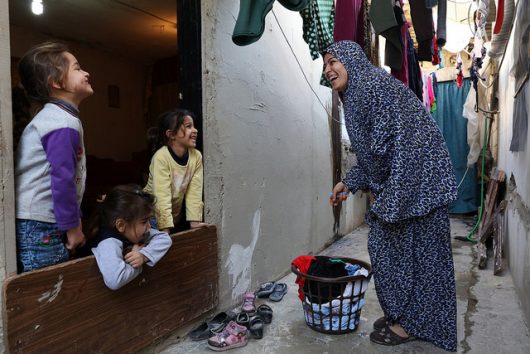
The small, Middle Eastern nation of Lebanon has undergone development and overall economic growth despite the conflict between the nation and neighboring states. Although Lebanon has experienced an overall increase in economic power, the distribution of wealth is largely unequal, causing more issues of poverty in the country. In order to gain a better understanding of poverty and how it is affecting the country, below are the top 10 facts about poverty in Lebanon.
Top 10 Poverty Facts about Lebanon
- Lebanon’s economy has grown exponentially since the beginning of development, offering citizens job opportunities to increase the standard of living. In 1988, Lebanon had a GDP of $3.31 billion. As of 2017, the country’s economy exponentially rose to an estimated $49.60 billion, which ranks 82nd highest in the world.
- Although GDP has certainly increased in recent years, the rate of economic growth in Lebanon has fluctuated. In some years since faster development, Lebanon experienced as low as a 56 percent decrease in GDP due to political instability and global economic decline. Most recently, however, Lebanon maintains an approximately successful 2 percent GDP growth rate.
- The service industry is Lebanon’s overwhelming largest economic sector, with specialized jobs and tourism services continuing to increase. The service industry accounts for a majority of the GDP in Lebanon at an estimated 73.3 percent, while industry and agriculture comprise 21 percent and 5.7 percent of the GDP, respectively.
- The unemployment rate in Lebanon is relatively average due to financial and political issues in the country, with an estimated 6.3 percent unemployment rate in 2017. While economic opportunity has been improved for many Lebanese, this number has actually stayed around the same over the past year, reaching the lowest of 6.2 percent unemployment.
- Although Lebanon’s economy has continued to grow, poverty in the country remains relatively prominent. Approximately 30 percent of the country’s grand total of six million people live under $4 a day. Poverty is much higher in the rural regions of the north, while it is less prominent in urban areas like the capital city of Beirut.
- Life expectancy in Lebanon has risen significantly catalyzed by rapid development throughout the country. In 1960, the average lifetime of people in Lebanon was an already relatively high 63.2 years and has increased to 79.6 years in 2016.
- School enrollment and persistence to end enrollment in Lebanon has fluctuated and decreased since the beginning of development. In 1999, about 90 percent of primary school students completed their full studies, while this number has decreased to 84 percent in 2016. Decreased educational persistence can trap some Lebanese into low-skill, high-demand job markets.
- Despite a decrease in primary school enrollment in Lebanon, the adult literacy rate in the country is high, standing at 91.18 percent. In young adults (ages 15 to 24), the literacy rate is substantially higher at 99.24 percent, and the male and female literacy rates are relatively equal with 99.16 percent and 99.34 percent, respectively.
- Nearly 500,000 people in Lebanon are Palestinian refugees registered with United Nations relief organizations in the country. This makes up an approximate 8 percent of the country’s population, but many continue to live in refugee camps in extreme poverty with limited access to diversified job markets.
- Poor Lebanese citizens and international refugees are more likely to be subjected to human trafficking. Refugees and women are particularly vulnerable to be involved in forced labor. Although the government has been working on decreasing the prevalence of forced labor and human trafficking in the country, results and impact have been inconsistent.
Lebanon has increased its economy, offering more opportunities for its people. A strong focus on the service and skilled industry, along with industrial and agricultural growth has allowed the country to increase its standard of living. Although the economy has developed significantly, poverty for some Lebanese and severe limitations for refugees still continues. With more freedom and better security for these people, poverty will continue to decrease in Lebanon.
– Matthew Cline
Photo: Flickr
