Posts

MakaPadsUganda produces large quantities of papyrus and other plants found in wetlands. However, for many years, their by-products were ignored while imported sanitary pads dominated the market. For many girls and women, especially in rural areas, those imported pads are too costly or hard to find, contributing to widespread unmet menstrual hygiene needs.

A national audit published in January 2025 found that 64% of female students miss school regularly because sanitary materials and proper water, sanitation and hygiene (WASH) facilities are lacking. In this context, MakaPads emerged as a social enterprise, through which local engineers and social entrepreneurs began producing sanitary pads from papyrus reeds and recycled paper. MakaPads’ aim was straightforward: create a hygiene product affordable enough for low-income families while relying on materials available in Uganda itself.

MakaPads Project

The manufacturing remains deliberately low-tech and locally based. Papyrus stems are harvested from wetlands, stripped into fibers or pulp, mixed with recycled paper and shaped into absorbent pads. The finished pads are reportedly up to 95% biodegradable, chemical-free and cost roughly half as much as many imported pads available on the Ugandan market.

MakaPads has also provided employment and economic opportunity, particularly for women from vulnerable backgrounds. According to the project’s own documentation, production at its peak involved as many as 225 people, including both skilled and unskilled workers, as well as refugees, across various factories and stages of production. In one refugee camp factory at Kyaka II, a 2015 report describes 76 women employed, producing more than 800 pads daily and scaling production from 30,000 pads in 2009 to more than one million in 2014.

Women involved in production reported earning enough to cover their children’s school fees or invest in small assets, such as land or motorcycles, illustrating the tangible economic benefits of the project.

Social Impact and Challenges

On the social side, users and distributors have reported that locally made pads have helped reduce reliance on improvised alternatives, such as cloth and rags, which are often uncomfortable, unhygienic and stigmatizing. One user in the camp, Evelyne Banyamisa, reported that access to MakaPads allowed her to maintain consistent school attendance and participate fully in daily activities during her menstrual cycle.

However, the initiative has faced challenges. The UNHCR contract to supply pads to refugee camps was discontinued in 2015 after a quality inspection by the Uganda National Bureau of Standards (UNBS) revealed deficiencies. Some users also noted limitations, including leakage on heavier flow days, narrow pad width and occasional odor issues, highlighting the ongoing need to balance affordability, accessibility and product quality.

Final Remarks

Despite these setbacks, MakaPads remains a rare example of a social enterprise that simultaneously addresses menstrual health, local employment and environmental sustainability through low-cost, biodegradable sanitary products. Nevertheless, MakaPads demonstrates what community-rooted, resource-aware innovation can achieve: a model that combines menstrual hygiene with local manufacturing, environmental sustainability and economic opportunity. In a country where period poverty affects the majority of schoolgirls, low-cost, biodegradable pads made from native plant waste stand out as a hopeful, home-grown solution.

– George Horberry

George is based in York, UK and focuses on Technology and Global Health for The Borgen Project.

Photo: Flickr

Asasah’s Microfinance ModelMore than 115 million women worldwide rely on microfinance loans. At first glance, this may look like an empowering opportunity. However, research shows a darker side: many women from improvised households running these small businesses report health challenges linked to the stress of heavy debt.

This raises an urgent question: how do we ensure that microfinance does not come at the cost of women’s well-being? One answer lies in Asasah’s Microfinance Model.

What is the Problem?

A study involving 442 women across multiple cities and provinces in Pakistan asked open-ended questions to explore the health consequences faced by small business owners. The findings revealed numerous challenges categorized into social, physical, mental and economic issues.

Specific concerns included stress, infectious diseases, inadequate housing and limited access to gas lines and health care facilities. Loans alone are insufficient to secure a thriving business and a healthy life.

Asasah’s Microfinance Model

Asasah is a Pakistan-based social enterprise that supports entrepreneurs through financial services to reduce poverty. Its mission is to boost productivity while driving sustainable poverty alleviation. What truly sets Asasah apart is its exclusive focus on women and its unique blend of financial services and health support.

Grounded in the belief that empowering women is one of the most powerful catalysts for social change, Asasah provides microloans and integrates health services to ensure long-term well-being and productivity. Every client receives mandatory health and credit life insurance, with coverage extending to their spouses.

Beyond insurance, Asasah also conducts health workshops to raise awareness and promote healthier living, ensuring that women remain productive and supported. The impact of Asasah’s approach is measurable.

Between its founding in 2003 and June 2013, the institution successfully disbursed 170,000 microloans, issued 170,000 life insurance policies and provided 35,000 health insurance plans.

Why It Is Important

Building on its findings, the study recommended several ways to address the challenges that arise after loans are provided in the microfinance sector. One key recommendation was to pair financial services with health interventions. These could include health insurance, housing loans and improvements to basic living conditions such as water and gas lines.

In other words, microfinance must be combined with health services to prevent the triple burden of debt, disease and destitution faced by many hard-working women. Only by acting on these recommendations can women sustain their businesses without being trapped in the cycle of poverty.

Thanks to Asasah’s approach and efforts, the institution has gone beyond simply providing tools for survival. Instead, it has asked a deeper question: How can we ensure women continue in their efforts? While the fight against poverty is far from over, Asasah’s microfinance model demonstrates how addressing immediate needs and long-term challenges can create lasting impact.

– Majida Mohamed

Majida is based in Minneapolis, MN, USA and focuses on Good News and Global Health for The Borgen Project.

Photo: Pixabay

MoelocoDespite being a source of creativity and self-expression, the fashion industry has long been criticized for its problematic practices. This has especially been the case within the fast fashion sector. According to the United Nations Environmental Protection Agency (UNEP), the industry uses 93 billion cubic meters of water annually, enough water for 5 million people. The fast-paced, low-cost production of clothing perpetuates a host of environmental and social problems, including severe human rights violations. Workers in developing nations frequently experience hazardous working conditions, excessive hours and unfair pay, trapping them in cycles of poverty.

Impoverished communities suffer disproportionately from the environmental damage caused by unsustainable manufacturing practices. They are the least equipped to manage the fallout from pollution, water scarcity and the changing climate. Despite these challenges, the fashion industry is increasingly striving to mitigate its impact and promote ethical fashion to fight poverty. Initiatives like the United Nations (U.N.) Alliance for Sustainable Fashion and social enterprise Moeloco, lead sustainability programs worldwide.

Moeloco

Moeloco, founded by Kathy Wong, is an ethical footwear brand. They produce flip-flops with inspirational messages engraved on the soles, such as ‘Love’ and ‘Be Happy.’ While these messages help spread positivity, the impact of each purchase is even more far-reaching. For every pair of flip-flops sold, the organization donates a pair of locally crafted, closed-toe canvas shoes to impoverished children in India. In many regions across India, many children remain shoeless – this puts them at significant risk of contracting diseases from the ground below them, which may lead to amputation or death and prevent them from going to school due to health regulations enforced at schools. Without education, these children are more likely to remain trapped in the cycle of poverty.

Moeloco alleviates poverty by donating 400 shoes to impoverished children in India, collaborating with the Hope Foundation. This partnership supports local manufacturers who make the shoes, thereby creating local jobs and distributing the footwear. It aims to provide these children access to education and raise awareness about the impact of consumer spending. This initiative represents ethical fashion by directly linking purchases with tangible benefits for impoverished children, demonstrating how consumer choices can significantly alter lives.

Ethnotek

Another impactful brand tackling poverty in the fashion industry is Ethnotek. Founded by Jake Orak, Ethnotek collaborates with artisan communities in Guatemala, Ghana, Vietnam, Indonesia and India to produce beautifully crafted bags that preserve cultural heritage. These artisans use traditional techniques to create colorful, handcrafted textiles which are incorporated into their products. Ethnotek is unique in that it is dedicated to sustainability and fair trade. Rather than providing direct aid, the company guarantees that artisans receive fair wages and work in safe conditions by forming direct partnerships with them.

Since many of these craftspeople reside in rural areas with few job opportunities, selling their handmade goods on international marketplaces enables them to become financially independent. Since Ethnotek’s conception in 2007, the business has now partnered with more than 500 artisans across five countries to generate more than $10 million in revenue in 2024. This economic empowerment aligns with core principles of ethical fashion in fighting poverty as it uplifts impoverished communities through fair wages and employment opportunities. 

Fashion Impact Fund

The Fashion Impact Fund, an innovative program, leverages the fashion industry’s broad influence to foster social change. This nonprofit organization offers grants, training and employment opportunities to female-led projects emphasizing environmental sustainability, poverty alleviation and education. It supports female designers, artists and entrepreneurs to cultivate a more diverse and socially conscious fashion industry. The fund’s core objective is to equip women from underprivileged backgrounds with the resources and opportunities they need to succeed in the fashion sector.

Through mentorship, skill development and financial support, this nonprofit helps women establish sustainable careers, lifting them and their families out of poverty. The organization also provides funding for initiatives tackling climate change and environmental degradation – issues disproportionately impacting underprivileged areas. The work of the Fashion Impact Fund contributes to the broader movement of ethical fashion fighting poverty, with a focus on addressing discrimination and lessening the gender-based wealth gap via economic inclusion.

Looking Ahead

These initiatives demonstrate the fashion industry’s potential to drive significant social change. By promoting fair wages, education and economic empowerment, these organizations prove that fashion can potentially serve as a powerful tool for long-term poverty reduction. As consumers increasingly recognize the influence of their purchases, the potential for ethical fashion to fight poverty could grow.

– Viola Cuthbertson

Viola is based in London, UK and focuses on Good News for The Borgen Project.

Photo: Flickr
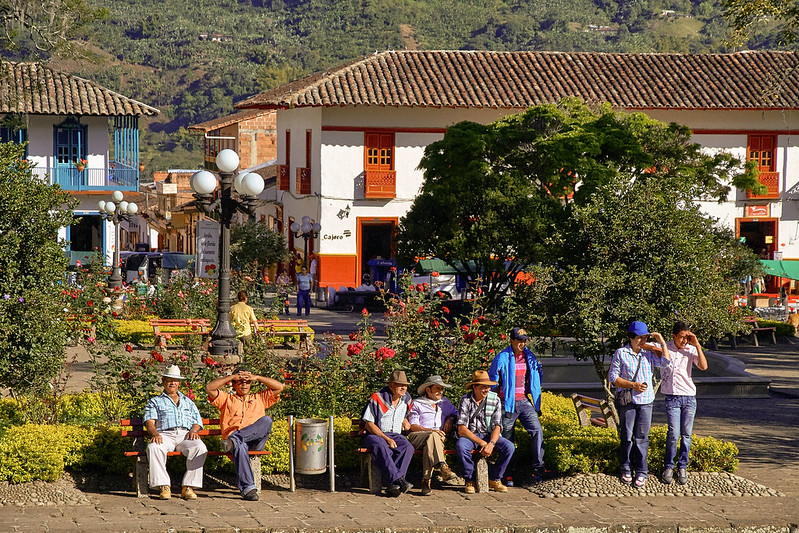
Social Enterprises in ColumbiaColombia is witnessing a transformative wave of social enterprises addressing pressing social issues while generating employment and reducing poverty. These innovative businesses are tackling critical challenges such as waste management, economic inclusion and sustainable agriculture, all while creating jobs and improving the quality of life for many Colombians. 

Tackling Waste with Innovation

Conceptos Plásticos is a leading example of innovation in waste management and housing solutions. This enterprise transforms plastic waste into building materials for affordable housing. In 2018, Colombia produced approximately 14 million tons of municipal waste daily and only 17% is recycled. Conceptos Plásticos reduces plastic pollution, creates jobs and provides sustainable housing solutions for low-income families. The company has already built more than 1,500 homes using recycled plastic. By converting plastic waste into a valuable resource, Conceptos Plásticos significantly impacts both environmental sustainability and social welfare.

Promoting Economic Inclusion

Fundación Capital is another notable enterprise making strides in Colombia. This organization focuses on economic inclusion by offering financial education and digital tools to low-income individuals. In Colombia, approximately 30% of the population lives below the poverty line. Fundación Capital’s initiatives help individuals manage their finances and improve their livelihoods. The organization has reached more than six million people across Latin America with its programs. By empowering people with the knowledge and tools to achieve financial stability, Fundación Capital plays a crucial role in reducing poverty and promoting economic growth. The initiative highlights the importance of financial literacy in achieving long-term economic sustainability.

Advancing Sustainable Agriculture

SiembraViva, a Colombian social enterprise, addresses environmental sustainability and agricultural innovation. Agriculture accounts for about 6.3% of Colombia’s GDP, with many small farmers struggling to maintain sustainable practices. SiembraViva supports small farmers by providing technology and promoting sustainable farming practices. These ongoing efforts improve crop yields and reduce the environmental impact of agriculture. The enterprise has supported more than 1,000 farmers, reducing waste from 30% to 5% and guaranteeing farmers an income. By focusing on sustainable methods, SiembraViva helps ensure that farming practices contribute to long-term ecological health.

The Broader Impact

These social enterprises in Colombia illustrate the powerful role of entrepreneurship in driving social good. By tackling critical issues such as waste management, economic inclusion and sustainable agriculture, these social enterprises are creating jobs and improving the quality of life for many Colombians. Colombia’s unemployment rate, which stood at 11.3% in 2024, underscores the need for job creation initiatives. The innovative solutions provided by Conceptos Plásticos, Fundación Capital and SiembraViva demonstrate the potential of social enterprises to transform economies and uplift communities. As Colombia continues to support and nurture these initiatives, the positive impact on society is expected to grow, contributing to a more sustainable and inclusive future.

– Chelsea Rasool

Chelsea is based in Stirling, Scotland and focuses on Technology and Solutions for The Borgen Project.

Photo: Flickr