• Link to X
  • Link to Facebook
  • Link to Instagram
  • Link to TikTok
  • Link to Youtube
  • About
    • About Us
      • President
      • Board of Directors
      • Board of Advisors
      • Financials
      • Our Methodology
      • Success Tracker
      • Contact
  • Act Now
    • 30 Ways to Help
      • Email Congress
      • Call Congress
      • Volunteer
      • Courses & Certificates
      • Be a Donor
    • Internships
      • In-Office Internships
      • Remote Internships
    • Legislation
      • Politics 101
  • The Blog
  • The Podcast
  • Magazine
  • Donate
  • Click to open the search input field Click to open the search input field Search
  • Menu Menu

Tag Archive for: Education in Pakistan

Posts

Global Poverty

Education Crisis for Pakistan’s Internally Displaced Persons

internally_displaced_persons
As of 2015, there have been approximately 700,000 internally displaced persons in the volatile North Waziristan region of Pakistan as a consequence of Taliban insurgency. Of these 700,000, around 300,000 are children of a school-going age range. For these children, a stable education remains a dream.

In late 2009, militant threats in the northwestern tribal areas of North Waziristan escalated dramatically. After various military offensives against militants in the surrounding regions of South Waziristan and Swat, the Pakistani army launched Operation Zarb-e-Azb in January 2014. The military has since been conducting an extensive yet lengthy military operation against the Taliban militants in North Waziristan.

The increasingly dangerous circumstances in the Taliban stronghold has led to a mass exodus of the region’s residents. This military intervention, despite its exigent need, has created significant issues for the displaced people as well as the Pakistani government. The already financially-crippled Pakistani government is thus faced with the immense challenge of providing relief for the refugees.

The refugees from Northern Waziristan add to the almost 1 million refugees who have been displaced during the war on terrorism in the country. The cost of providing basic healthcare and resources to the refugees has been allotted $1 million from the Pakistani government, with substantial bolstering from the United States and China.

Despite the funding, the conditions in the refugee camps are less than satisfactory. As the provision of shelter and food becomes an issue, the educational needs of refugee children have taken a backseat. Temporary schools established for refugee children are in abysmal conditions and are impossibly short-staffed. Many parents are told to enroll their children in far-off government schools. However, many government-run schools are being used as temporary shelters, and not as schools.

According to UNHCR, of the 300,000 children in refugee camps, only 5% are enrolled in schools, whether public, private or NGO-run. Many students old enough to work are choosing menial jobs over continuing their education so as to financially support their families.

Prior to the refugee crisis, the literacy rates in the Northern Waziristan district were only 16% overall and a deplorable 1.67% for girls. The increased presence of fundamentalists in the region who target schools—and, specifically, female education—has adversely affected the state of education in the region.

Unfortunately, for the families returning home this summer, the conditions for education have not improved. Many of the schools have been destroyed through the course of the clashes between the army and the Taliban; others are still occupied by the army as temporary bases. As schools across the country reopen in September, students in North Waziristan continue to face an uncertain, unstable future.

The government has so far failed to come up with a successful and effective plan for the rehabilitation of these students. Recently, the higher education commission announced a stipend of Rs. 2,000 for every student enrolled in post-secondary education; however, no such plan has been revealed for the elementary, middle or high school students.

The director of education for the Federally Administered Tribal Areas (FATA)—the education authority for North Waziristan—has suggested that UNICEF aid be used to establish schools in tents for IDPs who continue to reside in the camps. Additionally, the director has recommended a second shift for schools in neighboring areas, like Bannu and Lakki Marwat, specifically for IDPs. The feasibility and potential for success of both these measures have been met with criticism and apprehension from many nonprofit agencies, as well as the refugees themselves.

As the government deadline for the complete return of North Waziristan IDPs to their homes—set for January 2016—fast approaches, it is imperative that the educational authorities within the government focus on the rehabilitation of these students. The Pakistani government, with assistance from its aides, needs to make education in the region a priority in its budget. The goal of the provincial government should not be pre-2009, but to bring the region to a literacy rate at least on par with the rest of the country, especially for girls. An effective strategy and delegation of resources to educate the children of North Waziristan are crucial to the long-term stability of the region.

– Atifah Safi

Sources: UNHCR, FATA Disaster Management Authority, Aljazeera, Aljazeera, Dawn, Pakistan Today
Photo: Flickr

July 30, 2015
https://borgenproject.org/wp-content/uploads/borgen-project-logo.svg 0 0 Borgen Project https://borgenproject.org/wp-content/uploads/borgen-project-logo.svg Borgen Project2015-07-30 09:08:312024-12-13 17:52:05Education Crisis for Pakistan’s Internally Displaced Persons
Education, Global Poverty

Zindagi Trust Works to Reform Education in Pakistan

education_pakistan_reform
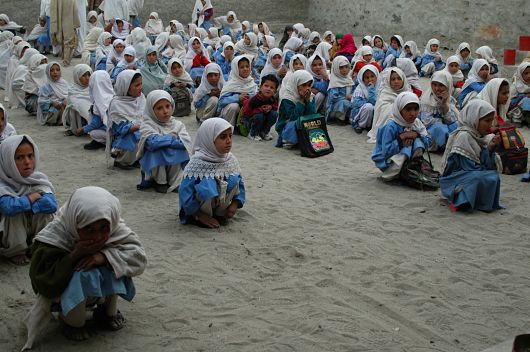
As Malcolm X once said, “education is the passport to the future, for tomorrow belongs to those who prepare for it today.” Those words have resonated with countless people around the world. The NGO Zindagi Trust has taken on the task of reforming education in Pakistan, a country plagued by corruption and poverty.

According to the World Bank, in 2013 Pakistan had an enrollment rate of 92% when it came to students in primary schools. Unfortunately, that number drops to 38% when enrollment is in regards to secondary schools.

In a nation with a population of 185 million people, the United Nations Children’s Fund (UNICEF) estimates that there are currently 73.8 million Pakistani children under the age of 18. With 40% of the population lacking adequate schooling, educational reforms are more important than ever.

Zindagi Trust works by reforming public schools, educating working children and lobbying the government to improve education policies. They believe these three foci are the best way to improve children’s education.

Their focus was developed to combat what they assess as the primary failure of the educational system. Most Pakistani children (85%) currently attend public government-run schools. According to Zindagi Trust, these schools are plagued by low teacher attendance, deteriorating buildings, inadequate learning facilities, and a curriculum and teacher culture that lacks any sort of creativity.

Their philosophy is that reforming existing schools is the best business proposition for an education provider because the expensive infrastructure (land, building, fixtures, basic furniture) are already present. By creating a successful model for reform in government schools, they can have more impact than 100 private schools would and save a lot of money that can be used for other projects.

In 2007, they implemented their strategy by taking over a government-run school in Karachi called the SMB Fatima Jinnah Government’s Girls School. It comprised of eight schools on one campus with independent teachers and administrators who were not working together. They honed in on five factors to reform the institution.

Infrastructure Rehabilitation

This included laying down a new football pitch, paving the school grounds and updating the fences and securities measures, providing filtered drinking water taps, and even cleaning out stray animals such as dogs that lived in the classrooms.

Administration Changes

The lack of competent administrators and teachers led to a situation where regulations were not properly being followed and a culture of student neglect was thriving. Zindagi Trust merged all the administrators into one unit, creating rigorous protocols for teacher and student attendance and performance. They also banned outsiders from throwing parties on the then deteriorating football grounds.

Academic Innovation and Planning

Previously, teachers were unorganized and textbooks were outdated. Zindagi Trust implemented modern thought-provoking textbooks and hired academic coordinators for English, mathematics and science to plan syllabi with learning outcomes and timelines, design tests, monitor progress, and observe and train teachers.

Teacher Reforms

To combat the teachers’ culture of inconsistency, Zindagi Trust began monitoring teacher attendance and penalized staff for unreported absences, lateness and shirking duties. This helped to bring consistency to the classrooms and better learning outcomes for students.

Student Affairs

Creativity is one of the greatest strengths of education. Students were given access to facilities they previously had never seen. Learning modules were created to allow students to explore art and sports such as cricket and Taekwondo. The school provides modules for sexual health and abuse awareness. There is even a chess club on campus.

The Zindagi Trust school model has been a success. Students have been successfully completing coursework and the government is currently taking notice. In July of 2011, the Sindh Education Secretary issued a notification approving the School Consolidation Policy that aims to merge adjoining and nearby schools into one campus under one administration, based on the Fatimah Jinnah Girls School model.

Recently, at the Oslo summit on Education and Development, Pakistani Prime Minister Nawaz Sharif committed to the vision of the Oslo leadership and said he shared that vision in educating all Pakistani children. He met with Ms. Malala Yousafzai and spoke about their shared responsibility to provide universal education to their country.

The United States must continue to provide aid to organizations such as the Zindagi Trust as they rebuild the Pakistani education system. Pakistan is a strategic ally to the United States and an established trading partner in the textile industry. The country’s uneducated population is living on pennies which is preventing the nation from becoming larger consumers of American exports. Coupled with their geographical location in regards to Afghanistan, it is in the best interest of the United States to support Pakistanis in receiving education, as they hold the passport to the future relationship between the United States and Pakistan.

– Adnan Khalid

Sources: New Delhi TV, UNESCO, UNICEF, World Bank 1, World Bank 2, Zindagi Trust
Photo: Al-Mehran Public School High
July 25, 2015
https://borgenproject.org/wp-content/uploads/borgen-project-logo.svg 0 0 Borgen Project https://borgenproject.org/wp-content/uploads/borgen-project-logo.svg Borgen Project2015-07-25 08:55:462024-06-07 04:52:04Zindagi Trust Works to Reform Education in Pakistan
Education, Global Poverty

Pakistan’s Commitment to Improve Education

Pakistan’s-Commitment-to-Improve-Education
Pakistan has seen its fair share of violence that has torn the country apart. Part of this was a disruption in the education of the youth. Pakistan currently spends seven times more on military spending than on primary school education. The results of this is shown in the numbers of children in school and the literacy rates—63 percent of school-age children in class and 49.5 million adults can’t read. And within these numbers, 4.5 million girls don’t attend school and two-thirds of adult women are illiterate. Since 1999 Pakistan has made rather small progress. Recently, however, Pakistan has made a commitment to improve education.

That is why the statement of Prime Minister of Pakistan, Nawaz Sharif, addressing education issues at the Oslo Education Summit is so important. Sharif stated that that his government will focus on improving the quality of education for both boys and girls as well as increasing the opportunities for young girls to attend school.

Recently, Pakistan’s poverty rates have begun to slip again. This is due to the large increase in population and the low productivity of the population due to a lack of education. Another factor is the inequality of education and literacy rates between men and women. About 70 percent of men are literate, compared to the 40 percent of women.

By increasing education opportunities for the youth, especially female children, Pakistan can begin to turn around the poverty rates. They will create a more informed population that begins to transform the economy and raise Pakistan’s poverty rates.

Sharif believes that by investing in education, Pakistan can begin to improve the living conditions for its people. During the Oslo Conference he stated, “education of youth is the only way forward for socio-economic progress of our future generations and that eradicating illiteracy is essential for promotion of peace, tolerance, and harmony in any society.”

– Katherine Hewitt

Sources: CNN, Poverties, Samaa
Photo: Pakistani Youth

July 14, 2015
https://borgenproject.org/wp-content/uploads/borgen-project-logo.svg 0 0 Borgen Project https://borgenproject.org/wp-content/uploads/borgen-project-logo.svg Borgen Project2015-07-14 15:12:132024-05-27 09:26:01Pakistan’s Commitment to Improve Education
Global Poverty, Women & Children

Maternal Mortality in Pakistan

maternal_mortality_pakistan
In Pakistan, one in 89 women die because of pregnancy and childbirth-related complications, and Pakistan’s Maternal Mortality Rate (MMR) is 299 per 100,000 live births.

Twenty percent of the deaths of women of childbearing age are caused by maternal complications. The majority of these deaths are caused by postpartum hemorrhaging. Hemorrhages can be extremely problematic, especially if hospitals do not have enough blood for transfusions to replace the blood loss. Maternal mortality is also high due to puerperal sepsis and eclampsia. Sepsis is when infections during pregnancy, even those not directly related to the pregnancy, trigger the body’s inflammatory response to infection. Sepsis is also called blood poisoning, and it can only be cured with the prompt treatment of antibiotics.

Eclampsia, the third leading cause of maternal deaths in Pakistan, is convulsions in a pregnant woman resulting from high blood pressure. Eclampsia is often followed by a coma.

Rural women are less likely to have access to a hospital. The rate of maternal mortality is consequently higher in rural areas than urban areas—23 percent rather than 14 percent. Home births are extremely common in rural areas. A total of 74 percent of women in rural areas give birth at home, compared to 43 percent of women in urban areas.

If women have an education, they are more likely to seek out prenatal care. Ninety-six percent of women with education had prenatal care visits with a doctor, rather than 50 percent of women who were not educated. One-third of pregnant women in Pakistan do not get prenatal care at all, due to feeling it is unnecessary or that it costs too much money. Prenatal care can help prevent complications and decrease the maternal mortality rate. While prenatal care visits have increased, as of 2007, only 28 percent of Pakistani women went to the recommended four prenatal care visits.

Another reason why Pakistan has a high maternal mortality rate is due to the fact that contraceptive use has not increased much in recent years. In 1984, the Total Fertility Rate (TFR) was six children per woman in Pakistan. By 2008, this number declined to about four children per mother, with a rate of about three children per mother for women in urban areas. However, contraceptive use has remained steady, and only about 30 percent of married women of childbearing age use contraceptives. Contraceptive use is still stigmatized by religious members of the community, such as Mohammed Zakaria, the mufti of Jamia Islamia, an Islamic religious school. Zakaria argues that “family planning is wrong and un-Islamic if practiced routinely.” Educated mothers are more likely to use contraceptives, but many women in Pakistan are uneducated. NPR argues that an increase in education would lead to an increase in contraceptive use and a corresponding decrease in maternal mortality, citing Sri Lanka as an example. In Sri Lanka, the literacy rate is 91 percent (compared to 62 percent in Pakistan).

Maternal mortality is also a problem in Pakistan due to a shortage of doctors, nurses and beds at government hospitals. Many of the regular staff members are postgraduate trainees who are not able to handle pregnancy-related complications.

Pakistan currently only spends less than 1 percent of its GDP on healthcare. In order for maternal mortality rates to decrease, more money has to be devoted to improving hospital care and making hospitals more accessible. The stigma around contraceptive use also has to end, and an increase in education would also lead to a lower MMR.

– Ashrita Rau

Sources: NPR, UNICEF, NIH, The Express Tribune, USAID The DHS Program
Photo: Pakistan Today

July 2, 2015
https://borgenproject.org/wp-content/uploads/borgen-project-logo.svg 0 0 Borgen Project https://borgenproject.org/wp-content/uploads/borgen-project-logo.svg Borgen Project2015-07-02 09:15:022024-05-27 09:25:34Maternal Mortality in Pakistan
Children, Education, Violence Against Women, Women and Female Empowerment

Sex-Ed for Girls in Pakistan

Girls in rural Pakistan are receiving groundbreaking sex education lessons from the Village Shadabad Organization. These lessons range from topics of puberty, sex, marital rape, menstruation, marriage, human rights and self-defense against attackers. These sex education lessons are being taught alongside normal education curriculum in eight different girls schools, which are funded by BHP Billiton, an Australian company.

Lessons on menstruation and puberty teach girls not to be ashamed by their own body, and lessons on marital rape explain that unwilling marital sex is a crime. The girls are taught to scream and fight if they are touched inappropriately, because their bodies are owned by no one but themselves. Uzma Panhwar, a 10-year-old student, declares “My body is only mine and only I have the rights on it.”

These lessons teach girls about their body, and about their sexual health. With greater knowledge and awareness of their bodies and their rights, girls can gain confidence and strike away feelings of guilt and shame thrust upon them by their conservative patriarchal society.

In a country where public discourse on sex is forbidden, these lessons are even more meaningful and relevant for these young girls. It is estimated that 70 percent to 90 percent of Pakistan’s women have experienced domestic abuse. Women in Pakistan experience high rates of sexual and domestic violence, fighting against a justice system that favors their male attackers. Both law enforcement and government officials have proved to be unresponsive towards violence against women.

The World Economic Forum’s Global Gender Gap report ranked Pakistan as 135th in the world due to its gender inequality. Pakistan has a history of honor killings, child marriages and violence against women. Although the country is making progress in women’s education, women still have little representation in their own government.

The families in these rural villages support sex education, but there are many others in Pakistan, especially from the education sector, who oppose it due to constitutional and religious reasons. The education minister for the Sindh province and the president of All Pakistan Private School Federation have opposed these sex education lessons in the rural villages.

These sex education lessons are important in providing a foundation for female empowerment in Pakistan. While reform and increased legislation on women’s rights from the government will be slow to create change, these lessons in rural villages are impacting transformation of social norms at the local level.

Women’s empowerment has been shown to not only combat poverty, but to promote development and greater well-being. Teaching these young girls in Pakistan to take control over their bodies also teaches them to take control of their own lives. These sex education lessons do not merely educate them about their bodies, it teaches them to respect themselves, and to demand the respect they deserve from their society and government.

– Sarah Yan

Sources: The Guardian, Global Public Square
Photo: Taipei Times

March 26, 2014
https://borgenproject.org/wp-content/uploads/borgen-project-logo.svg 0 0 Borgen Project https://borgenproject.org/wp-content/uploads/borgen-project-logo.svg Borgen Project2014-03-26 20:45:522024-06-05 01:57:20Sex-Ed for Girls in Pakistan
Activism, Education, United Nations, Women and Female Empowerment

Malala Proves Education is Key to Empowerment

malala_opt-1
Malala Yousafzai is a young education rights campaigner from Pakistan. Malala will soon be celebrating her 16th birthday, a miracle after she was shot by extremists for her outspoken beliefs on education. Malala will celebrate her birthday by traveling to the United Nations where students from more than 80 countries will join her.

Malala and the other young activists will be assembled to call for global education for everyone in the world. She and the other young diplomats believe that education is a right for all – one of the Millennium Development Goals, and a vital component of the path to global citizenship. This belief is well founded in the fact that universal compulsory education represents a future that the world wants. Malala was the first person to sign on to a new worldwide petition calling for urgent action to ensure the right of every child to safely attend school. The petition serves as an initial step in focusing the UN agenda on education.

UN Secretary General Ban Ki-moon supports Malala’s mission to bring education to the world. He states that education is an essential step in a world without poverty, violence, discrimination, and disease. He also recognizes that in order to achieve these objectives, the global society needs to continue pushing forward. The secretary general recognizes that we, as a global society, have made progress on this issue, however, there is much more work to be done. Ban expresses that no child or woman should have to consider going to school as an act of bravery.

Ban states that too many girls around the world are subjected to extremist threats for trying to obtain an education. The benefits of educating women in developing countries have been proven time and time again. Ban explains that when women and girls are educated, a society develops at a more rapid pace than without their education. Additionally, education increases future earnings for women, allowing them to provide their families with additional resources, over time, lifting them out of poverty.

If education is key to empowerment as the path to economic stability and development, why is it so widely contested in many developing countries? The answer lies in fear. If we as a global community continue to fear education for all, we will fail to grow as a global economy. More steps must be taken to ensure each child has access to education.

-Caitlin Zusy
Source: Huffington Post, UN News Center
Photo: Stanford Bookhaven

July 15, 2013
https://borgenproject.org/wp-content/uploads/borgen-project-logo.svg 0 0 Borgen Project https://borgenproject.org/wp-content/uploads/borgen-project-logo.svg Borgen Project2013-07-15 15:21:182024-06-11 01:39:24Malala Proves Education is Key to Empowerment
Page 2 of 212

Get Smarter

  • Global Poverty 101
  • Global Poverty… The Good News
  • Global Poverty & U.S. Jobs
  • Global Poverty and National Security
  • Innovative Solutions to Poverty
  • Global Poverty & Aid FAQ’s
Search Search

Take Action

  • Call Congress
  • Email Congress
  • Donate
  • 30 Ways to Help
  • Volunteer Ops
  • Internships
  • Courses & Certificates
  • The Podcast
Borgen Project

“The Borgen Project is an incredible nonprofit organization that is addressing poverty and hunger and working towards ending them.”

-The Huffington Post

Inside The Borgen Project

  • Contact
  • About
  • Financials
  • President
  • Board of Directors
  • Board of Advisors

International Links

  • UK Email Parliament
  • UK Donate
  • Canada Email Parliament

Get Smarter

  • Global Poverty 101
  • Global Poverty… The Good News
  • Global Poverty & U.S. Jobs
  • Global Poverty and National Security
  • Innovative Solutions to Poverty
  • Global Poverty & Aid FAQ’s

Ways to Help

  • Call Congress
  • Email Congress
  • Donate
  • 30 Ways to Help
  • Volunteer Ops
  • Internships
  • Courses & Certificates
  • The Podcast
Scroll to top Scroll to top Scroll to top