Finding the Solution to the HIV/AIDs Epidemic in South Africa
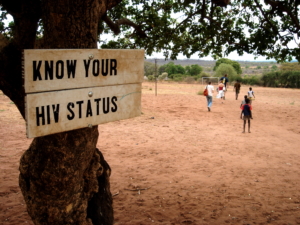
South Africa has the world’s largest HIV/AIDs epidemic. The government has issued numerous HIV prevention programs in an effort to educate the public, reduce the annual number of new infections, and, eventually, eliminate the disease.
History of the HIV/AIDS Epidemic in South Africa
South Africa’s first reported cases of the Human Immunodeficiency Virus, or HIV, emerged in 1982 among homosexual men amidst Apartheid. Due to the political upheaval and repression by the government during Apartheid, HIV was ignored, thus allowing the virus to spread rapidly throughout the homosexual community among men. HIV was almost exclusively diagnosed in gay men until 1987 when there was a sudden increase in women being infected with the virus. The opportunistic microbial infection was credited with being spread as a result of poverty, limited primary health care, lack of education, and sexual exploitation and violence against women. It was not until the early 2000’s that the government recognized HIV/AIDs as a major issue after HIV rates with pregnant women soared from 1 percent in 1990 to over 30 percent by the beginning of the next decade.
Prevalence of HIV/AIDs Epidemic in South Africa
In 2018, the HIV/AIDS epidemic in South Africa rose to an estimate of 7.1 million South Africans affected by the disease, with 240,000 new diagnoses, and 71,000 AIDS-related illnesses. The disease is most prevalent among marginalized groups: sex workers account for 57.7 percent of HIV cases, gay men at 26.8 percent, and drug addicts at 1.3 percent. Additionally, there is an estimate of 280,000 children who have contracted the disease from their mothers; HIV prevalence is four times greater in women and young girls due to gender-based violence and transgender women are twice as likely to be infected by the virus than gay men.
Solutions to the Epidemic
Despite the initial negligence to the HIV/AIDs epidemic of South Africa from the government, South Africa aims to reduce the number of new infections to under 100,000 by 2022. The government has made great efforts to resolve the issue by executing awareness campaigns, encouraging HIV testing, distributing condoms, and implementing HIV prevention programs. In 2018, the HIV/AIDS epidemic in South Africa rose to an estimate of 7.1 million South Africans affected by the disease. There have been large improvements in the choice of antiretroviral medicines and the widespread accessibility of the Prevention of Mother-to-Child Transmission, or PMTCT, program. As of 2016, mother-to-child transmission rates have fallen from 3.6 percent to 1.5 percent between 2011 to 2015, meaning the country is on track to completely eliminating MTCT.
Due to the 2010 national HIV Testing and Counselling (HTC), campaign and the 2013 HTC Revitalisation Strategy—which focused on encouraging people from the private sector, rural areas, and higher education to test—more than 10 million people in South Africa get tested for HIV every year.
As of 2016, only 5 percent of South African schools provided sex education, but the government has committed to increasing this number to over 50 percent by 2022—especially in high-risk areas. The government has adopted UNAIDS 90-90-90 strategy: By 2020, 90 percent of all people living with HIV will know their HIV status; 90 percent of all people with diagnosed HIV infection will receive sustained antiretroviral therapy; and 90 percent of all people receiving antiretroviral therapy will have viral suppression. Thus far, 90 percent of South African’s know their HIV status, 68 percent are on treatment, and 87 percent are virally suppressed. Factually, South Africa has made significant progress in reducing HIV amongst the population, and they are on track to eliminate the HIV/AIDS epidemic in South Africa.
– Arielle Pugh
Photo: Wikimedia
