SmartCane: Technology Empowers Blind Communities in India
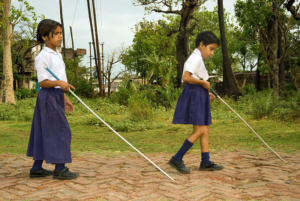 In India, visual disability affects approximately 0.23% of the population, with significantly higher rates, up to 1.53%, among older adults. Despite efforts to improve access, about 15% of people with visual disabilities still lack access to health care for their condition.
Barriers such as affordability, low literacy and geographic isolation disproportionately affect women, marginalized communities and people with low incomes. These challenges limit access not only to treatment but also to assistive devices like canes or glasses.
Smart cane technology in India is addressing this gap by using sensor-based innovation to improve mobility, independence and safety for people who are blind or visually impaired.
The Limits of Traditional Mobility Tools
An estimated 4.95 million people in India are blind and another 35 million are visually impaired. Cataracts and uncorrected refractive errors remain the leading causes of blindness and low vision, respectively.
Many of these individuals rely on traditional white canes for mobility. While helpful for detecting objects on the ground, conventional canes fail to detect obstacles above waist height, such as low-hanging signs or open windows.
This limitation increases the risk of accidents and discourages independent travel, especially in crowded or unfamiliar environments.
SmartCane Solution for Safer Navigation
Smart cane technology aims to overcome these limitations. The SmartCane was developed by the Indian Institute of Technology (IIT) Delhi in collaboration with Phoenix Medical Systems and Saksham Trust, with funding from the Wellcome Trust.
It is an electronic mobility aid that uses ultrasonic sensors to detect obstacles up to three meters away and at varying heights. The device sends tactile feedback through vibrations to alert users before impact. The SmartCane retails for around $34 and has reached more than 20,000 users across India and internationally.
Implementation and Impact
SmartCane’s distribution has primarily occurred through partnerships with NGOs, schools for the blind and regional disability centers in India. Saksham Trust, a key implementing partner, has helped train users to integrate the device into their daily routines. Instruction includes mobility training, orientation sessions and guidance on interpreting haptic feedback.
A study led by Rohan Paul, one of SmartCane’s innovators and a Rhodes Scholar, found a 93% reduction in collisions during a structured obstacle course compared to users of traditional canes. Another U.S.-based study of older adults evaluating smart mobility devices found that 83% supported the idea. Similarly, 100% believed they could learn to use it effectively with training. However, some raised concerns about accessibility, appearance and tech support.
Real Benefits Beyond Navigation
Smart canes give users greater independence, allowing them to move through public spaces and explore new places more confidently. Enhanced obstacle detection reduces the risk of injury and supports safer commuting. Integration with smartphones and other devices opens access to apps, navigation tools and public services.
However, affordability remains a barrier, especially for low-income users. About half of the people with visual disabilities can access recommended aids or appliances. Government subsidy programs and increased awareness could help scale the device’s reach and close these access gaps.
Looking Ahead
Smart cane technology in India illustrates how low-cost, scalable innovation can reshape the lives of people with disabilities. With further investment and inclusion in national disability programs, smart canes could empower millions to navigate their environments safely, independently and with dignity.
– Hayden Chedid
Hayden is based in Parker, CO, USA and focuses on Technology and Global Health for The Borgen Project.
Photo: Flickr
