Amazon’s Water Replenishment Program in India
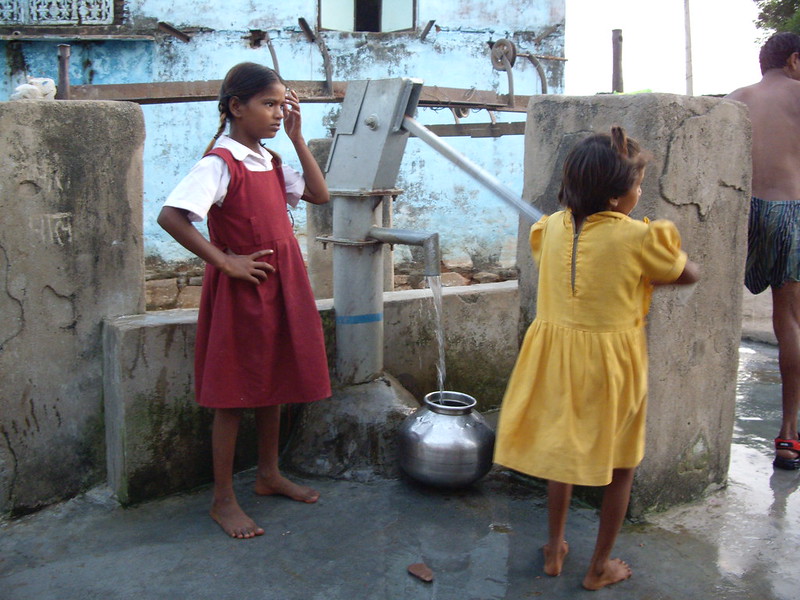 With a population of more than 1.4 billion people, India is the most populous country in the world. This title also puts pressure on the country’s resources, such as clean and safe water. Water stress in India has left 35 million people without access to clean water and more than 600 million people, nearly half of the country, lack reliable plumbing. However, Amazon’s water replenishment program is working to change this. The e-commerce giant’s program is restoring water to several locations in India, including the Yamuna River watershed, Yamare Lake and Sai Reddy Lake, to combat water scarcity.
Restoring 400 Million Litres of Water to New Delhi
At its Water Dialogues event, Amazon announced plans to support water sustainability in India. The project in New Delhi is a partnership with Hasten Regeneration, a developer of ecosystem restoration projects, as well as Arpan Seva Sansthan, a sustainable development nonprofit and Clear Water Dynamics, a water engineering firm.
Amazon’s water replenishment program will focus on improving existing infrastructure, such as check dams, and constructing new water structures, such as recharge shafts and percolation pits. Amazon also plans to plant ample vegetation around these structures to prevent erosion and increase moisture in the surrounding soil.
These improvements to New Delhi’s water infrastructure are expected to replenish 400 million litres annually to the Yamuna watershed. Amazon’s goal is to replenish more water than what the company uses in its Indian offices and fulfillment centers by 2027.
Rehabilitating Yamare Lake and Sai Reddy Lake
In addition to the project to restore the Yamuna Watershed, Amazon is also focusing its water conservation efforts in other areas of high water stress in India. The Yamare and Sai Reddy Lakes used to be reliable water sources for the surrounding communities. However, sediment buildup, urbanization, vegetation overgrowth and erosion have led to the diminished water storage capacity of the bodies of water and further strain on local water resources.
Amazon is teaming up with the environmental organization SayTrees to restore the lakes. Since January 2025, the partnership has been desilting the lakes, restoring embankments and repairing inlet and outlet structures. These projects aim to bring 270 million litres of water to Yamare Lake and 300 million litres to Sai Reddy Lake annually once completed.
Other Water Conservation Efforts by Amazon
In 2022, Amazon announced a project with WaterAid in Hyderabad and Andhra Pradesh with the goal of supplying the areas with a combined 640 million liters of water annually. In 2023, Amazon set out to secure consistent water supplies for farmers in Hyderabad by creating 100 new ponds across 12 villages, bringing almost 90 million liters of water to the area annually.
Amazon’s goal is to create “long-lasting, climate-resilient water and sanitation solutions” for communities in India. These water conservation efforts come alongside other initiatives such as reduced and recyclable shipping materials, investments in nature-based projects and switching to electric delivery vehicles. Amazon has pledged to achieve net-zero carbon emissions by 2040 and aims to help more than 1 million people in India access clean and safe water.
– Hannah Fruehstorfer
Hannah is based in Pittsburgh, PA, USA and focuses on Good News and Global Health for The Borgen Project.
Photo: Flickr
