• Link to X
  • Link to Facebook
  • Link to Instagram
  • Link to TikTok
  • Link to Youtube
  • About
    • About Us
      • President
      • Board of Directors
      • Board of Advisors
      • Financials
      • Our Methodology
      • Success Tracker
      • Contact
  • Act Now
    • 30 Ways to Help
      • Email Congress
      • Call Congress
      • Volunteer
      • Courses & Certificates
      • Be a Donor
    • Internships
      • In-Office Internships
      • Remote Internships
    • Legislation
      • Politics 101
  • The Blog
  • The Podcast
  • Magazine
  • Donate
  • Click to open the search input field Click to open the search input field Search
  • Menu Menu

Archive for category: Humanitarian Aid

Foreign Aid, Global Poverty, Humanitarian Aid

The Nonprofit That May Have Found the Answer to Effective Foreign Aid

Effective Foreign Aid
GiveDirectly, which four MIT and Harvard students founded in 2012, was donned potentially “the most economically efficient charity ever” by the online magazine The Atlantic. The organization champions unconditional and direct economic investment into the world’s poorest areas, having the potential to alleviate whole areas from poverty within years as well as promote effective foreign aid.

How Does it Work?

In its simplest form, GiveDirectly allows the public to send cash directly to the poorest individuals through bank transfers via mobile phones that they receive from those on the ground. So far, more than $650 million has been donated to 1.4 million people living in poverty. Donors are then able to stay informed about the progress of the individuals they have donated to, with GiveDirectly averaging a 99% follow-up rate from every recipient. The method of this highly effective foreign aid rests on the simple idea that people see a greater improvement in their overall quality of life when they have a say in how recipients spend the money.

Obstacles

GiveDirectly has been battling with the unproven notion that it is not a good idea to give money to those who are poor. This led the organization to conduct its own research into the matter. The research revealed how the extensive benefits of cash transfers often reach beyond a program’s core objectives, facilitating effective foreign aid. The research also found that monetary poverty, education, health and employment all improved as a result of direct injection of cash into poor areas.

Rory Stewart, president of GiveDirectly and former U.K. Secretary of State for International Development, initially had his reservations about GiveDirectly. He stated he thought the best way to approach foreign aid was by “teaching people to fish rather than giving them fish.” However, after his appointment as the president in 2022, he stated on BBC World News that “a relatively small amount of money from Western standards can transform people’s lives so much more rapidly and efficiently than many traditional aid programs.”

Projects for the Future

GiveDirectly functions on an optimistic outlook of human nature and individualism. Individual cash donations allow people to make their own investments, giving dignity to the receiver. Tarkok, a subsistence farmer in Kenya, has been the recipient of $180 over the last 11 days. He “intend[s] to use [the money] to buy at least three bags of 90 kg maize grains that [will] last … for at least six months.” The rest of the money will go toward the purchase of goats. This is just one example of the impact small donations can have on the world’s poor.

Looking Ahead

Rory Stewart’s appointment as president of GiveDirectly last year marks a shift in the world of international development. More than 180 governments have implemented cash programs during COVID-19, marking a decisive step forward to meeting the U.N.’s goal to end global poverty by 2030. GiveDirectly is now the world’s fastest-growing nonprofit, with more than $1 billion raised so far, showing the impact that its new approach is having on foreign aid, alongside alleviating poverty.

– George Somper
Photo: Flickr

May 12, 2023
https://borgenproject.org/wp-content/uploads/borgen-project-logo.svg 0 0 Jennifer Philipp https://borgenproject.org/wp-content/uploads/borgen-project-logo.svg Jennifer Philipp2023-05-12 11:06:182023-06-06 14:27:57The Nonprofit That May Have Found the Answer to Effective Foreign Aid
Global Poverty, Humanitarian Aid

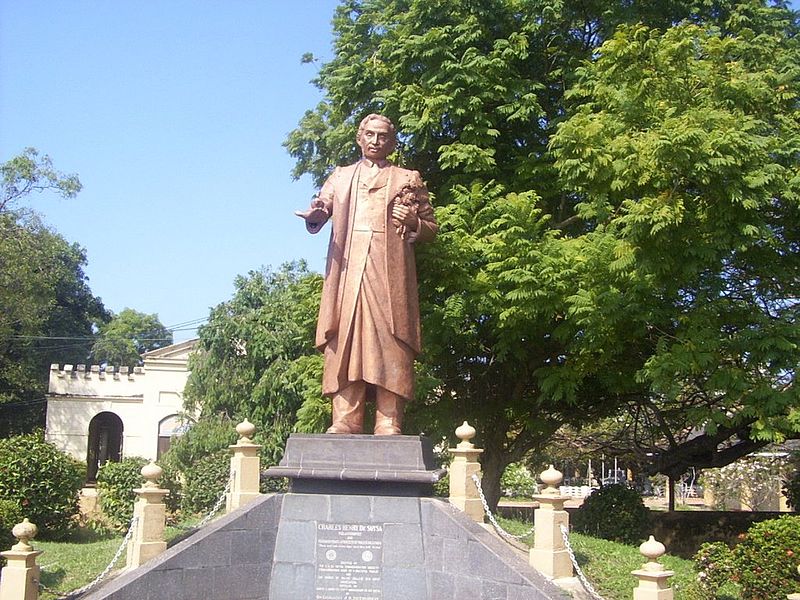
7 Facts About Charles Henry de Soysa’s Humanitarian Efforts

de Soysa's humanitarian Efforts
Charles Henry de Soysa (1836-1890) was an ambitious entrepreneur from Ceylon, known now as Sri Lanka. He was very wealthy and invested in many businesses, including tea plantations, transportation and oil mills. Deeply involved in his country, de Soysa built several profitable buildings in Ceylon and stood as the country’s first banker. However, aside from his business-related capabilities, Sri Lanka has celebrated de Soysa for his humanitarianism. To further illuminate his positive impact on Ceylon, here are seven significant facts about de Soysa’s humanitarian efforts.

7 Facts About Charles Henry de Soysa’s Humanitarian Efforts

  1. Efforts to Reduce Infant/Maternal Mortality. Determined to decrease the infant mortality rate, de Soysa assembled a team of trained midwives to tend to mothers and their infants. In addition, de Soysa established a maternity hospital, the De Soysa Lying-In-Home in Ceylon, and stood as “the first person in Asia” to found a maternity hospital. De Soysa’s childhood home became the hospital’s first building. The De Soysa Lying-In-Home is the “second oldest maternity home in Asia,” and currently, it provides maternity services to more than 14,000 mothers a year.
  2. A Commitment to Addressing Impacts of Ceylon’s Famine. When Ceylon endured famine during the financial crisis of 1868, de Soysa not only donated a large amount of money for famine relief but he also coordinated and delivered carts with rice and other rations to crowds of people throughout the island.
  3. An Anti-Discrimination Advocate. The first large-scale political gathering in Ceylon took place on November 11, 1871, in Moratuwa at the de Soysa manor. This meeting objected to discriminatory plans included in the Village Councils Ordinance 1871 and advocated for minority groups. A petition, urging that authorities issue the ordinance in the native language, distribute it to everyone and record its advantages and disadvantages, was handed over to the governor. De Soysa’s signature stood at the forefront of the document.
  4. Action to Further Education in Sri Lanka. De Soysa founded the Prince and Princess of Wales’ Colleges in 1876 to provide cost-free education to children regardless of caste, status, ethnicity and religion. The Princess of Wales College initially registered more than 350 female students — this was the first notable attempt in Ceylon to provide a non-religious education to girls. The schools still exist today but the state fully governs the facilities.
  5. Efforts to Establish Medical Facilities in Sri Lanka. De Soysa and his family gifted several medical facilities to Sri Lanka — the Lunawa Hospital Moratuwa, the Panadura Hospital, Marawila Hospital, the Hanguranketa dispensary, the Ingiriya Hospital and the Bacteriological Institute (Medical Research Institute).
  6. Donations to Facilities. In 1886, during a trip to Britain, de Soya made significant donations to 20 major hospitals. He also contributed to running and maintaining a nursing home for the Buddhist clergy.
  7. Supporting the Marginalized. When authorities evicted more than 100 families of Walapane due to their inability to pay the grain tax, de Soysa presented them with land for them to relocate and start over. In addition, de Soysa provided support as a significant donor to the Indian and Irish famine funds. Moreover, when thousands of impoverished people in Moratuwa could not pay the full amount for the Poll Tax, to assist them, de Soysa graciously paid the expected total.

Remembering Charles Henry de Soysa

De Soysa made countless charitable donations toward establishing infrastructure and facilities, advancing education and supporting the marginalized. De Soysa passed away at the age of 54 on September 23, 1890, but was honored posthumously as Ceylon’s first Knight Bachelor.

These specifics about Charles Henry de Soysa do not encompass all of his altruistic acts. In fact, de Soysa also made confidential donations that are not documented. These facts about de Soysa’s humanitarian efforts ensure the world continues to remember a historic humanitarian who significantly contributed to uplifting Sri Lanka’s impoverished.

– Megan Roush
Photo: Wikipedia Commons

April 10, 2023
https://borgenproject.org/wp-content/uploads/borgen-project-logo.svg 0 0 Kim Thelwell https://borgenproject.org/wp-content/uploads/borgen-project-logo.svg Kim Thelwell2023-04-10 01:30:082023-04-06 02:40:467 Facts About Charles Henry de Soysa’s Humanitarian Efforts
Global Poverty, Humanitarian Aid

The Greengate Trust’s Yemen Project

Yemen projectYemen is experiencing one of the worst humanitarian crises in the world. This is almost entirely due to the Yemen civil war, a conflict raging since 2014. The war has affected every single part of the country, including the capital city of Sana’a, an area that housed nearly 2.5 million people at the start of the war. As a result of the conflict largely taking place in urban centers, staggering numbers of Yemeni people had to leave their homes. The United Nations Population Fund (UNFPA) estimates that about 4.5 million people have endured displacement since the start of the conflict. The Greengate Trust’s Yemen Project aims to improve the lives of struggling Yemeni people.

Humanitarian Impacts of War

Within Yemen, UNICEF estimates that almost 18 million people, many of them children, lack access to clean drinking water and basic sanitation. The health situation in Yemen has also turned dire, with the population routinely suffering outbreaks of “cholera, measles, diphtheria and other vaccine-preventable diseases,” UNICEF says.

About 11 million children in Yemen require humanitarian aid and about 2.2 million children are suffering from acute levels of malnutrition, which has far-reaching impacts on children’s development. The destruction of school facilities and medical centers means Yemeni people lack access to critical health care and education. UNICEF reports that more than 2.5 million children in Yemen are not attending school. Overall, a minimum of 21.6 million Yemeni people require humanitarian aid to meet their basic needs.

The Yemen Project

The Greengate Trust, a United Kingdom-based charity that raises money for a variety of causes in Yemen, started the Yemen Project. The Yemen Project is currently gathering support through donations to set up a clinic near Aden, Yemen, specifically catering to malnourished children. The clinic will provide “immediate treatment, food, malnutrition screening and cash assistance to the most vulnerable children and their families,” the Greengate Trust website says.

Equally as important as the clinic is the Yemen Project’s campaign to build solar-powered wells in Yemen’s most disadvantaged communities. So far, these solar-powered wells have supplied 500 households across eight villages, providing clean water to at least 10,000 individuals who otherwise would not have access to safe drinking water. The campaign to provide the people of Yemen with clean drinking water goes hand-in-hand with Greengate Trust’s efforts to provide nutritious meals across Yemen. The organization’s website says, “A small donation of just £50 for [one] Food Pack could provide a Yemeni family with enough food for an entire month of Ramadan.”

The Yemen Project has also provided food in the country through the Al-Tayyibat Bakery, a bakery that, for upward of three years, has provided free bread to anyone who needed it. The bakery was burned down in a tragic accident, but the Yemen Project is in the process of raising donations via the Trust’s website to reopen the bakery and provide food for some of the 16 million people in Yemen that cannot meet their food needs.

Even though the humanitarian crisis in Yemen is dire, the efforts of humanitarian organizations and foundations like the Greengate Trust bring hope to millions of Yemeni people struggling to meet their basic needs amid conflict and violence.

– Ezra Bernstein
Photo: Flickr

March 30, 2023
https://borgenproject.org/wp-content/uploads/borgen-project-logo.svg 0 0 Jennifer Philipp https://borgenproject.org/wp-content/uploads/borgen-project-logo.svg Jennifer Philipp2023-03-30 01:30:222024-05-30 22:30:54The Greengate Trust’s Yemen Project
Global Poverty, Humanitarian Aid

Aid for Victims of the Earthquake in Ecuador

Earthquake in EcuadorOn March 18, 2023, a 6.8 magnitude earthquake in Ecuador shook the coastal city of Machala, killing at least 15 people and injuring nearly 460 others. The death toll is expected to continue to rise with search and rescue efforts underway. The earthquake in Ecuador destroyed homes and buildings along the coastline and had an impact as far as the Ecuadorian highlands and some areas of Peru.

Ecuador’s Risk of Natural Disasters

Ecuador is located on the west coast of the South American continent with Colombia neighboring to the north and Peru to the south. Though the country is prone to many natural disasters, the top three most common natural disasters are earthquakes, floods and volcanic eruptions. According to the World Bank’s Climate Change Knowledge Portal, between 1980 and 2020, Ecuador saw an average of 12 earthquakes per year.

The U.K. government’s advice on foreign travel indicates that Ecuador’s propensity for earthquakes is due to its location in an area of extreme seismic activity. The advice states, “Seismologists assess the risk of earthquakes in the province of Esmeraldas on the north-western coast as particularly high because of its proximity to the convergence of the Nazca and South American plates.”

Recent Earthquake Impact on a Struggling Economy

The recent earthquake in Ecuador originated off the Pacific Coast about 50 miles south of Guayaquil, the country’s second-largest city and is the most destructive since the devastating earthquake in April 2016. According to the World Food Programme (WFP), after striking Ecuador’s northern coast, the 2016 earthquake left reconstruction costs estimated at almost 3% of the GDP.

The nation does not quickly recover from the loss of livelihoods and infrastructure due to the struggling Ecuadorian economy and high poverty rates. According to a World Bank 2020 report, in 2019, about a quarter of the population lived under the national poverty line, equal to more than 4 million people, due to rising unemployment rates and a 2% real labor income decrease for the second consecutive year.

The WFP reports that 40% of Ecuador’s rural population now lives below the poverty line. While Ecuador has seen some growth in its GDP due to a decline in poverty through investments in health, education, infrastructure and social policies, plummeting oil prices and other factors are driving an economic decline.

GlobalGiving Initiative

A struggling economy and devastating natural disasters make it difficult for a country to flourish. For this reason, initiatives like the GlobalGiving’s Ecuador and Peru Earthquake Relief Fund are crucial to building up developing nations. GlobalGiving is a nonprofit whose mission is to connect various nonprofit organizations to donors and companies. The organization states that “All donations to this fund will support relief and recovery efforts in Ecuador and Peru. Initially, the fund helps first responders meet survivors’ immediate needs for food, fuel, clean water, medicine and shelter.” GlobalGiving states further, “As needs emerge, we will support longer-term recovery efforts run by local, vetted organizations in the impacted areas.” The goal is to raise $500,000 to support relief for the earthquake in Ecuador and Peru.

Government Initiatives

After President Guillermo Lasso declared a state of emergency, Ecuador’s Ministry of Economy and Finance announced that it will provide financial resources so the government can assist citizens impacted by the devastation of the earthquake. President Lasso has toured the impacted areas and has committed to mobilizing teams to provide needed support. In addition, the government announced in March 2023 the creation of a housing lease program to temporarily house families who lost their homes during the earthquake.

With government assistance and nonprofit support, there is hope that impacted families will find relief. The Ecuadorian government’s efforts in terms of addressing poverty and establishing disaster resilience are essential to minimize the impact of future natural disasters.

– Stella Tirone
Photo: Flickr

March 25, 2023
https://borgenproject.org/wp-content/uploads/borgen-project-logo.svg 0 0 Jennifer Philipp https://borgenproject.org/wp-content/uploads/borgen-project-logo.svg Jennifer Philipp2023-03-25 01:30:442023-04-18 03:33:41Aid for Victims of the Earthquake in Ecuador
Global Poverty, Humanitarian Aid

Aid for Syrian Earthquake Victims

Syrian Earthquake Victims
BetterShelter is a Swedish nonprofit organization that provides temporary shelter for people that armed conflict, natural disasters or homelessness displace. Founded in 2010, the organization claims to have improved the lives of 400,000 people suffering from displacement in more than 80 countries. It is currently one of many organizations providing humanitarian aid for Turkish and Syrian earthquake victims.

Challenges of Providing Aid to Syria

Providing humanitarian aid in Syria is not an easy feat. According to USAID, the situation in Syria is the “largest and most complex humanitarian crisis of our time.” In Syria, 15.3 million people are in need of humanitarian assistance this year, with many people needing aid as a direct result of the Syrian Civil War.

Parties to the Syrian conflict also prevent humanitarian aid from reaching those who need it, whether it be diverting, blocking or other means of preventing aid from getting through. Aid workers have been victims of violent attacks in the past, which hampers relief efforts. Politics further affect aid, with nations like Russia and China, who hold permanent seats on the U.N. Security Council, vetoing renewals of cross-border aid operations to Syria in the past. Therefore, it came as no surprise that efforts at providing humanitarian aid for Syrian earthquake victims faced challenges.

Initially, the U.N. did not send trucks carrying humanitarian aid to Syria en masse. The U.N. only scaled up humanitarian aid for Syrian earthquake victims after an agreement between them and Syrian President Bashar al-Assad that saw two additional border crossings open. With aid often facing hurdles like these, Dame Barbara Woodward, the British Ambassador to the U.N., stated that the earthquakes “brought into sharp focus the importance of unhindered and predictable access, without conditions, into north-west Syria.” While the U.N. and other organizations ramp up their aid operations, so is BetterShelter.

BetterShelter’s Impact

BetterShelter is no stranger to working in Syria. In fact, it has had a footprint there for quite some time. In partnership with the U.N. in 2020, it provided Relief Housing Unit (RHU) shelters to numerous refugee camps in Syria. RHUs were also “medical support shelters” when the COVID-19 pandemic first struck the country. In 2021, the organization sent RHUs to Syria, assisting another nonprofit organization in providing shelter to displaced families in the country.

The earthquakes have had a massive negative impact on the well-being of Syrians. The World Bank estimates that nearly $5.1 billion in “direct physical damage” took place in Syria and that the four governorates with “widespread damage” are home to around 10 million Syrians. Half of the total damage was direct damage to residential buildings, making the need for BetterShelter technology even direr.

With €10 million in funding from fellow Swedes at the IKEA Foundation, BetterShelter ramped up its operations in the country, as well as neighboring Turkey. The funds from the IKEA Foundation will provide 5,000 RHUs to those who the earthquakes impacted. For those in Syria, where BetterShelter says “delivery of critical aid has been delayed by the decades-long war that has already displaced 13 million people,” humanitarian aid for Syrian earthquake victims by companies like BetterShelter is a sign of hope for their recovery from the devastating quakes.

– Mohammad Samhouri
Photo: Flickr

March 18, 2023
https://borgenproject.org/wp-content/uploads/borgen-project-logo.svg 0 0 Jennifer Philipp https://borgenproject.org/wp-content/uploads/borgen-project-logo.svg Jennifer Philipp2023-03-18 01:30:582024-05-30 22:30:52Aid for Syrian Earthquake Victims
Global Poverty, Humanitarian Aid

The Effects of Humanitarian Efforts in 2022

Humanitarian Efforts
The United Nations Office for the Coordination of Humanitarian Affairs (OCHA) is the U.N. agency tasked with providing humanitarian assistance to areas of the world that so desperately need it. Specifically tasked with providing a response to humanitarian crises, a lot of its work helps combat the effects of poverty around the world. With a lot happening in the world in 2022, there was a lot of work necessary in the fight against poverty. From the Black Sea Grain Initiative to expanding its impact on countries like Syria, OCHA made tremendous progress in its humanitarian efforts to combat the effects of poverty around the world. Here are just a few of their successes.

Combating the Global Food Crisis

Along with the war in Ukraine came a global food crisis, which the effects of the COVID-19 pandemic made even more. In June 2022, the World Food Programme (WFP) wrote that millions of people worldwide were at risk of starvation due to the “rising prices of food, fuel and fertilizer.” Much of this was due to the war, as Ukraine is one of the largest exporters of foodstuffs in the world. The country accounted for 42% of the world’s supply of sunflower oil, 16% of corn and 10% of wheat, according to the Wilson Center.

U.N. and Turkish negotiators helped bring Russia and Ukraine together for the Black Sea Grain Initiative, which allowed for a resumption of vital food exports from Ukraine. Since the agreement came into effect, 21,300,708 tons of cargo have left Ukrainian ports, as of February 2023. Corn made up 47% of the exports, with wheat accounting for 29%.

According to the U.N., 25% of the cargo went to lower-income countries like Bangladesh, Kenya, Sudan, Yemen, Somalia and more. This includes humanitarian food assistance to the Horn of Africa, which is currently experiencing a severe drought and famine. The exports out of Ukraine as a result of this U.N. brokered deal will continue to help improve food security conditions for millions and represents just one of the positive effects of humanitarian aid in 2022.

Expanding Humanitarian Efforts in Syria

The previous year also saw an increase in humanitarian efforts in Syria, with a United Nations Security Council resolution allowing humanitarian aid to cross into Syria from neighboring Türkiye. The decision was a testament to the positive effects of humanitarian aid, as the aid crossing the border “reached an average of 2.7 million people per month.”

This assistance provided thousands of impoverished people living in Syria access to food and education, as well as other resources necessary for their well-being. The expansion of aid into Syria, whose decade-long civil war continues to have detrimental effects on its population, also represents the positive effects of humanitarian aid in 2022.

Efforts at Promoting Localization

OCHA also lists its efforts at promoting localization as a positive effect of humanitarian aid in 2022. Localization, according to the International Red Cross (IFRC) is an increase of “international investment and respect for the role of local actors, with the goal of increasing the reach, effectiveness and accountability of humanitarian action.” Localization has been a key aspect of most humanitarian responses for a while, as local actors have the ability to stretch aid further than international organizations.

Local actors have much closer ties to the communities they seek to assist, and can have a much larger impact on delivering aid to these communities than international aid organizations would. Emphasizing localization is one of the most important positive effects of humanitarian aid and can help provide aid to those who otherwise would not receive it.

While the above represents only a handful of the positive effects of humanitarian aid, OCHA accomplished a lot more in 2022. From providing aid to drought-stricken areas in the Horn of Africa to assisting aid deliveries in Yemen, OCHA and other humanitarian organizations have had a massive positive impact on humanitarian aid in 2022; work that will continue going into 2023.

– Mohammad Samhouri
Photo: Flickr

February 19, 2023
https://borgenproject.org/wp-content/uploads/borgen-project-logo.svg 0 0 Jennifer Philipp https://borgenproject.org/wp-content/uploads/borgen-project-logo.svg Jennifer Philipp2023-02-19 01:30:292023-02-15 09:16:19The Effects of Humanitarian Efforts in 2022
Global Poverty, Humanitarian Aid

3 People Under 30 Who are Fighting Global Poverty

People Under 30
Young people feel discouraged in today’s political environment. As an age group, they tend to have the least number of resources, know-how and influence. Global poverty and suffering are some of the most widespread issues today and many young people feel helpless because of the magnitude of these problems. Here are three people under 30 fighting global poverty and inspiring young people globally.

José Quisocala

The first of the people under 30 fighting global poverty is José Quisocala who is a high school teen fighting poverty in his home country of Peru. He realized at age 7 that there were many children around him who did not have the same access to schools, health care or stable family life. He coupled his compassion for others with his desire for a clean environment and created The Banco del Estudiante Bartselena. The Banco del Estudiante Bartselena is a bank that allows children to turn in the litter they have collected in exchange for money. José has been running the bank for more than nine years, and during this time, he has helped more than 6,500 children pay for meals and schooling.

Joshua Williams

Joshua Williams is another high school teen who has put his heart and soul into changing the world around him. As a 4-year-old in Miami, Florida, Joshua realized there were kids in his neighborhood that were malnourished. To combat this, Joshua founded the nonprofit called Joshua’s Heart. Joshua’s Heart employs teenage volunteers to help raise money for the organization, package donations and distribute aid packages. Over the past 12 years, Joshua has globalized his nonprofit and has helped to bring food and hygiene products to almost half a million people across seven different countries. Joshua continues to work hard and encourage young people to join the fight against global poverty.

Sonita Alizada

Sonita Alizada is an Afghan rapper in her 20s who is globalizing and advocating efforts to end child marriage. She was born in Afghanistan, and during her early childhood, she and her family escaped the Taliban regime. Sonita and her family lived impoverished lives as refugees in Iran, forcing them to sell Sonita into child marriage at age 10. The contract fell through, but Sonita was only free until age 16 when her family tried again to sell her into child marriage. Sonita miraculously escaped and now uses her story to shed light on the saddening state of child marriages, which often have roots in extreme poverty. Thousands of girls share Sonita’s story, which inspired Sonita to make a difference by using her rapping skills to spread awareness.

Closing Thoughts

Global poverty is not an issue that one person or group of people can solve alone. Solving global poverty will require a united effort to tackle an issue that plagues people across all stretches of the planet. Young people generally feel the most discouraged about being able to make a change, but these examples of people under 30 show how kids and young adults can play integral roles in fighting global poverty.

– Alexandra Curry
Photo: Flickr

February 16, 2023
https://borgenproject.org/wp-content/uploads/borgen-project-logo.svg 0 0 Naida Jahic https://borgenproject.org/wp-content/uploads/borgen-project-logo.svg Naida Jahic2023-02-16 07:30:362023-02-14 07:26:323 People Under 30 Who are Fighting Global Poverty
Global Poverty, Humanitarian Aid

Examining Humanitarian-to-Humanitarian Organizations

Humanitarian-to-Humanitarian Organizations
Humanitarian-to-humanitarian organizations (H2Hs), which have grown in prominence in recent years, provide behind-the-scenes support to the more visible front-line agencies that deliver humanitarian aid to those in need. These auxiliary organizations are usually dedicated to specific services, which allows other aid organizations to focus on their own strengths and avoid reinventing the wheel. Networks of these H2H organizations (modeled after ‘business-to-business’ or B2B networks) work together to provide services such as logistics, standardization, mapping and more to other aid agencies. Many of them are part of a Swiss group known as The H2H Network, described in its annual report. According to the H2H Network, humanitarian-to-humanitarian organizations fall into four different categories in terms of the types of support they provide. Here are some examples of organizations in each of these categories.

Humanitarian-to-Humanitarian Organization Categories

  1. Data, Information Management and Analysis. Some H2H organizations collect, manage and distribute data. For example, Evidence Aid provides summaries of academic articles on current research that is relevant to aid workers. Data Friendly Space helps aid organizations with tasks such as designing user interfaces and developing data analytics. For example, in 2019, it used AI to revamp the Internal Displacement Monitoring Centre’s analytics process, which big data had recently overwhelmed.
  2. Community Engagement and Accountability. Some H2H organizations, such as BBC Media Action, Internews and C-DAC, work to develop communication and cooperation between aid groups and communities. They will provide services such as public relations, translation, communications in disaster zones and accountability feedback. For example, groups including BBC Media Action and Translators Without Borders are combating COVID-19 misinformation in several countries in South and Southeast Asia, through social media and community outreach.
  3. Security, Logistics and Programme Support. The H2H Network members from this department aim to build significant efficiency in the department of security and the management of resources. For example, several of these organizations manage logistics by facilitating better connections between supply and demand and producing items locally. Others, on the other hand, provide information on the threats pertaining to areas of high risk. The Humanitarian-to-Humanitarian organizations in this category include Aviation Sans Frontières and Humanitarian Logistics Association. HLA has been able to release guidance on how to ship humanitarian goods into Ukraine safely. In contrast, every year, thanks to ASF, around 600 seriously ill children have received access to treatments in European hospitals for operations that cannot be administered locally.
  4. Quality and Sector Professionalization: H2H Organizations are dedicated to improving learning across the field. They do so by establishing a general standard of what is adequate and desirable for the services that aid organizations provide. They also help individuals in dangerous environments to develop survival skills that allow them to handle and recover from natural and artificial disasters. One such organization is RedR U.K., which provides training and technical expertise to NGOs, aid workers and communities responding to humanitarian emergencies. Following the 2021 earthquake in Haiti, after conducting a quick learning needs assessment, RedR U.K. developed and implemented a training program to enhance the response’s effectiveness. Among the participants were representatives from aid organizations from sectors such as health, protection, education and food security. More than 90% of participants reported that they learned new skills and gained new knowledge from attending the training.

Looking Ahead

Humanitarian-to-Humanitarian organizations increasingly work toward the improvement and success of the humanitarian system and are crucial for the development of an even stronger and more successful humanitarian order. As in the words of Kim Scriver, director of the H2H network, “Often… we talk about system change in terms of… big heavy policy processes. H2H actors provide an important counterpoint to that. They are in the system but at the edge of it, able to demonstrate different [kinds of] change.”

– Caterina Rossi
Photo: Flickr
January 26, 2023
https://borgenproject.org/wp-content/uploads/borgen-project-logo.svg 0 0 Jennifer Philipp https://borgenproject.org/wp-content/uploads/borgen-project-logo.svg Jennifer Philipp2023-01-26 01:30:552024-05-30 22:30:26Examining Humanitarian-to-Humanitarian Organizations
Global Poverty, Humanitarian Aid, Hunger

Political Instability in Burkina Faso Jeopardizes Aid

Instability in Burkina Faso
After the Burkina Faso September military coup, United States President Joe Biden cut Burkina Faso from The African Growth and Opportunity Act (AGOA). The political instability in Burkina Faso that prompted the AGOA removal designates Burkina Faso as a blacklisted, non-democratic nation. The recent political instability in Burkina Faso led to the loss of U.S. trade, economic aid and military support.

AGOA is U.S. legislation approved in May 2000, to support sub-Saharan African economies and improve economic relations between those countries and the U.S. The AGOA provides sub-Saharan African nations with U.S. duty-free access to more than 1,800 products. That allowance is beyond the more than 5,000 duty-free products under the Generalized System of Preferences program.

Background of Political Instability

Political instability and limitations in both trade and humanitarian aid are not new issues in Burkina Faso. In fact, the September coup was the second one in 2021. Army captain Ibrahim Traore seized power from military leader President Paul-Henri  Damiba in September, citing “his inability to deal with an armed uprising in the country that has worsened in the past nine months.” However, Burkina Faso was already experiencing effects from the first coup, in which Damiba orchestrated an uprising against President Roch Marc Christian Kabore in January. At that time, the U.S. paused a $450 million aid effort.

The political instability in Burkina Faso could exacerbate already desperate conditions. During seven years of radicalized military terror with connections to ISIL and al-Qaeda, the hunger crisis intensified. In fact, the United Nations has even reported that “the humanitarian situation in Burkina Faso has become so dire that some women and children have eaten only leaves and salt for weeks.” U.N. Under-Secretary-General for Humanitarian Affairs and Emergency Relief Coordinator, Martha Griffiths claimed that “Growing insecurity and blockades in many areas have left communities cut off from the rest of the country and facing growing hunger. Aid workers are struggling to reach these people who need assistance.”

Economic and Military Impact of Political Instability in Burkina Faso

The removal of Burkina Faso from the AGOA is particularly relevant for those concerned with U.S. legislative foreign aid decisions because legally if the U.S. State Department determines a democratically-elected government experienced an unconstitutional removal, the U.S. must suspend all non-humanitarian aid. Importantly, the U.S. is Burkina Faso’s largest international donor.

Burkina Faso also lost access to the markets of Economic Community of West African States (ECOWAS) markets. ECOWAS is the trade union of West African states and it strongly condemned the coup and pushed for elections as quickly as possible.  It claimed that Burkina Faso was close to restoring constitutional order so the coup was incredibly “inopportune.” Journalist Sam Mednick  claimed, “If Traore is not going to be able to show tangible progress quickly, people say he’s going to be ousted just like his predecessor.”

Militarily, the U.S. also provides surveillance, intelligence, air support to the French who intervened against militants in the Sahel. The U.S. also provides intermittent training to Burkina Faso’s security forces. Elizabeth Shackelford, a senior foreign policy fellow at the Chicago Council on Global Affairs suggested that because military support has not proved productive, the U.S. and its partners should put funding and effort into supporting democracy-fostering institutions.

Positives

Luckily, the European Union (EU) is still earmarking funds for aid in Burkina Faso. Specifically, the EU has set aside 52.4 million euros to address food insecurity, malnutrition, water, sanitation, hygiene, education and disaster preparedness. International non-governmental organizations will also still be able to provide aid. For example, Save the Children focus on Burkina Faso education, public health and protection. Specifically, for public health, Save the Children advocates for “universal access to health care and an increase in the health budget.” In regard to nutrition, it supports food assistance programs. For malnutrition, it provides screening and long-term care for affected children and families.

Outlook for the Future

Political instability in Burkina Faso is jeopardizing specialized aid to fight jihadism. Burkina Faso’s recent unconstitutional coups resulted in the cessation of all non-humanitarian aid in compliance with U.S. law.  Fortunately, the EU and international non-governmental organizations continue their support for Burkina Faso’s citizens plagued by political instability and its effects. Hunger, education and public health are often the primary focuses of many of these organizations, and if these programs remain operational, perhaps Burkina Faso can persevere until the political instability subsides.

– Braden Hampton
Photo: Flickr

November 28, 2022
https://borgenproject.org/wp-content/uploads/borgen-project-logo.svg 0 0 Jennifer Philipp https://borgenproject.org/wp-content/uploads/borgen-project-logo.svg Jennifer Philipp2022-11-28 07:30:172022-11-24 09:49:49Political Instability in Burkina Faso Jeopardizes Aid
Global Poverty, Humanitarian Aid, Poverty Eradication

The United Nations’ Fight Against Poverty

The United Nations' Fight Against Poverty
The United Nations’ fight against poverty began as early as 1945. The U.N. General Assembly declared the years 1997 to 2006 as the First United Nations Decade for the Eradication of Poverty. The Second U.N. Decade for the Eradication of Poverty then ran from 2008 to 2017 and the Third U.N. Decade for the Eradication of Poverty began in 2018 with an end date of 2027. The United Nations Millennium Declaration, signed by U.N. member states in September 2000, is a commitment from global leaders to “combat poverty, hunger, disease, illiteracy, environmental degradation and discrimination against women.” The Millenium Development Goals (MDGs) formed part of this Declaration and set targets to reach by 2015.

Progress in Reducing Extreme Poverty and Hunger

The target of reducing global extreme poverty rates by 50% occurred “five years ahead of the 2015 deadline,” the U.N. website notes. Since 1990, more than 1 billion individuals rose out of extreme poverty. Close to 50% of people in underdeveloped countries in 1990 survived on less than $1.25 per day. In 2015, this rate declined to 14%.

Furthermore, since 1990, the percentage of undernourished individuals in developing regions has decreased by about 50%. However, the percentage of employed working-age people reduced from 62% in 1991 to 60% in 2015, with a particularly notable decline occurring during the global recession of 2008/2009.

Here are three significant programs and funds aiding in the United Nations’ fight against poverty.

United Nations Development Programme (UNDP)

A pledge to “eradicate poverty everywhere, in all its forms and dimensions by 2030” is at the core of the Sustainable Development Goals (SDGs), which came about in 2015 after the MDG deadline. The UNDP is the “U.N.’s global development network” that works across 170 nations and territories to help further the SDGs. Its work also centers around “democratic governance and peacebuilding” as well as “climate and disaster resilience.”

From 2019 to 2021, thanks to the UNDP, 71 million individuals in 36 nations obtained “access to essential services” and labor market policies safeguarded 1 million jobs globally, the UNDP website highlights.

About 81 nations adopted “policies based on COVID-19 socio-economic impact assessments” and “82 countries adopted more than 580 digital solutions for e-commerce and e-governance.” While “2.4 million rural households in 33 countries benefited from clean, affordable and sustainable energy,” about 3 million individuals across 29 nations “benefited from jobs and improved livelihoods in crisis or post-crisis settings,” the UNDP website notes.

UNICEF

In more than 190 nations and territories, UNICEF strives to protect children’s lives, uphold their rights and assist them in realizing their full potential from infancy through adolescence. Thanks to UNICEF, several million children by 1950 received “garments made of wool, leather and cotton” and more than 6 million received meals on a daily basis.

By 1973, UNICEF had assisted approximately 70 nations in reducing the number of deaths resulting from ingesting contaminated water. The Child Survival and Development Revolution, which UNICEF started in 1982, aimed to save more children by implementing four main strategies: tracking development, delivering immunizations, encouraging breastfeeding and providing oral rehydration therapy.

Compared to the end of World War II, life expectancy rates had climbed by more than 33% by 1993. A rise in school attendance coincided with a sharp decline in child mortality rates. The standard of living was also fast increasing; many households who had previously struggled to find clean water now had easy access. More recently, in 2012, polio saw eradication in India thanks to UNICEF’s global immunization program for the poor. Africa celebrated one year without any confirmed cases of polio on August 11, 2015.

World Food Programme (WFP)

The WFP is the largest humanitarian organization in the world, saving lives in dire situations and utilizing food aid to create a road to peace, stability and prosperity for those recovering from war, natural disasters and the effects of environmental changes.

The WFP collaborates with governments and humanitarian partners on the front lines, responding to an increasing number of disasters, such as droughts and floods, which can destroy crops, disrupt markets and demolish roads and bridges. The WFP also implements preventative measures that lessen the number of people in need of humanitarian aid. In 2021, 12.2 million individuals from 47 different nations benefited from climate risk management strategies, including 2.7 million in 14 nations who were insured against climate-related risks.

The WFP has shifted its emphasis in recent years from emergency interventions to tackling all types of malnutrition, including vitamin and mineral deficiencies, overweight and obesity. In 2021, 23.5 million people, a 36% increase from 2020, mostly children, pregnant and lactating females, benefited from WFP programs to treat or prevent malnutrition.

Smallholder farmers produce most of the world’s food yet also ironically suffer from hunger. In 2021, WFP and partners provided assistance to around 947,000 smallholder farmers in 44 countries. In 2021, WFP purchased 117,000 metric tons of food from smallholder farmers in 27 countries, valued at $51.9 million.

Looking Ahead in the United Nations’ Fight Against Poverty

Apart from these three programs, other U.N. initiatives also play a significant role in supporting the world’s most impoverished. For example, the United Nations Population Fund, the United Nations Environment Programme, the United Nations Relief and Works Agency for Palestine Refugees, U.N. Women and U.N.-Habitat. The World Bank, the IMF, the WHO, the ILO, the FAO and other U.N. Specialized Agencies play a significant part in addressing emerging global issues. Overall, the United Nations has had a positive influence on the eradication of poverty worldwide.

– Karisma Maran
Photo: Flickr

November 15, 2022
https://borgenproject.org/wp-content/uploads/borgen-project-logo.svg 0 0 Naida Jahic https://borgenproject.org/wp-content/uploads/borgen-project-logo.svg Naida Jahic2022-11-15 07:30:452024-05-30 22:30:29The United Nations’ Fight Against Poverty
Page 11 of 34«‹910111213›»

Get Smarter

  • Global Poverty 101
  • Global Poverty… The Good News
  • Global Poverty & U.S. Jobs
  • Global Poverty and National Security
  • Innovative Solutions to Poverty
  • Global Poverty & Aid FAQ’s
Search Search

Take Action

  • Call Congress
  • Email Congress
  • Donate
  • 30 Ways to Help
  • Volunteer Ops
  • Internships
  • Courses & Certificates
  • The Podcast
Borgen Project

“The Borgen Project is an incredible nonprofit organization that is addressing poverty and hunger and working towards ending them.”

-The Huffington Post

Inside The Borgen Project

  • Contact
  • About
  • Financials
  • President
  • Board of Directors
  • Board of Advisors

International Links

  • UK Email Parliament
  • UK Donate
  • Canada Email Parliament

Get Smarter

  • Global Poverty 101
  • Global Poverty… The Good News
  • Global Poverty & U.S. Jobs
  • Global Poverty and National Security
  • Innovative Solutions to Poverty
  • Global Poverty & Aid FAQ’s

Ways to Help

  • Call Congress
  • Email Congress
  • Donate
  • 30 Ways to Help
  • Volunteer Ops
  • Internships
  • Courses & Certificates
  • The Podcast
Scroll to top Scroll to top Scroll to top