• Link to X
  • Link to Facebook
  • Link to Instagram
  • Link to TikTok
  • Link to Youtube
  • About
    • About Us
      • President
      • Board of Directors
      • Board of Advisors
      • Financials
      • Our Methodology
      • Success Tracker
      • Contact
  • Act Now
    • 30 Ways to Help
      • Email Congress
      • Call Congress
      • Volunteer
      • Courses & Certificates
      • Be a Donor
    • Internships
      • In-Office Internships
      • Remote Internships
    • Legislation
      • Politics 101
  • The Blog
  • The Podcast
  • Magazine
  • Donate
  • Click to open the search input field Click to open the search input field Search
  • Menu Menu

Archive for category: Humanitarian Aid

Education, Global Poverty, Humanitarian Aid, Women

5 Active NGOs in Afghanistan

NGOs in Afghanistan
Throughout the world, countless nongovernmental organizations (NGOs) are battling against abuses such as poverty, changing weather patterns and hunger. In Afghanistan, human rights abuses have been skyrocketing, and homelessness has become the new norm. More than 40% of Afghanistan’s population lives below the poverty line, in desperate need of help. Here are five NGOs Active in Afghanistan that are fighting these pressing issues.

5 NGOs in Afghanistan

  1. Afghan Institute of Learning: The Afghan Institute of Learning (AIL) seeks to equip all vulnerable Afghans, particularly women and children, with the knowledge and abilities to take care of themselves. Through community-based programming, AIL is increasing access to high-quality education and health care, empowering communities to strengthen their populations. The objective is to lay the groundwork for effective health and education systems in Afghanistan that will serve the needs of the population both today and in the future. Through health facilities, educational institutions and training programs, AIL, which was founded by an Afghan woman and is primarily operated by women, reaches thousands of people every year.
  2. Islamic Relief: Dr. Hany El-Banna and a group of students established Islamic Relief in 1984 to address the growing famine in Africa. The organization’s initial endeavor was to help a farm in Sudan, and years later, it started to broaden its reach outside of Africa, providing immediate relief to people in Pakistan, Iraq and finally Afghanistan. Islamic Relief is committed to helping vulnerable people who are in need. It achieves this by raising money for local projects and providing essentials like food and clothing. It has also implemented development initiatives aimed at long-term capacity building for vulnerable populations.
  3. Women for Afghan Women: In order to serve the Afghan immigrant populations in New York, Women for Afghan Women (WAW) originated in 2001. Before introducing comparable programs in Afghanistan, it participated in community outreach initiatives all around the region. It now works to advocate for and empower Afghan women and girls in both the U.S. and Afghanistan. Women for Afghan Women has reached more than 1.6 million women since its founding through various activities and services. Every year in the U.S., on average, more than 8,000 Afghan women receive assistance from their outreach activities. Additionally, it has approximately 800 employees working in Afghanistan to support the execution of its initiatives there.
  4. International Committee of the Red Cross: Henry Dunant established the International Committee of the Red Cross (ICRC) in 1863 to offer medical care to combat casualties. Years later, as World War I started to claim more lives, the ICRC increased its humanitarian activities across all of Europe. The organization persisted in offering assistance during World War II and is currently one of the most significant humanitarian organizations in existence. The International Committee of the Red Cross has helped thousands of Afghans since its foundation. For instance, it cared for approximately 50,000 injured patients in 2021. In its physical therapy facilities around the nation, the ICRC helped more than 79,000 patients in the same year. Furthermore, it has increased more than 49,000 people’s access to water.
  5. ActionAid International: Cecil Jackson-Cole established ActionAid International in 1972 to defend the rights of women most impacted by armed conflict, humanitarian crises and natural catastrophes. It started its first projects in Afghanistan in 2002 with the goal of ensuring that kids could go to school and get an education. Since then, the organization has established a number of programs that empower Afghan women and help them assert their rights. ActionAid International opposes social and cultural conventions that marginalize women and expose them to violence or discrimination. Additionally, it has advocacy, strategic and humanitarian programming capabilities to advance gender equality across Afghanistan. The organization provides training and tools to female leaders, empowering them to promote social change in their communities and advancing the rights of vulnerable women. ActionAid International has helped more than 100,000 people in five different Afghan provinces since its founding. For instance, it constructed a well in Afghanistan so that more than 1,000 local students could access safe drinking water.

Making a Difference in Afghanistan

In a country where the most vulnerable people face countless challenges, recognizing NGOs in that are making a real difference appears to be vital. These organizations work tirelessly to provide aid, assistance and support to those who need it most. 

– Jake Marks
Photo: Unsplash

October 5, 2023
https://borgenproject.org/wp-content/uploads/borgen-project-logo.svg 0 0 Yuki https://borgenproject.org/wp-content/uploads/borgen-project-logo.svg Yuki2023-10-05 01:30:382023-10-02 01:54:295 Active NGOs in Afghanistan
Global Poverty, Humanitarian Aid

Unpacking the Humanitarian Crisis in Nagorno-Karabakh

Humanitarian Crisis in Nagorno-KarabakhNagorno-Karabakh, also known as “Artsakh,” was home to 120,000 people, most of whom were ethnic Armenians. Artsakh functioned as a de-facto breakaway Armenian state yet was long claimed by Azerbaijan. The territory dispute escalated quickly in mid-September when Azerbaijan invaded the land, displacing 120,000 ethnic Armenians. Limited access to food, water and electricity has created a humanitarian crisis in Nagorno-Karabakh.

The Lachin Blockade

Prior to the invasion, Nagorno-Karabakh slowly plunged into poverty and insecurity with dramatically lowering human rights standards. In December 2022, Azerbaijani protestors blockaded the Lachin corridor, the only connecting road between Artsakh and the Republic of Armenia. This effectively ceased any movement by Artsakh’s residents. Both nations set up checkpoints at their borders.

As a result, food and medical supply deliveries were nearly halted. The main food markets in the villages within Nagorno-Karabakh were closed. Some locals did not see fresh produce like fruits and vegetables for months. Armenian authorities began rationing supplies.

Access to medical supplies in the region was also significantly restricted. People could not access necessary supplies for infant care, like diapers. The Red Cross brought medicine and necessities such as baby formula across the corridor, but this was only a short-term solution. Armenian authorities in Artsakh became so desperate, that they asked for an airbridge to bring supplies to the region.

The blockade of the Lachin corridor undoubtedly lowered the quality of life of Armenians residing in the area. The hospitals within Stepanakert and the other villages in the area ran out of supplies. Children had to be treated with medication meant for adults. Grocery store aisles were empty. Gas and electricity were only sporadically available. Prices for mundane goods skyrocketed.

The low quality of life in Artsakh due to the lack of access to basic necessities made it increasingly difficult for Armenians residing in the area to carry out their daily lives.

Artsakh’s Progressive Isolation

While the blockade stopped supply lines, Russian peacekeepers set up opposing checkpoints. They barred entry to any who attempted to access the region, even for humanitarian purposes. In one instance, they stopped a man attempting to bring toys to Artsakh from Armenia.

The U.S. Department of State condemned Azerbaijan for Artsakh’s progressive isolation. Azerbaijan entirely cut off Artsakh from the rest of Armenia in July 2023, barring even the Red Cross from entering the territory after accusing the Armenian branch of the Red Cross of smuggling unauthorized materials into the region. As living conditions in Artsakh became unbearable, the 120,000 Armenians residing in the region sought refuge in Armenia.

In September 2023, the International Committee of the Red Cross (ICRC) sent nearly 70 metric tons of humanitarian aid to Nagorno-Karabakh, including critical food aid. Russia delivered fifty tons of humanitarian supplies to Stepanakert, the region’s capital. Around the same time, the United States offered $11.5 million in humanitarian assistance to address the humanitarian crisis in Nagorno-Karabakh.

In a September 2023 press release, United States Secretary of State Antony Blinken said, “We encourage the sides to engage in direct talks and focus on ways to increase the flow of humanitarian supplies to the population of the region. The United States remains committed to supporting efforts between Armenia and Azerbaijan to resolve long-standing issues and achieve a dignified and durable peace.”

Looking Ahead

Samvel Shahramanyan, the head of Artsakh’s local government, signed a decree according to which all of the republic’s state institutions will be inactive by January 2024. Some have called for international intervention and retribution in the wake of Azerbaijan’s actions to reclaim Nagorno-Karabakh.

While the current conflict between Azerbaijan and Armenia does not appear to be approaching resolve, international groups and nations have rallied together to provide aid. Border and cultural conflicts are difficult to resolve. Thus, providing humanitarian protection and aid to address the humanitarian crisis in Nagorno-Karabakh is paramount for the foreseeable future.

– Tatiana Gnuva
Photo: Flickr

October 3, 2023
https://borgenproject.org/wp-content/uploads/borgen-project-logo.svg 0 0 Kim Thelwell https://borgenproject.org/wp-content/uploads/borgen-project-logo.svg Kim Thelwell2023-10-03 21:18:172024-05-30 22:32:36Unpacking the Humanitarian Crisis in Nagorno-Karabakh
Education, Global Poverty, Homelessness, Humanitarian Aid

ADRA and Their Work in Serbia

ADRA in Serbia

The Impact of COVID-19

On March 15, 2020, Serbia declared a national emergency due to COVID-19. Following the declaration and the decrease in economic activity, the working hours offered in Serbia declined by an estimated 14.8% during the second quarter of 2020. More than 700,000 workers were at immediate risk, including those in wholesale trade, transport services and crop and animal production.

Since the pandemic, Serbia has faced many challenges, including rising energy and food prices, rising inflation and slow trade. Without structural reform, many feel as though there cannot be a boost in productivity. 

The Adventist Development and Relief Agency 

ADRA, the Adventist Development and Relief Agency, has provided counseling and medical checkups for the homeless and displaced in Serbia, as well as transportation to health care institutions and other health care services. During the lockdown, children in Serbia also received tutoring from ADRA teachers, and this continues in 2023, as children in poverty receive education services from ADRA. 

Education

In Serbia, 45% of children will drop out of school once they reach 11 years of age, because of poverty and a lack of support for education. Yearly, ADRA supports 150 students who are a part of socially vulnerable families to enroll in school, advance their education and prevent dropout. ADRA provides links to employers for these students once they leave school.

Homelessness

ADRA estimates there are 5,000 to 15,000 persons who face homelessness in the capital of Serbia. ADRA supports up to 1,000 with mobile showers and laundry, as well as health care and psychological support. The organization works with authorities to ensure the proper implementation of relevant policies and to create new ways to end homelessness. Monthly, ADRA provides 550 hygiene, 350 health care and 450 psychological services to the homeless population in Serbia. 

ADRA trains local police to work with the homeless population. They also issue personal IDs and insurance to the impoverished people of Serbia. Yearly, ADRA lifts 130 homeless people out of their difficult living situations so they are able to restore their social lives and integrate into society.

Current Projects 

In Belgrade, ADRA has assisted in the renovation of a church. This renovation is meant to house a church congregation with some apartments offered to key workers. Currently, the organization is holding classes for Roma refugee children on Sunday mornings to improve their education. This is to help these children get into schools. ARDA runs formal education classes as well as informal ones where children learn about essential life skills and discuss the effects of smoking, drugs and alcohol consumption.

ADRA’s vision is to work with churches in Serbia to provide opportunities to break generational poverty and help victims of economic and political policies. 

– Abigail DiCarlo
Photo: Flickr

September 27, 2023
https://borgenproject.org/wp-content/uploads/borgen-project-logo.svg 0 0 Lynsey Alexander https://borgenproject.org/wp-content/uploads/borgen-project-logo.svg Lynsey Alexander2023-09-27 07:30:402023-09-24 16:13:31ADRA and Their Work in Serbia
Global Poverty, Humanitarian Aid

How To Help Native Hawaiians Through the Maui Wildfires

Native HawaiiansDeadly wildfires have ravaged Maui since August 8, 2023, resulting in the highest death toll in U.S. history, with 114 confirmed casualties. These devastating events are expected to significantly impact impoverished native Hawaiians, given Maui’s poverty rate of approximately 11%. Fortunately, numerous resources are available to aid the affected citizens of Maui during this crisis.

Foodbanks

Hawaii Foodbank is a nonprofit organization that provides food assistance to residents of Hawaii. Its work includes partnering with “Feeding America,” launching pop-up food distributions for COVID-19 support and offering a yearly Senior Farmers’ Market Nutrition Program. In light of the devastating wildfires, Hawaii Foodbank is working with the Maui Foodbank to assist communities impacted by the wildfires. There is an option on its official website to electronically donate money to help provide food assistance. All the donations go to the Maui Food Bank. The Maui Food Bank has been providing food relief to the citizens of Maui County through community partnerships.

“Of those served, 40% are children and youth,” according to the nonprofit’s website. “Working with more than 100 distribution partners and programs, the Food Bank distributes safe and nutritious food to individuals, families, kids, the working poor, seniors on fixed incomes, the homeless and anyone who is at risk of going hungry. This includes people in need living in the rural communities of Hana, Molokai and Lanai.”

Business Relief Fund

Not only did the wildfires destroy countless homes, it also destroyed businesses. Hawaii is a state that relies heavily on tourism for profit. Due to the recent wildfires, however, tourism in the state has dropped. CBS News reports that some business owners on the island fear that the decline of tourists will slow down the island’s recovery process. 

A study done by Gibson Nene, Ph.D., and Melaku Abegaz, Ph.D., revealed that in rural areas, small businesses can improve poverty rates. According to an article by the University of Minnesota, “Entrepreneurial activity by “micro-enterprises” with fewer than 20 workers was associated with lower poverty rates across rural counties. The benefits of these businesses come in several forms, including new job opportunities and sources of income for residents of the community, as well as creating “social capital” that could end up attracting people from outside the community to move to the area and spur further economic growth.”

This information shows that impoverished native Hawaiians benefit from the local businesses on the island. Due to the wildfires, however, these businesses cannot operate as usual. To assist with this, The Hawaii Chamber of Commerce Foundation/Chamber of Commerce Hawaii has created a GoFundMe to raise money to help impacted businesses.

Celebrity Donors

Since news about the wildfires broke, many celebrities and public figures have been donating to different organizations. These donations will help the island get back on its feet and hopefully assist impoverished native Hawaiians affected by the wildfires.

Oprah Winfrey, who has lived on the island for around 15 years, has been visiting local shelters to assist with getting victims the necessities they needed. She also stated that she would make a major donation once a plan to rebuild has been created.

Amazon founder Jeff Bezos, who has purchased property on the island, and Lauren Sanchez are creating a Maui Fund and dedicating $100 million to assist in the rebuilding process.

Facebook founder Mark Zuckerberg and his wife Priscilla Chan have donated an undisclosed amount to the Hawaii Community Foundation’s Maui Strong Fund. The couple also own a home in Kauai.

– Brianna Leonard
Photo: Flickr

September 25, 2023
https://borgenproject.org/wp-content/uploads/borgen-project-logo.svg 0 0 Yuki https://borgenproject.org/wp-content/uploads/borgen-project-logo.svg Yuki2023-09-25 07:41:492024-06-11 00:17:52How To Help Native Hawaiians Through the Maui Wildfires
Global Poverty, Humanitarian Aid

UK’s Aid to the DRC

Aid to the DRCOngoing conflict and persistently high poverty levels in the Democratic Republic of the Congo (DRC) have spurred the active involvement of both non-governmental and government organizations in the United Kingdom (U.K.) over several years. These organizations have dedicated their efforts to providing essential aid to those affected by poverty and assisting displaced victims of conflict in the region.

The UK’s Involvement in the DRC 

The U.K. has for years been actively involved in the DRC to help protect those who are financially vulnerable and those vulnerable due to continuous conflict across the country. There are many ways in which the U.K.’s aid to the DRC has happened. 

Between 2014 and 2022, the U.K. actively implemented the ‘Supporting Peace and Stability in Eastern DRC‘ program, which yielded significant contributions toward conflict reduction and community stabilization in the region. Throughout the program’s duration, it allocated more than £55 million in funding across various critical areas. These areas encompassed civilian peacebuilding, conflict prevention and resolution, security system management and reform, rural development and active participation in international peacekeeping operations. Notably, the program prioritized the promotion of gender equality as one of its overarching objectives.

The New Humanitarian Program Aiding Conflict

In recent times, the U.K.’s aid to the DRC has continued. In May 2023, the U.K. government announced that it would provide a humanitarian package for the DRC worth £21 million to support the citizens of the DRC who have been negatively impacted by their surroundings. The conflict has taken place in the form of internal and external conflict, with regional tensions leading to the displacement of 465,000 people in 2022 in the Kivu region. The external conflict has risen through the political problems between the DRC and Rwanda. The U.K.’s constant support has proven to be of massive help to those who need it within the country. 

There has been continuous work by the U.K. government throughout the years. It has continued to work with the government of the DRC to create national strategies in alignment with government objectives. 

Non-Government Organizations

The U.K.’s aid to the DRC has also come from non-government organizations with success. ActionAid U.K. has worked in the DRC since 1987. In addition, it has continued its long-term program, especially in North and South Kivu provinces, focusing on preventing the occurrence of sexual violence and providing agricultural tools to help communities build and stabilize themselves to be able to produce. It has provided training throughout the years, teaching women about sexual health and the police and military about stopping sexual violence. Overall, Action Aid actively works to ensure that communities can sustain themselves. 

Aid from non-government and governmental bodies in the DRC tends to focus on the provision of basic needs and facilities, such as helping the education sector by encouraging more children to get into education, the provision of health care where many do not have access to it in due to the citizens of DRC not having the money to afford health care and the lack of health care in areas experiencing conflict. So far, the U.K.’s aid to the DRC has positively impacted the citizens of the country. 

– Christelle Wealth-Mukendi
Photo: Flickr

September 23, 2023
https://borgenproject.org/wp-content/uploads/borgen-project-logo.svg 0 0 Lynsey Alexander https://borgenproject.org/wp-content/uploads/borgen-project-logo.svg Lynsey Alexander2023-09-23 01:30:312023-09-19 01:47:28UK’s Aid to the DRC
Food Aid, Global Poverty, Humanitarian Aid

World Central Kitchen’s Work in Ukraine

World Central Kitchen's Work in UkraineThe war in Ukraine has posed a significant threat to the region’s food supplies as ports and bridges have been under attack, limiting exports of Ukrainian grains to the rest of Europe. On June 6, 2023, the Kakhovka hydroelectric dam exploded, flooding one of the world’s largest reservoirs and displacing 190,000 people from the Mykolaiv region in Ukraine. Flooding destroyed entire villages and ravaged miles of crops.

This reservoir is known as “Europe’s breadbasket,” and according to The New York Times, it irrigates millions of acres of farmland. Its catastrophic flooding puts food for millions at risk. More than 5 million Ukrainians are already internally displaced, with an additional 8 million seeking refuge outside of Ukraine. Today, one-third of families in Ukraine are food insecure. Here is some information about World Central Kitchen’s work in Ukraine to feed Ukrainian families.

About World Central Kitchen’s Work in Ukraine

Since 2011, World Central Kitchen (WCK) has worked on the front lines of humanitarian crises, feeding those cut off from a stable food source. Since the onset of the war in Ukraine, WCK has cooked and delivered 235 million meals to refugees in seven other countries and people still in Ukraine.

On the same day the dam exploded, World Central Kitchen in Ukraine set up sites for evacuees. Volunteer teams from the Mykolaiv and Kherson regions arrived at Pryozerne, a village that was underwater. WCK teams used inflatable boats to transport the supplies to reach families stuck without food or drinking water.

How the World Central Kitchen Works

The goal of WCK is to provide hot, locally sourced meals for those with nothing to eat. First Food Fighters respond immediately to disasters where the need is greatest and then partner with local restaurants to affect long-term change. Its approach has come to include meal kits and bags of groceries.

In an interview on “The Late Night Show,” founder of World Central Kitchen Jose Andres, recipient of the 2018 Humanitarian of the Year by the James Beard Culinary Foundation, said of his decision to act: “I think I got tired of sitting in the comfort of my home and seeing that actually big problems had really simple solutions.”

In 2010, Andres went to Haiti to cook for victims of a devastating earthquake. He noticed inefficiencies in existing crisis response systems. Emergency provisions did not arrive soon enough nor stay long enough. To remain community-driven and sustainable, World Central Kitchen partners with local restaurants and chefs. José Andres formed a cooking school École des Chefs alongside a Haitian chef to permanently improve access to quality food in Haiti. Since then, WCK has spearheaded infrastructure that increases food stability in hard-hit regions.

Chefs for Ukraine

Chefs for Ukraine is a branch of WCK. It runs the largest food relief network in Ukraine, with sites in Kyiv, Kramatorsk, Kharkiv and Lviv, among others, despite active missile strikes. In a #ChefsforUkraine interview, a Food Fighter explains, “There is an urgent need for World Central Kitchen. Food is a big contribution because people in the 21st Century are dying of hunger.”

In Kramatorsk, at the end of a train line, World Central Kitchen in Ukraine opened an aid site within hours of Russia’s first attack. As more residential areas are targeted, Chefs for Ukraine sites feed refugees – mostly women, children and seniors. Currently, thousands of Food Fighters run more than 9,000 sites in Ukraine.

Ripple Effect

The impact of giving food and water to those hungry and thirsty is world-changing. José Andres believes WCK is an investment in the people, in democracy and in global interconnectedness. A video for #ChefsforUkraine in 2022 announced 100 million meals served in Ukraine. Andres, in the video, describes how World Central Kitchen’s work in Ukraine is helping fight for “a country of liberty, a country of freedom, and a country that for centuries has been feeding not only Ukraine but has been feeding the world.” Food changes individual lives and, in doing so, changes the world.

– Caroline Crider
Photo: Flickr

July 31, 2023
https://borgenproject.org/wp-content/uploads/borgen-project-logo.svg 0 0 Lynsey Alexander https://borgenproject.org/wp-content/uploads/borgen-project-logo.svg Lynsey Alexander2023-07-31 07:30:102024-12-13 18:02:55World Central Kitchen’s Work in Ukraine
Global Poverty, Humanitarian Aid

Assessing Humanitarian Aid Needs

Humanitarian Aid
Humanitarian aid is vital and often life-saving assistance provided to those most in need. Both humanitarian aid, which is emergency assistance, and development aid, which focuses on the long-term, are key to lifting people out of poverty. The primary motivations behind humanitarianism include the alleviation of suffering, preservation of dignity and the saving of lives. Also, there are four principles that guide humanitarian aid. These include neutrality, humanity, independence and impartiality.

As things stand, traditional forms of humanitarianism have not taken into account the specific needs of aid recipients. As a result, those impacted often do not receive the support that they need. This not only results in a waste of time and resources but can also lead to mistrust of aid organizations among aid recipients. “The support they provide doesn’t help much at all. People don’t want any more rice and lentils. There is no more land to live on. We need better support,” said a community leader in Bangladesh.

With around 274 million people around the world needing humanitarian assistance and protection in 2022, which represents the highest figure in decades, the need for humanitarian reform has never been greater.

How Ground Truth Solutions Envisions Reformed Humanitarian Aid

In 2012, Ground Truth Solutions originated, with a view to reforming the humanitarian system and encouraging humanitarian organizations to implement a needs-based response. Ground Truth envisions “a humanitarian system that fully recognizes the agency of the people it exists to serve, and is responsive to their views, preferences and needs.”

Ground Truth Solutions has developed a methodology that uses feedback from impacted communities to hold accountable humanitarian aid providers. Its aim is to reform the humanitarian system toward a needs-based response, tailored to the specific needs of affected people. Therefore, community feedback is key in terms of designing the humanitarian aid program and ensuring that delivery is efficient and effective.

Ground Truth Solutions identified several problems with the way in which the humanitarian system functions. Aid recipients are unable to participate in decisions that impact humanitarian response, meaning that they are unable to tailor aid to fit their needs. Also, they are often unaware of the source of aid. As a result, the most vulnerable feel that the humanitarian system leaves them out or forgets them due to favoritism, or that they do not receive proper aid due to poor management and opaque decision-making.

One respondent said, “The distribution is unfair. Well-off people are getting support while poor people like us never get anything.” At the same time, humanitarian organizations are touting policies that place “people at the center,” while there are complaints about the lack of transparency.

Effective Needs-based Humanitarian Aid Response

The origin of Ground Truth Solutions was to help those experiencing humanitarian disasters. Designing an effective humanitarian response based on the views and needs of those affected, the organization uses a mixed methodology of polls, interviews and questionnaires to hear directly from the people. Using pre-existing metrics such as the Core Humanitarian Standard, which espouses agreed-upon standards such as participation, effectiveness, agency, trust, respect and information, Ground Truth Solutions ensures that the humanitarian system is representative of the needs of those it aims to serve.

The organization also ensures a coordinated response across all levels and works in partnership with humanitarian actors across a variety of themes such as cash-based assistance, climate change adaptation and health.

Ground Truth Solutions has programs across Africa, Asia and Europe, which it tailors to the specific country context. However, broadly, the programs follow the below structure:

  • Analysis of the context and strategic goals of the current humanitarian response.
  • Annual perception surveys, which ask people how they experience and view the humanitarian response.
  • Development of related indicators that are included in response monitoring and evaluation.
  • The quantitative follow-up to analyze findings.
  • Continued dialogue with affected people and humanitarian groups to ensure action is taken based on feedback.
  • Documentation of the process for global advocacy.

Looking Ahead

Ground Truth Solutions has set the ball rolling for the reform of the humanitarian system. However, as Nick van Praag, founder of the organization, has recognized, this is not an overnight process. “Accountability players, like Ground Truth Solutions, have a role but responsibility must be collective and should include all those with the power, resources and operational rationale to make the difference.”

– Ottoline Spearman
Photo: Flickr

June 8, 2023
https://borgenproject.org/wp-content/uploads/borgen-project-logo.svg 0 0 Jennifer Philipp https://borgenproject.org/wp-content/uploads/borgen-project-logo.svg Jennifer Philipp2023-06-08 07:30:192023-06-04 14:29:28Assessing Humanitarian Aid Needs
Foreign Aid, Global Poverty, Humanitarian Aid

A Closer Look at Foreign Aid and Development

Foreign Aid and Development
A recent survey shows that 66% of Britons support foreign aid spending, but there is significant division regarding the specifics of aid, DEVEX notes. The British government is currently facing criticism as reports emerged that the government, in 2022, diverted £3.7 billion ($4.6 billion) from the foreign aid budget to domestic refugee programs. The act negatively impacted nearly all international humanitarian programs, according to Bond, a U.K. network of development organizations. Nonetheless, a British government representative highlights that Britain remains one of the largest foreign aid donors globally. A closer look at foreign aid and development illustrates the importance of aid to the world’s poorest.

Foreign Aid

Foreign aid remains elusive for many British citizens due to its complex network of donors and recipients. In essence, foreign aid involves the “transfer of capital, goods or services from one country or international organization to another for the benefit of the recipient country or population.” Its goal is to provide vital resources such as access to clean water, education, infrastructure and security.

Development

One should not mistake foreign aid as a mere wealth transfer or redistribution. Rather, it is an investment. A donor country in partnership with various private actors, provides financial resources or commodities: capital, credit, military and training, in return for preferential access to primary goods or capital returns on investments made in infrastructure or industry. Aid can be strategically deployed to ensure regional security, as investments in Libya, Somalia and Afghanistan exemplify.

As directed by the Marshall Plan of 1947, the U.S. sent complex aid packages made up of loans and goods to Europe to forestall the spread of communism and create a vast and dependable market for U.S. goods. This meant returns for both private and state investors and the recipient country.

Modern investments also have played a role in stabilizing regions. China, for example, has built 100 seaports in Africa to facilitate free trade and preferential access to goods. China built the Lekki Deep Sea Port in Nigeria. Costing the Chinese government $1 billion, it is one of the largest ports in West Africa.

The Chinese Ambassador to Nigeria Cui Jianchun says the project will create at least 200,000 jobs and will bring prosperity and security to the region. Of course, China, or the China Harbor Engineering Company Ltd (CHEC) specifically, owns 75% of the port and receives a fee on all goods entering and exiting. China has also provided humanitarian aid for disaster relief and refugee support globally.

Humanitarian Aid

Through foreign aid, countries and organizations are able to establish humanitarian assistance projects to help the most vulnerable people meet their basic needs. However, foreign aid primarily consists of comprehensive packages that include both development and humanitarian aid. Official Development Assistance (ODA) is a crucial aspect of this aid, designed to promote development and combat poverty. U.K.-funded ODA programs have achieved significant humanitarian milestones.

U.K.-funded ODA programs have, for example:

  • Immunized more than 56 million children between January 2015 and December 2017 saving 990,000 lives. An additional pledge will help immunize 75 million children over the next five years.
  • Made education accessible for 15.6 million people between 2015 and 2020.
  • Delivered nutrition programs for more than 50 million women and children.
  • Provided 365,000 vaccines in Syria and granted 1 million people access to clean drinking water.
  • Reached 300,000 women through the Work and Opportunities for Women programs.
  • Organized the “Better Work-Bangladesh” initiative, designed to improve the working conditions in the garments sector. More than 600,000 people labor in Better Work-registered factories in Bangladesh, with women accounting for 56% of this number.

Looking Ahead

During the U.K.-Africa Investment Summit in January 2020, the U.K. committed to investing an additional £1.6 billion in foreign aid and development projects to create jobs and foster growth. However, the U.K. falls short of the U.N. target of allocating 0.7% of GDP to ODA, currently spending 0.5%. The government suggests that financial constraints have affected meeting this target and it aims to return to it in the future. Global circumstances, such as the current focus on Ukraine, may redirect foreign aid budgets, raising concerns about neglecting other areas in equal need. 

The direction of Great Britain’s foreign aid and development strategy appears uncertain amidst the influence of COVID-19 and Brexit. These events have compelled the U.K. government to reevaluate its global stance, leading to budget reductions and altered spending priorities. However, as economic conditions improve, there is optimism that the U.K. will establish well-defined and impactful foreign aid strategies and objectives.

– James Durbin
Photo: Flickr

June 6, 2023
https://borgenproject.org/wp-content/uploads/borgen-project-logo.svg 0 0 Jennifer Philipp https://borgenproject.org/wp-content/uploads/borgen-project-logo.svg Jennifer Philipp2023-06-06 01:30:262026-04-16 10:21:00A Closer Look at Foreign Aid and Development
Humanitarian Aid

5 Debunked Common Myths About Unconditional Cash Transfers

Unconditional cash transfers (UCTs) are rapidly increasing as a radical method of ending poverty. Cash assistance has doubled in size since 2016 and now constitutes nearly 20% of the entire humanitarian aid sector. In opposition to tradition, advocates of UCTs believe that the way forward is to provide people in extreme poverty with cash and allow them to make their own spending decisions. This approach seems to attract skepticism. However, countless cash transfer programs have shown criticisms to be misplaced while revealing the incredible power UCTs have at transforming people’s lives. The following are myths about unconditional cash transfers.

5 Debunked Common Myths about Unconditional Cash Transfers

  1. “People will waste money on drugs and alcohol”: A stereotypically held view is that if people receive unconditional cash transfers, they will waste the funds on items such as drugs, tobacco, alcohol, etc. rather than making investments toward their future.  Contrarily, countless studies have shown the opposite to be true. A 2017 study from The World Bank and Stanford University found that people don’t spend the transfers on alcohol, tobacco and other such items. As a result, concerns regarding wasting the money were therefore “unfounded.”
  2. “People in poverty don’t know what they need”: Traditionally, governments and NGOs decide what form of humanitarian assistance a particular region requires, rather than letting the people themselves make the decision. For years, there has been an assumption in development that ‘the West knows best’ and that developing regions require intellectual guidance from more developed nations to progress. This approach underestimates the importance of resources and places knowledge as a determining factor of regional development levels. Furthermore, research has consistently shown that cash transfers allow those living in poverty to make effective individual choices that improve their lives. Spending choices routinely include increased investment in agriculture, health care and enrollment in education.
  3. “It is inefficient”: There is a belief that UCTs are simply inefficient. However, the available evidence suggests otherwise. Not only do the UCT recipients tend to spend their grants in a manner that effectively improves their lives, but they also do it in a way that is often far more cost-effective than existing aid programs. Just on its own, the World Bank spends nearly $1 billion dollars per year on aid programs. A 2015 study from The University of Chicago showed that skills training had a limited impact on poverty or stability in developing countries and was not cost-efficient. Conversely, cash transfers have proven to be a successful method of stimulating wealth and long-term earning potential with a more cost-effective result.
  4. “Giving people money will make them Lazy”: This is a common stereotype of welfare recipients. Again, evidence shows that the opposite is true. Studies have shown that cash transfers actually increase workers’ productivity. Moreover, unconditional cash transfers act as a kick-starter for many communities, stimulating them to invest more time and effort into achieving prosperity for themselves and their family.
  5. “It’s physically impossible to give away that much cash”: In the past, this may have been true. However, technological evolution now means that distributing large sums of money directly to individuals is not much of a challenge. GiveDirectly is an example of an NGO that uses electronic payment services such as M-Pesa and MTN that have unlocked the possibility of a mass-scale distribution of cash. GiveDirectly sends money to the recipients’ cell phones, allowing them to either convert this electronic balance into physical cash or use their cell phones to pay merchants directly. This gives people personal, secure access to life-changing financial aid.

Looking Ahead

In summary, the remarkable achievements of UCTs continue to defy expectations and change lives. Moreso, the world is beginning to see the merits of the cash movement, with recent research by the United States Agency for International Development (USAID) suggesting that up to 50% of all humanitarian assistance could now be effectively distributed as cash. Hence, unconditional cash transfers have the potential to revolutionize the development sector and nudge societies closer to minimizing or alleviating poverty.
– Henry Jones
Photo: Flickr

June 2, 2023
https://borgenproject.org/wp-content/uploads/borgen-project-logo.svg 0 0 Jennifer Philipp https://borgenproject.org/wp-content/uploads/borgen-project-logo.svg Jennifer Philipp2023-06-02 07:30:182026-04-16 10:21:015 Debunked Common Myths About Unconditional Cash Transfers
Global Poverty, Humanitarian Aid

How USAID is Providing Aid in Sudan

Aid in Sudan
Sudan has entered a new period of civil conflict, throwing an already delicate humanitarian situation into a full-blown crisis. As the Sudanese Armed Forces (SAF) and the Rapid Support Forces (RSF) fight for military control in the streets of Khartoum and across the country, more than 330,000 Sudanese civilians have experienced internal displacement since April 15. However, the United States Agency for International Development (USAID) and other organizations are providing aid in Sudan and making a difference.

The Situation

More than 100,000 people have fled the country and the United Nations High Commissioner for Refugees (UNHCR) estimates that the number will rise to more than 800,000 as the crisis continues. Neighbouring countries Chad and Egypt, have each welcomed tens of thousands of Sudanese refugees seeking aid. 

Before the conflict, the North African nation was already struggling to provide sufficient food and medical care to support its citizens. More than 16 million people, approximately one-third of Sudan’s population, relied on some form of humanitarian support before the conflict began. Unfortunately, the process of getting foreign aid across to those in need could become even more challenging due to the conflict. Port Sudan along the coast of the Red Sea is the only available entry point for aid into Sudan according to the International Committee of the Red Cross Africa. The epicenter of the humanitarian crisis is in the Darfur region, which is difficult to reach due to security concerns.

Restarting Aid in Sudan

Many foreign aid actors suspended their humanitarian activities in Sudan when the conflict broke out in Khartoum on April 15th, due to active fighting and the closure of the country’s borders. The World Food Programme (WFP) lifted its temporary suspension on foreign aid activities on May 1 after three staff members were killed in North Darfur when the fighting began. The WFP has stated that it will distribute food assistance in Al Jazirah, Gedaref, Kassala and White Nile.

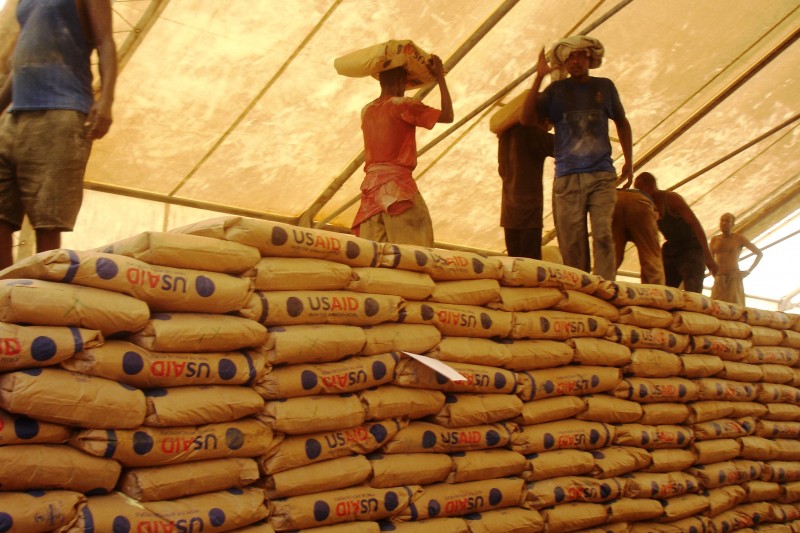
However, humanitarian access will remain limited in the most impacted regions of Darfur, Khartoum and Kordofan. USAID Bureau of Humanitarian Assistance (BHA) and the State Department’s Bureau of Population, Refugees and Migration coordinate with multiple United Nations aid organizations to bolster food security and humanitarian aid in Sudan. Partnering with the WFP, USAID/BHA assisted approximately 1.1 million people in Sudan with emergency food and nutrition assistance in February 2023.

The U.S. agency delivered about 45,000 metric tons of American-sourced Sorghum to Sudan between November 2022 and April 2023 to support critical food shortages in the country. USAID has also worked with UNHCR and the United Nations Children’s Fund (UNICEF) to provide water, sanitation and hygiene assistance in order to prevent the spread of infectious diseases such as dengue and malaria. Partner agencies have improved access to clean drinking water in conflict-impacted areas and have provided hygiene awareness sessions.

Opening Pathways for Aid in Sudan

The United States Government has demonstrated a commitment to supporting humanitarian aid efforts in Sudan amidst the violent civil conflict. The government has pledged $162,511,131 to USAID programs to support its humanitarian aid in Sudan for the fiscal year 2023. This funding comes in the form of financial aid to various U.N. partner agencies that provide food and medical aid to people in need all throughout the country.

U.S. State Department officials are in ongoing negotiations to open up additional avenues for humanitarian aid to Sudan. Envoys representing both warring factions have traveled to Jeddah, Saudi Arabia as part of “pre-negotiation talks” mediated by the United States and Saudi Arabia. Neither military faction has shown a willingness to negotiate an end to the conflict, but there are considerations regarding reaching a humanitarian truce. U.S. officials are cautiously optimistic that the two sides can reach an agreement to allow additional humanitarian aid to reach Sudan. However, Undersecretary of State for Political Affairs Victoria Nuland has stated that the U.S. is willing to apply economic pressure to the parties “depending on how talks go.”

Looking Ahead

Despite the ongoing civil conflict in Sudan, international aid organizations, including USAID, are working tirelessly to provide critical assistance to those affected by the crisis. While the situation remains challenging, the lifting of suspensions on aid activities and the commitment of the U.S. government to support humanitarian efforts offer hope for improving the dire conditions in the country. Negotiations for a potential humanitarian truce provide a glimmer of optimism, with the possibility of opening up pathways for additional aid to reach Sudan.

– Jeremy Rosen
Photo: Flickr

May 15, 2023
https://borgenproject.org/wp-content/uploads/borgen-project-logo.svg 0 0 Jennifer Philipp https://borgenproject.org/wp-content/uploads/borgen-project-logo.svg Jennifer Philipp2023-05-15 10:34:242024-05-30 22:31:06How USAID is Providing Aid in Sudan
Page 10 of 34«‹89101112›»

Get Smarter

  • Global Poverty 101
  • Global Poverty… The Good News
  • Global Poverty & U.S. Jobs
  • Global Poverty and National Security
  • Innovative Solutions to Poverty
  • Global Poverty & Aid FAQ’s
Search Search

Take Action

  • Call Congress
  • Email Congress
  • Donate
  • 30 Ways to Help
  • Volunteer Ops
  • Internships
  • Courses & Certificates
  • The Podcast
Borgen Project

“The Borgen Project is an incredible nonprofit organization that is addressing poverty and hunger and working towards ending them.”

-The Huffington Post

Inside The Borgen Project

  • Contact
  • About
  • Financials
  • President
  • Board of Directors
  • Board of Advisors

International Links

  • UK Email Parliament
  • UK Donate
  • Canada Email Parliament

Get Smarter

  • Global Poverty 101
  • Global Poverty… The Good News
  • Global Poverty & U.S. Jobs
  • Global Poverty and National Security
  • Innovative Solutions to Poverty
  • Global Poverty & Aid FAQ’s

Ways to Help

  • Call Congress
  • Email Congress
  • Donate
  • 30 Ways to Help
  • Volunteer Ops
  • Internships
  • Courses & Certificates
  • The Podcast
Scroll to top Scroll to top Scroll to top