• Link to X
  • Link to Facebook
  • Link to Instagram
  • Link to TikTok
  • Link to Youtube
  • About
    • About Us
      • President
      • Board of Directors
      • Board of Advisors
      • Financials
      • Our Methodology
      • Success Tracker
      • Contact
  • Act Now
    • 30 Ways to Help
      • Email Congress
      • Call Congress
      • Volunteer
      • Courses & Certificates
      • Be a Donor
    • Internships
      • In-Office Internships
      • Remote Internships
    • Legislation
      • Politics 101
  • The Blog
  • The Podcast
  • Magazine
  • Donate
  • Click to open the search input field Click to open the search input field Search
  • Menu Menu

Archive for category: Human Trafficking

Global Poverty, Human Trafficking

Addressing Human Trafficking in Panama

Human Trafficking in Panama
Panama, among other countries in Central America, is “a path to displacement for South American and extra-continental migrants,” says the United Nations Office on Drugs and Crime (UNDOC). According to the U.S. Department of State’s trafficking profile of Panama, human traffickers exploit both domestic and foreign victims.   

 What to Know About Human Trafficking

Each year, the Department of State issues trafficking persons reports for each country. The U.S. Department of State makes it clear that human traffickers prey on all ages, genders, nationalities and backgrounds for profit. Homeland Security defines human trafficking as the “use of force, fraud or coercion to obtain some type of labor or commercial sex act.” The International Labor Organization (ILO) released Global Estimates of Modern Day Slavery in September 2022. The Global Estimates of Modern Day Slavery estimated 27.6 million victims worldwide at any given time in 2021.

It is important to know that two main categories fall under human trafficking including forced labor and sex trafficking. Within each category, there are three elements including acts, means and purpose that are essential in forming a human trafficking violation. It embodies an array of activities that involve coercion, fraud or force to exploit labor. Domestic servitude falls under forced labor in which a victim is working in a private residence. Under this umbrella is also forced child labor, where children are compelled to work under traffickers’ forced labor schemes.

Similar to labor trafficking, children fall victim to sex trafficking. Sex trafficking occurs when one uses force, fraud or coercion to pressure one into commercial sex acts. In cases where the individual is under 18, the means element is extraneous regardless of evidence of force, fraud or coercion, prohibiting the use of children in commercial sex acts in the U.S. and many other countries.

Human Trafficking in Panama

While most cases involve women from South and Central America, this does not exclude men, children and other individuals. Panama’s National Anti-Trafficking Commission reported 16 confirmed trafficking victims in 2021. Of the 16 victims, seven were sex trafficking victims and the other nine were labor trafficking victims.

Panama’s government indicated that more than two-thirds of Panama’s traffickers are foreign nationals from the People’s Republic of China, Columbia and Venezuela. Of the traffickers in Panama, about half are men. In the trafficking profile, it mentioned that children tend to be exploited by traffickers into domestic servitude and sex trafficking in Panama.

The government slightly decreased prosecution efforts for human trafficking in Panama. One can see the decrease in prosecution in three articles. Article 456 of the penal code does not criminalize all forms of sex and labor trafficking because there needs to be movement to initiate a trafficking offense. Trafficking offenses involving adults resulted in 15 to 20 years imprisonment, while offenses involving children are 20 to 30 years. This article conflicts with international law because it relies on fraud, force and coercion rather than the three essential elements.

Article 180 criminalizes commercial sex exploitations with seven to nine years imprisonment with a fine of 5,200 balboas. Article 186 criminalizes commercial sex acts from a child with a five to eight-year sentence. These two articles offer a lighter sentence for sex traffickers by charging them with non-trafficking offenses.

Solving Human Trafficking in Panama

Different projects and campaigns are launching to solve the human trafficking problem in Panama. UNDOC launched a campaign to make September the month against human trafficking in Panama. In doing so, UNDOC and the Ministry of Security (MINSEG) joined forces in a joint project to establish a shelter for human trafficking victims, develop a booklet for shelter for victims and develop and implement a Master Training Plan that covers different areas in the public and private sectors.

UNDOC also founded the Blue Heart Prevention Campaign in four Central American countries including Panama, Guatemala, Costa Rica and El Salvador). The campaign’s objective is to raise awareness across the world about human trafficking as well as its effects on people and society through the stories of its victims. The Blue Heart Prevention Campaign is trying to prevent further cases while encouraging entities from the government, civil society and corporate sector to help.

The Blue Heart Prevention Campaign donates all proceeds to the United Nations Voluntary Trust Fund for Victims of Trafficking Persons. This provides vital assistance and protection to victims of human trafficking.

In 2014, Panama joined the Blue Heart Prevention Campaign and is making small strides toward solving human trafficking in Panama. The campaign hosted the Blue Heart Gala Concert where music held great power in bringing individuals together in the fight against human trafficking. More than 600 people attended the concert where the country’s National Symphony Orchestra and the Nemeth Quartet from Turkey performed.

Looking Ahead

Supporters across the globe continue to raise money and awareness for victims of human trafficking in Panama, but it still is not enough. Panama has a ways to go to meet the required standards for the elimination of human trafficking. With more focus returned to the prosecution of traffickers, it is possible that Panama can reach the required standards that the U.S. Department of State.

– Brianna Green
Photo: Flickr

February 28, 2023
https://borgenproject.org/wp-content/uploads/borgen-project-logo.svg 0 0 Jennifer Philipp https://borgenproject.org/wp-content/uploads/borgen-project-logo.svg Jennifer Philipp2023-02-28 07:30:042024-05-30 22:30:40Addressing Human Trafficking in Panama
Global Poverty, Human Trafficking

Human Trafficking in the Kyrgyz Republic

Human Trafficking in the Kyrgyz Republic
The Kyrgyz Republic, a country located in the heart of the Caucasus, is home to nearly 7 million people. Recent unrest in the region has led to an increase in human trafficking in the Kyrgyz Republic and neighboring areas.

Risk Factors

Currently, the Kyrgyz Republic is listed in the second tier of the human trafficking watchlist that the U.S. State Department created. This means that despite consistent efforts to eliminate human trafficking in the Kyrgyz Republic, the country has not yet achieved a satisfactory level of safety. There are several reasons for this, the biggest of which is brought on by regional unrest. As a result of the ongoing Russo-Ukrainian War, many Kyrgyzstani workers who relied on jobs in Russia are no longer able to work in Russia legally. Therefore, Kyrgyzstan migrants have to look for work as undocumented immigrants. This has led to migrants ending up in the online sex trade, an industry that is rapidly growing in the Kyrgyz Republic. According to the government of British Columbia, the Kyrgyz Republic fits the two most significant risk factors for increased human trafficking: political instability and forced migration.

Kyrgyzstani Efforts to Fight Human Trafficking

Human trafficking in the Kyrgyz Republic has not gone unnoticed by its inhabitants. According to the U.N. Office on Drugs and Crime (UNODC), a group ran by 30 youth organizations titled “100 Days against Trafficking in Persons” coordinated awareness efforts with the government in cities throughout the country, including the nation’s capital, Bishkek. Calls to the country’s national trafficking hotline saw an immediate increase, rising by nearly 15%.

The 100 Days against Trafficking in Persons is not the only citizen-run group fighting human trafficking in the Kyrgyz Republic. The non-governmental organization El Agartuu has been contributing to the fight against trafficking since 2006. The NGO created a database of over 30 other NGOs actively helping the government identify and aid victims of trafficking.

Meanwhile, the Kyrgyzstani government added four new articles to the country’s laws, including additional penalties for trafficking-related offenses. In addition to a stricter approach to trafficking crimes, the government of the Kyrgyz Republic instituted more protection services for victims of trafficking in 2022. The Kyrgyz Republic created a national referral method, or NRM, to help trafficking victims gain access to medical care and social services. An official case is not necessary for victims to access those services, they are widely available to anyone who should need them.

Lastly, the government continues to run the Center for Employment of Citizens Abroad, which helps job seekers look for employment and acquire legal work abroad. The Center for Employment of Citizens Abroad has helped reduce the number of Kyrgyzstani workers who feel the need to migrate illegally or put themselves in dangerous positions to find employment, thus reducing the risk factors for thousands of people looking for work.

Moving Forward

While human trafficking in the Kyrgyz Republic remains a problem today, there is reason to believe that that can change quickly. The public has come to a consensus on the existence of the problem, a step that is paramount to finding a solution. The Kyrgyzstani government has implemented new laws to prevent trafficking and allocated more resources to help the victims of the crime. With the renewed efforts of the public and government in Kyrgyzstan, it is possible that human trafficking is a less prominent issue in the future.

– Ezra Bernstein
Photo: Flickr

February 26, 2023
https://borgenproject.org/wp-content/uploads/borgen-project-logo.svg 0 0 Kim Thelwell https://borgenproject.org/wp-content/uploads/borgen-project-logo.svg Kim Thelwell2023-02-26 07:30:452023-02-24 11:49:45Human Trafficking in the Kyrgyz Republic
Global Poverty, Human Trafficking

Eliminating Human Trafficking in Comoros

Human Trafficking in Comoros
Human trafficking is an issue that plagues most of the world, but in some nations, it is more prevalent than in others. The archipelago of Comoros – located off of Africa’s east coast in the Indian Ocean – is a Tier 2 Watch List country making its citizens some of the most at-risk for human trafficking.

Notable Numbers

The Human Trafficking Institute’s annual Trafficking in Persons Report (TIP Report) ranks countries in three tiers – the third being the worst. Tier 2 means that the respective government does not fully comply with the minimum standards for combating trafficking but is making significant efforts to do so. However, the designation “Watch List” means that the number of human trafficking victims in Comoros is increasing or there is no evidence of heightened efforts from the previous year.
 
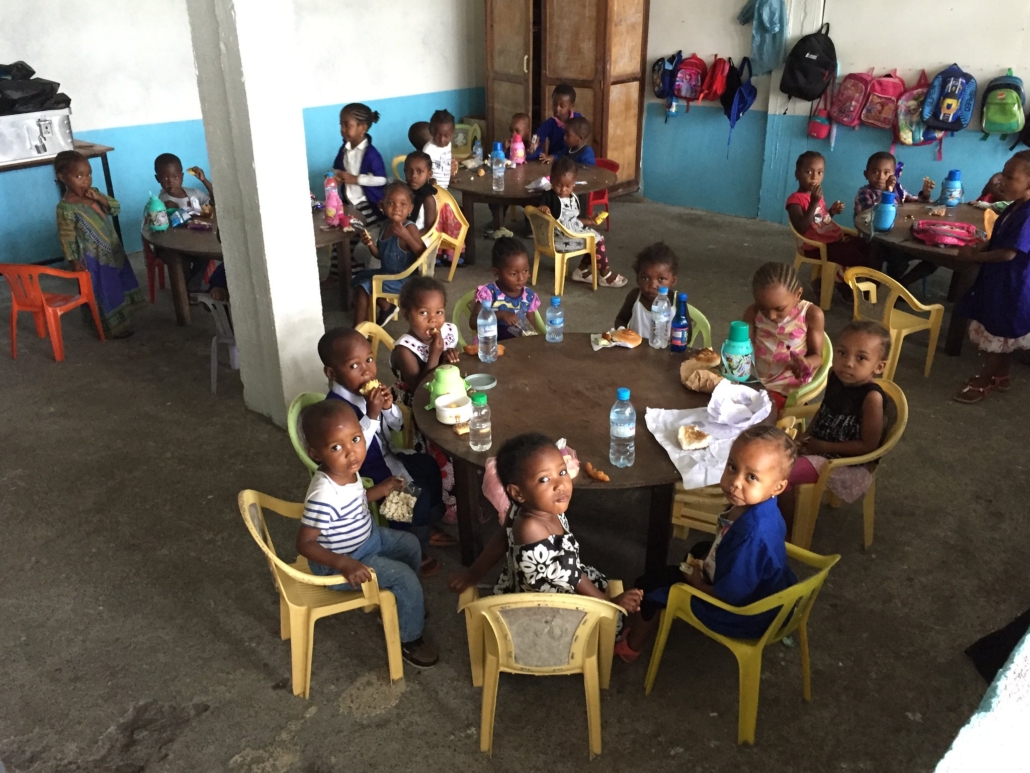
Most Comorian children ages 3 to 7 – and some as old as 14 – often study at unofficial neighborhood schools directed by private instructors, which makes them vulnerable to exploitation as domestic servants or field hands. Without formal schools to educate, children are often left in the hands of the corrupt.
 
The estimated 3,000 to 4,000 unaccompanied children on the island of Mayotte are especially susceptible to domestic servitude and sex trafficking. Due to a corrupt government, inadequate border control and international criminal networks, there is a high risk for transnational and domestic human trafficking in Comoros.

The 2022 TIP Report found that during the reporting period, the Comorian government investigated four trafficking cases – three of which were for forced labor, and one involving both labor and sex trafficking.
To combat human trafficking in Comoros, the government partnered with local NGOs and international organizations to provide support for the eight victims identified in 2022. MAEECHA is an NGO located in Moroni, Comoros that works to protect minors in isolation and much more. Between 2014 and 2015, MAEECHA identified 514 minors in a situation of vulnerability – 220, or 43%, were in isolation. About 68% of these children were under 12 years old.

Diplomatic Relations

The U.S. established diplomatic relations with Comoros in 1977 and has maintained its presence in some capacity through a strong bilateral relationship with the U.S. ambassador in Madagascar. Additionally, the Peace Corps re-established itself in the island nation in 2015.
 
In 2022, Comoros upgraded from Tier 3 to Tier 2 Watch List based on achievements, including investigating trafficking crimes for the first time since 2014 and initiating the country’s first trafficking prosecution. Though this may seem insignificant, a country as impoverished as Comoros taking these steps could mean major progress in the coming years.
 
That being said, when a country is Tier 3, they may no longer be subject to foreign aid from the United States, so Comoros receiving international support is conditional upon it remaining in Tier 1 or 2.

Progress for Comoros

The U.N. Office on Drugs and Crime (UNODC) reports that local community engagement is a recent initiative from Comoros in the war against trafficking. With the support of UNODC through informational workshops, parliamentarians and Islamic leaders have been working to spread awareness of human trafficking. With this type of movement underway – and hopefully, more to come – there is optimism that progress will occur in ensuring the safety of Comorians, especially the youth.

The U.S. Department of State financed the previously mentioned workshops as a part of the UNODC Enhancing Criminal Justice Responses to Trafficking in Person in Eastern Africa project. The main focus of the project is aligning different regions’ national legislation on TIP.

Although Comoros is making progress as a nation with regard to human trafficking, there is much more that needs to occur for all its citizens to have safety and everything they need.
 
– Stella Tirone
Photo: Flickr

February 22, 2023
https://borgenproject.org/wp-content/uploads/borgen-project-logo.svg 0 0 Kim Thelwell https://borgenproject.org/wp-content/uploads/borgen-project-logo.svg Kim Thelwell2023-02-22 01:30:202023-02-21 06:40:12Eliminating Human Trafficking in Comoros
Global Poverty, Human Trafficking

Combating Human Trafficking in Guinea

Human Trafficking in Guinea
For the third year in a row, in its Trafficking in Persons Report, the U.S. Department of State ranks Guinea as a Tier 2 Watch List country in 2022 in terms of its efforts to eliminate human trafficking in Guinea. This ranking means “the Government of Guinea does not fully meet the minimum standards for the elimination of trafficking but is making significant efforts to do so.”

Guinea’s Trafficking Profile

According to the trafficking profile of Guinea, as set out in the 2022 TIP report, “human traffickers exploit domestic and foreign victims in Guinea, and traffickers exploit victims from Guinea abroad.” The populations most at risk of sex trafficking and forced labor in Guinea are “individuals in commercial sex, including those from [Economic Community of West African States] and other nations, adults and children working in the informal labor sector, homeless and orphaned children, artisanal miners, children and adults with albinism and persons suffering severe mental illnesses,” the U.S. State Department says.

Traffickers also push both young boys and adults into forced labor in the mining industry. According to Verité, “Guinea also serves as a transit country for children from other West African countries who are forced into gold mining throughout that region.”

Girls and women in Guinea are at risk of ending up in domestic servitude or sex trafficking. Trafficking rings recruit females under the false pretense of work opportunities in a foreign country, subjecting them to forced labor or other exploitive conditions.

Guinea’s Progress

In 2021, the government investigated 46 trafficking cases and continued investigations on 11 incidents from the previous year. Guinean courts convicted 24 traffickers and acquitted one in comparison to 20 convictions in 2020. But out of these convictions, the majority of the traffickers received jail time of 24 months or less and one received only a fine — inadequate punishment considering the seriousness of the crimes.

The government dedicated a budget to the Office for the Protection of Gender, Children and Morals (OPROGEM) “for the first time since 2016” and also provided both finances and land to build new headquarters for OPROGEM. Additionally, the Guinean government, with support from a foreign government and several organizations, provided training to all relevant authorities on “anti-trafficking enforcement procedures, victim referral and investigative techniques related to human trafficking.”

The police and gendarme academy staff also received anti-trafficking skills training guidebooks and the government conducted one training session for prosecutors and judges to learn more about trafficking. Guinea’s government also established an “emergency anti-trafficking national action plan (NAP) to supplement the 2020-2022 NAP.” The creation of a helpline and an increase of resources designated to the anti-trafficking committee (CNLTPPA) also stand as positive steps on the part of the government.

APRIES

The African Programming and Research Initiative to End Slavery (APRIES) is a group of anti-trafficking researchers and advocates. “We use research and the collection of baseline data to identify target populations that are exploited in a trafficking sector and then work with local agencies to implement rigorous anti-trafficking programs and policies,” its website explains. APRIES currently works in Senegal, Sierra Leone and Guinea.

APRIES’ work in Guinea centers around child trafficking victims ages 5 to 16 across the Boké and Mamou regions. The program aims to “provide protection services to child trafficking survivors and ensure the sustainable reintegration of these survivors.” During its first year of work, the program aimed to “serve 65 child survivors at the Sabou Guinée transit center in Boké and 35 child survivors at the FMK transit center in Mamou.” The project also aims to ensure the successful prosecution of child traffickers. The Guinean NGO Les Mêmes Droits pour Tous (“Equal Rights for All”) will serve as a key partner.

With continued efforts on the part of the government and anti-trafficking organizations, the prevalence of human trafficking in Guinea can reduce.

– Lauryn Defreitas
Photo: Flickr

February 21, 2023
https://borgenproject.org/wp-content/uploads/borgen-project-logo.svg 0 0 Kim Thelwell https://borgenproject.org/wp-content/uploads/borgen-project-logo.svg Kim Thelwell2023-02-21 01:30:292023-02-21 04:56:26Combating Human Trafficking in Guinea
Global Poverty, Human Trafficking

Human Trafficking in Mauritius

Human Trafficking in Mauritius
The United States Department of State ranks the island nation of Mauritius as a Tier 2 country in 2022 in terms of efforts to eradicate human trafficking. This rank, unchanged from 2021, means the “Government of Mauritius does not fully meet the minimum standards for the elimination of trafficking but is making significant efforts to do so.”

5 Facts About Human Trafficking in Mauritius

  1. Migration. Mauritius saw almost 30,000 migrants in 2019. The increase in migration and lack of regulation has affected human trafficking in Mauritius. Financial difficulties and rising unemployment rates mean many low-income migrants and their families are susceptible to trafficking and exploitation.
  2. COVID-19 Pandemic. According to Statistics Mauritius, “Relative to the first quarter of 2020, the number of employed declined by almost 129,400 units” and 18% of households reported a loss of more than half their income. Moreso, the overall unemployment rate rose to more than 10% by May 2020 from around 7%. These economic factors put many low-income workers at greater risk of exploitation, particularly in terms of human trafficking.
  3. Children. Children are at significant risk of exploitation in Mauritius. In June 2022, the U.N. Special Rapporteur on the sale and sexual exploitation of children, Mama Fatima Singhateh, visited Mauritius to “promote strategies that prevent and combat the sale and sexual exploitation of children.” The 10-day-long visit aimed to tackle topics such as “the protection of children against sexual exploitation, child marriage, child trafficking for sexual exploitation, the exploitation of children living in the streets and the sale of children through illegal adoptions,” according to the website of the U.N. Human Rights Office of the High Commissioner. Singhateh also held the purpose of examining Mauritius’ progress in addressing the exploitation of children since the last country visit in 2011.
  4. Laws. The Mauritian government has ratified several International Labour Organization (ILO) conventions, such as ILO 29 Forced Labour convention on December 2, 1969, and the ILO 182 Worst forms of Child Labor on June 8, 2000. These conventions solidify Mauritius’s commitment to eradicating issues relating to human trafficking. In addition, laws such as the Combating of Trafficking in Persons Act of 2009, which criminalizes sex trafficking and labor trafficking, and the Children’s Act of 2020, which criminalizes child sex trafficking, show the government’s attempt to combat this issue on a legislative level.
  5. Challenges. An obstacle for the government is that traffickers utilize multiple methods to exploit their victims. Family members or domestic partners are often complicit in the exploitation of girls for sex trafficking. Traffickers also work with Russian and Kazakh criminal networks to exploit and move women into Mauritius from places such as Belarus and Ukraine. Additionally, more than 35,000 workers in the manufacturing and construction sector, hailing mainly from Bangladesh, India, Sri Lanka, Madagascar and Nepal, are most at risk of forced labor.

Looking Ahead

Regardless of the challenges, according to the U.S. Department of State, the Mauritian government showed positive efforts against trafficking. These include increased services for identified child trafficking victims, working alongside a global organization to “renovate a shelter and repatriate foreign victims identified in previous years,” educating migrant workers on how to identify situations of trafficking and “reconvening the Inter-Ministerial Committee on Trafficking in Persons (IMCTIP) after it was inactive for two years,” the U.S. Department of State website says.

Though human trafficking is an issue of concern in Mauritius, the government is implementing strong measures to ensure the nation’s most vulnerable citizens are protected from trafficking and exploitation.

– Saad Haque
Photo: Flickr

February 8, 2023
https://borgenproject.org/wp-content/uploads/borgen-project-logo.svg 0 0 Kim Thelwell https://borgenproject.org/wp-content/uploads/borgen-project-logo.svg Kim Thelwell2023-02-08 01:30:542024-05-30 22:30:46Human Trafficking in Mauritius
Global Poverty, Human Trafficking

The Fight to Eliminate Human Trafficking in Zimbabwe

Human Trafficking in Zimbabwe
Every year, the country of Zimbabwe faces the ever-present issue of human trafficking. The targets of human trafficking in Zimbabwe and the rest of the world are typically women and children whom the traffickers exploit as free labor for their businesses. This business of human trafficking is especially prevalent in Zimbabwe, rooting itself into the country similar to weeds. However, there is hope as Zimbabwe can pass legislation to suppress human trafficking. 

Targets of Human Trafficking in Zimbabwe

Every year, the United States Department of State conducts reports on the various levels of human trafficking in countries across the world. The U.S. Department of State uses three different criteria to determine a country’s level of human trafficking.

  • “Tier 1: Countries and territories whose governments fully comply with the minimum standards.
  • Tier 2: Countries and territories whose governments do not fully comply with the minimum standards but are making significant efforts to bring themselves into compliance with those standards.
  • Tier 2 Watch List: Countries and territories whose governments do not fully comply with the minimum standards but are making significant efforts to bring themselves into compliance with those standards and the estimated number of victims of severe forms of trafficking is very significant or is significantly increasing and the country is not taking proportional concrete actions.”

As of 2023, the U.S. Department of State recognizes Zimbabwe as a Tier 2 watch list. According to the report, human trafficking in Zimbabwe uses the victims of trafficking for various reasons including, mining for gold and diamonds, sex trafficking, cattle herding, domestic service and agriculture. About 71% of children who are victims of human trafficking work in the agricultural industry of Zimbabwe, where the children labor on tobacco, sugarcane and cotton farms. Another part of working in the agricultural sector is forestry and fishing, in which children harvest and pack goods.

The report also states that children ages 9-14 are used as “nannies, housemaids, and gardeners in urban areas and mining communities,” where employers withhold wages and deny the children access to school, as an incentive for the children to work. Zimbabwe also has multiple traditional practices which make young girls subject to trafficking including trading girls for food or money and using girls as “replacement brides” for deceased family members.

The Failure of Zimbabwe’s Legislation

In 2019, Zimbabwe released a three-year plan with hopes of reducing human trafficking. Strategies named in the plan to lower human trafficking include:

  • To improve access to services for victims of trafficking (VOT)
  • To reduce bribery corruption in trafficking in persons (TiP) cases
  • To offer specialized continuous training for investigators
  • To facilitate the provision of appropriate shelter and psycho-social support services to identified VOT
  • To enhance cooperation at international levels

Each of these strategies fundamentally failed, which the U.S. Department of State goes into detail about in their 2022 report on Zimbabwe.

VOT access to services has not seen significant improvement. In fact, the Zimbabwean government has still held no trials for 17 VOT from a case in 2016, regardless of the victims urging for a trial. The report states that bribery is still highly prevalent too. The U.S. Department of State has reported one example of this in which border officers accept bribes in exchange for allowing unauthorized crossings over the border.

The US Department of State’s Report on Investigations

The report also finds judges accepting payments of “farms and houses” to turn a blind eye in court. While 500 officers and 10 immigration officers have received training on trafficking, the government did not provide effective procedures to investigate cases. The lack of proper procedures results in law enforcement dishing out wage infractions or immigration violations, instead of human trafficking violations.

Shelter for VOT is lacking as well, in which traffickers kidnap children from one of the government-run homes and force the children to work on citrus farms in Mazowe. Cooperation at the International level requires improvement as well. One key way Zimbabwe is not in cooperation at the International level is concerning how they write their laws on human trafficking. Zimbabwe’s law regarding human trafficking, the 2014 Trafficking in Persons Act, is not consistent with International law by way of not defining “exploitation” adequately. This leaves Zimbabwe without “comprehensive prohibitions of trafficking crimes.”

Improvements by the Zimbabwean Government

The Zimbabwe government hopes 2023 will be a year of improvement for the human trafficking situation. In April 2022, the Information Minister of Zimbabwe, Monica Mutsvangwa informed the media that the government will introduce a Trafficking in Persons Bill. The contents of this bill are focusing on strengthening the current laws regarding human trafficking in Zimbabwe. This bill also contains the definition of “service exploitation.” Introducing this definition will allow for much less leeway for human traffickers, as there will be strong legal guidelines on what is technically human trafficking.

The situation of human trafficking in Zimbabwe is deep-rooted and corruption has accelerated it. While the level of human trafficking in Zimbabwe is not ideal by any measure, it is seeing improvement. With the hopes of new legislation on the horizon, Zimbabwe could see massive changes in 2023 which would drastically improve the situation for the country.

– David Keenan
Photo: Flickr

January 28, 2023
https://borgenproject.org/wp-content/uploads/borgen-project-logo.svg 0 0 Jennifer Philipp https://borgenproject.org/wp-content/uploads/borgen-project-logo.svg Jennifer Philipp2023-01-28 07:30:212024-05-30 22:30:43The Fight to Eliminate Human Trafficking in Zimbabwe
Global Poverty, Human Trafficking

What to Know About Human Trafficking in Mauritania 

Human Trafficking in Mauritania
The U.S. Department of State has ranked Mauritania on the Tier 2 Watch List, indicating that it needs to do much more when it comes to tackling human trafficking. The Tier 2 Watch List reflects countries that have made strides to stop human trafficking but do not comply with all of the established minimum prevention criteria. Here is some information about human trafficking in Mauritania.

About Human Trafficking in Mauritania

Slavery and child labor have been part of Mauritania’s long history. Mauritania did not abolish the practice until 1981, and it was only two decades later before it became a criminal offense. This is the root cause of human trafficking in the region.

Indeed, many often refer to Mauritania as one of the last strongholds of slavery. Estimates point to approximately 20% of the 3.4 million Mauritanians living in some form of enslavement; women and children are particularly vulnerable to trafficking.

Many factors complicate the issue of slavery and bondage in Mauritania. Like many other religions, Islam does not condemn slavery and recognizes it as an institution. The Maliki School of Islamic Law was famous in Mauritania before the 19th century. After the holy wars, labor was necessary to boost the economy and Muslims used Maliki law to justify the enslavement of black Africans.

Human trafficking in Mauritania has deep roots. Slavery and the trafficking of children operate quietly in the nomadic and pastoral settlements of the country. People often pass slaves down through family ties and generations. There are no chains and few large transactions that one can track in Mauritania. The government has also allowed a system of forced labor to exist.

Solutions

Mauritania’s government implemented the Law of Associations, which gives NGOs more room to investigate issues, establish a permanent committee on trafficking and increase fundraising for the anti-trafficking national action plan (NAP). The law has anti-trafficking organizations’ investigations involving three hereditary slavery instances in the country. According to the U.S. Department of State’s data, authorities arrested 14 traffickers and prosecuted five traffickers since 2020. As a member of the G5 Sahel (countries that cooperate with counterterrorism efforts), Mauritania has been willing to comply but large improvements on behalf of the Law on Associations have not undergone fulfillment.

Although the government showed some commitment to the cause, it has yet to develop strong enough institutions to prosecute traffickers effectively — to which the severe impacts of COVID-19 did not help to strengthen their anti-slavery institutions. Human trafficking in Mauritania can disappear, but only if the country takes more effective measures.

Room for Improvement

The U.S. Department of State has suggested that Mauritania increase efforts to prosecute cases of human trafficking and hereditary slavery; which would include directing law enforcement to investigate instances of trafficking and slavery fully. There should also be an institution in place to help victims of human rights violations such as human trafficking in the Sahel.

A glimpse into the marginalized groups in Mauritania provides a sense of optimism for a better future. Biram Dah Abeid is an abolitionist in Mauritania who authorities previously arrested for fighting against the country’s deeply rooted slave tradition and recently became a member of the Human Rights Council at the United Nations to truly improve their human rights initiative. He founded the Initiative for the Resurgence of the Abolitionist Movement, which actively sought to empower people in Mauritania to protest slavery in a non-violent manner. The non-violent tactics include sit-ins, publicizing the issue and assisting victims. The Netherlands presented him with the Human Rights Tulip Award in recognition of his work.

Human trafficking and slavery have significant roots in the nation’s history, but the government has made some efforts to combat the issue. More work is essential to improve the safety and security of marginalized groups in Mauritania.

– Anna Richardson
Photo: Flickr

January 24, 2023
https://borgenproject.org/wp-content/uploads/borgen-project-logo.svg 0 0 Jennifer Philipp https://borgenproject.org/wp-content/uploads/borgen-project-logo.svg Jennifer Philipp2023-01-24 07:30:412023-01-23 06:20:35What to Know About Human Trafficking in Mauritania 
Global Poverty, Human Trafficking

Eliminating Human Trafficking in Serbia

Human Trafficking in Serbia
The U.N. has stated that human trafficking is the “recruitment, transportation, transfer, harboring or receipt of people through force, fraud or deception, with the aim of exploiting them for profit.” Nicolas Bizel of the EU delegation to Serbia believes that human trafficking is “the most profitable criminal activity in the world.” In the 1980s, many considered Serbia more prosperous than its regional neighbors. However, the affluence of Serbia would not last. ASTRA – Anti-Trafficking Action suggests that due to the subsequent Yugoslav Wars, the arrival of different foreign military groups into the region allowed for human trafficking to thrive in Serbia. According to ATINA, Serbia today is considered a “source, transit and destination country for children, women and men trafficked for the purpose of sexual and labor exploitation.”

The Link Between Poverty and Human Trafficking

Serbia’s poverty rate was 24.3% in 2017. In comparison, Serbia’s neighbor Hungary had a poverty rate of 12.3% in 2019, significantly lower than that of Serbia. The GDP per capita in Serbia was $9,230 in 2021 and the unemployment rate was 10.1%. Transform Justice found a strong correlation between poverty and violent crime, whereas crime and corruption are more common in nations with higher poverty rates.

In 2021, there were a total of 46 officially identified victims of human trafficking, 39 of whom were Serbian citizens. However, it is increasingly difficult to estimate the true number of victims. ASTRA Anti-Trafficking Action understands that the number could be significantly higher. Many victims of human trafficking “remain invisible to the public eye.” The main reason for this seems to be that the exploited are working in closed-off environments such as abandoned factories or fenced-off estates.

Human trafficking in Serbia affects women and children significantly more than men. Women and children count for the majority of victims in Serbia. For women, it is most likely that traffickers exploit them for sex work throughout Europe. In fact, the thriving sex trade in Serbia has “overwhelmed the police” who have become unable to sustain the campaign against human trafficking and the sex trade. The Institute For War & Peace Reporting states that the campaign against the industry is sure to fail until many women stop viewing escort work as a way out of poverty.

According to the U.S. Department of State’s 2022 Trafficking in Persons Report, Serbia was downgraded to a tier 2 rating. This means that Serbia failed to meet the minimum standards for the elimination of human trafficking, however, it is “making significant efforts to do so.”

Serbia’s Response

Serbia has set penalties for sex trafficking and labor trafficking to two to 12 years imprisonment for an adult victim and three to 12 years for a child victim, according to the Trafficking in Persons Report. This is in line with serious crimes such as rape.

The Serbian Police filed complaints on 63 suspects, an increase from 57 in 2020. The Public Prosecutor’s Office (PPO) investigated 35 suspects in comparison with 22 in 2020. However, the PPO failed to prosecute more defendants than in 2020. Alongside this, courts convicted 16 traffickers compared with 18 in 2020, according to the same report.

ASTRA-Anti-Trafficking Action

ASTRA – Anti-Trafficking Action is a non-governmental organization fighting to eradicate all forms of human trafficking. During its journey to combat human trafficking, the organization has assisted 507 victims and aims to help many more in Serbia.

The organization has employed several methods to tackle human trafficking. Primarily, an information and prevention campaign in Serbia. This includes encouraging people to pay attention, recognizing human trafficking in their environment and reporting the case. Alongside this, ASTRA educates individuals on early potential signs that they may be potential victims such as whether a potential job offer is real.

ASTRA – Anti-Trafficking Action has acknowledged that it is fighting an increasingly difficult battle due to the indifference of the Serbian institutions. As a result, it has a hotline in case any individual would like to report a matter: 011-785-0000.

The Future

The Serbian government and ASTRA – Anti-Trafficking Action’s desire to eradicate human trafficking in Serbia could be a positive step. With human trafficking largely affecting the most vulnerable, any positive action can help improve the future living situation for the most exposed in Serbia.

A healthy and growing economy can only help the poorest in Serbia, raising the standard of living and reducing poverty. Reducing poverty makes it harder for organized crime to partake in human trafficking. Reducing the risk for the most vulnerable.

– Josef Whitehead
Photo: Flickr

January 19, 2023
https://borgenproject.org/wp-content/uploads/borgen-project-logo.svg 0 0 Kim Thelwell https://borgenproject.org/wp-content/uploads/borgen-project-logo.svg Kim Thelwell2023-01-19 07:30:022024-05-30 22:30:41Eliminating Human Trafficking in Serbia
Global Poverty, Human Trafficking

Human Trafficking in Zambia

Human Trafficking in Zambia
In 2017, the International Labour Organization (ILO) published The Global Estimates of Modern Slavery, approximating that 24.9 million individuals are victims of human trafficking around the world. This prediction includes 20.1 million labor trafficking victims and 4.8 million sex trafficking victims. Globally, the ILO estimates 99% of victims to be women and girls. The World Population Review states, “Child trafficking is very common in Africa…where approximately 100% of all human trafficking victims are children.”

Causes and Effects of Human Trafficking

As mentioned, human trafficking is mainly an issue in developing countries, rather than developed countries. This is mainly due to the various political, social and economic differences between the two groups. Included are various causes and effects of human trafficking, all of which inhibit a developing country’s ability to overcome human trafficking.

Causes:

  • Poverty: Poverty offers a vulnerable position for families, thus becoming the target of traffickers. This factor is often due to the poor condition of a country’s economy and/or social inequality.
  • Unemployment: Traffickers often use the desperation of the unemployed to persuade them to leave their country. Traffickers use these unknowing individuals to manipulate them into forms of forced labor and sexual exploitation, as victims get threats with potential reports to an immigration officer.
  • Displacement: War, political instability and natural disasters force victims into vulnerable positions, thus allowing traffickers to easily prey on individuals and embed them into human trafficking.

Effects:

  • Mental Trauma: Victims often face dehumanization and objectification, thus leaving them in a state of mental degradation. Victims often experience post-traumatic stress, anxiety, fear, guilt and shame. These mental conditions can lead to suicide and abuse, forever inhibiting the victim to become economically independent.
  • Physical Trauma: Many victims experience physical abuse in the trafficking process. Individuals often face rape, beating and subjecting to other abuses over an extended period of time. Sexual exploitation, a common form of human trafficking, also leads to the increased transmission of sexually transmitted diseases. These physical injuries can lead to an inability to work and death.
  • Ostracism: Victims of human trafficking often experience social isolation from friends and family due to personal feelings and cultural beliefs. In the case of Africa, loved ones often blame or shun victims of human trafficking.

Human Trafficking in Zambia

Despite the Government of Zambia’s inability to fully meet the minimum standards for the elimination of human trafficking, the U.S. State Department ranks Zambia on the Tier 2 Watch List, as it is making tremendous efforts to do so.

The most vulnerable population to human trafficking in Zambia is mainly women and children. A poor economy and low social status encourage traffickers to use women and young girls for sexual exploitation, while they often use young boys for forced labor in agriculture, textile production, mining and other profit-inducing businesses.

Due to the high rate of migration within Africa, traffickers are also prone to exploiting immigrants desperate to cross borders into another region. The U.S. State Department reports, “Traffickers exploit women and children from neighboring countries in forced labor and sex trafficking in Zambia, including transiting migrants whose intended destination is South Africa. In recent years, traffickers lure Rwandan women to Zambia with promises of refugee status, coerce them into registering as Democratic Republic of Congo (DRC) nationals seeking refugee status in Zambia, and subsequently exploit them in sex trafficking and threaten them with physical abuse and reporting them to immigration officials for fraudulent refugee claims.”

Efforts to End Human Trafficking in Zambia

The U.S. State Department applauds the Zambian Government for its efforts to end the practice of human trafficking, as it states, “The government…[has] launched various awareness campaigns via billboards, radio shows, text alerts and pamphlets in rural and border areas to educate local communities on human trafficking.”

Additionally, on December 19, 2019, the United Nations Office on Drugs and Crime (UNODC) partnered with the Zambia Law Development Commission (ZLDC) to validate the Anti-Human Trafficking Act No.11 of 2008. The review was associated with revamping the 2002 Protocol to Prevent, Suppress and Punish Trafficking in Persons (Palermo Protocol).

The Road Ahead

Reducing human trafficking in Zambia is a daunting task. Despite this, the Zambian government has made significant efforts to improve. By raising awareness and developing plans to advance socially and economically, the prevalence of human trafficking in Zambia can reduce.

– Sania Patel
Photo: Unsplash

January 17, 2023
https://borgenproject.org/wp-content/uploads/borgen-project-logo.svg 0 0 Jennifer Philipp https://borgenproject.org/wp-content/uploads/borgen-project-logo.svg Jennifer Philipp2023-01-17 01:30:242023-01-13 09:11:26Human Trafficking in Zambia
Global Poverty, Human Trafficking

Eliminating Human Trafficking in Kazakhstan

Human Trafficking in Kazakhstan
The Government of the Republic of Kazakhstan convicted 23 sex traffickers in 2021 out of the 49 trafficking cases that it prosecuted the same year. The government made notable efforts to deal with human trafficking in Kazakhstan that includes steady support to nonprofit organizations as they play a key role in conducting awareness campaigns, supporting the victims and taking care of their individual rights.

Sana Sezim is one such NGO that carries out anti-trafficking activities and supports the victims in every possible way. The mission of the organization is to build civil society and democracy through the promotion of women and children and the protection of their rights in society with the motive of preventing human trafficking in Kazakhstan.

Victims of Human Trafficking in Kazakhstan

Kazakhstan is a destination, origin and transit country for women and girls for sexual exploitation and for men, women and children for labor exploitation. Victims of domestic violence are at risk of trafficking because of their vulnerable situation.

Most of the victims come in search of employment and end up doing forced sex work and labor at construction sites, agriculture or another sector while children have to beg on the streets. The traffickers lure young girls and women with job opportunities like modeling, waitressing and nannying, and exploit them. Meanwhile, they forcefully push both adults and children into criminal activities. The traffickers prey on the migrant workers, mostly illegal migrants and threaten them to remain in the business, who in fear of punishment over illegal border crossing, do not report to the authorities. The women and children arriving with the migrant workers are also likely to become a target to the traffickers.

“Most (about 70%) of the victims who contacted the organization were citizens of other countries. For example, among the victims for 11 months of 2022, only 24 are citizens of Kazakhstan. As we are close to Uzbekistan, the majority of beneficiaries are citizens of Uzbekistan,” Shakhnoza Khassanova, Director of Sana Sezim, told The Borgen Project in an interview.

Anti-Trafficking Efforts

The Kazakhstan Government has made noteworthy improvements in law and order. The government amended Article 134 in 2021 which increased the obligatory imprisonment period of child traffickers to three to six years, according to the U.S. Embassy and Consulate in Kazakhstan.

“Today, with the cooperation of the Government, law enforcement agencies and civil society, a lot of joint work on combating human trafficking in Kazakhstan is carried out,” said Khassanova.

The government has stretched enormous support and coordination with nonprofit organizations countering human trafficking in Kazakhstan. It has spent a generous amount of money on awareness campaigns, funded radio and TV programs and also distributed facemasks with an anti-human trafficking hotline number printed on them during the pandemic.

The Government and the NGOs

The government continues to publicize an NGO-operated hotline number and also provides training to its operators on victim identification and service assistance. Khassanova also explained that the Ministry of Internal Affairs established the Interdepartmental Commission on Combating Illegal Export, Import and Trafficking in Persons, which also includes all relevant government bodies and non-governmental organizations including Sana Sezim.

Nonprofit organizations also cooperate with the police in carrying out anti-trafficking operations. The government-funded and NGO-operated shelters provide all the basic facilities like food, clothing, medical and legal help to the victims of human trafficking in Kazakhstan.

“Working with victims of human trafficking is a holistic approach. This includes the work of several professionals, such as legal services, psychological services and social services.” Khassanova explained.

“The main work of our organization is to identify violations of the rights of migrant workers, assist them, assist the victim in applying to the law enforcement agencies to hold the exploiter accountable, assist in the restoration of documents, if necessary, organize the return of the victim to his family home, as well as represent their legal rights and interests in court.”

Looking Forward

“Sana Sezim is currently implementing a project covering eight regions of Kazakhstan with the support of the U.S. Department of State. This project carries out activity on counteraction to human trafficking in Kazakhstan according to the 4P approach (prevention, protection, prosecution and partnership) that Palermo Protocol specified,” Khassanova explained.

The Ministry of Internal Affairs of Kazakhstan also announced the government’s plan to form a draft law on human trafficking in April 2023.

– Aanchal Mishra
Photo: PxHere

January 17, 2023
https://borgenproject.org/wp-content/uploads/borgen-project-logo.svg 0 0 Jennifer Philipp https://borgenproject.org/wp-content/uploads/borgen-project-logo.svg Jennifer Philipp2023-01-17 01:30:172023-01-17 03:43:18Eliminating Human Trafficking in Kazakhstan
Page 4 of 31«‹23456›»

Get Smarter

  • Global Poverty 101
  • Global Poverty… The Good News
  • Global Poverty & U.S. Jobs
  • Global Poverty and National Security
  • Innovative Solutions to Poverty
  • Global Poverty & Aid FAQ’s
Search Search

Take Action

  • Call Congress
  • Email Congress
  • Donate
  • 30 Ways to Help
  • Volunteer Ops
  • Internships
  • Courses & Certificates
  • The Podcast
Borgen Project

“The Borgen Project is an incredible nonprofit organization that is addressing poverty and hunger and working towards ending them.”

-The Huffington Post

Inside The Borgen Project

  • Contact
  • About
  • Financials
  • President
  • Board of Directors
  • Board of Advisors

International Links

  • UK Email Parliament
  • UK Donate
  • Canada Email Parliament

Get Smarter

  • Global Poverty 101
  • Global Poverty… The Good News
  • Global Poverty & U.S. Jobs
  • Global Poverty and National Security
  • Innovative Solutions to Poverty
  • Global Poverty & Aid FAQ’s

Ways to Help

  • Call Congress
  • Email Congress
  • Donate
  • 30 Ways to Help
  • Volunteer Ops
  • Internships
  • Courses & Certificates
  • The Podcast
Scroll to top Scroll to top Scroll to top