• Link to X
  • Link to Facebook
  • Link to Instagram
  • Link to TikTok
  • Link to Youtube
  • About
    • About Us
      • President
      • Board of Directors
      • Board of Advisors
      • Financials
      • Our Methodology
      • Success Tracker
      • Contact
  • Act Now
    • 30 Ways to Help
      • Email Congress
      • Call Congress
      • Volunteer
      • Courses & Certificates
      • Be a Donor
    • Internships
      • In-Office Internships
      • Remote Internships
    • Legislation
      • Politics 101
  • The Blog
  • The Podcast
  • Magazine
  • Donate
  • Click to open the search input field Click to open the search input field Search
  • Menu Menu

Archive for category: Human Trafficking

Human Trafficking

Anuradha Koirala Strives to Rescue Victims of Human Trafficking in Nepal

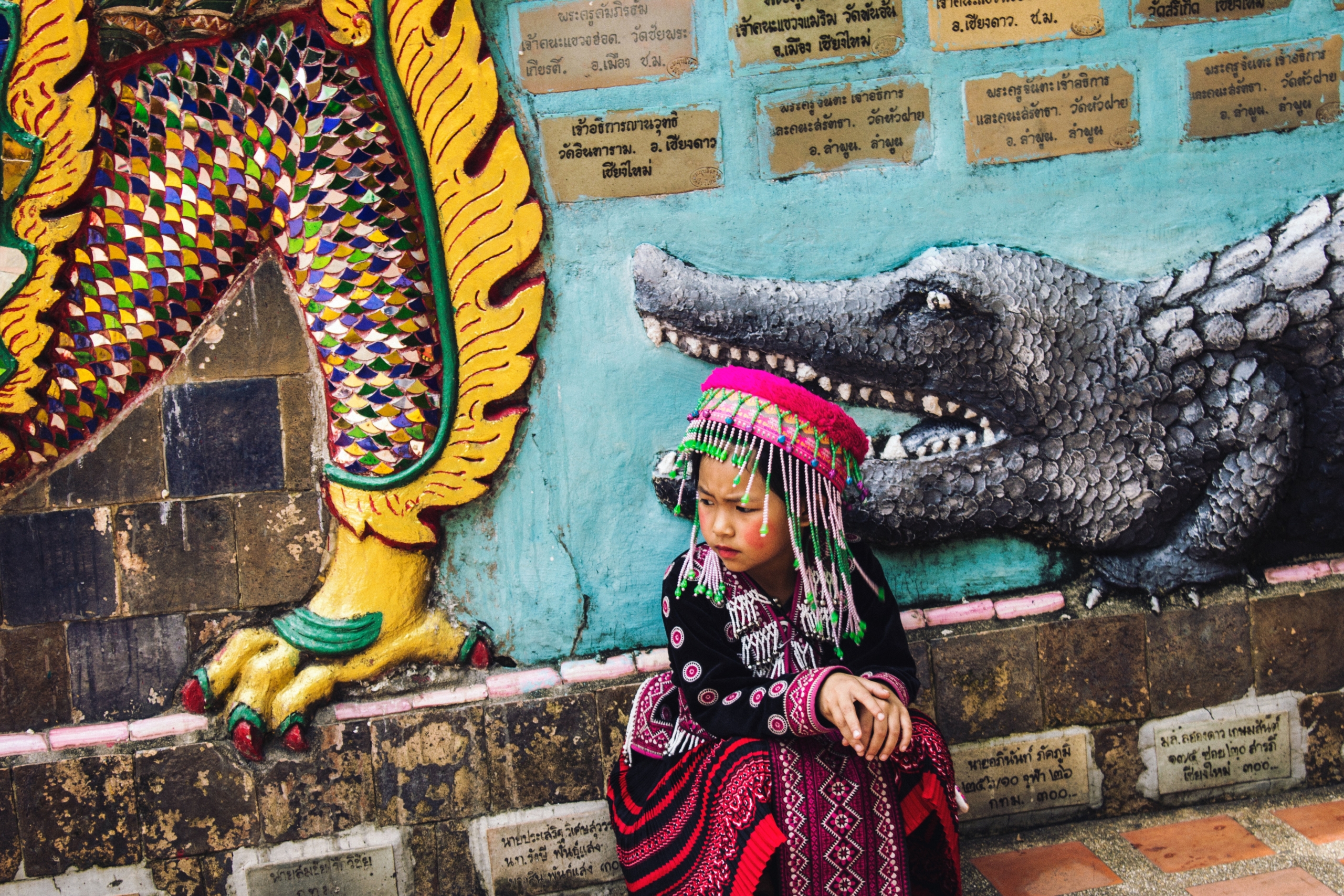
Human Trafficking in NepalAnuradha Koirala, the founder of Maiti Nepal, has rescued and prevented over 50,000 female victims of human trafficking in Nepal in the past 30 years. 

In 1949, Koirala was born into a well-educated and affluent family, showered with love from her parents. Her life seemed like a carefree fairy tale until her marriage during which suffered physical abuse, mistreatment and humiliation from her husband. Koirala blamed domestic violence for enduring three miscarriages.

Finally, she was able to escape her horrible marriage and start a grocery store in a small town to make a living. However, Koirala didn’t forget the pain of her marriage. She determined to use her experience to help abused victims of human trafficking in Nepal. Thus, she embarked on her own rescue mission, tracing the footsteps of trafficked girls.

A Background on Human Trafficking in Nepal

Nepal and India share an open border of 1,850 kilometers, which has made human trafficking in Nepal one of the most lucrative markets in the world. The Human Trafficking Rescue Program estimated that there are more than 54 women trafficking cases in Nepal every single day. According to investigations from the United Nations and local non-governmental organizations, approximately 12,000 to 15,000 Nepalese young girls and women are victims of human trafficking each year. These individuals hold hopes of finding well-paid employment abroad, but their dreams turn into nightmares. Most of them end up in brothels in India, enduring rape and becoming slaves to addiction. Furthermore, these exploited women are at high risk of contracting sexually transmitted diseases, including hepatitis and HIV/AIDS. 

Maiti Nepal Helps Rescue Human Trafficking Victims

In 1993, Koirala used her meager income to establish the nonprofit organization Maiti Nepal, meaning “Mother’s Home Nepal.” The organization offers medical care, rehabilitation services and educational training services to trafficked girls, enabling them to reintegrate into society. Its vision is to create a society free from exploitation against women. As the organization developed, the United Nations Children’s Fund (UNICEF) decided to provide financial support to Maiti Nepal. 

Moreover, Maiti Nepal collaborated with UNICEF to launch a dance program “KinderKulturKarawane” to release girls’ inner pain and rebuild their confidence. Many survivors have found a positive outlet through dance, expressing their emotions and boosting their physical and mental well-being. Additionally, survivors incorporate their stories into dance performances, raising awareness among the public about the dangers of human trafficking and the common tactics used by traffickers.

Currently, Maiti Nepal has established 11 temporary shelters in different border towns, providing counseling services, health care and life skills training. The organization‘s transit homes serve not only as temporary residences for victims of human trafficking but also as interception points to rescue children and women. It collaborates with border police, conducting regular raids on brothels and searching for traces of traffickers along the Nepal-India border. 

Maiti Nepal became the world’s first social organization to utilize AI technology for tracking criminals and missing girls in 2018. The American software company, NowtRKit, provided the facial recognition technology program for tracking human traffickers to Maiti Nepal free of charge. The adoption of this technology significantly enhanced Maiti Nepal’s border surveillance efforts, enabling the organization to intercept criminals crossing the border more efficiently and preventing human trafficking. Koirala stated that in 2022, the organization helped police rescue 499 women and children. 

The work of combating human trafficking is fraught with danger. Koirala remains confident even though she receives life-threatening letters from criminal groups every day. From the moment she decided to establish Maiti Nepal, she understood the kind of difficulties she would face.

Looking Forward

Through the relentless efforts of Koirala and Maiti Nepal over the past 30 years, the Nepalese government has designated September 5th as “Anti-Trafficking Day.” The government has continuously worked towards improving relevant laws, protecting victims and strengthening sentencing measures. Koirala regards every assisted girl as her own child. She hopes for the day when Maiti Nepal can disband, signifying the end of trafficking in Nepal and the cessation of torment for Nepalese girls. 

The work of Maiti Nepal has received recognition and support from various sectors both domestically and internationally for their efforts against human trafficking in Nepal. Koirala’s steadfast belief and selfless dedication set an example for this organization and inspired more people to join the fight, bringing hope and transformation to trafficked girls.

– Mingjun Hou
Photo: Flickr

June 28, 2023
https://borgenproject.org/wp-content/uploads/borgen-project-logo.svg 0 0 Kim Thelwell https://borgenproject.org/wp-content/uploads/borgen-project-logo.svg Kim Thelwell2023-06-28 01:30:532026-04-16 10:21:00Anuradha Koirala Strives to Rescue Victims of Human Trafficking in Nepal
Global Poverty, Human Trafficking

The Fight Against Human Trafficking in Mauritius

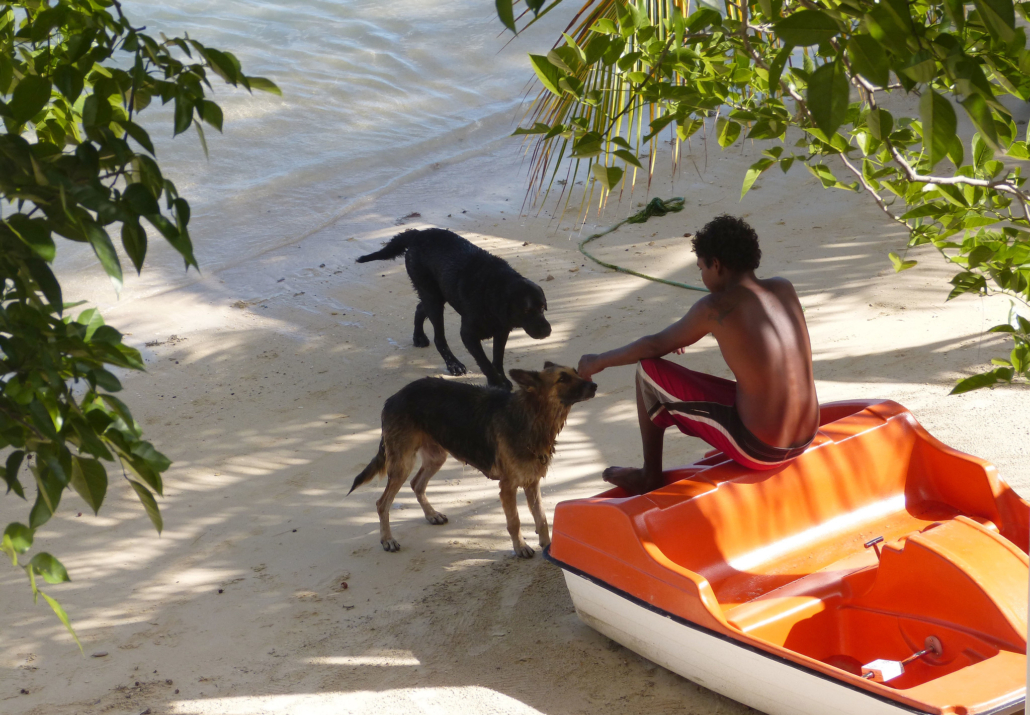
Human Trafficking in Mauritius
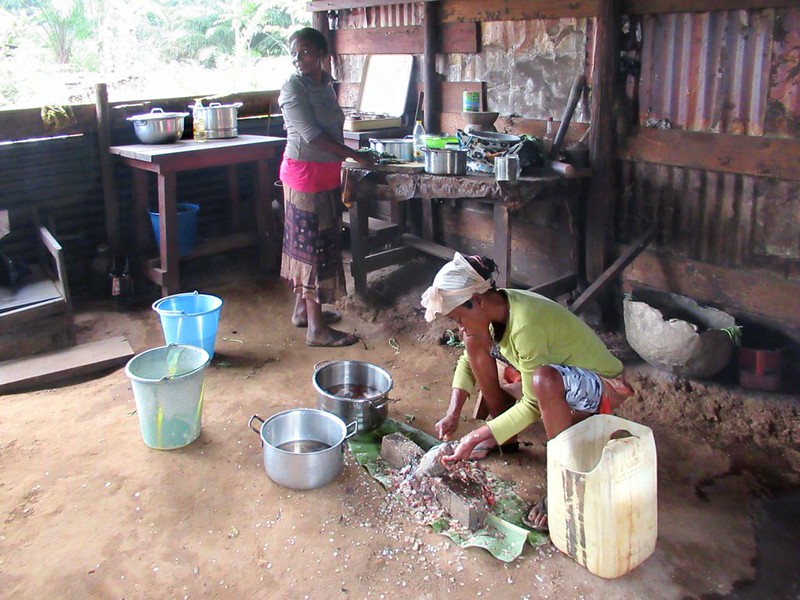
Mauritius, an archipelago on the southeastern coast of Africa, is a nation with a large migrant population. In recent years, it has become a hub of human trafficking. The U.S. Department of State’s 2022 Trafficking Persons Report (TPR) gave Mauritius a Tier 2 ranking. This means that the country’s government while having made some effort, has yet to meet the global standard for minimizing trafficking. Here are six ways to alleviate human trafficking in Mauritius.

Criminalizing and Tracking Foreign Trafficking Recruiters

Mauritius has begun reforming its judicial system with the Combating of Trafficking in Persons Act of 2009. This led to the imprisonment of a handful of national traffickers annually. In 2021, the government identified six potential victims. This act, however, does not criminalize recruiters who conduct trafficking abroad before reentering Mauritius.

It is currently legal to be a citizen of Mauritius, traffic in another country and return. The U.S. Department of State suggests broadening and making adjustments to the Mauritius trafficking laws to outlaw trafficking abroad. Human trafficking activities on foreign soil present a hurdle for solving trafficking issues in Mauritius. Mauritian police told Migration EU Expertise (MIEUX+) that it is quite difficult to prosecute transnational cases of human trafficking due to poor international cooperation and insufficient evidence for convictions.

Prosecution of Complicit Officials

The Mauritian government has yet to investigate or prosecute any government official complicit in trafficking. The 2022 Mauritius Human Rights Watch noted that “impunity was a significant problem for police and investigations involving officers often continued for years.” Officials known for human rights violations were disciplined but rarely fired, let alone prosecuted.

Inefficient Justice System

The lack of prosecution is in part due to the inefficiency of the justice system. According to the World Prison Brief, as of July 19, 2022, prisoners who waited for trial comprised “51.4 percent of the total prison population due to a backlogged court system.” The Mauritius prison system prevents fair punishment for traffickers. In addition, the Trafficking Persons Report notes that “though a Mauritian law prohibits the practice, employers routinely retain migrant workers’ passports to prevent them from changing jobs,” enhancing vulnerability to forced labor.

The State of Protection Services

The Ministry of Gender and Family Welfare in Mauritius systemically provides referral procedures for child victims. Currently, there are no programs in place for adult victims. The government spends nearly $1 million on shelters for children, yet only one shelter is designed to protect human trafficking victims in Mauritius. There are also no streamlined procedures for adult trafficking victims, which leads to uneven assistance and potential re-traumatization of victims. The TPR urges the opening of more shelters and streamlining the method of assistance. NGOs from the EU and the Mauritian government are beginning to work together to solve this issue. Governmental collaboration with MIEUX+ in the ongoing action plan Mauritius III aims to refine “the capacities of public officials to identify and refer” victims of human trafficking in Mauritius.

Better Monitor Migrants

According to the Trafficking Persons Report of 2022, instead of checking into migrants’ histories, Mauritian police regularly send back Malagasy women attempting to enter Mauritius alone with little money. Since July 2021, the Ministry of Labor’s Special Migrant Works Unit has worked to inform migrants of their rights. However, border workers were not informed on how to profile potential trafficking victims, did not refer any migrants for future investigation and they also did not report any violations of incomplete contracts.

Looking Ahead

There are ongoing efforts to combat human trafficking in Mauritius. Halley Movement, founded in 1989, is the lead organization of a coalition serving Mauritius and other African-Indian Ocean island states. It addresses child abuse by holding conventions, counseling parents and testifying in court. Via its program Helpline Mauritius, this organization provides vulnerable children with guidance and support.

Halley Movement empowers youth by connecting them to jobs within the private sector and funding educational programs such as Basic Education to Adolescents (BETA) which services elementary school dropouts. The Mauritian government has also held awareness campaigns on signs of trafficking that target frontline workers and local committees. These programs help combat trafficking by helping children escape abuse and rejoin society as normal people.

– Caroline Crider
Photo: Flickr

June 12, 2023
https://borgenproject.org/wp-content/uploads/borgen-project-logo.svg 0 0 Naida Jahic https://borgenproject.org/wp-content/uploads/borgen-project-logo.svg Naida Jahic2023-06-12 01:30:492024-05-30 22:31:08The Fight Against Human Trafficking in Mauritius
Human Trafficking, Migration

Human Trafficking in the U.K.

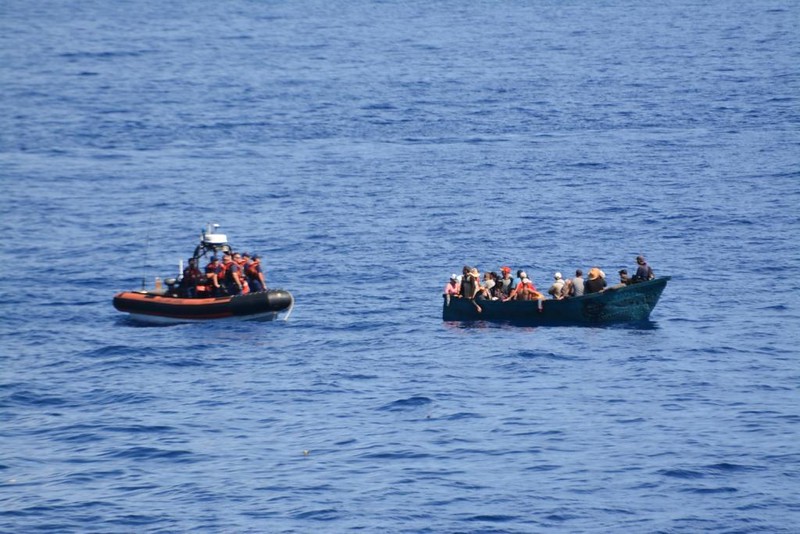
Human Trafficking in the U.K.In March 2023, the U.K. government set out to implement its new solution to the challenge of small boat Channel crossings, a route that at least 45,755 migrants used to gain entry into the country in 2022 alone. The new Illegal Migration Bill could see asylum seekers who arrive in the U.K. through this route removed from the country, potentially impacting the legal and practical support available to victims of human trafficking in the country.
Human Trafficking and Migration in the U.K.

Human trafficking is a form of modern slavery that involves the exploitation of individuals through the use of force, fraud or coercion to entrap victims into manual labor or sex work. Traffickers use various forms of violence and manipulation to entrap victims. And often, victims from vulnerable backgrounds fall for enticing promises only to find themselves facing the threat of violence once the charade is over.
As things stand, accurately quantifying rates of human trafficking is a challenge, but police records, reports and legal evidence all point to a year-on-year increase in cases of human trafficking in the U.K. In fact, estimates suggest that human trafficking was responsible for the majority of the 130,000 victims of modern slavery identified in the U.K. in 2022. In 2018, 6,993 potential victims of human trafficking, originating from 130 different countries, were identified in the U.K.
Migration and human trafficking are closely linked. And sadly, migrants are especially vulnerable to human trafficking for reasons including poverty, marginalization, language barriers and conflict. Traffickers actively prey upon vulnerable individuals, seeking out signs of economic, political and psychological hardship, as well as a lack of social support.

The Importance of Legislation

The vulnerability of migrants to human trafficking can be entrenched or alleviated by legislation. For instance, restrictive immigration laws that limit the legal movement of people into a country can force migrants to seek entry routes with higher levels of risk, including relying on smugglers and traffickers. The U.K.’s new Illegal Migration bill is an example of such legislation.
The Illegal Migration Bill stipulates stopping any migrant entering the U.K. on small boats across the English Channel from having their claim considered, constituting an effective ban on migration. Practically, this would extend to all victims of human trafficking who entered through this route. Between 2018 and 2022, 7% of migrants entering the U.K. on small boats claimed to be victims of trafficking and modern slavery.
So far, leading human trafficking organizations in the U.K. have raised concerns that the government’s plan would “needlessly block victims of trafficking and slavery from accessing safety and recovery.” Under the new legislation, victims of human trafficking who enter the U.K. through this route would be disqualified from the National Referral Mechanism, which is the only national framework in place for identifying and supporting potential victims of human trafficking.
Alongside reducing protection and support for victims, stricter immigration laws may increase the profitability of human trafficking. A reduction in legal routes through which to enter the U.K. would likely drive people to rely on traffickers. Furthermore, the illegality of all small boat Channel crossings would tighten the hold that traffickers have over their victims as they can exploit migrants’ fear of criminalization and deportation. By denying any migrants who enter in small boats the right to identify as victims of crime, this bill could increase the hold that traffickers have over victims and trap countless victims in unsafe, exploitative situations.

The Pushback

Anti-Slavery International is an organization working to combat detrimental legislation in the U.K. In 2009, it established the Anti-Trafficking Monitoring Group (ATMG), a coalition of organizations that exists to monitor the state of the U.K.’s implementation of European anti-trafficking legislation. Since its establishment, the ATMG has successfully influenced legislation such as the Modern Slavery Act, supported the introduction of an Anti-Slavery Commissioner, supported the reversal of a decision to cut down the financial support given to victims of trafficking and ensured that survivors have long-term support from the government. Even more, by amplifying the voices of victims and survivors, the ATMG has made a significant impact in the U.K. and has ensured that legislation such as the Illegal Migration Bill cannot leave all victims ignored and unrepresented.

Reducing Human Trafficking in the U.K.

Aside from a focus on the legislature, there is already a solid foundation of support for potential victims and survivors of human trafficking in the U.K. The Medaille Trust, a leading organization in the fight against human trafficking, takes a holistic approach that aims to reduce trafficking, encompassing prevention, protection and prosecution.

Prevention

The Medaille Trust emphasizes the importance of raising awareness about the risks and signs of human trafficking. Furthermore, one of its main goals is to support socioeconomic development among impoverished communities. By addressing the root causes of vulnerability to trafficking, such as poverty, the Medaille Trust empowers individuals to withstand and protect themselves against the efforts of human traffickers.

Protection

The Medaille Trust provides comprehensive support to victims and survivors of human trafficking through the provision of legal, therapeutic and financial support. Through collaboration with law enforcement agencies, the organization improves arrest rates and offers accommodation for those rescued. In the longer term, the Medaille Trust provides supported accommodation and a specialized ‘moving on’ program that focuses on the resilience and well-being of predominantly female survivors.

Prosecution

The Medaille Trust actively contributes to the prosecution of traffickers. The organization provides U.K. law enforcement agencies with monthly intelligence summaries about human trafficking, facilitates annual conferences for sharing best practices and works alongside survivors who are providing evidence to improve their chances of successful convictions. Through the work of advocacy organizations like the Medaille Trust, the U.K. has seen an increase in convictions for traffickers, a vital step toward combatting human trafficking in the U.K.

Looking Ahead

Overall, legislation plays a crucial role in determining the level of protection and support afforded to victims of human trafficking. And the proposed Illegal Migration bill presented by the British government creates risks for victims of human trafficking in the U.K. as it threatens to strip all migrants entering in small boats of their right to claim support as victims of crime and exploitation. Despite these challenges, a diverse range of international and domestic organizations advocate intently for this vulnerable group, offering support to both survivors and potential victims. Moreover, organizations such as the Medaille Trust actively foster collaboration within the U.K., creating a united front against human trafficking and mitigating the increased risks presented by legislation such as the Illegal Migration Bill.

– Polly Walton
Photo: Flickr

May 18, 2023
https://borgenproject.org/wp-content/uploads/borgen-project-logo.svg 0 0 Jennifer Philipp https://borgenproject.org/wp-content/uploads/borgen-project-logo.svg Jennifer Philipp2023-05-18 11:13:532023-06-05 16:11:24Human Trafficking in the U.K.
Human Trafficking

The Fight Against Human Trafficking in Papua New Guinea 

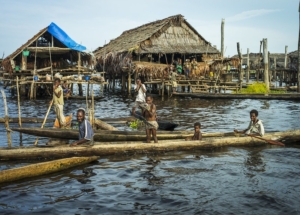
Human Trafficking in Papua New GuineaPapua New Guinea is a cluster of islands located near Indonesia with a population of 9.8 million. In 2022, the State Department classified the country as a Tier 2 nation, which indicates that while the government is making significant strides to eliminate human trafficking, it has not yet met the minimum requirements to do so. The people of Papua New Guinea are at an increased risk for human trafficking, which includes sex trafficking and forced labor. Approximately 30% of the victims of human trafficking in Papua New Guinea are under the age of 18. Typically, their families are responsible for exploiting them. Forced labor is widespread, with children forced to beg or sell goods on the streets, while young boys are armed and pushed into participating in inter-tribal conflict. Human traffickers also use Papua New Guinean children as porters and in illegal gold panning operations. Additionally, human traffickers exploit foreign citizens by using Papua New Guinea as a transit site.

Sex Trafficking and Servitude

In Papua New Guinea, young girls are frequently subjected to forced marriage or sex trafficking by their family members. Often, this happens in a bid to settle disputes between communities, repay debts or make profits. Additionally, some young women in Papua New Guinea are coerced into domestic servitude to support their families. Human traffickers lure girls and women with false promises of legal employment and exploit them in sex trafficking or servitude. Furthermore, traffickers bring foreign women into Papua New Guinea with fraudulent visas and force them into servitude and sex trafficking, particularly in mining and logging operations.
Human traffickers force both local citizens and foreign nationals into forced labor. Traffickers force men to work as miners and loggers. The fishing industry also relies on human trafficking. To gain work on fishing ships, foreign and local men are charged recruitment fees, which can escalate into a debt they are unable to pay off, leading to indefinite work in inhumane conditions. Human trafficking affects all members of the population, regardless of age or nationality, in Papua New Guinea.

Corruption and Human Trafficking

Logging and mining are two of Papua New Guinea’s primary industries. Unfortunately, many of the officials in these industries are corrupt. According to the State Department’s 2022 assessment of the nation, the rampant corruption amongst officials within the logging industry allows for human traffickers to maintain sex trafficking and forced labor at logging locations. This corruption is not limited to those in the foresting industry, as officials throughout the government permit human trafficking in Papua New Guinea. The government allows companies to push workers into forced labor in the fishing and logging industries. Also, some members of the government take bribes to allow trafficking victims into the country, and others exploit victims in order to gain political support.

Lack of Awareness

Apart from corruption, another hindrance to preventing human trafficking in Papua New Guinea is the lack of awareness and resources. Papua New Guinea’s government has engaged in no awareness campaigns to inform the public of the dangers of human trafficking and how to combat it. It has also not dedicated resources to the fight against human trafficking. There are more than 20 provinces in Papua New Guinea, and each one has only two labor inspectors. This is not enough to implement the required inspections across industries and prevent incidents of forced labor or sex trafficking. No members of the government, including diplomats, received anti-trafficking training. This lack of awareness and resources, alongside government corruption, makes fighting human trafficking in Papua New Guinea a challenging endeavor.

Efforts Against Trafficking

The International Organization for Migration (IOM), a United Nations entity, is working to stop human trafficking in Papua New Guinea. The organization has worked with local law enforcement, government agencies, NGOs and private sector partners in the country. Together, these agencies have followed the “4Ps” framework: Partnership, Prevention, Prosecution and Protection. The IOM provides direct assistance to both international and domestic victims of sex trafficking or forced labor.

Looking Ahead

>While human trafficking is an issue in Papua New Guinea, primarily due to a lack of resources and awareness, there have been ongoing efforts to combat it. With the work of organizations such as IOM, trafficking survivors are able to reunite with their families. As organizations such as IOM continue the fight, hopefully, the tide will continue to shift against human trafficking in Papua New Guinea.
– Madison Tomaso
Photo URL: https://flic.kr/p/oNeMbr

May 10, 2023
https://borgenproject.org/wp-content/uploads/borgen-project-logo.svg 0 0 Jennifer Philipp https://borgenproject.org/wp-content/uploads/borgen-project-logo.svg Jennifer Philipp2023-05-10 07:30:082026-04-16 10:21:02The Fight Against Human Trafficking in Papua New Guinea 
Global Poverty, Human Trafficking

The Fight Against Human Trafficking in Burkina Faso

Human Trafficking in Burkina Faso
Burkina Faso is a landlocked West African country with an estimated population of 22 million people as of 2021. The country identifies as a hotspot for human trafficking but the government and organizations are taking action to reduce the prevalence of human trafficking in Burkina Faso.

Leading Causes and Issues

The U.S. Department of State classifies Burkina Faso as a Tier 2 nation in its 2022 Trafficking in Persons Report. This indicates that despite not yet entirely meeting the requirements for eradicating trafficking, the Burkinabe government is putting much effort into doing so. However, the government is struggling in certain areas, such as providing services to trafficking victims and holding offenders accountable.

Social issues such as poverty, gender inequality and a lack of education contribute to the prevalence of human trafficking in Burkina Faso. In addition, Burkina Faso has a large population of vulnerable people, with more than 40% living below the poverty line. Women and girls are particularly vulnerable to trafficking for purposes of sexual exploitation and involuntary work, while children are targeted for forced labor in industries such as mining and agriculture.

In its 2022 Trafficking in Persons Report, the U.S. Department of State says that “an international organization estimates between 200,000 to 300,000 children work in artisanal mining sites, some of whom may be trafficking victims. Traffickers exploit girls in sex trafficking in Ouagadougou and in mining towns.”

The COVID-19 pandemic exacerbated poverty and heightened economic desperation, increasing the risk of people falling for the lures of traffickers. In addition, school closures exposed out-of-class children to higher risks of exploitation.

Anti-Trafficking Measures

According to the 2022 report, Burkina Faso’s government has implemented some alleviatory measures against human trafficking. For instance, “establishing child protection units in law enforcement offices throughout the country, identifying potential trafficking victims and continuing its program with Quranic teachers to prevent child forced begging.” Burkina Faso’s government also partnered with international groups and foreign donors to introduce a “humanitarian response plan to assist vulnerable people in conflict-affected areas, including potential trafficking victims.”

The government also strengthened law enforcement and judicial capacities, with Articles 511-1 to 511-5 of the penal code criminalizing sex trafficking and labor trafficking. The penalties included up to 10 years of jail time and up to 5 million West African CFA francs (FCFA) ($8,790) for offenses on victims older than 15 years. A fine of up to 10 million FCFA is applicable for offenses involving victims 15 and younger.

Terre des Hommes

In 2002, Terre des Hommes, an international children’s rights organization, committed efforts toward fighting human trafficking in Burkina Faso in relation to child trafficking and labor exploitation. At the core, the organization strives to safeguard children from exploitation and maltreatment. The organization works with the local communities in Burkina Faso to spread awareness about human trafficking risks and share tips on how to prevent the recruitment of children. The charity also offers shelter and medical care to victims of trafficking.

According to the 2020 Terre des Hommes International Federation’s annual report, the organization’s African programs successfully supported 11 countries in sub-Saharan Africa, including Burkina Faso. These programs reached more than 3.5 million children and other community members, including those at risk of trafficking and exploitation.

Burkina Faso received support in the following programs: mother and child health, migration, access to justice humanitarian aid and transversal protection. The support included providing access to education, health care and protection services alongside raising awareness about children’s rights and trafficking-related issues. These efforts reached more than 1.9 million beneficiaries.

The Bright Side

Although human trafficking remains a major issue in Burkina Faso, a number of human rights groups and programs continue working to bring it to an end. The Burkinabe government and organizations like Terre des Hommes aim to further the progress in the fight against human trafficking and safeguard the rights of the most vulnerable people.

– Lorraine Lin
Photo: Pixabay

April 21, 2023
https://borgenproject.org/wp-content/uploads/borgen-project-logo.svg 0 0 Jennifer Philipp https://borgenproject.org/wp-content/uploads/borgen-project-logo.svg Jennifer Philipp2023-04-21 01:30:412024-12-13 18:02:51The Fight Against Human Trafficking in Burkina Faso
Global Poverty, Human Trafficking

Human Trafficking in Saint Lucia

Over the past two decades, the Saint Lucian government has made notable efforts, including enacting anti-trafficking laws, to alleviate human trafficking in Saint Lucia. In the 2020 Trafficking in Persons (TIP) report by the U.S. State Department, the Eastern Caribbean country attained a Tier 2 status due to its continued efforts toward bolstering its anti-trafficking capacity. Nonetheless, the U.S. Department of State’s latest research suggests that Saint Lucia has not yet fulfilled the minimum requirements for eradicating trafficking, leading to its downgrade to a Tier 2 watchlist nation in the 2022 report.

Trafficking Profile

Sexual and labor exploitation in Saint Lucia’s human trafficking industry affects both locals and foreigners. Women commonly coerce teenage migrants and foreign victims, typically hailing from South Asia, Haiti and Jamaica, into the illicit trade. Business proprietors are frequently the culprits. Furthermore, there is a growing trend of older trafficking survivors recruiting younger victims.

Saint Lucia’s human trafficking rating, according to the Global Organized Crime Index, is four out of 5.13. The report reveals that parents and guardians frequently coerce or pressure victims into trafficking situations. Economic vulnerability is a key factor driving such exploitation, with children and rural women from low-income households at a heightened risk of succumbing to commercial sexual exploitation in exchange for goods and services.

Limitations Within the Legislation

The 2022 TIP report for Saint Lucia assesses the country’s human trafficking landscape in three domains: prosecution, prevention and protection, acknowledging the progress and shortcomings in each. For instance, the report states that the 2010 Counter-Trafficking Act, which criminalized sex trafficking in Saint Lucia, is sufficiently stringent but allows for a fine instead of imprisonment; thus, mitigating its efficiency in contrast to tackling other serious crimes.

The report also identifies the government’s failure to decrease demand for commercial sex as a concern. Saint Lucia’s government only identified “two child trafficking victims in 2019, zero victims between 2016 and 2018 and ten victims in 2015,” according to the report. The State Department also highlights inadequate legal, health and advocacy services for human trafficking victims, including shelters for trafficked individuals and weak enforcement of prevention laws. Moreover, the report notes that the COVID-19 pandemic contributed significantly to hampering the legislation’s implementation.

Ongoing Efforts

Lawmakers continue to introduce new policies against human trafficking in Saint Lucia. Some of these policies involve amendments to existing trafficking laws to further make certain that penalties are stringent or “commensurate with penalties of other serious crimes.”

Alongside these measures, the government of Saint Lucia launched a national action plan to enhance victim identification techniques, ensure rigorous investigation and conviction of traffickers and train officials in the latest procedures. Policymakers have also prioritized funding anti-trafficking prevention campaigns in their efforts to eliminate human trafficking in the country.

The International Organization for Migration (IOM), a United Nations agency, has also been helping the government in building capacity to address human trafficking in Saint Lucia. Its week-long project in 2018 included workshops to support frontline workers in the identification, referral and protection of trafficking victims. IOM’s Senior Regional Thematic Specialist Rosilyne Borland explains: “Sensitizing and training frontline partners, like health professionals, diplomatic personnel and civil society is a necessary first step to being able to find people who need help.”

There has been ongoing support from the United Nations Office on Drugs and Crime (UNODC) in Saint Lucia’s fight against human trafficking. In collaboration with the Centre of Excellence in Statistical Information on Government, Crime, Victimization and Justice (ESCoE), the UNODC is assisting the country in generating data on victimization and safety. The improved quality and availability of crime statistics are vital in understanding the trafficking phenomenon, including changes within reporting periods and victim/perpetrator patterns. It also enables the monitoring of progress and facilitates evidence-based decision-making in the country.

Looking Ahead

Despite the several and varied human trafficking issues affecting Saint Lucia, its government continues to make efforts toward alleviation. The latest projects with IOM and UNODC as well as the ongoing legislative measures are indications of several attempts to address a complicated social issue. Even amid the unanticipated COVID-19 pandemic and other national concerns, the Saint Lucian authorities continued to support victims and raise awareness about the issue. Moving forward, community work on existing action plans can potentially increase the pace and likelihood of change, while ensuring culturally relevant progress.

– Kasvi Sehgal
Photo: Pxfuel

April 20, 2023
https://borgenproject.org/wp-content/uploads/borgen-project-logo.svg 0 0 Kim Thelwell https://borgenproject.org/wp-content/uploads/borgen-project-logo.svg Kim Thelwell2023-04-20 07:30:542024-05-30 22:30:57Human Trafficking in Saint Lucia
Global Poverty, Human Trafficking

The Fight Against Human Trafficking in North Korea

Human Trafficking in North Korea
Human trafficking in North Korea is a cause of concern. According to the 2022 Trafficking in Persons report by the U.S. Department of State (DOS), North Korea does not meet the “minimum requirements for the elimination of trafficking.” North Korea ranks as a Tier 3 country in terms of efforts to end trafficking, which is the lowest rank possible.

Prison Camps

According to the  2022 TIP report, North Korea holds between 80,000 and 120,000 people in political prison camps and an “undetermined number of persons” reside in other types of confinement facilities, like re-education camps.

There are no official charges against many of these prisoners and authorities have not undertaken fair sentencing processes. All prisoners in these camps, including children, endure extreme working conditions through forced labor in areas such as mining, agriculture and logging for excessive amounts of time.

“In many cases, the government also detains all family members if one member is accused or arrested,” the report says. Children in the camps also undertake forced labor for as much as 12 hours daily and lack access to proper education. Conditions in these prisons are dire and prisoners face physical abuse, torture, hunger and inadequate medical care. The report highlights that “many prisoners do not survive.”

Child Labor in North Korea

From a tender age, North Korean children are forced into labor, including “agricultural labor support, item collection and construction work,” according to PSCORE. Children residing in prison camps, orphanages and relief shelters also engage in forced child labor.

The types of child labor typically vary according to season. In spring, children plant corn, sow seeds and collect certain beans and sunflower seeds. During summer, children must “remove grass and lay rocks to build railways,” use soil to mold bricks and collect certain nuts. Autumn’s activities involve agricultural support and collecting scrap iron and scrap paper. In winter, children work in mines and transport soil.

Agricultural Labor, Item Collection and Construction

Agricultural labor support is a term that describes compulsory farm work, such as harvesting, sowing, planting and weeding. “The government mobilizes children through the education system and sends them to local farms [that partner with schools]. Farm work is considered an essential component of the school curriculum and the work is unpaid,” PSCORE highlights.

The government also obligates students to collect specific items, such as scrap iron. Scrap iron is almost non-existent in the country yet failures to meet item quotas result in beatings and verbal abuse.

Students must also participate in building projects and performances on national holidays, such as the birthdays of the country’s leaders. Performances for Kim Il-Sung, Kim Jong-Il and Kim Jong-Un require the work of 50,000 children for six to 12 months. The children are tasked with flipping cards to create a colorful and dynamic site in honor of the leaders. The children practice the routine in extreme heat, which results in “casualties among the children.”

Students must also take part in construction products regarding “municipal infrastructure, school buildings, railroad repair and even private housing of school personnel.” The children engage in hazardous labor and, at times, “must also make or bring the materials necessary for construction at their own expense,” PSCORE says.

Forced Labor Abroad

North Korea does not only subject victims to exploitation within the country but also abroad. In 2015, the government had more than 50,000 citizens working abroad in Russia, China, Africa and the Middle East. The purpose of these workers is to earn money overseas to counteract the international sanctions countries impose on North Korea. The North Koreans abroad work for as many as 10 to 12 hours, six days a week. The government takes a bulk of their pay, 90%, which garners around $1.2 billion to $2.3 billion a year for North Korea, Reuters reported in 2016.

Help for North Koreans

Liberty in North Korea is an organization that provides support to North Koreans seeking refuge in other countries, such as South Korea. It also provides help to victims of human trafficking. The organization’s website tells the story of Joy. Via a broker, Joy left North Korea in search of a better life in China. The broker turned out to be a trafficker who sold her as a bride for $3,000. After some years, Joy safely made it to South Korea in 2013 with the help of Liberty in North Korea. Joy is currently studying social work and endeavors to help other North Korean women in situations of trafficking.

Though limited efforts are underway to address human trafficking in North Korea, the work of organizations like Liberty in North Korea is making a difference. By advocating and mobilizing to end human trafficking in North Korea, organizations can uphold the rights of North Koreans.

– David Keenan
Photo: Unsplash

April 18, 2023
https://borgenproject.org/wp-content/uploads/borgen-project-logo.svg 0 0 Kim Thelwell https://borgenproject.org/wp-content/uploads/borgen-project-logo.svg Kim Thelwell2023-04-18 01:30:422023-04-17 04:44:26The Fight Against Human Trafficking in North Korea
Global Poverty, Human Trafficking

Human Trafficking in Côte d’Ivoire

Human Trafficking in Côte d’Ivoire
Human trafficking refers to the “recruitment, transportation, transfer, harboring or receipt of people through force, fraud, coercion or deception, with the aim of exploiting them for profit,” according to Anti-Slavery International. According to the U.S. Department of State, Côte d’Ivoire, a country situated on the southern coast of West Africa, ranks as a Tier 2 country, meaning it “does not fully meet the minimum standards for the elimination of trafficking but is making significant efforts to do so” as set out in the Trafficking Victims Protection Act or TVPA. However, Côte d’Ivoire has made progress over the years, upgrading to Tier 2 in the 2017 Trafficking in Persons (TIP) report.

The country initially ranked as a Tier 2 Watch List country, which encompasses countries that are making an effort to comply with the TVPA’s minimum standards but fail to provide evidence of this and note an increasing number of victims. Through continued efforts, human trafficking in Côte d’Ivoire can significantly improve.

The Current State of Human Trafficking in Côte d’Ivoire

According to the TIP 2022 report, the Côte d’Ivoire government has developed “a draft national referral mechanism (NRM) and provided anti-trafficking training to law enforcement and judicial officials.” Paule Marlène Dogbo, the director of the cabinet of the Ministry of Solidarity and the Fight against Poverty, says the new referral mechanism will allow the Ivory Coast to move up to Tier 1 by conforming to the TVPA.

The government also coordinated the creation of a National Committee for the Fight against Trafficking in Persons (CNTLP), with an inauguration for its headquarters held in October 2022 in Cocody-Angré.

According to the 2022 TIP report, the Ivorian government identified 1,190 trafficking victims, in contrast to the identification of 302 trafficking victims the year prior. Children accounted for most victims. Additionally, out of the total number of victims, sex trafficking victims equaled 437 people and forced labor victims amounted to 753 people.

Despite these positive efforts, the country does not fully meet the TVPA’s minimum standards. Although convictions of traffickers are on the rise (43 convicted compared to 12 in the previous report), Côte d’Ivoire “did not report any investigations, prosecutions or convictions of government officials complicit in human trafficking crimes,” the TIP report says. This is an issue as corruption prevents the proper enforcement of the law. Some individuals have alleged that officers situated on the border take bribes to facilitate the passage of trafficking victims in Ghana and Mali.

“Law enforcement lacked the specialized training and resources to investigate trafficking cases and identify victims,” the report highlights. Furthermore, the CNLTP, which stands as the body for leading anti-trafficking efforts, “did not meet or coordinate anti-trafficking activities and the government did not allocate a dedicated budget for the CNLTP’s operations” for the third year in a row. Additionally, “shelter and services, especially for adult victims, remained inadequate,” the report says.

Action to Address Child Labor and Child Trafficking

In terms of child labor in general and child labor arising from trafficking, Côte d’Ivoire has made significant progress. Côte d’Ivoire is the main producer of cocoa on the international market, representing 45% of all production. Unfortunately, the cocoa agricultural sector relies on child labor to achieve high levels of production.

Because of domestic and international pressure, the Ivorian government took action and passed several laws to prevent child trafficking. For example, in 2010, it passed the prohibition of child trafficking and the worst forms of child labor laws, the Guardian reports.

The Ivorian government made school attendance both free and mandatory for children between 6 and 16, which relieved some of the burdens on parents that had no choice but to send their children off to work as they could not afford school. School attendance in cocoa-producing regions increased from 58% to 80% from 2008 to 2019.

To combat human trafficking in Côte d’Ivoire, in 2020, the government also established six police units dedicated to reducing child labor and trafficking. The units patrol the cocoa plantations and randomly search vehicles in cocoa-growing regions. According to the government, in total, authorities have arrested more than 1,000 traffickers since 2012.

The Centre for Victims of Child Labor opened its doors in 2018 and aims to reunite children with their families, whether abroad or locally, and get the children back into the education system. Because of the trauma children have faced, a nurse and psychologist from part of the organization’s staff.

Finally, in 2021, for the first time, an Ivorian court sentenced 10 people found guilty of child trafficking in cocoa plantations to 10 years in jail.

Looking Ahead

Although improvements are visible, increased funding and resources will help strengthen anti-trafficking efforts in the country. With continued positive efforts and adequate reporting, Côte d’Ivoire can move closer to its goal of ranking as a fully compliant Tier 1 country.

– Raphaelle Copin
Photo: Flickr

March 21, 2023
https://borgenproject.org/wp-content/uploads/borgen-project-logo.svg 0 0 Kim Thelwell https://borgenproject.org/wp-content/uploads/borgen-project-logo.svg Kim Thelwell2023-03-21 07:30:022023-03-20 10:32:10Human Trafficking in Côte d’Ivoire
Global Poverty, Human Trafficking

Human Trafficking in Tonga 

Human Trafficking in Tonga
Despite its effort to develop legislation and procedures to combat human trafficking, Tonga has remained in the U.S. State Department’s Trafficking in Persons (TIP) Watchlist report for a second consecutive year. In 2019, the State Department reported that the government of Tonga was taking strides toward its human trafficking problem by funding an NGO that aims to assist victims of trafficking. Tonga’s government shifted focus away from human trafficking due to the COVID-19 pandemic, as well as a destructive volcanic eruption and tsunami last year. Since the 2020 TIP report, the country has not shown an increased effort to prosecute traffickers and preventive measures. The 2021 report downgraded Tonga from a Tier 2 country to a Tier 2 watchlist country, where it remained in the 2022 TIP report.

Labor and Sex Trafficking

Tongans, both local and abroad, are vulnerable to labor trafficking. Domestic labor trafficking is rising in many countries globally, Tonga included, as a product of globalization. Low-income Tongan women and children are vulnerable to forced labor within domestic work while a significant portion of Tonga’s domestic labor force is from overseas.

The 2022 TIP report specifically mentions women from the People’s Republic of China that have relocated to Tonga for domestic work. A common technique used to lure women and young people into human trafficking in Tonga is through false job opportunities.

Families may send their children to cities or abroad due to insufficient local opportunities. Hoping to make money for their families, people may apply for jobs that they believe to be legitimate before instead becoming victims of trafficking. Children may then become forced into prostitution or employed by corrupt employers who pay them little, house them in unsafe environments and make it difficult for them to quit.

With a pull of education and work opportunities, Tongans primarily immigrate to New Zealand, Australia and the United States. The 2022 TIP report mentions that it is common for Tongan citizens to work seasonal jobs in neighboring countries of New Zealand and Australia. Some employers abroad exploit the language barrier and high competition for employment by rushing workers to sign employment contracts before they can adequately understand what they are agreeing to.

Limitations With Trafficking Legislation

Tonga’s 2013 Counter Terrorism and Transnational Organised Crime Act showed initiative toward tackling human trafficking but had many limitations. Both the U.N.’s and the U.S.’s definitions of human trafficking emphasize trafficking as exploitation through means of “force, fraud, or coercion;” Tonga’s definition of human trafficking does not. Excluding those three means limits what defines human trafficking, who are its victims and who gets prosecuted. Tonga’s definition also limits trafficking to cross national borders, while the U.N. and U.S. do not.

Recent efforts have shown little persistence. Since convicting the country’s first trafficker in April 2011, Tonga has not prosecuted or convicted any others. In 2015, the government identified four potential trafficking victims but has not reported any since. The State Department credits this to a lack of formal identification procedures as well as a general distrust in the Tongan government on the part of the citizens.

Refocusing on the Issue 

With the pandemic, the Hunga Tonga-Hunga Ha’apai volcanic eruption and the resulting tsunami in January 2022, the government has veered its focus elsewhere. Tackling other issues have pushed human trafficking combative efforts to the sidelines. However, other countries and global organizations are reaching out with help to address human trafficking in Tonga.

In July 2022, the United State Agency for International Development (USAID) teamed up with The Asia Foundation to begin a five-year project aimed at combating human trafficking in Tonga as well as three other Pacific countries. The program is called the Pacific Regional Initiative and Support for More Effective Counter-Trafficking in Persons, or Pacific RISE-CTIP.

The Asia Foundation is a philanthropic, international nonprofit focused on improving lives across Asia. Specifically, the partnership aims at reducing human trafficking in Tonga, Fiji, Papua New Guinea and the Marshall Islands by reducing vulnerabilities to trafficking, focusing on victim support and establishing legal aid for victims and against perpetrators.

Its approach focuses on getting government actors and private institutions in Pacific Island countries (PICs) involved with the issue. Since the project spans only five years, the aim is to boost existing local institutions that focus on exposing trafficking and helping victims. The hope is that, when the program ends, the systems will have steady ground to continue their initiatives.

Since the arts are significant in Tongan culture, The Asia Foundation uses creativity to communicate its ideas. Several initiatives are currently underway. By teaming up with local painters, photographers, choreographers and poets, The Asia Foundation is using creative outlets to promote the issue and ensure communities and local systems are the sources of change in the PICs.

Looking Ahead

Instead of bulldozing existing Tongan efforts to expose trafficking, the hope is that building community support will increase the likelihood of permanent change. Tonga faces unique vulnerabilities to trafficking, which require unique solutions. Strengthening community leadership and promoting awareness addresses the issue of human trafficking in Tonga in a transformative and culturally significant way specific to the country.

– Maya Steele
Photo: Flickr

March 12, 2023
https://borgenproject.org/wp-content/uploads/borgen-project-logo.svg 0 0 Jennifer Philipp https://borgenproject.org/wp-content/uploads/borgen-project-logo.svg Jennifer Philipp2023-03-12 07:30:532024-05-30 22:30:51Human Trafficking in Tonga 
Global Poverty, Human Trafficking

Facts About Human Trafficking in Suriname

Human Trafficking in Suriname
Located on the northeastern coast of South America, Suriname is the least populated country on the continent. The Globalized Crime Index lists Suriname as both a “waypoint and destination market” for human trafficking. The U.S. Department of State’s 2022 Trafficking in Persons Report gave Suriname a Tier 2 grade for its current standard of trafficking elimination efforts. This means that it does not meet the minimum expectations for the eradication of human trafficking. While many have acknowledges its attempts, further anti-trafficking action is necessary.

4 Facts About Human Trafficking in Suriname

  1. The Victims: Most victims of human trafficking in Suriname are migrants. Traffickers ship them from the Caribbean and transport them across the border from the poor, northern regions of neighboring Brazil or from Venezuela. Venezuela is a hotbed for trafficking due to its poor track record for prosecuting the offense. Once inside Suriname, victims end up in the capital where traffickers sell them to club owners who provide them with food and lodging in return for forced labor and prostitution.
  2. Gold Mining: About 90% of Suriname’s 620,000 population live in the capital, Paramaribo or on its coast. With just more than three people per square kilometer, Suriname is the seventh least densely populated country in the world. Moreover, with the thick cover of its unchartered jungle, Suriname’s rainforests is the optimum habitat for inconspicuous and illegal mining operations. Many victims of human trafficking in Suriname end up working in these mines with little to no pay. Furthermore, these mines have serious environmental consequences. Deforestation to clear land for illegal operations threatens indigenous populations. The use of mercury in gold mining pollutes rivers and contaminates fish which are a vital food source for many impoverished communities.
  3. Women and Girls: Reports show that those at the highest risk of being trafficked are young women and girls for sex work. This includes brothels and massage parlors in Paramaribo, which has an active sex tourism industry. There are also mining camps located deep within the rainforest where the possibility of escape from captors is even more unlikely due to the isolation of these secret locations.
  4. Legality: Prison sentences for traffickers have recently increased. The new laws mean sentences range between 9-12 years depending on the age of the victims. Suriname has also introduced a new fine of 100,000 Surinamese dollars ($5,120). Despite these government efforts to reduce human trafficking in Suriname, reports state that there were no convictions for trafficking in 2021 or 2020, compared with 18 in 2019 and seven in 2018.

The Future of Human Trafficking in Suriname

Ultimately, the issue of human trafficking in Suriname is difficult to precisely quantify, owing to the lack of data and the inherent corruption. There also surrounds the underground world of people trafficking and its clandestine practices. Many migrants do not have any documentation which makes it easier for traffickers to move people around like possessions. However, following Suriname’s uncontested election in 2020, its new president, Chan Santokhi promised to reform the judicial system. The enormity of this task amid such entrenched government corruption is evident.

Yet, Santokhi has pledged to tackle the issue head-on. He aims to strengthen the country’s judiciary by “granting it its own budget, improving prosecution services and appointing special prosecutors to focus on high-level corruption cases,” according to the Organised Crime Index. Within 6 months of taking office, Santokhi appointed 12 High Court judges and 15 prosecutors to the Attorney General’s office. As of November 2022, Santokhi announced his intentions to create an Anti-Corruption Commission with the purpose of monitoring the assets of more than 4,000 of Suriname’s top political officials. These pragmatic efforts demonstrate his genuine desire to make real changes in Suriname and create a brighter future for its inhabitants.

– Max Edmund
Photo: Flickr

March 4, 2023
https://borgenproject.org/wp-content/uploads/borgen-project-logo.svg 0 0 Naida Jahic https://borgenproject.org/wp-content/uploads/borgen-project-logo.svg Naida Jahic2023-03-04 07:30:172023-03-02 15:32:39Facts About Human Trafficking in Suriname
Page 3 of 31‹12345›»

Get Smarter

  • Global Poverty 101
  • Global Poverty… The Good News
  • Global Poverty & U.S. Jobs
  • Global Poverty and National Security
  • Innovative Solutions to Poverty
  • Global Poverty & Aid FAQ’s
Search Search

Take Action

  • Call Congress
  • Email Congress
  • Donate
  • 30 Ways to Help
  • Volunteer Ops
  • Internships
  • Courses & Certificates
  • The Podcast
Borgen Project

“The Borgen Project is an incredible nonprofit organization that is addressing poverty and hunger and working towards ending them.”

-The Huffington Post

Inside The Borgen Project

  • Contact
  • About
  • Financials
  • President
  • Board of Directors
  • Board of Advisors

International Links

  • UK Email Parliament
  • UK Donate
  • Canada Email Parliament

Get Smarter

  • Global Poverty 101
  • Global Poverty… The Good News
  • Global Poverty & U.S. Jobs
  • Global Poverty and National Security
  • Innovative Solutions to Poverty
  • Global Poverty & Aid FAQ’s

Ways to Help

  • Call Congress
  • Email Congress
  • Donate
  • 30 Ways to Help
  • Volunteer Ops
  • Internships
  • Courses & Certificates
  • The Podcast
Scroll to top Scroll to top Scroll to top