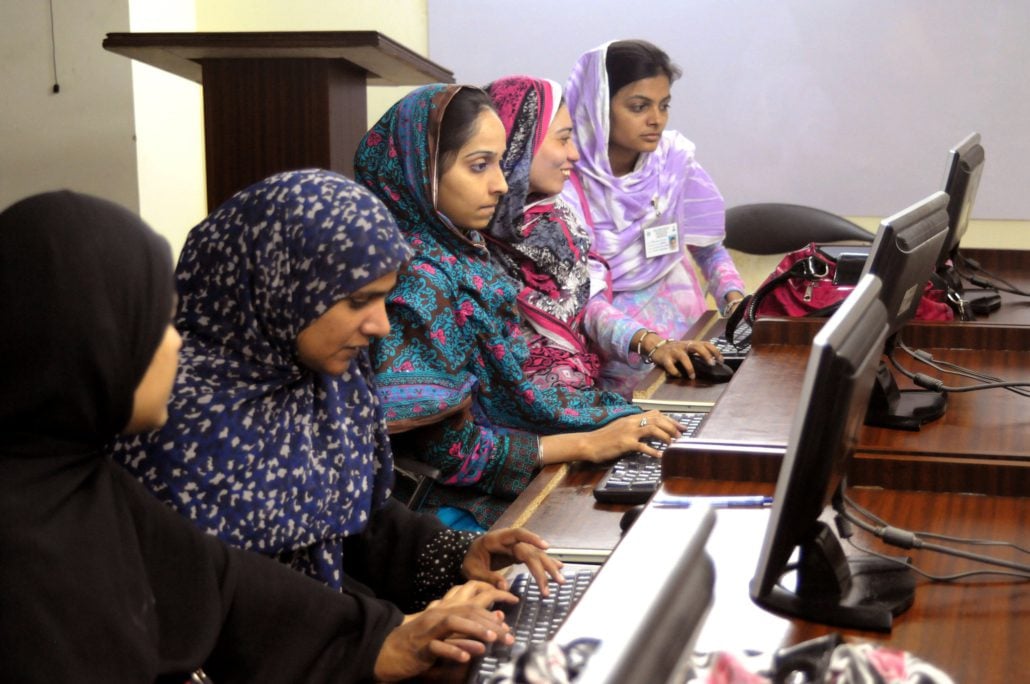
 For many young Pakistanis, moving from education to employment can be difficult. Nearly 67% of Pakistan’s population is under age 30, creating both an opportunity for economic growth and a need for more education, skills and employment pathways.
An estimated 32 million young people in Pakistan are not in education, employment or training, according to UNICEF Pakistan. The organization has emphasized the need to expand pathways from learning to earning, particularly for girls and young people from underserved communities.
The World Bank has also highlighted the need for Pakistan to expand jobs and economic opportunities, particularly for women and young people, as the country works to reduce poverty and improve livelihoods.
A Digital Solution for Young Job Seekers
The Digital Youth Hub (DYH) is Pakistan’s national digital youth platform developed under the Prime Minister’s Youth Programme. The platform brings together opportunities related to education, employment, engagement and the environment.
Young people can use the platform to explore jobs, scholarships, internships, training programs, career guidance and entrepreneurship opportunities. The government describes it as a centralized digital platform designed to connect young people with opportunities based on their skills and interests.
The Digital Youth Hub also supports initiatives under PMYP, including the Prime Minister’s Youth Business and Agriculture Loans, Youth Skill Development Programme and Youth Laptop Scheme.
A Growing Network of Opportunities
The Digital Youth Hub has expanded its reach since its launch. As of June 23, 2026, the platform reported 800,240 registered users, partnerships with 3,163 organizations and 114,783 listed opportunities.
Of those opportunities, 114,374 were employment opportunities, 292 were related to education, 38 to engagement and 79 to the environment.
These figures demonstrate the scale of the platform and the number of opportunities available through it. However, registrations and listings do not mean that users have secured jobs or that the listed positions have been filled.
The platform also uses AI-powered tools to provide personalized recommendations for jobs, scholarships, internships, skills development programs, volunteer initiatives and climate-related projects, according to Pakistan’s Press Information Department. The government presents these tools as a way to help users find opportunities that correspond with their profiles.
Connecting Young People With Employers
The Digital Youth Hub aims to connect young people with organizations offering employment, internships, training and other opportunities. Users can create profiles containing information about their qualifications, skills and interests.
Officials have also described the platform as a way to connect Pakistani workers with international opportunities. When the platform was introduced, officials said it was intended to provide access to opportunities in countries such as Saudi Arabia, the United Arab Emirates, Japan, South Korea, Canada and the United States.
These international opportunities are an intended function of the platform, rather than evidence of overseas employment placements. No current figures in the cited sources establish how many users have obtained jobs through the platform internationally.
Partnerships Can Expand Access
A digital employment platform depends on organizations providing genuine opportunities. The government has encouraged educational institutions, private-sector organizations, development partners and other stakeholders to participate in the Digital Youth Hub.
The wider youth-employment effort also includes Pur Azm Pakistan, a separate initiative launched in June 2026 by the Government of Pakistan through the Prime Minister’s Youth Programme in partnership with UNICEF and Generation Unlimited.
Pur Azm Pakistan focuses on expanding access to skills, employment, entrepreneurship and economic opportunities. Its Friends of GenU Pakistan initiative brings businesses together to support skills development, entrepreneurship, innovation and work-based learning.
Keeping these initiatives connected but distinct can help strengthen pathways from education and training to employment.
Access is Only the First Step
The Digital Youth Hub may make it easier for young people to find information about jobs, education and training, particularly for those who have limited professional networks.
However, digital access itself can be a barrier. An online platform can only help people who have the internet access, digital skills and ability to use the available services. In addition, having access to a job listing does not guarantee employment.
Pakistan’s National Youth Employment Policy, which the government discussed in August 2026, identifies 32.4 million young people who are not in employment, education or training and seeks to align young people’s skills with labor-market needs.
Making Employment Opportunities Easier to Find
The Digital Youth Hub addresses one part of Pakistan’s youth-employment challenge: access to information about opportunities.
With more than 800,000 registered users, more than 3,000 partner organizations and more than 114,000 listed opportunities reported in June 2026, the platform has established a significant digital network. However, these figures measure platform use and available opportunities, not employment outcomes.
Its longer-term contribution will depend on the availability of genuine jobs and training opportunities, participation from employers, digital accessibility and whether young people can successfully move from finding opportunities to securing employment.
The Digital Youth Hub could therefore improve access to employment pathways for young Pakistanis, but its contribution to employment and poverty reduction will need to be measured through outcomes beyond registrations and job listings.
– Afia Atif
Afia is based in Chenab Nagar, Pakistan and focuses on Technology and Solutions for The Borgen Project.
Photo: Flickr
 Over the past few years, Oman has restructured much of its social safety net to protect citizens from financial shocks throughout their lives. The government began a major review and reform of national social protection in 2020. These changes to
  Over the last three decades, Vietnam has become one of the world’s leading poverty reduction stories. Between 2010 and 2020, the
  Before the sun rises, a woman in Western Kenya is likely already carrying water to her household. By the time everyone else wakes up, she has spent hours
  In 2021, Uzbekistan, with assistance from the World Bank, set out an ambitious goal: to halve poverty by 2026. The
  Poverty deeply impacted Pope Francis from his childhood in Argentina and continued to shape his outlook throughout his life as
  For millions of factory workers in Vietnam’s industrial zones, the dream of a stable, safe home has been out of reach. Nhà Ở Xã Hội, Vietnam’s sweeping new social housing program, is changing that.
 Despite recent economic growth, poverty remains a challenge in Kyrgyzstan, with