Vietnam’s Social Housing Program
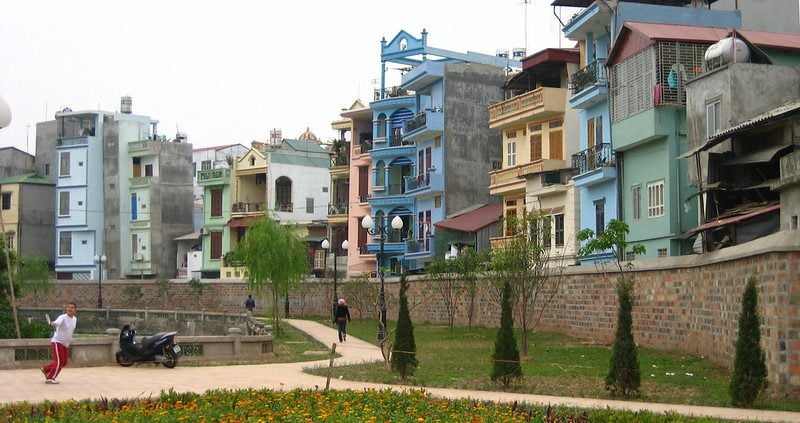 For millions of factory workers in Vietnam’s industrial zones, the dream of a stable, safe home has been out of reach. Nhà Ở Xã Hội, Vietnam’s sweeping new social housing program, is changing that.
The Housing Gap Squeezing Vietnam’s Workers
Vietnam’s economic growth over the last two decades has been incredible, yet workers who power that growth face a painful trade-off. Home prices in major cities like Ho Chi Minh City and Hanoi have risen 5.6% in the last year, with apartments averaging 80 million Vietnamese dong (VND), or about $3,028, per square meter. An average Vietnamese worker earns roughly 98.4 million VND annually, meaning an apartment can cost more than an entire year’s wages per square meter.
The burden falls hardest on the country’s industrial workforce. According to a National Statistics Office survey, nearly 70% of industrial zone workers currently live in substandard, unsafe rental accommodations. More than half live in temporary housing or on-site at factories, with 18.4% having less than six square meters of personal living space — about the size of a parking spot.
That strain persists even as Vietnam has made rapid progress against poverty nationally: 1.3% of the population lived below the national poverty line in 2025, down from 4.4% in 2021, according to the Asian Development Bank. Housing costs, rather than income alone, are now one of the sharpest financial pressures facing low-wage industrial workers, whose earnings have not kept pace with urban housing prices.
The 1 Million-Unit Solution
In response, the Vietnamese government launched Nhà Ở Xã Hội, one of Southeast Asia’s most ambitious housing initiatives. The plan aims to build more than 1 million social housing units between 2021 and 2030, specifically targeting industrial workers, low-income families and urban youth priced out of the commercial market.
The program offers heavily subsidized purchase prices and favorable loan terms, and has progressively expanded who qualifies. In April 2026, Ho Chi Minh City raised its income ceiling for eligibility to 25 million VND per month, meaning more workers can now access the program.
Momentum has accelerated dramatically. In 2025, Vietnam completed 102,633 social housing units across the country, exceeding its annual target by 2% and marking the highest single-year total since the program began. Ho Chi Minh City alone completed 14 projects totaling 13,040 apartments, hitting 100% of its local target.
Nationally, 698 projects are now underway covering more than 657,000 units in total, putting the program at roughly 62% of its overall 2030 target. Officials now believe the one-million-unit target could be reached two years ahead of schedule.
What It Means for Families
While the numbers tell one story, lived experience tells another. For workers commuting long distances from cramped rented rooms near industrial zones, access to a stable, affordable unit close to employment can mean lower transportation costs, better sleep, improved productivity and the ability to begin building savings for the first time. Ho Chi Minh City’s Social Policy Bank has extended housing loans totaling 1,570 billion VND to 2,205 borrowers as of March 2026, a 10.3% increase from the end of 2025, reflecting growing uptake as units become available and eligibility expands.
The government has also adjusted land use fee regulations to prevent commercial developers from pricing units beyond affordability. Additional preferential credit for social housing developers is also being introduced to keep construction moving.
Looking Ahead
Vietnam’s social housing program is far from finished, and challenges remain. Developers have flagged difficulties accessing preferential credit at certain stages of construction, and building at scale requires continued policy support and investment. For the 2026-2030 period, Ho Chi Minh City alone is targeting 181,257 units — a significant scale-up from prior years.
But the trajectory is clear. What began as an aspirational pledge is becoming infrastructure that real families can move into. For Vietnam’s industrial workers — the people assembling goods sold worldwide — the slow, quiet work of building stable homes is one of the most consequential poverty-reduction efforts in the region today.
– Saakshi Bhat
Saakshi is based in San Marcos, CA, USA and focuses on Global Health and Politics for The Borgen Project.
Photo: Flickr
