• Link to X
  • Link to Facebook
  • Link to Instagram
  • Link to TikTok
  • Link to Youtube
  • About
    • About Us
      • President
      • Board of Directors
      • Board of Advisors
      • Financials
      • Our Methodology
      • Success Tracker
      • Contact
  • Act Now
    • 30 Ways to Help
      • Email Congress
      • Call Congress
      • Volunteer
      • Courses & Certificates
      • Be a Donor
    • Internships
      • In-Office Internships
      • Remote Internships
    • Legislation
      • Politics 101
  • The Blog
  • The Podcast
  • Magazine
  • Donate
  • Click to open the search input field Click to open the search input field Search
  • Menu Menu

Archive for category: Global Poverty

Key articles and information on global poverty.

Global Poverty, United Nations

Senators Urge for Increased Aid to Yemen

Relief for YemenRelief for Yemen has long been a goal of humanitarian politicians and activists. A bipartisan letter, signed by four U.S. senators, urges the Biden administration to allocate more federal funding for aid to Yemen.

The Letter of Appeal

Two Republican senators and two Democratic senators signed a letter appealing for more U.S. aid to Yemen. On May 4, 2021, Senators Jerry Moran (R-KS), Todd Young (R-IN), Chris Murphy (D-CT) and Jeanne Shaheen (D-NH) signed the open letter together in an act of humanitarian bipartisanship. The senators voiced their concern about the international community failing to reach previously established relief goals “after a recent United Nations fundraising appeal for the war-torn country fell short.”

In March 2021, international donors raised $1.35 billion in humanitarian aid for Yemen, falling short of the United Nations’ target goal of $3.85 billion, the estimated amount required for a comprehensive humanitarian response. As one of the most powerful countries in the world, the U.S. pledged only $19 million, much less than Oxfam’s recommended $1.2 billion.

All the while, close to “50,000 people in Yemen are living in famine-like conditions” and the conflict threatens to plummet another five million people into similar conditions. The conflict itself has already claimed tens of thousands of civilian lives. The humanitarian crisis and poverty brought on by the conflict have compromised the food security of more than 20 million people, accounting for two-thirds of Yemen’s population. The United Nations warns that “400,000 Yemeni children under the age of 5 could die from acute malnutrition” without swift humanitarian action.

Efforts to End the Crisis in Yemen

The open letter came around the same times as renewed calls for a ceasefire from the international community. Senator Murphy was in Yemen when the letter was released, joining Tim Lenderking, the U.S. special envoy for Yemen, as well as diplomats from Europe, with the hopes of brokering a ceasefire between Houthi rebel factions and the Saudi-led military coalition. Participants in the meeting demand an end to war crimes actively committed by both sides. The Biden administration has backed away from weapons sales in an effort to mitigate the conditions. But, the conflict and subsequent crises continue, requiring increased aid to Yemen.

UNICEF and the UN Assist

One of the priorities of UNICEF’s efforts in Yemen is to treat cases of acute malnutrition in children and assist children whose lives have been overturned by the continuous military conflict. Efforts range from facilitating access to therapeutic foods and educating children about the dangers of explosives scattered throughout the country. UNICEF is also restoring damaged schools in an effort to develop secure spaces for children to continue learning.

At a time of resurgent violence coupled with the COVID-19 pandemic, foreign aid groups have stepped up relief measures in anticipation of increased demand for food. In one particular hotspot, within the Ma’rib Governorate, the intensification of military conflict has displaced at least 2,871 families. The U.N. Regional Coordination Team for Ma’rib aims to assist about 200,000 people in the area. Sanitation, nutrition and shelter remain top priories for these efforts.

Despite the scale of the crisis, international aid groups remain determined to provide relief. Senators, leaders and foreign diplomats are continuing efforts to broker a peace deal. The severity of the humanitarian crisis in Yemen requires broader support from the global community in order to upscale efforts and comprehensively provide aid to Yemen.

– Jack Thayer
Photo: Flickr

May 15, 2021
https://borgenproject.org/wp-content/uploads/borgen-project-logo.svg 0 0 Kim Thelwell https://borgenproject.org/wp-content/uploads/borgen-project-logo.svg Kim Thelwell2021-05-15 01:30:202024-05-30 22:23:33Senators Urge for Increased Aid to Yemen
Global Poverty

Solar Power to Boost Electricity Access in the Sahel

Electricity Access in the SahelOn March 11, 2021, the World Bank approved $22.5 million of funding for the Regional Off-Grid Electricity Access Project (ROGEAP) in the Sahel region of Africa. This region is one of the most impoverished areas in the world and few residents have access to electricity. However, the funding expects to increase electricity access in the Sahel by turning to a new source of energy — solar power.

Electricity Access in Sahel Region

The Sahel region stretches across the Sahara desert and includes the countries of Ghana, Mali, Burkina Faso, Niger and Chad, among others. Besides having arid climates, the common denominator for countries in the Sahel region is poverty. None of the countries mentioned above have a GDP per capita of more than $3,000, and with this lack of capital, comes a lack of electricity access. Furthermore, approximately 50% of the 340 million people living in the Sahel region do not have access to electricity, representing one of the lowest modern electricity consumption rates for any region on Earth. Insufficient generation, high petroleum prices and lack of financing for large electricity grids have all contributed to the area’s low connectivity.

This lack of electricity access in the Sahel has had destructive physical and economic effects on regional residents. Several public health centers lack sufficient energy generation, which puts the lives of patients requiring electricity for survival at great risk. Furthermore, rural areas of the Sahel often lack any electricity, forcing residents to use firewood in traditional stoves for cooking, which has led to adverse health effects from smoke inhalation and the dangers of cutting trees for fuel. Even if the electrical grid reaches some rural areas, most families cannot afford the cost. Many countries in the region currently generate more than 90% of their energy from expensive diesel or heavy fuel, which results in high energy costs for both the urban and rural impoverished. Without any policy changes, energy poverty will continue to ravage the Sahel region for the foreseeable future.

Turning to Solar Power Solutions

Thankfully, solar power presents an exciting new possibility for expanding electricity access in the Sahel. Experts see the Sahel as an area with massive solar potential, as many people living there, especially those in rural communities, have access to vast areas of flat land needed for solar panels. Furthermore, off-grid (individually owned) solar power systems present the lowest-cost energy option for 65% of the rural population in the Sahel region. Off-grid power sources are already becoming regional hallmarks as many residents live a significant distance from the power grid. According to the International Energy Agency, about 70% of Africa’s new rural power will come from off-grid power sources by 2040.

Seeing this potential, the World Bank increased funding for the Regional Off-Grid Electricity Access Project (ROGEAP) by $22.5 million. Grants from the International Development Association and the Clean Technology Fund have made this funding possible. The main goal of ROGEAP is to support the development of stand-alone (off-grid) solar products and the advancement of the solar market in a unified effort to boost electricity access in the Sahel. This project will assist in accelerating the deployment of stand-alone solar products, provide credits and grants for off-grid solar home systems and coordinate policies and standards to develop a prosperous regional solar market.

How ROGEAP Will Help

  1. It will provide electricity for public health centers and schools, which will, in turn, improve health and education in the region. The projected increase in the standard of living will likely lead to more people being able to secure well-paying jobs to support themselves and their families.
  2. It will create jobs within the blossoming solar market for people of all skill levels. Transitioning to solar power creates the need for jobs in installation, transportation and infrastructure industries. Additionally, entrepreneurial ventures in solar power will likely sprout from the new funding.
  3. It will improve the output and ease of production for many different jobs. For example, farming communities can use solar water pumps for easier irrigation and milling communities can use new solar milling equipment for more efficient production.

Lighting the Way Forward

By supporting the advancement of stand-alone solar products, ROGEAP aims to enhance electricity access in the Sahel for more than a million residents. The project will increase the use of solar power across the region and subsequently provide electricity for homes, schools, hospitals, farms and small businesses that previously lacked connection. The new funding will likely have a positive impact on health, education and employment in the region for decades to come. If the World Bank and other international agencies hope to continue this endeavor of expanding electricity access in developing regions of the world, projects supporting stand-alone solar power sources like ROGEAP seem to be a winning solution.

– Calvin Melloh
Photo: Flickr

May 14, 2021
https://borgenproject.org/wp-content/uploads/borgen-project-logo.svg 0 0 Kim Thelwell https://borgenproject.org/wp-content/uploads/borgen-project-logo.svg Kim Thelwell2021-05-14 07:30:272021-05-12 01:49:27Solar Power to Boost Electricity Access in the Sahel
Developing Countries, Development, Global Poverty

4 Things to Know About Nigerian Infrastructure

Nigerian InfrastructureNigeria is located in West Africa and shares a border with Niger to the north and the Atlantic Ocean to the south. The hundreds of different languages spoken in the country characterize its diverse population. The country benefits from a relatively large population and economy but it still has a high poverty rate. Reducing the poverty rate will require better Nigerian infrastructure that will expand the economy to reach the countries rural population.

4 Facts About Nigerian Infrastructure

  1. A public-private partnership is the core strategy. The government has acknowledged the importance of private sector help to reduce the infrastructure deficit which has been a thorn in the side of an economy that shows immense potential. The Nigerian vice president, Yemi Osinbajo, clearly outlined what the government believes the role of the private sector should be as it pertains to improving Nigerian infrastructure. He pointed out that the private sector, which accounts for 92% of the country’s GDP compared to the public sector accounting for a mere 8% of the GDP, shows the limits of public expenditures and budgetary allocations. Osinbajo says it could require $3 trillion over 30 years in infrastructure investment to resolve the infrastructure deficit. Osinbajo included that the country would see a lot of benefit from large investments from the private sector whether it be from local or foreign resources.
  2. The president is promoting private investment in infrastructure. President Muhammadu Buhari of Nigeria recently approved the creation of a new development firm called Infra-Co, which will be backed by an infrastructure fund worth $2.63 billion. The hope is to improve the transportation and power networks that have held back the 40% of Nigerians living below the poverty line — a staggering number for a country that boasts the biggest economy and population in Africa. It has been reported that KPMG will serve as the transactional advisor to the fund which further legitimizes the government’s plan to boost Nigerian infrastructure through partnership with the private sector.
  3. Nigeria is investing heavily in railway construction. The construction of the Lagos-Ibadan rail created history in West Africa as being the first double-track standard gauge rail in the region. The Lagos-Calabar railway is another large project costing $11 billion and running 1,400 kilometers long, which connects the western and eastern parts of the country.
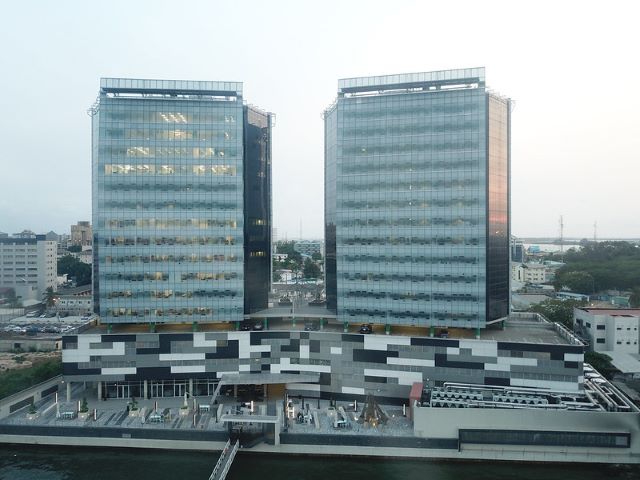
  4. Other key infrastructure projects. Other infrastructure projects in Nigeria include the World Trade Centre, the Lekki Free Trade Zone and the Abuja Gateway Airport. The World Trade Centre and Lekki Free Trade Zone will create more business opportunities for foreign and local investors and increase tourism and entertainment. It will also boost commercial and residential real estate development. The Abuja Gateway Airport will be an architecturally appealing addition to the Abuja Airport. Its design will include features that symbolize the countries diverse culture. The use of solar power, green roofs and locally made laterite clay will help contribute to an environmentally friendly and modern design. All three of these projects seem to be an attempt to bring about more economic opportunities by making Nigeria’s richest cities more welcoming and luxurious for foreign investors.

The increased business opportunities created by the heavy investments in Nigerian infrastructure will significantly help the economy. The railways will allow more Nigerians across the country to work better jobs in wealthier cities such as Lekki city. But, the infrastructure spending still needs to expand to the country’s rural parts so that every Nigerian can be involved in the rapidly growing economy. Nevertheless, Nigeria is making developmental strides and its rapid economic progress should be viewed as a success.

– Stephen Blake Illes
Photo: Flickr

May 14, 2021
https://borgenproject.org/wp-content/uploads/borgen-project-logo.svg 0 0 Lynsey Alexander https://borgenproject.org/wp-content/uploads/borgen-project-logo.svg Lynsey Alexander2021-05-14 01:30:012021-05-12 00:59:044 Things to Know About Nigerian Infrastructure
COVID-19, Global Poverty, Humanitarian Aid

NGOs Support Germany During COVID-19

Germany During COVIDCOVID-19 forced Germany to adapt to a new reality as it heavily impacted poverty, unemployment and inequality rates. NGO coalitions are supporting Germany during COVID-19 by providing relief sources for vulnerable individuals and children. On December 16, 2020, Germany initiated a COVID-19 lockdown that received an extension until March 7 to keep citizens safe from new COVID-19 variants. As Germany had suffered approximately 3.4 million cases and 3.1 million recoveries by May 5, 2021, the country has needed to adapt to a new reality during 2020. Government and NGO support formed the backbone for this transition.

Caritas Germany Association

Caritas Germany is a Catholic Welfare Charity Association that pioneered Catholic charity work in Germany since 1897. Recently, the association integrated safe volunteering methods while maintaining services in Caritas hospitals, elderly care facilities and other centers. It even created online services to train people as online counselors as part of a COVID-19 strategy to support Germany.

Approximately 693,082 people work with the association to support 13 million beneficiaries. To maintain contact with everyone during COVID-19, Caritas Germany utilized the Youngcaritas volunteer platform to teach people how to use digital devices through remote tutorials. Caritas Germany’s Press Spokeswoman, Mathilde Langendorf, talked with The Borgen Project. She explained that “our big aim is that no one falls through, that we continue to be able to reach out to people.”

Caritas’ counseling services received an “enormous boost from the pandemic,” making its aim even more crucial. The coalition trained thousands in counseling online during the first year of COVID-19. Langendorf described how 3,000 new people sought help every month on Caritas Germany’s online counseling platform in 2020. The platform even initiated two new counseling topics, regarding young adults and migration, in addition to the 15 already available.

In December 2020, Caritas Germany received 750,000 euros from the Generali insurance company. Langendorf told The Borgen Project that the funds will go toward approximately “21 [COVID-19] projects in 12 locations.” The projects range from training people to use digital tools to help families cope with the challenges of homeschooling.

The Association for Development Aid and Humanitarian Aid (VENRO)

The VENRO Germany coalition represents and advocates for the interests of 140 NGOs while strengthening NGO engagement in the field of development cooperation and humanitarian aid. VENRO’s 2017 to 2022 strategy focuses on protecting human rights, reducing poverty and conserving natural resources. Managing Director, Heike Spielmans, told The Borgen Project that VENRO Germany’s members include “almost all major German NGOs in this field.”

The coalition advocated for decreasing the value of government grants that NGOs have to match with their own funds from 25% to 10%. Spielman’s described how the coalition anticipates progress in a campaign “focused on a supply chain law to make companies take responsibility for their production and sourcing overseas with regard to human rights and environmental protection” before national elections in September 2021.

Government Policies Supporting Germany During COVID-19

A 2017 project authorized by the German Federal Ministry for Economic Cooperation and Development (BMZ) and the German Society for International Cooperation (GIZ) was still in progress when COVID-19 hit. The project seeks to achieve Sustainable Development Goals 1 and 10 from the UN Agenda 2030, where no one is left behind. To continue this work, authorities implemented tax and unemployment schemes for vulnerable populations as companies reduced hours and even closed. Germany passed a bill in March 2020 prohibiting landlords from terminating leases or evicting tenants for unpaid rent. The bill also provides rent extensions until June 30, 2022.

On February 12, 2021, Germany’s Federal Government expanded the Bridging Aid II into the Bridging Aid III and Restart Help application portal for companies of all sizes to provide a restart grant of up to 7,500 euros until June 30, 2021. Businesses and self-employed individuals can apply for monthly assistance of up to 1.5 million euros.

Beyond the in-country support, Germany’s government also increased its 2020 humanitarian assistance in Venezuela in a virtual donor conference in May 2020. It promises to increase its contributions by 4 million euros, bringing the total to over 50 million. Germany also seeks to aid refugees. As its refugee cap decreased from 5,500 to 1,178 refugees in 2020, Germany is working to migrate the remaining refugees in 2021.

A Look Ahead

Germany’s government and NGOs stepped up to support Germany during COVID-19’s debilitating effects. Yet another example is how the German Parity Welfare Association, which represents 10,000 NGO organizations, transferred member seminars and workshops online to introduce NGO members to topics ranging from protecting child rights to digitizing work processes during COVID-19. Another NGO, the International Rescue Committee (IRC) in Germany, is helping German NGOs acquire laptops for beneficiary employment support, PPE and vaccinations. With so many organizations willing to help those in need, Germany can be optimistic about its future.

– Evan Winslow
Photo: Flickr

May 13, 2021
https://borgenproject.org/wp-content/uploads/borgen-project-logo.svg 0 0 Kim Thelwell https://borgenproject.org/wp-content/uploads/borgen-project-logo.svg Kim Thelwell2021-05-13 07:31:232024-06-04 01:03:19NGOs Support Germany During COVID-19
Global Poverty

How Africa’s Digital Economy Contributes to SDGs

Africa's Digital Economy ContributesDigitalization is not new to the African economy. However, with the COVID-19 pandemic, the need to improve and expand Africa’s digital economy has become evident. With intentions to minimize the health and economic risks of the pandemic, African businesses are implementing strategies that will lead to the rise in digital transformation. Economic sectors such as banking, transportation, agriculture and telecommunication have already digitally evolved to adjust to the economic climate and health crisis. Most importantly, Africa’s digital economy contributes to the U.N. Sustainable Development Goals (SDGs).

Developing Africa’s Digital Economy

The World Bank started the Digital Economy Initiative for Africa (DE4A) in mid-2019 to accelerate digital enabling achievements as part of the 2030 SDGs. As the COVID-19 pandemic transpired, the rise in digitalization laid expectations for more transformations in the coming years. With investments being made, Africa’s booming digital economy contributes greatly to the SDGs.

A digital economy would create more jobs, promote entrepreneurship and introduce new markets. Reaching DE4A’s targets would raise growth per capita by 1.5 percentage points annually and poverty would be reduced by 0.7 percentage points per year. In addition, this approach takes into account that only 27% of the African population has access to the internet. Increasing access to digital resources will be the focus of the five pillars of the DE4A. This includes digital infrastructure, digital public platforms, digital financial services, digital businesses and skills.

Growing the Economy by Promoting Digital Transformation

The African Union (AU) has launched the Digital Transformation Strategy for Africa (2020-2030). The initiative strives for a collaborative digital single market, building on the recent trade initiative, Africa’s Continental Free Trade Area (AfCFTA). This would facilitate the movement of digitized services and propel the expansion of internet access across the continent.

Notably, the initiative also promotes innovation and digital upskilling with development programs. The e-skills vocational program will reach 100 million Africans a year by 2021 and 300 million annually by 2025. This would not only integrate Africa into the digital era but create new opportunities for startup businesses.

An important tool to achieve the initiative’s objectives is collaboration with policymakers. The government plays an important role in the promotion of market transformation. As a result, the AU will propose actions to equip educational institutions with renovated technology, promote digital rights and security awareness.

Significant growth will occur when stable infrastructure is built for the 200 million people currently without internet access. Addressing this digital divide is how Africa’s digital economy contributes to the SDGs as it plans to build resilient infrastructure, create sustainable industrialization and foster innovation.

Investing in Digital Resources

There are many investment opportunities in Africa’s digital economy as a myriad of sectors start transitions. For example, banking in Africa is experiencing major changes. Mobile-based digital banks provide access to transaction activity, savings, loans and other financial services. Banking in Africa is expected to increase to $53 billion by 2022 so long as digitalization continues, contributing to the DE4A’s digital financial service objective.

Additionally, large international corporations have set foot in Africa, which will further increase investment flow. In 2019, Amazon Web Service launched its first data center in Africa. Likewise, Microsoft expanded its cloud services and opened its first data centers in South Africa. With two of the biggest players in the global digital economy in Africa, increased access to methods for digital transformation for businesses becomes more feasible. Digital transformation in Africa has the potential to significantly reduce poverty on the continent.

– Malala Raharisoa Lin
Photo:Flickr

May 13, 2021
https://borgenproject.org/wp-content/uploads/borgen-project-logo.svg 0 0 Kim Thelwell https://borgenproject.org/wp-content/uploads/borgen-project-logo.svg Kim Thelwell2021-05-13 07:30:212021-05-11 02:57:35How Africa’s Digital Economy Contributes to SDGs
Global Poverty, Human Rights, Women

US Support for Las Damas de Blanco in Cuba

Las Damas de BlancoLas Damas de Blanco (The Ladies in White) is a peaceful civic movement of wives and female relatives advocating for the release of jailed political protestors in Cuba. The group has been active since 2003 and is internationally acclaimed for its dedication to human rights advocacy, having won the Sakharov Prize for Freedom of Thought in 2005. Currently, the movement is the subject of a resolution on the Senate calendar.

History of Las Damas de Blanco

Las Damas de Blanco formed in 2003 following an event known as the Black Spring. The Black Spring was a mass arrest of 75 journalists and political protestors in Cuba. Each of the arrested had either spoken out against the Castro regime or advocated for democracy in some way. The people arrested ranged from librarians to human rights activists who were all peaceful in the dissent and yet were arrested for threatening Cuban national security. In response to the arrests, the wives and sisters of the protestors decided to band together and form a countermovement. Every Sunday, the women gather and attend mass wearing white, and then, march silently through the streets. The white clothing symbolizes peace and the message is centered on family and freedom.

Overcoming Barriers

As a women-led movement, Las Damas de Blanco faces many challenges in its advocacy efforts. The movement is agitated by other citizens and particularly by Cuban authorities. The Cato Institute reports that the women “are routinely harassed, threatened, beaten and arrested” for the peaceful protest. Despite this, the movement has never weakened. The Ladies in White continue to march every Sunday and the members have brought global awareness to the issue. All 75 of the protestors arrested in the Black Spring were freed by 2011, in large part due to the efforts of the Ladies in White. The women-led movement still protests consistently and will not cease until all Cuban political prisoners are freed.

US Recognition

In March 2021, Sen. Mark Rubio introduced a resolution honoring Las Damas de Blanco and adding the Senate’s voice to the call for the release of all political prisoners in Cuba. The resolution acknowledges the efforts of the women-led movement and the Cuban regime’s consistent attacks on the movement. It particularly honors the legacy of the movement’s founder, Laura Ines Pollán Toledo, on human rights advocacy.

A more recent event highlighted in the resolution is the second arrest of Las Damas de Blanco member, Xiomara de las Mercedes Cruz Miranda, which took place in 2018 and resulted in Miranda developing a rare skin disease in prison. Miranda’s health deteriorated and she was hospitalized in Cuba for more than six months. In 2020, the U.S. government granted Miranda a humanitarian visa and transferred her to a hospital in Miami.

The resolution’s direct calls for the Cuban government to release all political prisoners and allow Las Damas de Blanco to attend mass in peace are vital actions of solidarity. If it is agreed to in the Senate, the resolution will further amplify the voices of Las Damas de Blanco and all peaceful Cuban dissidents hoping for liberty.

– Samantha Silveira
Photo: Flickr

May 13, 2021
https://borgenproject.org/wp-content/uploads/borgen-project-logo.svg 0 0 Kim Thelwell https://borgenproject.org/wp-content/uploads/borgen-project-logo.svg Kim Thelwell2021-05-13 05:44:052021-05-13 05:44:05US Support for Las Damas de Blanco in Cuba
Global Poverty

Casa Pintada: Recovering from Conflict by Painting Houses

Casa PintadaMany communities in Colombia have been decimated after more than 50 years of conflict. Despite the signing of a peace deal between the Colombian Government and rebel groups in 2016, violence persists in many parts of the country. Rural communities have been disproportionally impacted as government services are almost non-existent in these areas. Many programs have been initiated to assist victims of the conflict, one of them being the Casa Pintada project. This project involves members of shattered communities coming together to rebuild and repaint buildings that have been destroyed. It seeks to re-establish the sense of community that has been lost in the conflict.

Overview of the Colombian Conflict

The Colombian conflict began in the 1960s with the formation of the Revolutionary Armed Forces of Colombia (FARC) and the National Liberation Army (ELN). These two far-left militant groups embarked on a violent campaign against the Colombian state for more than 50 years. Kidnappings, assassinations and drug trafficking were commonplace during this time and at least 220,000 people have been killed.

The signing of a peace deal in 2016 was lauded around the world and then-president, Juan Manuel Santos, even won a Nobel Peace Prize. However, violence has continued as many of the promises made by the Colombian government have not been kept. Rural areas still are not receiving basic assistance and this has convinced many militants to resume fighting.

The Casa Pintada Project

Blumont undertakes the Casa Pintada project, an organization that provides developmental programs around the world. In the Casa Pintada or painted house project, people restore and repaint damaged buildings in various communities throughout Colombia. Focusing specifically on the Caquetá, Cauca and Córdoba states, it seeks to help the residents of these areas restore the sense of community among themselves by rebuilding their communities from the ground up.

At least 740 families have benefited from Casa Pintada and these benefits have gone far beyond rebuilding damaged infrastructure. The project also provides psychological assistance to those who have experienced years of violence and displacement. The act of repainting homes as a community breaks down barriers that have gone up over the years by instilling a sense of pride among residents of these areas. This helps to reestablish connections between neighbors, which in turn, goes a long way in healing the trauma caused by decades of conflict.

The Closing Gaps Program

Casa Pintada is a part of Blumont’s larger Closing Emergency Gaps to Aid Displaced People program. Called the Closing Gaps program for short, it is funded by the U.S. State Department’s Bureau of Population, Refugees and Migration. This program seeks to aid victims of displacement in Colombia by strengthening the local government’s ability to care for refugees while providing for their basic needs and representation. Furthermore, as demonstrated by the Casa Pintada project, Closing Gaps is also concerned with treating the psychological impacts of displacement.

The Casa Pintada project reflects the multifaceted issues that arise from violent civil conflicts. The Colombian conflict lasted for more than five decades and left an indelible impact on much of the population, especially in rural areas. While the physical toll the Colombian people have suffered received much attention, Casa Pintada aims to address the psychological effects of the conflict. By having people repaint and refurbish damaged buildings in their neighborhoods, it helps heal the trauma they have endured by instilling a sense of community among them.

– Nikhil Khanal
Photo: Flickr

May 13, 2021
https://borgenproject.org/wp-content/uploads/borgen-project-logo.svg 0 0 Kim Thelwell https://borgenproject.org/wp-content/uploads/borgen-project-logo.svg Kim Thelwell2021-05-13 03:06:472021-05-13 03:06:46Casa Pintada: Recovering from Conflict by Painting Houses
Global Poverty

10 Facts About Child Sex Trafficking in Indonesia

10 Facts About Child Sex Trafficking in IndonesiaIn recent years, Indonesia has been struggling to address the grim issue of child sex trafficking. Although laws are in place to provide protection for children, there is still much work to be done in implementing these policies. Tourist hot spots such as Bali and urban centers are where trafficking and exploitation of children thrive. Here are 10 facts about child sex trafficking in Indonesia.

10 Facts About Child Sex Trafficking in Indonesia

  1. There are an estimated 70,000-80,000 victims of child sex trafficking in Indonesia. Despite this alarmingly high number, Indonesian authorities arrested only 132 traffickers in 2019. The police struggle to identify victims and rely heavily on assistance from NGOs.
  2. Up to 30% of Indonesia’s commercial sex workers are female victims of child sex trafficking. Underage girls represent a majority of child sex trafficking victims, but boys are also at high risk.
  3. Foreign tourists are often complicit. Australians and Singaporeans, in particular, have been major culprits in committing acts of sexual abuse towards children in Indonesia, along with smaller numbers of other nationalities.
  4. Sometimes friends and family members force children into sex work. When it comes to child sex trafficking, brokers are highly varied and can be family members of victims.
  5. Indonesia is a source and destination country for child sex trafficking. In addition to urban centers in Indonesia, child sex workers have been trafficked to Malaysia, Taiwan, the Middle East and other regions.
  6. Poverty due to natural disasters plays a role. Natural disasters have been a major reason for mass displacement and chronic poverty in many of Indonesia’s thousands of islands. Victims of child sex trafficking often originate from situations of displacement.
  7. There are 4 million impoverished children at risk. This is an estimate by the Indonesian government of children that are living in abject poverty and are at risk of exploitation. Addressing poverty, therefore, is an essential component of ending child sex trafficking.
  8. High rates of urban youth homelessness also lead to increased trafficking. There are an estimated 16,000 homeless children living in urban centers throughout Indonesia. Living on the streets greatly increases the vulnerability of these children.
  9. The police only enforce laws when under pressure. NGOs report that Indonesian police aren’t likely to intervene in child sex trafficking situations unless they are under pressure by the government or the international community to do so. Some of this is due to a lack of funding.
  10. Child sex trafficking is no longer an unknown problem. Thanks to the tireless work of NGOs and aid organizations, there is now more awareness and advocacy for child protection in Indonesia.

Solutions

The NGO Dark Bali operates using three steps of prevention, intervention and rehabilitation in assisting victims. The first step involves combating poverty, offering protection and educating vulnerable families. It identifies intervention as the weakest link in protecting children, so Dark Bali raises awareness of the issue and puts pressure on law enforcement to intervene in cases of child sex trafficking. Lastly, the NGO offers long-term rehabilitation for victims, along with educational programs and job training.

Project Karma is an Australia-based charity run by a former detective that assists Indonesian police in apprehending child sex traffickers throughout Southeast Asia. Their operations have rescued more than 200 children and brought more than 30 sex traffickers to justice for their crimes. In addition to raising awareness, Project Karma also utilizes digital platforms to alert authorities of pedophile rings and posts photos of fugitives throughout the region.

Australia has addressed cases of its citizens sexually abusing children in Southeast Asia by banning travel for convicted pedophiles. This applies to 20,000 Australians that were convicted at home or abroad. For those that sexually abused children abroad, the country has some of the world’s strictest punishments, with sentences of up to 25 years in prison.

Conclusion

Thanks to coordinated NGO task forces throughout the country, the issue of child sex trafficking in Indonesia is a more widely known societal problem. With the continued work of these organizations, the Indonesian government and police forces are under more pressure to implement laws protecting children. Important connections have been made between NGOs and law enforcement that will be crucial to ending child sex trafficking in Indonesia.

– Matthew Brown
Photo: Flickr

May 13, 2021
https://borgenproject.org/wp-content/uploads/borgen-project-logo.svg 0 0 Kim Thelwell https://borgenproject.org/wp-content/uploads/borgen-project-logo.svg Kim Thelwell2021-05-13 01:31:072021-05-14 06:11:0210 Facts About Child Sex Trafficking in Indonesia
Global Poverty

3 Renewable Energy Initiatives that Empower Women

3 Renewable Energy Initiatives that Empower WomenProviding women with access to clean energy is crucial in the fight against poverty and gender inequality. Women experience energy poverty at higher rates than men and are more likely to die from indoor air pollution caused by nonrenewable household energy solutions. When women have access to electricity, they have greater opportunities to pursue an education, find employment and become civically involved. This article examines three renewable energy initiatives that empower women to create change within their communities and lives.

The Importance of Including Women in the Renewable Energy Sector

The renewable energy sector has ample employment opportunities, with a projected 29 million job opportunities by 2050. While this creates room for women within the workforce, 68% of hires are men. The World Economic Forum (WEF) explains that empowering women in the industry and in their communities “will strengthen economic and social progress and support governments to deliver gender-balanced, sustainable energy for all.”

Including women also has a positive impact on the energy sector. When women run energy enterprises, work in energy and create energy policies, the policies are more efficient. The utilities earn more revenue and sell more energy commodities. Thus, including women in the industry can help improve efficiency and generate profit.

As WEF explained, empowering women in their communities can be transformative. When given the opportunity, one woman can power 50 homes in her community. This is because women “hold strong social capital in communities, [so] they are better able to reach out to other women to generate awareness about clean energy solutions and its positive impacts on their lives.” It is clear that working to empower women with renewable energy opportunities benefits both the industry and communities.

3 Projects that Empower Women with Renewable Energy

Despite the fact that women are underrepresented in the renewable energy sector, there are many organizations that empower women with renewable energy initiatives.

  1. Solar Sister: The U.N. describes Solar Sister as “an award-winning social enterprise advancing women’s entrepreneurship to bring off-grid electricity and clean cooking solutions to underserved communities across sub-Saharan Africa.” Solar Sister trains women in entrepreneurship and equips them with the services and goods they will need for their sustainable businesses. These women, in turn, provide renewable energy to those in need in rural communities in African countries. Currently, Solar Sister works in Nigeria and Tanzania and has previously worked in Uganda. The organization hopes to be actively working in five countries by 2022. As of 2020, Solar Sister has trained more than 5,000 entrepreneurs who have provided electricity to almost two million people.
  2. Barefoot College: Barefoot College is an organization in India that trains women to be entrepreneurs, solar engineers and teachers so that they can bring electricity and education to their communities. Barefoot College works in more than 2,000 villages and 93 countries. The organization provides solar energy education, training, empowerment programs, clean water initiatives, education for children and healthcare programs.
  3. ENVenture: The ENVenture program, sponsored by New Energy Nexus, supports Community Based Organizations (CBOs) in villages in Uganda so that these CBOs can establish clean energy businesses. After a year, the CBOs that perform the best receive more financial support. ENVenture has helped provide energy access to 95,000 people. It has created 600 jobs, 70% of which are filled by women.

Moving Forward

These three projects show how renewable energy initiatives can empower women and benefit communities. Whether through financial support or education, these organizations are empowering women with renewable energy solutions to expand their horizons. Moving forward, it is essential that more organizations make renewable energy and women’s empowerment a priority.

– Sophie Shippe
Photo: Flickr

May 13, 2021
https://borgenproject.org/wp-content/uploads/borgen-project-logo.svg 0 0 Kim Thelwell https://borgenproject.org/wp-content/uploads/borgen-project-logo.svg Kim Thelwell2021-05-13 01:30:062024-05-30 22:23:113 Renewable Energy Initiatives that Empower Women
Global Poverty, Health

Fighting Tuberculosis in Ukraine

Tuberculosis in UkraineThe tuberculosis epidemic in Ukraine is characterized by drug-resistant tuberculosis strands. Among new tuberculosis cases in 2019, 27% involved drug-resistant tuberculosis and thousands of other cases were classified as multidrug-resistant tuberculosis (MDR-TB). Ukraine suffers from close to the highest rate of MDR-TB in the world. Tuberculosis in Ukraine is only successfully treated at a rate of 76% for various reasons, including patients stopping treatment prematurely, further complications, the high prevalence of MDR-TB and receiving treatment too late.

Current Efforts

In an effort to reduce the burden of tuberculosis in Ukraine, USAID is working with U.S. government agencies and other partners on various projects. Many programs have been introduced in recent years to strengthen the fight against tuberculosis in Ukraine. For example, the Management Sciences for Health (MSH) implemented the Safe, Affordable and Effective Medicines for Ukrainians (SAFEMed) project to ensure transparency and cost-efficiency within the Ukrainian health system. The programs work to increase public access to medicines and commodities essential to treating tuberculosis. Moreover, PATH, a global nonprofit working to improve public health, began the USAID-supported Serving Life Project to reduce the spread of tuberculosis and other diseases by improved detection. Serving Life specifically aims to increase the care and treatment of people living with tuberculosis in pre-trial detention centers, prisons and post-prison settings.

The Transportation Problem

Affordable medication and proper detection are the first steps in the fight against tuberculosis as “timely access to diagnosis and treatment make a difference in tuberculosis care.” However, many parts of Ukraine suffer from lacking specimen transportation systems. With inefficient or even nonexistent systems, the fight against tuberculosis in Ukraine becomes more difficult as these systems delay access to tuberculosis testing and treatment.

The failures in specimen transportation have potentially increased the already high rates of multidrug-resistant tuberculosis, a tuberculosis strand much more challenging to treat. This is because multidrug-resistant tuberculosis arises from the incomplete treatment of tuberculosis, occurring when public health systems are unable to deliver reliable and consistent tuberculosis treatment to patients. Strains on the healthcare system only exacerbate these inefficiencies as the system becomes overloaded. For example, when COVID-19 reached Ukraine, COVID-19 treatment received priority. As a result, many tuberculosis patients were forced to resort to their own methods of specimen transport.

USAID Introduces New Transportation Plan

When USAID’s Support TB Control Efforts in Ukraine activity began in October 2019, Ukraine’s lacking specimen transportation system was identified as one of the weakest links in the fight against tuberculosis in Ukraine. USAID then began a functional transportation system in the Cherkasy Oblast of Ukraine in June 2020. The program uses USAID-provided coolers to preserve specimens in transport and works to plan more flexible and adaptable transportation routes. As a result, transport vehicles are now able to do rounds four times a week while also ensuring weekly delivery to and from each primary healthcare facility. While the program began in Cherkasy, it has expanded to seven other oblasts in Ukraine within less than a year of the program’s inception.

With efforts from organizations to address the tuberculosis epidemic in Ukraine, it is hopeful that Ukraine will see its case numbers dropping.

– Kendall Carll
Photo: Flickr

May 13, 2021
https://borgenproject.org/wp-content/uploads/borgen-project-logo.svg 0 0 Kim Thelwell https://borgenproject.org/wp-content/uploads/borgen-project-logo.svg Kim Thelwell2021-05-13 01:06:062024-05-30 22:23:17Fighting Tuberculosis in Ukraine
Page 775 of 2162«‹773774775776777›»

Get Smarter

  • Global Poverty 101
  • Global Poverty… The Good News
  • Global Poverty & U.S. Jobs
  • Global Poverty and National Security
  • Innovative Solutions to Poverty
  • Global Poverty & Aid FAQ’s
Search Search

Take Action

  • Call Congress
  • Email Congress
  • Donate
  • 30 Ways to Help
  • Volunteer Ops
  • Internships
  • Courses & Certificates
  • The Podcast
Borgen Project

“The Borgen Project is an incredible nonprofit organization that is addressing poverty and hunger and working towards ending them.”

-The Huffington Post

Inside The Borgen Project

  • Contact
  • About
  • Financials
  • President
  • Board of Directors
  • Board of Advisors

International Links

  • UK Email Parliament
  • UK Donate
  • Canada Email Parliament

Get Smarter

  • Global Poverty 101
  • Global Poverty… The Good News
  • Global Poverty & U.S. Jobs
  • Global Poverty and National Security
  • Innovative Solutions to Poverty
  • Global Poverty & Aid FAQ’s

Ways to Help

  • Call Congress
  • Email Congress
  • Donate
  • 30 Ways to Help
  • Volunteer Ops
  • Internships
  • Courses & Certificates
  • The Podcast
Scroll to top Scroll to top Scroll to top