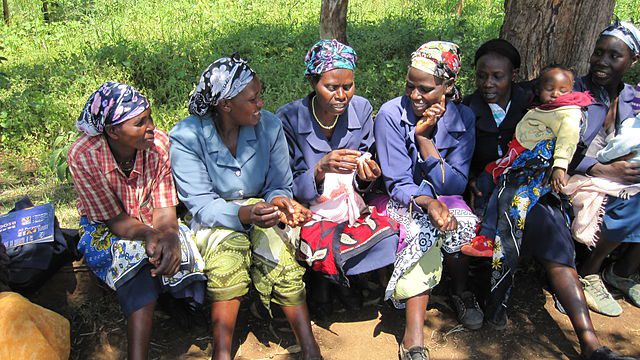
 According to the Business Daily, close to 40% of Kenyan youth were unemployed in 2020. Specifically, unemployment most greatly impacts the age groups of 15-19 and 20-24 in comparison to the rest of the population. Apart from a rapidly growing population, a significant contributing factor to Kenyan youth unemployment is low educational achievement. Only 1% of Kenyan youth have, at most, an undergraduate qualification. The Mastercard Foundation in Kenya is working to change this.
Jobs in Kenya
While Kenya’s economy is growing, most job opportunities are found in the informal sector. About 15 million Kenyans, most being youth, are employed in the informal sector. Turning to informal employment comes as a result of young people lacking formal qualifications. With higher education, young Kenyans can secure higher-paying jobs in skilled markets, enabling them to break cycles of poverty.
The MasterCard Foundation in Kenya
The Mastercard Foundation believes that everyone “deserves an opportunity to learn and prosper” regardless of economic circumstances. By collaborating with the “private sector, donors, young people and civil society,” the Mastercard Foundation creates an environment where the youth can secure employment and entrepreneurs can thrive.
The International Monetary Fund states that the increasing population in Africa “means that by 2035, there will be more young Africans entering the workforce each year than in the rest of the world combined.” However, a shortage of job opportunities and the lack of a skilled workforce present barriers to success. The Mastercard Foundation addresses this “skills mismatch” through various youth empowerment programs.
Young Africa Works
Young Africa Works in Kenya is a Mastercard Foundation initiative that aims to secure “dignified and fulfilling work ” for five million Kenyan youth by 2030. The initiative recognizes that “in the next five years, there will be an estimated six million un- and underemployed Kenyans,” mostly impacting Kenyan youth. The program strategy aims to “break down barriers faced by young men and women when accessing work, skills development or starting their own businesses.”
The initiative aims to accomplish this by harnessing technology and partnering with several organizations, banks and companies, focusing on the sectors of “agriculture, manufacturing, housing and healthcare.” Young Africa Works also focuses on “education and vocational training,” linking employers and job seekers through technology and the growth of entrepreneurs and small businesses through financial inclusion.
Youth Entrepreneurial Support During COVID-19
According to the World Bank, the Kenyan economy can recover from the pandemic in 2021. However, for the youth in the informal sector who do not have access to welfare services and employment benefits, economic recovery may appear to be out of reach. The informal sector in Kenya has been brought to a stall due to job losses. Furthermore, COVID-19 fears lead to heightened vigilance, and as a result, people buy less from street vendors, who are usually young.
In September 2020, Kenya National Chamber of Commerce and Industry (KNCCI) and the Mastercard Foundation partnered to create the COVID-19 Recovery and Resilience Program. The initiative aims to aid the recovery of small, youth and women-led businesses impacted by COVID-19. The initiatives will see “25,000 Micro, Small and Medium-Sized Enterprises (MSMEs) in Kenya benefit from an interest-free, zero-fee short-term concessional loan.” For businesses in the informal sector especially, the aid is a lifeline during the pandemic.
The Mastercard Foundation in Kenya is an example of how the private sector can help fight global poverty by engaging with the needs of the youth in developing countries. While a lot of work remains to aid the economic challenges faced by young people, the Mastercard Foundation in Kenya leads the way.
– Frank Odhiambo
Photo: Wikimedia

 Lionel Messi, captain of the Argentina national football team and one of the highest-paid athletes in the world,
  Many know the United Arab Emirates (UAE) as one of the richest countries in the world, thanks to its abundant reserves of oil and natural gas. One of its most popular cities, Dubai, is home to some of the world’s most extravagant and expensive buildings, while artificial islands shaped like palm trees dot its coast. Putting its riches to a good cause, the UAE’s foreign aid program is remarkably well-funded and successful.
 Haiti faces a surge in COVID-19 cases, while also being the only COVAX member in the Americas to not commence administering vaccines. Despite reporting low infection rates at the start of the pandemic, Haitian hospitals are now overwhelmed with an influx of patients. With a deficit of resources and infected patients being turned away, there is a desperate need for the commencement of COVID-19 vaccinations in Haiti.


 Many know Latvia, a small country in Eastern Europe that Lithuania and Estonia border, for its seaside capital city and rich cultural heritage. Following its swift recovery after the 2008 financial crisis, the country’s elderly population overshadowed Latvia’s strong economy. Brought on by a declining working-age labor force, the rate of elderly poverty in Latvia remains a point of concern.