• Link to X
  • Link to Facebook
  • Link to Instagram
  • Link to TikTok
  • Link to Youtube
  • About
    • About Us
      • President
      • Board of Directors
      • Board of Advisors
      • Financials
      • Our Methodology
      • Success Tracker
      • Contact
  • Act Now
    • 30 Ways to Help
      • Email Congress
      • Call Congress
      • Volunteer
      • Courses & Certificates
      • Be a Donor
    • Internships
      • In-Office Internships
      • Remote Internships
    • Legislation
      • Politics 101
  • The Blog
  • The Podcast
  • Magazine
  • Donate
  • Click to open the search input field Click to open the search input field Search
  • Menu Menu

Archive for category: Global Poverty

Key articles and information on global poverty.

Global Poverty

Extreme Poverty Has Been Halved

Back in 2000, countries around the world convened to discuss the United Nations Millennium Development Goals – goals to make the world a safer, healthier place and to ultimately eradicate global poverty. Countries pledged that by 2015, they would halve the number of people living in poverty, cut maternal mortality by three-quarters and cut child mortality by two-thirds. Though there are considerable strides to make toward the latter two objectives, the former goal of halving extreme poverty has been achieved even earlier than expected.

In 1990, 1.9 billion people in developing nations were living in extreme poverty, or 43 percent of the world’s population. By 2000, that number was down by one-third. By 2010, the number was 1.2 billion – or 21 percent of the Earth’s population. This indicates that in a short 20 years, the global poverty rate was cut in half.

The quick, yet drastic improvements that were made in just two decades raise the question: what is stopping world leaders from reaching 1 percent in the near future?

According to Martin Ravallion, the World Bank’s head of research, growth alone does not ensure less poverty in a nation. Based on Ravallion’s research and surveys, he found that two-thirds of the poverty decrease was the result of growth and one third came from greater income equality. His surveys reveal that a one percent increase in incomes cut poverty by 0.6 percent in the most unequal countries and by 4.3 percent in the most equal ones.

China is responsible for three-quarters of the world’s total decline in extreme poverty over the past twenty years. Back in 1980, the country was home to the greatest poverty-ridden population in the world. In just two decades, China lifted 600 million citizens out of extreme poverty.

It is not the only nation, however, that has experienced accelerated economic growth. In Brazil, new poverty reduction policies – including equality through minimum wages, cash transfer programs for the poor and better public services – have largely contributed to the nation’s economic development. Not only has poverty been considerably reduced, but deforestation of the Amazon has also been cut by 80 percent.

World leaders argue that today’s developed nations have the resources and technology to eventually eradicate extreme poverty. It is the small factors, however, that will be most important. Not only is it essential for a nation to experience economic growth and income equality, but it must also foster a healthy and stable population.

This means that education and health are at the forefront of the United Nations’ agenda. Though 17,000 more children are alive per day compared with the situation twenty years ago and mosquito nets have saved 3.3 million lives from malaria, there are still large obstacles to overcome. Taking small initiatives, while tackling large issues with the proper resources, will be the key to seeing the end of extreme poverty by the year 2030.

– Samantha Scheetz

Sources: The Economist, UN, Devex
Photo: My Modern Met

August 22, 2014
https://borgenproject.org/wp-content/uploads/borgen-project-logo.svg 0 0 Borgen Project https://borgenproject.org/wp-content/uploads/borgen-project-logo.svg Borgen Project2014-08-22 11:35:022024-06-05 01:58:05Extreme Poverty Has Been Halved
Global Poverty

GravityLight in African Homes

A considerable amount of resources have been dedicated to finding a sustainable means of providing electricity to those suffering from poverty. In order to create a solution for such a complex problem, a tremendous amount of creativity, innovation and resources have been directed toward finding an answer. Thus far, one idea has managed to utilize the same power that keeps our entire earth in orbit — gravity.

GravityLight, a new product created by the London-based design consultancy firm Deciwatt, does just that. The light is entirely powered by a specific weight, usually around 10 kilograms. This weight can be anything, including sand, stones or even water. As the weight descends due to gravitational force, the kinetic energy created by this process is converted into light by a handful of small gears within the self-contained mechanism. The light lasts anywhere from 28 minutes to 12 minutes, depending on what setting the light is on. It requires no batteries, and can be used repeatedly without any running costs.

The best part about this technology? The entire apparatus only costs $6. For the price of a hamburger, families can buy a source of light more reliable than a kerosene lamp.

Naturally there was some original skepticism surrounding the product. GravityLight was almost shelved entirely in 2012, due to a lack of funding. Jim Reeves, co-creator/inventor of GravityLight said, “In truth, at first it didn’t go well. But it’s an iterative process. You see what doesn’t work, you move on. You see what doesn’t work, and you improve upon it.”

Eventually inertia kicked in, the word spread and the product began to gain traction. The original fundraising goal was to raise $55,000. However, the campaign massively exceeded expectations by raising $399,590 thus far. This has allowed for the product to become even more accessible to those who need it.

The end goal is to eventually make GravityLight commercially available. While the producers of the technology haven’t hit that goal yet, they are currently on track to pursue mass production by next year. With any luck, GravityLight will provide hundreds of thousands of people with a source of light more stable than any other form of electricity.

– Andre Gobbo

Sources: Devex, Deciwatt
Photo: Sustainable Brands

August 22, 2014
https://borgenproject.org/wp-content/uploads/borgen-project-logo.svg 0 0 Borgen Project https://borgenproject.org/wp-content/uploads/borgen-project-logo.svg Borgen Project2014-08-22 11:33:122024-06-05 01:58:05GravityLight in African Homes
Global Poverty

UN Report: Africa’s Youth to Top 1 Billion by 2050

1 Billion by 2050
A recent report released by UNICEF has predicted a massive shift in Africa’s child population. The study reported that the under-18 population is predicted to increase by two-thirds, and will reach at least 1 billion by 2050. The report also noted that approximately 40 percent of the world’s children will be in Africa. Over the next 35 years, almost 2 billion babies will be born in Africa, and the continent’s population will double in size.

These numbers show a drastic increase from 1950, when only 10 percent of all children lived in Africa. These new statistics also come in spite of a high child mortality rate. Africa currently accounts for approximately half of all child deaths globally, and the ratio of child mortality could rise to about 70 percent.

There are a multitude of factors that play into this high mortality rate. The UNICEF report specifically mentioned that three in ten children live in conflict-affected areas or in fragile regions. It also pointed out that almost 60 percent of all Africans will live in cities by 2050.

Special attention was given to Nigeria, which is currently the most populous country in all of Africa. Nigeria has the greatest number of births on the continent, and is projected to account for one in ten births globally by 2050.

As Leila Gharagozloo-Pakkala, UNICEF’s Regional Director for Eastern and Southern Africa, explained, “This report must be a catalyst for global, regional and national dialogue on Africa’s children. By investing in children now – in their health, education and protection – Africa could realize the economic benefits experienced previously in other regions and countries that have undergone similar demographic shifts.”

– Andre Gobbo

Sources: BBC, UNICEF 1, UNICEF 2
Photo: Kiwanja

August 22, 2014
https://borgenproject.org/wp-content/uploads/borgen-project-logo.svg 0 0 Borgen Project https://borgenproject.org/wp-content/uploads/borgen-project-logo.svg Borgen Project2014-08-22 10:21:032024-05-27 09:21:27UN Report: Africa’s Youth to Top 1 Billion by 2050
Food & Hunger, Global Poverty, Health

Primer on Food Insecurity

Hunger kills more people per year than AIDS, malaria and tuberculosis combined. Nearly 842 million people in the world do not have enough to eat and 98.2 percent of them live in developing countries. Yet hunger is essentially man-made; it is a product of poverty. In a world that can produce more than enough food to sustain everyone, hunger is due to human inefficiencies and inaction.

In the world of global poverty, “food insecurity” is a term often mentioned. But what exactly is food insecurity, what are its effects and how can it be prevented?

What is Food Insecurity?

In order to understand food insecurity, it is important to first define food security. According to the World Food Summit of 1996, food security exists “when all people at all times have access to sufficient, safe, nutritious food to maintain a healthy and active life.”

This condition is based on three components: availability, access and use. First, a sustainable and sufficient food supply must exist to prevent malnutrition. Second, people must have both the physical and economic resources to obtain that food. And third, people must be able to use food in conjunction with clean water and sanitary practices to keep healthy, especially in countries where food-borne diarrhea has the potential to cause serious harm. Food insecurity means being without any of these critical components.

At its core, food security provides recipients with the elements necessary for optimal health and nutrition. But it depends on a sustainable, dependable and sufficient food supply system. Such a system solves not only issues of hunger, but also benefits environmental health, the economy and social equality.

What are the Effects of Food Insecurity?

Without sustainable and dependable food sources, malnutrition can wreak havoc on a population. Lack of access to sanitation and clean water can also spread diarrhea and other food-borne illnesses, which are especially deadly to young children. In addition, lack of proper access to food hinders development and trade. Victims of malnutrition are unable to work productively or put energy into new endeavors. When the majority of a country suffers from food insecurity, it is unlikely that substantial development will occur. This leads to a vicious cycle of poverty, hunger and stagnation.

How Can Food Insecurity be Prevented?

Food insecurity can be ameliorated by increasing local food production, increasing food imports, providing more jobs and higher pay for poverty-stricken communities and improving food distribution infrastructure. But food insecurity is a multifaceted issue, one which complicates any potential solutions. An example of a promising idea gone wrong is that of self-sufficiency.

Food self-sufficiency—in other words, meeting all food needs through domestic production—used to be a promising potential solution for developing nations. Not only would countries be able to buffer themselves from the fluctuations of international prices and trade, they would also be able to allocate more funds to the purchasing of foreign commodities instead of foodstuffs. Self-sufficiency was touted as a method to ensure that sufficient food was always available for a country’s population.

Yet in reality, many issues arose. Climatic factors and natural events such as storms, flooding and droughts could rapidly deplete or destroy resources and force nations to depend on foreign aid or imports. In arid regions, a disproportionate amount of available water and land resources were devoted to irrigation, depriving other sectors of water. Some countries even accumulated massive water deficits trying to produce their own grains.

Today, the most reliable solution seems to be a combination of self-sufficiency and food imports. Because of recent water scarcities, it is no longer feasible for many countries to irrigate their lands or grow certain crops. In addition, labor in industries other than agriculture can lead to higher returns and profits. This makes it easier to exchange national commodities for food imports.

However, poor developing countries in areas such as sub-Saharan Africa and South Asia struggle to both grow their own food and purchase necessary food imports. Food aid is the quickest solution in such dire cases of food insecurity. But this also stresses the need for more long-term, extensive agriculture infrastructure programs. Such programs have great potential to increase food security by stimulating national productivity and reducing poverty.

-Mari LeGagnoux 

Sources: WHO, World Food Programme, FAO
Photo: Agripolicy outreach

August 22, 2014
https://borgenproject.org/wp-content/uploads/borgen-project-logo.svg 0 0 Borgen Project https://borgenproject.org/wp-content/uploads/borgen-project-logo.svg Borgen Project2014-08-22 10:14:482024-12-13 17:49:35Primer on Food Insecurity
Children, Education, Global Poverty, Women, Women & Children, Women and Female Empowerment

Free High School in Nicaragua

High School in Nicaragua
In order to eliminate poverty, the impoverished must be educated. This is the philosophy practiced by Margaret Gullette, co-founder of the Free High School for Adults in Nicaragua. 12 years ago, Margaret, who resides in Newton, Massachusetts and is a resident scholar at Brandeis University, was volunteering in Nicaragua through the Newton-San Juan del Sur Sister City Project when she and another woman, Rosa Elena Bello, decided they wanted to start a literacy program.

“It’s a great story,” Margaret said as she recalled the details. “Rosa was working in a clinic for women and children, and infant mortality rate was not improving.” The two women believed that it would never improve without literacy. It is not enough just to donate money; the people must be educated.

In Nicaragua, one out of 10 people are illiterate, and this figure is even higher among women. The average Nicaraguan has less than five years of schooling and only 29 percent of children complete primary school. Much of this can be attributed to the poverty cycle. Until 1979 a dictator ruled Nicaragua, and dictators rely on ignorance to control the masses.  “Poverty and ignorance should always be put together,” Margaret explained. Because many adults who lived under that dictator’s rule and did not receive an education themselves, not only do they not have enough money to pay for school supplies and uniforms, but they often do not value education.

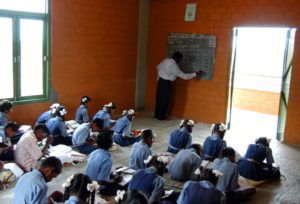
In order to begin the literacy program, Margaret applied for funding to 25 different grants. She received 24 rejections, but the one acceptance was all the two women needed. At first it was difficult to get Nicaraguan women involved in the program because their lives revolved around housework and children, but in the first three years nearly 300 women received certificates for the completion of sixth grade.

High school in Nicaragua runs from grade 7 to 11, so after the success with the sixth grade program, the next logical step was to continue the women’s education into high school. Once again Margaret found funding in America, and the following year (2002) a free high school for adults opened. 12 people graduated that year and the number has been growing ever since. The high school currently has 800 students and 616 graduates.

Eventually the Nicaraguan government took over the building of the schools, and the 12 communities that have these high schools have better overall health and fewer unwanted pregnancies. What makes the Free High School Program unique is the teaching model adopted by Margaret and Rosa. The schools use feminist textbooks and a modified version of twentieth century educator Paolo Freire’s teaching method.

Freire believed that education was vital to the liberation of the oppressed and did not support the method of teaching in which students are simply empty vessels to be filled with knowledge. For basic literacy, Freire believed in teaching language that is meaningful to people’s lives. He did not have a program for women, so Margaret and Rosa adapted his method to teach the women in Nicaragua. The first word the women learn is “fetus,” which Margaret says is a word every woman should know.

The Free High School program has continued to grow with a technical high school that opened in 2006 in which students can specialize in one of three fields: Management of Tourist and Hotel Enterprises, Accounting and Civil Construction. A number of graduates from both the Free High School and the Technical School have gone on to receive university degrees and other accomplishments.

Margaret believes that “there is always something to do in Nicaragua,” pointing to her husband David’s bio-sand filter project for contaminated water as an example. The next steps in the Free High School project are to buy new textbooks and construct an office building for the organization in Nicaragua. Go here (https://sanjuandelsursistercityproject.wordpress.com/) to learn more about the various Newton-San Juan del Sur Sister City projects, including the Free High School.

– Taylor Lovett

Sources: San Juan del Sur Sister City Project, Bless the Children, Interview with Margaret Gullette
Photo: The Random Act

August 22, 2014
https://borgenproject.org/wp-content/uploads/borgen-project-logo.svg 0 0 Borgen Project https://borgenproject.org/wp-content/uploads/borgen-project-logo.svg Borgen Project2014-08-22 04:00:032024-05-27 09:21:19Free High School in Nicaragua
Children, Education, Global Poverty, Volunteer

Volunteer for Bangladesh

In recent years, education in Bangladesh has greatly improved. Poverty rates have decreased, and with it, hunger. But the nation faces many challenges.

Ready to meet these challenges are the members of Volunteer for Bangladesh (VBD). It is a branch of the JAAGO Foundation, a larger organization which works to provide all children in Bangladesh with access to a quality education. Both have strong ties to and receive financial support from the U.S. Embassy in Dhaka.

There is much work to be done, so the VBD mission is broad; to end poverty and hunger and to protect children’s rights, including their right to an education. The organization promotes gender equality, works to improve nutrition, educates on sustainability and aids in local development projects. Its projects are as varied as its mission tenets.

VBD awareness campaigns fall on holidays like Universal Children’s Day, when they “spread consciousness among mass people about children’s education.” On World Water Day, they raise awareness of freshwater resources, and on Income Tax Day, they speak on the importance of paying taxes.

Last year in Dhaka, Gazipur, Chittagong, Narayanganj, Khulna and Rajshahi, Universal Children’s Day VBD workers, four corporate partners and five local media groups built carnivals for underprivileged children. There were sporting events, visits to the zoo, merry-go-round rides and introductions to Mickey Mouse. For several hundred destitute children, it was a day on which they could enjoy being a child.

The theme for World Environment Day of this year was “more care for the environment, lessen the rise of the sea level.” It is a poignant message for Bangladeshi citizens, 15 million of who stand to lose their homes to rising ocean waters.

On June 5, 1,150 volunteers in bright yellow VBD t-shirts rode bicycles to 12 districts. They planted over 400 saplings to further their goal of “reversing the greenhouse effect.”

All VBD efforts are truly community endeavors. More than 12,000 people are now working in VBD projects. Volunteer for Bangladesh hopes to establish Action Groups in all of Bangladesh’s 64 districts by 2016.

– Olivia Kostreva

Sources: Volunteer for Bangladesh 1, Volunteer for Bangladesh 2, Volunteer for Bangladesh 3, JAAGO
Photo: The Daily Star

August 21, 2014
https://borgenproject.org/wp-content/uploads/borgen-project-logo.svg 0 0 Borgen Project https://borgenproject.org/wp-content/uploads/borgen-project-logo.svg Borgen Project2014-08-21 19:56:402024-05-27 09:21:30Volunteer for Bangladesh
Global Poverty

Center for International Development

Center for International Development
The Center for International Development at Harvard University is dedicated to both understanding the causes of global poverty and working to eradicate them.  It aims to accomplish the following five goals:

1. To reexamine the methods in which growth strategies are applied.

2. To increase various countries’ levels of productivity.

3. To make more markets accessible in impoverished countries.

4. To make a more efficient system for assuring basic human rights such as adequate health care, education and other social services.

5. To establish a way of life for the people in impoverished nations in a way that is sustainable over a long period of time.

Completed and successful projects by Harvard’s Center for International Development include the Migration Project, which sought to discover “the links between migration, remittance and prosperity”; the Empowerment Lab, which aimed to figure out a way to give the world’s poor access to crucial markets in order to promote their economic growth; and the Mexico Project, which established a research collaboration between the Harvard Kennedy School of Government and the Graduate School Of Public Administration and Public Policy of the Tecnologico de Monterrey.

One of the most recent projects from Harvard’s Center for International Development involved exposing fake malaria medicine being sold in Uganda. Researcher David Yanagizawa-Drott’s findings explain that these counterfeit drugs are extremely hurtful to those in need of medicine – in more ways than one might expect.

Naturally, if given the fake medicine, the patients aren’t receiving the real treatment they need, but if the patients are ever to receive the real medicine, these counterfeit drugs can also prevent the real medicine from working.

In an article in the New York Times, Tina Rosenberg explains that some of these counterfeit medicines contain a small portion of the active ingredient contained in the real medicine.  The amount of active ingredient, however, is so small that it will not help the sick patient, but ultimately is enough to “promote resistance that renders even the real medicine powerless.”

This research, however, now gives Harvard’s Center for International Development the knowledge and chance to attempt to remedy such situations.

– Jordyn Horowitz 

Sources: Center for International Development, Chronicle of Higher Education
Photo: Center for International Development

August 21, 2014
https://borgenproject.org/wp-content/uploads/borgen-project-logo.svg 0 0 Borgen Project https://borgenproject.org/wp-content/uploads/borgen-project-logo.svg Borgen Project2014-08-21 19:54:532024-12-13 17:51:09Center for International Development
Development, Food & Hunger, Global Poverty

Malnutrition in Bangladesh

Malnutrition in Bangladesh remains a severe problem, especially for women and children.

According to the United Nations, 33 percent of Bangladeshi adolescent girls are anemic and micronutrient deficient and 25 percent of women ages 15-44 are unhealthily thin for their height. About 48 percent of Bangladeshi children are malnourished and 1.5 million of them die each year from diarrhea that both worsens and is worsened by malnutrition.

A variety of factors cause malnutrition in Bangladesh, the two most prominent being poverty and food insecurity. These two problems limit one’s ability to live on a diet that provides all the nutrients necessary for healthy living, leading to malnutrition.

The country has high levels of absolute poverty, with nearly 50 million of its people unable to obtain food, clothing or shelter. Thus, even while Bangladesh has managed to reduce poverty by 50 percent since 1971, almost one-third of the population is still impoverished. Poverty is in turn exacerbated by a major distress to Bangladesh: natural disasters.

Consider the food crisis of 1974-75. A deluge destroyed two rice crops in a row, robbing heavily impoverished rural populations of their main source of income. In addition, the lack of rice contributed to malnutrition on an extreme scale. One in four children became “third-degree malnourished,” meaning they were less than 60 percent of a median weight-for-age measure.

Even more problematic, natural disasters in Bangladesh have been described as “frequent,” though not all have been as devastating as the ’74 flood.

In addition to and as a result of poverty, the people of Bangladesh suffer from high levels of food insecurity. The recently released Global Food Security Index (GFSI) ranked Bangladesh 88th out of 109 countries and reported that Bangladesh’s decline in food security was the ninth fastest in the world.

The Bangladeshi diet has the lowest share of non-starchy foods of all the countries studied in the GFSI. This indicates very poor nutrition and diet diversification, which of course induce micronutrient deficiencies.

Other causes of malnutrition in Bangladesh include the fact that many Bangladeshi mothers were never taught proper child-rearing behaviors; in addition, mothers often lack access to health services that are necessary to secure the health of their children.

Despite all of these problems, there is hope. Rates of childhood malnutrition have fallen recently, albeit gradually. In the past 15 years, vitamin A deficiencies among Bangladeshi children have been significantly reduced.

Also, income levels in Bangladesh are on the rise. Typically, this correlates with a decline in malnutrition, and while some South Asian countries mysteriously lack this correlation, Bangladesh is not one of them.

As International Food Policy Research Institute researcher Derek Headey noted in his 2013 study: “From 1997 to 2007, Bangladesh recorded one of the fastest prolonged reductions in child underweight and stunting prevalence in recorded history, 1.1. and 1.3 percentage points per year, respectively.”

Thus, while malnutrition in Bangladesh continues to be a major problem, some signs suggest the country is heading in the right direction for attacking that problem. Moreover, if the country’s overall food security increases somehow, a major reduction in malnutrition may follow.

– Ryan Yanke

Sources: The Hunger Project, JSTOR, FAO, World Food Programme, International Food Policy Research Institute, Global Food Security Index, NHS, Bread for the World, The American Journal of Tropical Medicine and Hygiene
Photo: Axis of Logic

August 21, 2014
https://borgenproject.org/wp-content/uploads/borgen-project-logo.svg 0 0 Borgen Project https://borgenproject.org/wp-content/uploads/borgen-project-logo.svg Borgen Project2014-08-21 19:52:492024-12-13 17:51:09Malnutrition in Bangladesh
Development, Global Poverty

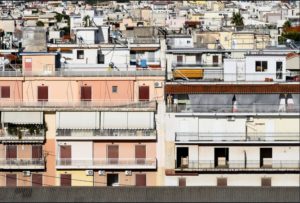
Poverty in Italy Today

Rome, Italy has a population of nearly 2.9 million people and is considered to be one of Europe’s most significant cities. Notwithstanding its status as a city rich with culture and history, Rome is also a victim of poverty.

Although the country has seem some economic stability during the past several years, Rome, as well as the rest of Italy, are not foreign to financial turmoil.

Several years ago, poverty in Italy reached its highest level in over 16 years. It resulted in high levels of unemployment and lower wages. Today, more than 16 percent of the country’s population lives in poverty.

In Italy, poverty is defined by a family of two living on a monthly income of 991 euros or less.

Similar to much of the industrialized world, Italy experienced an economic recession following the global stock market downturn of the late 2000s. Between 2011 and 2012, the nation saw its poverty levels increase.

Like the rest of the country, Rome’s economy is decidedly mixed. Even though Italy has seen some economic improvement in recent years, there continues to be some worrisome signs.

As a metropolitan city and popular tourist destination, Rome, like many of Europe’s cities, regularly sees its economy boosted by tourism. This is in conjunction with an increasingly significant number of African refugees who occupy isolated camps and villages around the city.

Unlike other countries, Italy does not provide refugees with adequate skill sets and chances to seek new economic opportunities. Many of these refugees, who are from the impoverished nations of the Horn of Africa, often find similar poverty conditions along the outskirts of Rome.

Such poverty is not limited to African refugees, however. Thousands of children in the city live in a state of poverty. Austerity measures, generated by the recession of recent years, have not had much of an effect.

Perhaps only time can help alleviate some of Rome’s economic suffering. With its notable tourism industry, Rome will likely remain one of Europe’s most prominent cities despite its lingering poverty problem.

– Ethan Safran

Sources: Reuters, Ansa Med, Open Society Foundations, Global Post, The Guardian
Photo: RT

August 21, 2014
https://borgenproject.org/wp-content/uploads/borgen-project-logo.svg 0 0 Borgen Project https://borgenproject.org/wp-content/uploads/borgen-project-logo.svg Borgen Project2014-08-21 19:51:372024-05-27 09:21:31Poverty in Italy Today
Foreign Policy, Global Poverty

Clinton Drifts from Obama’s Foreign Policy

In an interview last Sunday with The Atlantic, former Secretary of State Hillary Clinton greatly distanced herself from President Obama’s foreign policy views.

Discussing her opinions with Jeffrey Goldberg, Clinton criticized Obama’s catch phrase for foreign policy, which is said to be, “Don’t do stupid stuff.”

According to Clinton, this is not exactly an effective approach. “Great nations need organizing principles,” Clinton told Goldberg when he mentioned Obama’s doctrine. Clinton described such organizing principles as peace, prosperity and progress.

Apart from her general philosophy on foreign policy, Clinton elaborated on specifics, insisting that the United States should have intervened early in the Syrian war in order to avoid al-Qaeda-inspired groups from seizing control of the rebel side against the Assad regime. She noted that in failing to assist in building up a credible fighting force on the rebellion’s side, a large hole was left, increasingly filled by Jihadists.

The pointed evaluation from Clinton comes at an interesting time period, as she is rumored to be a potential candidate for the 2016 presidential election.

Despite Clinton’s critique, she continued to defend Obama as far as his intentions, explaining to Goldberg that Obama was, “trying to communicate to the American people that he’s not going to do something crazy” (as far as foreign policy).

Given Obama’s second term has been dominated by foreign policy issues including the rise of ISIS in Iraq, the Israeli Palestinian conflict and the rising aggression of Russia against Ukraine, Clinton’s criticism is hard-hitting.

Although she did not outright state as much, Clinton’s interview suggests that she is worried that the United States is removing itself from the world stage as a leader in foreign policy and conflict. More than this, she subtly hints that if she were in charge in the near future, she would approach foreign policy differently.

In her recently released book “Hard Choices,” Clinton details how she and Obama disagreed on how to handle the situation in Syria, especially when it came to the question of whether or not to arm the rebel factions.

Clinton continued to qualify her comments during the interview, stating: “I’ve sat in too many rooms with the president. He’s thoughtful, he’s incredibly smart, and able to analyze a lot of different factors that are all moving at the same time. I think he is cautious because he knows what he inherited.”

In this way, Clinton has propped herself strategically in-between the President and former President George W. Bush on the scale of advocating for military intervention.

According to CNN, those close to Clinton gave the Obama administration a warning that the interview was coming. In response to the interview, White House deputy national security adviser Ben Rhodes stated that Hillary was “fully-on-board” during her time as Secretary of State with respect to the administration’s foreign policy strategy.

– Caroline Logan 

Sources: CNN, Sun Herald, The Atlantic
Photo: US News

August 21, 2014
https://borgenproject.org/wp-content/uploads/borgen-project-logo.svg 0 0 Borgen Project https://borgenproject.org/wp-content/uploads/borgen-project-logo.svg Borgen Project2014-08-21 19:47:472024-06-04 01:17:38Clinton Drifts from Obama’s Foreign Policy
Page 1976 of 2162«‹19741975197619771978›»

Get Smarter

  • Global Poverty 101
  • Global Poverty… The Good News
  • Global Poverty & U.S. Jobs
  • Global Poverty and National Security
  • Innovative Solutions to Poverty
  • Global Poverty & Aid FAQ’s
Search Search

Take Action

  • Call Congress
  • Email Congress
  • Donate
  • 30 Ways to Help
  • Volunteer Ops
  • Internships
  • Courses & Certificates
  • The Podcast
Borgen Project

“The Borgen Project is an incredible nonprofit organization that is addressing poverty and hunger and working towards ending them.”

-The Huffington Post

Inside The Borgen Project

  • Contact
  • About
  • Financials
  • President
  • Board of Directors
  • Board of Advisors

International Links

  • UK Email Parliament
  • UK Donate
  • Canada Email Parliament

Get Smarter

  • Global Poverty 101
  • Global Poverty… The Good News
  • Global Poverty & U.S. Jobs
  • Global Poverty and National Security
  • Innovative Solutions to Poverty
  • Global Poverty & Aid FAQ’s

Ways to Help

  • Call Congress
  • Email Congress
  • Donate
  • 30 Ways to Help
  • Volunteer Ops
  • Internships
  • Courses & Certificates
  • The Podcast
Scroll to top Scroll to top Scroll to top