Addressing Disability and Poverty in Mauritius
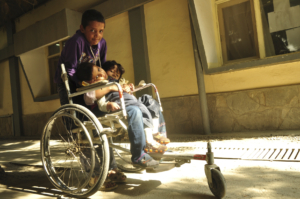 Mauritius, often commended as one of Africa’s economic success stories, hides a sobering truth behind its polished surface: disability and poverty intertwine, leaving people with disabilities especially vulnerable to systemic marginalization. According to the 2011 Housing and Population Census, 59,869 people in Mauritius live with a disability, which is roughly 5.4% of the population.
The Struggles of Living With a Disability in Mauritius
The stigma associated with disability marginalizes this group and the inaccessibility of the physical and social environment further isolates them from full participation in society. A World Bank study revealed that in Mauritius, people with disabilities are more likely to have lower educational attainment and employment levels than their non-disabled peers, reinforcing the link between disability and poverty. The World Bank also highlights the lack of accessible environments and limited access to assistive technologies, which compound existing barriers.
In 2015, the U.N. Committee on the Rights of Persons with Disabilities warned that entrenched gender and disability stereotypes continued to exacerbate marginalization in Mauritius. These factors, combined with the lack of legal enforcement, limited public awareness and exclusion from decision-making, create a web of disadvantage. People with disabilities in Mauritius are often denied basic human rights, including access to education, employment, housing and health care.
In its 2024 review, the U.N. Committee noted, “The Committee was concerned that persons with disabilities were not meaningfully involved in the processes aimed at improving their lives.” It also “noted the need to harmonize the different definitions of disability in various documents.” Inconsistent definitions across official documents and the lack of representation hinder policy implementation. When people with disabilities are not included in planning and reform, their needs are often overlooked.
Still, change is underway. Civil society organizations and disability rights activists continue to push for accountability. At the same time, government documents acknowledge that earlier approaches were inadequate and commit to restructuring the disability sector.
The Government’s Efforts
Mauritius has launched several policies and programs to reduce the burden of poverty for people with disabilities. These include:
- Basic Invalid’s Pension (BIP): A monetary allowance for individuals with severe disabilities. According to recent reports, more than 20,000 Mauritians received the BIP in 2016.
- Carer’s Allowance: Financial support for family members or caregivers of people with disabilities.
- Child Disability Allowance: Additional financial assistance provided to support children with disabilities.
- Ratification of the U.N. Convention on the Rights of Persons with Disabilities: Demonstrating commitment to global disability rights standards.
- National Policy Paper and Action Plan on Disability: A framework focused on rights-based inclusion and improving access across sectors.
- Accessibility in Education: As of March 2024, 46 students with disabilities are enrolled in universities. Most secondary and tertiary institutions now meet accessibility standards.
- New Disability Action Plan (2024): Currently in development, this plan promises meaningful consultation with persons with disabilities in both design and execution stages.
Local Advocacy Groups
- Inclusion Mauritius: A federation of 13 NGOs supporting individuals with intellectual and/or physical disabilities. The organization provides education, life skills training and pre-employment preparation to individuals annually, working to enhance independence and dignity.
- Youth With Disabilities Empowerment Program (YWDEP): This initiative runs training sessions, workshops and cultural events for young people with disabilities.
Conclusion
Even though challenges remain, these initiatives show Mauritius’ commitment to strengthening disability-inclusive policies. They aim to address the systemic links between disability and poverty. The ultimate goal is to “build a society where every citizen enjoys his or her rights fully while respecting those of others.”
– Riddhi Sharma
Riddhi is based in Vancouver, BC, Canada and focuses on Good News for The Borgen Project.
Photo: Wikimedia Commons
