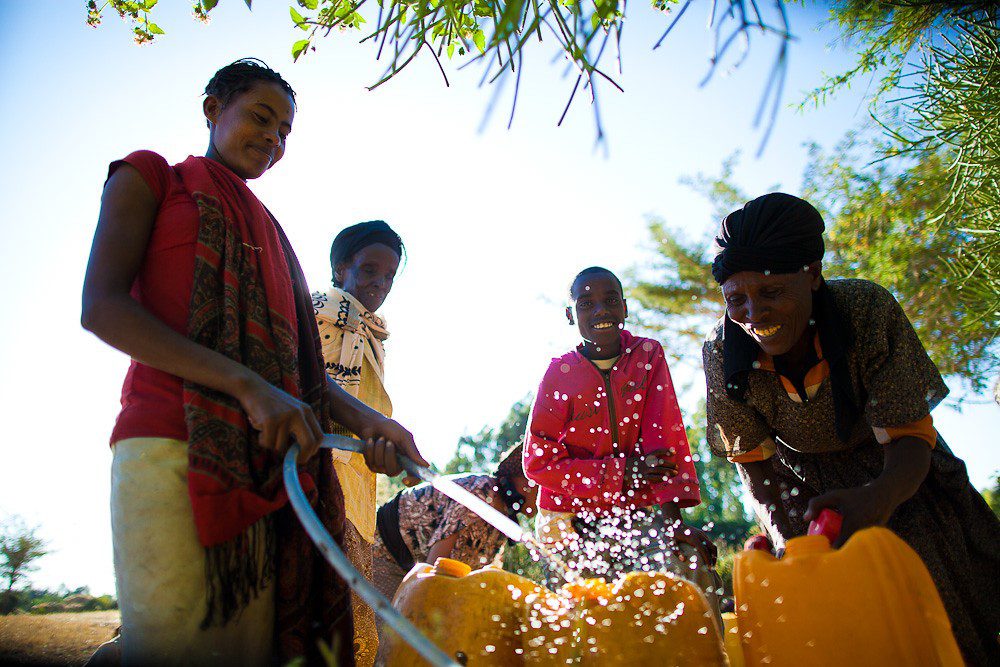
The U.S. investments that have been working toward improving access to water and sanitation have been particularly focussed on building a more water-secure world during the coronavirus pandemic. So far, the pandemic has affected the lives of billions all over the world and the most vulnerable in particular, already struggling with health and sanitation challenges. According to the OECD, before COVID-19, the African continent had already faced a slowdown in growth and poverty reduction. The organization added that “the current crisis could erase years of development gains.”
The pandemic could impact people already struggling with hunger and poverty. Several international organizations estimated that the number of starving people could have increased to 132 billion by the end of 2020.
To support countries struggling with water and sanitation access during the global pandemic, USAID re-configurated the priorities the Water for World Act of 2014 listed.
How does the global pandemic challenge water security and, in turn, how does USAID respond to these challenges? Before tackling these two questions, this article will give a brief background on the Water for World Act of 2014 and discuss its reconfiguration in light of the recent events regarding sanitation.
The 2014 Water for World Act and WASH Programs
The Water for World Act of 2014 is a reform bill that emerged from the 2005 Water for the Poor Act which made water, sanitation and hygiene – conveniently called WASH – top priorities in the federal foreign aid plan. In an attempt to make data more transparent, optimize aid strategies and improve water support, Congress voted for the Water for World Act in 2014. However, in 2020, the pandemic accelerated the need for global access to water and sanitation.
To address this concern, USAID re-designated 18 high-priority countries according to criteria such as lack of access to water, inadequate sanitation conditions and opportunities to make progress in these areas. Some of the high-priority countries are the Democratic Republic of Congo, Haiti, India, Kenya and South Sudan. In doing so, USAID intended to leverage WASH programs and enable vulnerable populations to have continual access to clean water during this critical period.
Current Challenges to Water Security
Access to water and sanitation is a basic human right and the current pandemic underscored the emergency to settle this right in the most vulnerable countries. Populations receive daily reminders to wash their hands and keep a healthy diet to prevent the propagation of the virus and save lives. However, the lack of clean, drinkable water is not only amplifying the already precarious living conditions of vulnerable populations, but it is also making it harder for these countries to stop virus transmission.
COVID-19 tends to affect vulnerable populations the most: poor communities, minorities and people living in crowded areas. According to UN-Habitat, it is clear that the pandemic affects the world’s most vulnerable populations the hardest because they lack sustainable access to water and sanitation.
For instance, India is the second-leading country in the world for most cases of COVID-19. It had almost 11 million cases on February 21, 2021. This number directly links to the country’s crowded rural areas and the lack of access to running water. At the end of 2020, more than 21% of the Indian population showed evidence of exposure to the virus. Meanwhile, in Bangladesh, Rohingya refugees living in a refugee camp are crowded with a population density four to seven times more than New York City, putting them in high-risk situations.
How WASH Programs Help
WASH programs helped high-priority countries respond to the pandemic in 2020. In the Democratic Republic of Congo, USAID and the World Bank financed WASH campaigns to improve the population’s handwashing behaviors.
Meanwhile, in Ethiopia, they collaborated with the local authorities to improve access to water and sanitation in health care facilities. In Haiti, WASH services included purchasing chlorine to clean water and installing water supply in markets, health centers, orphanages and prisons. According to the World Bank report, ensuring that these countries have safe access to water and sanitation is a necessary medium-term response to the pandemic.
US Investments and Improving Access to Water and Sanitation
U.S. investments aim to provide financial support for water service providers. For instance, in June 2020, USAID partnered with UNICEF in Mozambique to provide subsidies covering the cost of private water providers.
USAID also financed programs that relay information about handwashing. In April 2020, U.S. investments financed radio campaigns in Burkina Faso promoting a new handwashing system expanding access to hygiene in more areas. Data has shown that these programs made a difference in terms of transmission. In fact, transmission levels went down in both Mozambique and Burkina Faso from June to December 2020.
USAID also focused on health care facilities and on supporting health care workers in priority countries by training and protecting them. WASH programs trained more than 16,000 workers in diverse locations such as Senegal, India, Bangladesh, Ghana and Cote d’Ivoire. USAID support in Senegal was one of many successes: 447 officers and 549 health workers received training while the programs also resulted in the installation of 497 public handwashing stands in health facilities and high-risk places. They also distributed 2,423 handwashing kits to families with COVID-19.
Looking Ahead
Despite the crises of the past year, one can spot at least one positive outcome: global leaders have had to rethink access to water and sanitation. The pandemic increased global awareness about the importance of water and sanitation security, all over the world. U.S. investments to improve water and sanitation accessibility under the Water for World Act provide help during sanitary and water emergencies, even during these challenging times. The recent update about the high-priority status for designated countries is not the only positive news on the horizon. USAID administrator John Barsa has also signed the Sanitation and Water for all World Leaders call to action. His signature confirms what many have come to realize over the past year; international collaboration is key to fight the pandemic and secure better living conditions for all.
– Soizic Lecocq
Photo: Flickr

Female Genital Mutilation in Iraq
In 2008, Gola told her story of female genital mutilation in Iraq to reporters with The Human Rights Watch. It was a story of silent pain. “My family took me and told me nothing, I never went to the doctors, my family was never concerned.”
About Female Genital Mutilation
Female genital mutilation or FGM has been going on for centuries. The World Health Organization (WHO) defines FGM as “all procedures involving partial or total removal of the external female genitalia or injury to the female genital organs for non-medical reasons.”
Iraq’s older generations believe that cutting a woman’s clitoris will ensure the preservation of her virginity and push the prevalent practice of female genital mutilation in Iraq. Additionally, the women do not receive any anesthesia beforehand. FGM consists of three types including type one which is the removal of the labia minora and the labia major, the protective layers surrounding the vaginal orifice. Meanwhile, type two is the removal of the clitoris and the labia minora and type three is the narrowing of the vaginal orifice. However, all reproductive parts of a woman are important to her maintaining physical and mental health, and expulsion of one or more of these parts puts women’s lives at risk.
FGM is a silent practice that has been going on for decades. Female genital mutilation in Iraq occurs across Iraq without religious, lawful or ethical reasoning. Mutilation begins on girls as young as 3 although grown women may also experience it.
Solutions
Wadi, an NGO, finds solutions for women in crisis. In early 2004, Wadi began visiting villages after learning of the high number of women that FGM affects. After interviewing several women in the area, it found that 907 out of the 1,544 women it questioned were victims of FGM. Wadi has launched a campaign to educate women about the harmful consequences of FGM. In 2011, the parliament of the Kurdish region passed a bill banning domestic violence against women thus banning FGM. However, even though the Kurdish region has banned this practice, women’s voices are continuing to cry out against it to prevent future injustices.
A Light at the End of the Tunnel
In July 2012, Wadi launched an FGM hotline to provide social, mental, medical and reproductive advice to FGM-affected women throughout the region. By mainstreaming gender rights and working on educational programs, Iraq should be able to make headway to eradicate FGM. To fully eliminate this practice, the Wadi team began to visit local villages and midwives to educate them that these mutilations do not preserve a woman’s virginity, the wounds are not self-healing and the practice causes harm that is often permanent. Hadiya, who experienced FGM at the age of 5-years-old, spoke of pain 20 years after the mutilation occurred. FGM can cause infertility, incontinence, complications in labor and even death.
With all endings come new beginnings. Iraq has been the home to unlawful practices and prevalent mistreatment of women, but women are steadily pushing back to reclaim their freedom and honor. Some who have undergone FGM are now refusing to let their daughters experience the same fate, disallowing their clerics from approving practices of FGM. They band together in face of an ancient ritual that tears the body apart. Gola told her story so that women born after her will not have to tell theirs.
– Nancy Taguiam
Photo: Flickr
Access to Water and Sanitation During COVID-19
The U.S. investments that have been working toward improving access to water and sanitation have been particularly focussed on building a more water-secure world during the coronavirus pandemic. So far, the pandemic has affected the lives of billions all over the world and the most vulnerable in particular, already struggling with health and sanitation challenges. According to the OECD, before COVID-19, the African continent had already faced a slowdown in growth and poverty reduction. The organization added that “the current crisis could erase years of development gains.”
The pandemic could impact people already struggling with hunger and poverty. Several international organizations estimated that the number of starving people could have increased to 132 billion by the end of 2020.
To support countries struggling with water and sanitation access during the global pandemic, USAID re-configurated the priorities the Water for World Act of 2014 listed.
How does the global pandemic challenge water security and, in turn, how does USAID respond to these challenges? Before tackling these two questions, this article will give a brief background on the Water for World Act of 2014 and discuss its reconfiguration in light of the recent events regarding sanitation.
The 2014 Water for World Act and WASH Programs
The Water for World Act of 2014 is a reform bill that emerged from the 2005 Water for the Poor Act which made water, sanitation and hygiene – conveniently called WASH – top priorities in the federal foreign aid plan. In an attempt to make data more transparent, optimize aid strategies and improve water support, Congress voted for the Water for World Act in 2014. However, in 2020, the pandemic accelerated the need for global access to water and sanitation.
To address this concern, USAID re-designated 18 high-priority countries according to criteria such as lack of access to water, inadequate sanitation conditions and opportunities to make progress in these areas. Some of the high-priority countries are the Democratic Republic of Congo, Haiti, India, Kenya and South Sudan. In doing so, USAID intended to leverage WASH programs and enable vulnerable populations to have continual access to clean water during this critical period.
Current Challenges to Water Security
Access to water and sanitation is a basic human right and the current pandemic underscored the emergency to settle this right in the most vulnerable countries. Populations receive daily reminders to wash their hands and keep a healthy diet to prevent the propagation of the virus and save lives. However, the lack of clean, drinkable water is not only amplifying the already precarious living conditions of vulnerable populations, but it is also making it harder for these countries to stop virus transmission.
COVID-19 tends to affect vulnerable populations the most: poor communities, minorities and people living in crowded areas. According to UN-Habitat, it is clear that the pandemic affects the world’s most vulnerable populations the hardest because they lack sustainable access to water and sanitation.
For instance, India is the second-leading country in the world for most cases of COVID-19. It had almost 11 million cases on February 21, 2021. This number directly links to the country’s crowded rural areas and the lack of access to running water. At the end of 2020, more than 21% of the Indian population showed evidence of exposure to the virus. Meanwhile, in Bangladesh, Rohingya refugees living in a refugee camp are crowded with a population density four to seven times more than New York City, putting them in high-risk situations.
How WASH Programs Help
WASH programs helped high-priority countries respond to the pandemic in 2020. In the Democratic Republic of Congo, USAID and the World Bank financed WASH campaigns to improve the population’s handwashing behaviors.
Meanwhile, in Ethiopia, they collaborated with the local authorities to improve access to water and sanitation in health care facilities. In Haiti, WASH services included purchasing chlorine to clean water and installing water supply in markets, health centers, orphanages and prisons. According to the World Bank report, ensuring that these countries have safe access to water and sanitation is a necessary medium-term response to the pandemic.
US Investments and Improving Access to Water and Sanitation
U.S. investments aim to provide financial support for water service providers. For instance, in June 2020, USAID partnered with UNICEF in Mozambique to provide subsidies covering the cost of private water providers.
USAID also financed programs that relay information about handwashing. In April 2020, U.S. investments financed radio campaigns in Burkina Faso promoting a new handwashing system expanding access to hygiene in more areas. Data has shown that these programs made a difference in terms of transmission. In fact, transmission levels went down in both Mozambique and Burkina Faso from June to December 2020.
USAID also focused on health care facilities and on supporting health care workers in priority countries by training and protecting them. WASH programs trained more than 16,000 workers in diverse locations such as Senegal, India, Bangladesh, Ghana and Cote d’Ivoire. USAID support in Senegal was one of many successes: 447 officers and 549 health workers received training while the programs also resulted in the installation of 497 public handwashing stands in health facilities and high-risk places. They also distributed 2,423 handwashing kits to families with COVID-19.
Looking Ahead
Despite the crises of the past year, one can spot at least one positive outcome: global leaders have had to rethink access to water and sanitation. The pandemic increased global awareness about the importance of water and sanitation security, all over the world. U.S. investments to improve water and sanitation accessibility under the Water for World Act provide help during sanitary and water emergencies, even during these challenging times. The recent update about the high-priority status for designated countries is not the only positive news on the horizon. USAID administrator John Barsa has also signed the Sanitation and Water for all World Leaders call to action. His signature confirms what many have come to realize over the past year; international collaboration is key to fight the pandemic and secure better living conditions for all.
– Soizic Lecocq
Photo: Flickr
Increasing Mobile Data Traffic in sub-Saharan Africa
The Need for Mobile Broadband
According to Fadi Pharaon, president of Ericsson Middle East and Africa, the increasing demand for mobile broadband provides an unprecedented chance to improve economic conditions for Africa. Currently, Africa is one of the quickest growing technology markets.
In addition to younger populations requiring technology to develop practical computer skills, during the COVID-19 pandemic, access to the internet is also crucial for remote learning and remote work to continue development and economic progression.
In response to the pandemic, sub-Saharan African countries that were able to implement telework adaptations had considerably greater access to the internet, as much as 28 % of the population, as opposed to countries that were not implementing telework, at 17 %.
Due to the increase of digitalization during the pandemic, these developments are expected to positively contribute to the region’s economic recovery post-pandemic. Research suggests that expanding internet access to cover an additional 10% of the region’s population has the ability to increase gross domestic product (GDP) growth by one to four percentage points.
The Mobile Broadband Demand
Fixed Wireless Access (FWA) delivered over 4G or 5G is a more affordable alternative to providing broadband in areas with limited access. By 2025, FWA connections are expected to reach 160 million, accounting for 25% of global mobile data traffic.
The estimated total growth of mobile data traffic is from 0.87EB per month in 2020 to 5.6EB by 2026, an increase of 6.5 times the current figures.
To keep up with the demand, service providers are predicted to continue upgrading their networks to meet their customers’ evolving needs.
Additionally, networks expect to see an increase in customers purchasing mobile data subscriptions. Long-term evolution (LTE) was predicted to amount to 15% of subscriptions at the conclusion of 2020.
Novissi Digital Cash Transfers
The Novissi cash transfer program in Togo is an example of why mobile broadband access is important in developing countries. To support struggling people in Togo during COVID-19, instant mobile cash payments were made to their mobile phones to address urgent needs. The program provided more than half a million people with financial assistance during a crisis.
Closing the Digital Divide Reduces Poverty
Experts suggest that funding infrastructure, increasing electricity access and developing approaches to support digital businesses will aid in economic recovery and continue to close the digital divide. While sub-Saharan Africa has seen an acceleration of mobile data traffic during COVID-19, more action still needs to be taken to support its citizens post-pandemic. Providing affordable access to mobile phones, mobile broadband subscriptions and internet access will help support the recovering economy and alleviate poverty in the region.
– Diana Dopheide
Photo:Flickr
Microcredits for Women in Paraguay
Job Loss for Paraguayan Women
For over 200,000 Paraguayan women, following the security measures could mean losing their jobs without the compensation of social security nets. The vast majority of women who work informally (that is, receiving pay daily as laborers, rather than receiving a stable salary) risk getting the COVID-19 virus or getting laid off.
The situation was especially dire for rural and indigenous women, who make up the largest percentage of the informal employment sector. Fortunately, Paraguay has put a lot of fiscal effort in relief for those finding themselves in precarious employment situations. It has allocated over $2.5 billion to mitigate the crisis. It will send economic relief to the communities that the pandemic has affected the most.
Recovery for Paraguay and Microcredits for Women
More than $970 million is going toward the financing of new credits for those working in the informal sector. This plan, Ñapu’ā Paraguay (Recovery for Paraguay), is focussing on granting relief checks. In addition, the plan attends to people who, because of their day laborer conditions, cannot afford to work from home.
This government plan is especially targeting women, under the name of Kuña Katupyry (Skilled Women), where microcredits for women go to small business owners and women working in the agricultural sector. These microcredits offer flexibility for payments and applying for group loans. In this situation, a whole community becomes responsible for paying the loan on time.
What has been remarkable about these loans is that they require little to no paperwork, are accessible and grant women economic independence and empowerment. In some cases, they become free from compromising situations at home where violence towards women is ever more present. The Kuña Katupyry loans benefit women ranging from ages 18 to 75. The loans have been vital in keeping afloat agricultural production. With the COVID-19 crisis, the need to maintain a sturdy local food production became more evident.
Over 1,200 women living in rural Paraguay have already been benefited from this program. It emerged in early 2020 to combat the effects of the pandemic. Many more guilds formed by women have signed up for benefits, including artisans and women working in the tourism sector.
Moving Forward with the Program
Kuña Katupyry plans on expanding to more rural sectors this year so more women can be beneficiaries of this initiative. It is not only relevant for informal individual workers, but also for families and communities in Paraguay. As a country relying heavily on the unorganized labor sector, these types of microcredits for women are not only commendable but essential.
– Araí Yegros
Photo: Flickr
Migrant Herders and Poverty in Mongolia
Mongolia is situated in Central Asia and is landlocked by Russia to the north and China to the south. The country has a rich history that remains shrouded in mystery for many people. Its vast landscape consists of mountains, pastures and deserts. As a result, the geography creates suitable conditions for migrant herders to carry out their traditions. Sheep, camels, cattle, yak, goats and horses have provided for nomads for thousands of years.
History of Mongolia
Outer Mongolia used to be a part of the Mongolian Empire while Inner Mongolia was a province of China. The split of Mongolia developed first from internal strife within the Empire. Genghis Khan ruled in the eastern territory for 34 years. The Manchus people ruled during the Ming and Qing Dynasties. Through alliances with Chinese administrators, the Ming dynasty was able to start expanding its power. By 1700, the Qing dynasty gained full control of Mongolia. To alleviate tensions, the Manchus used strategies to pacify the Mongol Khans. The two groups proposed intermarriage between the two groups in order to stabilize the country. In 1945, Western powers recognized the sovereignty of Mongolia, while Inner Mongolia remained a province of China.
Poverty in Mongolia
There are two main factors that explain the decline of the herding economy: The end and privatization of livestock cooperatives and state farms and climate change. As a result, the socio-economic repercussions rapidly created a new underclass of extremely impoverished families. These families are predominantly unemployed migrant herders with few livestock to support them. In 2017, environmental challenges dealt a fatal blow to the last surviving migrant herders. Thus, around 600,000 migrant herders seeking employment flocked to Ulaanbaatar with their families. Due to their lack of income, many families had to live in yurts around the urban centers.
In an interview, Altansukh Purev told the Guardian, “We lost all our animals […] 39 out of 40 cows, almost 300 sheep. The cows wandered far away in the snow and never came back. And when we got up one morning, all the sheep had frozen to death. We had lost everything so we decided to leave immediately for Ulaanbaatar.” Migrant herders are particularly vulnerable to the “dudz,” an unusual weather pattern marked by dry summers and extremely frigid winters.
Aid for Mongolia
Mongolia experienced a period of recovery when mining sectors, tourism and trade partners brought substantial revenue.
More recently, USAID has reached out to Mongolia during the COVID-19 pandemic to implement strategies for sustainable growth. According to USAID, the Mongolian economy needs to move away from heavily relying on extractive industries and begin expanding its smaller business sectors. To date, USAID has provided more than 500 groups and cooperatives with technical assistance.
Additionally, Australia has awarded scholarships to 62 Mongolian students to receive higher education in Australia. A technical school in the south Gobi serves as a model for Technical and Vocational Education through competency-based training curricula. Australia also extends its assistance to target sustainable growth, safety regulations in the mining sectors and geoscience.
Migrant herders are finding more opportunities to improve their income, education and health through aid Mongolia has received. Although many migrants cannot go back to herding, training and education allow them to provide for their families.
– Elhadjoumar Tall
Photo: Flickr
The Effects of COVID-19 on Child Poverty in New Zealand
During the international struggle of dealing with COVID-19, New Zealand stood out as one of the few nations able to effectively and quickly minimize the virus. But the effects of COVID-19 on child poverty in New Zealand have worsened one of the country’s biggest social problems. More than 235,000 children live in poverty in New Zealand, a striking number considering New Zealand’s population of 4.8 million.
Child poverty in New Zealand is among the nation’s most dominant social issues. Tackling child poverty was a key tenant of Prime Minister Jacinda Ardern’s Labour Party Platform prior to her 2020 reelection. However, the economic fallout from the pandemic has hampered the government’s ability to deal with widespread poverty. Still, the government’s pandemic population assistance could be useful for taking on child poverty in the long term.
The Pandemic of Child Poverty
The New Zealand government defines child poverty across three measures. The first two include children living in low-income families before and after factoring in housing costs. The other encompasses children facing “material hardship.” Material hardship is a condition that a list of 17 factors in a child’s day-to-day life measures, such as owning two pairs of good shoes or having financial access to a doctor. If a child does not meet six of these items, the government considers them as living in material hardship. The government estimates that 13.4% of children in New Zealand were in material hardship in 2019 and that 20.8% of children lived in poverty after factoring in housing costs.
Even before COVID-19, the reduction of child poverty in New Zealand was challenging for the federal government. Even though Ardern and the Labour Party ran on the promise they would halve child poverty and material hardship by 2028, the percentage of children living below the poverty rate dropped by only 1.6% between 2018 and 2019. Early in 2020, UNICEF ranked New Zealand as having the 33rd worst record on child poverty out of 37 nations in the Organization for Economic Cooperation and Development (OECD).
COVID-19 Response and Alleviating Poverty
The New Zealand government’s response to COVID-19 provided a number of economic and social safety nets to those the pandemic affected, dedicating 4% of its GDP to pandemic relief. New Zealanders received a weekly relief payment until June 30, 2020. The amounts ranged from $585 a week for full-time employees and $350 a week for part-time employees. The government also introduced wage subsidy programs for employers and employees, allowing families to earn their pre-pandemic income even if they were unable to work regular hours or at their place of employment.
According to the government’s 2020 Wellbeing Budget, these relief programs kept several families from slipping into poverty throughout the pandemic. In managing the COVID-19 crisis, Jacinda Ardern’s government found effective ways to manage child poverty in New Zealand. It did this through the subsidization of wages and relief programs with the intention of protecting household economic stability. In addition to wage subsidies and relief packages, the government has worked to fight poverty during the pandemic through:
The Future of Child Poverty Response
These benefits are temporary, with the purpose of shielding New Zealanders from the economic impact of the pandemic. However, the government is incorporating economic relief into its long-term plans to tackle child poverty in New Zealand. Labour’s 2020 Manifesto, which the government’s response to the pandemic shaped, includes extensive plans to assist low-income New Zealand households and workers. This includes extensions of COVID-19 relief programs, such as wage subsidies for those seeking employment.
Child poverty in New Zealand remains a high national priority for the government and the people of New Zealand. The government’s fast response to COVID-19 mitigated what could have been a disastrous increase in child poverty. Should Jacinda Ardern’s coalition government between Labour and the Green Party continue to follow the success of its COVID-19 response, New Zealand could take major strides in tackling child poverty.
– Kieran Graulich
Photo: Flickr
How Gender Equality Fights Terrorism Globally
The Correlation between Gender Inequality and Terrorism
A study examining the in-depth link between gender, terrorism and foreign fighters hypothesized that countries that tolerate domestic violence against women are more likely to experience political violence and extremism. The same study found that the majority of radicalized individuals have a past history of domestic violence and crimes against women.
A strong correlation coefficient of 0.6 exists between lower levels of violence against women and higher democratic quality. As a higher level of democracy implies a lower prevalence of terrorism, this implicitly indicates that promoting gender equality strengthens efficient and effective democracy, which weakens terrorism. Democratic efforts further support the societal benefits of efforts where gender equality fights terrorism.
Although there is no one-size-fits-all explanation for why both men and women engage in terrorism, compounding factors that primarily affect women may be one of the answers. In a cruelly cyclical manner, such factors include a lack of decision-making power over household finances and a desire for greater independence.
Furthermore, a report by the United Nations Office on Drugs and Crime (UNODC) lists rape and coercive familial relationships as among the factors that push women into terrorism.
Case study: Bangladesh & Morocco’s Success Stories
The strong correlation that exists between gender inequality and terrorism leaves no doubt that promoting gender equality and female empowerment is one of the best strategies to put into place to deter terrorism. This strategy has successfully worked in countries like Bangladesh and Morocco.
Since 2005, Bangladesh has not experienced any significant non-political terrorist attacks. Since 2011, Morocco has not either. A similarity between the two countries, apart from success in suppressing terrorism, is an emphasis on women’s empowerment and integration of counter-terrorism efforts.
As a Bangladeshi representative at the country’s Washington Embassy disclosed, the country substantially owes its success in countering terrorism to the inclusion of female empowerment in its local Countering Violent Extremism (CVE) efforts.
Measures that the Bangladeshi Government has taken to empower women include employment efforts. The Ready-Made Garment (RMG) Industry is the largest employer of women in Bangladesh. For self-employment measures, the government established micro-credit and micro-lending programs for women, which have significantly improved the standards of living of Bangladeshi women. These lending programs have helped women start and successfully run small businesses.
The newfound sense of independence, self-esteem and self-worth among Bangladeshi women has increased their economic participation, furthered their education and boosted their social empowerment. Bangladesh has also worked to inspire girls through education by ensuring that 60% of remote primary school teachers are women.
Likewise, Morocco has implemented various measures which have successfully helped the country to curb extremism and terrorism. These include raising the minimum marriage age to 18 for women; allotting shared property rights through marriage; introducing restrictions on polygamy, which significantly lowered its incidence; allowing women to initiate divorce by law; and making it possible for women to retain custody of children after divorce.
Looking Ahead
Former Secretary to the U.N. Kofi Annan declared, “There is no development strategy more beneficial to society as a whole — women and men alike — than the one which involves women as central players.”
Promoting gender equality and female empowerment has proven to be a crucial measure to fight terrorism. The level of success at which this strategy has helped control terrorism in countries clearly signals its efficacy. Ultimately, gender equality fights terrorism, weakening it across the board and limiting those who engage in it in a variety of ways. Based on national examples, promoting and developing gender equality promises the same — or even better — results if enacted at a global level.
– Divine Mbabazi
Photo: Flickr
November’s 2020 Afghanistan Conference
On November 23, 2020, and November 24, 2020, the governments of Afghanistan and Finland and the United Nations hosted the 2020 Afghanistan Conference in Geneva. The Conference is a quadrennial summit that serves as a chance for the international community to renew its long-term assistance commitments to Afghanistan. Seventy countries and 30 international organizations participated in this COVID-19-conscious summit at the UN Palais des Nations. The groups discussed the ways in which Afghanistan can develop economically, politically and socially. Talks went on in light of a worldwide pandemic and a year of new clashes as well as historic peace talks.
Changes in Funding for Afghanistan
The 2020 Afghanistan Conference serves as a “pivotal moment for aid-dependent Afghanistan.” The changes in funding that Afghanistan will receive in the coming years were a prioritized issue. From 2017 through 2020, Afghanistan received a yearly $3.8 billion from its donors. On the other hand, more recently, estimates determined a 17% drop in funds as Afghanistan has received $3.3 billion for 2021 from donors. Many expected the considerable drops in funding, however. According to the World Bank, Afghanistan’s economy will contract at least 5.5% by the end of 2020. This is a COVID-19-related crunch that the entire world is feeling. “Donor fatigue” is a concurrent effect as the pandemic stretches the global aid system thin. Donor-reliant nations such as Afghanistan are taking a hit. As the United States Institute for Peace considers funding “a critical ingredient” for stability in Afghanistan, an incoming drop in funds may have detrimental impacts both economically and politically.
Peace Talks in Afghanistan
2020 was also a year for monumental peace talks in Afghanistan, but not a year without violence. In February 2020, a monumental peace agreement between the U.S. and the Taliban had resulted in a considerable withdrawal of U.S. troops from Afghanistan; forces will have reduced from 4,500 to 2,500 by mid-January 2021. But violence continues, and in October alone, 35,000 civilians experienced displacement in Helmand Province, and another 16,000 underwent displacement in Kandahar. With the U.S. clearly on the withdrawal, the Afghan government now leads negotiations with the Taliban, who were not invited to the 2020 Afghanistan Conference but made a statement with the hopes that the international community would deliver aid “collected in the name of the people.”
Roles of Afghan Women in the Nation’s Civil Society
Another primary concern at the 2020 Afghanistan Conference, specifically among Afghan-based groups working for peace and development, was the future roles that Afghan women may play in the nation’s civil society. The Kabul-based group Equality for Peace and Democracy made an address. It exalted the impact that gender-based equality has in a society striving for a place on the world stage. The aid group CARE, which noted that women and girls have experienced exclusion “from meaningful participation” in Afghan society, hopes that donors will make more economic and political opportunities for women in Afghanistan a requirement for financial assistance.
Naturally, the epidemic, declines in donorship, historic developments in regional peace and potential upheaval of civil society all presented humanitarian worries for Afghanistan’s immediate future. As the nation enters the second wave of COVID-19, food prices will continue to rise globally. In addition, a third of Afghanistan’s population is predicted to face “crisis or emergency levels of hunger” through March 2021. The more mountainous regions of Afghanistan, which typically face bitter winters, will have even more vulnerable food security. The 2020 Afghanistan Conference, however, was a productive way to bring these issues to light and an opportunity for the international community to learn about these problems and pledge to help treat them.
– Stirling MacDougall
Photo: Flickr
How the RCEP Will Benefit Asia’s Impoverished
The Introduction of the RCEP
In 2011, the Association of Southeast Asian Nations (ASEAN) Summit introduced the RCEP. Simultaneously, another free trade agreement, the Trans-Pacific Partnership (TPP), was undergoing development. The TPP’s existence failed to come to fruition when former U.S. president, Donald Trump, removed the U.S. from negotiations in 2017. Consequently, this led many Asia-Pacific nations to negotiate with each other to make the RCEP become a reality. The ASEAN Secretariat has declared the RCEP as an accelerator for employment and market opportunities. The RCEP has been seen as a response to the absence of U.S. economic involvement and a form of stimulating the economy due to the COVID-19 pandemic.
RCEP Regulations
The RCEP has a set of new regulations that made it enticing for many nations to join. As much as 90% of tariffs will be eliminated between participating countries. Moreover, the RCEP will institute common rules for e-commerce and intellectual property. The trade deal will also include high-income, middle-income and low-income nations.
RCEP Benefits for the Philippines
Allan Gepty, a lead negotiator from the Philippines, assures that the RCEP will benefit the low-income country in many ways. The RCEP will mean more investments in sectors such as e-commerce, manufacturing, research and development, financial services and information technology. Moreover, the trade secretary, Ramon Lopez, also believes the Philippines will benefit because the RCEP will bring job opportunities. In a country where the poverty rate stood at 23.3% in 2015, the RCEP will benefit Asia’s impoverished.
Supporting Myanmar’s Economic Growth
According to the World Bank, a way to promote the reduction of poverty in Myanmar is supporting the private sector to create job opportunities. Furthermore, vice president of the Asian Investment Bank (AIIB), Joachim von Amsberg, also believes the RCEP will benefit Asia’s impoverished. He sees the RCEP as a way to grant small and medium-sized enterprises (SMEs) more access to markets, thus creating more job growth and promoting infrastructure development.
Industries Impacted by the RCEP
Many other nations will benefit from the RCEP as well. Textile and apparel (T&A) is a key sector under the RCEP. While countries such as Australia and Japan have high labor and production costs, many others do not. The RCEP will increase investment to lower-cost and less skilled countries such as Myanmar, Cambodia and Laos. The trade deal will also impact the country of Vietnam. Vietnam will benefit from its exports which include footwear, automobiles and telecommunications. Furthermore, Vietnam is could also benefit from the exporting of agriculture and fisheries products. Malaysia anticipates greater opportunities in travel, tourism and the aviation industry. Malaysia is expected to increase its GDP between 0.8% and 1.7% through the RCEP.
The Potential for Poverty Reduction
The RCEP is the biggest trade deal in Asia-Pacific’s history. The trade deal is predicted to add US$186 billion to the global economy and 0.2% to the gross domestic product of each participating nation. Also, free trade agreements allow emerging economies to become more sustainable. According to the World Bank, poverty is reduced by boosting international trade. Global trade expands the number of quality jobs and encourages economic growth. The RCEP came at a time when there are future uncertainties due to the COVID-19 pandemic and its economic impacts. Many anticipate that the RCEP will benefit Asia’s impoverished.
– Andy Calderon
Photo: Flickr
New HPV Vaccines in Laos
Despite the changing direction of attention away from other illnesses and towards COVID since the beginning of 2020, Laos has made significant forward strides regarding HPV (human papillomavirus) and Laotian health. In March 2020, the program for HPV vaccines in Laos was founded as an active response to the high number of deaths due to cervical cancer. In Laos, at least 320 women are infected with HPV every year; 182 or around half of the sufferers die from the illness. The vaccines were first distributed in a high school in the Xaythany District in Vientiane Capital. Schools across the country administered the vaccinations shortly afterward to increase HPV prevention in 360,000 girls from the ages of 10 to 14.
Why Does This Matter?
The new vaccination program is significant considering that cervical cancer is the third most common cancer in Laos. It is also second-highest cancer to cause premature death or disability next to liver cancer. Furthermore, Laos is the eighth Southeast Asian country to have high rates of cervical cancer according to an age-standardized graph. More middle-aged women from the ages of 40 to 64 years old are diagnosed with cervical cancer each year: 197 a year compared to 62 older women and 61 younger women. Of the 197 middle-aged women who contract cervical cancer, 101 of those women die from the disease.
Logistics of the New Vaccines
Gavi, the Vaccine Alliance, and the government both contributed to the price of the HPV vaccines in Laos. UNICEF helped the Ministry of Health as well as the Ministry of Education and Sports to implement the vaccination of adolescent girls. The government vaccinates girls early on to battle HPV as a preventative measure as opposed to treating it at advanced stages later on in life. The vaccines work to prevent the infection of two strains of HPV, 16 and 18, which cause 70% of all cervical cancer cases due to HPV.
Vientiane Vaccinations
This is not the first time that there have been HPV vaccines in Laos. They were first introduced in 2013 as part of a demonstration of the vaccine’s effectiveness. The vaccines were confined within the Vientiane province until 2015 when the government completed the demonstration successfully. This most recent round of vaccinations was the first time the HPV vaccine was produced nationally.
Increasing Rate of HPV Vaccination
HPV vaccination in Southeast Asia is relatively new. Most countries are giving priority vaccination to illnesses like DTP (diphtheria, pertussis, and tetanus) and measles. These illnesses are also the three garnering the most vaccinations worldwide. Because HPV is a newer vaccine for low and middle-income countries, there is still much to be done about the vaccination process. For example, low and middle-income countries still experience a dropout in between the first and final doses of HPV. This leaves many women at risk. Still, due to GAVI’s implementation and increasingly lower prices, countries like Laos can expect a decrease in cervical cancer fatalities.
HPV is a serious, cancer-causing infection afflicting countries all over the world. Fortunately, Laos is keeping up with other low and middle-income countries with their vaccination program. With the help of GAVI and UNICEF, Laos can increase vaccine availability and effectively combat one of the deadliest cancers in the country.
– Alyssa Ranola
Photo: Flickr