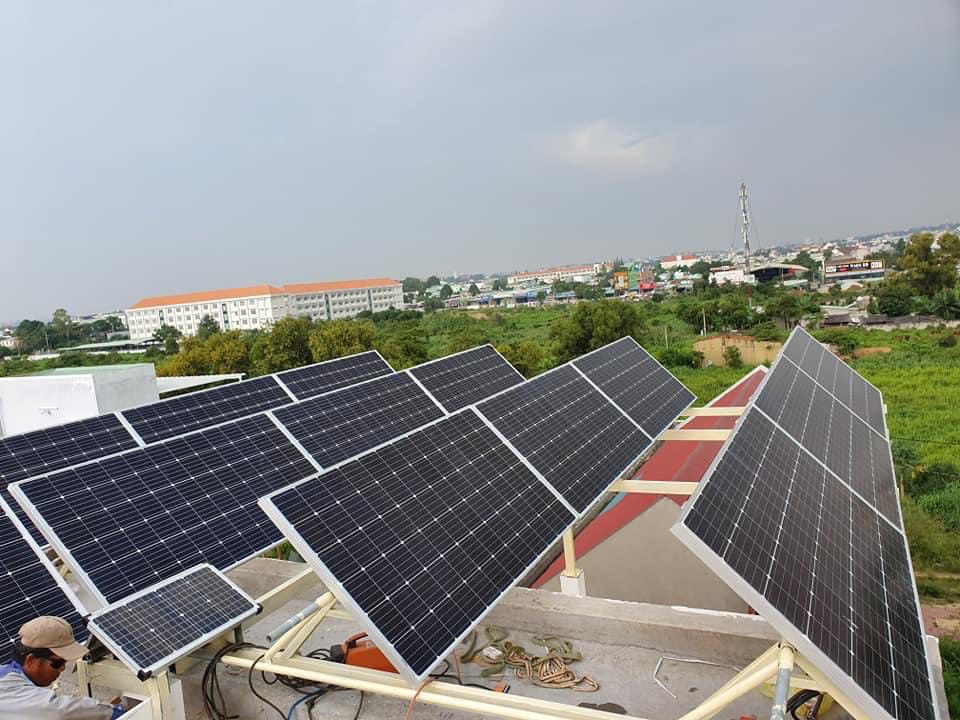
The French Development Agency (AFD) announced a $100 million concessional credit line to the Bank of Investment and Development in Vietnam (BDIV) and technical assistance to help establish green financing in Vietnam. As Vietnam continues its rapid development while disproportionately dealing with the adverse effects of environmental challenges, it is searching to develop green financing to underpin a sustainable, efficient renewable energy system. The BDIV plays a crucial role in that transition and the assistance from the AFD is a significant first step in the transition to green financing in Vietnam.
Development in Vietnam
In 1986, a set of economic reforms would fundamentally shift the role of markets in Vietnam. By encouraging private ownership, overturning its policy on forced collective farming and recognizing private land rights, the Doi Moi reforms provided a central role for markets as the primary resource allocation mechanism.
The results have been astounding for economic development and poverty reduction in Vietnam. In the last three decades, the poverty rate reduced from 70% to 6%, and the GDP per capita increased by 2.7 times. In total, more than 45 million people were able to leave poverty. Today, Vietnam is the fastest-growing economy in Southeast Asia.
A component of this development was a shift away from an agriculture-based economy to a more industrial economy. In 1988, agriculture constituted 46% of the GDP. Fast forward to 2014, and agriculture as a share of the GDP had contracted to only 17%, while the service sector and industrial sector accounted for 44% and 39%, respectively.
Economic Consequences
Nevertheless, similar to other nations with experienced industrialization and remarkable growth and in a truncated period, Vietnam struggles to manage the environmental consequences. It logically flows as the more dynamic an economy becomes, the more energy it requires to power it. Likewise, the quicker the development, the more demand for energy will outpace the supply. Vietnam is no exception; on average, its energy demands increase by 10% every year.
Naturally, when demand rapidly outpaces supply, countries search for cheap, quick options to increase supply. Therefore, fossil fuels, a historically abundant and cheap energy source, have primarily fueled Vietnamese development. As of 2019, 84.7% of Vietnam’s energy came from fossil fuels, primarily in the form of coal (50.25%) but also in oil (25.92%) and gas (8.61%).
This Faustian pact with the cheaper, more abundant resources – along with other trappings of middle-income status – comes with environmental consequences. In 1989, Vietnam contributed 0.26 tons of carbon emissions per capita to the globe. By 2017, this number jumped to 1.93 tons. As a result of the severe air pollution, 50,000 people a year die. Although significant inroads have occurred, access to clean water in Vietnam remains a problem as 9,000 people die a year from polluted water.
Environmental Consequences
In addition to medical costs, environmental deterioration has a profound economic cost. Air pollution causes a financial cost of around 5% of GDP per year.
As with most unintended consequences, the most impoverished bear the brunt of it. The most poverty-stricken members of society are the most exposed, susceptible and resource-poor to adapt to the deteriorating environment. However, as the U.N. noted that it also creates a “…vicious cycle, whereby initial inequality makes disadvantaged groups suffer disproportionate loss of their income and assets, resulting in greater subsequent inequality” that threatens the economic development Vietnam has achieved over the last three decades.
On the flip side then, the poor benefit the most from green financing. For example, some researchers investigated this connection by studying 25 Chinese provinces over 13 years and found a high correlation between the two variables. The group argues that through a strong absorption capacity, long industrial chains and a high degree of relevance, green financing has a “pulling effect on economic development and can effectively alleviate poverty.”
Green Financing
Vietnam has recognized this dynamic and has set out to reverse the trend. The government has made significant inroads in providing cleaner development through creating cleaner transportation infrastructure, safer water and shifting to renewables. However, Vietnam achieved these inroads through government financing. According to the Asian Development Bank Institute, to supply energy demand with renewable energy, 50% of total investment in renewable energy development must come from private green financing. Yet, due to a lack of capacity and infrastructure, Vietnam banks cannot get near the 50% number.
Nevertheless, the AFD concessional loan is a significant first step in establishing green financing in Vietnam. As noted, the AFD provided a $100 million concessional loan to BDIV. BDIV is one of the leading financial institutions in Vietnam. It has over 1,100 banks worldwide and assets totaling VND1.56 quadrillion to promote green financing. The credit line will also mark the first green finance fund AFD has set up in Vietnam. Notably, AFD and BDIV earmarked $366,000 of the loan for technical assistance to support the transition.
AFD is valuable and experienced. It has more than 90 projects worldwide worth over 2.3 billion Euros. In addition, it has experience supporting green development in various sectors such as transport, infrastructure, agriculture and energy.
Taking Action
The CEO of BDIV, Le Ngoc Lam, hinted at three critical takeaways for Vietnam and BDIV in particular. First, it will assist BDIV in improving its operational efficiency in financing Vietnam’s green development. Second, it will establish a partnership between BDIV and AFD for future green development loans or projects. Finally, it signals to international partners Vietnam’s willingness to participate in green development projects or financial partnerships.
Put another way, the loan provides significant financing, technical assistance and establishes a partnership that can lead to other green financing opportunities. Therefore, it is essential to establish green financing in Vietnam and, accordingly, sustaining its development and further alleviating poverty.
– Vincenzo Caporale
Photo: Wikipedia Commons

The IMF’s Assistance in Costa Rica’s Economic Recovery
In 2021, the International Monetary Fund (IMF) agreed to provide Costa Rica with a $1.7 billion loan “to support Costa Rica’s recovery and stabilization from the economic damage caused by the COVID-19 pandemic.” Although the Costa Rican government’s response to the COVID-19 pandemic was effective, economic improvements are stagnant. Costa Rica’s economy relies heavily on tourism and the COVID-19 pandemic created a significant halt in this sector. The IMF’s assistance in Costa Rica would help create jobs in high-demand areas and improve the resiliency of businesses.
Economic Challenges During COVID-19
The World Bank indicates that Costa Rica’s economy expanded over the last quarter of a century, with poverty rates lower than other Latin American countries. However, the COVID-19 pandemic caused the economy to decline by 4.6% in 2020. As a result, “one out of five workers” experienced unemployment by the last quarter of 2020 and the poverty rate in Costa Rica increased to 13%. As the situation improves, the economy expects to grow by 2.6% in 2021 and 3.3% in 2022.
The Organization for Economic Cooperation and Development (OECD) reports that besides the pandemic, Costa Rica’s increased budget deficits and debt could have played a role in the recent economic destruction. Since the Costa Rican government had to provide additional funding for social and health programs, the budget deficits would grow further. Therefore, a strong recovery plan is necessary to lower deficits and improve Costa Rica’s economic situation.
Tourism: A Struggling Industry
According to Reuters, Costa Rica’s economy struggled since “hotel and trade shrank by 40% last year.” The pandemic and tourism produced 8.5% of its gross domestic product. At the beginning of 2021, fewer tourists visited than in previous years, indicating that economic recovery could take a while. However, officials in the tourism industry remain optimistic for more tourists in the future since many attractions are outdoors and there are fewer concerns about the virus spreading in open areas.
However, the amount of COVID-19 cases in Costa Rica was at its highest point from the end of April 2021 into early May 2021, leading to decreased levels of tourism. The U.S. even issued a travel advisory warning for citizens planning to visit Costa Rica. The Costa Rican government attempted to help the tourism sector by indicating that industries such as tourism did not need to impose new COVID-19 restrictions. Nevertheless, several groups of international tourists canceled their plans to visit.
Officials aim to improve economic conditions by expanding sustainable tourism. This would benefit the environment and help small businesses. The Minister of Tourism explained that expanding this industry would increase employees’ incomes and allow tourists to see different attractions. Officials introduced this plan to the national bank to see if it could consider using additional recovery strategies such as credits or implementing changes in rates.
Overcoming the Economic Challenges
So far, the Costa Rican government has made several efforts to assist those most impacted by the pandemic. It distributed grants to at least 700,000 citizens who suffered the most during the pandemic. It also had businesses impose strict health precautions, preventing a massive spread of the virus and further economic downturn.
Al Jazeera states that the Costa Rican government began working with the IMF to obtain a loan that would go toward tax reform and selling assets. The IMF’s assistance would also help Costa Rica pay off part of the significant debt accumulated within the past few decades.
The IMF’s assistance expects to cover a three-year time frame to improve economic conditions and reduce poverty rates. The Costa Rican government also plans to put the loan toward strategies that could boost employment. The IMF reports that the majority of those facing unemployment are women and youths. Various career fields in Costa Rica need employees and many companies are struggling to hire due to the pandemic.
The Costa Rican government thinks increased spending on social services would allow more women to enter the workforce since these programs will ease the burden of many familial caretaking responsibilities often resting on the shoulders of women. In addition, the government wants to pass legislation that aims to improve the education system to increase the possibility of employment opportunities in higher-paying jobs.
Moving Forward
The IMF’s assistance in Costa Rica would mitigate the current economic situation by addressing the root causes of high unemployment rates and income inequality. This effort would contribute to further development and potentially allow Costa Rica’s economy to reach pre-pandemic rates of growth.
– Cristina Velaz
Photo: Pixabay
Global Gender Equality and the Gates Foundation
A Generous Donation
At the 2021 Generation Equality Forum, the Gates Foundation announced it would donate more than $2 billion to help improve gender equality worldwide. Over the next five years, the foundation plans to use the money to advance gender equality in three main areas: economic support, family planning and placing women in leadership roles. The Gates Foundation’s goal behind this decision is to specifically focus on gender-related issues that have worsened due to the COVID-19 pandemic. For example, the International Labor Organization found that unemployment for women increased by nine million from 2019 to 2020. Since the foundation has dedicated itself to supporting gender equality for many years, this monetary commitment will accelerate its progress.
Actions From the Foundation
Besides its billion-dollar donation, the Gates Foundation has been dedicating its work to create solutions for the lack of women’s equality for many years. In addition to several other million-dollar donations, in 2020, the foundation formally established the Gender Equality Division to prioritize its commitment to improving the lives of women and girls. From family health to economic empowerment, the foundation is working on expanding access to a variety of social, medical and educational services. This includes analyzing factors that help or hinder women and advising international governments on how to better support gender equality.
Solutions From Other Organizations
Aside from the Gates Foundation’s various efforts, other projects can improve circumstances relevant to global gender equality. One vital step to this process is looking at data from around the world. Data2X created a campaign that draws attention to issues associated with gender and proposes possible improvements. Similarly, another organization, Equality Now, uses legal and systemic advocacy to help improve global gender equality. Furthermore, after donating more than $400 million, the Ford Foundation has also committed to helping fix various gender-related issues. These issues include inequality in the economy and workforce.
The Gates Foundation’s donation of more than $2 billion is one significant step in eliminating global gender inequality. With initiatives worldwide, women and girls are gaining the equality and respect they should have always had. In addition, the Gates Foundation is supported by Data2X, Equality Now and the Ford Foundation. Together, people everywhere are working to understand and improve global gender equality.
– Chloe Moody
Photo: Wikimedia
The Love Is Project Reduces Poverty
The Love Is Project
Chrissie Lam is the founder and CEO of the Love Is Project. Harnessing her background in the corporate fashion industry, Lam taught women from Kenya, Indonesia and Ecuador how to create and market a product that will resonate with people worldwide. She worked with artisans to “design a bracelet emblazoned with one powerful word: LOVE.” The Love Is Project website explains the reasoning behind the initiative’s name: love is “the single common thread that connects us all.” The goal of the project is to uplift “thousands of female artisans in developing countries around the world through fair wages, healthcare, education and more.” The project now covers 10 countries, empowering more than 2,000 women in Kenya, Indonesia, India, Guatemala, Bhutan, Ecuador, Vietnam, Columbia, Mexico and the Philippines to enter the workforce by becoming entrepreneurs.
How Making Bracelets Reduces Poverty
Poverty disproportionately impacts women, with women more likely to live in persistent poverty than men. About 22% of women have a persistent low income, compared with about 14% of men. As a result, it is harder for women to accrue “rainy day savings” and assets. In this way, women are at an economic disadvantage in comparison to their male counterparts.
During her trip to Kenya, Lam realized that “true empowerment is about job creation. Women need to be able to support themselves and their families.” Because of this “pay it forward” ideology, the Love Is Project has impacted thousands of lives through employment opportunities and financial freedom.
Showing solidarity during COVID-19, in 2020, the Love Is Project began the LOVE Grows Program. The program is a sustainable initiative “to empower locals to grow their own farming practices and skills so families can thrive — physically and economically.” The business also supports food gardens in Bhutan and provided a monetary donation to the ACCESS Development Services organization in India. Furthermore, the business “donated masks, sewing machines, supplies and food” to its partners in Uttar Pradesh, India.
Impact of the Love Is Project
A 28-year-old Love Is Project Kenyan artisan, Nantiyon Letaapo, started beading bracelets for the project in 2019. The income she earns allows her to support her family, enroll her four children in school and accumulate financial savings.
The Love Is Project is a business created, sustained and supported by women. It not only upholds the symbolic custom of beadwork in various countries around the world but also teaches women and girls that if they lead with love, they can achieve success.
– Sara Jordan Ruttert
Photo: Flickr
5 Ways Connecticut Senators Fight for Foreign Aid
5 Ways Connecticut Senators Fight for Foreign Aid
Committing to a Progressive Foreign Policy
Actively solving issues like hunger and infectious diseases tie directly into fighting global hunger. Hence, Connecticut Senators Murphy and Blumenthal remain committed to a progressive foreign policy. They have shown their commitment through public statements, letters to other senators and legislation like the Global Health Security Act. Ultimately, the Connecticut Senators want the U.S. to be an active member of a global community. The country would, accordingly, use its power to alleviate global inequalities and stem poverty.
– Samuel Weinmann
Photo: Flickr
Green Financing in Vietnam – Help From France
The French Development Agency (AFD) announced a $100 million concessional credit line to the Bank of Investment and Development in Vietnam (BDIV) and technical assistance to help establish green financing in Vietnam. As Vietnam continues its rapid development while disproportionately dealing with the adverse effects of environmental challenges, it is searching to develop green financing to underpin a sustainable, efficient renewable energy system. The BDIV plays a crucial role in that transition and the assistance from the AFD is a significant first step in the transition to green financing in Vietnam.
Development in Vietnam
In 1986, a set of economic reforms would fundamentally shift the role of markets in Vietnam. By encouraging private ownership, overturning its policy on forced collective farming and recognizing private land rights, the Doi Moi reforms provided a central role for markets as the primary resource allocation mechanism.
The results have been astounding for economic development and poverty reduction in Vietnam. In the last three decades, the poverty rate reduced from 70% to 6%, and the GDP per capita increased by 2.7 times. In total, more than 45 million people were able to leave poverty. Today, Vietnam is the fastest-growing economy in Southeast Asia.
A component of this development was a shift away from an agriculture-based economy to a more industrial economy. In 1988, agriculture constituted 46% of the GDP. Fast forward to 2014, and agriculture as a share of the GDP had contracted to only 17%, while the service sector and industrial sector accounted for 44% and 39%, respectively.
Economic Consequences
Nevertheless, similar to other nations with experienced industrialization and remarkable growth and in a truncated period, Vietnam struggles to manage the environmental consequences. It logically flows as the more dynamic an economy becomes, the more energy it requires to power it. Likewise, the quicker the development, the more demand for energy will outpace the supply. Vietnam is no exception; on average, its energy demands increase by 10% every year.
Naturally, when demand rapidly outpaces supply, countries search for cheap, quick options to increase supply. Therefore, fossil fuels, a historically abundant and cheap energy source, have primarily fueled Vietnamese development. As of 2019, 84.7% of Vietnam’s energy came from fossil fuels, primarily in the form of coal (50.25%) but also in oil (25.92%) and gas (8.61%).
This Faustian pact with the cheaper, more abundant resources – along with other trappings of middle-income status – comes with environmental consequences. In 1989, Vietnam contributed 0.26 tons of carbon emissions per capita to the globe. By 2017, this number jumped to 1.93 tons. As a result of the severe air pollution, 50,000 people a year die. Although significant inroads have occurred, access to clean water in Vietnam remains a problem as 9,000 people die a year from polluted water.
Environmental Consequences
In addition to medical costs, environmental deterioration has a profound economic cost. Air pollution causes a financial cost of around 5% of GDP per year.
As with most unintended consequences, the most impoverished bear the brunt of it. The most poverty-stricken members of society are the most exposed, susceptible and resource-poor to adapt to the deteriorating environment. However, as the U.N. noted that it also creates a “…vicious cycle, whereby initial inequality makes disadvantaged groups suffer disproportionate loss of their income and assets, resulting in greater subsequent inequality” that threatens the economic development Vietnam has achieved over the last three decades.
On the flip side then, the poor benefit the most from green financing. For example, some researchers investigated this connection by studying 25 Chinese provinces over 13 years and found a high correlation between the two variables. The group argues that through a strong absorption capacity, long industrial chains and a high degree of relevance, green financing has a “pulling effect on economic development and can effectively alleviate poverty.”
Green Financing
Vietnam has recognized this dynamic and has set out to reverse the trend. The government has made significant inroads in providing cleaner development through creating cleaner transportation infrastructure, safer water and shifting to renewables. However, Vietnam achieved these inroads through government financing. According to the Asian Development Bank Institute, to supply energy demand with renewable energy, 50% of total investment in renewable energy development must come from private green financing. Yet, due to a lack of capacity and infrastructure, Vietnam banks cannot get near the 50% number.
Nevertheless, the AFD concessional loan is a significant first step in establishing green financing in Vietnam. As noted, the AFD provided a $100 million concessional loan to BDIV. BDIV is one of the leading financial institutions in Vietnam. It has over 1,100 banks worldwide and assets totaling VND1.56 quadrillion to promote green financing. The credit line will also mark the first green finance fund AFD has set up in Vietnam. Notably, AFD and BDIV earmarked $366,000 of the loan for technical assistance to support the transition.
AFD is valuable and experienced. It has more than 90 projects worldwide worth over 2.3 billion Euros. In addition, it has experience supporting green development in various sectors such as transport, infrastructure, agriculture and energy.
Taking Action
The CEO of BDIV, Le Ngoc Lam, hinted at three critical takeaways for Vietnam and BDIV in particular. First, it will assist BDIV in improving its operational efficiency in financing Vietnam’s green development. Second, it will establish a partnership between BDIV and AFD for future green development loans or projects. Finally, it signals to international partners Vietnam’s willingness to participate in green development projects or financial partnerships.
Put another way, the loan provides significant financing, technical assistance and establishes a partnership that can lead to other green financing opportunities. Therefore, it is essential to establish green financing in Vietnam and, accordingly, sustaining its development and further alleviating poverty.
– Vincenzo Caporale
Photo: Wikipedia Commons
Advancements in Indigenous Fashion
History Behind the Pattern
Indigenous people, specifically the indigenous people of Guatemala, have a specific reason for choosing their patterns and distinctive colors. Color and design are deeply integrated into their everlasting culture and history. According to an ancient Mayan myth, the Mayan goddess Ixchel first developed this type of design, called loom weaving. People know her as the goddess of love, the moon, medicine and textile arts. Loom weavers utilize her practices to create fashionable crossbody bags. Whether they work with a company or by themselves, weavers are benefitting from the popularity of their culture’s patterns.
Weaving has henceforth become more than just a means for indigenous women to provide for their families. These women have important roles in their communities and these skills are teaching them to push for more self-reliance within themselves.
Mama Tierra
Indigenous Guatemalans are not the only ones taking advantage of this development in indigenous fashion. A nonprofit organization called Mama Tierra (which translates to “Mother Earth” in Spanish) is helping advance self-reliance in the Wayuu community through fashion. Founded in 2014, Mama Tierra assists the Wayuu community of La Guajira in several ways. It works to:
The Wayuu community greatly needs and appreciates Mama Tierra’s work. Consisting of 600,000 people, many in the Wayuu community do not have electricity or running water. Environmental changes make their land less suitable for growing food. Additionally, 50 Wayuu children younger than 5 die each month in La Guajira due to malnutrition and related causes. These families display their humanity through the bags they produce: each bag comes with a tag with a picture of the maker and their children. With the help of organizations like Mama Tierra, the Wayuu people are improving their lives and changing their futures.
Moving Forward
Indigenous women are now turning their skills and culture into something that will pay off in the long run. Apart from providing for their families, the women are making something of themselves, putting their names on something that they created. Organizations like Mama Tierra have also created trading routes for this community, displaying their artistic skills to the fashion world. By doing this, indigenous communities’ work is becoming commercialized for a broader market to see. With skillful weaving and vivid colors, the women make their own indigenous fashion and show the larger industry they are here to stay.
– Maria Garcia
Photo: Flickr
Addressing Lesotho’s Water Crisis
Lesotho gained independence from the United Kingdom in 1966 and is one of Africa’s few remaining constitutional monarchies. Although Lesotho is one of the youngest and smallest countries in Africa, it has the second-highest adult HIV/AIDS rate in the world. Surrounded by South Africa and plagued by devastatingly high disease and poverty rates, Lesotho’s economic situation is unique. Water generates significant revenue and growth for the country, with the water industry responsible for roughly 8 to 10% of the country’s gross domestic product (GDP). However, the Highlands, a water-rich region in Lesotho, is susceptible to the uncertainties of climate change, leading to the beginning of Lesotho’s water crisis.
Lesotho’s Water Industry
The country’s access to abundant clean water led to the creation of the Lesotho Highlands Water Project (LHWP), with the Highlands’ Orange-Senqu River Basin as the center of Lesotho’s water sector. Lesotho’s water industry now supplies various water-poor countries and regions within the southern tip of Africa.
Contributing more than 3% of the country’s GDP, the LHWP uses hydroelectric power to transfer water from Lesotho to the Gauteng region of South Africa, where water is even more scarce. However, while the water industry brings in revenue, it has also inadvertently created great scarcity for Lesotho’s rural citizens.
Water Scarcity in Lesotho
Lesotho’s water industry involves many trade-offs, including decreased water security for both urban and rural residents. Local communities lack the infrastructure needed to benefit from Lesotho’s water supply. As a result, citizens of Lesotho have limited access to a resource that is historically abundant in the region.
Aside from the inadequate domestic water supply, changes in climate will also affect the long-term sustainability of Lesotho’s water industry. The region has a history of high temperatures, inconsistent precipitation and detrimental droughts. For example, El Niño-induced droughts have created states of emergency that lasted for more than six months. Lesotho’s vulnerability to climate change makes long-term plans to maintain the water industry and improve domestic water access imperative.
Addressing Lesotho’s Water Crisis
Lesotho recognizes its water crisis and is working to reduce water insecurity throughout the country. Developing new sources of water and water treatment, advanced transfer methods and increased bulk resource storage are all tenets of the Lesotho Lowlands Water Supply Scheme (LLWSS). Following Phase I’s completion in 2003, LLWSS is currently completing Phase II of the program. This phase includes further social, developmental and environmental programs that aim to advance infrastructure, dams, tunnels and local hydropower.
The Metolong Dam and Water Supply Program (MDWSP) will likely benefit more than 400,000 citizens of Lesotho and increase the quantity of safe water while also strengthening the water industry. The Lowlands Rural Water Supply and Sanitation Program is an extension of MDWSP focused on improving universal and sustainable access to clean water in Lesotho’s rural areas.
The three aforementioned programs are only a few of the ways Lesotho is addressing its water crisis. Water scarcity is a facet of poverty that many countries struggle to fight. Lesotho is working toward widespread access to clean water through long-term solutions while continuing to grow an important sector of its economy.
– Annaclaire Acosta
Photo: Flickr
5 Facts About Healthcare in the Marshall Islands
5 Facts About Healthcare in the Marshall Islands
Healthcare Potential
Some of these five facts may paint a harsh picture of healthcare in the Marshall Islands. However, there is still great potential for improvement in the future. The effectiveness of care, for starters, is a great opportunity for the country to excel in its healthcare coverage. With the intervention of organizations such as WHO and an ever-improving healthcare system overall, these statistics could one day be numbers of the past.
– Rebecca Fontana
Photo: Flickr
Advancing Women’s Rights in Canada
In 1884, Ontario became the first Canadian province to grant women the same legal rights as men through the Married Women’s Property Act. In 1900, Manitoba became the second province to recognize the act. While this proved to be a turning point for women’s rights in Canada, a great deal of work remained.
In 1928, five women, Henrietta Muir Edwards, Nellie McClung, Louise McKinney, Emily Murphy and Irene Parlby, petitioned the Canadian government to have the Supreme Court decide whether the British North America Act recognized women as “persons.” The court initially ruled that women were not considered “persons” under the act, but in 1929 it reversed its ruling. While this was a huge advancement of women’s rights in Canada, it was advantageous mainly for white women. It wasn’t until 1960 that women belonging to minority groups received full legal rights, including the right to vote.
Canada’s Gender Wage Gap
Through the years, the Canadian government has striven to promote gender equality across the country. However, plenty of work remains. In 2015, a U.N. Human Rights Report raised concerns about Canada’s economic inequality and in particular cited “persisting inequalities between women and men.” Similarly, in 2016, a study by the Organisation for Economic Co-operation and Development (OECD) ranked Canada as having the eighth-highest gender pay gap out of 43 surveyed countries.
Women in Office
Women make up an estimated 50% of Canada’s population, and representatives should reflect their constituents. Following the 1929 clarification of “persons” in the British North America Act, women eventually began holding elected office. However, decades passed before women of color received the same legal rights as white women. Even today, the Canadian government struggles with a lack of diversity.
Fortunately, Prime Minister Justin Trudeau has made it his goal to change this trend. In July 2021, Trudeau appointed Mary Simon, Canada’s first Indigenous governor general. Her appointment marks a major milestone for Canada as the country continues to grapple with past and current discriminatory practices against Indigenous communities.
Women in the Workforce during COVID-19
As the world continues to feel the effects of the COVID-19 pandemic, many Canadians remain unemployed, and women have experienced higher rates of job loss than men. According to the Royal Bank of Canada (RBC), almost half a million women who lost their jobs during the pandemic have been unable to return to the workforce as of January 2021. Among those most impacted were women of color, immigrants, young professionals and new mothers. The pandemic forced many companies to downsize, and experts warn that these changes could permanently and disproportionately impact women.
Progress in Recent Years
Despite lingering uncertainties, Prime Minister Trudeau still believes the country can “smash one of the defining inequalities of our time.” Recently, Canada has pledged $100 million to address inequalities in both unpaid and paid care work internationally, as well as $80 million to support feminist movements and organizations around the world.
In July, Canada also announced the creation of the Pay Equity Act, which will go into effect on August 31, 2021. The new law will promote gender equality and help close the gender wage gap. It will also apply to parliamentary workplaces. Under the Pay Equity Act, employers will inform their employees of an upcoming new pay equity plan by November 1, 2021, create a pay equity committee and then share their pay equity plan with employees by September 1, 2024.
Canada’s ability to acknowledge its flaws will open new opportunities for the country to end gender inequality. The government’s commitment to advancing women’s rights in Canada and around the world will bring about needed change and serve as a blueprint for other countries hoping to improve women’s rights.
– Jordyn Gilliard
Photo: Flickr
Clean Energy Buses in South Africa
In the days of a global pandemic and climate change creeping up on the world, the need to utilize more natural forms of energy to power the world has become preeminent. And in South Africa, major steps are being taken, starting with their public transportation using clean energy buses.
Where Golden Arrow Comes In
In July 2021, Golden Arrow, one of the major organizations that provide public transportation for people in Cape Town, South Africa, has put out two fully electric buses to help transport individuals without using types of energy that are harmful to the air and to the world as a whole. According to IT News Africa, Golden Arrow began its renewable energy project back in 2016, and this project is in collaboration with the bus company, the city of Cape Town and New Southern Energy, a construction company based in South Africa that helps make solar energy products.
These clean energy buses in South Africa are expected to be run from Retreat all the way to Cape Town, which will be very convenient for people in the area due to the collapse of train services in the metro ran by MetroRail.
Due to this collapse of services, caused by poor conditions, looting and attacks from civilians, many people that worked for MetroRail have lost their jobs in an area where unemployment is already at an all-time high. The French Agency of Development (AFD), highlights that young people represent more than half of the unemployed population in Africa, or 60% to be exact. However, Golden Arrow has increased its services recently around the time these buses were introduced, so for some people in search of a job, bus operations might alleviate unemployment.
Launching the Effort
The program of launching these vehicles, according to IT News Africa, did not involve the vehicles themselves; it started from the ground up. Golden Arrow installed a small solar-powered system in one of its main vehicle depots in Epping, a small town within Cape Town. Then, in the next two phases of the program, it expanded its solar power capabilities by installing 2,500 panels at its Multimech stop. Then, with the success of these solar systems, it was time to test it out on the buses.
Two types of tests were done with the clean energy buses in South Africa, according to Techinafrica. One bus was completely empty, and the other had sandbags filled in the bus that simulated the weights of different passengers — 44 of them to be exact. For a few months, the team at Golden Arrow has been running those tests, becoming excited with the progress being made as Gideon Neethling, an engineer for Golden Arrow, stated, “Testing these vehicles has been a joy for everyone who is part of the project. Each time we carry out a new test or reach a new milestone, the level of excitement increases further.”
Considering the Future
According to Oxfam, an estimated 633 million people in Africa are living without access to electricity, and almost 800 million people are cooking food with old cookstoves, which is deemed not safe. With renewable energy use on a decline in Africa, these clean energy buses in South Africa stand to positively benefit the country and the continent as a whole. Golden Arrow can transport its 250,000 passengers every day, employ some of them to launch these solar-powered buses and then continue to add more buses to its network. Thanks to Golden Arrow, Africa is better poised to fight harmful energy, add new jobs and fight poverty within the continent.
– Matt Orth
Photo: Unsplash