In 2019, the world witnessed the first 3D-printed neighborhood in Tabasco, Mexico, in partnership with nonprofit charity organization New Story and ICON, an Austin-based company developing advanced construction technology. Together, the groups built two houses within a week, a process that would usually take months. As a result, New Story is tackling the challenge of global homelessness in a cost-effective, efficient and sustainable manner through the implementation of 3D printing in global housing initiatives.
The Beginnings of New Story
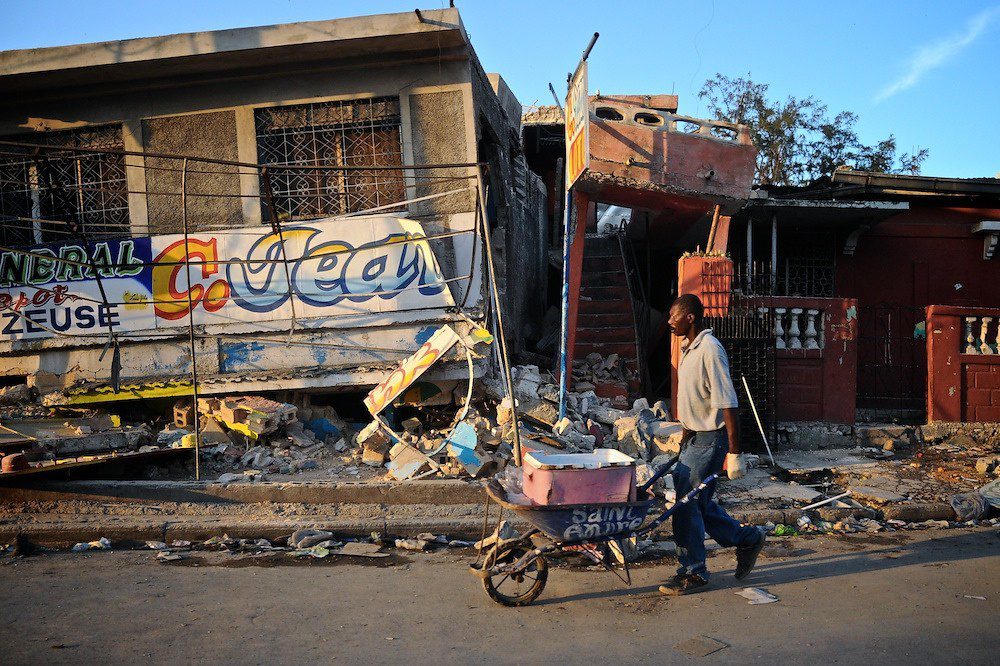
After the 2010 earthquake that devastated Haiti, New Story co-founder Brett Hagler met with struggling families. The destruction of homes due to the natural disaster displaced thousands of Haitians. However, this experience did not leave Hagler who would then go on to partner with Alexandria Lafici and Matthew Marshall to found New Story in 2014.
The organization’s original focus was on the earthquake victims that hit Haiti. It crowdfunded for building homes with a goal of roughly $6,000 for each building before construction began, as TechCrunch reported. Each house would have a timeline of approximately 45 days to build and involve the partnership of local nonprofits to vet families in need of housing.
Speaking with Sarah Buhr from TechCrunch, Brett Hagler discussed the importance of houses, saying, “there are a number of things we don’t think about that go along with not having a home, such as rape and kidnapping of children.” Additionally, from 2014 to 2018, New Story expanded from Haiti to communities in El Salvador, Bolivia and Mexico and built more than 850 homes. In addition, it has created partnerships with leading organizations around the world such as Salesforce, DocuSign and Amazon.
Now, New Story is transforming the global housing initiative with 3D-printed homes through its partnership with ICON.
ICON and New Story
In 2018, New Story partnered with ICON, an Austin-based robotics construction company using 3D printing robotics, software and advanced material, to bring 3D-printed houses to those who most need them. In March 2018, the two organizations exhibited a permanent 3D-printed home at the SXSW festival in Austin. According to CNN Business, the home had three rooms consisting of a bedroom, a living room and a small room that could either be another bedroom or office. The two constructed the house within 48 hours using a 3D printing machine.
The two organizations developed the Vulcan 3D printer. It can print homes and anyone can operate it with basic training. ICON expects the 3D-printed houses to last as long or longer than standard Concrete Masonry Unit (CMU) built homes. Printing with Lavacrete, a concrete mixture, construction projects can stay within the schedule and budget. Building homes and structures that boast impressive statistics, such as compressive strength of 2,000 – 3,500 psi, the Vulcan 3D printer changed the world with its innovation, leading to the world’s first 3D-printed neighborhood.
The World’s First 3D-Printed Neighborhood
In December 2019, New Story, ICON and ÉCHALE, a nonprofit in Mexico, built the first 3D-printed neighborhood in Tabasco, Mexico, as CNN Business reported. According to Sarah Lee, a blogger for New Story, the organization met with many families “who had to be resourceful to stay afloat.”
Many times, these homes experienced overcrowding and were falling apart. In Tabasco, a state prone to flooding in Mexico, factors like the ability to withstand an earthquake and keep families dry during heavy rains played a significant role in the design process.
Each 3D-printed home spanned 500-square-feet with two bedrooms, one bathroom, a living room and a kitchen. The houses had curved walls and a flat roof painted with cool roof paint on the outside, Lee reported. This paint ensures that the tiles are waterproof and deflect heat from the house.
The rest of the houses that New Story provided in the neighborhood comprised ecoblocks, a “compressed earth block technology that uses 90% local earth and only 10% cement.” In total, New Story, ICON and ÉCHALE provided 65 homes for struggling families.
Global Housing Initiatives to End the Global Housing Crisis
New Story and ICON brought innovative technology to implement global housing initiatives and help families and people worldwide. These 3D-printed homes are the newest chapter in global housing initiatives and only time will tell where the 3D printing industry will go.
– Gaby Mendoza
Photo: Flickr

How Smart Cities in Latin America Alleviate Poverty
According to TWI, “a smart city uses information and communication technology (ICT) to improve operational efficiency, share information with the public and provide a better quality of government service and citizen welfare.” The primary purpose of a smart city is to improve the lives of its citizens by using innovative technology “to optimize city functions and promote economic growth.” According to the Inter-American Development Bank, “a Smart City is one that places people at the center of development,” highlighting the value of smart cities in addressing issues that impact a city’s most marginalized population. In particular, smart cities in Latin America have the potential to lift the region out of poverty.
Addressing Poverty with Information and Communication Technology
In Latin America, smart cities are gaining more traction as nations look for innovative ways to address poverty and improve the lives of their citizens. Across the region, developing nations are embracing information and communication technology to address environmental concerns, improve energy efficiency and provide people with essential resources such as running water.
Investment in smart city infrastructure allows for the opportunity “to build more reliable power grids or expand the Internet” to stimulate economic growth in low-income communities. In addition, technological advancements in public transportation have the potential to create an equitable and accessible city, providing people on the periphery the opportunity to access urban centers unlike ever before. More than half of the world’s population live in cities with a projected increase to 66% by 2050. As rural communities continue to seek economic opportunities in the urban landscape, it is more important than ever for cities to implement the people-centered model of smart cities.
4 Smart Cities in Latin America
Rising Smart Cities in Latin America Alleviate Poverty
Cities throughout Latin America are alleviating poverty by integrating smart technology into their frameworks. Urban areas that focus on creating smart and connected systems of living offer numerous benefits for their people, including improving the quality of life and ensuring the sustainable application of resources. With an urbanization rate of 80% in 2017, Latin America stands as the world’s most urbanized region, which means there is ample opportunity for smart city implementation.
– Jennifer Hendricks
Photo: Flickr
The Effects of the Economic Collapse in Lebanon
Poverty continues to loom over Lebanon’s most vulnerable communities, leaving them to battle with deteriorating living standards and several health hazards. Lebanese people’s quality of life sank to an unprecedented low due to many reasons. One of the most prominent reasons for the economic collapse in Lebanon is the Lebanese government’s immense amount of debts that add up to the “equivalent [of] 150% of national output.”
Lebanon’s Economic Landscape
Some financial experts describe the Lebanese government’s economic system “as a nationally regulated Ponzi scheme where new money is borrowed to pay existing creditors.” Adding to the nation’s troubles, the corrupt elite in Lebanon exploited the country’s foreign aid and income post-civil war and continue to do so to this day. The indebted government struggled to make ends meet, which led to the devaluation of the national Lebanese currency. While the economic collapse affected all citizens residing on Lebanese land, the already dire standard of life of the Lebanese lower-class became worse in several ways.
5 Ways the Economic Collapse in Lebanon Impacts Disadvantaged People
Beit El Baraka
As the factors mentioned above overlap, nongovernmental organizations (NGOs) launched several initiatives and efforts to aid Lebanon’s most vulnerable communities. One of the most prominent NGOs currently operating on a large scale within Lebanon is Beit El Bakara. The NGO is dedicated to helping Lebanon’s vulnerable families by covering medical expenses, paying bills and tuitions and providing meals and essential services. Since its launch, Beit El Baraka’s team helped more than 128 families pay their electricity bills, paid 93 families’ rental costs, covered the cost of treatment for 1,681 patients in need and refurbished 3,011 homes across 62 Lebanese areas.
The economic collapse in Lebanon is becoming increasingly dire. Without help, Lebanon and its people could face a catastrophic fate as more than half of the population sinks below the poverty line. Therefore, aiding the Lebanese population should be a top priority of the international community.
– Nohad Awada
Photo: Wikipedia Commons
Challenges for Impoverished Indigenous Australians
As of 2021, Australia remains within the top 15 economies in the world. However, as the Australian economy flourishes, the Indigenous Australian community remains a forgotten minority. According to the Aboriginal and Torres Strait Islander Commission (ATSIC), a former Indigenous Australian government body, this marginalization increases several poverty risks within the community. In reference to research that the ATSIC conducted, more than 120,000 Indigenous Australians are currently living below the poverty line. This indicator signifies that more than 30% of the Australian Indigenous population endure “income poverty” and suffer from various forms of inequality on several life-impacting bases. A closer look at the challenges for impoverished Indigenous Australians provides insight into the severity of this marginalization.
Education and Work
Indigenous Australians often face income inequality when they join the workforce. Between 2018 and 2019, the weekly “median gross adjusted household income” of Indigenous Australians aged 18 and older was approximately $553. This number is a cause for concern because it is significantly lower than the wages of non-Indigenous Australians whose weekly median gross household income is about 65% higher.
Moreover, Indigenous teenagers are three times more likely to not receive full-time education than any non-indigenous group in Australia. Roughly 70% of young adult Australian Indigenous people do not work a full-time job or engage in full-time education, which causes an increased risk that affects their income average, living standards and overall quality of life.
Indigenous Australians must overcome several struggles when seeking out education. One of the biggest obstacles Indigenous Australians in under-funded or rural areas must overcome is the language barrier. The Australian nationwide curriculum includes only English instruction, which creates a language barrier for students within remote Indigenous areas.
Furthermore, schools in rural areas often occupied by Indigenous Australians are severely underfunded. The Australian government spends 47 cents on education per child in remote communities for every dollar spent on education per child in the Northern Territory of Australia. Also, many impoverished Australian students live with their extended family in overcrowded households, which creates distractions and deprioritizes education for Indigenous youth. All the factors mentioned above lead to an increased poverty rate in Indigenous communities due to the poor quality of education or the complete lack of it.
Health
Poverty within Indigenous Australian groups is also a significant contributor to the increased health hazards Indigenous Australians face. Many illnesses threaten the lives of indigenous Australians at much higher rates than non-Indigenous Australians. For example, diseases that otherwise do not exist within other communities threaten Indigenous Australian communities. Moreover, disability, as well as chronic and terminal illness, are observed at much higher rates within Indigenous communities throughout the country. These implications lead to a decreased life expectancy among Indigenous Australians as projections determine that they could live “20 years less” than any other group of people in Australia.
It is important to note that, according to a 2019 Oxfam analysis of Australian inequality, Australian indigenous women face several additional threats when it comes to poverty. Many gender-based health risks arise due to poverty and inequality. Indigenous Australian women face an increased infant mortality rate. In fact, the infant mortality rate for Indigenous Australian women is about twice the rate of their non-indigenous counterparts. In addition, Indigenous Australian women face the consequences of income inequality. Women in Australia make 85 cents for every dollar a man makes. This income gap widens further when it comes to Indigenous women, which puts them at an increased risk of poverty.
Combating COVID-19
The Australian Department of Health states that COVID-19 poses a greater health risk to Indigenous Australians in comparison to non-Indigenous people. Several structural and systematic injustices, such as limited access to health care, added risks due to pre-existing health issues and the lifestyles within remote Indigenous Australian communities, lead to this reality. However, the Australian government launched several efforts to help lessen the dire impacts of the COVID-19 pandemic on Indigenous Australians. This assistance materialized in the Indigenous community as 53% of Indigenous Australians older than 16 were receiving income support throughout the pandemic, which helped alleviate the impacts poverty has on these communities all over the country.
Community Support for Impoverished Indigenous Australians
While injustices continue to increasingly affect Indigenous Australian communities, it is important to note that activists are leading multiple efforts and initiatives to aid with alleviating poverty in these communities. For example, based in Victoria, Australia, Pay The Rent Grassroots Collective is a collaborative effort between Australians that aids struggling Indigenous Australians by collecting funds from non-Indigenous Australians. Because of this group, many native clans and people avoid instability by allowing the Indigenous Australians within Pay The Rent’s decision-making team to study the community’s needs and establish solutions to meet these needs.
As social and economic hardship continues to affect Indigenous Australians, taking action through evident support and direct aid to the community’s most vulnerable is more important than ever. As funds increase, it is clear to see that the nongovernmental organizations founded by Indigenous Australians are taking steps toward alleviating poverty among impoverished Indigenous Australians.
– Nohad Awada
Photo: Flickr
Using Green Trade to Transform Developing Nations
Following the impacts of COVID-19, many developing countries are attempting to rebuild their economies and alleviate the financial hardships of the people facing these impacts. Prior to the pandemic, the International Energy Agency predicted that renewable energy would expand by 50% between 2019 and 2024. As of 2022, it seems many nations are more focused on economic advancement rather than avoiding environmentally dangerous actions. Many world organizations are advocating for “greening trade” as a new growth strategy that could protect the environment and benefit nations with high poverty levels as a consequence of the onset of COVID-19. Green trade has the potential to transform developing countries.
What Does Greening Trade Mean?
According to the United Nations Environment Programme (UNEP), greening trade involves promoting sustainable measures to engage in trade that do not pollute land or water. The process focuses mainly on engaging in trade with renewable energy and energy efficiency markets. Greening trade helps the environment while maintaining trade relations for economic prosperity.
Evidence of Success in Greening Trade
In 2019, Palgrave Communications reported that the green trading industry generated $1.3 trillion in the United States economy alone. The industry has created 9.5 million full-time jobs in the U.S. In China, the International Monetary Fund (IMF) reported that a mix of carbon taxes and green investment could have the potential to increase China’s GDP by 0.7% and create more than 12 million jobs by 2027. It is clear that green trade has created success in major economies globally.
How Can Greening Trade Reduce Poverty?
The World Trade Organization (WTO) released a study in January 2022 suggesting that more trade in green technologies could help developing nations transition to a low carbon economy. This is an advantage for nations with impoverished populations because new guidelines by WTO may require green practices in the future. In consideration, implementing green policies could prepare developing countries for future trading markets while preventing the countries from lagging behind.
Greening Trade Begins in Developing Countries
In September 2021, the Brookings Africa Growth Initiative hosted an event to explore opportunities for green trade with Europe’s new Green Deal. The event occurred in hopes of encouraging the African Continental Free Trade Area (AfCFTA) to do the same. The AfCFTA is projected to bring 30 million Africans out of poverty simply by means of trade and would benefit from engaging in green trade to maintain trade relations with the United Nations. The recent African Green Recovery Action Plan states that “for the COVID-19 recovery to be sustainable, it must link a green recovery with an inclusive recovery.” The plan insinuates that marginalized groups and those in poverty can benefit from green plans.
The World Bank states that Vietnam should use its resources to promote green trade to maintain a competitive edge in international markets and generate new, innovative jobs for the unemployed to combat pandemic-induced poverty levels. Green recovery is crucial in the post-COVID-19 era to improve the conditions of those in poverty, specifically in developing countries that have the opportunity to rebuild.
Ways to Green Trade
UNEP suggests four ways that governments can actively engage in greening trade:
Green trading is a relatively new industry and its full economic potential has not yet come to fruition. If developing countries take advantage of engaging in green trade now, these nations could be setting themselves up for the future of trade in general while benefiting their economies.
– Rachel Reardon
Photo: Flickr
A Look at Mental Health in Egypt
Increased levels of stress and fear due to the COVID-19 pandemic have led to a spike in mental health issues globally. Egypt is no exception to these mental health concerns, prompting the Egyptian government to take steps to address the subject of mental health in Egypt. For the country and its citizens, studies of mental health and mind date as far back as the Pharaonic era. Today, COVID-19 has prompted a revitalization of mental health awareness and solutions to better strengthen Egypt’s mental health care.
Mental Health in Numbers
A country-wide survey by Egypt’s Ministry of Health in 2018 indicates that 25% of Egyptians suffer from mental health issues. The Ministry of Health derived the data from a “random sample of 22,000 families” in Egypt. The survey noted a high prevalence of depression and anxiety conditions with anxiety impacting almost 44% of the population experiencing mental health issues. About 31% of Egyptians enduring mental health conditions are “suffering from depression that is linked to substance abuse.”
A 2020 study that Safaa M. El-Zoghby led aimed to uncover the effects of the COVID-19 pandemic on mental health in Egypt. Researchers gathered data between May 2, 2020, and May 9, 2020, from a survey of 510 Egyptian adults. The survey results indicated that 41.4% of respondents endured severe mental health impacts due to the stressors of the COVID-19 pandemic.
A lack of mental health awareness and high treatment costs prevent progress in the mental health arena. The societal stigma surrounding mental illness tends to discourage Egyptians from seeking out help for mental health conditions. Schizophrenia, for example, is one mental illness in Egypt that continues to hold significant stigma. In an interview with Al-Ahram Weekly, Egyptian-Canadian psychologist Rita Kallini has stated that society labels Egyptians suffering from schizophrenia as “crazy.” In addition, the Egyptian Journal of Psychiatry conducted a study in 2020 that indicates that almost 44% of 300 patients with diverse mental health conditions reported victimization in the past year.
History of Egyptian Mental Health
In Egypt’s ancient past, the country studied and documented mental health. Ancient Egyptians’ knowledge and awareness of “diseases of the mind” point to this, according to an article by Mervat Nasser, a senior lecturer in psychiatry at the University of Leicester. Her studies involve an analysis of ancient Egyptian papyri, which documents some of the first known concepts of psychology and mental health disorders.
In studying the papyri, Nasser concluded that the ancient Egyptians identified mental health conditions in their people similar to the conditions modern psychiatrists and doctors see in their patients today. For example, ancient Egyptians described a form of sadness with the ability to manifest physical illness. In Nasser’s explanation, she determined that this sadness “is this somatized form of depression that is still regarded to be the commonest presentation in Egypt today.” Nasser also concluded that carefully selected and trusted sorcerers held unofficial positions as ancient Egyptian psychiatrists as the papyri had no mention of an official physician of the mind.
Increasing Mental Health Awareness in Egypt
Despite the significant societal stigma surrounding mental health in Egypt, modern Egyptians are setting forth to break barriers to mental health progress through awareness movements and initiatives.
In August 2021, the Ministry of Health and Population in Egypt announced an intention to set in motion a cycling marathon to raise “awareness on mental health concepts among adolescents” in Egypt. With 100 participants and precautionary COVID-19 prevention measures in place, cyclists rode 12 kilometers in support of adolescent mental health in Egypt. The Ministry recognizes the psychological impacts of COVID-19 on all people, especially adolescents, and aims “to provide all means of psychological support to improve the level of mental health for adolescents.”
Young Egyptian minds like Ally Salama, the founder and CEO of EMPWR Magazine, “the Middle East’s first online mental health magazine,” have set forth to spread awareness of Egyptian mental health. Salama’s goals of societal mental health acceptance and awareness are some of many goals of young Egyptians striving to change the way Egypt views, manages and treats mental health issues that afflict the nation.
Hope for Improving Mental Health in Egypt
Ally Salama and the Ministry of Health and Population in Egypt aim to change the landscape of mental health in Egypt. Salama, who has made history with his efforts, is one of many Egyptians trying to break the stigma that clings to mental health in Egypt. Salama, other activists and Egyptian leaders serve as inspiration for others to help improve mental health in the nation.
– Michelanie Allcock
Photo: Flickr
Food Vulnerability in West Africa During COVID-19
West Africa and COVID-19
The World Health Organization (WHO) reported in January 2022 that 30 African countries detected the highly contagious Omicron variant and 42 African countries detected the Delta variant. West Africa has accumulated about 10.2 million COVID-19 cases and Africa, in general, notes a fully vaccinated population of only 10%. Starting in the early days of the pandemic, West African nations responded to COVID-19 through lockdowns, traveling restrictions and curfews.
Food Vulnerability in West Africa
Many food production systems in West Africa are already facing issues regarding their reliability and affordability. A 2020 report from Nature Food found that rural farming regions in West Africa have unreliable food storage means and many West Africans rely on their daily income to pay for food.
COVID-19 has likely increased food prices for West African regions as access to markets, implementations of lockdowns and trading restrictions reduce food access for West African families. Nature Food reports that prices in food imports for cereals and rice for West African regions have risen by 11% to 17%.
Schools in West Africa account for a significant amount of household food supplies by providing food for nearly 7 million West African school children through school feeding programs. Due to the pandemic, school closures strain the already minimal access to food for children in low-income families while increasing food vulnerability in West Africa.
West African Food Investments and Partnerships
Multiple international organizations are pledging significant funding to support West African efforts to address COVID-19. While efforts in aiding food vulnerability are short-term, the commitments open the doors for governments to increase agriculture investments with positive long-term effects.
In April 2020, the African Development Bank pledged $10 billion in support of African economies and to protect against issues such as food vulnerability in West Africa amid the pandemic. This creates a possibility for improvements in West Africa’s financial stability through the strengthening of public-private partnerships.
Financial Inclusion and Mobile Money
Other developments include financial inclusion through mobile money services (MM). MM is a progressive method toward handling finances that allow rural and urban regions in West Africa to have efficient access to financial services and the ability to receive payments via mobile phone.
A 2020 Wilson Center report indicates that MM services saw an increase from 34% to 43% from 2011 to 2017 throughout sub-Saharan Africa. Furthermore, adults in the region using MM doubled from 12% to 21% from 2011 to 2017 in comparison to the steady number of adults using other financial institutions. However, the progression of financial inclusion through mobile money came to a halt when the pandemic hit.
In response, multiple reforms and policies are in place to continue financial inclusion progress. Central banks encourage digital payments to curb the spread of COVID-19 while keeping banks up and running. Countries ranging from Ghana to Liberia have increased access to MM accounts without extra fees or documentation for transactions reaching a set amount. Regarding low-income homes or families in poverty, West African governments have mobilized direct cash transfer programs to lessen the weakening economic effects of COVID-19 lockdowns.
With partnerships and financial strategies to address West Africa’s food and financial issues amid the pandemic, efforts will continue to improve the lives of low-income households.
– Michelanie Allcock
Photo: Flickr
Establishing Greater Food Security in Nigeria
Nigeria is a West African country that stands as the most populous nation in Africa with more than 182 million citizens. The nation holds a high population growth rate as well as a high poverty rate. About 60% of Nigerians live in impoverished conditions, a consequence of several factors including conflict, drought and floods. The ongoing conflict and violence in Nigeria has not only led to more than 2 million internally displaced Nigerians but has also led to high food insecurity levels. The violence and conflict are “disrupting food supplies, impeding access to basic services and markets and limiting agricultural activities and livelihood opportunities.” With more than 8.7 million people facing food insecurity in the northern parts of Nigeria, establishing greater food security in Nigeria is more important than ever.
Reasons Behind Food Insecurity in Nigeria
The escalation of the conflict together with the crisis that COVID-19 caused and rising numbers of internally displaced persons make food insecurity in Nigeria a growing problem. The COVID-19 pandemic has worsened both poverty and food insecurity in the nation. According to ReliefWeb, “embargoes on food items, the reluctance of manufacturing countries to export and the reduction of economic activities due to the pandemic has led to food price hike as high as 120% across markets nationwide.” Severe droughts and floods also impact agricultural output, exacerbating both food insecurity and economic insecurity, especially for rural people who depend on the agricultural sector for their income and sustenance.
How the World Food Programme (WFP) is Providing Assistance
Because food insecurity links to malnutrition, the WFP is providing “specialized nutritious food” to vulnerable children younger than 5 as well as pregnant and breastfeeding Nigerian women. With the support of UNICEF and Action Contre La Faim (ACF), the WFP is able to provide “an integrated package of essential health and nutrition services” to reduce and address severe malnutrition among vulnerable Nigerian people, especially in the most isolated and remote regions. In the most conflict and violence-ridden states of Borno, Adamawa and Yobe, the WFP aims to expand its food security efforts to support 1.9 million citizens by the close of 2022.
In November 2021, the WFP had supplied more than 12,105 metric tonnes of local food to more than 1 million people enduring food insecurity in the most conflict-ridden parts of Nigeria. Through $7.1 million worth of cash-based assistance in the form of “E-vouchers, prepaid cards, bank cards and mobile money,” the WFP was able to help more than 551,000 people buy “life-sustaining food and engage in livelihood activities” to secure an income.
To address nutritional deficiencies, the WFP supplied “nutrition support to 126,631 children aged 6-23 months and 87,396 pregnant and lactating women and girls,” among other efforts. According to the WFP, women formed 60% of the beneficiaries of the WFP’s aid efforts. In total, the WFP’s work helped more than 1.4 million people in November 2021.
The food insecurity crisis in Nigeria is ongoing due to limited food access as a consequence of the conflict, which is why the WFP seeks funding of $211 million between December 2021 and May 2022 to continue with the goals of the Country Strategic Plan (2019-2022).
The Road Ahead
The Nigerian government could establish greater food security in Nigeria by focusing on rural development, appropriate policies for food, political stability and the reduction of poverty. All these strategies must work in collaboration with international aid in order to see true success. With the support of the WFP, Nigeria was able to stabilize staggering levels of food insecurity in the nation. However, “4.4 million people are still entirely depending on food assistance” for their survival. Ongoing humanitarian assistance is necessary to provide emergency food relief and support and improve food security in Nigeria.
– Ander Moreno
Photo: Flickr
How The Tomorrow School Alleviates Poverty in Ethiopia
Schooling is a proven pathway out of poverty, paving the way for higher-paying, skilled employment opportunities. However, impoverished nations, such as Ethiopia, face barriers to education and struggle with issues such as food insecurity, a lack of access to clean water and a lack of access to proper hygiene and sanitation facilities. By addressing all of these factors, impoverished people can live a better quality of life. With education, impoverished people can break generational cycles of poverty. The Tomorrow School, a German nonprofit organization formed in 2019, aims to “empower children in Ethiopia to shape their own future and to pursue their dreams on the basis of education.” By centering its work around four focal areas, the organization aims to create “a more dignified learning environment in Ethiopian schools.” Here is some information about how The Tomorrow School alleviates poverty in Ethiopia through education.
Education in Ethiopia
Ethiopia’s education sector has made strides over the past decade “with primary school net enrollment” reaching a remarkable rate of 100%. Educational progress is vital for Ethiopia’s children who make up almost 50% of the population. However, while many children in Ethiopia enroll in school, only 54% go further than the eighth grade. In addition, approximately “[63%] of students in lower primary school are not achieving the basic learning outcomes needed to succeed higher up the education ladder.”
Cultural gender norms, domestic work responsibilities, “long distances to schools” and “climate-induced and conflict-related emergencies” form the education barriers present in the country. The Tomorrow School works to provide Ethiopian children with the necessary resources to aid in their educational success. Here are four focal areas to demonstrate how The Tomorrow School alleviates poverty in Ethiopia.
4 Focal Areas of The Tomorrow School
Ensuring a Bright Future Through Education
Proper schooling has a significant impact on an individual’s quality of life, bringing benefits that can impact communities and entire nations. The Tomorrow School’s efforts to improve the learning environment in Ethiopian schools play a significant role in ending cycles of generational poverty in Ethiopia. The Tomorrow School alleviates poverty in Ethiopia by aiding children through education to provide clean water, school supplies, improved sanitation and food.
– Katelyn Rogers
Photo: Flickr
How Sports Programs Can Reduce Poverty
Sports programs can reduce poverty by promoting health, education and diplomacy in developing countries. The Foundation for Global Sports Development creates and supports numerous programs around the world to uplift children through sports. Access to safe and educational sports opportunities can prepare children and entire nations for success by teaching them valuable sportsmanship and conflict-resolution skills.
The Foundation for Global Sports Development
The Foundation for Global Sports Development began as an organization called Justice for Athletes in 1996. To this day, the Foundation “delivers and supports initiatives that promote fair play, education and the benefits of abuse-free sport.” For more than two decades, the Foundation’s central focus has empowered youth by encouraging young athletes to speak up about emotional, physical and sexual abuse. The Foundation also awards scholarships and grants, coordinates educational programs, promotes gender equality in sports and collaborates with countries to offer sports opportunities to children with socioeconomic disadvantages. In March 2021, the Foundation collaborated with the International Table Tennis Federation Foundation (ITTF) to support grassroots projects that help participants learn problem-solving skills for broader community issues through table tennis. The Foundation for Global Sports Development models how sports programs can reduce poverty by sponsoring children and teaching them valuable skills from a young age.
Early Childhood Benefits
Sports often teach children how to resolve conflict peacefully and respectfully. Conflict-affected areas may particularly benefit from sports programs because sports can teach children to overcome differences and work together as part of a team. According to ReliefWeb, in 2019, “1.6 billion children (69%) were living in a conflict-affected country,” a situation that continues to intensify. When children develop the skills to resolve conflict peacefully, in their adulthood, they can serve as peacemakers across a conflict-ridden nation.
Sports programs can also promote health and gender equality. These programs keep children active and often include co-ed interactions and relationships that help children learn to treat people equally, regardless of gender. Sports programs may even give children who excel at sports the opportunity to turn sport into a career and potentially support themselves and their families. From early childhood, sports programs can reduce poverty by encouraging diplomacy, boosting health, advancing gender equality and opening doors to career opportunities.
National Development
On a national level, sports programs can help raise awareness about social issues and public health. For example, in 2014, the Fédération Internationale de Football Association (FIFA) teamed up with the World Bank and the World Health Organization (WHO) to raise awareness about Ebola and help combat the outbreak in West Africa. World-renowned soccer players participated in the campaign, and as popular icons, they spread awareness about preventative measures to protect against Ebola. Sports programs can also improve public health on a local level. Coaches often help children adopt good hygiene practices and understand the importance of physical activity and nutrition. Sports programs may even serve local economies by creating jobs in coaching and mentorship.
Individual sports programs may only reach one small community but have impacts that have the potential to reach an entire nation. Former South African president and anti-apartheid activist Nelson Mandela harnessed “the power of sport during the 1995 Rugby World Cup” to reunite South Africa after the abolition of apartheid. Mandela’s words at the 2000 Laureus World Sports Awards highlight the transformative power of sport: “Sport has the power to change the world. It has the power to inspire, it has the power to unite people in a way that little else does.”
– Cleo Hudson
Photo: rawpixel
New Story Transforms Global Housing Initiatives
In 2019, the world witnessed the first 3D-printed neighborhood in Tabasco, Mexico, in partnership with nonprofit charity organization New Story and ICON, an Austin-based company developing advanced construction technology. Together, the groups built two houses within a week, a process that would usually take months. As a result, New Story is tackling the challenge of global homelessness in a cost-effective, efficient and sustainable manner through the implementation of 3D printing in global housing initiatives.
The Beginnings of New Story
After the 2010 earthquake that devastated Haiti, New Story co-founder Brett Hagler met with struggling families. The destruction of homes due to the natural disaster displaced thousands of Haitians. However, this experience did not leave Hagler who would then go on to partner with Alexandria Lafici and Matthew Marshall to found New Story in 2014.
The organization’s original focus was on the earthquake victims that hit Haiti. It crowdfunded for building homes with a goal of roughly $6,000 for each building before construction began, as TechCrunch reported. Each house would have a timeline of approximately 45 days to build and involve the partnership of local nonprofits to vet families in need of housing.
Speaking with Sarah Buhr from TechCrunch, Brett Hagler discussed the importance of houses, saying, “there are a number of things we don’t think about that go along with not having a home, such as rape and kidnapping of children.” Additionally, from 2014 to 2018, New Story expanded from Haiti to communities in El Salvador, Bolivia and Mexico and built more than 850 homes. In addition, it has created partnerships with leading organizations around the world such as Salesforce, DocuSign and Amazon.
Now, New Story is transforming the global housing initiative with 3D-printed homes through its partnership with ICON.
ICON and New Story
In 2018, New Story partnered with ICON, an Austin-based robotics construction company using 3D printing robotics, software and advanced material, to bring 3D-printed houses to those who most need them. In March 2018, the two organizations exhibited a permanent 3D-printed home at the SXSW festival in Austin. According to CNN Business, the home had three rooms consisting of a bedroom, a living room and a small room that could either be another bedroom or office. The two constructed the house within 48 hours using a 3D printing machine.
The two organizations developed the Vulcan 3D printer. It can print homes and anyone can operate it with basic training. ICON expects the 3D-printed houses to last as long or longer than standard Concrete Masonry Unit (CMU) built homes. Printing with Lavacrete, a concrete mixture, construction projects can stay within the schedule and budget. Building homes and structures that boast impressive statistics, such as compressive strength of 2,000 – 3,500 psi, the Vulcan 3D printer changed the world with its innovation, leading to the world’s first 3D-printed neighborhood.
The World’s First 3D-Printed Neighborhood
In December 2019, New Story, ICON and ÉCHALE, a nonprofit in Mexico, built the first 3D-printed neighborhood in Tabasco, Mexico, as CNN Business reported. According to Sarah Lee, a blogger for New Story, the organization met with many families “who had to be resourceful to stay afloat.”
Many times, these homes experienced overcrowding and were falling apart. In Tabasco, a state prone to flooding in Mexico, factors like the ability to withstand an earthquake and keep families dry during heavy rains played a significant role in the design process.
Each 3D-printed home spanned 500-square-feet with two bedrooms, one bathroom, a living room and a kitchen. The houses had curved walls and a flat roof painted with cool roof paint on the outside, Lee reported. This paint ensures that the tiles are waterproof and deflect heat from the house.
The rest of the houses that New Story provided in the neighborhood comprised ecoblocks, a “compressed earth block technology that uses 90% local earth and only 10% cement.” In total, New Story, ICON and ÉCHALE provided 65 homes for struggling families.
Global Housing Initiatives to End the Global Housing Crisis
New Story and ICON brought innovative technology to implement global housing initiatives and help families and people worldwide. These 3D-printed homes are the newest chapter in global housing initiatives and only time will tell where the 3D printing industry will go.
– Gaby Mendoza
Photo: Flickr