In a time of unprecedented wealth, poverty still plagues the planet. Despite enormous strides in health care, education and total wealth over the last millennium, modern society is as unequal as feudal Europe. As transnational companies (TNCs) and the super-rich accrue vast fortunes, in 2022, 648 million people lived in extreme poverty, surviving on less than $2.15 per day. Without fair taxes, global inequality increases and poverty progress slows.
Growing Inequality
Between 1990 and 2019, the global extreme poverty rate shrank from 37.8% to 8.4%. However, in the wake of the global pandemic, progress toward ending poverty reversed for the first time in 25 years. In 2020, global extreme poverty rates rose to 9.3%. Since 2020, the wealthiest 1% of people have accumulated 63% of all newly created wealth.
Further, as billionaire fortunes raise a cumulative interest of $2.7 billion per day, the last year saw inflation rates surpass salary growth for 1.7 billion workers. Only half of all billionaire fortunes are subject to inheritance tax, with “tax havens” holding “8% of the world’s household financial wealth,” Oxfam highlights. Additionally, major “food and energy companies more than doubled their profits in 2022,” during the same year that saw even the developed world choose between a full stomach and a warm home, Oxfam reports.
The 5% Tax
In January 2023, Oxfam published a paper titled “Survival of the Richest,” which highlights the broadening wealth gap between the rich and the deprived and suggests that the world reconsiders the meaning of fair taxes. The crux of this paper is a simple idea. Oxfam proposes that a 5% tax apply unilaterally to all multi-millionaires and billionaires. A humble 5% tax would accumulate $1.7 trillion per annum: sufficient funds to implement a comprehensive strategy to eliminate world hunger and end poverty for 2 billion people.
Changing Attitudes
Amid escalating inequality, attitudes regarding what constitutes fair taxes are changing. For the first time in history, most Americans agree with the statement: “the government should redistribute wealth by heavy taxes on the rich.” About 80% of Indians and 85% of Brazilians also favor higher, fair taxes for the super-rich.
In October 2022, proposed tax cuts for large corporations in the U.K. led to a “U-turn” in the prime minister’s plans and even her resignation. In the same year, more than 100 millionaires signed a charter demanding higher tax burdens on the rich as a way to resolve global poverty. Even those who benefit from the current economic system agree that it causes unfair economic inequality.
Tax expert Chenai C. Mukumba says in her foreword introducing the Oxfam paper, “Inequality is one of the most important issues today and, left unabated, has the potential to exacerbate many of the social cleavages that exist within our society.”
She says further, “Addressing it, therefore, should be at the forefront of our policy agendas and this report presents an important but insufficiently explored way of doing just that: taxing the rich. Taxes that target the rich allow tax to play its redistributive function by constraining the growth of income.”
Colombia’s Tax Revolution
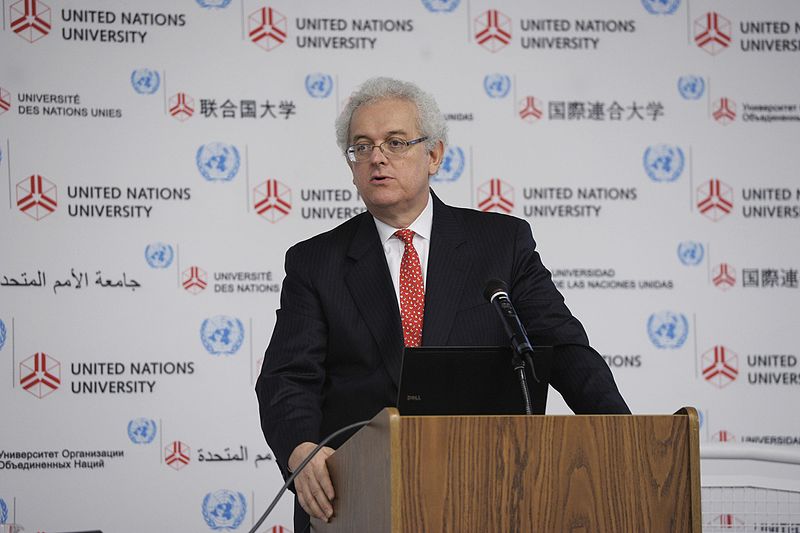
Echoing Mukumba, Colombia’s Minister of Finance and Public Credit José Antonio Ocampo proclaims in his foreword that “taxing the wealthiest is no longer an option — it’s a must. Global inequality has exploded and there is no better way to tackle inequality than by redistributing wealth.”
Colombia stood as the seventh most economically unequal nation on the planet in 2020 but Ocampo aims to change this. “By abolishing decades-long tax privileges and loopholes that benefit only the richest, there will be more money to invest in free, quality public services like education and health care. To invest in agriculture. In climate and nature. And in peace.” He says further, “This is not something symbolic; it’s not just talk about increasing taxes on the rich to support the poor. It’s [a] historic shift. And it’s long overdue…Ordinary Colombians have had enough and demanded change.”
In keeping with Ocampo’s aspirations, Colombia passed the Tax Reform Law (TRL) on January 1, 2023. In 2022, Colombia temporarily raised its corporation tax to 35%, the third highest rate in the world. The new TRL enshrines the 35% corporation tax in the Colombian legislature. The TRL also repealed the Mega Investment regime law, which reduced income tax to 27% for foreign investors. Most pertinently, TRL introduces Oxfam’s proposed 5% millionaire tax, which supplements the new 35% corporation tax. Although Oxfam’s paper only offers a fledgling suggestion, the ripples of its ideas are already making waves in the Colombian tax structure.
Fair Taxes to End Poverty
Since 1980, inheritance and income taxes have fallen sharply for the super-rich. With global cohesion and cooperation, the 5% income tax could eradicate poverty and hunger in a year at the cost of returning billionaires to the levels of wealth they held in 2012, which is still a tremendous imbalance in affluence.
The world is beginning to agree that “inequality is not inevitable,” as Oxfam highlights. Colombia has proven that fair taxes are a possibility. Those who wish to end inequality and poverty can take heart that the world is not only listening but beginning to change.
– David Smith
Photo: Wikipedia Commons

How The Avido Foundation is Aiding Kibera
David Avido, the creator of the Lookslike Avido clothing brand and The Avido Foundation, has made a remarkable impact within Nigeria and globally. Avido has overseen operations and provided leadership for sustainable program implementation. The Avido Foundation has placed these programs to inspire youths to live a life free of crime and idleness. Through this, households are able to generate income, further giving back to theie community. Here is how The Avido Foundation and Lookslike Avido are aiding Kibera.
The Avido Foundation
Avido had the desire to create an NGO that would bring additional aid to Kibera locals who are in need of a brighter future. A group of committed, young individuals who are hungry to make a difference in developing communities by creating innovative ways to end the cycle of poverty established the organization in 2021. Lookslike Avido expresses David Avido’s message through the crafting of beautiful handmade pieces in Kibera. Here is how Looklikes Avido is aiding Kibera.
5 Ways Looklikes Avido is Giving Back to Kibera
About the Avido Foundation
The Avido Foundation itself is a non-governmental organization based in Kibera. The majority of their initiatives serve to specifically target mothers and children who live in the Kibera slum. The number of Nigerians living in poverty stands at more than 133 million, according to the National Bureau of Statistics (NBS), and that figure represents 63% of the nation’s population. Avido’s efforts focus on eradicating poverty by educating children and empowering the people affected with tailoring and fashion design skills. Here are four programs that the Avido Foundation provides that are aiding Kibera.
4 of The Avido Foundation’s Programs
Building imaginative futures and empowering the people of Kibera are the primary motivations behind The Avido Foundation and the global fashion brand LooksLike Avido. The Avido Foundation is one of the many NGOs that are changing the world.
– Lauryn Defreitas
Photo: Flickr
The Benefits of Formalizing India’s Economy
India’s government outlined major economic formalization within the next 10 years. Formal economies create new tax incentives and remove financial burdens an informal economy leaves in place. Informal economies have left in place jobs with no benefits. They can create significant pay gaps between those in informal economies and formal economies. The latest step in formalizing the economy is formalizing the “mom-and-pop” shops, thus creating boosted tax bases and increasing a taxpayer database to remove further economic burdens from the poorest Indians.
Formal Versus Informal Economies
An informal economy or informal economic sector is common worldwide in developing nations. An informal economy or sector is a type of market, job or business that can generate reliable revenue but the government does not properly tax or track. From their offset, informal economies seemed promising, especially to the workers, as they promised a reliable transition between a developing nation and a nation with a solid and robust economy. Instead, as many informal sectors have yet to formalize, they and their workers are putting extra strain on the economy without paying fair taxes.
The COVID-19 pandemic devastated the informal economy workers. In most cases, an informal economic worker works on a case-by-case basis, such as cab and bus drivers in Africa or market vendors. The informal workforce predominantly defines work done on a one-to-one transactional case. The informal economy has been necessary for an economic transition to find areas with sustainable economic growth. However, economic growth, job opportunities, and income possibilities remain low if those areas remain informal.
Workers in informal economic sectors tend to be poorer and have fewer chances to create an upward financial movement for themselves. The continuance of an informal sector or business separates workers from tax benefits, government resources and assistance as needed. As a whole, this can limit the potential upward mobility for an entire region or nation, limiting sustainable economic growth and leaving poverty rates higher than they would be if an economy were to formalize.
Why is India Formalizing its Economy?
India has been aiming to formalize its economy for years, and current Prime Minister Narendra Modi is spearheading the efforts. PM Modi and his government are formalizing India’s economy through sweeping policy changes that can keep workers safe and markets flexible while decreasing poverty rates as access to government assistance improves. Formalizing India’s economy is not an easy task, with a great deal of pushback coming from the informal work sectors, but for long-lasting economic growth, the government began taking small steps in the formalization process.
About 93% of India’s workforce works in its informal economy. When the COVID-19 pandemic hit, and citizens in informal work positions lost most, if not all, of their income, they had to turn to government assistance, forcing a formalization process that proved beneficial for all. Between 2019 and 2021, India’s poverty rate dropped from 55% to 16%, an impressive economic recovery aided by Modi’s push for formalizing India’s economy.
Formalizing India’s economy has been a long time coming, and the government is determined to capitalize on the improvements made during the pandemic and create stable, sustainable growth that benefits all Indian citizens.
The Latest Formalization Steps
The latest steps in formalizing India’s economy include expanding the Goods and Services Tax (GST). PM Modi originally introduced the GST to formalize the economy and plans to expand the GST for the small “mom-and-pop” stores. Expanding the GST is not the first step India has taken to formalize the sector of small corner stores. India’s government implemented zero Merchant Discount Rates (MDRs) on all digital financial transactions for stores earning less than Rs 20,000 a month.
Expanding the GST will bring additional businesses under the tax umbrella to lighten economic burdens on others and other businesses that may have heavier taxes as compensation for the remaining untaxed businesses. Formalizing India’s economy brings the mom-and-pop stores government assistance as needed, as many suffered due to shutdowns during the COVID-19 pandemic, and business-to-customer (B2C) interactions minimized. With the GST’s growth, the Indian government wants to use private and public databases to track the development of B2C interactions to understand each region’s economic growth and stability.
Formalizing India’s economy is necessary for lifting millions of citizens out of poverty, creating jobs that can last generations and bringing tax and government benefits to all citizens. PM Modi and his government are striving to support their citizens in unprecedented ways in India. Expanding the Goods and Services Tax is one of many ways to build national economic strength.
– Clara Mulvihill
Photo: Flickr
Updates on SDG 17 in Uganda
Uganda is a country that is making progress. Although slow, it is working towards creating a more sustainable future based on the U.N.’s Sustainable Development Goals (SDGs). The SDGs are a set of 17 objectives that sufficiently help countries contribute toward a globally sustainable future. As of 2021, Uganda’s overall score in the U.N.’s SDGs is 54.9, a steady increase of 7.22 over the past 20 years. However, the country still faces many challenges in achieving SDG 17: Partnerships for the Goals. Here are updates on SDG 17 in Uganda.
A Slow Start
SDG 17 focuses on collaborations between and within nations, as a means of realizing the other 16 goals. Despite the challenges that Ugandans have with SDG 17, the country has made a small and unsteady improvement in relation to its Statistical Performance Index (SPI). SPI is a subset of SDG 17 which measures data monitoring and collection. For a country where 21.9% of its population lives below the poverty line, data is essential to work in partnership with other stakeholders and move toward a sustainable future.
Data Progress
A lack of accurate data may affect updates on the SDGs. The progress of SDG 17 in Uganda is dependent on data that partnerships can share. One of the governing principles behind the U.N.’s Sustainable Development Goals (SDGs) is “Leave No One Behind.” It necessitates data collection to identify communities and populations that need aid, as well as recognize inequalities they face. Ghana is another sub-Saharan country that has made big investments in data collection. This has significantly impacted its work to alleviate poverty. The example of Ghana could be a lesson to Uganda on the importance of data on SDG progress. With improved data collection, qualitative nature will inform work between Uganda and other stakeholders.
Mapping a Future
One way in which partnerships are being developed in line with SDG 17 in Uganda is through projects like Community Mapping. The project collects geographical data from the north of the country. It allows people to know where and to whom to deliver aid to. Community Mapping is an online platform that allows anyone around the world with access to a computer to generate maps of the north of Uganda. Jamie Huck, a Geographer at the University of Manchester, England, developed this program. Community Mapping has helped stakeholders to, for example, provide prosthetic limbs to citizens, which in turn allows those people to step back into the workforce. The accumulation of data also allows partnerships to form and improve development.
Improving the Future
Another way in which SDG 17 in Uganda is progressing is via community health programs that global partnerships funded. For example, the global COVID-19 Vaccine Delivery Partnership, which seeks to support countries who have been struggling to provide vaccines to their citizens has been funding Uganda since July 2020. This partnership has allowed local medical professionals to distribute COVID-19 vaccines to rural communities, which many often overlook. This, in turn, has allowed children to return to school with fewer hurdles, like illness and lockdowns. With accurate data about communities and rural areas, there can be a more equal and equitable distribution of vaccines.
Uganda’s Journey
It is essential that the world moves toward a sustainable future, in line with SDG 17 as there is an interconnection between several stakeholders. To improve its SDG 17 score, Uganda must prioritize data collection, as it can positively affect development. People can return to the workforce and children can go to school. When people are accounted for, countries and communities can work together to create a sustainable future.
– Eloïse Jones
Photo: Flickr
How Grameen Bank in Bangladesh is Reducing Poverty
Bangladesh is located in South Asia with an estimated 171 million people. The country is a developing nation due to its poverty reduction and economic growth over the years. It has made significant progress since 1971 when it was the second poorest country in the world. In 2019, according to the Asian Development Bank (ADB), 20.5% of people were living below the national poverty line of $1.90 per person per day. Among the initiatives for the nation’s development, Grameen Bank in Bangladesh contributed significantly to poverty reduction as it provided access to financial services for poor people.
A Bank for the Poor
The founder of Grameen Bank is Professor Muhammad Yunus. He started the project in 1976 at a small village in Bangladesh, Jobra. Grameen Bank began in Bangladesh in 1983 and it is actively working in remote communities in Bangladesh. Its main aim is to fully include poor people, especially women, in financial and economic activities. Grameen Bank is different from conventional banks, which are based on people’s possessions. Green Bank’s priority is to help the poorest and most vulnerable people. According to the managing director of the bank, “Grameen Bank is the pioneer microcredit organization in the world. Starting from scratch, the bank has for years added a multidimensional package of services aimed at freeing the marginalized poor from starvation, hunger, and deprivation.”
How the Microcredit Loan Works
Grameen Bank believes in the potential of the individual. It helps anyone with a business that they want to develop be eligible to get a loan. Grameen Bank also helps them reduce their poverty level. The microcredit model consists of a small loan that can help poor people to better their living conditions and to start or support their small businesses. It is a little amount, between $10 and $2,000. The first example of the microcredit approach was in Bangladesh when Grameen Bank gave two women $27 to expand their bamboo stool company.
The women were able to support their business and repay their loans. The distribution of the loan starts with the division of people into groups of five. In the beginning, the money arrives only to two people. After seeing adequate results from their investment, the other two people from the group can get the loan. If the repayments are regular, finally the last person gets the money. After the distribution of the full loan, people participate in a training program.
Achievements and a Prosperous Future
The microcredit approach that Grameen Bank has adopted is an example of how a small amount of money can make a really big difference in the lives of those who live in poverty. Grameen Bank is considered a successful model for fighting poverty as 6 million people were able to get a loan. In 2006, it received the Nobel Peace Prize. One of Grameen Bank’s main achievements is increased social respect for women.
According to Grameen Bank, many societies consider women at risk of failing to repay loans. However, Grameen Bank gave more loans to women and nowadays, 98% of borrowers are female.
Grameen Bank is currently operating in 94% of the villages in Bangladesh and is helping 45 million people. Grameen Bank in Bangladesh has assisted poor people in an incredible way. It provides guidance and inclusion of disadvantaged people in the financial environment. One can consider it a fundamental step to help improve poor people’s conditions and help them escape from poverty.
– Elena Luisetto
Photo: Flickr
About Russia’s Foreign Aid
The Russian Federation or simply Russia has had what one can only describe as a tumultuous time over the period since the collapse of the Soviet Union. The economic revolution after the fall of the USSR could be the driving force behind the economic adversity the nation suffered during the period. With Russia enacting extreme economic reform with the aim to transform itself into a modern capitalist nation, Russia actually received vast humanitarian aid itself due to the hardship many lived through during the first years after the Soviet Union.
While there is still much work necessary in the country, Russia has transformed itself from a net receiver of foreign aid into a significant net donor. Russia’s Official Development Assistance (ODA) steadily increased from $100 million in 2004 to more than $1 billion in 2017, making it one of the largest foreign aid donors in the world. Here is some information about Russia’s foreign aid.
Russia’s Foreign Aid
According to the World Bank, Russia has been formulating its development cooperation agenda for nearly a decade. The nation has increased its foreign aid efforts, chiefly, with a significant boost to ODA. As stated previously, Russia’s ODA gradually increased between 2004 and 2017. While also increasing foreign aid, Russia equally provides significant military aid to certain nations.
Alongside the ODA, Russia has increased its role in improving assistance to the International Development Association (IDA). The World Bank stated that “Russia expressed strong support for the IDA as an important multilateral mechanism for providing assistance to the poorest countries.”
Putin and his government list “poverty reduction, disaster relief and the development of trade and economic partnerships as the key reasons” why Russia gives foreign aid, according to AidData.
However, studies also suggest that Moscow might actually be a “pioneer in de-stabilizing aid.” This is a form of aid designed to promote unrest and provoke antagonism towards other states and international institutions. Governments can do this through financial military aid.
Benefits to Russia
Many assume that providing foreign aid only benefits the recipient nation. However, there are many reasons why foreign aid could also benefit Russia itself. By providing foreign aid, there is a chance to boost economic activity in recipient countries. Russia may be able to improve conditions for trade and foreign investment in receiving countries. Thus, increasing the industrial capabilities and capacities may help provide more markets for Russia and increase potential trading partners, according to the World Bank.
Increasing and strengthening national institutions that combat organized crime and terrorism in receiving nations may also prove beneficial to Russia by improving Russian national security. AidData suggests that Russia also benefits from “checkbook diplomacy via foreign aid.” Nicaragua benefited heavily from Russia’s ODA, receiving $150 million alongside substantial military aid.
Nicaragua happens to be one of the only nations that recognize the Russian-backed separatist regions of Abkhazia and South Ossetia as independent nations. Perhaps unsurprisingly, Nicaragua was one of only 11 states to back Russia in a U.N. General Assembly resolution during the Russian invasion of Crimea in 2014. This suggests that Russia also benefits politically from foreign aid, gaining favor from nations that receive financial and military aid from the nation.
Benefits of Foreign Aid
While it is possible to see how Russia may benefit from giving foreign aid, it is clear that foreign aid helps many nations around the world tackle serious issues such as poverty. Humanitarian Careers has stated that the first significant reason foreign aid is so important is that “it saves lives.”
Countries that provide foreign aid contribute a number of their funds to humanitarian assistance. Nations that crises, disasters or conflicts around the world affect are often unable to afford basic necessities due to the situations they are in. Foreign aid allows for the provision of food and water alongside other vital supplies that are necessary during a crisis. Foreign aid also allows for a more steadfast recovery and helps rebuild areas where catastrophes devastated, according to Humanitarian Careers.
A second key benefit of international foreign aid is that it helps impoverished countries develop. Increased funding to key government departments such as infrastructure, health care and education can help reduce poverty. Assisting poorer nations benefits their citizens’ livelihoods and increases their incomes.
A substantial part of foreign aid is in the form of military aid. Military aid can come in many different forms. It mostly comes in the form of donations of military equipment or loans which a nation can spend on its armed forces. This can be vital as many donor nations have significant security threats such as terrorism, organized crime groups or separatist movements. While often divisive depending on which side of the debate a person is on, military aid can provide huge security to a nation.
Increasing Efforts
The Russian government has made huge strides to increase its foreign aid in recent years, having moved from a net receiver of foreign aid into a global donor of foreign aid. Foreign aid not only provides many benefits to Russia but also will help nations in need better provide for their citizens.
Ultimately, foreign aid can provide significant resources to those in severe poverty across the globe. The more foreign aid provided from those nations who can afford to can only continue to benefit those who struggle to make ends meet and those who have suffered through tragic natural disasters and regional conflicts that devastate local populations.
– Josef Whitehead
Photo: Flickr
Implementing Fair Taxes to End Poverty
In a time of unprecedented wealth, poverty still plagues the planet. Despite enormous strides in health care, education and total wealth over the last millennium, modern society is as unequal as feudal Europe. As transnational companies (TNCs) and the super-rich accrue vast fortunes, in 2022, 648 million people lived in extreme poverty, surviving on less than $2.15 per day. Without fair taxes, global inequality increases and poverty progress slows.
Growing Inequality
Between 1990 and 2019, the global extreme poverty rate shrank from 37.8% to 8.4%. However, in the wake of the global pandemic, progress toward ending poverty reversed for the first time in 25 years. In 2020, global extreme poverty rates rose to 9.3%. Since 2020, the wealthiest 1% of people have accumulated 63% of all newly created wealth.
Further, as billionaire fortunes raise a cumulative interest of $2.7 billion per day, the last year saw inflation rates surpass salary growth for 1.7 billion workers. Only half of all billionaire fortunes are subject to inheritance tax, with “tax havens” holding “8% of the world’s household financial wealth,” Oxfam highlights. Additionally, major “food and energy companies more than doubled their profits in 2022,” during the same year that saw even the developed world choose between a full stomach and a warm home, Oxfam reports.
The 5% Tax
In January 2023, Oxfam published a paper titled “Survival of the Richest,” which highlights the broadening wealth gap between the rich and the deprived and suggests that the world reconsiders the meaning of fair taxes. The crux of this paper is a simple idea. Oxfam proposes that a 5% tax apply unilaterally to all multi-millionaires and billionaires. A humble 5% tax would accumulate $1.7 trillion per annum: sufficient funds to implement a comprehensive strategy to eliminate world hunger and end poverty for 2 billion people.
Changing Attitudes
Amid escalating inequality, attitudes regarding what constitutes fair taxes are changing. For the first time in history, most Americans agree with the statement: “the government should redistribute wealth by heavy taxes on the rich.” About 80% of Indians and 85% of Brazilians also favor higher, fair taxes for the super-rich.
In October 2022, proposed tax cuts for large corporations in the U.K. led to a “U-turn” in the prime minister’s plans and even her resignation. In the same year, more than 100 millionaires signed a charter demanding higher tax burdens on the rich as a way to resolve global poverty. Even those who benefit from the current economic system agree that it causes unfair economic inequality.
Tax expert Chenai C. Mukumba says in her foreword introducing the Oxfam paper, “Inequality is one of the most important issues today and, left unabated, has the potential to exacerbate many of the social cleavages that exist within our society.”
She says further, “Addressing it, therefore, should be at the forefront of our policy agendas and this report presents an important but insufficiently explored way of doing just that: taxing the rich. Taxes that target the rich allow tax to play its redistributive function by constraining the growth of income.”
Colombia’s Tax Revolution
Echoing Mukumba, Colombia’s Minister of Finance and Public Credit José Antonio Ocampo proclaims in his foreword that “taxing the wealthiest is no longer an option — it’s a must. Global inequality has exploded and there is no better way to tackle inequality than by redistributing wealth.”
Colombia stood as the seventh most economically unequal nation on the planet in 2020 but Ocampo aims to change this. “By abolishing decades-long tax privileges and loopholes that benefit only the richest, there will be more money to invest in free, quality public services like education and health care. To invest in agriculture. In climate and nature. And in peace.” He says further, “This is not something symbolic; it’s not just talk about increasing taxes on the rich to support the poor. It’s [a] historic shift. And it’s long overdue…Ordinary Colombians have had enough and demanded change.”
In keeping with Ocampo’s aspirations, Colombia passed the Tax Reform Law (TRL) on January 1, 2023. In 2022, Colombia temporarily raised its corporation tax to 35%, the third highest rate in the world. The new TRL enshrines the 35% corporation tax in the Colombian legislature. The TRL also repealed the Mega Investment regime law, which reduced income tax to 27% for foreign investors. Most pertinently, TRL introduces Oxfam’s proposed 5% millionaire tax, which supplements the new 35% corporation tax. Although Oxfam’s paper only offers a fledgling suggestion, the ripples of its ideas are already making waves in the Colombian tax structure.
Fair Taxes to End Poverty
Since 1980, inheritance and income taxes have fallen sharply for the super-rich. With global cohesion and cooperation, the 5% income tax could eradicate poverty and hunger in a year at the cost of returning billionaires to the levels of wealth they held in 2012, which is still a tremendous imbalance in affluence.
The world is beginning to agree that “inequality is not inevitable,” as Oxfam highlights. Colombia has proven that fair taxes are a possibility. Those who wish to end inequality and poverty can take heart that the world is not only listening but beginning to change.
– David Smith
Photo: Wikipedia Commons
Bamboo Houses to Address the Global Housing Crisis
Across the globe, millions of people are suffering from homelessness. In 2017, Habitat for Humanity approximated that 1.6 billion people worldwide suffered from inadequate housing. With the global population continuing to rise, the need for housing across the globe is becoming dire. More than half the planet’s population lives in urban areas, yet affordable housing is inaccessible. The answer to this housing inadequacy could come from one of the fastest-growing grasses on the planet — bamboo. Bamboo houses stand as an affordable solution to the global housing crisis.
What is Bamboo?
Bamboo is a tree-like grass that rapidly grows throughout countries with subtropical and tropical temperatures. The plant is most commonly found in South America and Asia but also exists in specific regions in North America, Australia and Africa. The unique aspect of this plant is its quick regrowth. Certain species of bamboo can grow 2.91 feet in just one day. Bamboo is durable, sustainable and strong. In fact, bamboo has a greater tensile strength than steel.
Bamboo is also an eco-friendly alternative to many different building materials. Bamboo contributes to the sequestration of carbon — “When properly managed and intensively harvested, bamboo can sequester up to 1.78 tonnes of CO2 per clump per year,” One Tree Planted says. Another study estimated that bamboo contributed to 27.38 million tons of oxygen per annum just in India alone.
The Potential of Bamboo Houses
Not only is the plant durable and sustainable but bamboo is also affordable. Bamboo is accessible and inexpensive in many parts of the world experiencing rapid urban growth. Besides its wide accessibility, because of the strength of the plant, bamboo is an optimal building material choice when creating houses in certain climates. Changing weather patterns have affected housing in drastic ways. More extreme weather has led to more fires, more hurricanes and the destruction of homes. Bamboo houses, however, prove resilient against extreme weather.
The Climate Smart Forest Economy Program began a climate-resilient bamboo housing initiative in Guatemala called CASSA. When tropical storm Julia hit, the program reported good news. “The CASSA bamboo houses were some of the few houses left undamaged by the storm. The bamboo structures held up against the incredibly strong winds and, because they are built on stilts, they avoided being flooded,” consultant Kagisho Koza said.
Not only is bamboo resistant to strong winds and flood damage but bamboo is also fireproof. Because of the high content of water in the bamboo, the plant can endure temperatures up to 400 degrees Celsius. This makes bamboo a great choice for building in areas where wildfires are common.
CASSA’s Work
CASSA, a sustainable construction company in Guatemala, is showcasing the value of bamboo in providing shelter for those in need. Across Guatemala, refugees of climate emergencies have been building bamboo houses with their very own tool kits developed by the Climate Smart Forestry Program. CASSA and the Climate Smart Forestry Program have been working together to get these toolkits out so that people affected by climate emergencies, such as hurricanes and flooding, have the ability and knowledge to create these bamboo houses and also pass their knowledge on to more people in their communities.
“Within five years, the four hectares of bamboo plantations supplying CASSA, for example, are expected to provide enough sustainable bamboo to build 40 homes per year, while also providing jobs and training for the local community and having a positive climate impact,” the World Economic Forum reports.
Providing shelter to the millions of people lacking adequate housing globally must stand as a priority. Bamboo houses are cost-effective and easily accessible in many countries where homelessness is on the rise. The durability and sustainability of the plant make it reliable in places most affected by extreme weather events.
– Olivia MacGregor
Photo: Flickr
Human Rights in Bosnia and Herzegovina
Bosnia and Herzegovina is a country located on the southern peninsula of Europe. Having gained its independence in 1992 following a war with Yugoslavia, Bosnia and Herzegovina is a relatively young country. The 1992-1995 war brought forth conflict between Bosniak, Croatian and Serbian individuals who wished to gain control of the territory. Thirty years later, tension continues to be prominent, challenging human rights in Bosnia and Herzegovina.
War
In March 1992, Bosnia and Herzegovina declared its independence from Yugoslavia. Bosnian Serb minority disagreed with the sovereignty of Bosnia and Herzegovina which led to conflict between ethnic and religious affinities and ultimately led to war as the country abandoned Yugoslavia. The war for independence ultimately caused great disagreement between Croats, Serbs and Bosniaks. During the war, the Bosnian Serb military campaign launched ethnic cleansing operations in an attempt to eliminate the number of Bosniak civilians. The war concluded in 1995 with an estimated 100,000 casualties.
The Borgen Project spoke with Velemir Jankovic, an individual born and raised in Bosnia and Herzegovina before the 1992 war and now lives in the U.S. Velemir describes that war’s impact on his village resulted in “his house being destroyed and him losing everything but hope.” Like Velemir, many refugees sought to escape the casualties of war. With physical destruction and political tension, many citizens still find themselves struggling to settle. While many suffered monetary loss, such as Velemir’s home, others lost family members, leading to great resentment among those the violence of war impacted. These differences have impacted the Bosnian population for the last 30 years.
Unemployment
In 2020, the unemployment rate in Bosnia and Herzegovina stood at 27%. Corruption and slow economic development contribute to low job availability in the area. Not to mention, ethnic conflicts enabled a divide in the country. Prejudice against certain ethnicities continues to be prominent after the war, therefore making it difficult for individuals to work harmoniously alongside one another.
There has been a progressive decrease in the unemployment rate in recent years. In 2014, 57% of Bosnia and Herzegovina’s youth were unemployed. That number has decreased to 14.9% in 2021.
While the country is still figuring out a strong economic structure, financial aid funds infrastructure and facilities for citizens. What may be contributing to the improvement of unemployment is the 2021 Instrument for Pre-accession Assistance (IPA), a €73 million investment for regional development, social protection, as well as employment and public transportation. One can see IPA’s impact on the labor market through the development of wage settings as well as the establishment of unions.
Poverty and the Economy
While unemployment is one of the leading factors in the stagnation of the economy, Bosnia and Herzegovina has not seen an impact on the poverty levels. The poverty rate has steadily remained at 15% between the years 2008 and 2020, according to the World Bank.
While aid enables the country to survive financially, the economy in Bosnia and Herzegovina is depleting. The COVID-19 pandemic caused a significant decrease in consumption in 2020, therefore slipping Bosnia and Herzegovina into “its worst recession in 25 years.”
Not to mention, inflation has increased by 16.7% in 2022. These circumstances create a difficult economic environment for citizens. With low employment rates and high consumer costs, it is very difficult for Bosnians to overcome the poverty rate.
Human Rights
Aside from low infrastructure in the economy, abuse of human rights in Bosnia and Herzegovina continues to occur three decades after the turmoil of the 1992 war. In 2021, there were significant reports of torture or inhumane treatment of civilians by law enforcement. Abuse of power by police also harms individuals such as journalists. It is common for journalists to face violent threats to erase content, prohibiting them from their right to press.
There has also been an increase in gender-based discrimination, in which women are targeted violently and mistreated in the workplace. The tension between ethnic groups continues to be present as well, with Bosnians often planning anti-refugee platforms, using hostility and threats to harm migrant communities, according to the U.S. Department of State.
Organizations Working to Improve the Situation
CARE, a nonprofit that began helping marginalized groups in the area in 1993, has been able to provide aid to many citizens in Bosnia and Herzegovina. It focuses on integrating minority group members into society through supporting local programs such as the Young Men’s Initiative II (YMI II), which it founded in 2006.
The YMI II ultimately joins young men in Bosnia and Herzegovina, teaching them the importance of gender equality. The goal of the program is to educate the younger generation on the importance of unity in efforts to make an impact on the years of tension and discrimination in Bosnia and Herzegovina.
There is an evident issue of human rights in Bosnia and Herzegovina following the 1992 war. Its independence from Yugoslavia enabled prejudice and discrimination among differing ethnicities. Through foreign aid and a steady increase in the employment rate, there is hope that this struggling country improves its social welfare.
– Micaela Carrillo
Photo: Flickr
USAID Programs in Yemen
The continued civil war in Yemen, ongoing since 2014, has led to a severe humanitarian crisis. The UNFPA says the conflict has displaced 4.2 million Yemenis as of 2022 and 20 million citizens are suffering from malnutrition and hunger, according to the World Food Programme (WFP). By February 2022, about 80% of the population lived in poverty. Extreme climate events have only worsened this while increasing people’s susceptibility to disease outbreaks. Since 1959, apart from a 70-year hiatus ending in 2003, USAID programs in Yemen have helped to better the quality of life in the country.
USAID Programs in Yemen
Looking Ahead
In a world where many still require emergency humanitarian assistance, foreign aid is critical. Even though there is room for the U.S. government to do more, so far, the U.S. stands as a champion in bringing support to Yemen amid its crisis.
– Audrey Gaines
Photo: Flickr
Eliminating Human Trafficking in Comoros
Human trafficking is an issue that plagues most of the world, but in some nations, it is more prevalent than in others. The archipelago of Comoros – located off of Africa’s east coast in the Indian Ocean – is a Tier 2 Watch List country making its citizens some of the most at-risk for human trafficking.
Notable Numbers
The Human Trafficking Institute’s annual Trafficking in Persons Report (TIP Report) ranks countries in three tiers – the third being the worst. Tier 2 means that the respective government does not fully comply with the minimum standards for combating trafficking but is making significant efforts to do so. However, the designation “Watch List” means that the number of human trafficking victims in Comoros is increasing or there is no evidence of heightened efforts from the previous year.
Most Comorian children ages 3 to 7 – and some as old as 14 – often study at unofficial neighborhood schools directed by private instructors, which makes them vulnerable to exploitation as domestic servants or field hands. Without formal schools to educate, children are often left in the hands of the corrupt.
The estimated 3,000 to 4,000 unaccompanied children on the island of Mayotte are especially susceptible to domestic servitude and sex trafficking. Due to a corrupt government, inadequate border control and international criminal networks, there is a high risk for transnational and domestic human trafficking in Comoros.
The 2022 TIP Report found that during the reporting period, the Comorian government investigated four trafficking cases – three of which were for forced labor, and one involving both labor and sex trafficking.
To combat human trafficking in Comoros, the government partnered with local NGOs and international organizations to provide support for the eight victims identified in 2022. MAEECHA is an NGO located in Moroni, Comoros that works to protect minors in isolation and much more. Between 2014 and 2015, MAEECHA identified 514 minors in a situation of vulnerability – 220, or 43%, were in isolation. About 68% of these children were under 12 years old.
Diplomatic Relations
The U.S. established diplomatic relations with Comoros in 1977 and has maintained its presence in some capacity through a strong bilateral relationship with the U.S. ambassador in Madagascar. Additionally, the Peace Corps re-established itself in the island nation in 2015.
In 2022, Comoros upgraded from Tier 3 to Tier 2 Watch List based on achievements, including investigating trafficking crimes for the first time since 2014 and initiating the country’s first trafficking prosecution. Though this may seem insignificant, a country as impoverished as Comoros taking these steps could mean major progress in the coming years.
That being said, when a country is Tier 3, they may no longer be subject to foreign aid from the United States, so Comoros receiving international support is conditional upon it remaining in Tier 1 or 2.
Progress for Comoros
The U.N. Office on Drugs and Crime (UNODC) reports that local community engagement is a recent initiative from Comoros in the war against trafficking. With the support of UNODC through informational workshops, parliamentarians and Islamic leaders have been working to spread awareness of human trafficking. With this type of movement underway – and hopefully, more to come – there is optimism that progress will occur in ensuring the safety of Comorians, especially the youth.
The U.S. Department of State financed the previously mentioned workshops as a part of the UNODC Enhancing Criminal Justice Responses to Trafficking in Person in Eastern Africa project. The main focus of the project is aligning different regions’ national legislation on TIP.
Although Comoros is making progress as a nation with regard to human trafficking, there is much more that needs to occur for all its citizens to have safety and everything they need.
– Stella Tirone
Photo: Flickr