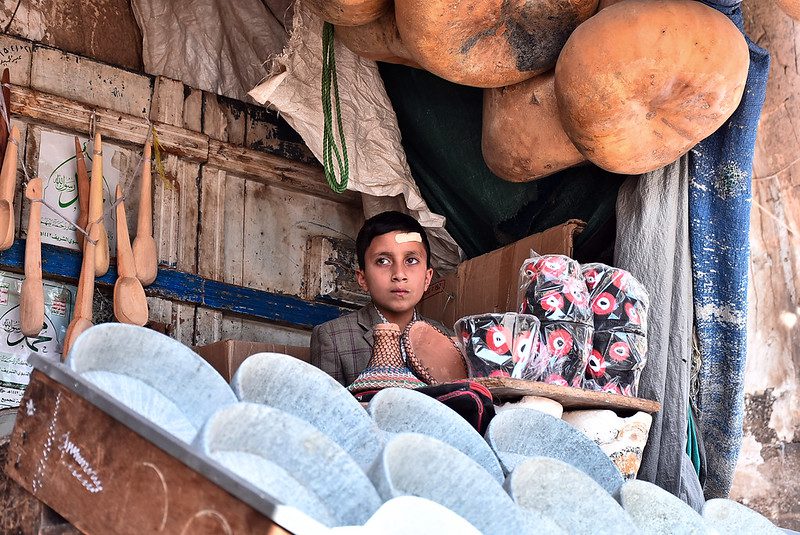
 The United Nations International Children’s Emergency Fund (UNICEF) has released a statement on child protection in Yemen. It highlights child labor and early marriage as pervasive issues in the country. A study indicates that, out of Yemen’s 7.7 million children aged 5 to 17, 17% are subject to child labor, with the majority of them working without pay. As of 2019, 4 million child brides reside in Yemen, with families marrying off 1.4 million of them before they reach the age of 15.
The Government’s Unfulfilled Commitment
In 2021, Yemen achieved little progress in fighting child labor despite a training initiative by the International Labor Organization. The government struggled to enforce regulations, with state forces recruiting child soldiers and marginalized children facing increased vulnerability due to school discrimination.
The divided Yemeni government, with Northern Yemen resisting child protection and gender-based violence projects, poses challenges to combating gender-based violence in schools and fully realizing the Global Program’s objectives. In July 2014, the Yemeni government signed a charter at the London Girl Summit, committing to end child marriage by 2020. Despite this commitment, there is still no minimum age requirement for marriage in the country. And with the government’s focus on other humanitarian crises and the ongoing war, child marriage remains a pressing concern.
Impacts on Children
Poverty-stricken families struggle to survive in a country where necessities like food, water and health care are scarce. In the face of such adversity, many parents feel they have no choice but to send their children to work, often in dangerous and exploitative conditions. The Bureau of International Labor Affairs released a report indicating that approximately 13.6% of the working population are children from the ages 5 to 13.
Additionally, child marriage serves as a coping strategy for parents seeking relief from caregiving costs or better protection for their daughters. Amid the conflict, women and girls face worsening conditions, with broken social institutions and 1.83 million children, including 830,000 girls, losing school access. Lacking education and support, child brides suffer increased vulnerability.
UNICEF’s Initiatives to Address Child Labor and Early Marriage in Yemen
UNICEF strengthens child protection systems by supporting community-based committees and case management systems for addressing child protection in Yemen. It contributes to data collection and analysis to guide policy decisions and employs communication strategies to encourage positive social norms and behavior change regarding child marriage.
UNICEF regularly publishes monthly reports to track its humanitarian response in Yemen. The latest report, released on Dec. 31, 2022, shows that UNICEF’s Yemen Humanitarian Action for Children (HAC) aligned with the 2021 Yemen Humanitarian Response Plan (YHRP). The organization reported that it requires $484.4 million to deliver aid in Yemen in 2023. Factors such as the COVID-19 pandemic, economic instability, rising oil prices and global logistical costs have contributed to increased operational expenses in the country.
UNICEF persistently educates 5.5 million children and community members about the dangers of mines, unexploded ordnances and explosive remnants of war. Furthermore, it has provided psychosocial support to over 410,000 children and caregivers in conflict-affected regions and has helped 4.1 million children and women benefit from gender-based violence risk reduction, prevention or response measures. UNICEF and UNFPA jointly tackle child marriage in Yemen through the Global Program, focusing on key drivers and empowering girls with education and life skills.
The Global Program has provided education support to vulnerable girls in conflict-affected regions. Through the Global Partnership for Education, 1,220 vulnerable girls benefitted from enrollment or reintegration into formal education systems. UNICEF also advocates for legal frameworks and policies to protect children from early marriage.
Funding Challenges and International Support
According to the U.N. Office for the Coordination of Humanitarian Affairs (OCHA), most international donations to Yemen are directed towards food security. In fact, the Financial Tracking Service report revealed that 43.7% of the $2.77 billion from other countries to Yemen was allocated for food security. However, child protection receives only $5.55 million and education gets $44.31 million, leaving issues like child labor and early marriage underfunded.
Nonetheless, UNICEF actively promotes support from other countries to aid Yemen. Kuwait, for example, recently signed a $2 million agreement with the United Nations High Commissioner for Refugees (UNHCR) to support internally displaced people in Yemen.
Additionally, 53 international organizations (IOs) and non-governmental organizations (NGOs) are working to help the country. Among these organizations are Save the Children, Islamic Relief and the Yemeni League for Development Foundation (YLDF).
Looking Ahead
In the face of immense challenges, UNICEF is actively working to address child labor and early marriage in Yemen. Its initiatives include strengthening child protection systems, providing education and psychosocial support to children and caregivers and advocating for legal frameworks to protect children. While funding for child protection remains a challenge, UNICEF continues to advocate for international support and collaboration with other organizations to improve the situation in Yemen. Despite the obstacles, ongoing efforts offer hope for a future that is free of child labor and early marriage in Yemen.
– Tanya Hamad
Photo: Flickr

The Taimaka Project Tackles Child Malnutrition in Nigeria
Post-Harvest Loans
The Taimaka Project’s first success was inspired by randomized controlled trials in Kenya and Tanzania. There, researchers found that post-harvest loans generated a 29% and 40% investment return respectively, making these loans around twice as effective as cash transfers for raising incomes in times of need and hunger. In northeastern Nigeria, where Taimaka operates, smallholder farmers frequently find themselves compelled to sell their produce shortly after the September harvest. This arises from their inability to cover expenses and the fear of potential crop losses. The resultant price spikes equally impact consumers, exacerbating food insecurity during this difficult season.
Crowdfunding success allowed Taimaka founders to raise $10,000 and provide post-harvest loans and Purdue Improved Crop (PICS) bags to 50 households in northeastern Nigeria. As a result, farmers could capitalize on the 55% rise in crop prices over subsequent months. Within the first three years of this program, more than 1,000 families benefitted from an estimated $50,000 in additional income.
Community Management of Acute Malnutrition (CMAM)
Of the more than 45 million children suffering from malnutrition worldwide, estimates suggest that less than a third receive treatment. Those who survive the approximately 10 times higher mortality rate for children with severe acute malnutrition often go on to suffer from persistent health problems. Typically, these problems include neurodevelopmental complications and disruptions to academic development. Gombe, a state in Nigeria where the Taimaka Project operates was recently named “Nigeria’s poverty capital”, with 70% of its citizens living in poverty. The state has one of the “highest rates of stunting and malnutrition for under-five children” worldwide. According to a Taimaka report, approximately 32,000 children under 5 years old in Gombe suffer from the condition.
The Taimaka Project tackles the problem of malnutrition through a two-pronged approach. The first approach involves Taimaka’s CMAM program. This program offers community-based treatment services that alleviate the burdens of caregivers’ transportation, travel and hospitalization costs. Additionally, it provides weekly food and medication packages, with partnerships established with nearby hospitals for severe cases. Secondly, the Taimaka Project emphasizes innovation by conducting feasibility studies that aim to enhance treatment methods and reduce expenses.
CMAM Program Solutions
Some of the strategies that Taimaka uses in its CMAM program are as follows:
The Taimaka Project hopes that the expansion and application of these innovations can result in the prevention of up to 1,000 statewide deaths annually.
Cost Efficiency
The intertwined nature of malnutrition and poverty, as outlined by a 2020 study, suggests that both are “cause and consequence of each other.” Often, poverty leads to malnutrition, which in turn, affects the economic potential of a population. The Taimaka Project’s emphasis on malnutrition, alongside cost-effectiveness, enables the organization to address both issues simultaneously. Having already reached the WHO standard of a “very cost-effective” treatment, Taimaka set a goal in 2020 to reduce the cost-per-life saved by a further 10% by 2025. According to the organization, a 1% reduction in treatment costs would “free up over $3.4 million currently spent globally on treatment. And this would also facilitate the treatment of an additional 50,000 children.”
Looking Ahead
In just a few years, the Taimaka Project has gone on to earn funding and acclaim from organizations like the Founders Pledge and USAID. It also won the D-prize in 2020 for its first project, pledging to “put ideas to the test and confidently share them with others.” These events inspire hope and suggest that Taimaka’s success can be replicated around the world and lead to more progress in the alleviation of malnutrition and poverty.
– Helene Schlichter
Photo: Flickr
Illegal Kidney Trade in Nepal: Disregard for Human Dignity
According to a CNN report, Nepal witnesses up to 7,000 illegal kidney transplant cases each year. Many of the individuals involved in these transactions come from low-income backgrounds, driven by the need to repay debts or earn a livelihood. In the village of Hokse, commonly referred to as Nepal’s “Kidney Valley,” more than 300 residents have sold their kidneys for as little as $500 to $3,000.
Reasons Behind the Illegal Kidney Trade in Nepal
The Lifelong Harm
The kidneys play a vital role in filtering and detoxifying the body. The absence of one kidney can profoundly affect the body, as the remaining kidney must shoulder an increased workload. Consequently, individuals who sell their kidneys face the risk of life-threatening conditions such as renal failure. Furthermore, illegal kidney transplants lack the presence of qualified medical personnel and sterile equipment, resulting in potential infections, blood loss and other irreparable health complications.
Ongoing Efforts
The Indian government has introduced Bipanna Nagarik Kosh, a program aimed at providing financial aid to individuals suffering from serious illnesses, including cancer, kidney failure and other diseases. According to the Department of Health Services, the government has allocated over Rs2 billion for this initiative, with kidney diseases accounting for more than 52% of the expenditure. In January 2023, the Prime Minister of India announced plans to enhance the capacity of the National Human Organ Transplant Center (HOTC). Additionally, the Health Ministry has partnered with more than 50 NGO-operated hospitals, nursing homes and dialysis centers nationwide to offer free dialysis services and financial support for transplants and treatments for patients with kidney ailments.
Despite these efforts, Nepal’s National Human Rights Commissioner has raised concerns about the lack of attention from the Nepalese government and international humanitarian agencies regarding this issue. This negligence continues to expose numerous innocent Nepalis to the perils of the illegal kidney trade, making them vulnerable victims.
Looking Ahead
The illegal kidney trade in Nepal is an ongoing issue. However, there is a glimmer of hope as dedicated efforts seek to address this pressing issue. These initiatives, backed by substantial funding, demonstrate a commitment to improving the lives of those affected. The hope is to create a safe and prosperous society where the people of Nepal never have to consider trading organs for survival.
– Mingjun Hou
Photo: Pixabay
Child Marriage in the Central African Republic
Child marriage rates in the Central African Republic are the second-highest globally. According to Girls Not Brides, among girls in the Central African Republic, 61% marry before their 18th birthday and 26% marry before they turn 15 years of age. As for young men or boys, 28% marry before the age of 18. There are several factors that contribute to this problem, and below is a look into some of them.
Factors Contributing to Child Marriage in the Central African Republic
Measures To Prevent Child Marriage
In the Central African Republic, children under the age of 18 have no legal permission to marry due to the 1992 Convention on the Rights of the Child. The government is responsible for ensuring that every person has the right to freely consent to marriage. The Central African Republic has also implemented additional laws to prevent early and forced marriages.
The Convention on the Elimination of All Forms of Discrimination Against Women (CEDAW), an international agreement that prohibits discrimination against women, was signed in 1991 and requires all states to ensure free and full consent to marriage. This convention has established a legal framework for the protection of children’s rights in the Central African Republic, particularly in regard to marriage. Furthermore, CEDAW has aided in eradicating all types of discrimination against women in the country.
While the Central African Republic has committed to achieving Goal 5 of the Sustainable Development Goals, which calls for eliminating child marriage, forced marriage and female genital mutilation by 2030, High-level political forums are yet to provide updates on progress.
Conclusion
The Central African Republic’s ability to enforce laws protecting children appears to be weak due to a lack of resources, inadequate funding for initiatives and unstable economic conditions, leaving women and girls vulnerable to violence. Addressing gender inequality and harmful practices, such as child marriage, can be challenging in cultures where such practices are traditional.
It is much easier for girls who are married as children to become victims of physical and sexual violence from their partners because their lack of rights and power over their lives makes them more vulnerable to such violence. This vulnerability may lead to long-term psychological and physical effects. Hence, public awareness campaigns and education could play a major role in creating real and lasting change in the fight against child marriage in the Central African Republic.
– Simran Raghav
Photo: Flickr
Health Care for Children in Guinea-Bissau
Challenges
Child survival rates in Guinea-Bissau are on the low side. In fact, the European Commission reports that “Guinea-Bissau has particularly alarming indicators of maternal and child health, with the highest maternal and child mortality rates in the world.”According to UNICEF, the under-5 mortality rate is 74% per 1,000 births. This number represents 4,693 children who die between 0-4 years old (0-59 months).
Additionally, the lack of health care practitioners is a significant challenge to health care for children in Guinea-Bissau. According to a World Health Organization (WHO) report, there were only 7,890 health workers in Guinea-Bissau as of 2018. This inadequacy of health care practitioners results in the inability of children to access required health care services. Alongside this problem, many important health care facilities are unavailable.
Health Care for Children in Guinea-Bissau: Progress
Guinea-Bissau had a population of more than 2 million in 2021. The country has developed significantly in terms of providing health care for kids in recent times. The government made efforts to improve access to health care services, particularly in rural areas. One of the key initiatives is the Expanded Program on Immunization (EPI), which aims to provide essential vaccines to children under the age of 1. The country implemented the program in 2008 and this led to significant progress in the effort to minimize child mortality. According to the Lancet Global Health, “in 1999–2006, child mortality was higher in children who had not received measles vaccine than in those who had.”
The World Food Programme (WFP) and UNICEF have also implemented social protection programs to help vulnerable households cope with poverty. For example, cash transfer programs provide regular cash payments to low-income families so they can meet their basic needs. In addition, school feeding programs provide meals to schoolchildren, and this helps to improve their nutritional status and reduce absenteeism. These programs have positively impacted the health and well-being of children in Guinea-Bissau.
Initiatives
Through collaborations with international organizations like UNICEF and the WFP, efforts have been made to increase children’s access to health care services. The WFP “works to prevent and reduce malnutrition among children under 5 and pregnant and nursing women, providing nutritional support to 96,000 people. The organization also provides food to 6,500 people who are undergoing treatment for HIV or tuberculosis. This is to improve their general health and help minimize the side effects of the drugs.”
In the effort to combat malnutrition and its detrimental impact on children’s health and development, various nutrition programs have been implemented. One notable initiative is the provision of over 173,000 hot meals to school children by the WFP, which aims to encourage enrollment and regular attendance. Additionally, take-home food rations specifically targeted at female students have proven effective in promoting school attendance and retention among girls. The WFP is also actively involved in strengthening the government’s capacity to manage the school meals program, with the ultimate goal of transferring ownership to the government. As a result of these programs, the number of malnourished children in the country has significantly decreased.
Improving Livelihoods
The quality of health care services provided to children has improved as a result of investments in health care infrastructure, education and resources. Guinea-Bissau’s medical professionals can now detect and treat common ailments with more ease and as a result, are able to provide children with better care. Working with the Government and local NGOs, WFP helps to protect the livelihoods of vulnerable households and build their resilience to crises that could affect their food security.
The ongoing initiatives demonstrate the progressive advancement of children’s health care in Guinea-Bissau. With the continued investment and effort put into improving children’s healthcare in Guinea-Bissau, it is possible to advance the health and well-being of more children in the future.
– Lorraine Lin
Photo: Pixabay
Everything To Know About Hunger in Tunisia
Causes of Hunger in Tunisia
One of the major factors contributing to hunger in Tunisia is the nation’s reliance on agricultural imports, especially cereals, to sustain its population. Long-term economic challenges have prevented the nation from being able to purchase sufficient food staples to feed all of its citizens. The country’s high inflation rate, which reached 9.1% in 2022, has exacerbated food shortages and led to soaring prices that are limiting the most vulnerable citizens’ access to available food products.
Impact of the Hunger Crisis
Efforts Toward Change
Looking Forward
– Madison Tomaso
Photo: Flickr
Lula da Silva’s Bolsa Familia: A Mission to Feed Every Brazilian
Difficulties Facing Brazil
Brazil suffers from extreme levels of inequality. More than 50% of the population experiences some sort of food insecurity. This is despite it being the world’s fourth-biggest producer of grain and the biggest producer of beef.
21st-Century Victories in the Fight Against Food Insecurity
From 2003 to 2014, the Zero Hunger strategy conducted by the federal government formed public infrastructures, such as Public Infrastructure for Food and Nutrition Security (EPSAN), with the goal of supporting the Human Right to Adequate Food. In 2010, the country’s Constitution made this right fundamentally guaranteed. While other countries in the Americas offer similar programs, most are not publicly institutionalized. This is a distinction often accused of negating public involvement.
A Look Ahead
Photo: Flickr
The Fight Against Human Trafficking in Papua New Guinea
Sex Trafficking and Servitude
In Papua New Guinea, young girls are frequently subjected to forced marriage or sex trafficking by their family members. Often, this happens in a bid to settle disputes between communities, repay debts or make profits. Additionally, some young women in Papua New Guinea are coerced into domestic servitude to support their families. Human traffickers lure girls and women with false promises of legal employment and exploit them in sex trafficking or servitude. Furthermore, traffickers bring foreign women into Papua New Guinea with fraudulent visas and force them into servitude and sex trafficking, particularly in mining and logging operations.
Human traffickers force both local citizens and foreign nationals into forced labor. Traffickers force men to work as miners and loggers. The fishing industry also relies on human trafficking. To gain work on fishing ships, foreign and local men are charged recruitment fees, which can escalate into a debt they are unable to pay off, leading to indefinite work in inhumane conditions. Human trafficking affects all members of the population, regardless of age or nationality, in Papua New Guinea.
Corruption and Human Trafficking
Logging and mining are two of Papua New Guinea’s primary industries. Unfortunately, many of the officials in these industries are corrupt. According to the State Department’s 2022 assessment of the nation, the rampant corruption amongst officials within the logging industry allows for human traffickers to maintain sex trafficking and forced labor at logging locations. This corruption is not limited to those in the foresting industry, as officials throughout the government permit human trafficking in Papua New Guinea. The government allows companies to push workers into forced labor in the fishing and logging industries. Also, some members of the government take bribes to allow trafficking victims into the country, and others exploit victims in order to gain political support.
Lack of Awareness
Apart from corruption, another hindrance to preventing human trafficking in Papua New Guinea is the lack of awareness and resources. Papua New Guinea’s government has engaged in no awareness campaigns to inform the public of the dangers of human trafficking and how to combat it. It has also not dedicated resources to the fight against human trafficking. There are more than 20 provinces in Papua New Guinea, and each one has only two labor inspectors. This is not enough to implement the required inspections across industries and prevent incidents of forced labor or sex trafficking. No members of the government, including diplomats, received anti-trafficking training. This lack of awareness and resources, alongside government corruption, makes fighting human trafficking in Papua New Guinea a challenging endeavor.
Efforts Against Trafficking
The International Organization for Migration (IOM), a United Nations entity, is working to stop human trafficking in Papua New Guinea. The organization has worked with local law enforcement, government agencies, NGOs and private sector partners in the country. Together, these agencies have followed the “4Ps” framework: Partnership, Prevention, Prosecution and Protection. The IOM provides direct assistance to both international and domestic victims of sex trafficking or forced labor.
Looking Ahead
>While human trafficking is an issue in Papua New Guinea, primarily due to a lack of resources and awareness, there have been ongoing efforts to combat it. With the work of organizations such as IOM, trafficking survivors are able to reunite with their families. As organizations such as IOM continue the fight, hopefully, the tide will continue to shift against human trafficking in Papua New Guinea.
– Madison Tomaso
Photo URL: https://flic.kr/p/oNeMbr
Being Poor in Sudan
The second civil war lasted from 1983 to 2005 and despite leading to the subsequent independence of South Sudan in 2011, It resulted in the death of an estimated two million civilians, with disease and famine being the biggest killer.
Meanwhile, since 2003, in the Western Sudanese province of Darfur, conflict continues to rage over the genocide of non-Arab Sudanese citizens. These conflicts, along with unstable and dictatorial leaders, have only perpetuated intense poverty for the majority of the Sudanese population.
Here is what it’s like being poor in Sudan:
Hunger and food insecurity
In Sudan, an estimated 15 million people are currently facing acute hunger, making food insecurity a major concern. Political instability and high rates of inflation are the primary drivers of this crisis, with 95% of Sudanese households spending more than half their income on food. In the last year alone, prices have surged by 137%.
Sudan’s already critical food conditions have further deteriorated due to the pandemic and the war in Ukraine. More than 60% of Sudan’s population lives in rural areas, resulting in an economy heavily reliant on agriculture. However, due to climate insecurity, including droughts and land degradation, as well as inadequate infrastructure, harvest yields have been alarmingly low.
Access to Water and Sanitation
In Sudan, 17.3 million people lack access to basic clean water, putting them at risk of disease. Additionally, only half the schools in Sudan have access to water supply. An estimated 24 million people face limited access to sanitation facilities and nearly half of them have no choice but to defecate in the open, exposing children and others to the risk of disease and death. With water becoming an increasingly hard-to-reach resource, women and children are consistently risking their lives to gather water from remote sources.
Unemployment
Sudan’s unemployment rate has been on the rise over the past few years. Between 2019 and 2020, the rate increased from 17.65% to 19.65% and continued to climb, albeit at a slower pace, in 2021. Meanwhile, the youth unemployment rate over the past decade has remained between 80% to 90%. According to economist Hafiz Ismail, the reason for this is the lack of economic growth in the country, with various federal policies behind this.
Kids for Kids: the Charity Using Goats for Empowerment
In 2001, while visiting her son, who was working at the British Embassy in Sudan, Patricia Parker was moved by the sight of a young boy trekking across the arid desert in Darfur to fetch water for his family. After meeting Ibrahim and his family, Patricia felt moved to fund the installation of a hand pump near their home.
From there, Patricia launched a goat-focused initiative that provides families with goats for nutritious milk. And upon maturing, the goats birth offspring that go to other families. Her charity, Kids for Kids, based in the United Kingdom, also lends donkeys, chickens and agricultural tools while training health professionals to strengthen communities.
After 19 years, when Patricia returned to the village, she was delighted to find Ibrahim healthy and with a family of his own. In 2021, Patricia was awarded the Order of the British Empire for her diligent work in Darfur, Sudan.
Looking Ahead
The hot climate in Sudan contributes to exacerbating poverty in the country. It presents problems involving water scarcity and agricultural growth, resulting in conflict and wars that impact everyday civilians. Nevertheless, with more charities, like Kids for Kids, turning to Sudan, there is hope for children like Ibrahim to experience better living conditions.
– Genevieve Lewis
Photo: Flickr
The Spark Minda Foundation: Empowering Disabled People in India
The Challenges of Being Disabled
Individuals with disabilities encounter numerous challenges in their daily lives, ranging from inaccessible transportation and buildings to inadequate access to mobility and adaptive aids. They also face social stigma and discrimination, which is widespread. The Covid-19 pandemic has also caused lasting repercussions for many disabled individuals, impacting their health and access to transportation and education.
Disabled people in India also face challenges that are a result of the country’s infrastructural weaknesses. And socially, some perceive disabled Indians as a burden to their families if they cannot contribute to their household income or medical expenses. Unfortunately, this kind of outlook further perpetuates discrimination.
On the bright side, the Spark Minda Foundation continues working to alleviate the challenges and issues of discrimination that affect people living with disabilities in India. The following is a brief look into the organization’s efforts.
SAKSHAM and the Spark Minda Foundation
The Spark Minda Foundation’s SAKSHAM program is committed to empowering individuals with disabilities in India. It provides employment training and develops and fits mobility aids to help create a harmonious and inclusive society where disabled individuals can realize their potential. The program aligns with the Indian government’s Accessible India Campaign, which kicked off in 2015. It employs the following key strategies to improve the lives of disabled individuals.
The Spark Minda Foundation employs more than 300 disabled individuals throughout India and has aided disabled Indians in securing employment elsewhere. In December 2019, the SAKSHAM program held a week-long camp in Chimbali Phata, Pune, which included a job fair for local disabled individuals to connect with potential employers. Companies such as Aegis Global, Sodexo, and Accenture participated in the job fair, resulting in 265 disabled individuals finding employment in Pune alone thanks to the program’s efforts.
The SAKSHAM program has also distributed almost 8,000 assistive devices in India. In addition, the program has helped over 500 disabled individuals in Indonesia and Vietnam, granting them life-changing disability aids. The fitting of 1,335 assistive aids took place at the Pune camp in Maharashtra.
Looking Ahead
The United Nation’s 2030 Agenda for Sustainable Development asserts that disability should not hinder access to development programs or fundamental human rights. Seven of the agenda’s Sustainable Development Goals directly reference the rights of disabled individuals, which are often under threat, particularly in developing countries. The Spark Minda Foundation is working to help realize these goals in India and beyond by creating more employment opportunities and providing vital assistive aid to those in need.
– Martha Probert
Photo: Flickr
Tackling Child Labor And Early Marriage In Yemen
The Government’s Unfulfilled Commitment
In 2021, Yemen achieved little progress in fighting child labor despite a training initiative by the International Labor Organization. The government struggled to enforce regulations, with state forces recruiting child soldiers and marginalized children facing increased vulnerability due to school discrimination.
The divided Yemeni government, with Northern Yemen resisting child protection and gender-based violence projects, poses challenges to combating gender-based violence in schools and fully realizing the Global Program’s objectives. In July 2014, the Yemeni government signed a charter at the London Girl Summit, committing to end child marriage by 2020. Despite this commitment, there is still no minimum age requirement for marriage in the country. And with the government’s focus on other humanitarian crises and the ongoing war, child marriage remains a pressing concern.
Impacts on Children
Poverty-stricken families struggle to survive in a country where necessities like food, water and health care are scarce. In the face of such adversity, many parents feel they have no choice but to send their children to work, often in dangerous and exploitative conditions. The Bureau of International Labor Affairs released a report indicating that approximately 13.6% of the working population are children from the ages 5 to 13.
Additionally, child marriage serves as a coping strategy for parents seeking relief from caregiving costs or better protection for their daughters. Amid the conflict, women and girls face worsening conditions, with broken social institutions and 1.83 million children, including 830,000 girls, losing school access. Lacking education and support, child brides suffer increased vulnerability.
UNICEF’s Initiatives to Address Child Labor and Early Marriage in Yemen
UNICEF strengthens child protection systems by supporting community-based committees and case management systems for addressing child protection in Yemen. It contributes to data collection and analysis to guide policy decisions and employs communication strategies to encourage positive social norms and behavior change regarding child marriage.
UNICEF regularly publishes monthly reports to track its humanitarian response in Yemen. The latest report, released on Dec. 31, 2022, shows that UNICEF’s Yemen Humanitarian Action for Children (HAC) aligned with the 2021 Yemen Humanitarian Response Plan (YHRP). The organization reported that it requires $484.4 million to deliver aid in Yemen in 2023. Factors such as the COVID-19 pandemic, economic instability, rising oil prices and global logistical costs have contributed to increased operational expenses in the country.
UNICEF persistently educates 5.5 million children and community members about the dangers of mines, unexploded ordnances and explosive remnants of war. Furthermore, it has provided psychosocial support to over 410,000 children and caregivers in conflict-affected regions and has helped 4.1 million children and women benefit from gender-based violence risk reduction, prevention or response measures. UNICEF and UNFPA jointly tackle child marriage in Yemen through the Global Program, focusing on key drivers and empowering girls with education and life skills.
The Global Program has provided education support to vulnerable girls in conflict-affected regions. Through the Global Partnership for Education, 1,220 vulnerable girls benefitted from enrollment or reintegration into formal education systems. UNICEF also advocates for legal frameworks and policies to protect children from early marriage.
Funding Challenges and International Support
According to the U.N. Office for the Coordination of Humanitarian Affairs (OCHA), most international donations to Yemen are directed towards food security. In fact, the Financial Tracking Service report revealed that 43.7% of the $2.77 billion from other countries to Yemen was allocated for food security. However, child protection receives only $5.55 million and education gets $44.31 million, leaving issues like child labor and early marriage underfunded.
Nonetheless, UNICEF actively promotes support from other countries to aid Yemen. Kuwait, for example, recently signed a $2 million agreement with the United Nations High Commissioner for Refugees (UNHCR) to support internally displaced people in Yemen.
Additionally, 53 international organizations (IOs) and non-governmental organizations (NGOs) are working to help the country. Among these organizations are Save the Children, Islamic Relief and the Yemeni League for Development Foundation (YLDF).
Looking Ahead
In the face of immense challenges, UNICEF is actively working to address child labor and early marriage in Yemen. Its initiatives include strengthening child protection systems, providing education and psychosocial support to children and caregivers and advocating for legal frameworks to protect children. While funding for child protection remains a challenge, UNICEF continues to advocate for international support and collaboration with other organizations to improve the situation in Yemen. Despite the obstacles, ongoing efforts offer hope for a future that is free of child labor and early marriage in Yemen.
– Tanya Hamad
Photo: Flickr