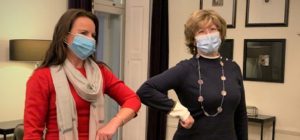
 The small, Northern European nation of Estonia is rarely the focus of widespread media coverage in Europe. However, its advancements in women’s rights deserve attention. In 2015, Estonian President Toomas Hendrik committed to “concentrate on women’s human rights, gender equality and the empowerment of women also in development cooperation.”
The Big Picture
Globally, Estonia ranks high on several women’s rights issues. The Global Gender Gap Report (2022) states that Estonian men and women have equal access to financial services, justice and freedom of movement, etc. Estonia also ranks first in all indicators of educational attainment and healthy life expectancy.
In 2016, Estonia’s fifth president Kersti Kaljulaid became the first female leader in the country’s history. Estonia’s first female prime minister Kaja Kallas, elected in 2021, made Estonia the first nation in the world to be entirely run by women.
Data from U.N. Women found that females in Estonia have slightly higher levels of stability compared to their male counterparts. Food insecurity for adult women is slightly lower than for adult men, at 7.7% and 8.0% respectively. There are also fewer female children falling out of primary and lower secondary education at only 1.8% to the male rate of 2.4%.
Keeping young girls in school is a powerful tool to ensure that Estonian women remain educated and prepared to obtain better jobs in the future, lowering their chances of cyclical poverty.
Education
Estonian women are some of the most highly educated in Europe. According to the CIA World Factbook, as of 2021, the literacy rate for Estonian women stood at 99.9%, on par with that of Estonian men. The percentage of Estonian women between 25 and 64 who completed higher education in 2021 was about 53%, well above the 36% average for the European Union.
The relatively low costs of tertiary education in Estonia help make higher education more accessible to women, especially those who are low-income. In 2013, a higher education reform made full-time, tertiary education programs conducted in Estonian free at public institutions. Unfortunately, the reform does not apply to part-time students. By providing free education for part-time students, more women, such as those who are low-income, care for children or have work-related duties, would be able to attain an education.
Employment
According to the Organisation for Economic Co-operation and Development (OECD), Estonia’s female employment rate was 72% in 2021, significantly higher than the average of 61%. However, part of improving women’s rights in Estonia means making sure women have access to all areas of the workforce. Women are still underrepresented in Science, Technology, Engineering and Math (STEM) fields which remain dominated by men. Instead, many women in Estonia work in low-earning fields such as education and retail.
Based on The Global Gender Gap Report (2022), women make an estimated $28,880 in earned income compared with men at $42,320. With so many women concentrated in low-paying or unpaid fields, there is little opportunity to rise out of poverty.
On February 11, 2021, the University of Tartu celebrated the International Day of Women and Girls in Science for the first time in Estonia. The U.N. established the day to celebrate and encourage women’s involvement in the sciences. Professors at the university recognized that the school’s large proportion of female students was not reflected in science and research roles. In their coverage of the event, Estonian World highlighted seven Estonian female scientists making a difference for women’s rights in Estonia and the world.
The Future of Women’s Rights
Despite all of the progress the Estonian government is making, there is still work to do. Local grassroots organizations are taking on the challenge of furthering women’s rights in Estonia. The Estonian Women’s Union/League (ENL) aims to unite women and safeguard their rights. The organization collaborates with state bodies and other democratic social organizations. ENL encourages women’s involvement in politics and organizes international conferences and training.
In 2008, ENL members participated in presenting the “Estonian Human Development Report 2007” which covered school violence, increase in unemployment, etc. In 2023, the organization continued its naming of “Mother of the Year,” a series meant to shine a light on Estonian mothers and the challenges they may face in supporting their children.
Women’s rights in Estonia have visibly improved in recent years, setting up the country for further success. The Estonian Women’s League is just one of a variety of local initiatives committed to empowering women from all walks of life, ensuring Estonia’s progress continues.
– Yesenia Aguilera
Photo: USAID

Women’s Rights in Kuwait
Divorce, for instance, is easier for men to file than for women. Men may divorce their wives for any reason, while women must file on specific grounds, such as a lack of financial support or mental illness. Many women also need permission for marriage from a male relative and the laws allow men to take up to four wives without needing the consent of prior spouses. While Kuwait may still have barriers to overcome to achieve gender equality, many organizations are working to advance women’s rights in Kuwait.
Women’s Place in Society
Women’s lack of autonomy in marriage likely contributes to the high prevalence of domestic violence in the country, according to Human Rights Watch (HRW). There were no laws outlawing domestic violence or intramarital rape and sexual abuse prior to 2020. According to a 2020 Soroptimist survey, 62.9% of those surveyed admitted to having experienced domestic violence, with 83.5% being women. It is also likely that domestic violence is largely underreported in the country. The issue of domestic violence is expected to be dealt with within the family rather than by law enforcement.
There is also a severe lack of women’s representation in government and women in the country only received the right to vote in 2006, according to a World Economic Forum report. Furthermore, Kuwait swore in the first female judges in the country’s history in 2020.
Progress
One organization currently working to advance women’s rights in Kuwait is Abolish Article 153. The organization aims to remove Article 153 from the Penal Code in Kuwait. This article stipulates that any man who kills a female family member after finding them engaged in an “unsavory” sexual act will receive no more than three years of jail time. These acts are “honor killings” and are common in the Middle East.
About 47,000 women and girls worldwide were murdered in 2020 by their families or intimate partners. Abolish Article 153 group’s advocacy includes advocacy meetings with committees in the National Assembly as well as working with civil society organizations to spread awareness and educate the public on violence against women. The organization has had successes in the past, such as conducting the first survey on the topic of determining the public’s opinion on laws such as Article 153. The report indicated that 63% of those surveyed condemned such laws.
Looking Ahead
Although women in Kuwaiti society still experience many obstacles related to their gender, recent progress in gender equality in the country shows that the nation is undergoing improvements. Women’s rights groups such as Abolish Article 153 are helping to make strides in the right direction.
– Emma Glas
Photo: Wikimedia
Increasing Access to Renewable Energy in Malta Can Help Reduce Poverty
Malta faces challenges in reaching its energy goals due to high prices and limited options. The biggest is that most of Malta’s energy is imported, primarily from non-renewable sources, with only a small amount, approximately 4% as of 2021, coming from solar power. Additionally, Malta relies on a single electricity distributor and lacks a natural gas and district heating and cooling network. These limitations pose challenges, particularly in terms of expanding renewable energy production in Malta, as they restrict the available options to meet the 2050 energy-saving standards.
These issues further perpetuate poverty in the country, amplifying high energy prices due to the small market and the fact that the tiny nation is an island. Every household in the nation, especially the most vulnerable, experiences both direct and indirect effects as a result. Moreover, the cost of living increases as acquiring and performing products and services becomes more expensive. Therefore, increasing renewable energy in Malta would not only benefit the energy industry as a whole but individual households, especially those most vulnerable.
Renewable Energy Options in Malta
Resources for powering renewable energy endeavors are plentiful in and around Malta. The island receives abundant sun, enabling the establishment of large solar arrays. Furthermore, the implementation of offshore wind farming is not a new concept within the European Union and could be achieved easily off the shores of Malta. Additionally, Malta serves as a testing ground for innovative technologies that harness the power of the ocean and convert it into electricity. Harnessing wave energy alone would contribute significantly to Malta’s achievement of national energy targets, further highlighting the untapped potential of relying on renewable energy in Malta.
How it Directly Affects Poverty Rates
It is valid to inquire about the direct impact of increasing renewable energy in Malta on reducing the national poverty rate. One significant aspect to consider is that increasing renewable energy, both in Malta and elsewhere, contributes to mitigating the effects of changing weather patterns. This, in turn, reduces the severity of flooding and storm surges, which undoubtedly affect the island country. The impact of natural disasters tends to be more severe on individuals living in extreme poverty, making the most vulnerable population in Malta more susceptible.
Increasing renewable energy in Malta not only brings national benefits but also contributes to economic growth. Implementing renewable energy methods such as solar, wave and wind farming would diversify Malta’s sources and suppliers. This not only helps reduce direct and indirect energy costs for those living in poverty through economic competition but also enhances energy security by relying on multiple sources. It provides flexibility and reliability in the energy system, particularly during times of need. Moreover, increasing renewable energy in Malta does not solely bring national benefits. As Malta expands its solar fields and adopts new renewable energy technologies, it stimulates and positively impacts global trade. This further benefits individuals living in poverty in Malta by boosting national economic welfare, which historically leads to direct increases in wages.
Wave Energy Harvesting
As aforementioned, wave energy harvesting stands out as a particularly promising technology in Malta. Studies have been conducted by Researchers at the University of Malta, Institute for Environmental Protection and Research in Rome and they concluded wave energy harvesting is most suitable for the winter months. Additionally, the researchers noted that during the summer months, wind and solar power could compensate for the decrease in wave power. This further underscores the importance of diversification to guarantee an adequate energy supply for all.
The Maltese government has already taken steps to promote renewable energy. Incentives such as feed-in tariffs and grants encourage the installation of solar photovoltaic (PV) systems, resulting in rapid growth in solar PV capacity. This growth is expected to continue as the costs of solar technology become more affordable. Furthermore, Malta is actively pursuing wind energy through projects like the Montenegro Wind Farm, increasing its wind energy capacity. In addition, offshore wind energy exploration further enhances Malta’s renewable energy portfolio. Alongside these efforts, Malta is actively working on energy efficiency measures and aims to reduce primary energy consumption. This is being achieved through initiatives such as energy-efficient buildings, smart grid technologies and the promotion of energy-efficient appliances. These endeavors contribute to Malta’s overall energy transition and diversification, making energy in the country more reliable and affordable for those in need.
Ultimately, increasing renewable energy in Malta will lead to greater energy independence, positioning the country as a stronger member of the EU and the international community. If energy availability and consumption are no longer major concerns then more funding could be allocated toward poverty alleviation efforts in a nation where 16.9% of the population lives below the poverty line. Individuals in poverty will gain the energy security they deserve, paving the way for a brighter future.
– Ada Rose Wagar
Photo: Flickr
Advancing Women’s Rights in Estonia
The Big Picture
Globally, Estonia ranks high on several women’s rights issues. The Global Gender Gap Report (2022) states that Estonian men and women have equal access to financial services, justice and freedom of movement, etc. Estonia also ranks first in all indicators of educational attainment and healthy life expectancy.
In 2016, Estonia’s fifth president Kersti Kaljulaid became the first female leader in the country’s history. Estonia’s first female prime minister Kaja Kallas, elected in 2021, made Estonia the first nation in the world to be entirely run by women.
Data from U.N. Women found that females in Estonia have slightly higher levels of stability compared to their male counterparts. Food insecurity for adult women is slightly lower than for adult men, at 7.7% and 8.0% respectively. There are also fewer female children falling out of primary and lower secondary education at only 1.8% to the male rate of 2.4%.
Keeping young girls in school is a powerful tool to ensure that Estonian women remain educated and prepared to obtain better jobs in the future, lowering their chances of cyclical poverty.
Education
Estonian women are some of the most highly educated in Europe. According to the CIA World Factbook, as of 2021, the literacy rate for Estonian women stood at 99.9%, on par with that of Estonian men. The percentage of Estonian women between 25 and 64 who completed higher education in 2021 was about 53%, well above the 36% average for the European Union.
The relatively low costs of tertiary education in Estonia help make higher education more accessible to women, especially those who are low-income. In 2013, a higher education reform made full-time, tertiary education programs conducted in Estonian free at public institutions. Unfortunately, the reform does not apply to part-time students. By providing free education for part-time students, more women, such as those who are low-income, care for children or have work-related duties, would be able to attain an education.
Employment
According to the Organisation for Economic Co-operation and Development (OECD), Estonia’s female employment rate was 72% in 2021, significantly higher than the average of 61%. However, part of improving women’s rights in Estonia means making sure women have access to all areas of the workforce. Women are still underrepresented in Science, Technology, Engineering and Math (STEM) fields which remain dominated by men. Instead, many women in Estonia work in low-earning fields such as education and retail.
Based on The Global Gender Gap Report (2022), women make an estimated $28,880 in earned income compared with men at $42,320. With so many women concentrated in low-paying or unpaid fields, there is little opportunity to rise out of poverty.
On February 11, 2021, the University of Tartu celebrated the International Day of Women and Girls in Science for the first time in Estonia. The U.N. established the day to celebrate and encourage women’s involvement in the sciences. Professors at the university recognized that the school’s large proportion of female students was not reflected in science and research roles. In their coverage of the event, Estonian World highlighted seven Estonian female scientists making a difference for women’s rights in Estonia and the world.
The Future of Women’s Rights
Despite all of the progress the Estonian government is making, there is still work to do. Local grassroots organizations are taking on the challenge of furthering women’s rights in Estonia. The Estonian Women’s Union/League (ENL) aims to unite women and safeguard their rights. The organization collaborates with state bodies and other democratic social organizations. ENL encourages women’s involvement in politics and organizes international conferences and training.
In 2008, ENL members participated in presenting the “Estonian Human Development Report 2007” which covered school violence, increase in unemployment, etc. In 2023, the organization continued its naming of “Mother of the Year,” a series meant to shine a light on Estonian mothers and the challenges they may face in supporting their children.
Women’s rights in Estonia have visibly improved in recent years, setting up the country for further success. The Estonian Women’s League is just one of a variety of local initiatives committed to empowering women from all walks of life, ensuring Estonia’s progress continues.
– Yesenia Aguilera
Photo: USAID
Using the Internet to Combat Rural Poverty in China
Digital Finance in China
In 2021, China had 1.011 billion Internet users, comprising 71.6% of its total population. As smartphones and the Chinese Internet spread, so do digital finance services such as mobile payment, online banking, online insurance and online investment tools. All of these increase the accessibility of formal financial services for impoverished people who previously lacked access to them, according to PLOS ONE.
China leads the world in the ubiquitous use of digital financial services. According to PLOS ONE, for each point increase in China’s digital finance aggregation index (DFAI), the probability of rural absolute poverty decreases by 10.27% while the probability of rural relative poverty decreases by 18.31%. Specifically, digital finance alleviates rural poverty in China by spurring four developments: the decrease of credit constraints, the increase of access to information, the expansion of social networks and the promotion of entrepreneurship.
The rural poor often struggle with the high cost of agricultural loans from traditional banks. Digital finance solves this issue by compiling massive amounts of online user information to grant loans much more liberally than traditional banks ever could. Easier access to loans and capital has the effect of promoting rural entrepreneurship. Next, digital financial services offer the rural poor timely information about agricultural production, employment opportunities, etc. which help them remain economically stable. Finally, these services also provide social capital, allowing the rural poor to network with friends and family. One example is WeChat Pay, which applies the Chinese tradition of gifting red envelopes to the digital market. This increases the circulation of online money and raises income for the rural poor.
The Benefit of Internet Policies in Rural Areas
The ethnic minority areas of Aba, Ganzi and Liangshan in Sichuan Province are the most economically underdeveloped in Southwest China. It would be appropriate to use those areas as a case study of how government investments in the Internet have produced positive economic effects. Central and municipal governments have put money toward a Communication Infrastructure Investment (CII) with the intention of developing the Internet in underdeveloped regions, thus facilitating e-commerce and other economic activity.
Indeed, in recent years, villagers in ethnic minority areas have begun selling agricultural products on popular e-business sites like Taobao, Alibaba, Amazon and Jingdong, which have helped lift sellers out of poverty. The Internet also provides platforms and venues for industries like health and tourism. Data analysis from the years 2000-2018 indicates that pro-Internet investments and policies in Aba, Ganzi and Liangshan are positively correlated with local GDP for years one to four years and per capita income for the entire time.
Playing a Crucial Role
The Internet proved especially useful during the COVID-19 crisis. According to the China Internet Network Information Center, 98% of people in rural areas living in poverty had access to fiber-optic Internet in 2020, compared to only 70% in 2017. Users sold their agricultural products online to maintain a stable income amidst COVID-19 layoffs and the slowing of business. The Internet also allowed them to donate money, fostering a community-based financial support system in rural regions.
Overall, it appears that the Internet plays a vital role in combating rural poverty in China. It provides new platforms that allow people to receive financial capital while enabling entrepreneurs to market and sell their products.
– Eric Huang
Photo: Unsplash
4 Groups Making Innovation in Malawi a Reality
Malawi is a country that has long struggled with poverty and under-development — around 70% of the native population lives on $2.15 a day as of 2019. Many struggle without necessary resources such as clean water and food, even with an extensive agricultural sector in the country. In light of these issues, many groups work to improve the lives of the people and actively look to bring new, beneficial developments to the country. The following four groups are making innovation in Malawi a reality.
The Centre For Youth and Development’s Promotion of the SDGs
The 17 Sustainable Development Goals (SDGs) form the bedrock for many poverty-reduction movements in the world. Eliminating poverty, eliminating world hunger and providing clean water and sanitation are just some examples of these development goals. Malawi has struggled to fulfill these sustainable development goals for many years, with clean water proving the most difficult to address. The Centre for Youth and Development (CYD) seeks to make SDGs a major focus for Malawi while inspiring people to improve and empower their communities.
Based in Mzuzu, the CYD is a non-governmental organization that drives people, most prominently women and youth, to lead others in developing SDGs and innovation in Malawi. The CYD commits to this through a series of projects such as its Water is Life program. The Water is Life project seeks to overhaul the local irrigation of the Rumphi district for agricultural purposes and develop hydroelectric power for the area, which will affect 824 lives for the better. Its most recent successes in this project include building a water canal for water transport and farming.
How Converged Technology Networks is Connecting Malawi
Lack of internet access troubles Malawi. At most, 24% of individuals in Malawi had access to the Internet by 2021. This is an issue since many services, such as online banking, are available on the internet. The lack of internet also limits the availability of outside markets to reach the people, which hurts economic investment and limits the number of available jobs. Converged Technology Networks seeks to alleviate this issue by providing broadband internet to the country.
Beginning commercial operations in 2019, Converged is an internet service provider that is working to bring broadband internet to Malawi. The organization seeks to develop Malawi’s digital infrastructure and ensure that even people from more impoverished communities have access to the internet. In 2021, Converged joined forces with the U.S. Trade and Development Agency to provide a grant for a feasibility study in Malawi to provide service to underserved groups in the country.
How mHub Helps Entrepreneurs
As many people live on $2.15 a day, struggles to become financially stable in Malawi are frequent. People need employment to pay for necessities, as well as develop skills in the business and technology sectors to make better, stronger systems for the economy. mHub, based in Lilongwe, works toward providing others with these skills, further facilitating innovation in Malawi.
mHub works as a hub for innovation, seeking to finance aspiring entrepreneurs working in the fields of business and technology. mHub’s work has assisted in creating more than 950 jobs for people within Malawi and has trained more than 40,000 youths in the skills necessary for these two major fields. Like the CYD, mHub uses numerous programs that help to develop communities such as the Jobs for Youth program. This project trains the youth in the tech and business fields to prepare them for future employment, which has helped in making 120 jobs for students after graduation.
The African Drone and Data Academy in Malawi
Keeping people relatively healthy is a difficult task in Malawi, especially due to the lack of sanitation and the need for proper health care facilities. Disease can run rampant if left unchecked in a community, which can put a strain on services to provide for the sick. A way to combat this problem is to collect data on the issues at hand to better prepare a response. The Malawi University of Science and Technology, in partnership with UNICEF, seeks to do this with the African Drone and Data Academy (ADDA).
The ADDA trains around 140 students in how to design and pilot drones, all to apply them to development, humanitarian efforts and innovation in Malawi. This will allow Malawi to employ drones to respond to sudden developments and for data analysis, as well as simpler things such as medical deliveries. Data can be mapped to identify key areas for disease outbreaks, which in turn can help health care standards for people across Malawi.
Bringing Innovation to the People
Institutions such as these can help to inspire others in improving their home and make life better for the country. In the years to come, Malawi can lead the way for its people to innovate in new, unique and creative ways.
– Kenneth Berends
Photo: Flickr
Share The Meal – The App Eliminating Food Insecurity in Haiti
In an age where technology and electronic devices are at many people’s fingertips, global inequities can appear even starker — as William Gibson stated, “The future is already here, it’s just not evenly distributed.” The world’s 2 billion smartphones outnumber its hungry children by 20 to one. But apps such as Share The Meal are pioneering new ways to use the power of our smartphones to help those living in poverty and food insecurity.
Food Insecurity in Haiti
As the poorest country in Latin America and the Caribbean, Haiti’s poverty rate reached almost 60% in 2020, and it is one of the most vulnerable countries in the world with regard to food insecurity. According to the World Food Programme (WFP), almost half of the Haitian population — 4.9 million people — are underfed, and 1.8 million are at dangerous levels of food insecurity. Because of this, children are malnourished and underweight, and 66% of children under the age of 5 are anemic, affecting their early-stage development.
One of the main reasons for food insecurity in Haiti is poor agricultural performance. Although roughly two in three people in the Haitian workforce have employment within the agricultural sector, agriculture only actually accounts for 25% of Haiti’s gross domestic product.
More than 40% of Haitian land is under cultivation although only 20% of its land is even suitable for agriculture. Poor soil quality and soil erosion are among the leading problems with the land, and environmental issues such as droughts and lack of irrigation make it difficult to grow crops on land which does not have soil issues.
Haiti, therefore, relies heavily on importing food, which exposes its food market to price rises and inflation from the international market. The food insecurity situation has been desperate in recent years, but this could all change due to the development of an app eliminating food insecurity in Haiti.
Share The Meal App
The United Nations World Food Programme is helping people connect with the fight to end world hunger via a smartphone application called Share The Meal. Users of the app can support relief campaigns in poverty-stricken places all over the world at the touch of a button, whether they give one meal or one year’s worth. One meal that the WFP supplies costs only $0.80 (USD) or £0.65 (GBP), and according to WFP data, more than 150 million meals have been shared since the launch of the app in 2015.
The WFP aims to reach and support 512 million people via Share The Meal in 2023. The app allows users to choose a campaign or “goal” to donate to, which gives recipients nutrition support, agricultural support, school meals and emergency assistance depending on their needs.
Eliminating Food Insecurity in Haiti
Many people are choosing to support eliminating food insecurity in Haiti through Share The Meal’s “Improve Food Security for Families in Haiti” campaign. Haitians taking part in this poverty-fighting initiative receive cash support from the WFP donations to build protective measures for their agricultural sector, such as restoring local ecosystems to act as barriers to the climate, soil and water conservation efforts and providing local farmers with essential training on how to boost agriculture.
The WFP, with Share The Meal, is building more long-term solutions in Limbé in the Nord Department of Haiti, so people have better access to food and water, and food production is more steady and sustained. Repairing irrigation canals and planting trees such as pineapple and elephant grass are helping to reduce flooding and protect existing crops, allowing for the successful cultivation of more crops. This has promoted more sustainable ecosystems and facilitated a better standard of nutrition and is gradually eliminating food insecurity in Haiti. Funds that Share The Meal raise have also allowed for a 6,000-gallon reservoir to be built, which is providing locals with access to clean drinking water, as well as a reliable source of water to tend their crops.
The Haitian government is also working with WFP to provide school meals from local agricultural produce. This system involves the procurement of rice, fruit and vegetables from smallholder farmers, which gives them not only a more stable market for their goods but allows them to contribute to the nourishment of local children and help with eliminating food insecurity.
Overall, Share the Meal is working not only to improve food security, but it is equipping Haitians with the tools they need to strengthen their agricultural knowledge and resources, which is eliminating food insecurity in Haiti due to the shortcomings of the agricultural sector. The success of this Share The Meal campaign is a reminder of how impactful our decisions as smartphone users can be, and how technology can help in the fight against global poverty.
– Molly Wallace
Photo: Flickr
Lebanon’s Humanitarian Efforts – 5 Charities Operating in Lebanon
5 Charities Operating in Lebanon
In short, Lebanon, through its numerous national and international humanitarian organizations, has made a significant impact in addressing global poverty and aiding those facing humanitarian issues. These efforts have improved the lives of many individuals. The Borgen Project looks forward to witnessing further progress in the future.
– Jennah Kalaaji
Photo: Flickr
How Doctors Without Borders is Helping People in Turkey
Doctors Without Borders, also known as Médecins Sans Frontiers (MSF), is a global organization dedicated to providing essential medical care worldwide. The program collaborates with countries in need of emergency medical assistance. As reported by The Guardian, the devastating Turkey-Syria earthquakes of February 2023 resulted in the loss of 47,000 lives, with thousands of people missing and millions displaced from their homes. Doctors Without Borders has been actively involved in providing aid and support to the affected areas. Here is how Doctors Without Borders has been helping people in Turkey during the recent crisis.
6 Ways That Doctors Without Borders is Helping the People in Turkey
Looking Ahead
The efforts of MSF teams were vital in providing essential aid and medical assistance to the earthquake survivors in Turkey and Syria. They worked diligently to assess medical needs quickly and offer psychological and hygiene support, ensuring that the affected communities had access to basic facilities. Additionally, MSF teams provided training to local staff to ensure the sustainability of their efforts. Their primary focus was on enhancing the capacity of health care and relief services for those facing crises.
– Gurjot Kaur
Photo: Flickr
Fighting Generational Poverty with Trust Funds for Babies
Statistics reflect the truth that hard work and luck are not enough to escape generational poverty. In the United States (U.S.), for example, only 4% of poor Americans climb the rungs of the economic ladder toward wealth. The large majority of Americans born into the lowest income bracket remain there for life. Economist Darrick Hamilton confidently stated in The Journal that “Wealth is the paramount indicator of economic security and wellbeing.” Accepting this philosophy, the key question becomes: How does a society accumulate and distribute wealth to people born into the throes of poverty?
The answer just might be establishing trust funds for babies.
Looking to Babies to Address Generational Poverty
In 2002, the United Kingdom (U.K.) piloted a long-term savings account for minors called the Child Trust Fund (CTF). CTF was a tax-free savings account parents could open for their kids without facing any decrease in government benefits or tax credits. The parents of any child born in the U.K. between 2002 and 2011 received a £250 voucher to launch a CTF — they could then contribute an additional £9,000 per year. Once the child turned 18, they could access the funds in their account for any combination of reinvestment and spending they saw fit.
The government knew this was a small step in the direction of addressing generational poverty — a £250 stipend would not be enough to solve the nation’s fiscal inequity — but the hope was that a tax-free savings account for children would promote the possibility of home ownership, higher education and healthy investment practices for many who never thought such would be attainable.
Beyond the UK: Child Trust Funds in Canada
In Canada, every family is eligible to open a Registered Education Savings Plan (RESP): a low-tax, long-term saving account to help guardians save for their child’s future education. RESP funds can go toward any post-secondary education including colleges, trade schools, universities and formal apprenticeship programs.
While Canadians from all income brackets are encouraged to open an RESP for their children, Canada provides direct capital to low-income families’ RESPs. Any Canadian child born into a low-income family after 2004 is eligible for the Canada Learning Bond (CLB). The Canadian government provides an initial payment of $500 in the child’s first year and continues to add $100 each year until the total governmental contribution hits $2,000.
The Canada Learning Bond, much like the U.K.’s CTF, aims to chip away at the generational wealth gaps that prevent low-income youth from actualizing their full intellectual and economic potential.
Extrapolating the Baby Bonds Model to the United States
In Connecticut, nearly 15,000 children are born into poverty each year. To help close the state’s wealth gaps and encourage innovation, investment and long-term economic growth, Connecticut recently implemented a Baby Bonds program modeled on the U.K. and Canada’s previous successes.
Any child who is born into a family on Connecticut’s public health insurance — on or after July 1, 2023 — will be automatically enrolled in CT Baby Bonds. The government will contribute up to $3,200 to each child’s trust, and at 18, after completing a financial literacy course, the child can claim their capital. The funds are to be used for home ownership, business investment, education or retirement planning. Despite the program name, CT Baby Bonds, Governor Ned Lamont backed off of the original idea to fund the program using money from investors in exchange for bonds. He worried about debt accumulation. Instead, the state will be funding the program through a deposit of $381 million of state budget surplus — meaning there will be no inflated state debt or increased tax.
The Potential Impacts of CT Baby Bonds
While a leg-up of a few thousand dollars is certainly not the end-all-be-all for leveling the playing field, it is a powerful tool in revolutionizing saving philosophies in low-income communities. “You’re more focused on possibly going to college if you see a pathway, if there’s a fund,” Former Connecticut State Treasurer Shawn Wooden shared. “You’re more focused on one day owning a home, which some people in poverty never aspire to because they don’t think it’s ever achievable.”
Shondell Vann, a mother living in Bridgeport, Connecticut with a two-year-old daughter, sees earnest hope in the Baby Bonds program. “I feel like the program would give her a little bit more of a leg up,” she said of her daughter, Maria, in an interview with The Journal. “If she wanted to have a business just like me, she would be able to fund it with no problem. Just anything she wanted to do with that money to be able to be a bit more successful than she was or just be a little bit better off than she was, is better than nothing.”
– Elena Unger
Photo: Flickr
USAID Programs Pave Pathways in Jordan
USAID Makanati – Women’s Economic Empowerment and Leadership Activity
In November 2021, EnCompass Inc. a woman-owned business partnered with USAID to implement the Makanati Program, which focuses on addressing the gender gaps women face in the labor force. Unemployment has been a problem in Jordan for some time but has skyrocketed since the coronavirus pandemic at 20-25% over the last three years. Women are disproportionately impacted with a 30% unemployment rate and 14.2% labor force participation rate, according to the World Bank. Increasing female involvement in the workforce would drastically shift the unemployment rate and improve household incomes, boost economic growth and produce a more inclusive and stable workforce. This is exactly what the Makanati Program is for.
Makanati is a $30 million, five-year project with the primary goal of creating opportunities for women in the workforce. Through the right research, campaigns and interventions, it plans on improving workplace environments and employment policies so that they are inclusive of women. Makanati is taking the approach of solving root issues that prevent women from joining the workforce in the first place. Some of the restrictions women deal with include childcare and transportation or lack thereof. Given this concern, the program intends to explore alternatives to childcare and transportation modes that would give women the flexibility they need. Over the course of the next few years, as a USAID program in Jordan, Makanati hopes to create a domino effect for women as it overcomes these root issues so that it leads to overall economic empowerment for not just Jordan itself, but for the women of Jordan.
USAID Water Management Initiative – Water Efficiency and Conservation Activity
Jordan is the second most water-scarce country in the world. USAID has implemented several programs to address these issues in hopes that with the proper engineering and planning, water can be conserved and more abundant. To put it in perspective, Jordan’s annual water availability in 2012 was 145m3 and 10 years later it is less than 100m3. With significant population growth combined with water scarcity, only two-thirds of the population’s water demands are being met. While changing weather patterns play a role in the disappearing water levels, much of the cause comes from poor infrastructure including supply systems, broken piping and the lack of conservation strategies. USAID is determined to address the issues of water scarcity with the help of Tetra Tech, a consulting and engineering services firm through the Water Management Initiative (WMI).
The WMI is a $35 million five-year initiative that focuses on four key areas; water supply systems, water conservation and demand management, water sector governance and protection of water supply. Tetra Tech is taking a realistic approach in order to create long-term solutions that will provide the country with sustainable water sources. It is hoping to achieve this by partnering with the Jordanian government, Jordan’s water utility services (Yarmouk Water Company) and the private sector. By addressing the problems first and then creating solutions, these long-term goals can be achieved. As an engineering services firm, they are developing the proper framework to improve water conservation and quality management. Gradually, this program will help change the trajectory of Jordan’s resources and assist in meeting the basic need for water accessibility for the people of Jordan, including their large refugee population.
Final Thoughts
Manakati and The Water Management Initiative are simply two examples of the focus USAID programs in Jordan have on ensuring local concerns are met and root problems are identified and solved. Development is not simply applying a bandage to a deep wound; it involves thoroughly cleaning the wound, dressing it properly and providing the appropriate medication. Over the next few years, these programs intend to build a better future for Jordanians and the country as a whole.
– Sarina Qureshi
Photo: Flickr