 Globally, 244 million children and youth aged 6 to 18 remain without access to education. Nigeria, as Africa’s most populous and largest economy, contributes significantly, with 20 million of its young population currently out of school, with the threat of additional millions facing the risk of dropout looms large.
Among the complex factors hindering education, one stands out prominently – “Hunger.” Childhood malnutrition disorders affect more than 42% of school children in the country and are responsible for 49% of the absenteeism of primary school-age children.
Studies by the United Nations Children’s Fund (UNICEF) reveal a grim reality. Nigeria carries the world’s second-highest burden of stunted children under 5, with a prevalence rate of 32%. This widespread malnutrition not only impacts physical health but also hinders cognitive development, learning outcomes and future productivity.
The Vicious Cycle of Hunger and Education
Studies conducted by the World Food Programme (WFP) demonstrate a strong correlation between malnutrition and educational outcomes. Specifically, research has shown that providing daily meals at school can have several positive effects, including:
- Improved focus and concentration in children.
- Increased enrollment and attendance rates.
- Higher retention rates in educational programs.
- Enhanced cognitive abilities.
Data analysis indicates that such school meal programs can, on average, boost enrollment by 9%. This suggests that addressing hunger is a critical factor in removing barriers to education.
Enter the Home-Grown School Feeding Programme
In a 2016 attempt to tackle Nigeria’s out-of-school crisis, the Federal Government of Nigeria revived the Home-Grown School Feeding Programme (HGSFP) in 22 states nationwide. This N70 (around $0.17) per child, per day initiative aimed to boost primary school enrollment, improving students’ health and nutrition, all within a social safety net framework. To achieve this, the program targeted multiple areas: increasing farmers’ income, empowering women, fostering collaboration among ministries of education, health, justice, agriculture and budget and planning. Additionally, it actively engaged state governments, school boards, community leaders, women’s groups and parents.
Beyond Nourishment
Sourcing ingredients from 150,000 smallholder farmers, the HGSFP creates a stable market for their produce and boosts their income, fostering agricultural development. This has spurred 106,000 jobs, especially for women cooks and food deliverers, directly combating Nigeria’s unemployment rate, which stood at 33.3% in Q4 2020.
Impact Quantified
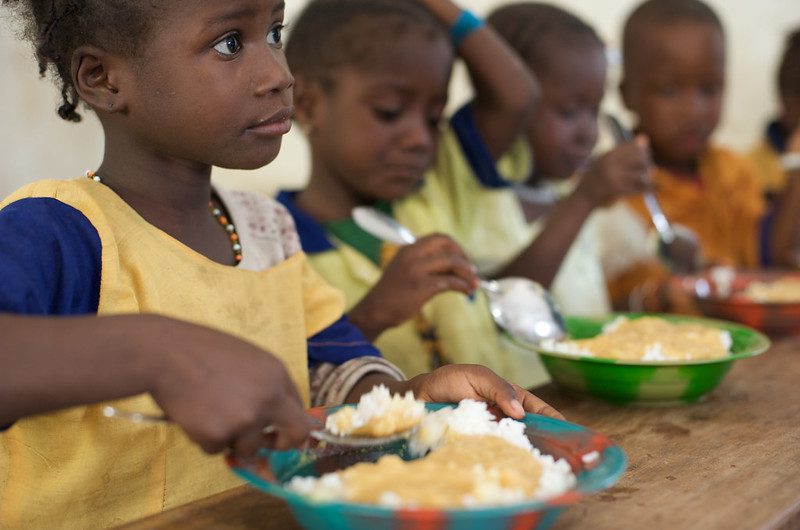
Initially aiming to reach 12.8 million primary school children by July 2019, the program currently nourishes at least 9.4 million pupils in 46,000 public schools across 31 states. These children receive a nutritious meal every school day, with menus varying across regions from moi moi (beans pudding) to beans, porridge, rice and other local staples.
The impressive scale of the program is evident in the sheer volume of ingredients used. Each week, 594 cattle, 138,000 chickens, 6.8 million eggs and 83 metric tons of fish contribute to feeding the children. This not only nourishes young minds but also stimulates domestic agriculture and food production.
The program’s positive impact extends beyond plates. In 2019, the federal government acknowledged HGSFP’s significant contribution to a 20% increase in primary school enrollment nationwide since its launch in 2016. This increase demonstrates the program’s effectiveness in attracting and retaining children in school, paving the way for a brighter future for individuals and the nation.
Challenges and the Road Ahead
While the HGSFP boasts impressive achievements in feeding millions of children and boosting local agriculture, it faces several hurdles that threaten its full potential. Limited funding restricts meal quality and reach, while corruption involving some cooks necessitates stricter monitoring. Inefficient management, including the lack of regular reviews, leads to unmet demand and potential mismanagement. Additionally, discrepancies exist between reported successes and experiences in specific areas, raising concerns about uneven implementation.
A Tech Boost
WFP has declared Nigeria’s National Home-Grown School Feeding Programme (NHGSFP) the best in Africa. It is partnering with the government to enhance its impact further. WFP will provide tablets loaded with the PLUS Schools Menus app to promote better nutrition and dietary habits, empowering nutrition officers to design budget-friendly, nutritious meals for schools. This decision stems from a joint assessment to strengthen, scale and sustain the NHGSFP.
A Plateful of Potential
The HGSFP offers a powerful antidote to Nigerians’ struggle with hunger and unequal access to education. Nurturing both minds and bodies, it illuminates a path toward a more promising future for millions of children. With continued commitment and collaborative efforts, a plate of food can truly transform lives and reshape the educational ecosystem of Nigeria.
– Abraham Ikongshul
Photo: Flickr

How SAMRC Is Improving Public Health in South Africa
Limited resources, persistent socioeconomic disparities and ongoing issues related to sanitation and clean water further compound the public health troubles South Africa faces. This demonstrates the urgent need for comprehensive and sustainable health care initiatives like the South African Medical Research Council (SAMRC), which is becoming one of the most prominent organizations improving public health in the country today.
Unveiling SAMRC: A Brief Overview
SAMRC was established in 1969 to improve the health of populations throughout South Africa. Through efforts in research, innovation and technology transfer, they have significantly contributed to recent advancements in health care for the country. Their scope of research delves into laboratory investigations, clinical research and public health studies. They address prevalent diseases and promote preventive measures with evidence-based health care policies, ultimately leading to improved health outcomes and a better quality of life for all South Africans.
Glenda Grey became SAMRC’s president in 2019. In her first five years leading the organization, grant initiatives significantly improved funding for young African scientists. Under Gray’s leadership, the organization’s mission is to advance the nation’s health, enhance quality of life and address inequity by conducting and funding relevant and responsive health research and research translation. In areas with limited access to health care services, SAMRC establishes mobile clinics to provide on-site medical care, screenings and research participation opportunities directly in the community.
Programs and Research Technology
Leading the health care innovation at SAMRC is a company group labeled Strategic Health Innovation Partnerships (SHIP) unit. This initiative partners with the Department of Science and Technology to raise funds and manage projects to develop new drugs, treatments, vaccines and prevention strategies. More recently, SHIP has worked hard to actively drive health innovation by enhancing South African science’s capacity in research and development.
To gain support and funding for development, the group uses competitive open calls to identify projects within its strategic areas. All applications are subjected to in-depth international review. The SHIP Steering Committee, which comprises officials from SAMRC, the Department of Science and Technology, the Department of Trade and Industry and the Department of Health, approves the selection procedures and recipients.
While SAMRC funds many South African health projects. They also connect their innovative researchers with like-minded organizations worldwide that provide more external funding opportunities. One of these recent research initiatives is the SAMRC’s Self-initiated Research Program (SIR).
The SIR project aims to support young researchers at recognized research institutions in various areas of health. Up to $200,000 in grants for SIR are given annually for three years. These grants pay for the facilities, equipment and research costs necessary for the initiatives. These projects directly impact the largest populated areas of the country, significantly improving public health in South Africa.
SAMRC Project Impact
In recent years, SAMRC has continued to drive several COVID-19 vaccine studies to guarantee that South African populations get tested for vaccinations developed globally. This study also includes information about South African policy on vaccination and boosting.
The organization delivered the Johnson and Johnson Ad26 COV2.S vaccine to 496,424 individuals during 2021-2022 through their research and studies. SAMRC has demonstrated its commitment to safeguarding public health and advancing scientific knowledge to improve it in South Africa and the world.
Another major SAMRC project making a massive impact in the country is the South African Population Research Infrastructure Network (SAPRIN). This initiative is a network of public and academic institutions in a long-term partnership to produce high-quality research and improve public health. SAPRIN is part of a strategic approach to building and strengthening research capacity in the country. It analyzes and has accessible and collaborative population-based health and demographic data.
A benefit of this networking is it offers an opportunity to aid in calibrating national datasets such as those from health facility data and electronic medical records. These can be linked to the longitudinal geolocated surveillance data and allow for the investigation of chronic diseases such as hypertension, diabetes, cardiovascular disease, mental health, HIV and substance abuse. The resource findings from SAPRIN provide essential insights into understanding multi-morbidity disease patterns occurring in South Africa.
– Caleb Ilayan
Photo: Unsplash
Women in Sudan Receive Hygiene Support Amid Crisis
Menstrual Hygiene Amid Crisis
Women and girls in Sudan who have been forced to flee under intense gunfire and threats of sexual violence usually end up without essential dignity kits, including menstrual hygiene products. Evidently, when one is escaping war, everything is left behind, and menstrual products are not considered a priority. While families grapple with challenges securing food and water, inflation has made it difficult for women and girls to afford menstrual products. Additionally, disposable sanitary pads are not widely available in remote and hard-to-reach areas.
According to the Strategic Initiative for Women in the Horn of Africa, “This situation of utter scarcity of menstrual products raises women and girls’ likelihood of developing infections, which are more likely to become life-threatening given the lack of access to clean water and medical services. These risks are even higher in internally displaced persons (IDP) camps.” In their urgent need to address their menstrual needs, women and girls have resorted to using old cloth pieces, posing a risk of infections, mainly when proper hygiene practices are not observed.
Reusable Sanitary Towels Initiative
World Vision launched an initiative to promote reusable sanitary towels to help support adolescent girls through their menstrual cycles. This initiative was first introduced to the Blue Nile State with funding from the USAID-Bureau for Humanitarian Assistance (BHA). Women from six vicinities were then divided into groups to be trained and equipped with start-up kits for making reusable sanitary towels.
Three prototypes were created with different ministries and the United Nations Children’s Fund (UNICEF), utilizing the locally accessible cotton fabric. Two hundred units of each design were produced and given to a hundred girls in four other areas. Subsequently, a user survey was undertaken to gather feedback from the girls, ensuring that their insights were integrated into the final designs to improve acceptance and utilization. Five thousand pieces were produced, which World Vision purchased and distributed to 500 girls.
Now, World Vision has designated these trained women to teach others how to produce quality reusable sanitary towels in South Kordofan, South Darfur and East Darfur to advance the initiative. World Vision facilitated connections between the trained women groups and local suppliers to ensure easy access to raw materials. These women are also earning improved household income through this initiative.
UN Women and USAID Contributions To Menstrual Support
Through their campaign, U.N. Women distributed 1000 hygiene kits to internally displaced women in December 2023. According to USAID, the United Nations Fund for Population Activities (UNFPA) has also reached approximately 161,000 individuals with dignity kits between April 15 and October 29, 2023. Dignity/Hygiene kits usually contain essentials like menstrual pads, bath soap, underwear, detergent powder, sanitary napkins, a flashlight, toothpaste, a toothbrush and a comb. These kits help women and girls maintain proper hygiene and preserve their dignity during times of crisis.
Conclusion
Dignity kits play a crucial role in humanitarian response by addressing the basic needs of individuals in crises, promoting hygiene, providing privacy and supporting the overall well-being of affected populations, especially women and children.
– Noura Dakka
Photo: Flickr
From Peril To Progress: Clearing Landmines in Somalia
The Halo Trust, a nonprofit organization founded in 1988, is methodically removing landmines in Somalia. Their work makes the country safer, improving the lives of Somalians.
Improving Agropastoralism
In August 2021, the Halo Trust celebrated the clearance of one million square meters of land in Somalia from landmines. Land clearance positively impacts agropastoralism. Once land is safe from explosives, herders can use it for livestock grazing. They no longer have to worry about losing their cows and donkeys to accidents, which can be worth more than two months’ wages.
Communities also use cleared land to produce frankincense, made from the resin of Boswellia sacra trees and earn income. These trees have been growing in the region for thousands of years and can generate frankincense nearly year-round. Harvesting frankincense offers a way for people in Somalia to earn a reliable income and support their families.
Increasing Safety Through Education
Clearing landmines is painstaking work and takes significant time. Until the Halo Trust can rid Somalia of landmines, it is educating communities on avoiding their risks. Education efforts prioritize children because they are often curious and at high risk for landmine accidents. The Landmine and Cluster Munition Monitor, a program researching and monitoring worldwide landmines and munitions, reported that 88% of deaths from landmines in Somalia in 2019 were children.
Employing People in Landmine Communities
Creating jobs in Somalia is critical. The World Bank reported in 2022 that 70% of its citizens are impoverished. In recent years, the country has faced droughts and widespread food insecurity.
The organization employs people from the communities where it works, creating jobs while propelling landmine clearance. Halo Somalia employs nearly 400 men and women from landmine communities in Somalia. These jobs are concentrated along the border between Somalia and Ethiopia, where most of the nation’s landmines are located. Jobs are often scarce in these regions, especially for women. Through this work, locals benefit economically while helping to make their communities safer.
Though much work remains to declare the globe landmine-free, the Halo Trust is progressing and improving lives in Somalia.
– Kelly Carroll
Photo: Flickr
Maternal Mortality in Egypt
Factors and Facts
Upper Egypt and rural areas face more challenges regarding maternal mortality. These areas lack sanitation, services and hygiene. According to the United Nations Children’s Fund (UNICEF), rural areas are home to 8.4 million people without improved sanitation. In 2014, 15% of the population did not have adequate sanitation. A lack of sanitation and hygiene facilitates the spread of disease, significantly impacting maternal and children’s health.
UNICEF highlights a concerning statistic, i.e., just 82% of women in Egypt receive postnatal care within two days of childbirth. It leaves a notable gap, with 18% of women missing out on crucial postpartum support and medical attention. Failure to receive postnatal care can be hazardous, as most deaths occur within the first six weeks of delivery. Postnatal care can help detect diseases, promote a healthy lifestyle and identify medical complications.
Intervention
UNICEF has partnered with the Ministry of Health and Population. This partnership aims to provide women and babies with high-quality, easily accessible health, nutrition and hygiene education. The cooperation offers immunizations for mothers and newborns to eliminate tetanus and polio eradication. The Integrated Perinatal Health Care and Nutrition program strives to reduce “neonatal mortality by 20% and child malnutrition by 30% in the targeted disadvantaged areas.” This organization aims to create an environment for women and newborns to thrive by providing access to health care providers, promoting change and strengthening health care systems.
The Health Quality Improvement Program, a World Bank-funded initiative, assists Egypt’s 1,000 poorest communities in accessing medical facilities that satisfy the country’s health care standards. UNICEF supported the project and evaluated the health care facilities to ensure they met federal standards.
The United Nations Fund for Population Activities (UNFPA) is taking several steps to reduce maternal mortality in Egypt. They train nurses and midwives to become certified and skilled, focusing on rural Upper Egypt, where many women need adequate medical attention. Additionally, they have partnered with the Ministry of Health to support the Safe Motherhood Committee.
The Ministry of Health has also gained support from the World Health Organization (WHO). In 2015, they planned to build 1,402 health facilities in underprivileged and underserved communities, reaching 22 million people. WHO is working with the Ministry of Health to develop better protocols and guidelines, provide enhanced training to nurses and midwives and monitor the success of implementations.
Conclusion
Although there are still many struggles with maternal mortality in Egypt, there are many partnerships, programs and interventions that are helping reduce the maternal mortality rate.
– Abby Trussell
Photo: Flickr
Kenya’s Hunger Safety Net Program for Drought-Hit Homes
Drought-Driven Poverty
HSNP focuses on these “arid or semi-arid lands (ASALs)” because they are prone to food insecurity and poverty. Severe drought makes farming and food production extremely difficult, leaving families starving without income to buy food and relying on emergency food aid. Drought along with failing rain seasons chronically exacerbates poverty and the threat of death from starvation. With money from HSNP, families can purchase enough food and varied ingredients to feed their families and pay for education, keeping them from dropping into life-threatening circumstances. The government disburses Ksh537 million ($3 million) to poor families to mitigate the effects of drought.
Evaluation of the Kenya HSNP, Oxford Policy Management
In 2009, the HSNP began as a collaboration effort between the NDMA and the Department for International Development. The initial pilot phase started in the same year, focusing on providing cash transfers to households in arid regions of the country. After this success, more phases followed, with the second launching in 2013 to expand coverage and introduce additional components like livelihood support. The third phase began in 2019, aiming to enhance resilience and sustainability.
How the Hunger Safety Net Program Works
There are two groups of HSNP beneficiaries: those who receive money bi-monthly and direly need help and those who only receive funds in case of emergency like a sudden drought or economic shock. For all applications, one person must be in the household with a national identity card to receive the money, and the climate must suffer from drought. Submissions are evaluated by a PMT, or Proxy Mean Test, an “electronic selection based on set predetermined socioeconomic parameters to generate a household livelihood condition score (HLCS).”
Once accepted, beneficiaries set up a bank account with a Mastercard through which they receive money. To ensure the transfers reach the correct households safely, a fingerprint scan identifies them before they can receive the first transfer.
Impact
The program has successfully achieved its goals of helping reduce drought-driven poverty and starvation. HSNP alone provided funds to 68,621 homes; the current version supports 101,800 homes. The HSNP has big plans for the future. On that list is an expansion to support 32,000 more households in ASALs.
– Emily Shapiro
Photo: Unsplash
5 Charities Operating in Italy
Mission Bambini
In Italy, more than 1.4 million children live in poverty and 14.2% of them live in absolute poverty. Mission Bambini is an NGO that seeks “to give help to poor, sick, outcast, uneducated children.” Goffredo Modena, an engineer, founded the organization in Milan on January 18, 2000. During its first five years, Mission Bambini worked to set up its Children’s Heart program, which focuses on saving the lives of babies abroad born with heart conditions. From 2000 to 2005, the organization helped more than 20,000 receive medical treatments.
At the national level, Mission Bambini launched early childhood educational programs in 2006, providing services like study support, dropout prevention and school renovations. Thanks to the efforts of volunteers, more than 12,000 children obtained access to learning services at an early age.
Soleterre
Soleterre is also among the health care-oriented, non-profit charities operating in Italy. It seeks to support those not fortunate enough to be afforded a healthy life, regardless of age or provenance. Though Soleterre’s base is in Italy, it reached 23 developing countries to bring food relief programs to 30,000 people and other health care relief programs to 260,000 people.
Since 2002, Soleterre has been providing aid, in the Italian cities of Pavia and Taranto, to children and adolescent cancer patients. The organization focuses on providing economic, psychological and medical support to give children a chance to improve their diagnosis and possibly heal. Soleterre reached more than 21,000 children and 16 hospitals with cancer assistance programs.
Save the Children
Another charity operating in Italy that focuses on aiding young people is Save The Children. The foundation collects donations from Italians and supports developing programs for children in 62 countries. Save the Children’s campaigns focus on fighting malnutrition, ending wars and providing safe environments where children can thrive.
According to the World Health Organization (WHO), 5.2 million children died in 2019 from “mostly preventable and treatable causes.” Currently, Save the Children estimates that malnutrition threatens 13.6 million kids under the age of 5. To tackle this issue, the organization launched its “Emergenza Fame” (Famine Emergency) campaign to mobilize Italians by urging them to petition their government and donate to fund food programs in Somalia and India.
Intersos
Intersos was originally founded in 1992, to aid people who extreme poverty, war and other unfortunate circumstances affect. Since its inception, the organization has operated on an international level and brought emergency humanitarian intervention to 23 countries, providing medical care, shelter and basic necessary goods.
In 2011 Intersos launched the A28 Center in Rome, to provide nightly accommodations to young and unaccompanied minors traveling to Europe. In 2017, another center was established in Rome to supply medical aid to migrant women and children, as well as for Italian nationals. Most recently, Intersos worked in Ukraine to aid refugees by establishing psychological, medical assistance and protection resources.
Assistenza Nazionale Tumori (ANT)
The Assistenza Nazionale Tumori (ANT) or National Tumor Assitance originated in 1978 seeking to provide free medical home care to those who are suffering from tumors and unable to afford medical assistance. Over the years, the organization helped more than 155,000 ill people by engaging teams of doctors, nurses, nutritionists and more, to provide health care directly within households through dedicated therapies. Some of the additional services ANT provides include hygiene care, laundry services and transportation of patients to medical centers.
While ANT mainly provides support and infusion therapies, it runs a free mobile prevention center, dubbed the “Bus of Prevention,” equipped with oncological diagnostic tools. ANT’s programs in 11 out of 20 Italian regions can reach those facing tumor-related concerns, spanning the length of Italy’s famous booth-shaped territory.
Looking Ahead
As of 2023, 22% of the Italian population is living at risk of food poverty following the height of the COVID-19 pandemic. These five charities operating in Italy, and beyond, continue to tackle the problems affecting marginalized, young and non-national individuals to make sure they do not become a statistic.
– Francesco Luisi
Photo: Flickr
The Darién Gap: Everything You Need To Know
Here is everything you need to know about the Darién Gap and the people working to keep the migrants safe.
People from all across the world access the Gap
Venezuelans are the largest nationality of migrants across the Darién Gap, with more than 440,000 people crossing since January 2022. People from other South American countries, such as Ecuador and Haiti, follow close behind. Many people also come from countries in Africa and Asia, such as Cameroon, Pakistan and China.
The terrain makes for a dangerous journey
The hostile environment of the Darién Gap is characterized by heavy rainfall, extreme humidity and muddied landscape. Migrants are often forced to leave behind any shelter they may have brought, such as a sleeping mat or tent, in favor of more dire necessities, such as food and water. Without sufficient resources, migrants are left at the mercy of the elements and experience severe illness during their journey.
Women and children are increasingly vulnerable
In 2023, more than 32,000 children crossed the Darién Gap, with more than half under 5 years old. Since the region of the Darién Gap does not have any strong rule of law, migrating families are at a higher risk of falling prey to an extreme threat of violence during their journey through the Gap. The potential dangers include exploitation, assault and trafficking, along with the innate risks posed by the jungle of the Darién Gap.
Of everything you need to know about the Darién Gap, the most important thing to recognize is that the extreme stress and danger associated with traveling through the Gap makes it a last resort for most. In their home countries, migrants are often exposed to situations of extreme violence, poverty and even persecution.
Action Against Hunger
With the lack of government intervention, several Non-governmental organizations (NGOs) have made it their mission to help the migrants in their journey across the Gap. Action Against Hunger (AAH) began its work within the region in September 2023 and has already provided 3,236 primary health consultations and 266 supplements to prevent malnutrition.
Although everything you need to know about the Darién Gap can be bleak, AAH is not alone in its work to help the migrants crossing. The nonprofit works with the Columbian Health Secretary, the Mayor’s Office and local organizations to ensure that the migrants crossing the Gap receive all the care they need to have a safe journey.
– Anjum Alam
Photo: Flickr
Lasting Solutions of WhyHunger
The Approach
WhyHunger identifies that hunger exists in our world because people can neither afford to buy food nor have access to the land, water and other resources necessary to produce their food. As a result, it is often decided that hunger is the problem; however, WhyHunger takes a different approach.
Instead of deciding that hunger is the problem, something that can limit solutions to food charity and distribution, WhyHunger looks at the root causes and defines hunger as a symptom. The organization believes that taking this approach is the first step to finding lasting solutions to the complex economic, social and environmental issues that lie at the source.
The Solutions
Among the many lasting solutions of WhyHunger, three have had incredibly tremendous impacts. First, growing grassroots power lies at the core of WhyHunger’s approach to building lasting solutions to hunger. By developing partnerships and allying with grassroots leaders and organizations, the initiative can support grassroots factors committed to ending global hunger.
Second, WhyHunger believes that lasting societal transformations occur when individuals, particularly those most vulnerable, work together towards common goals and visions for society. Therefore, social movements express this shared desire to address the injustices that lead to hunger and movements that WhyHunger supports in the quest for food justice.
Third, WhyHunger frames the solution to hunger as a human right. This framing acts as a catalyst for lasting, systemic change and thus holds institutions responsible for protecting and fulfilling the right to food for all people. As a member of the Global Network on the Right to Food, WhyHunger can actively protect this right to food as a human right across the globe.
The Impact
Due to the significant impact of WhyHunger, the Duke Sanford World Food Policy Center at Duke University singles out the organization as a leader in the movement to end hunger and advance the human right to nutritious food in the U.S. and in communities around the world.
Since its establishment in 1975, WhyHunger has supplied $1.2 million to support and train 103,999 farmers in 68 countries to grow nutritious food to feed themselves and their communities in need. WhyHunger also works in partnerships to connect children to free, healthy meals in the summer when childhood hunger spikes. The nonprofit has succeeded in connecting 2.4 million children to these meals. Finally, WhyHunger has granted $532,280 to 85 grassroots partners and social movements to help their communities develop lasting solutions to hunger.
Through these impacts, WhyHunger continues to lead the fight against hunger. Although this fight is ongoing, the good news is that much progress has already been made. The organization believes that a world without hunger is possible and is committed to finding lasting solutions until that world is realized.
– Olivia Pitrof
Photo: Unsplash
Freedom for Rohingya Refugees in Bangladesh
Kutupalong, located in Ukhia on the vast Cox’s Bazar complex, is one of the largest refugee camps in the world. Built on steep hillsides, the camps are susceptible to flooding and landslides, particularly during monsoon season and the bamboo structures hastily constructed to house Kutupalong’s one million occupants provide little sanctuary. Fires in the camp are also not uncommon.
A Fresh Chance at Freedom
However, as of December 2023, a new hope was presented for the camps’ occupants. After blocking any resettlement of refugees to third countries since 2010, Bangladesh agreed to allow the U.S. to resettle some Rohingya refugees after striking a deal. For the first time in more than a decade, refugees were provided with hope for a way out of the camp that didn’t involve the risk of violence and even death through illegal human trafficking.
Although only 62 refugees have been flown to the U.S. thus far, these figures are set to increase. AK Abdul Momen, Bangladesh’s foreign minister, reportedly wants developed nations to take 100,000 refugees and criticized the stagnant pace of the resettlement process, despite ultimately believing the best solution to support the Rohingya is for them to be repatriated back to Myanmar, where they face persecution.
Juliet Volls Noyce, Assistant Secretary to President Biden, also offered her support, adding that “the U.S. is proud to be able to support resettlement in our country of the very vulnerable Rohingya. This is a priority of President Biden. We are discussing with other governments and with other partners. We will be working together with the international community.”
Speaking to the Guardian, Nurul, among the first refugees afforded a chance at a new life with resettlement to the U.S., spoke glowingly of his newfound freedom. “We have escaped the prison,” he said, adding that “for 31 years, I did not even have “basic rights. All this time, we lived with only primary services – school, food, health. Nothing more than that.”
The Future?
The early success of the resettlement process demonstrates the enormous potential for the Rohingya population of Myanmar to start a new life in the West. However, there is unequivocally a substantial amount of progress to be made before the program can be labeled a success.
AK Abdul Momen highlighted that current progress represents nothing more than “just a drop in the ocean,” as Bangladesh hosts more than 1.1 million refugees. For the program to be labeled successful, resettlements will need to continue on a larger scale and continued support from the U.S. government will be significantly depended upon.
– Ethan Leyden
Photo: Flickr
The Home-Grown School Feeding Programme in Nigeria
Among the complex factors hindering education, one stands out prominently – “Hunger.” Childhood malnutrition disorders affect more than 42% of school children in the country and are responsible for 49% of the absenteeism of primary school-age children.
Studies by the United Nations Children’s Fund (UNICEF) reveal a grim reality. Nigeria carries the world’s second-highest burden of stunted children under 5, with a prevalence rate of 32%. This widespread malnutrition not only impacts physical health but also hinders cognitive development, learning outcomes and future productivity.
The Vicious Cycle of Hunger and Education
Studies conducted by the World Food Programme (WFP) demonstrate a strong correlation between malnutrition and educational outcomes. Specifically, research has shown that providing daily meals at school can have several positive effects, including:
Data analysis indicates that such school meal programs can, on average, boost enrollment by 9%. This suggests that addressing hunger is a critical factor in removing barriers to education.
Enter the Home-Grown School Feeding Programme
In a 2016 attempt to tackle Nigeria’s out-of-school crisis, the Federal Government of Nigeria revived the Home-Grown School Feeding Programme (HGSFP) in 22 states nationwide. This N70 (around $0.17) per child, per day initiative aimed to boost primary school enrollment, improving students’ health and nutrition, all within a social safety net framework. To achieve this, the program targeted multiple areas: increasing farmers’ income, empowering women, fostering collaboration among ministries of education, health, justice, agriculture and budget and planning. Additionally, it actively engaged state governments, school boards, community leaders, women’s groups and parents.
Beyond Nourishment
Sourcing ingredients from 150,000 smallholder farmers, the HGSFP creates a stable market for their produce and boosts their income, fostering agricultural development. This has spurred 106,000 jobs, especially for women cooks and food deliverers, directly combating Nigeria’s unemployment rate, which stood at 33.3% in Q4 2020.
Impact Quantified
Initially aiming to reach 12.8 million primary school children by July 2019, the program currently nourishes at least 9.4 million pupils in 46,000 public schools across 31 states. These children receive a nutritious meal every school day, with menus varying across regions from moi moi (beans pudding) to beans, porridge, rice and other local staples.
The impressive scale of the program is evident in the sheer volume of ingredients used. Each week, 594 cattle, 138,000 chickens, 6.8 million eggs and 83 metric tons of fish contribute to feeding the children. This not only nourishes young minds but also stimulates domestic agriculture and food production.
The program’s positive impact extends beyond plates. In 2019, the federal government acknowledged HGSFP’s significant contribution to a 20% increase in primary school enrollment nationwide since its launch in 2016. This increase demonstrates the program’s effectiveness in attracting and retaining children in school, paving the way for a brighter future for individuals and the nation.
Challenges and the Road Ahead
While the HGSFP boasts impressive achievements in feeding millions of children and boosting local agriculture, it faces several hurdles that threaten its full potential. Limited funding restricts meal quality and reach, while corruption involving some cooks necessitates stricter monitoring. Inefficient management, including the lack of regular reviews, leads to unmet demand and potential mismanagement. Additionally, discrepancies exist between reported successes and experiences in specific areas, raising concerns about uneven implementation.
A Tech Boost
WFP has declared Nigeria’s National Home-Grown School Feeding Programme (NHGSFP) the best in Africa. It is partnering with the government to enhance its impact further. WFP will provide tablets loaded with the PLUS Schools Menus app to promote better nutrition and dietary habits, empowering nutrition officers to design budget-friendly, nutritious meals for schools. This decision stems from a joint assessment to strengthen, scale and sustain the NHGSFP.
A Plateful of Potential
The HGSFP offers a powerful antidote to Nigerians’ struggle with hunger and unequal access to education. Nurturing both minds and bodies, it illuminates a path toward a more promising future for millions of children. With continued commitment and collaborative efforts, a plate of food can truly transform lives and reshape the educational ecosystem of Nigeria.
– Abraham Ikongshul
Photo: Flickr